

Buy New
-40%
$9.61$9.61
$3.99 delivery Monday, November 9
Ships from: Shakespeare Book House Sold by: Shakespeare Book House
Get it faster
$16.00$16.00
FREE delivery Sunday, November 8 on orders shipped by Amazon over $35
Ships from: Amazon.com Sold by: Amazon.com
Used - Very Good
$6.64$6.64
FREE delivery November 9 - 12
Ships from: ThriftBooks-Phoenix Sold by: ThriftBooks-Phoenix
Download the free Kindle app and start reading Kindle books instantly on your smartphone, tablet, or computer - no Kindle device required.
Read instantly on your browser with Kindle for Web.
Using your mobile phone camera - scan the code below and download the Kindle app.

-
-
-
Image Unavailable
Image not available for
Color:
Follow the author
OK
Ask a Manager: How to Navigate Clueless Colleagues, Lunch-Stealing Bosses, and the Rest of YourLife at Work
Purchase options and add-ons
From the creator of the popular website Ask a Manager and New York magazineâs work-advice columnist comes a witty, practical guide to navigating 200 difficult professional conversationsâfeaturing all-new advice!
Thereâs a reason Alison Green has been called âthe Dear Abby of the work world.â Ten years as a workplace-advice columnist have taught her that people avoid awkward conversations in the office because they simply donât know what to say. Thankfully, Green doesâand in this incredibly helpful book, she tackles the tough discussions you may need to have during your career. Youâll learn what to say when
âĒ coworkers push their work on youâthen take credit for it
âĒ you accidentally trash-talk someone in an email then hit âreply allâ
âĒ youâre being micromanagedâor not being managed at all
âĒ you catch a colleague in a lie
âĒ your boss seems unhappy with your work
âĒ your cubemateâs loud speakerphone is making you homicidal
âĒ you got drunk at the holiday party
âClear and concise in its advice and expansive in its scope, Ask a Manager is the book I wish Iâd had in my desk drawer when I was starting out (or even, letâs be honest, fifteen years in).ââSarah Knight, New York Times bestselling author of The Life-Changing Magic of Not Giving a F*ck
- Print length304 pages
- LanguageEnglish
- PublisherBallantine Books
- Publication dateMay 1, 2018
- Dimensions5.5 x 0.7 x 8.2 inches
- ISBN-100399181814
- ISBN-13978-0399181818
Explore your book, then jump right back to where you left off with Page Flip.
View high quality images that let you zoom in to take a closer look.
Enjoy features only possible in digital â start reading right away, carry your library with you, adjust the font, create shareable notes and highlights, and more.
Discover additional details about the events, people, and places in your book, with Wikipedia integration.
Frequently bought together

What other items do customers buy after viewing this item?
- The Talent Fix Volume 2: A Leader's Guide to Recruiting Great TalentPaperbackFREE Shipping on orders over $35 shipped by AmazonGet it as soon as Sunday, Nov 8Only 5 left in stock (more on the way).
- Managing to Change the World: The Nonprofit Manager's Guide to Getting ResultsPaperbackFREE Shipping on orders over $35 shipped by AmazonGet it as soon as Sunday, Nov 8Only 1 left in stock - order soon.
Customers also bought or read
- Managing to Change the World: The Nonprofit Manager's Guide to Getting Results
Paperback$21.45$21.45Delivery Sun, Nov 8 - The Talent Fix Volume 2: A Leader's Guide to Recruiting Great Talent
Paperback$20.97$20.97Delivery Sun, Nov 8 - Say the Thing: Boundary-Setting Scripts & Phrases to Communicate Directly & Speak Up with Kindness
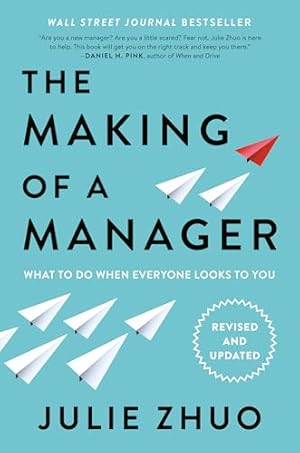
Paperback$19.97$19.97Delivery Sun, Nov 8 - The Making of a Manager: What to Do When Everyone Looks to You
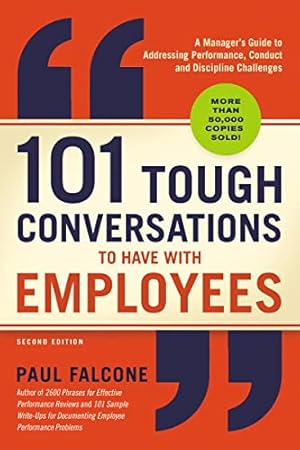
Hardcover$12.33$12.33Delivery Sun, Nov 8 - 101 Tough Conversations to Have with Employees: A Manager's Guide to Addressing Performance, Conduct, and Discipline Challenges
Paperback$11.55$11.55Delivery Sun, Nov 8 - Crucial Conversations: Tools for Talking When Stakes are High, Third Edition#1 Best SellerHuman Resources & Personnel Management
Paperback$10.48$10.48Delivery Sun, Nov 8 - The Asshole Survival Guide: How to Deal with People Who Treat You Like Dirt â A Research-Based Workplace Etiquette and Self-Help Handbook
Paperback$18.99$18.99Delivery Sun, Nov 8 - Inspire Greatness: How to Motivate Employees with a Simple, Repeatable, Scalable Process
Hardcover$13.99$13.99Delivery Sun, Nov 8 - Managing Transitions (25th anniversary edition): Making the Most of Change
Paperback$10.61$10.61Delivery Sun, Nov 8 - Hbr's 10 Must Reads on Emotional Intelligence (with Featured Article What Makes a Leader? by Daniel Goleman)(Hbr's 10 Must Reads)
Paperback$11.25$11.25Delivery Nov 13 - 19 - Radical Candor: Fully Revised & Updated Edition: Be a Kick-Ass Boss Without Losing Your Humanity
Hardcover$13.98$13.98Delivery Sun, Nov 8 - Thinking in Bets: Making Smarter Decisions When You Don't Have All the Facts
Paperback$19.37$19.37Delivery Sun, Nov 8 - The Five Dysfunctions of a Team: A Leadership Fable, 20th Anniversary Edition
Hardcover$10.84$10.84Delivery Nov 16 - 21 - 7 Rules of Power: Surprising--but True--Advice on How to Get Things Done and Advance Your Career
Paperback$15.90$15.90Delivery Sun, Nov 8
Editorial Reviews
Review
âThe authorâs friendly, warm, no-nonsense writing is a pleasure to read, and her advice can be widely applied to relationships in all areas of readersâ lives. Ideal for anyone new to the job market or new to management, or anyone hoping to improve their work experience.ââLibrary Journal (starred review)
âI am a huge fan of Alison Greenâs Ask a Manager column. This book is even better. It teaches us how to deal with many of the most vexing big and little problems in our workplacesâand to do so with grace, confidence, and a sense of humor.ââRobert Sutton, Stanford professor and author of The No Asshole Rule and The Asshole Survival Guide
âAsk a Manager is the ultimate playbook for navigating the traditional workforce in a diplomatic but firm way. Alison Green covers just about every conceivable awkward moment you can (and will) experience as an employee, coworker, or boss and then gives you a script for how to address and, more importantly, solve the problem.ââErin Lowry, author of Broke Millennial: Stop Scraping By and Get Your Financial Life Together
âFor those of us who navigate the complexities of the workplace at this point in history, whether we have somehow blundered into being managers ourselves or are merely data-entry peons, Alison Green is a treasure and a gift. Her writing is funny, fresh, clear, and helpful.ââNicole Cliffe, co-founder, The Toast
"As someone who has lost (happily devoted, rather) countless hours of their life to committing all the Ask a Manager archives to memory, I've been ready for this book for years. I donât know anything about having a job, and Alison knows so much; she always seems to have the perfect thing to say, the balance between tact and firmness.ââDaniel Mallory Ortberg, author of Texts from Jane Eyre and The Merry Spinster
âAsk a Manager is essential reading for anyone who has to navigate the weirdness of office culture, managers who are possibly unhinged, or the dreaded coworker who will just not stop talking. Alison Green is the workplace mentor you always wantedâwise, kind, and unflappable.ââJolie Kerr, author of My Boyfriend Barfed in My Handbag . . . and Other Things You Canât Ask Martha
âThis book handles just about every work conundrum youâve ever stayed up late at night worried about. Iâd recommend reading it . . . and then conspicuously leaving it in your break room. Green is the work guru weâve been reading for years; of course her book is fantastic!ââAlida Nugent, author of Donât Worry, It Gets Worse and You Donât Have to Like Me.
About the Author
Excerpt. ÂĐ Reprinted by permission. All rights reserved.
Conversations with Your Boss
Conversations with your boss can be stressful even when theyâre relatively routine. The uneven power dynamic can mess with your head and make you approach conversations far more delicately than you need to, or even convince you not to have the conversation at all.
But for the most part, youâll get the best results if you approach your boss as if sheâs a normal human, not royalty or a terrible ogre. Thatâs sometimes easier said than done, though, so here are some general operating instructions to follow:
âĒ   Donât overthink it. Overthinking will cause you a lot more stress and anxiety than is probably warranted and itâs likely to make you less effective, too. Youâll wind up dancing around the issue, or using formal wording that sounds odd and unclear. Just be direct and straightforward.
âĒ   Keep your ego at bay. The more you can approach the conversation from an emotionally detached place, the more effective youâre likely to be. This doesnât mean that you canât have emotions; it just means that you canât let them drive the conversation. For example, if your boss gives you some critical feedback and you get defensive or upset, youâre less likely to truly process the guidance sheâs giving you. Instead, calmly ask for more information and talk through your options. That should lead you away from defensive responses like âNo one told me not to do it that way!â and toward more constructive responses like âWould it be better to do X?â or âI think X is happening because of Y. Let me try Z and see if that solves it.â
âĒ   Think like a consultant. Employeesâ relationships with their managers sometimes resemble a parent/child dynamic more than a peer-Âto-Âpeer relationshipâÂand thatâs not a good thing. To avoid that, try thinking of yourself as a consultant and your boss as your client. Consultants are able to sidestep that parent-Âchild dynamic because theyâre independently offering their services, and while they want to make their clients happy, if they ultimately canât see eye to eye on something important, they can part ways without a ton of drama. And really, thatâs true for employees, tooâÂemployees just tend to lose sight of it.
âĒ   When you bring concerns to your boss, frame them from the perspective of âWhat makes the most sense for the organization and why?â rather than âI want X.â The former is the perspective that your boss will need to take, so itâs better for both of you if the conversation starts there. However .â.â.
âĒ   If something really just comes down to âI want X,â itâs okay to be straightforward about that. If youâre in pretty good standing with your boss and you have some credibility built up (in part because you donât approach her with âI want Xâ-Âtype requests on a daily basis), then sometimes itâs okay to say, âI know that this doesnât sound like a big deal, but itâs driving me crazy. Could we try doing X instead?â or âX is really important to me. Can we talk about whether thereâs any way to make that happen?â Good bosses want to make good employees happy, so knowing what would make you happier is actually great information for them to have.
âĒ   Make it clear that you understand that your boss may have different information or a different perspective than you. In many cases, your boss really will have more information than you do, and you should approach sensitive conversations with that in mind. For example, if youâre concerned about why your boss moved a high-Âprofile project from you to your coworker, start by saying, âI realize that there might be reasons for this that Iâm not privy toâ as opposed to just launching into âIâm really upset about losing this project.â Youâll have more credibility, and you wonât put your boss on the defensive.
âĒ   In some cases youâll get better results by asking for a short-Âterm experiment rather than a permanent change. If your boss is resistant to what youâre asking for, suggesting a short-Âterm trial rather than a permanent change can be a good way to lower the stakes. For example, if you want to work from home on Thursdays and your boss isnât convinced it makes sense, she might agree more easily if you donât ask her to commit to it forever. Instead, say, âCould we try it for the next three Thursdays and see how it goes? If it causes problems, of course I wouldnât continue. But it could be a good way to test it out.â This approach works for all kinds of requests, from asking for more autonomy in your work to suggesting a different format for staff meetings.
1. Your boss seems unhappy with your work
Sometimes itâs clear that your boss is unhappy with your work: Youâre getting a lot of critical feedback and/or she tells you directly that sheâs concerned. Other times, you might be less certain. Maybe you have a vague sense that sheâs dissatisfied without having anything concrete to point to, or you might not know whether the amount of criticism youâre getting is par for the course or something to worry about.
In all these cases, the worst thing you can do is silently worry. You might think that raising the issue will make it worse, but really, if your boss has concerns about your performance, itâs much better to know and to try to address the situation. If you avoid the topic, you wonât ever know what you could be doing better. And you might be denying yourself peace of mind, too, if in fact your boss isnât as worried as you think.
So, name what youâre worried about and ask for more insight. Here are some ways you can say it:
âĒ   âIâm getting the sense that youâre concerned about how Iâm handling X and Y. If so, Iâd really like to talk it through with you and get your feedback.â
âĒ   âI might be misreading, but you seemed disappointed with how project X went. Could we talk about how you think it went?â
âĒ   âCan I ask about some of the feedback youâve given me lately? I wasnât sure if this is the amount and type of feedback youâd normally expect to give the person in my role, or if Iâm having a tougher time than youâd generally expect.â
âĒ   âCould we talk about how things are going overall? Iâd Âreally like to get your feedback on how Iâm doing, in the big picture.â
2. The job isnât what you agreed to
If you find yourself in a new job thatâs significantly different from the one you signed up for, you should speak up. First, if you donât speak up, your boss may not even realize this is happening; he may be so busy with other things that he hasnât fully focused on whatâs going on with you. Second, you want to find out whether youâre just pinch-Âhitting for someone else short-Âterm (maybe until someone has time to train you on your primary responsibilities or until something else changes) or this is what the job will look like long-Âterm. And third, you need to be clear that youâre not okay with doing a different job than the one you signed up for. (Donât assume that this is obvious.)
Start by saying something like this:
âĒ   âSince I started a month ago, Iâve been spending most of my time on database maintenance. Could we talk about the plan for getting the accounting work transferred over to me? I was happy to help out with the database because I know we were in a pinch with Niles being out, but Iâd rÂeally like to focus on the accounting work I was hired for.â
If your manager says that there are no immediate plans to make that happen, you could say:
âĒ   âWould you be open to talking about handling it differently? I hadnât expected the job to be centered on database work when I took it, and itâs not something Iâd normally seek to make part of my role.â
Itâs possible that this conversation will make your manager realize that he needs a different planâÂin which case, great, problem solved. But itâs also possible that youâll hear, âYeah, Iâm sorry it worked out this way, but this is what we need from the role now.â If thatâs the case, youâll need to decide if you want the job under these new terms. Thatâs definitely not fairâÂbut if itâs the reality of the situation, itâs better to figure that out sooner rather than later so that you can decide how you want to proceed.
3. You have concerns about a colleagueâs work
Letâs say you have a coworker who isnât very good at her job. Her work is full of mistakes, or she doesnât return calls from her clients so they end up contacting you for help instead, or sheâs frequently late in finishing up her piece of a joint project.
A lot of people will tell you that if the problems arenât impacting your ability to do your own job, you should stay out of it. And sometimes thatâs trueâÂif the problems are minor. But if the problems are significant and you can see that theyâre affecting your team or your organization, a good manager will appreciate a discreet heads-Âup about whatâs going on.
Of course, âsignificantâ is the key here. Your coworker coming in two minutes late every day probably doesnât meet that bar, but clients complaining that your coworker never responds to their calls probably does. The question to ask yourself is: How does this affect our work, and by how much? If itâs more than mildly annoying and has a real impact on the work, a good boss will want to know about it.
Product details
- Publisher : Ballantine Books
- Publication date : May 1, 2018
- Language : English
- Print length : 304 pages
- ISBN-10 : 0399181814
- ISBN-13 : 978-0399181818
- Item Weight : 2.31 pounds
- Dimensions : 5.5 x 0.7 x 8.2 inches
- Best Sellers Rank: #259,370 in Books (See Top 100 in Books)
- #535 in Job Hunting & Career Guides
- #1,213 in Communication & Social Skills (Books)
- #3,360 in Success Self-Help
- Customer Reviews:
About the author

Alison Green runs the Ask a Manager website (AskaManager.org), where she tackles readers' questions on workplace issues. Ask a Manager receives 2 million visits each month and has been featured in the New York Times, USA Today, the Wall St. Journal, CBS News, ABCnews.com, Glamour, and more.
She also writes regular columns for Slate, The Cut, and Vice and is a regular contributor to Marketplace Weekend.
Customer reviews
Customer Reviews, including Product Star Ratings help customers to learn more about the product and decide whether it is the right product for them.
To calculate the overall star rating and percentage breakdown by star, we donât use a simple average. Instead, our system considers things like how recent a review is and if the reviewer bought the item on Amazon. It also analyzed reviews to verify trustworthiness.
Learn more how customer reviews work on Amazon