Pott

Lens Artists Challenge: Memories

Do we take visual notes? Do we need pictures as a memory aid? Even after getting my first camera in my teens, I could not be fully convnced that a photograph should serve memory; after all, that’s what our heads are for, isn’t it? I always had a feeling that photos should be pictures in their own right, going beyond note-taking. After reading Susan Sonatg’s essays on photography, I was even more convinced that it should be so. I look for pictures “in their own right” – or compose them in my miniature photography.

The pictures I share today are from real life though, and they might be about memory: The coffee pots I know first hand from way back when my aunts, uncles and friends’ parents used them. The dark hues of industry I also know from working factories. This is a defunct coal mine, an architectural landmark that serves severeal new purposes today (and memory).

The title I chose literally means “pot”. We also slangily use the word for the Ruhr Area: Kohlenpott – Kohle denoting coal; although they also cooked a lot of steel here. The (inaccurate) picture was that the area was covered by a huge cloud of smoke. And Düsseldorf, the city I returned to alomst five years ago? It’s been called the Ruhr Area’s desk.

Catching Some Sun

For the day’s last walk down to the beach, I did not bother to bring my camera. So when I realized just how beautiful the evening was – the light, the clouds, the stillness of the tide pools – all I had was my smartphone. It’s a very basic model (after all, I own high quality cameras and prime lenses), hence I never use its zoom. So I had to move.
These photos were taken from the spot that’s as close to England as you can get on the continent, meaning that from the cliff on the left of these four pictures, you can spot Dover Castle on a clear day.

Lens-Artits Challenge #415: Move your body!

Art Spots (Katalog)

Oberbilk

Düsseltal

Kunstakademie

Flingern: Sammlung Philara

Art happens. In artists’ studios, academies, and museums it affects people, asking who we are, what we do, and what we would not like to be. It that last sense, we do not have to consider a work beautiful – stirring the wish to have it our home – to enjoy it. When I visit art spots, my explorations leave me inspired. I feel that the pictures I take in the process bear witness to that.

Flight Risk

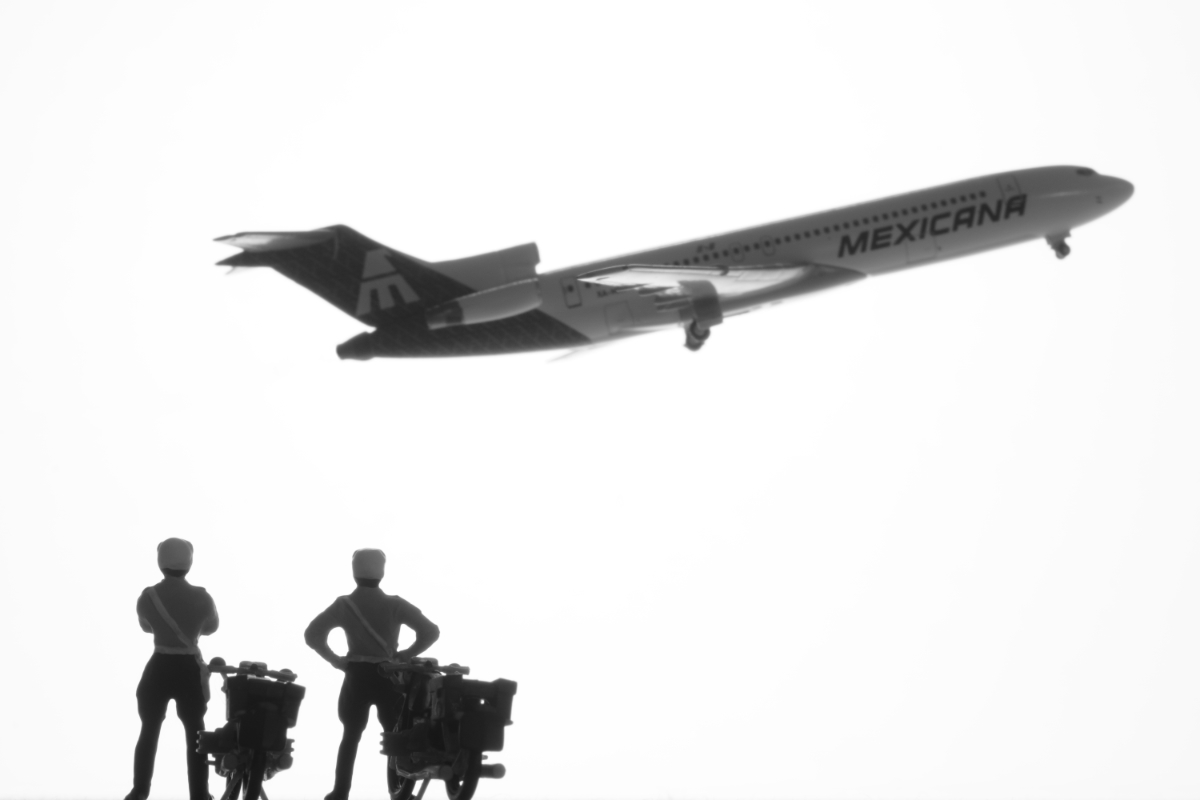
The original challenge had been “a coherent mix of toy scales” which inspired me to use the combination of 1/87 scale policemen and a 1/500 scale airplane to create the illusion of space.

Reading this week’s lens-artists challenge – which was to share “images which contain three subjects” – however, I really felt I would like to throw this one into the mix: While there are, strictly speaking, five subjects, the composition seems to suggest there are three elements: basically, two dots (or blobs?) and a line.

Pas de deux

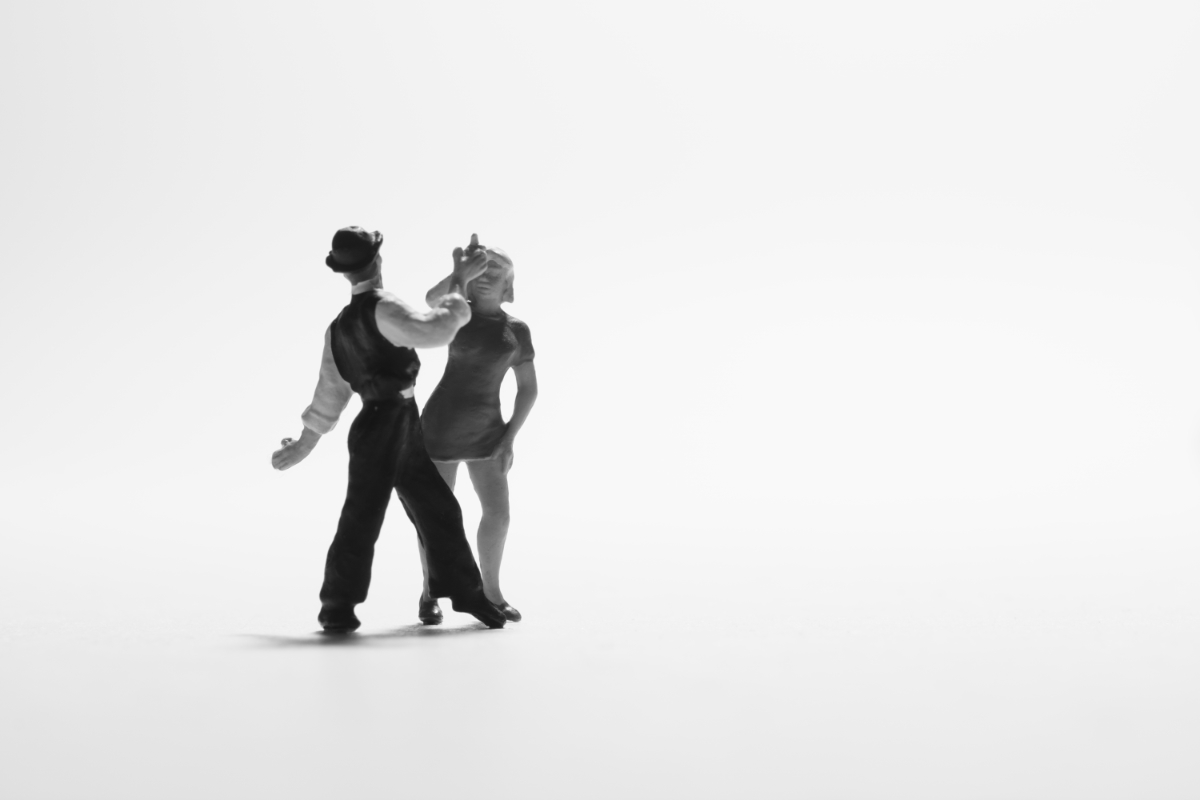
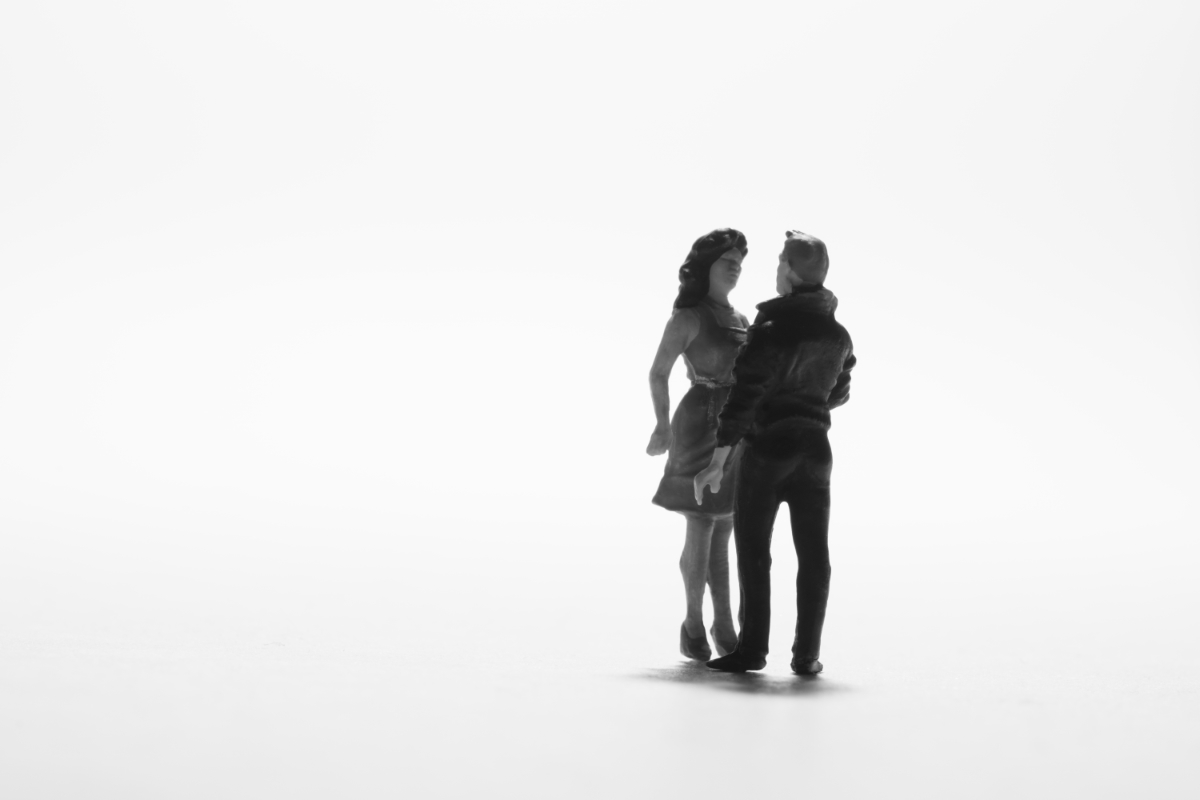
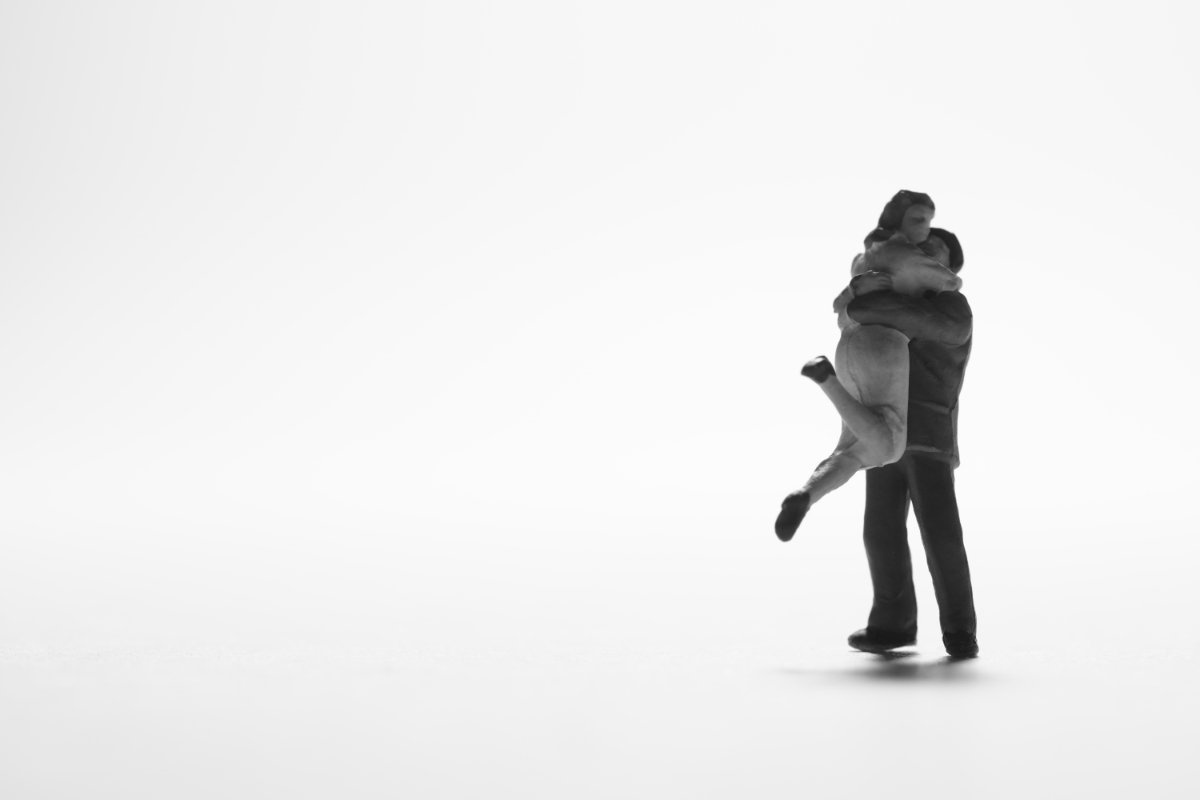
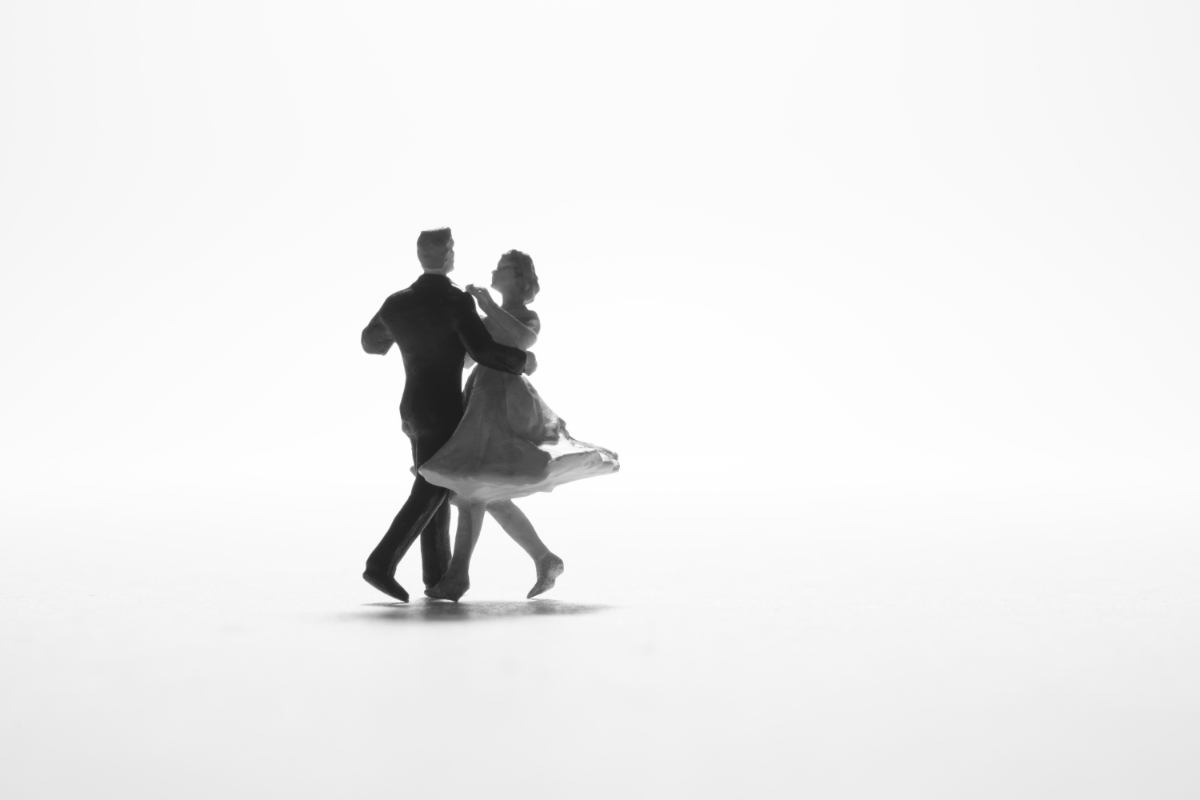
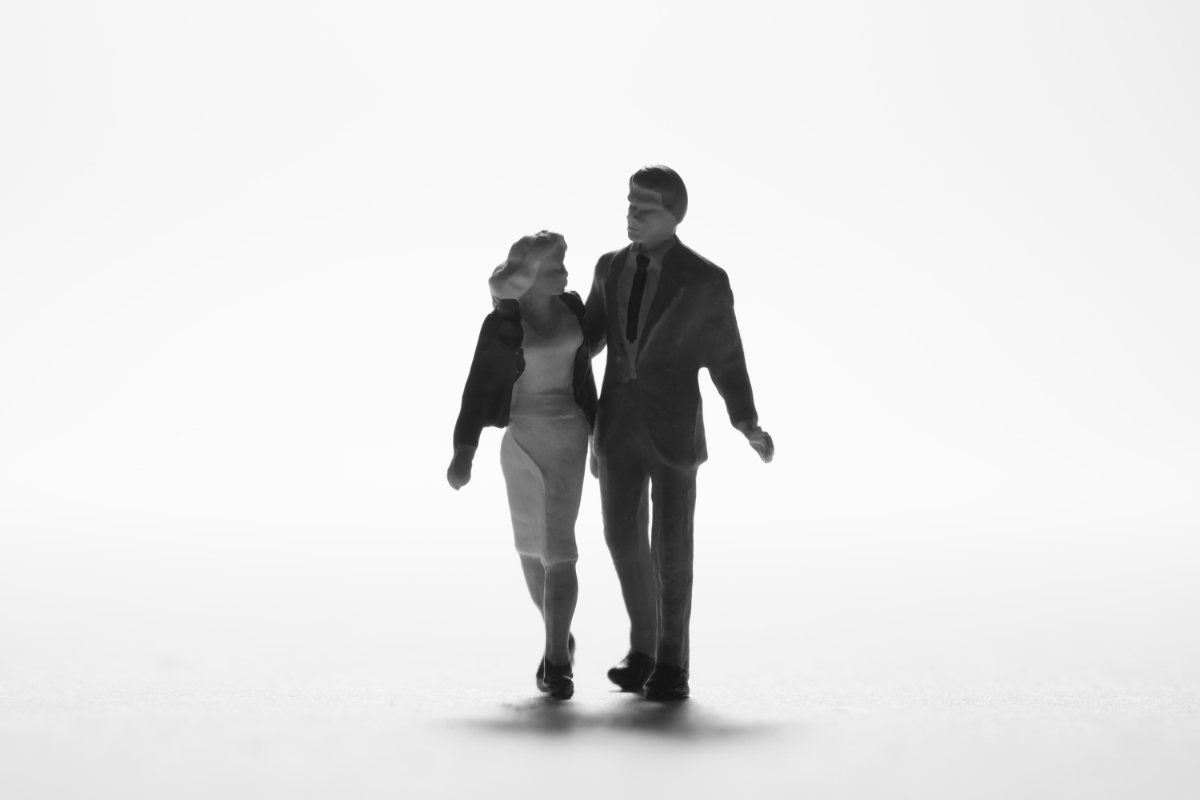
The one thing I wanted to make was an icon for a West Coast Swing community. So I tried a couple of variations and found the first picture came closest to a WCS vibe (surprisingly so because the male figure is originally supposed to be a pantomime, and the female was labeled “woman, pointing”). However, I also liked the other couples – dancing or not – so I decided to keep the pictures together as a small series.

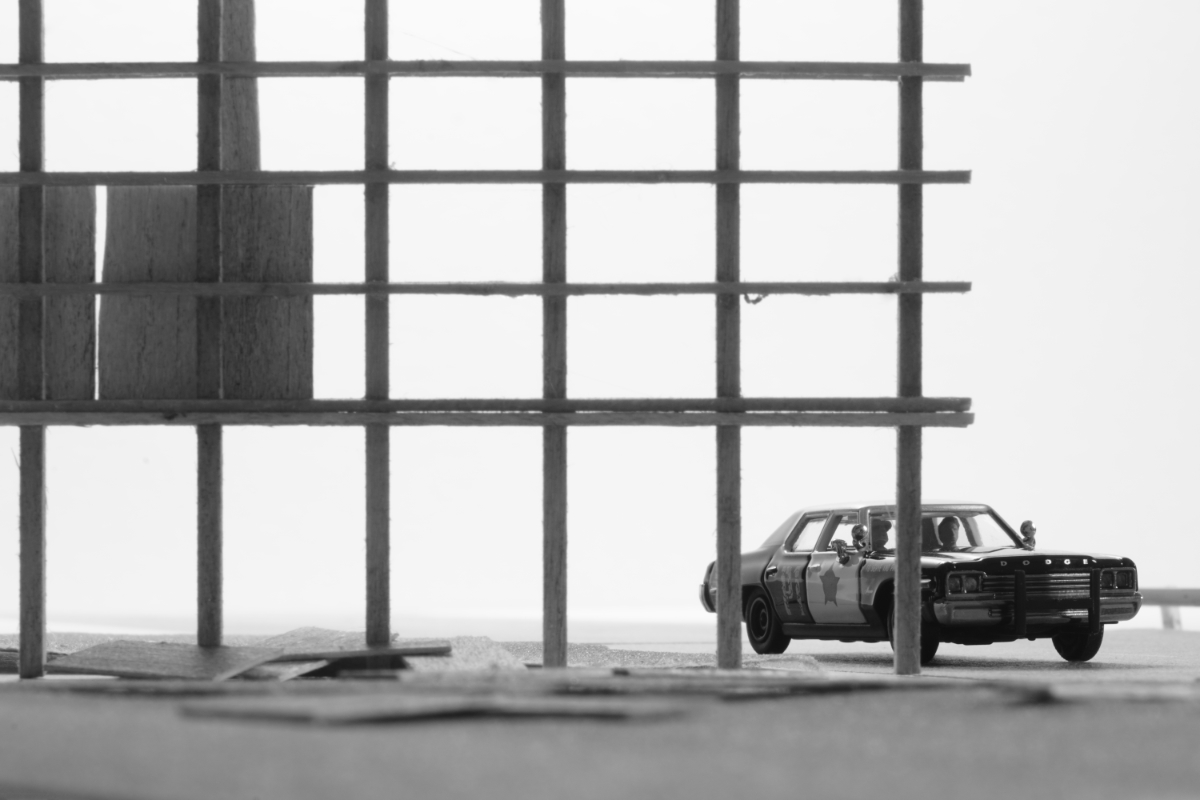
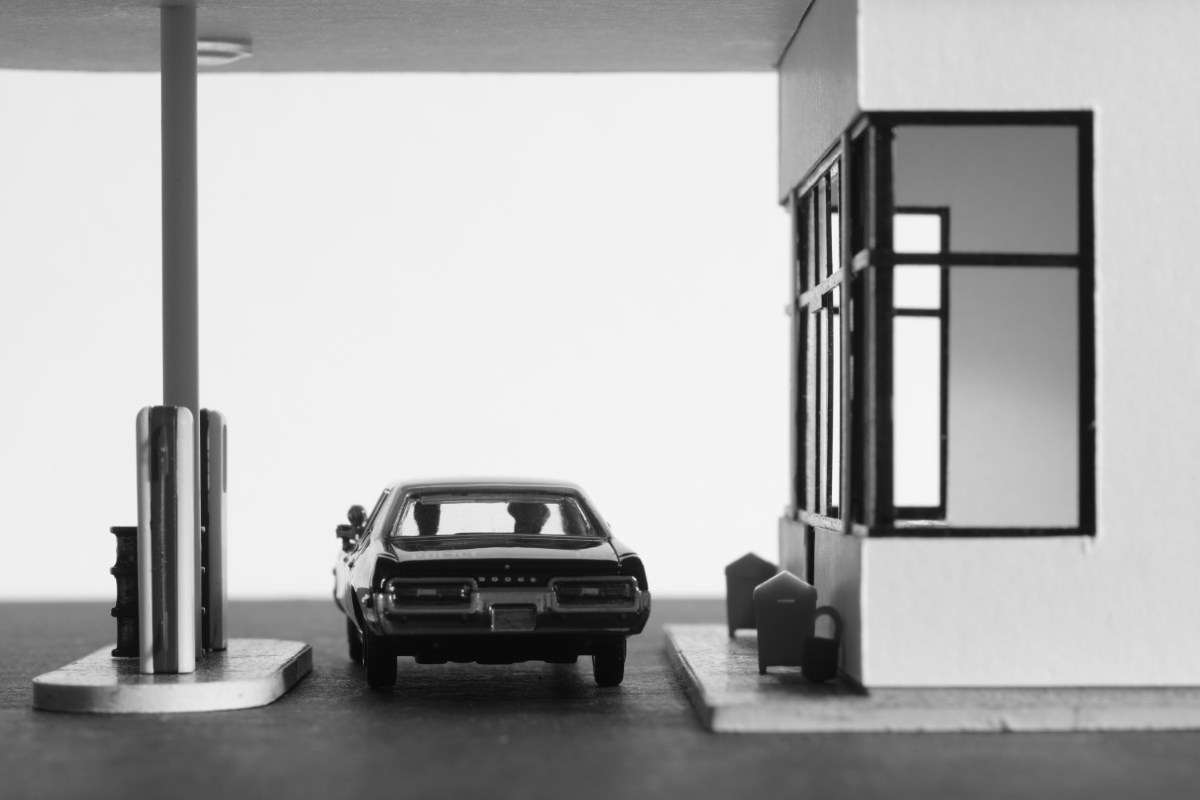
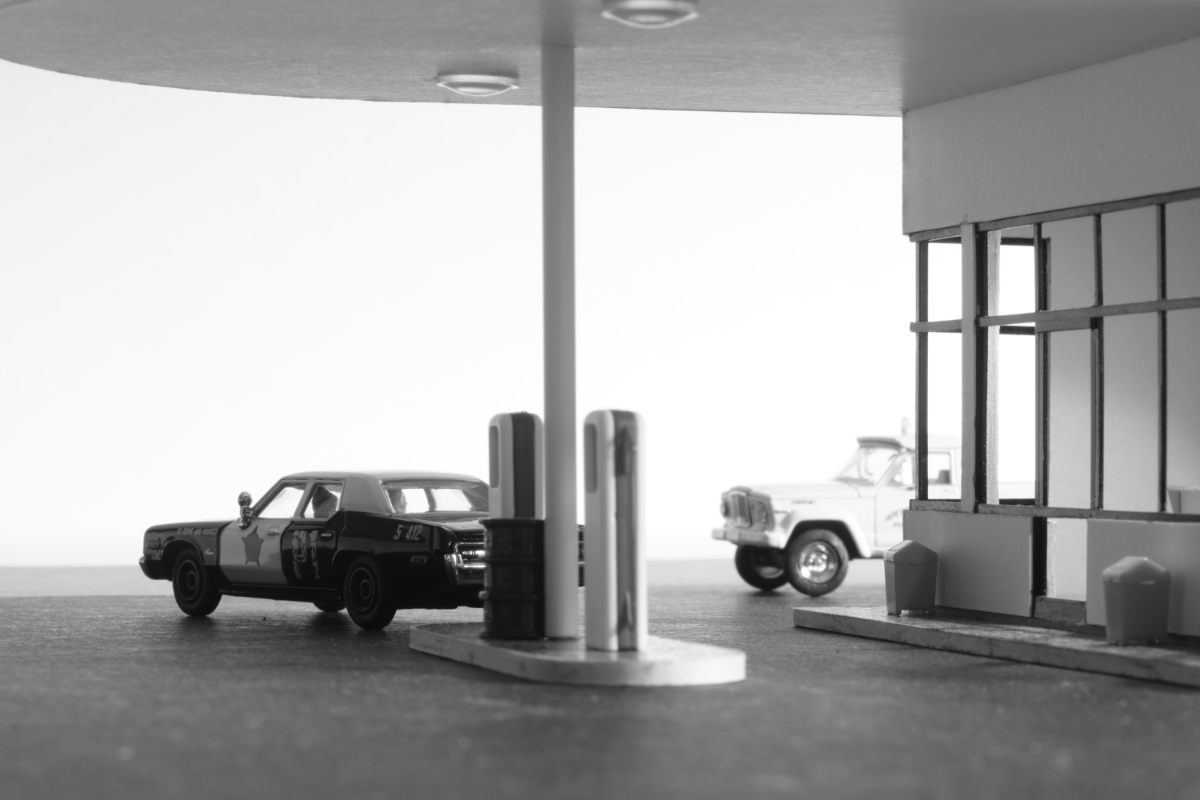
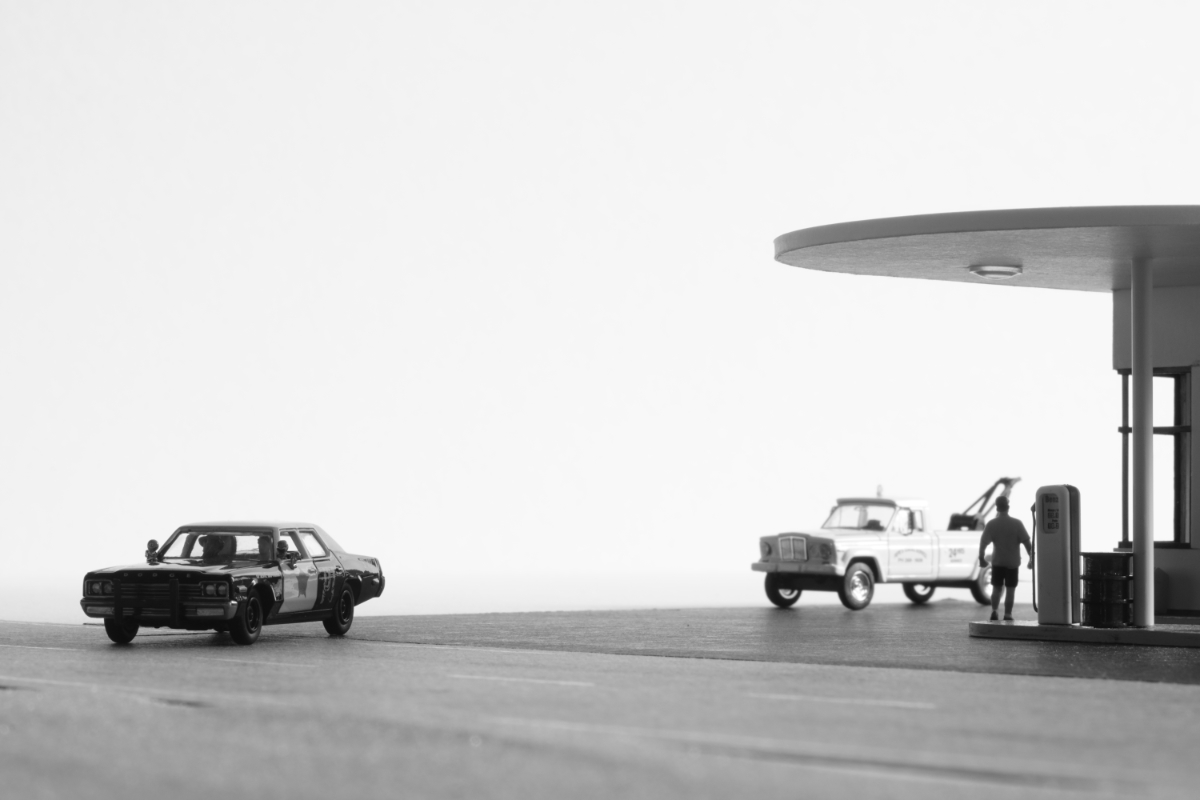
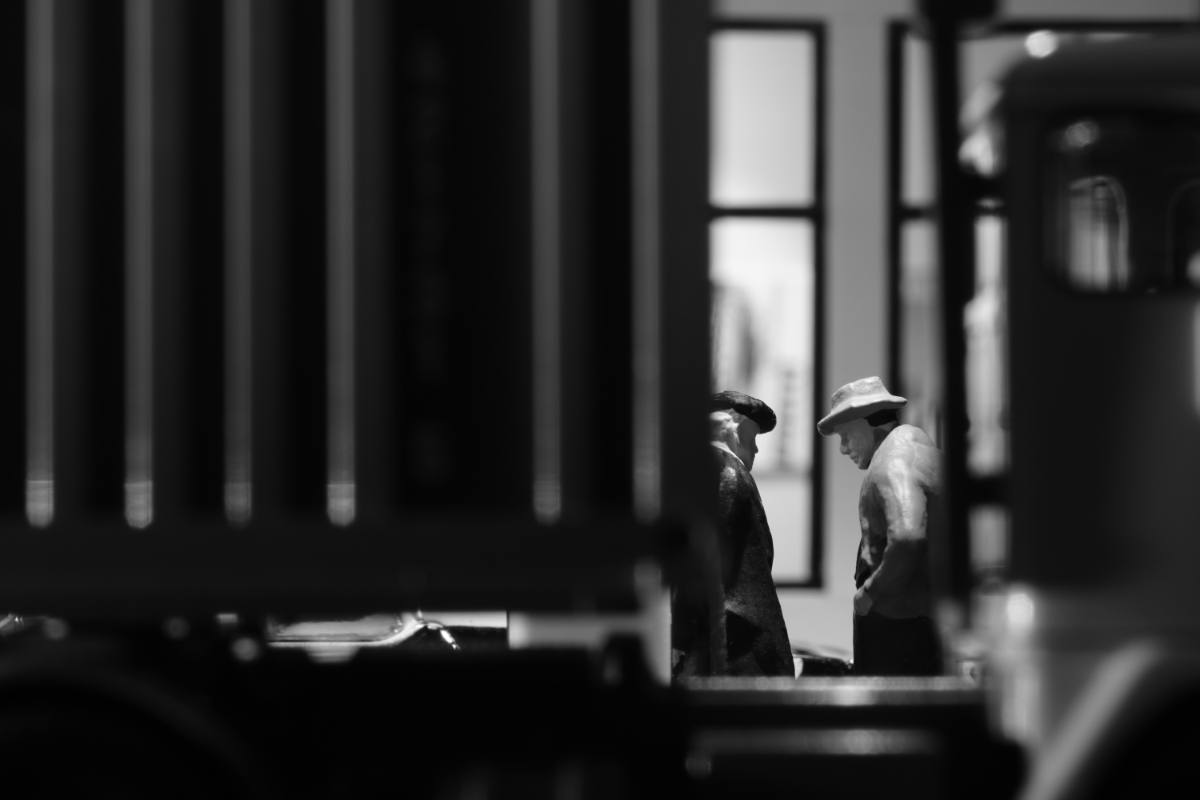
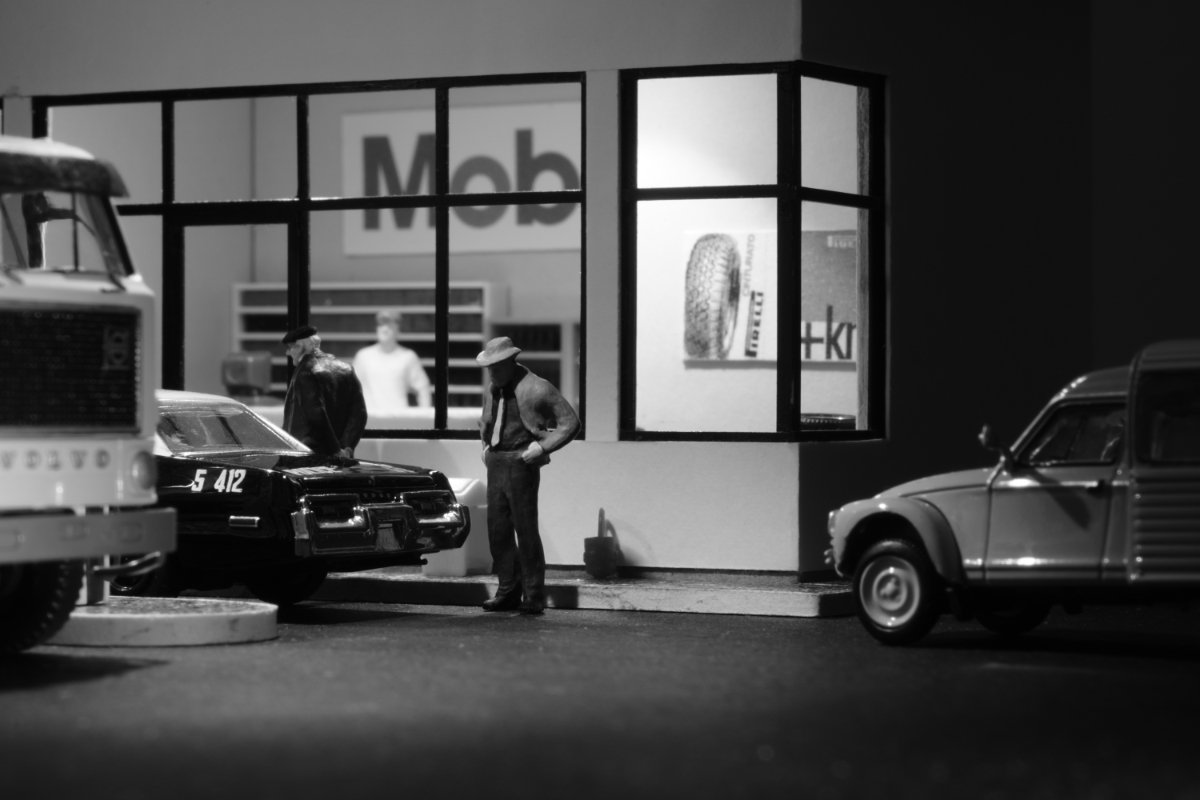
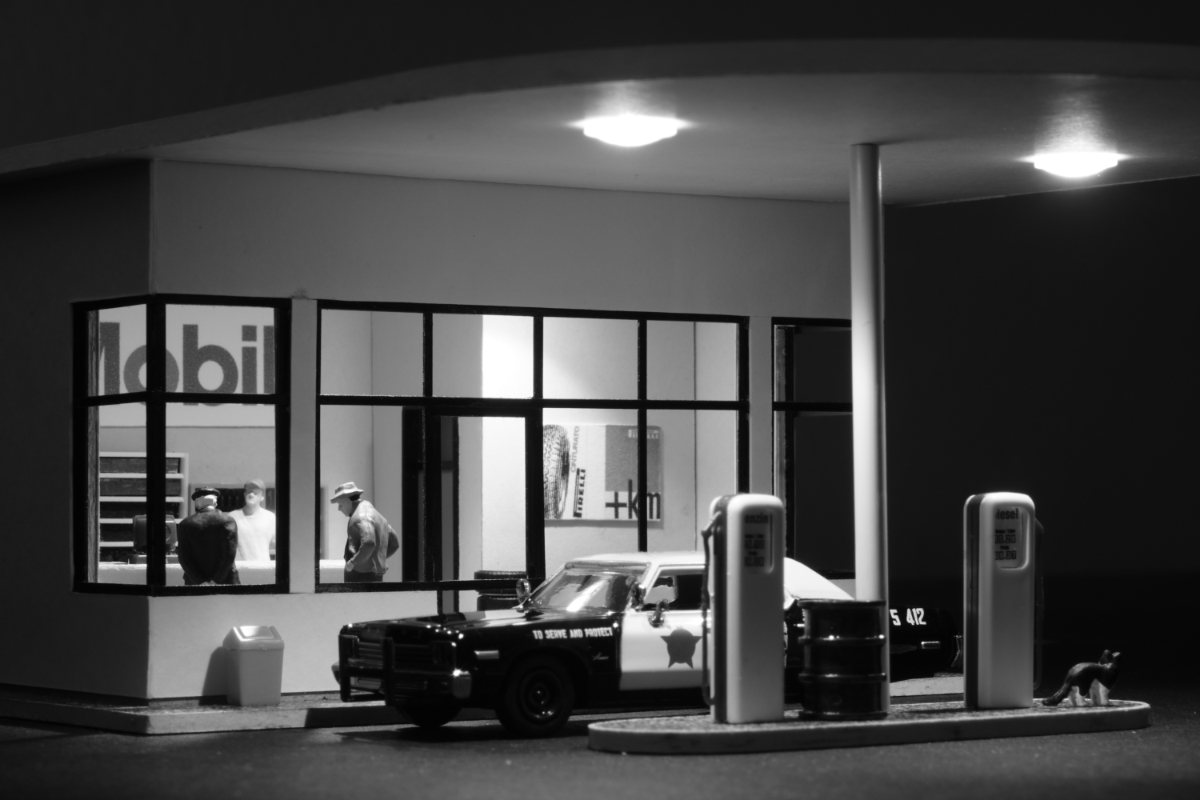
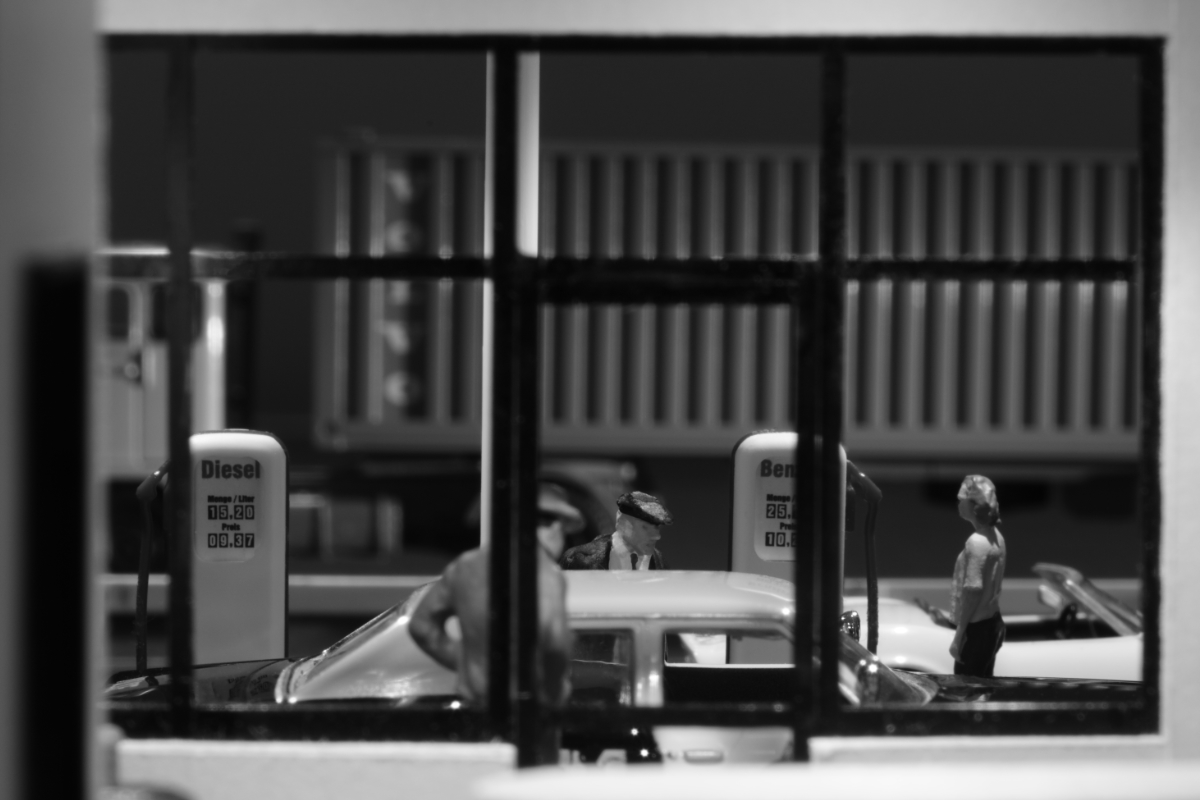
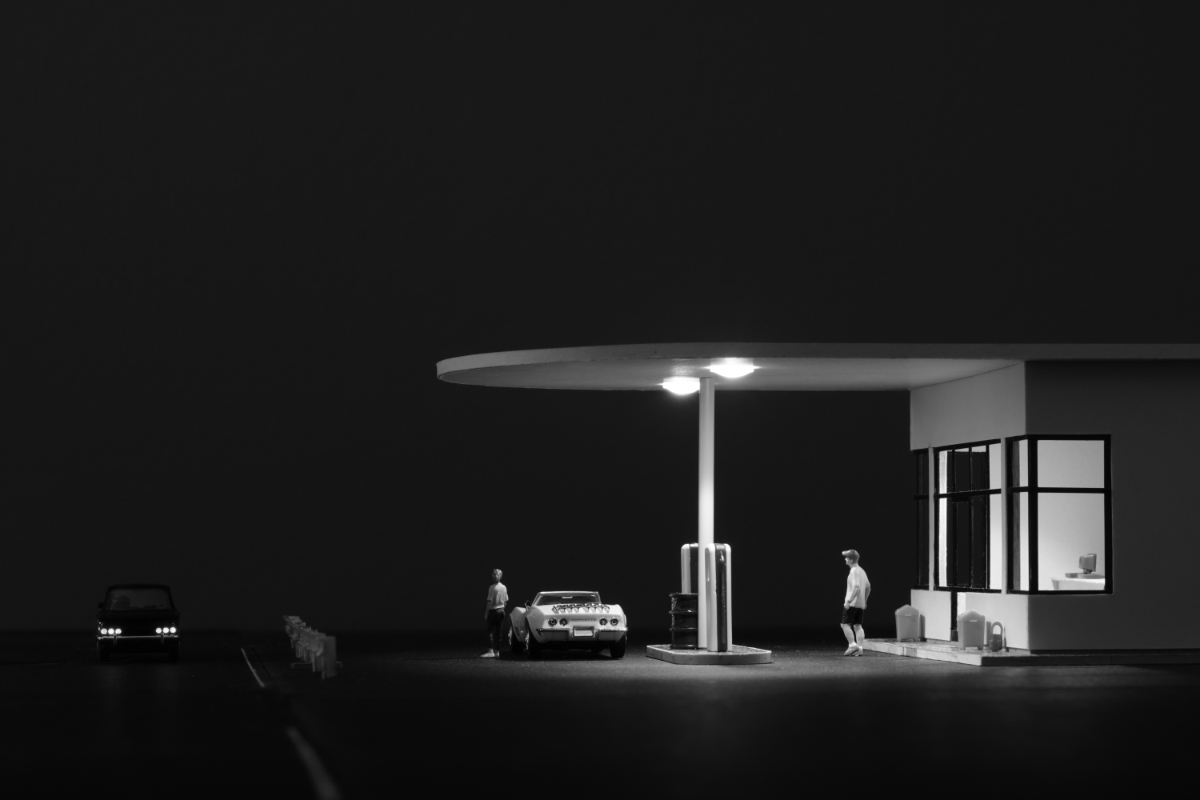
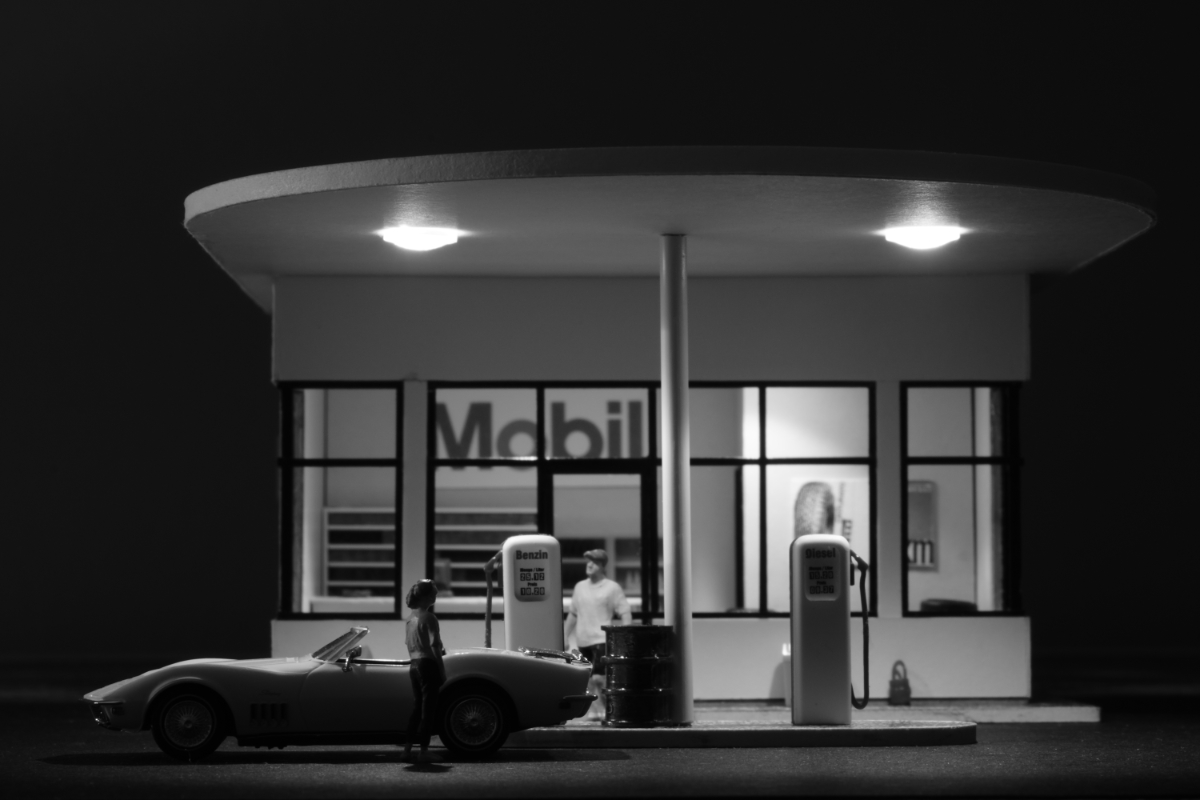
Gas Station

This may be the most sophisticated scale model I made to date.

It is based on photographs of a historic gas station in Chemnitz, Germany; it is my first build featuring this type of corner windows; and it is my first building with curved elements.

It’s also the first time I decided on a white façade because I imagined I would use the model in a high key photo, having the window frames pop out. However, since all my buildings come with built-in lighting lately, the structure also lends itself to night shots.

Sice these photos heavily rely on the use of shadow, this is my entry for this week’s lens-artists photo challenge.

Continue reading “Gas Station” →