<?xml version="1.0" encoding="utf-8"?>
<feed xmlns="http://www.w3.org/2005/Atom">
   <title>Ferdy on Films, etc.</title>
   <link rel="alternate" type="text/html" href="http://ferdyonfilms.com/" />
   <link rel="self" type="application/atom+xml" href="http://ferdyonfilms.com/atom.xml" />
   <id>tag:ferdyonfilms.com,2010://1</id>
   <updated>2010-01-02T04:23:21Z</updated>
   <subtitle>Film reviews and commentary, random thoughts on the world around us, blatant promotion of favorite charities, and other ponderables.</subtitle>
   <generator uri="http://www.sixapart.com/movabletype/">Movable Type 3.34</generator>

<entry>
   <title>Gosford Park (2001)</title>
   <link rel="alternate" type="text/html" href="http://ferdyonfilms.com/2010/01/gosford-park-2001.php" />
   <id>tag:ferdyonfilms.com,2010://1.686</id>
   
   <published>2010-01-02T00:38:05Z</published>
   <updated>2010-01-02T04:23:21Z</updated>
   
   <summary> Gosford Park (2001) Director: Robert Altman By Marilyn Ferdinand There aren’t many types or genres of film Robert Altman didn’t tackled, but at the time he and Bob Balaban conceived the idea for Gosford Park, he had yet to...</summary>
   <author>
      <name>Marilyn</name>
      
   </author>
         <category term="Mystery" scheme="http://www.sixapart.com/ns/types#category" />
   
   
   <content type="html" xml:lang="en" xml:base="http://ferdyonfilms.com/">
      <![CDATA[<p align="center"><img alt="Gosford%2011.jpg" src="http://ferdyonfilms.com/Gosford%2011.jpg" width="420" height="272" /></p>

<span style="font-size:130%;"><strong>Gosford Park (2001)</strong></span>
<i>Director</i>: Robert Altman

<em>By Marilyn Ferdinand</em> 

There aren’t many types or genres of film <a href="http://www.beachwoodreporter.com/people_places_things/robert_altman.php">Robert Altman</a> didn’t tackled, but at the time he and Bob Balaban conceived the idea for <i>Gosford Park</i>, he had yet to direct a whodunit. Thus, the idea of a traditional murder mystery at an English country estate a la Agatha Christie appealed to Altman, but as a humanist director who was always much more interested in character than plot, he characteristically turned this genre on end. 
<p align="center"><img alt="Gos%202.jpg" src="http://ferdyonfilms.com/Gos%202.jpg" width="400" height="172" /</p>

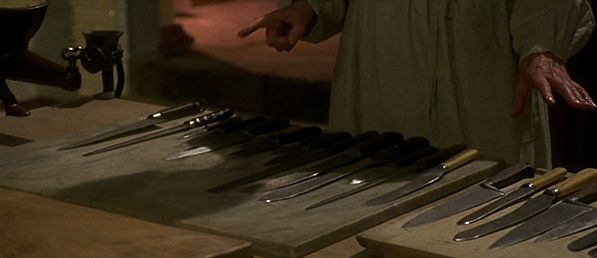
Altman gives us a film full of people with a motive for murder, and some portentous shots of bottles of poison and a scene in which the kitchen staff discover a knife is missing. Yet, we are well into the film before the fatal deed occurs. Rather than present a  straightforward crime showcasing a traditional effort at a solution, Altman prefers to handle the crime perfunctorily, in Altman’s words, as an “it was done” and concentrate on the various personal mysteries that broaden the genre into a teeming microcosm of passions and betrayals. As an added bonus, Altman manages to subvert the genre entirely by turning its imposing police inspector into a minor character without a detecting bone in his body.

<p align="center"><img alt="site_28_rand_2006282657_gosford_park1_maxed.jpg" src="http://ferdyonfilms.com/site_28_rand_2006282657_gosford_park1_maxed.jpg" width="400" height="223" /></p>

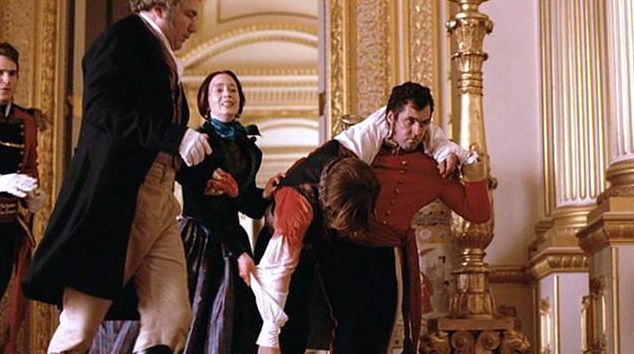
“The butler did it,” Morris Weissman (Bob Balaban) says to an unseen, unheard Hollywood honcho in California just as Mr. Jennings (Alan Bates), butler at the English country estate where Weissman is a weekend guest, passes by. Weissman produces Charlie Chan pictures and has wrangled an invitation to do research for his next film through movie star Ivor Novello (Jeremy Northam), who is related to the head of the household, Sir William McCordle (Michael Gambon). Here is Altman indulging his perennial delight in sending up the denizens of Hollywood, as Weissman, a homosexual vegetarian who would have taken to cellphones like a fly to shit, exists oblivious to his insignificance in this aristocratic, snobbish, hypermasculine gathering of flesh eaters who intend to shoot dozens of grouse and pheasants from the sky as part of their weekend recreation.

<p align="center"><img alt="gosford_park_6.jpg" src="http://ferdyonfilms.com/gosford_park_6.jpg" width="400" height="261" /></p>

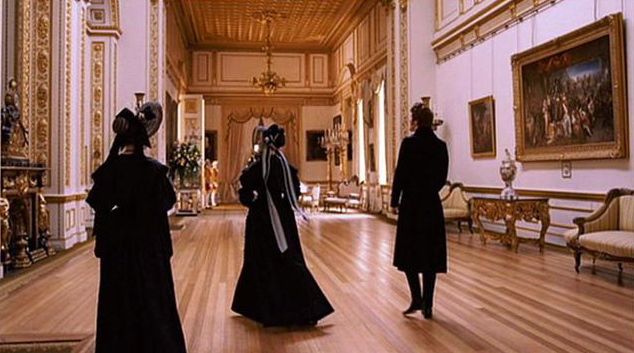
Weissman and his valet, Henry Denton (Ryan Phillippe), seem to be the only ones at the McCordle mansion who don’t seem to know where they fit in the grand scheme of things. Yet England is a country in transition as well. The relics of the British Empire are still evident—the massive estate, the hereditary aristocrats and their servants who descend on it for the weekend, the house staff who manage the weekend party in the “old ways” by calling visiting servants by the surname of their employers and seating them according to their employers’ rank at the below-stairs dinner table. Yet, the time is the 1930s, and England has lost its cocksure vigor in the debacle of the Great War. When the subject of the war comes up, William’s statement, “I did my part,” means that he made himself rich enough in business to buy himself some class, namely his blueblood wife Sylvia (Kristin Scott Thomas).  Their visiting relatives are near financial ruin or dependent on William’s largesse to maintain the style they previously assumed as a birthright.  And there is nothing meaner than elites in the throes of losing their entitlements.

<p align="center"><img alt="gosfordpark.jpg" src="http://ferdyonfilms.com/gosfordpark.jpg" width="400" height="258" /></p>

The oldest of the old guard is Lady Constance Trentham (Maggie Smith), who makes her new lady’s maid Mary Maceachran (Kelly Macdonald) stand unprotected in a bone-chilling downpour as she herself is escorted under an umbrella into her coach; she forces the young woman out again during the journey to open a stubborn thermos for her. Constance is as mean as a spitting snake, insisting Mary share house gossip with her and cutting her “inferiors” down to size. For example, she loudly criticizes the “common” Mabel Nesbitt’s (Claudie Blakely) limited wardrobe, though Mabel can’t afford to expand it because her fortune-hunting husband Freddie (James Wilby) has run through all the money settled on her by her merchant father. Freddie is romancing Sylvia and William’s daughter Isobel (Camilla Rutherford), and appeals to her for a loan. Mabel comforts herself listening to Novello play and sing his own tunes, as Constance snipes from the bridge game that he never knows when to stop. 

<p align="center"><img alt="gos%204.jpg" src="http://ferdyonfilms.com/gos%204.jpg" width="400" height="272" /></p>

Sylvia hates her husband, confiding that she and her sister Lavinia (Natasha Wightman) cut cards to see who would get him. Sylvia encourages Denton to come to her bedroom, and is indifferent to William’s affair with Elsie (Emily Watson), Isobel’s lady’s maid. Lavinia’s nearly bankrupt husband Tony (Tom Hollander) is desperate to have William finance a business venture in the Sudan, and Raymond Stockbridge (Charles Dance) insinuates that he would like to be hired as a translator and cultural expert. None of their machinations seem to matter, however, as William has decided to pull out of the scheme altogether. It is only after this drawn-out look at the large cast of characters and the minutely observed workings of an old-style aristocratic household that Altman finally decides to kill someone.

<p align="center"><img alt="gos%203.jpg" src="http://ferdyonfilms.com/gos%203.jpg" width="400" height="176" /></p>

Altman is keenly interested in examining the dynamics of power. In addition to familial struggles and old versus new money, he sets his sights on the ruling class versus the servant class and men versus women. Strikingly, we see that there is an entire industry dedicated to addressing the smallest private whim of a single family. We watch the McCordles and their guests assemble for a meal and some leisurely lounging around, and then follow the large staff of resident and guest servants working extremely hard to create this leisure of their “betters.” An entire room is devoted to cleaning and shining their employers’ shoes. A shortage of homemade marmalade has housekeeper Jane Wilson (Helen Mirren) concerned. Yes, the servants are paid for their services, but they are, nonetheless, victims of the imbalance of power in the relationship. Henry Denton may come to Sylvia’s bed chamber, but he would be instantly sacked if he were discovered in the wing that houses the female servants. When the servants are betrayed by Denton, they exact a small revenge on him. At a time of socialist agitation across Europe and the United States, it’s easy to see the foolishness of Inspector Thompson (Stephen Fry) in dismissing the servants as suspects for not “being close” to the victim.  

<p align="center"><img alt="Gos%201.jpg" src="http://ferdyonfilms.com/Gos%201.jpg" width="400" height="191" /></p>

At the same time, male dominance is a problem both above and below stairs. William is a serial seducer of both the females working in his factories and those on his house staff. Elsie confides to Mary that William has numerous bastards from factory workers he forced to give up their babies or face dismissal. Her affection for him gets the better of her when she defends him from Sylvia’s attacks at the dinner table; she immediately flees the dining room and prepares to leave the household for this breach of etiquette, not expecting William to intercede on her behalf. Even Robert Parks (Clive Owen), Lord Stockbridge’s valet, presses a kiss on Mary. Despite what appears to be a small, but mutual attraction between the pair—and our desire as an audience to see that attraction acted upon—this kiss isn’t that different from Denton trying to force himself on the inexperienced Mary. In this film, sex is largely a commodity and an instrument of domination. 

<p align="center"><img alt="Gosford%209.jpg" src="http://ferdyonfilms.com/Gosford%209.jpg" width="400" height="260" /></p>

Altman’s gift for large set pieces is beautifully on display. The hunting party is rhythmically choreographed, as we watch the drummers flush the birds from the bushes and into the sky, only to spin toward the ground following a rifle report. Balaban plays the perfect buffoon as he, the vegetarian in a fur coat, watches the slaughter with horror and then panics when several slain birds nearly fall on top of him. The viciousness of the hunt reflects as little else can the ruthlessness of the class of men who indulge in it as sport.

<p align="center"><img alt="northam_l.jpg" src="http://ferdyonfilms.com/northam_l.jpg" width="400" height="300" /></p>

Much more appetizing is the extended performance of Jeremy Northam singing and playing several charming tunes by Ivor Novello. The servants gather at the edges of the drawing room and in the kitchen stairwell to listen and dance, scurrying away whenever one of the guests walks nearby or through a door. Music is a staple in many of Altman’s films, and I’m inclined to think that he asked Julian Fellowes to write Novello into the script just so that he would have a chance to use his songs and air Northam’s genuinely wonderful voice and interpretive skills. But Fellowes shrewdly uses the set piece as the innocent interlude during which to stage the murder.

<p align="center"><img alt="gosford_park_2.jpg" src="http://ferdyonfilms.com/gosford_park_2.jpg" width="400" height="266" /></p>

It was also extremely clever to take the bloom off the image of the intuitively brilliant British detective by making Fry’s character a complete imbecile who exasperates the diligent Constable Dexter (Ron Webster) by failing to understand what a clue is. Dexter sees a broken cup and saucer on the ground and calls it to Det. Thompson’s attention, only to be told that the servants will clean it up. Fry, a skilled comic, milks these scenes for all they’re worth, and provides a needed contrast with the real detective in the house, one with a true depth of understanding about human nature.

<i>Gosford Park</i> represents another superior ensemble piece in the Altman oeuvre as well as another believable world created down to the smallest detail. While his technique of overlapping dialogue can be an impediment to those not familiar with a variety of British accents, its effectiveness in breathing life into film is as great as ever. <i>Gosford Park</i> is delightful and deep.  <span style="font-family:webdings;">l</span>]]>
      
   </content>
</entry>
<entry>
   <title>Cleopatra (1963)</title>
   <link rel="alternate" type="text/html" href="http://ferdyonfilms.com/2009/12/cleopatra-1963.php" />
   <id>tag:ferdyonfilms.com,2009://1.685</id>
   
   <published>2009-12-28T18:51:35Z</published>
   <updated>2009-12-31T04:14:48Z</updated>
   
   <summary> Cleopatra (1963) Director/Screenwriter: Joseph L. Mankiewicz By Roderick Heath It probably began as an idea tossed about the luncheon table during some, long alcohol-lubricated, executive sojourn—make a film about history’s most famous beauty starring today’s most famous beauty, Elizabeth...</summary>
   <author>
      <name>Marilyn</name>
      
   </author>
         <category term="Historical" scheme="http://www.sixapart.com/ns/types#category" />
   
   
   <content type="html" xml:lang="en" xml:base="http://ferdyonfilms.com/">
      <![CDATA[<p align="center"><img alt="Cleo3.jpg" src="http://ferdyonfilms.com/Cleo3.jpg" width="420" height="177" /></p>

<span style="font-size:130%;"><strong>Cleopatra (1963)</strong></span>
<i>Director/Screenwriter</i>: Joseph L. Mankiewicz

<em>By Roderick Heath</em> 

It probably began as an idea tossed about the luncheon table during some, long alcohol-lubricated, executive sojourn—make a film about history’s most famous beauty starring today’s most famous beauty, Elizabeth Taylor, kind of a <i>Ben-Hur</i> (1959) with more sex appeal. And so may have begun the making of 20th Century Fox’s colossal folly, a melodrama in itself. Filming began with Peter Finch playing Julius Caesar and Stephen Boyd as Marc Antony, on sets built at Pinewood Studios in England, in a climate that caused a recurrence of Taylor’s chronic pneumonia. This setback helped to hold up the shoot for months, necessitating relocation of the production to Cinecitta in Rome, and Finch and Boyd were replaced with Rex Harrison and Richard Burton. Lacking a workable screenplay, the producers brought in Joseph L. Mankiewicz, four-time Oscar winner and a late choice to save the project, to replace the fired Rouben Mamoulian. Mankiewicz often wrote scenes the night before they were shot. <i>Cleopatra</i> finally cost so much (Fox had to sell part of its studio for real estate development to pay the bill) it managed to be both the biggest hit of the ’60s and nearly the biggest flop, finally eking out a profit after a number of years. The execs may well have thanked the movie gods that they made as much back as they did thanks to the publicity generated by Burton and Taylor’s legendary on-set romance. 

<p align="center"><img alt="Cleo12.jpg" src="http://ferdyonfilms.com/Cleo12.jpg" width="400" height="181" /></p>

The resulting movie has been largely dismissed as a lumbering and bloated misfire. And it is that, but it’s still a fascinating and underrated film for being generally far more ambitious, not just in scale of production but in narrative scope, than even its rivals in the genre of the epic. At the very least, it can be seriously regarded as a superior Joe Mankiewicz film, his most cinematically expansive work. Blockbuster cinema of the ‘50s and ’60s still generally has a hard time of it in terms of critical appreciation, but I admit some nostalgia for an era of filmmaking when event movies meant tackling meaty historical subjects with grand productions rather than bland CGI battles between toy robots.

<p align="center"><img alt="Cleo6.jpg" src="http://ferdyonfilms.com/Cleo6.jpg" width="400" height="181" /></p>

Moreover, <i>Cleopatra</i> displays the split personality of many of those mega-productions on the most gloriously erratic of scales. Making epics had a different meaning in this period than it had in the ’30s, when it entailed DeMille, dancing girls, and hilarity-inducing historical invention. Mankiewicz’s <i>Cleopatra</i> is, by and large, historically accurate, and more than that, presents in Mankiewicz’s script a conflation of some serious literary sources. <i>Cleopatra</i> is not a better film than, say, <i>Spartacus</i> (1960), but it is in many ways a more complex and intriguing drama. Mankiewicz had hoped that Fox would release the film in two parts, but the studio insisted on one colossal hunk, slicing out a lot of substance from the script that, rather than streamlining the work, rendered its development clumsier and making the last hour gracelessly protracted.

<p align="center"><img alt="Cleo8.jpg" src="http://ferdyonfilms.com/Cleo8.jpg" width="400" height="163" /></p>

The bifurcated structure is still, however, more or less intact, with the first half detailing Caesar’s coming to Egypt in pursuit of his enemy Pompey and to sort out the civil war between Cleopatra and her brother Ptolemy (Richard O’Sullivan). He falls in love with and marries her, and they have a son, Caesarion. He returns to Rome with Cleopatra’s idea that he take up the mantle of Alexander the Great and attempt to erect a worldwide empire, ringing in his ears. As the dictator of Rome, the example of her rule by divine right is all too tempting to him, finally inspiring his enemies to assassinate him. The second half accounts her disastrous romance and alliance with Mark Antony, their defeat at Actium, and their suicide in preference to being captured by rapacious rival Octavian (Roddy McDowall).

<p align="center"><img alt="Cleo9.jpg" src="http://ferdyonfilms.com/Cleo9.jpg" width="400" height="202" /></p>

<i>Cleopatra</i> presents its titular character as neither outright femme fatale nor a victimised martyr, but as an anti-heroine admirable in her ardour and determination, but disturbing in her belief in her own divinity, a relentless self-promoter with a thirst for power who has monstrous hissy fits when other people use her in the same way she uses them. The depth of Mankiewicz’s engagement with the epoch is quite absorbing, as he illustrates the burning of the library of Alexandria as a side effect of Caesar’s campaigning, which he’s only vaguely embarrassed by, illustrating a barbed notion of militarist zeal overwhelming cultural iconography. Cleopatra is constantly accompanied by her Greek tutor Sosigenes (Hume Cronyn), who laments the library’s burning and whose murder by Octavian signals the commencement of an age of dictatorship. How many other movies like this spared time for moments such as when Caesar and Cleopatra discuss their liking for the poet Catullus in spite of Catullus’ well-known contempt for Caesar? 

<p align="center"><img alt="Cleo11.jpg" src="http://ferdyonfilms.com/Cleo11.jpg" width="400" height="169" /></p>

The first half sticks with some fidelity to the template of George Bernard Shaw’s <i>Caesar and Cleopatra</i> (which had previously been filmed in 1946 starring Claude Rains and Vivien Leigh), as the two titanic figures taunt and tantalise each other, and try to outwit the traps set for them by Ptolemy’s noxious courtiers and warrior hordes. The second half, naturally, takes its cues from Shakespeare’s <i>Antony and Cleopatra</i> and from Plutarch’s history. The film’s greatest asset is Harrison’s strident performance of Caesar, full of high wit and feeling, and warming up for his Oscar-winning turn as Henry Higgins the following year. He wraps his lips around Mankiewicz’s sharp dialogue with aplomb, refusing the offer of a slimy Egyptian eunuch Pothinus (Grégoire Aslan) to escort him with a disgusted “Anyone but you!” or beadily eyeing Cleopatra after she suggests she’s done nothing but rub him the wrong way, stating, “I’m not sure I want to be rubbed by you at all, young lady.” And the same goes for the remarkable depth of the supporting cast: Martin Landau as Caesar and Antony’s loyal offsider Ruffio, Andrew Keir as Octavian’s tough-minded henchman Agrippa, George Cole as Caesar’s mute servant Flavius, Michael Hordern as Cicero, the teenaged Francesca Annis and Isabel Cooley as Cleopatra’s favourite handmaidens Iras and Charmion, Robert Stephens as stalwart soldier Germanicus, and particularly MacDowall’s inspired ham of an Octavian. 

<p align="center"><img alt="Cleo4.jpg" src="http://ferdyonfilms.com/Cleo4.jpg" width="400" height="188" /></p>

But the faults are as marked as the virtues. The production is gorgeous to look at, almost turning into something like the science fiction film set in the past as Fellini wanted his <i>Satyricon</i> to be, with its lustrous set design suggesting the ancient world was a helluva lot prettier than you ever guessed. But there’s also a variety of high-camp pizzazz infusing the proceedings, especially the DeMille-via-Playboy evocations of Cleo’s palatial splendour, constant changes of costume, and her cohort of pneumatic multiracial gal pals dispensing baths and massages. Mankiewicz keeps suggesting ironic layers to the gilded spectacle, emphasising that Cleopatra is, in essence, a showwoman of statecraft who knows how to dazzle statesmen and the populace alike. Having overheard Caesar’s aides bandy stories of her immorality, she contrives artfully to have Caesar come across her lying around semi-naked, surrounded by her beautiful bevy of servants, to give him an eyeful. The film’s split personality reaches an apogee in the staggeringly silly recreation of Cleopatra’s arrival in Rome. Mankiewicz makes clear that event is Cleopatra’s greatest coup of political theatre, but it’s also a splashy opportunity for Hollywood hype: Hermes Pan’s choreography of scantily dressed dancers shaking their boobs at the screen is less an evocation of classical decadence than a reminder of the Hollywood variety.

<p align="center"><img alt="Cleo2.jpg" src="http://ferdyonfilms.com/Cleo2.jpg" width="400" height="181" /></p>

Another not exactly minor problem is theoretically indispensable star Taylor. Even at her best, in films like <i>Who’s Afraid of Virginia Woolf?</i> (1966), Taylor was a limited, archly affected actress, and she’s downright clumsy in trying to portray a woman of titanic guile and intellect to match the ego she wears on her sleeve. Not that there were many rivals of the era who might have provided the necessary looks, charisma, and innate, exotic complexity: the closest I could come up with were Irene Pappas, or possibly, in some glorious alternative universe, Barbara Steele (legend has it Dorothy Dandridge was also considered). But Taylor sure ain’t it, wading in with a grating mid-Atlantic accent brayed in graceless tones, before offering a scene of nihilistic rage when she finds Antony has married Octavian’s sister (Jean Marsh) for political reasons and trashes her bedroom; this display completely misses whatever emotion it was supposed to inspire other than mild hilarity. Taylor’s only decent moments come towards the end when she quietens down. Nor does it help that Burton flounders through much of the film, but to a certain extent, his look of bewildered, almost exhausted confusion suits his character, characterised as a macho sot who goes to pieces when he realises he’s not the man Caesar was. But it also sees Burton reduced to throwing a lot of his pet actor tricks at the screen with little real investment in the part.

<p align="center"><img alt="Cleo7.jpg" src="http://ferdyonfilms.com/Cleo7.jpg" width="400" height="181" /></p>

That neither actor is at anything like their best saps the dramatic force that the project ought to have possessed. Nonetheless, Mankiewicz’s hoped-for balance in portraying Caesar as brought down by external forces and Antony as consumed by internal faults emerges largely intact, as well as that of Cleopatra as a genius politician who finally commits fearlessly to a self-destructive path rather than submit to a merely macho, Machiavellian age. She’s presented as both an arbiter of single-minded rule by right and an heir to Greek and Egyptians cultures; she’s fascinated by Alexander’s ideal of uniting the peoples of the Earth under a common law and tongue and achieving peace, only to run into the less equitable version of the same idea welling from Octavian Augustus. Inevitably, their drama is romanticised—excising how, for instance, they actually offended Roman public opinion by murdering Cleopatra’s sister in a temple to ensure Cleopatra’s grasp on her throne. But historical storytelling is always a hard task of picking compelling narratives out of the mess of history.

<p align="center"><img alt="Cleo1.jpg" src="http://ferdyonfilms.com/Cleo1.jpg" width="400" height="181" /></p>

Mankiewicz was not a particularly forceful camera handler, but he pulls off a few excellent moments. As Antony gives his oration to the crowd outside the Forum over Caesar’s dead body,  Mankiewicz has his words drowned out by the outrage thrum of the crowd piling furniture onto Caesar’s pyre, as the camera drifts back in a long crane shot to find Flavius weeping the truest tears for his dead master. When he’s left alone by his troops, Antony saddles up in one corner of the frame whilst an endless number of enemy legionnaires streams over a hill in the distance. When Caesar is assassinated, Mankiewicz has the scene projected, as a vision a priestess (Pamela Brown) conjures, over Cleopatra’s distraught face. And there’s the affecting shot of Cleopatra’s ship fleeing Rome after the assassination disappearing into the darkness.

<p align="center"><img alt="Cleo13.jpg" src="http://ferdyonfilms.com/Cleo13.jpg" width="400" height="181" /></p>

But the film stalls on its lack of action, skipping around the Battle of Philippi and then offering some rather stodgy shipboard dueling in a Battle of Actium that’s not half as punchy as the similar set piece in <i>Ben-Hur</i>. Then we have the oddly wasteful sequence in which Antony confronts Octavian’s army single-handedly after his own soldiers desert, frustrated by their refusal, at Octavian’s order, to kill him, thus forcing him into the less martially vainglorious recourse of stabbing himself in the stomach and expiring in Cleopatra’s arms. All that’s left for Cleopatra and her handmaidens is take the bite of the asp and cheat Octavian of his hoped-for prize in a close replication of Plutarch’s account. Her end, like the film, is a stab at making the best of an impossible situation, and likewise Mankiewicz’s <i>Cleopatra</i> retains a more than a little of her dignity. <span style="font-family:webdings;">l</span>]]>
      
   </content>
</entry>
<entry>
   <title>Black Christmas (1974)</title>
   <link rel="alternate" type="text/html" href="http://ferdyonfilms.com/2009/12/black-christmas-1974.php" />
   <id>tag:ferdyonfilms.com,2009://1.684</id>
   
   <published>2009-12-23T15:41:50Z</published>
   <updated>2009-12-24T05:38:23Z</updated>
   
   <summary> Black Christmas (1974) Director: Bob Clark By Roderick Heath Bob Clark was an exceptionally unlucky filmmaker whose career degradation came about mostly thanks to his association with the crass hit Porky’s (1981), leading to some truly embarrassing late career...</summary>
   <author>
      <name>Marilyn</name>
      
   </author>
         <category term="Horror/Eerie" scheme="http://www.sixapart.com/ns/types#category" />
   
   
   <content type="html" xml:lang="en" xml:base="http://ferdyonfilms.com/">
      <![CDATA[<p align="center"><img alt="bchris5.jpg" src="http://ferdyonfilms.com/bchris5.jpg" width="420" height="237" /></p>

<span style="font-size:130%;"><strong>Black Christmas (1974)</strong></span>
<em>Director</em>: Bob Clark

<em>By Roderick Heath</em>

Bob Clark was an exceptionally unlucky filmmaker whose career degradation came about mostly thanks to his association with the crass hit <i>Porky’s</i> (1981), leading to some truly embarrassing late career work, almost but not entirely erasing the genuinely eerie and cinematically innovative work he did as a horror director in the ’70s, like his uniquely atmospheric Sherlock Holmes versus Jack the Ripper epic <i>Murder by Decree</i> (1978), and his very different Yuletide classic <i>A Christmas Story</i> (1983).

<p align="center"><img alt="bchris2.jpg" src="http://ferdyonfilms.com/bchris2.jpg" width="400" height="225" /></p>

A favourite of Scrooges of all ages, Clark’s <i>Black Christmas</i> is justly regarded as a seminal English-language horror film of the ’70s. Released four years before <i>Halloween</i>, it beat that film to the punch in laying down the template for the type of genre film that would be so endlessly popular in the ’80s and echo through to the likes of <i>Scream 2</i> (1997) and beyond to an execrable remake. It helped institute such beloved creepfest clichés as the house or institution full of female victims being hunted and slaughtered one by one, a notable calendar date, the mysterious heavy-breather phone calls from the killer that prove to be coming from upstairs, and the gratuitous use of John Saxon. 

<p align="center"><img alt="bchris12.JPG" src="http://ferdyonfilms.com/bchris12.JPG" width="400" height="308" /></p>

<i>Black Christmas</i> possesses ambiguities and visual intensity that a lot of subsequent imitators never quite sustained or even grasped. Taking place over about a 30-hour time span, Clark’s film commences with an unseen intruder, indicated by the liberal use of a first-person camera, sneaking into the disused attic of a university sorority house, whilst the few remaining residents and their boyfriends are assembled below. The girls split into effective types: there’s Clare (Lynne Griffin), a virginal goody two-shoes; Barb (Margot Kidder), a heavy-drinking, sharp-tongued cynic; Phyl (Andrea Martin), the bespectacled nerd; and Jess (Olivia Hussey), the level-headed English girl who’s pregnant by her pianist boyfriend Peter Smythe (Keir Dullea). The gathering is the last before Clare leaves for home to spend the holiday. The latest in a string of obscene phone calls draws the girls and their mates in to listen to the bizarre ranting, until Barb gives the caller an earful, inspiring him to snarl “I’m going to kill you!” before hanging up. Clare, easily unnerved by this and by Barb’s potty mouth, ascends to pack her bag, but is assaulted by the intruder and asphyxiated with plastic.

<p align="center"><img alt="bchris6.jpg" src="http://ferdyonfilms.com/bchris6.jpg" width="400" height="225" /></p>

The next morning, Clare’s father Mr. Harrison (James Edmond), waits to pick her up, and encounters Peter, who directs him to the sorority house, where their hard-bitten den mother Mrs. Mac (Marian Waldman) tries awkwardly to avert his attention from its less-than-snowy-pure expressions of college life. Jess tells Peter of her intention to abort the baby, news which perturbs him so much that he blows an important audition and later smashes up a school piano. Meanwhile, a 13-year-old girl has gone missing from town, and anxiety over Clare’s disappearance begins to crank up, as Jess enlists Clare’s boyfriend Chris (Art Hindle) to impress upon the police the improbability of her having gone off someplace with another guy. Canny detective Fuller (Saxon) swings into action, having the sorority house’s phone tapped to trace the mysterious caller and arranging a search party to scour the snowy, darkening grounds around the university for the two missing girls. The search turns up only the younger girl. Returning to the sorority, Barb, in self-accusatory self-pity, gets smashed and falls asleep, making her a ripe target for the killer, who soon also claims Phyl, leaving Jess alone to be told by the telephone operators that the calls are coming from inside the house...

<p align="center"><img alt="bchris11.bmp" src="http://ferdyonfilms.com/bchris11.bmp" width="400" height="295" /></p>

<i>Black Christmas</i>’ inspired sense of atmosphere is its first stand-out quality. It conjures a deeply effective vision of an ice-crusted North American university (where it’s actually set is only vaguely defined, but it was shot mostly at the University of Toronto), with Reginald Morris’s terrific cinematography evoking nights of warmly glowing lights and homey decorations and the wintry chill and yawning shadows of the night beyond. As in <i>Halloween</i> and Richard Fleischer’s probable precursor <i>See No Evil</i> (1971), Morris’ camera restlessly dollies about the environs of the university to evoke the prowling presence of madness, and the extremely careful lighting turns the setting into a gothic wonderland, with an unsettling sense of space that entwines with the chronological tightness of the narrative, dark crannies, frosted windows, and sharply edited glimpses of the roving killer blurring a sure sense of who and where the threat is coming from. Most subsequent variations would suck away atmosphere altogether and leave us with the visually bland genre we love today.

<p align="center"><img alt="bchris10.bmp" src="http://ferdyonfilms.com/bchris10.bmp" width="400" height="295" /></p>

The screenplay by Roy Moore is detailed, amusing, and spotted with great little character moments, from Michael Rapport as Phyl’s boyfriend grumpily cursing his way through playing Santa Claus when he finds she’s going on a skiing trip, to Mrs. Mac’s fondness for guzzling the secreted liquor in the sorority. But it’s also as cryptic as the visuals in terms of what’s really going on. The killer’s paranoid fixations are memorably suggested, but never truly explicated; his bizarre phone calls seem to hint at a history involving abusive parents and the fate of a baby named Agnes at the hands of a boy named Billy, who may or not have been its killer still enacting a prepubescent trauma. Either way, the killer keeps referring to his prospective victims as Agnes. The looming terror of infanticide seems linked in a threatening way to Jess’s contemplation of abortion and Peter’s queasily anguished response to it. Moore’s narrative works painstakingly to build up a convincing suspicion that eventually consumes Jess—that Peter might be the murderer—and the score by Carl Zittrer lends force to the hints by providing a dissonant, rumbling piano that accords with the noise that erupts from Peter’s instrument when he pulverises it. This all builds to the point where, when Peter finds her hiding, instead of greeting him as a saviour, she beats him to death with a poker.

<p align="center"><img alt="bchris8.jpg" src="http://ferdyonfilms.com/bchris8.jpg" width="400" height="225" /></p>

The motifs of <i>Black Christmas</i> make it revelatory not simply in technique and story patterns, but also in the confrontational approach it takes (not dissimilar to Dario Argento’s <i><a href="http://ferdyonfilms.com/2009/10/deep-red-profondo-rosso-1975.php">Deep Red</i></a> from the following year) to the anxieties presented by a rapidly transforming cultural zeitgeist. The dynamics of second-wave feminism and campus counterculture gave rise to an explosion in urban legends, so many of which stemmed from the late ’60s and early ’70s, popular as cautionary post-liberation tales for young women, and <i>Black Christmas</i> most overtly captures that atmosphere, especially in evoking <a href="http://en.wikipedia.org/wiki/Richard_Speck">Richard Speck’s</a> murder of a dormitory full of student nurses in 1966. Here, the era’s anxieties are explicitly evoked, initially in comic style, with Mr. Richardson looking down his nervous Midwestern nose at the jokily rude posters festooning the sorority and worrying about his daughter’s declining morals in such an environment. Similarly, Barb is almost the caricature of a liberated woman, fond of traditionally male dirty talk and booze, contemptuous of straitlaced Clare, mocking of masculine authority—as in the amusing moment she fools dimwit police sergeant Nash (Douglas McGrath) into thinking the word “fellatio” is a new telephone exchange—and of other women (in response to news of the rape of a girl in the town, she retorts, “You can’t rape a townie!”). She’s actually enraged with her “gold-plated whore” of a mother, and becomes abusive in expressing her guilt at Clare’s disappearance. Her fate is to be stabbed to death with the phallic horn of a crystal unicorn statuette. 

<p align="center"><img alt="bchris4.jpg" src="http://ferdyonfilms.com/bchris4.jpg" width="400" height="224" /></p>

But it’s in Peter’s outrage at Jess for fracturing the ideal of the man-woman-child arrangement for which he’s willing to quit the conservatory where the impetus is clearest. Jess is unwilling to give up her ambitions to this quirk of biology. Simultaneously, her guilt and attachment to the moral schema she’s rejecting in the planned abortion is signaled by the large crucifix she wears about her neck. Whether then Peter is the killer becomes moot in importance: Jess’s situation in its entirety evokes a closing vice of life alternatives. Unlike her successors as movie “final girls,” Jess is not ennobled by her outsider status or lack of sexual association, but instead by her efforts to live up to her liberated ideals. But the finale underlines a disturbing point, that such conflicting ideals will be mutually destructive and leave everyone at the mercy of the lurking, monstrous id upstairs.

<p align="center"><img alt="bchris1.jpg" src="http://ferdyonfilms.com/bchris1.jpg" width="400" height="257" /></p>

Of course, in the bleakly funny pay-off, a distraught, tranquilised Jess is left alone in the house by the police and other attendant males, only for the unmistakable sounds of the killer’s presence in  the attic to be heard again, his cache of corpses still undiscovered, just before the telephone calls start up once more. Unlike the many witless facsimiles of such an unresolved conclusion that would invade the genre, this one retains its dark wit and mordant evocation of evil not returned to the box. In spite of the air of cheap imitation that lurked around a lot of Canadian-produced horror, <i>Black Christmas</i> is damn classy on top of its visceral pleasures. Clark entirely avoids the more exploitable elements of the set-up, with very minimal gore and no opportunistic co-ed bra shots. Kidder gained a tremendous career boost from her terrific performance, and the film also gave Hussey, whose career was badly limited by agoraphobia, one of her most well-remembered roles.

Watch it, again or for the first time, and have a very merry Christmas. <span style="font-family:webdings;">l</span>]]>
      
   </content>
</entry>
<entry>
   <title>Twenty-Five Essential Documentaries of the 2000s</title>
   <link rel="alternate" type="text/html" href="http://ferdyonfilms.com/2009/12/five-essential-documentaries-o.php" />
   <id>tag:ferdyonfilms.com,2009://1.683</id>
   
   <published>2009-12-22T00:32:06Z</published>
   <updated>2010-01-01T06:31:22Z</updated>
   
   <summary> Begging Naked, 2007 Twenty-Five Essential Documentaries of the 2000s By Marilyn Ferdinand As anyone who has read my blog partner’s 25 Essential Films of the 2000s knows, Rod concentrated on feature films in compiling his list. It’s my turn...</summary>
   <author>
      <name>Marilyn</name>
      
   </author>
         <category term="Commentary" scheme="http://www.sixapart.com/ns/types#category" />
   
   
   <content type="html" xml:lang="en" xml:base="http://ferdyonfilms.com/">
      <![CDATA[<p align="center"><img alt="Begging%20Naked.JPG" src="http://ferdyonfilms.com/Begging%20Naked.JPG" width="400" height="300" /></p>
<p align="right"><i><strong>Begging Naked, 2007</strong></i></p>

<span style="font-size:130%;"><strong>Twenty-Five Essential Documentaries of the 2000s</strong></span>

<em>By Marilyn Ferdinand</em>

As anyone who has read my blog partner’s <a href="http://ferdyonfilms.com/2009/12/twentyfive-essential-films-of.php">25 Essential Films of the 2000s</a> knows, Rod concentrated on feature films in compiling his list. It’s my turn as the self-assigned documentary maven at Ferdy on Films, etc. to choose a list of notable documentaries of the 2000s. This category of filmmaking is a particular favorite of mine and one that rarely receives the kind of attention that feature films do, unless, of course, it’s a piece of docusnark by some yo-yo from Michigan who is given to channeling Mike Wallace, Geraldo Rivera, and Ub Iwerks all at the same time. Nonetheless, documentaries were on the ascent in the 2000s as a way many people could get the information and education that corporatized, downsized, and increasingly partisan media would or could no longer deliver. Consider the success of the Oscar-winning <i>An Inconvenient Truth</i>, Al Gore’s traveling show on global warming, as the official acknowledgment of the documentary as an alternative, legitimate, trusted source of news and analysis. 

Yet, documentaries are also films, and the form has developed and changed over time, eschewing a strict talking-heads format for more interpretive methods of relating factual material, including the controversial reenactments that always seem to get Errol Morris in trouble but that caused no one a moment’s worry about James Marsh’s <a href="http://ferdyonfilms.com/2008/09/man-on-wire-2008.php"><i>Man on Wire</i></a>, though they were far more dubiously used. What once would have been considered merely “home movie” footage is now the raw material and finished product of such documentaries as <i>Capturing the Friedmans</i>, <i>Tarnation</i>, and one of my favorites listed below, <i>Trouble the Water</i>. This innovative use of primary-source—particularly self-referential—material has spilled into features such as <i>The Blair Witch Project</i> and <i><a href="http://ferdyonfilms.com/2009/12/cloverfield-2008.php">Cloverfield</i></a>, and strongly influenced the “queasicam” features that have become <i>de rigueur</i>.

There were many worthy documentaries in the 2000s—this list could have extended much further and included the entertaining and enlightening <i>March of the Penguins, Murderball, My Architect, <a href="http://ferdyonfilms.com/2006/01/grizzly-man-2005-director.php">Grizzly Man</a>, <a href="http://ferdyonfilms.com/2007/03/the-nomi-song-2004-1.php">The Nomi Song</a></i>, and <i>Bright Leaves</i>, not to mention those I didn’t have the chance or the stomach to catch up with, like <i>Taxi to the Dark Side, Blind Spot: Hitler’s Secretary</i>, and <i>No Direction Home</i>. Ultimately, I chose films that took me places I couldn’t go myself, taught me things, and moved me with their commitment, honesty, and beauty. Here they are in alphabetical order:

<b><a href="http://ferdyonfilms.com/2009/04/ebertfest-2009-begging-naked-2.php">Begging Naked</b></a> (Karen Gehres, 2007)

This film has yet to find a distributor, but it did find a champion in Roger Ebert, who showed it at the 2009 Ebertfest. Exploring Times Square both before and after Giuliani’s “clean up,” what comes through most movingly about this film is the meaning of friendship, as director Karen Gehres films the life and times of her troubled friend, artist Elise Hill.

<p align="center"><img alt="ipanema.jpg" src="http://ferdyonfilms.com/ipanema.jpg" width="400" height="224" /></p>

<b><a href="http://ferdyonfilms.com/2009/10/2009-ciff-beyond-ipanema-2009.php">Beyond Ipanema</a></b> (Guto Barra and Béco Dranoff, 2009)

I can’t remember when I’ve learned so much in such a short span of time. Barra and Dranoff’s pulsing exploration of Brazilian music since the 1940s is like a musical composition itself—driving, expressive, and filled with the enthusiasm to stuff as much great music into its horn of plenty as possible.

<p align="center"><img alt="Born-Into-Brothels-2003.jpg" src="http://ferdyonfilms.com/Born-Into-Brothels-2003.jpg" width="400" height="267" /></p>

<b>Born into Brothels</b> (Zana Briski and Ross Kauffman, 2004)

The red-light district of Calcutta is never captured on film, so this documentary is valuable for that feat alone. But it would be nothing more without the children who did—and did not—find a way out of the cycle of poverty and prostitution through photography. Moving, memorable, and a worthy winner of the 2004 Oscar for Best Documentary Feature.

<p align="center"><img alt="Private_Snafu_1.jpg" src="http://ferdyonfilms.com/Private_Snafu_1.jpg" width="326" height="264" /></p>

<b>Chuck Jones: Extremes and In-Betweens, a Life in Animation</b> (Margaret Selby, 2000)

As a big Chuck Jones fan, just about any documentary about this great animator and director would have made my day. But Margaret Selby’s documentary doesn’t leave any aspect of his career on the cutting room floor, while moving with the verve and humor of the animated world the great man himself brought to life.

<p align="center"><img alt="Cinerama.jpg" src="http://ferdyonfilms.com/Cinerama.jpg" width="400" height="224" /></p>

<b>Cinerama Adventure</b> (David Strohmaier, 2002)

Another film without a distributor, this film represents the most enjoyable documentary movie experience I’ve ever had. My curious obsession with movie technology—particularly widescreen formats—was more than sated on this history of Cinerama and the technology Strohmaier created to simulate a Cinerama experience—Smilebox.

<p align="center"><img alt="control%20room.jpg" src="http://ferdyonfilms.com/control%20room.jpg" width="374" height="298" /></p>

<b><a href="http://ferdyonfilms.com/2006/01/control-room-2004-director.php">Control Room</a></b> (Jehane Noujaim, 2004)

You may not like it, but Al-Jazeera is the voice of news and information for the Arab Middle East. <i>Control Room</i> offers a unique look at this misunderstood organization and the way that American public information workers come to see the world in a different light by watching it, and then watching what their bosses tell them to report. Essential viewing, in my opinion, with real-life drama that will stop your heart.

<p align="center"><img alt="damage02.jpg" src="http://ferdyonfilms.com/damage02.jpg" width="400" height="280" /></p>

<b>DAM/AGE</b> (Aranhada Seth, 2002)

Indian writer Arundati Roy is the focus of this documentary about the proposed  construction of a dam in the Narmada valley. Roy, a native of this area, protests the construction and visits communities along the river, so her odyssey is a very personal one, the nuances of which Seth captures beautifully. This affecting profile of a famous person and her fabled country can be <a href="http://www.snagfilms.com/films/title/dam_age/">viewed for free</a> at the invaluable Snag Films.

<p align="center"><img alt="excellentcadaversnu4.jpg" src="http://ferdyonfilms.com/excellentcadaversnu4.jpg" width="320" height="240" /></p>

<b><a href="http://ferdyonfilms.com/2006/09/excellent-cadavers-2005-1.php">Excellent Cadavers</a></b> (Marco Turco, 2005) 

Despite a slightly awkward framing device, <i>Excellent Cadavers</i> exposes and explains the complicated history of the Sicilian Mafia and two crusading lawmen who paid the ultimate price to try to bring them down. Sad, infuriating, urgent, this is a look at justice and its cost that will have you rethinking your devotion to the Sopranos.

<p align="center"><img alt="Gleaners.jpg" src="http://ferdyonfilms.com/Gleaners.jpg" width="400" height="286" /></p>

<b>The Gleaners and I</b> (Agnès Varda, 2000)

Master filmmaker Varda premiered a great autobiographical documentary this year, <i>Beaches of Agnès</i>. But it is this minutely observed documentary on those dedicated to saving what others discard that, to me, provides the best portrait into her life and work. A beautiful exploration of aging and the mystery of life, filmed as only Varda can.

<p align="center"><img alt="How%20to%20eat.JPG" src="http://ferdyonfilms.com/How%20to%20eat.JPG" width="313" height="187" /></p>

<b><a href="http://ferdyonfilms.com/2009/03/how-to-eat-your-watermelon-in.php">How to Eat Your Watermelon in White Company (And Enjoy It)</b></a> (Joe Angio, 2005) 

Melvin Van Peebles is the most important African American filmmaker alive today, and perhaps of all time, but I didn’t know the half of it until I saw this energetic, humorous, and sharp documentary. I felt the kind of rush watching it that I had on viewing Van Peebles’ seminal <i><a href="http://ferdyonfilms.com/2007/10/sweet-sweetbacks-baadasssss-so.php">Sweet Sweetback’s Baadasssss Song</i></a> for the first time. Irreverent, caustic, and vitally important.

<p align="center"><img alt="Lamancha.jpg" src="http://ferdyonfilms.com/Lamancha.jpg" width="400" height="272" /></p>

<b>Lost in La Mancha</b> (Keith Fulton and Louis Pepe, 2002)

Terry Gilliam’s loss in failing to film <i>Man of La Mancha</i> is our gain, as Fulton and Pepe use bits and pieces of footage of the failing production to show a train wreck in slow motion. It’s funny, horrifying, and ultimately sad when one considers the film that might have been.

<p align="center"><img alt="Plagues.jpg" src="http://ferdyonfilms.com/Plagues.jpg" width="400" height="268" /></p>

<b><a href=http://ferdyonfilms.com/2007/06/plagues-and-pleasures-of-the-s.php>Plagues and Pleasures on the Salton Sea</b></a> (Chris Metzler and Jeff Singer, 2004) 

I’d never heard of the Salton Sea before viewing this documentary, and now I’ll never forget it. Archival footage of this California resort community’s heyday juxtaposes with dead fish and welfare communities that have sprung up in this real estate fiasco some still remember fondly.

<p align="center"><img alt="Revolution.jpg" src="http://ferdyonfilms.com/Revolution.jpg" width="400" height="279" /></p>

<b>The Revolution Will Not Be Televised</b> (Kim Bartley and Donnacha O’Briain, 2003)

It doesn’t get any better than this—real footage of the attempted coup against Venezuelan president Hugo Chávez shot by an Irish film crew that happened to be filming a profile of the leader at the time. A lucky break for Bartley and O’Briain and, ultimately, for us, in helping to make sense of a fast-moving event and providing a filmed record of an historic event.

<p align="center"><img alt="Ridinga.JPG" src="http://ferdyonfilms.com/Ridinga.JPG" width="400" height="264" /></p>

<b>Riding Giants</b> (Stacy Peralta, 2004)

<i>Step into Liquid</i> is perhaps the better known of modern surfing films, but <i>Riding Giants</i> is the more awe-inspiring. The footage is beautiful and masterfully cut for suspense and visual impact, and the score is hypnotic and inspiring. I can’t think of a better sports or nature documentary of the 2000s.

<p align="center"><img alt="state-of-mind.gif" src="http://ferdyonfilms.com/state-of-mind.gif" width="400" height="273" /></p>

<b>A State of Mind</b> (Daniel Gordon, 2004)

Director Daniel Gordon was given unprecedented access to film in North Korea, chronicling school girls spending all of their spare time rehearsing for the yearly Mass Games, an enormous and lavish demonstration to honor dictator Kim Jong-il. An extremely rare look at a truly awesome event, and the mindset of North Korean youth dedicated to pleasing their leader.

<p align="center"><img alt="steviefeat.jpg" src="http://ferdyonfilms.com/steviefeat.jpg" width="400" height="200" /></p>

<b>Stevie</b> (Steve James, 2002)

This is the hardest film you might ever try to watch. <i>Hoop Dreams</i> director Steve James looks up the man who was his charge when James was in the Big Brother program. Stevie, a difficult boy James backed away from, has become a sad, lost, and dangerous fringe dweller. James wonders if Stevie ever had a chance, and if he himself failed Stevie. Honest, brutal, unforgettable.

<p align="center"><img alt="Tell%20Them.JPG" src="http://ferdyonfilms.com/Tell%20Them.JPG" width="400" height="319" /></p>

<b>Tell Them Who You Are</b> (Mark Wexler, 2004)

What’s it like to be the son of a famous director/cinematographer? Mark Wexler demonstrates as he attempts to document his father, Haskell Wexler, for posterity. It’s a fractious ride that will make you wonder why Wexler didn’t become an accountant instead of trying to follow in his father’s footsteps.

<p align="center"><img alt="Rated.jpg" src="http://ferdyonfilms.com/Rated.jpg" width="400" height="217" /></p>

<b>This Film Is Not Yet Rated</b> (Kirby Dick, 2006)

We’ve all wondered about the secret workings of the Motion Picture Association of America’s rating board. Kirby Dick takes us inside the process by recording this documentary’s ratings odyssey, and by cracking the veil of secrecy by interviewing a couple of former raters who have broken their contracted silence. Dick connects the dots and helps us reach some disturbing conclusions about the agenda of censors in the film industry.

<p align="center"><img alt="TroubleTheWater.jpg" src="http://ferdyonfilms.com/TroubleTheWater.jpg" width="361" height="203" /></p>

<b><a href="http://ferdyonfilms.com/2009/04/ebertfest-2009-trouble-the-wat.php">Trouble the Water</b></a> (Tia Lessin and Carl Deal, 2008)

Go inside New Orleans’ Ninth Ward as Katrina approaches, hits, and recedes. Watching the waters rise higher, higher, higher through the live footage of a family of survivors, cut with follow-up footage and news reports by Lessin and Deal, brings the tragedy of Katrina and the shame of our nation vividly to life.

<p align="center"><img alt="True%20Pic.jpg" src="http://ferdyonfilms.com/True%20Pic.jpg" width="400" height="302" /></p>

<b><a href="http://ferdyonfilms.com/2009/01/the-true-meaning-of-pictures.php">The True Meaning of Pictures: Shelby Lee Adams’ Appalachia</b></a> (Jennifer Baichwal, 2002) 

Exploiter. Artist. Appalachian insider and friend. Photographer Shelby Lee Adams is, perhaps, all of these things. But respected Canadian director Jennifer Baichwal allows everyone to have their say. What you ultimately decide is up to you.

<p align="center"><img alt="War%20Photog.jpg" src="http://ferdyonfilms.com/War%20Photog.jpg" width="400" height="225" /></p>

<b>War Photographer</b> (Christian Frei, 2001)

James Nachtwey is one of the world’s preeminent war photographers. Why does he do it? How does he get so close to danger, grief, and anger? Why do his subjects trust him with their rawest emotions and experiences? Swiss filmmaker Christian Frei combines fly-on-wall experiences with interviews to paint a portrait of a complicated man.

<p align="center"><img alt="war-tapes.jpg" src="http://ferdyonfilms.com/war-tapes.jpg" width="400" height="300" /></p>

<b><a href="http://ferdyonfilms.com/2006/07/the-war-tapes-2006-1.php">The War Tapes</b></a> (Deborah Scranton, 2006) 

Three American soldiers in Iraq filmed their experiences. Deborah Scranton edited their footage and interviewed them and their families. Together, they created a record of the passage from civilian to survivor for two of the men, as well as the viewpoint of a career soldier. I haven’t seen all the Iraq-related docs that are out there, but I feel I understand so much more about this war than I did before because I got it right from the horse’s mouth.

<p align="center"><img alt="Levees.jpg" src="http://ferdyonfilms.com/Levees.jpg" width="400" height="225" /></p>

<b>When the Levees Broke: A Requiem in Four Acts</b> (Spike Lee, 2006)

Spike Lee’s documentaries are as renowned as his feature films, and with <i>When the Levees Broke</i>, he has created his most ambitious and meaningful film to date. The four-part, 255-minute opus gives a thorough, impassioned, 360-degree view of the weather event known as Hurricane Katrina and the tragedy that followed.

<p align="center"><img alt="Whose%20Song.jpg" src="http://ferdyonfilms.com/Whose%20Song.jpg" width="400" height="219" /></p>

<b><a href="http://ferdyonfilms.com/2006/02/whose-song-is-this.php">Whose Song Is This?</b></a> (Adela Peeva, 2003)

An exploration that rose out of a lighthearted curiosity about the origins of a popular song turns dark and deadly as Bulgarian filmmaker Adela Peeva makes her way around the Balkan countries that claim the song as their original creation. A shrewder illustration of the term “balkanization” you’ll never find.

<p align="center"><img alt="Why%20Towers.jpg" src="http://ferdyonfilms.com/Why%20Towers.jpg" width="275" height="198" /></p>

<b>Why the Towers Fell</b> (Garfield Kennedy and Larry Klein, 2002)

The Twin Towers of the World Trade Center were huge blocks of steel and concrete, built to withstand the impact of weather and aircraft collisions. They should have withstood the impact of the jetliners that crashed into them, bruised but unbowed. But they didn’t. This fascinating documentary shows schematics and offers penetrating analysis about the design flaws that brought them crashing to the ground. It’s not easy to watch, but it is an important look at the very heart of why this tragedy was not better contained. The documentary can be viewed <a href="http://video.google.com/videoplay?docid=-6402347900887643799#">here</a>. <span style="font-family:webdings;">l</span>
]]>
      
   </content>
</entry>
<entry>
   <title>Twenty-Five Essential Films of the 2000s</title>
   <link rel="alternate" type="text/html" href="http://ferdyonfilms.com/2009/12/twentyfive-essential-films-of.php" />
   <id>tag:ferdyonfilms.com,2009://1.682</id>
   
   <published>2009-12-20T15:10:50Z</published>
   <updated>2009-12-27T03:21:15Z</updated>
   
   <summary> CQ, 2001 Twenty-Five Essential Films of the 2000s By Roderick Heath Making best-of lists are always exercises in self-accusation as well as personal taste, reflecting back to you the films you didn’t see, either through choice—the latest raved-about work...</summary>
   <author>
      <name>Marilyn</name>
      
   </author>
         <category term="Commentary" scheme="http://www.sixapart.com/ns/types#category" />
   
   
   <content type="html" xml:lang="en" xml:base="http://ferdyonfilms.com/">
      <![CDATA[<p align="center"><img alt="CQ%20lead.jpg" src="http://ferdyonfilms.com/CQ%20lead.jpg" width="420" height="241" /></p>
<p align="right"><strong><em>CQ, 2001     </em></strong></p>

<span style="font-size:130%;"><strong>Twenty-Five Essential Films of the 2000s</strong></span>

<em>By Roderick Heath</em> 

Making best-of lists are always exercises in self-accusation as well as personal taste, reflecting back to you the films you didn’t see, either through choice—the latest raved-about work by that wunderkind whose last film you loathed—or the panoply of great foreign films that didn’t get enough distribution, or you couldn’t bring yourself to watch when they turned up at 2 am on cable TV. And then there are the films I saw years ago and have fine lingering memories of, but can’t properly place without another viewing. 

It’s possible then that in 10 years time, my list of this decade’s must-sees will look completely different. Otherwise, the criteria I’ve used for composing this list have been pretty simple: which films have stuck with me the most vividly? Which do I think offer the richest and most lasting examples of cinema I have seen in the past 10 years? What amongst what I saw 10 years ago and what I viewed last week gives me the most pleasure and stimulation in thinking back? Films I recall admiring on release can fade away to nothingness once their appointed moment of hype is over; others that felt like misses, or hit my eyes vaguely on first glance, could sink roots into my brain and grow in glory. 

I keep to my usual rules for such lists: I do not pit documentaries against feature films, and I only offer one film per director. (And although I know it could therefore be argued I’m cheating with one of the choices, well, sue me.) And I’m also determined to please nobody but myself.

<p align="center"><img alt="2046.jpg" src="http://ferdyonfilms.com/2046.jpg" width="400" height="179" /></p>

<strong>2046</strong> (Wong-Kar Wai, 2005)

<i>In the Mood for Love</i>, Wong-Kar Wai’s airy 2000 anti-romance, gained the most immediate favour, but his follow-up, a fever dream of sleazetache-sporting journalists, masochistic call girls, black-gauntleted gamblers, and love-starved androids, is his most substantial achievement.

<p align="center"><img alt="4%20mos.jpeg" src="http://ferdyonfilms.com/4%20mos.jpeg" width="400" height="170" /></p>

<a href="http://ferdyonfilms.com/2007/10/4-months-3-weeks-2-days.php"><strong>4 Months, 3 Weeks, and 2 Days</strong></a> (Cristian Mungiu, 2007)

Eastern bloc film noir with the lightest seasoning of message picture, Mungiu’s “shit, there’s life out past Transylvania!” revelation evoked the ruins of the recent past as well as making ever-relevant commentary on a host of human concerns—the nature of friendship, the exploitation of women—and building to a nightmarish midnight expedition to get rid of a dead foetus that made the fantastic monstrosities of <i>No Country for Old Men</i> look childish. 

<p align="center"><img alt="Black%20B.jpeg" src="http://ferdyonfilms.com/Black%20B.jpeg" width="400" height="240" /></p>

<a href="http://ferdyonfilms.com/2007/05/black-book-zwartboek-2006.php"><strong>Black Book</strong></a> (Paul Verhoeven, 2007)

Verhoeven’s return home was, ironically, his best chance to make a classic Hollywood film, infused with his familiar brand of haute-camp and confrontational, defiant approach to dealing with touchy subjects. 

<p align="center"><img alt="zatoichi.jpeg" src="http://ferdyonfilms.com/zatoichi.jpeg" width="400" height="245" /></p>

<strong>The Blind Swordsman: Zatoichi</strong> (Takeshi Kitano, 2004)

As Asian cinema continued to take great strides in the ’00s in outlook and cultural reach, its traditional genres took something of a beating after Ang Lee’s wildly popular <i>Crouching Tiger, Hidden Dragon</i> suddenly required every wire-fu flick have slick CG battles and operatic set pieces. Lee’s film and Zhang Yimou’s delirious twosome <i>Hero</i> (2003) and <i>House of Flying Daggers</i> (2004), set the pace for Chinese martial arts, but over in Japan, cult auteur “Beat” Takeshi Kitano took a more individualistic approach in reinventing the famed Zatoichi series, incorporating slapstick comedy, musical sequences, and a crucial humanistic sensibility.

<p align="center"><img alt="Boarding.jpg" src="http://ferdyonfilms.com/Boarding.jpg" width="400" height="173" /></p>

<a href="http://ferdyonfilms.com/2008/12/boarding-gate-2008.php"><strong>Boarding Gate</strong></a> (Olivier Assayas, 2007)

Half cryptic, jet-setting thriller, half cocaine-fueled S&M reinvention of <i>Last Tango in Paris</i>, the best of Assayas’ wayward but fascinating ’00s <i>oeuvre</i> took a lingering look into the yawning pits the theoretically tight-knit modern world still offers the footloose soul.

<strong><a href="http://ferdyonfilms.com/2009/11/cq-2001.php">CQ</a></strong> (Roman Coppola, 2001)

I notice that three films in my list deal in very different ways with the stock figure of the American in Paris, but it seems appropriate considering the infamous transatlantic arguments (Freedom Fries, anyone?) and air of dislocation that defined the cultural mood after the Global Village fantasies of the 1990s. Roman Coppola’s <i>CQ</i>, like <i>The Dreamers</i>, looked backward and forward, and like <i>Femme Fatale</i>, bends narrative in fascinating loops,whilst offering a playful ode to creative yearning and cinematic dreaming.

<p align="center"><img alt="Dreamers.jpg" src="http://ferdyonfilms.com/Dreamers.jpg" width="400" height="225" /></p>

<strong>The Dreamers</strong> (Bernardo Bertolucci, 2003) 

One part sexy nostalgia, one part hymn to cinema buff fellowship, infused with political allegory and quiet menace, Bernardo Bertolucci’s only film of the decade was a sterling return to form, offering a trio of young demigods in its cast. More than this, in a period with more than a few similarities to the ’60s, yet far more stratified and fragmented, Bertolucci’s allegory about the desire to retreat into hermetic bubbles of hedonism, theory, and culture whilst the world burns had a prognosticative insight.

<p align="center"><img alt="Elephant.jpg" src="http://ferdyonfilms.com/Elephant.jpg" width="400" height="236" /></p>

<strong>Elephant</strong> (Gus Van Sant, 2002)

Van Sant’s career reinvention kicked off with a grim, yet iridescent portrait of a school massacre, filled with moments of beauty, horror, and brutal narrative dead ends.

<p align="center"><img alt="Fat%20Girl.jpeg" src="http://ferdyonfilms.com/Fat%20Girl.jpeg" width="400" height="221" /></p>

<strong>Fat Girl</strong> (Catherine Breillat, 2001) 

After the hoo-ha around her essayistic, but ragged <i>Romance</i>, Catherine Breillat turned in her most corrosive and fluid work, taking an unblinkered look at coming of age, the politics of family, and nascent sexuality and offering a concussive finale that managed with restraint what too many other Euro-cinema provocateurs tried and failed to pull off: to leave body and soul reeling.

<p align="center"><img alt="Femme.jpeg" src="http://ferdyonfilms.com/Femme.jpeg" width="400" height="225" /></p>

<strong>Femme Fatale</strong> (Brian de Palma, 2002)

This ebullient piece of cinematic fetishism, with its mind-boggling heist sequence and fragmented sense of reality, proved that De Palma could take on the post-modernist brats (Jonze, Fincher, Tykwer, Gondry, etc.) and squish them between his toes.

<p align="center"><img alt="gangs_of_new_york_2002_reference.jpg" src="http://ferdyonfilms.com/gangs_of_new_york_2002_reference.jpg" width="400" height="266" /></p>

<a href="http://ferdyonfilms.com/2007/07/gangs-of-new-york-2002-1.php"><strong>Gangs of New York</a></strong> (Martin Scorsese, 2002)

Saddled with a miscast Cameron Diaz and defiantly unconventional in its approach to the historical epic, Martin Scorsese’s long-gestating opus was nonetheless the boldest big studio release of its era, a one-time-only melding of classical myth and punk-rock tribute to Sergio Leone.

<p align="center"><img alt="Death%20Proof.jpg" src="http://ferdyonfilms.com/Death%20Proof.jpg" width="400" height="162" /></p>

<strong>Grindhouse: Death Proof</strong> (Quentin Tarantino, 2007)

Much more of an acquired taste than Tarantino’s two other popular, epic projects of the decade, the <i><a href="http://ferdyonfilms.com/2009/06/kill-bill-vol-1-2003vol-2-2004.php">Kill Bill</i></a> duo and <a href="http://ferdyonfilms.com/2009/08/inglourious-basterds-20090.php"><i>Inglourious Basterds</a></i>, and not really seen to best effect as the denuded half of a cockamamie double bill, in its full-length cut, <i>Death Proof</i> is a nigh-on perfect movie, pitting sassy she-devils against a rampaging dickless wonder in the best (and most metaphorically loaded) action scene of the decade.

<p align="center"><img alt="Rings.jpg" src="http://ferdyonfilms.com/Rings.jpg" width="400" height="173" /></p>

<strong>The Lord of the Rings</strong> (Peter Jackson, <strong>The Fellowship of the Ring</strong>, 2001; <strong>The Two Towers</strong>, 2002; <strong>The Return of the King</strong>, 2003)

Distended and flabby in places, and yet breathtaking as a whole, Peter Jackson’s triptych reinvented fantasy and blockbuster cinema whilst remaining surprisingly true to the material’s down-home yeoman valour. It was, well, precious.

<p align="center"><img alt="marie_antoinette_screen1_large.jpg" src="http://ferdyonfilms.com/marie_antoinette_screen1_large.jpg" width="400" height="265" /></p>

<strong>Marie Antoinette</strong> (Sofia Coppola, 2006)

Famously booed at Cannes, and proving a momentary millstone for wonder girl auteur Sofia Coppola, <i>Marie Antoinette</i> was still the most inventive and allusive of the decade’s prolific biopics, mixing post-punk pop and mash-up aesthetics with a subtly smart and broad-minded study of an Enlightenment party girl, as well as confronting the vital moment, so familiar to us in this post-economic meltdown world, when the parties end.

<p align="center"><img alt="robertavner483.jpg" src="http://ferdyonfilms.com/robertavner483.jpg" width="400" height="222" /></p>

<strong>Munich</strong> (Steven Spielberg, 2005)

Spielberg’s had a terrific decade, and picking his best film out of a slew of inventive, quietly radical entertainments is actually pretty difficult: I could as easily vote for <i>Minority Report</i>, Spielberg’s best (and smartest) action film since romping around the Temple of Doom, or the deceptive, layered <i>Catch Me If You Can</i>, but I’ll go with <i>Munich</i>. Returning to looking at his Jewish identity without the awkward moral tentativeness of <i>Schindler’s List</i>, confirming his ever-darkening sense of history and humanity with a John Le Carré-esque account of an infamous Mossad assassination scheme of the 1970s and the even more infamous Munich massacre, Spielberg provides a dialogic structure that is a high point of sophistication in popular cinema, building to a moment of eruptive sexual crisis that, whether you found it startling or risible, is hard to forget.

<p align="center"><img alt="New%20World.jpg" src="http://ferdyonfilms.com/New%20World.jpg" width="400" height="237" /></p>

<strong>The New World</strong> (Terence Malick, 2005)

After the clumsy and disjointed <i>The Thin Red Line</i> (1998), Terence Malick rebounded with one of the greatest films ever made, a sinuously beautiful and conceptually brilliant exploration of the meeting of Europe and America through the tragic yet visionary tale of Pocahontas. No film of the decade looked or sounded better.

<p align="center"><img alt="Pandemonium.jpg" src="http://ferdyonfilms.com/Pandemonium.jpg" width="400" height="226" /></p>

<strong>Pandaemonium</strong> (Julien Temple, 2000)

Armed with a gloriously mad, yet erudite Frank Cottrell Boyce screenplay, one-time Sex Pistols running dog Temple presented Samuel Taylor Coleridge as a proto-hippie and William Wordsworth as an energy vampire locked in a defining battle of the hip and the square.

<p align="center"><img alt="6a00d83451c49869e200e54f1262438833-800wi.jpg" src="http://ferdyonfilms.com/6a00d83451c49869e200e54f1262438833-800wi.jpg" width="400" height="250" /></p>

<a href="http://ferdyonfilms.com/2007/01/pans-labyrinth-el-laberinto-de.php"><strong>Pan’s Labyrinth</strong></a> (Guillermo del Toro, 2006)

Evil cousin to <i>The Lord of the Rings</i>, del Toro’s film burrowed its way into the dark heart of both the fantastic tradition and the half-remembered pains of history.

<p align="center"><img alt="Piano%20Teacher.jpeg" src="http://ferdyonfilms.com/Piano%20Teacher.jpeg" width="400" height="221" /></p>

<strong>The Piano Teacher</strong> (Michael Haneke, 2001)

Haneke has an irritating tendency to play the finger-slapping schoolmaster of contemporary European cinema, but his adaptation of Elfriede Jelinek’s novel settled for dead-eyed studiousness in an absorbing, memorable psychodrama, and letting Isabelle Huppert off the leash in a performance of staggering force.

<p align="center"><img alt="PE.jpeg" src="http://ferdyonfilms.com/PE.jpeg" width="400" height="240" /></p>

<a href="http://ferdyonfilms.com/2009/09/public-enemies-2009.php"><strong>Public Enemies</strong></a> (Michael Mann, 2009)

Michael Mann’s ferocious gangland epic was a happy mean between his favourite genre niche of neo-noir, essayed at its most darkly beautiful in <i>Miami Vice</i>, and his prestige-pic side, exhibited with mixed results at the decade’s start with <i>Ali</i>. 

<p align="center"><img alt="Somersaultt.jpeg" src="http://ferdyonfilms.com/Somersaultt.jpeg" width="400" height="223" /></p>

<strong>Somersault</strong> (Cate Shortland, 2004)

The superior Australian film of recent years, <i>Somersault</i> was an imperfect, yet affecting, menacing, ultimately gentle study of social, emotional and sexual exile, similar to and yet far more modest and deeper in its incisions than Ray Lawrence’s overblown twosome <i>Lantana</i> and <i><a href="http://ferdyonfilms.com/2007/09/jindabyne-2006.php">Jindabyne</i></a>. It also set Abbie Cornish and Sam Worthington on their conquering way.

<p align="center"><img alt="Team%20America.jpeg" src="http://ferdyonfilms.com/Team%20America.jpeg" width="400" height="266" /></p>

<strong>Team America: World Police</strong> (Matt Stone and Trey Parker, 2004)

Matt Stone and Trey Parker’s rowdy, raunchy, ruthless assault on both sides of the culture wars was the <i>Dr. Strangelove</i> of the ’00s. As well as being one of the funniest films of the epoch, and sporting the best original soundtrack full of peerlessly crafted satiric songs, it also had, of course, the greatest puppet sex-scene of all time.

<p align="center"><img alt="Blood.jpg" src="http://ferdyonfilms.com/Blood.jpg" width="400" height="165" /></p>

<a href="http://ferdyonfilms.com/2008/04/there-will-be-blood-2007.php"><strong>There Will Be Blood</strong></a> (Paul Thomas Anderson, 2007)

Sort of like <i>Cimarron</i> remade as gothic horror, Anderson’s fifth feature confirmed his tremendous promise with an oil-drenched parable about American business and religion and how they render the sacred and profane indistinguishable.

<p align="center"><img alt="Three%20Times.jpg" src="http://ferdyonfilms.com/Three%20Times.jpg" width="400" height="231" /></p>

<strong>Three Times</strong> (Hou Hsiao-hsien, 2006)

Possibly the greatest film of the decade whilst also being one the most elusive, Hou’s tripartite evocation of love and life in Taiwan at the turn, middle, and end of the last century evokes the fatalism of oppression, the glory of yearning, and the troubling wastelands of ultimate freedom.

<p align="center"><img alt="ytumama.jpg" src="http://ferdyonfilms.com/ytumama.jpg" width="395" height="315" /></p>

<strong>Y Tu Mama Tambien</strong> (Alfonso Cuarón, 2001)

American cinema south of the Rio Grande had a terrific decade, and Cuaron’s irony-laden road-movie-cum-orgy holds up thanks to the genuinely complex way it looks at solipsism, constantly asserting the way people choose and edit their realities, whilst listening out for the bell that, like, totally tolls for thee.

<strong>Nearly</strong>: 

<em>Amores Perros</em> (Alejandro Gonzalez Iñarritu, 2000); <em>Angel</em> (François Ozon, 2007); <a href="http://ferdyonfilms.com/2007/11/the-assassination-of-jesse-jam.php"><em>The Assassination of Jesse James by the Coward Robert Ford</em></a> (Andrew Dominik, 2007); <em>Big Fish</em> (Tim Burton, 2003); <em>The Blind Shaft</em> (Yang Li, 2003); <em>Brick</em> (Rian Johnston, 2005); <em>City of God</em> (Fernando Meirelles and Katia Lund, 2002); <em>The Claim</em> (Michael Winterbottom, 2000); <em>Dodgeball: A True Underdog Story</em> (Rawson Marshall Thurber, 2004); <em>Dog Soldiers</em> (Neil Marshall, 2002); <em>Don’t Come Knocking</em> (Wim Wenders, 2006); <em>Downfall</em> (Oliver Hirschbiegel, 2004); <em>Exiled</em> (Johnny To, 2006); <em>Friday Night</em> (Claire Denis, 2003); <em>Gabrielle</em> (Patrice Chéreau, 2006); <a href="http://ferdyonfilms.com/2009/02/nuovomondo-the-golden-door-200.php"><em>Nuovomondo</em></a> (Emanuele Crialese, 2006); <em>Good Night, and Good Luck</em> (George Clooney, 2005); <em>Grindhouse: Planet Terror</em> (Robert Rodriguez, 2007); <em>Hunger</em> (Steve McQueen, 2008); <em>Hot Fuzz</em> (Edgar Wright, 2007); <em>House of Flying Daggers</em> (Zhang Yimou, 2004); <em>Kingdom of Heaven</em> (Ridley Scott, 2005); <em>Lawless Heart</em> (Tom Hunsinger and Neil Hunter, 2001); <em>Lust, Caution</em> (Ang Lee, 2007); <a href="http://ferdyonfilms.com/2006/11/master-and-commander-the-far-s-1.php"><em>Master and Commander</em></a> (Peter Weir, 2003); <em>Morvern Callar</em> (Lynne Ramsay, 2002); <em>Mysterious Skin</em> (Gregg Araki, 2005); <em>Pride and Prejudice</em> (Joe Wright, 2005); <em>Red Lights</em> (Cédric Khan, 2004); <em>Star Wars Episode III: Revenge of the Sith</em> (George Lucas, 2005); <em>A Prairie Home Companion</em> (Robert Altman, 2006); <em>This Is England</em> (Shane Meadows, 2007); <em>Trilogy: The Weeping Meadow</em> (Theo Angelopoulos, 2004); <em>The 25th Hour</em> (Spike Lee, 2002); <em>Two Lovers</em> (James Gray, 2008); <em>Sweet Sixteen</em> (Ken Loach, 2003); <em>The World</em> (Jia Zhang-ke, 2005)

<strong>Significant blind spots</strong>: 

<em>The Wind Will Carry Us</em> (Abbas Kiarostami, 2000); <a href="http://ferdyonfilms.com/2007/07/yi-yi-2000-1.php"><em>Yi Yi</em></a> (Edward Yang, 2000); <em>Trouble Every Day</em> (Claire Denis, 2001); <em>Time Out</em> (2001) and <a href="http://ferdyonfilms.com/2009/02/the-class-entre-les-murs-2008.php"><em>The Class</em></a> (2008) (Laurent Cantet); <em>Spirited Away</em> (Hayao Miyazaki, 2001); <em>The Circle</em> (2001), <em>Crimson Gold</em> (2004), and <em>Offside</em> (2007) (Jafar Panahi); <em>Platform</em> (Jia Zhiang-ke); <em>Eureka</em> (Shinji Aoyama, 2000); <a href="http://ferdyonfilms.com/2009/04/the-house-of-mirth-2000.php"><em>The House of Mirth</em></a> (Terence Davies, 2001); <em>The Werckmeister Harmonies</em> (Bela Tarr, 2001); <em>Audition</em> (Takashi Miike, 2001); <em>Far From Heaven</em> (Todd Haynes, 2002); <em>Spider</em> (David Cronenberg, 2002); <em>The Son</em> (2003) and <em>The Child</em> (2005) (Jean-Pierre and Luc Dardenne); <em>Gerry</em> (Gus Van Sant, 2003); <a href="http://ferdyonfilms.com/2007/08/twentynine-palms-2003.php"><em>Twentynine Palms</em></a> (Bruno Dumont, 2003); <em>Secret Things</em> (Jean-Claude Brisseau, 2004); <em>The Best of Youth</em> (Marco Tullio Giordana, 2005); <em>Tropical Malady</em> (2005) and <i>Syndromes and a Century</i> (2007) (Apichatpong Weerasethakul); <em>The Death of Mr. Lazarescu</em> (Cristi Puiu, 2006); <em>Hidden</em> (Michael Haneke, 2006); <em>Waltz with Bashir</em> (Ari Folman, 2008); <em>Gomorrah</em> (Matteo Garrone, 2008). <span style="font-family:webdings;">l</span>]]>
      
   </content>
</entry>
<entry>
   <title>Bright Star (2009)</title>
   <link rel="alternate" type="text/html" href="http://ferdyonfilms.com/2009/12/bright-star-2009.php" />
   <id>tag:ferdyonfilms.com,2009://1.681</id>
   
   <published>2009-12-17T15:25:43Z</published>
   <updated>2010-01-01T06:07:37Z</updated>
   
   <summary> Bright Star (2009) Director/Screenwriter: Jane Campion By Roderick Heath Jane Campion is a puzzle to me. She rose out of Aussie cinema in the late 1980s with something of the reputation of a firebrand and a new breed of...</summary>
   <author>
      <name>Marilyn</name>
      
   </author>
         <category term="Biopic" scheme="http://www.sixapart.com/ns/types#category" />
   
   
   <content type="html" xml:lang="en" xml:base="http://ferdyonfilms.com/">
      <![CDATA[<p align="center"><img alt="Bright%20Star%206.jpeg" src="http://ferdyonfilms.com/Bright%20Star%206.jpeg" width="420" height="236" /></p>

<span style="font-size:130%;"><strong>Bright Star (2009)</strong></span>
<i>Director/Screenwriter</i>: Jane Campion

<em> By Roderick Heath </em> 

Jane Campion is a puzzle to me. She rose out of Aussie cinema in the late 1980s with something of the reputation of a firebrand and a new breed of woman director which she has never really lived up to. Her international hit <i>The Piano</i> (1993) was a kind of mash-up of college-level lit studies, feminist theory, and perfervid Victorian melodrama, with its half-defined metaphors for control of the female voice and the often bartered nature of erotic desire, scored through with a weird variety of emotional and sexual masochism. Those notes were something that recurred in her execrable adaptation of <i>The Portrait of a Lady</i> (1996), <i>Holy Smoke</i> (1999), and <i>In the Cut</i> (2003), in all of which smart but curiously febrile ladies throw themselves at the mercy of beastly male conquerors. It seemed as if Campion’s only mode for exploring femininity was in its battles with a particularly prickly kind of masculinity, whilst never being as direct or lucidly provocative as Catherine Breillat. The cornerstone of her reputation remains, then, her biography of writer Janet Frame, <i>An Angel at My Table</i> (1991). Finally, with <i>Bright Star</i>, about the famed poet John Keats and his amour Fanny Brawne, she goes back to English lit class and comes close to making the <i>Twilight</i> of poet biopics.

<p align="center"><img alt="Bright%20Star%209.jpeg" src="http://ferdyonfilms.com/Bright%20Star%209.jpeg" width="400" height="225" /></p>

<i>Bright Star</i> begins as an intriguing and layered look at three distinctive characters: Fanny (Abbie Cornish), a dressmaker and designer who lives with her mother (Kerry Fox) and younger brother and sister Margaret and Samuel (Edie Martin and Thomas Sangster) is part of the social circle of the Dilke family. The Dilkes are renting out half of their house to two poets, Keats (Ben Whishaw) and Charles Brown (Paul Schneider). Keats is spindly, doe-eyed, and visionary; Brown is sarcastic, stolid and jealous of Keats’ attention, aware that he’s by far the greater poet. Fanny, intelligent but uneducated, with a defensive prickliness bordering on offensive in her initial encounters with the two men, wants to understand poetry better. She purchases a copy of Keats’ poorly received first book <i>Endymion</i> in order to find out “if he’s an idiot.” Impressed, she makes more tentatively appealing approaches to Keats, asking him to teach her how to approach and understand the poetic process. Brown and Fanny’s encounters are punctuated by grazing, elusive cross-purposes and suspicion, but her talks with Keats are restrained, intelligent, and convivial. The penniless Keats soon falls in love with Fanny, whom he is completely incapable of marrying and taking care of in the expected style.

<p align="center"><img alt="Bright%20Star%204.jpeg" src="http://ferdyonfilms.com/Bright%20Star%204.jpeg" width="400" height="225" /></p>

The film’s earliest segments, detailing the uncoiling, complex, elusive triangle of admiration and frustration between the two poets and the invasive female, are compelling and original. The idea of introducing Fanny as a transcription of a more contemporary type of woman into a period setting to constantly set Brown on edge illustrates a well-described set of appositional tensions. The masculine fellowship of Keats and Brown, Brown’s resentment of Fanny’s intrusion into it given an even keener twist by his attraction to her, and Keats’ efforts to be fair to everyone whilst dealing with his dying brother Tom (Olly Alexander) are all given their moment’s attention. 
<p align="center"><img alt="Bright%20Star%201.jpeg" src="http://ferdyonfilms.com/Bright%20Star%201.jpeg" width="400" height="225" /></p>

Campion’s firmly physical invocation of time and place, realised by Greg Fraser’s interesting cinematography, emphasises a Georgian England of flapping laundry, singing birds, insect trills, mud, colour-bleached woods, and freeze-dried winter forests. Scenery is absorbed with simple yet intimate vividness, as the natural setting that defines the characters’ lives and that both helps feed Keats’ imagination and wastes away his body. Campion’s feel for physical context is one of the strongest in modern cinema, and the setting, a Hampstead village still not yet annexed by the city of London, seems nearly as exotic as the stormy shores of New Zealand in <i>The Piano</i>. In a splendid early sequence, Fanny and Keats attend a soirée where Campion tries to define the fecundity of an era based entirely in oral and literary skills using a short, but droll turn by Samuel Roukin as John Reynolds, a friend who elegantly evokes the beauties of Keats’ work and a choral of singers spinning beauties in the shadows of the period house. Later, as the couple’s relationship blossoms, their play together is in a fashion that’s offhand, charming, and possessing the flavour of real life. The central <i>pas de trois</i> concludes when Brown writes Fanny a teasing valentine; when Keats hears of it, he erupts in jealous suspicion, Brown insultingly dismisses Fanny as a mere flirt and fan, and Fanny runs from both of them, grievously insulted. It is, however, only the momentary crisis that allows Fanny and Keats’ love to truly expose itself.

<p align="center"><img alt="Bright%20Star%202.jpeg" src="http://ferdyonfilms.com/Bright%20Star%202.jpeg" width="400" height="225" /></p>

Unfortunately from this point on <i>Bright Star</i> steadily ebbs away to nothingness. The trouble with almost all biopics with a focus on such ill-fated figures is that they eventually must lurch into morbid deathbed fetishism. Campion, far from trying to sidestep the problem, embraces it like an ardent hippie girl with a poet crush determined to feel every hopeless minute of it. There are endless scenes of the heretofore intriguing Fanny weeping over an increasingly desiccated Keats coughing up blood and his friends trying, too late, to secure passage to the healthier climes of Italy. The screenplay’s fatal problem is that the conception and portrayal of Keats never develops beyond spindly, endangered, romantic victim. All the originality and detail of characterisation goes into the sparring duo of Fanny and Brown; Whishaw, who’s already cornered the market on playing bedraggled, doomed avatars of creative self-consumption, is left spouting airy poetic theory and then wasting away in despairing angelic fashion, as if he were as gossamer and ethereal a creature as the famous nightingale of his poem. In one scene, having been installed in a London flat to wait out the time before he can sail, and to spare Fanny and her family the sight of his pain, he turns up lying on the lawn, having walked all the way to berate Fanny for not coming to him.

<p align="center"><img alt="Bright%20Star%205.jpeg" src="http://ferdyonfilms.com/Bright%20Star%205.jpeg" width="400" height="225" /></p>

Finally this Keats suggests less a living, or dying, man, than an idea for Fanny to fall in love with, an icon to inspire female suffering. In opposition, Schneider’s full-bodied, gratingly convincing performance is far more affecting not only because does he seem more real, but he also actually seems to be in the room. Of course, <i>Bright Star</i> is as much, or more, about Fanny, but here’s an equal, quieter failure. Fanny is introduced as a woman desperate to gain some intellectual traction in an almost strictly masculine field of endeavour, and Campion presents a dual-layered parallel of the difficulty Keats faces as an innovative artist in an epoch set strongly against stylistic advance (and as a poet in any era) and that faced by a woman seeking a more than merely passive relationship to both art and men. The trouble is Campion never even tries to reconcile the disparate concepts, the doomed pair of arch-romantics, the wasting troubadour and the weeping true love, and the earlier, more complex creations.

<p align="center"><img alt="Bright%20Star%207.jpeg" src="http://ferdyonfilms.com/Bright%20Star%207.jpeg" width="400" height="225" /></p>

Cornish’s terrific performance is indeed the force that drags the film along, with alternations of sniping, self-promoting anxiety, her somehow forlorn efforts to prove herself in showing off the dresses she made with their too-showy adornments as her substantial riposte to the airiness of Keats’ words, and finally devastated grief. But Campion’s script pulls the rug out from under her in the second half, and her hopefully devastating final scenes lack the impact they ought to because she’s already been crying for most of the last half-hour. Nor is the film finally interesting for saying anything new about poetry or sexism in the arts: Campion flinches from the questions she raises, so that whilst her filmmaking is artful, her concepts come up empty. Compared with, say, the Julian Temple’s <i>Pandaemonium</i> (2000), which tackled this kind of material with less finesse but far more intellectual heft and provocative cultural theory, <i>Bright Star</i> looks like a witless and stilted <i>objet d’art</i>. <span style="font-family:webdings;">l</span>]]>
      
   </content>
</entry>
<entry>
   <title>Living in Emergency: Stories of Doctors Without Borders (2008)</title>
   <link rel="alternate" type="text/html" href="http://ferdyonfilms.com/2009/12/living-in-emergency-stories-of-1.php" />
   <id>tag:ferdyonfilms.com,2009://1.680</id>
   
   <published>2009-12-15T21:43:58Z</published>
   <updated>2009-12-16T15:20:07Z</updated>
   
   <summary> Living in Emergency: Stories of Doctors Without Borders (2008) Director: Mark N. Hopkins By Marilyn Ferdinand I don’t know who Manny the Movie Guy is, but he had this to say at a link on the IMDb page for...</summary>
   <author>
      <name>Marilyn</name>
      
   </author>
         <category term="Documentary" scheme="http://www.sixapart.com/ns/types#category" />
   
   
   <content type="html" xml:lang="en" xml:base="http://ferdyonfilms.com/">
      <![CDATA[<p align="center"><img alt="MSF%201.jpg" src="http://ferdyonfilms.com/MSF%201.jpg" width="420" height="236" /></p>

<span style="font-size:130%;"><strong>Living in Emergency: Stories of Doctors Without Borders (2008)</strong></span>
<i>Director</i>: Mark N. Hopkins

<em>By Marilyn Ferdinand</em>

I don’t know who Manny the Movie Guy is, but he had this to say at a link on the IMDb page for <i>Living in Emergency</i>:

<blockquote>How could this be? Michael Moore’s <i>Capitalism: A Love Story</i> was snubbed by the Academy Awards!<br><br>
Moore’s new documentary was largely favored by critics, including me, but apparently, it’s not good enough for the Academy. It’s this year’s highest-grossing documentary (it has made $10 million so far), and Overture Films even opened it on Sept. 23, in time for the Academy’s Sept. 30 cutoff date.<br><br>
Moore won an Oscar before in 2002 for <i>Bowling for Columbine.</i></blockquote>

I must say that I’m a little flummoxed, too. I didn't realize that winning an Oscar (and for an undeserving film at that), having a film company smart enough to follow a simple AMPAS rule, and being popular with the public were sufficient to guarantee an Oscar nomination. Although this is, in fact, often the case, there does still seem to be a minimum threshold of quality involved. Moore’s film about a system that has benefited him heartily and that he could have scripted by cribbing a few blog posts from Firedoglake, represents everything that is wrong with the state of documentary inquiry—the docusnark. <i>Living in Emergency</i>, which had Moore made it would have looked like the pandering, pathetic human relief commercials (with laugh track) that pepper late-night television, represents everything that’s right with documentaries. It presents in intimate and unflinching detail the compelling story of the humanitarian efforts of <a href="http://www.msf.org/">Médecins Sans Frontières</a>, aka Doctors Without Borders, an international organization that provides emergency medical care to people afflicted by armed conflict, epidemics, healthcare exclusion, and natural or manmade disasters. I'm deeply pleased that it was singled out for Oscar consideration over the popular choice.

<p align="center"><img alt="MSF%20g.JPG" src="http://ferdyonfilms.com/MSF%20g.JPG" width="400" height="191" /></p>

I’ve long been a supporter of MSF, which acts as a small oasis in a desert of misery. Doctors are deployed on six-month missions to serve under some of the worst conditions human beings have to endure. In MSF aid zones, diseases that have long been eradicated in developed countries, such as cholera and tetanus, are commonplace, and driving down a road to deliver aid might mean negotiating with a dozen different warring factions—indeed, where driving down a road could cost an aid worker his or her life, as it did <a href="http://war.change.org/blog/view/two_aid_workers_killed_in_pakistan?">two aid workers in Pakistan</a> early this year. As a supporter, I was keen to view <i>Living in Emergency</i> for an unprecedented chance to see MSF in action. The documentary follows four doctors—three in Liberia and one in the Democratic Republic of Congo. 

<p align="center"><img alt="MSF%20h.JPG" src="http://ferdyonfilms.com/MSF%20h.JPG" width="400" height="225" /></p>

In the desperately poor country of Liberia, 27-year-old Australian doctor Davinder Gill is on his first mission in the rural town of Foya. He is a one-man clinic, frustrated to breaking by a lack of supplies and by his local workers who do not operate like a well-oiled hospital staff. He has almost no time for sleep or recreation—we first see him at night, tending to a patient with an enormous hernia with only a miner’s helmet light by which to work in the electricity-free village—and he constantly doubts his decisions and working style. In the Liberian capital of Monrovia, Tom Krueger, a seasoned surgeon from Kentucky also on his first mission, tends to the sick and hurt at MSF’s Mamba Point Hospital, the only free and functioning hospital in the entire country. Chiara Lepora, an Italian national who is the head of the Liberian operation, not only tends to patients at Mamba Point, but also travels to other missions in the country, including Gill’s, to troubleshoot, manage problems, and lend a brief helping hand. After a 15-year presence during the ravaging Liberian civil war, MSF must decide whether to pull out now that the war has ceased and a Ministry of Health has been established to restore the country’s collapsed healthcare system. 

<p align="center"><img alt="MSF%204.jpg" src="http://ferdyonfilms.com/MSF%204.jpg" width="400" height="224" /></p>

War continues in Congo, and most of the patients MSF treats have been attacked or caught in the crossfire. Christopher Brasher, an Aussie doctor now on staff with MSF, is compensating for the shortage of volunteer doctors that always occurs in summer by deploying to Congo. He’s surprised to find himself in another war zone after being so traumatized by the Liberian civil war in 2003 that he almost quit. After nine years with MSF—he jokes that he has managed to have a career being homeless—he is thinking about moving on so that he can finally settle down. Brasher seems matter-of-fact about walking near the MSF facility among armed soldiers and frightened, scurrying civilians, but we’ll see that he’s anything but blasé to the traumas he has witnessed as the film progresses. 

<p align="center"><img alt="MSF%20a.JPG" src="http://ferdyonfilms.com/MSF%20a.JPG" width="400" height="189" /></p>

Hopkins and his camera crew do an excellent job of taking us close to the doctors and their staff as they go about their work, which at times requires them to improvise as best they can. For example, a man has been brought into Brasher’s facility by his family. Soldiers came to their home to rob them and shot the man in the head. Brasher points to the entry wound above the eye and the exit wound at the side of his head—his ear has been blown off. His coma is deepening, but as there are no CT or MRI machines around, there is no way to know what’s going on in his skull. The team finally decides to drill in and take a look, but they don’t have the right-size drill bit. They take a large chance of killing him if they use what they have, but he’ll probably die anyway if they don’t. Luckily for him, the drilling relieves the pressure on his brain, and in a few hours he is alert, with his memory intact. The operation is wince-inducing to watch, but how he got onto the surgical table in the first place is even more unsettling. “Some of them (soldiers) just like to kill people,” Brasher says. 

At Mamba Point, Krueger examines a man with a seriously infected foot, a typical case of a treatable problem left to go until it becomes life-threatening. Krueger is forced to use a ligature saw—basically piano wire—to saw the man’s foot off. He comments that he is practicing the kind of medicine his father would have been comfortable performing in Depression-era Kentucky. This kind of medicine, he says, is hard for modern physicians to adapt to. 

<p align="center"><img alt="MSF%203.gif" src="http://ferdyonfilms.com/MSF%203.gif" width="400" height="240" /></p>

All of the doctors voice their concerns about their psychological health, the relative futility of the good they can accomplish in the face of severely overwhelming need, the absolute necessity of making hard choices about who to treat and who to let go. Brasher examines a teenage boy in cardiac arrest. He does CPR to get the boy’s heart going and then says he’ll let his aide force air into his lungs with a blue balloon for an hour. If the boy doesn’t start breathing on his own, they’ll let him go. Fortunately, the boy does revive and tells Brasher he’s feeling ok. Later that day, Brasher and we are crushed to learn the boy has died after all. At a wild party where Gill and other MSF field staff are dancing and getting drunk, Lepora says in voiceover that MSF workers have a lot of sex: “We’re faced with so much death. Sex is life.”

<p align="center"><img alt="MSF%20d.JPG" src="http://ferdyonfilms.com/MSF%20d.JPG" width="400" height="198" /></p>

In the end, MSF staff in Paris decide it is time to close Mamba Point and leave Liberia. Lepora’s going-away party is sweet but also bitter, as one of her nurses complains that they will be left behind without MSF resources. This is always the case, and in fact, only 10 percent of MSF’s work is done by foreign recruits. Still, MSF is designed for emergency assistance. When the emergency has passed, each country must come to rely on its own resources. Liberia’s health system is still in critical condition, but they have managed to reopen John F. Kennedy Hospital in Monrovia, and Mamba Point staff are needed there. Brasher returns to Monrovia at the end of his mission in Congo and testifies that things are better: “It’s nice to see people going about their business, no guns on the streets.” He and Gill won’t be back. Lepora and Krueger continue the work. And Hopkins and crew have helped us to bear witness in a clear, compelling way that, though difficult to watch and contemplate, I could have kept watching for hours.

A live panel discussion moderated by TV personality Elizabeth Vargas was shown after the film in theaters across the country. Vargas, schooled in the “how do you feel” brand of “journalism” was fine on the intimate questions she posed to Krueger and Brasher, who attended along with MSF-USA executive director Sophie Delaunay, Liberian Minister of Health Walter Gwenigale, MD, and American journalist and war correspondent Sebastian Junger. Vargas avoided speaking with Dr. Gwenigale as much as possible, to the point where Delaunay actually had to ask him a question and defer questions from Vargas to him. It was an embarrassing performance to say the least, which ended for me and the hubby when she asked where the beautiful beach scene that ends the film was shot, in deference, I suppose, to the adventure travelers in the audience. 

<p align="center"><img alt="MSF%20b.JPG" src="http://ferdyonfilms.com/MSF%20b.JPG" width="400" height="199" /></p>

Nonetheless, the panelists managed to be eloquent, informative, and real. When Vargas wondered about whether Dr. Gill should have been given the mission he was, Delaunay could only say that MSF is needs driven, and that they choose an available doctor with the most appropriate skills and background. Only about 2 percent of applicants are accepted into the program in the first place, and there is a high attrition rate, so many doctors simply don’t have a choice of mission. The highlight of the discussion for me came when Brasher called the current healthcare reform debate in the United States “pathetic.” Indeed it is, and given the criteria of natural disaster and healthcare exclusion that MSF applies to its work, parts of the United States could qualify. 

<p align="center"><img alt="MSF%20f.JPG" src="http://ferdyonfilms.com/MSF%20f.JPG" width="400" height="198" /></p>

Krueger, quiet and reflective, mature enough to process a lot of what he has seen, seemed to stumble when he ruminated on witnessing what cruelty human beings can inflict on each other. MSF wouldn’t have to exist if we could just cure that disease. <span style="font-family:webdings;">l</span>
]]>
      
   </content>
</entry>
<entry>
   <title>Cloverfield (2008)</title>
   <link rel="alternate" type="text/html" href="http://ferdyonfilms.com/2009/12/cloverfield-2008.php" />
   <id>tag:ferdyonfilms.com,2009://1.679</id>
   
   <published>2009-12-14T20:46:10Z</published>
   <updated>2009-12-16T17:57:30Z</updated>
   
   <summary> Cloverfield (2008) Director: Matt Reeves By Marilyn Ferdinand A strange unease has overtaken me in the waning days of 2009. Suddenly, the filmic hills are alive with lists and best-ofs not only of this year, but of the entire...</summary>
   <author>
      <name>Marilyn</name>
      
   </author>
         <category term="Scifi" scheme="http://www.sixapart.com/ns/types#category" />
   
   
   <content type="html" xml:lang="en" xml:base="http://ferdyonfilms.com/">
      <![CDATA[<p align="center"><img alt="cloverfield03.jpg" src="http://ferdyonfilms.com/cloverfield03.jpg" width="420" height="280" /></p>

<span style="font-size:130%;"><strong>Cloverfield (2008)</strong></span>
<i>Director</i>: Matt Reeves

<em>By Marilyn Ferdinand</em> 

A strange unease has overtaken me in the waning days of 2009. Suddenly, the filmic hills are alive with lists and best-ofs not only of this year, but of the entire decade. We’ve reached another tick on the artificial ruler of time, and I’m feeling I ought to produce some Aught talk. Fortunately, I was presented with a question last week that asked me about the film that most conveys the spirit of the double-0s. It was a question I could answer easily; indeed, I have been meaning to address just this question and film for some time. It was thus with a sense of purpose not only to my own intentions, but also to my many colleagues who can’t seem to exist without placing each film into its properly ranked cubbyhole, that I steeled myself to endure the <a href="http://ferdyonfilms.com/2009/07/welcome-to-the-world-of-motion.php">queasicam</a> extravaganza <i>Cloverfield</i>.

<p align="center"><img alt="09.jpg" src="http://ferdyonfilms.com/09.jpg" width="400" height="225" /></p>

<i>Cloverfield</i> is one of the most cleverly constructed films in recent memory. A monster movie in the classic tradition—giant monster inexplicably pitches up in big city to wreck inexplicable havoc, while a small band of plucky civilians mess around in the war zone of monster and military on a rescue mission—it updates the possible source of and response to the threat by posing electronic communications and mass-marketed DV cameras as the worm-riddled fruit of the 21st century tree of knowledge that atomic energy was to the 20th century. In so doing, it provides commentary not only on the seminal event in recent American history (and because of its position as the ascendant nation of the 20th century, the world)—the terrorist attack on New York City—but also on the cultural self-absorption that comes with mitigated reality that far exceeds the almost quaint film critiques of television that came in the previous few decades in such classics in the field as <i>Network</i> (1976) and <i><a href="http://ferdyonfilms.com/2008/06/to-die-for-1995.php">To Die For</i></a> (1995).

<p align="center"><img alt="04.jpg" src="http://ferdyonfilms.com/04.jpg" width="400" height="225" /></p>

Reeves prepares us for a movie within a movie by opening with a title card, an apparent military description of footage from an operation code-named Cloverfield from a camera found in a sector “previously known” as Central Park. Cut to the video showing Central Park from a posh 39th-floor apartment that borders it. The video was shot by Rob Hawkins (Michael Stahl-David), who has just spent the night with Beth McIntyre (Odette Yustman), whom he then ambushes with his camera as she lounges in bed. Cute love talk ends with a plan to go to Coney Island and an abrupt shift, time-stamped a month later, to a going-away party for Rob in lower Manhattan. 

<p align="center"><img alt="_11999943566731.jpg" src="http://ferdyonfilms.com/_11999943566731.jpg" width="400" height="266" /></p>

In a nod to the antecedents of <i>Cloverfield</i>, scriptwriter Drew Goddard has written Rob a promotion to vice president (of what is never revealed) whose new job is in Japan. Rob’s best friend Hudson Platt (T. J. Miller) is given the job of recording farewell messages from the partygoers by Lily (Jessica Lucas), the girlfriend of Rob’s brother Jason (Mike Vogel). Hud gets in the face of Marlena Diamond (Lizzy Caplan), a girl he’d like to get to know better, despite her insistence that she barely knows Rob, doesn’t want to record a message, and definitely doesn’t want Hud hanging around her. When Beth shows up at the party with a date, Rob is jealous; Hud follows Rob and Beth out of the apartment to record Beth’s complaint that after the Coney Island trip, Rob never tried to contact her. Hud can’t contain himself; the juicy story of two long-time friends suddenly becoming lovers makes the rounds of the party, only to be interrupted by a sudden jolt. Earthquake? People pour out of the surrounding buildings. They witness a bomb burst, flames, and then the head of the Statue of Liberty comes bowling down the street, skidding to a stop in front of Lily’s building. Cellphones come out to photograph the sight. 

<p align="center"><img alt="jiwhs8sxd1rdhw8d.jpg" src="http://ferdyonfilms.com/jiwhs8sxd1rdhw8d.jpg" width="400" height="266" /></p>

Soon, a figure is spotted in the distance. On television, live feeds show an enormous creature breaking down buildings and depositing spiderlike “babies” that begin attacking people. Back at Lily’s, Marlena says she saw “it” eating people. The race away from the death zone is underway until Rob gets a call on his cell from Beth saying she is trapped and hurt in her father’s apartment. Rob decides to go to her rescue; Lily, Hud, and Marlena agree to accompany him. Their bleak odyssey through the streets, subways, and finally through Central Park form the rest of the film.

<p align="center"><img alt="_11840187582554.jpg" src="http://ferdyonfilms.com/_11840187582554.jpg" width="400" height="165" /></p>

As a film, <i>Cloverfield</i> sets up believable actions for its main characters—avoiding the firefight aboveground by making their way to midtown through the subway system, creating a plan to rescue Beth that within the conventions of science fiction work well, even having Marlena join the band because she really doesn’t have anywhere else to go. The effects work well, and Reeves understands the effectiveness of the symbology he has chosen to strike horror into viewers, from the decapitated Lady Liberty to a gaping hole of fire in a tall building in lower Manhattan. The film is masterfully shot, as well, with the monster obscured tantalizingly at first, great camera angles making scenes such as the crossing from one building to another look possible and yet still treacherous, and editing with precise pacing to keep our hearts pounding with dread and hope.

<p align="center"><img alt="13.jpg" src="http://ferdyonfilms.com/13.jpg" width="400" height="225" /></p>

But it is as a work of sociology and social critique that <i>Cloverfield</i> works so brilliantly. Putting the video camera in Hud’s hands is the first great move Reeves makes. The character is socially awkward, a clown. He wants to chat up Marlena but doesn’t know how, so he forces her to provide a farewell message just so he’ll have a pretext to keep talking to her. He absentmindedly brings up a horror story of homeless people being set on fire in the subways while the band is making its way through the tunnels, then suddenly realizes that his comments are in poor taste. He hangs onto the camera even while making a dangerous crossing from the hi rise Beth’s crumbling building is leaning against: “People need to see this, you know? It’s gonna be important. People are going to watch this.” It’s hard to argue this point given the circumstances he is recording—not to mention the fact that the fictitious military authorities viewing this archive of Operation Cloverfield and we are, in fact, watching—but the comment is eerily similar to one Suzanne makes in <i>To Die For</i>: “On TV is where we learn about who we really are. Because what’s the point of doing anything worthwhile if nobody’s watching?” Hud is enough of a narcissist to think that what HE is doing is important, regardless of what he’s filming.

<p align="center"><img alt="_11999943561556.jpg" src="http://ferdyonfilms.com/_11999943561556.jpg" width="400" height="266" /></p>

In fact, most of the characters in this film are afflicted with some level of narcissistic disorder. Rob is very concerned that Hud is using the tape that recorded his day with Beth: “I had a tape in there...something important.” His record of his love affair is precious, yet he didn’t see a reason to keep in touch with Beth herself. “What’s the point?” Rob tells himself. “I’m leaving.” Then what was the point of making love in the first place? His actions reduce their relationship to that of “friends with benefits,” an incredibly blasé relational designation of the X generation, and his brush-off little more than a delete-unread e-mail. His brother calls him a douche bag, so all understanding of interpersonal contact has not disappeared. Yet <i>Cloverfield</i> is more interested in the failure to connect, the deep penetration of mitigated reality into our social fabric. In this film, Rob breaks into an electronics store instead of a gun shop to arm himself—with what?—a new battery for his cellphone so he can call Beth. His crisis is not that a monster may eat him; it’s that he can’t connect without his gadgets. 

<p align="center"><img alt="11.jpg" src="http://ferdyonfilms.com/11.jpg" width="400" height="225" /></p>

Marlena seems a truly lost soul—angry, blunt, staring at her cellphone instead of engaging with Hud. Based on her farewell-to-Rob video, admitting to being drunk every time she’s “met” Rob, it’s pretty clear that she absents herself in any way possible from the world around her. Later, Marlena saves Hud from one of the spiderlike creatures. He thanks her for coming back to help him. She can only reply defensively, “Do you think I’m the kind of person who wouldn’t do that?” When he says he “knows” she’s not that kind of person, she softens. How would he know that? Based on her previous actions, even she seems to know that he’d be justified to think she wouldn’t lift a finger to help his sorry ass. 

<p align="center"><img alt="_11999943567037.jpg" src="http://ferdyonfilms.com/_11999943567037.jpg" width="400" height="266" /></p>

And what of Beth? What of sacrificing all for love? She set out to hurt Rob at his party instead of talking to him long before that when he failed to call. She’s a girl who clearly has internalized “The Rules,” except that The Rules are written for players, not real people. The phoniest part of the film comes at the end when Rob and Beth give a foxhole declaration of love to each other. Reeves wisely ends with the last bit of the original Coney Island tape, with Beth saying, “I had a good day.” This smiling, shallow assessment of a day that supposedly meant the world to her is as honest as it gets.

<p align="center"><img alt="cloverfieldmonster.jpg" src="http://ferdyonfilms.com/cloverfieldmonster.jpg" width="400" height="214" /></p>

The larger lesson comes from Hud and Rob’s speculations about where the monster came from: Deep-sea trenches? Outer space? The elitist world is teetering like Beth’s leaning tower of privilege on Central Park. We might easily have noticed the enemies from without and the American-born and bred monsters within our own borders. But the media shined its light elsewhere. And we didn’t stop texting soon enough to see the evidence with our own eyes. <span style="font-family:webdings;">l</span>]]>
      
   </content>
</entry>
<entry>
   <title>Amélie (Le fabuleux destin d’Amélie Poulain, 2001)</title>
   <link rel="alternate" type="text/html" href="http://ferdyonfilms.com/2009/12/amelie-le-fabuleux-destin-dame-1.php" />
   <id>tag:ferdyonfilms.com,2009://1.678</id>
   
   <published>2009-12-12T16:49:12Z</published>
   <updated>2009-12-12T16:50:02Z</updated>
   
   <summary> Amélie (Le fabuleux destin d’Amélie Poulain, 2001) Director: Jean-Pierre Jeunet By Roderick Heath Jean-Pierre Jeunet’s 2001 film Amélie remains the highest-grossing French film of all time and a movie that pierced the cultural awareness of the English-speaking world as...</summary>
   <author>
      <name>Marilyn</name>
      
   </author>
         <category term="Foreign" scheme="http://www.sixapart.com/ns/types#category" />
   
   
   <content type="html" xml:lang="en" xml:base="http://ferdyonfilms.com/">
      <![CDATA[<p align="center"><img alt="Amelie%202.jpg" src="http://ferdyonfilms.com/Amelie%202.jpg" width="420" height="197" /></p>

<span style="font-size:130%;"><strong>Amélie (Le fabuleux destin d’Amélie Poulain, 2001)</strong></span>
<i>Director</i>: Jean-Pierre Jeunet

<em>By Roderick Heath</em> 

Jean-Pierre Jeunet’s 2001 film <i>Amélie</i> remains the highest-grossing French film of all time and a movie that pierced the cultural awareness of the English-speaking world as very few recent foreign-language films have managed. It was, and is still, regarded as a “feel-good” film <i>par excellence</i>, a label that is as often used as a pejorative as it is in praise, with some at the time of its release even stating that the film ran into trouble with some French critics because it courted that designation. Whether or not <i>Amélie</i> is simply a movie designed to elicit cheer in an audience demands we actually ask what, generically or even commercially speaking, a feel-good movie is and whether or not a feel-good film is necessarily simple. Because <i>Amélie</i> is surely not a simple or simplistic film, either stylistically or dramatically, in portraying a heroine pursuing happiness not only for herself, but also the people she may or may not knows.

<p align="center"><img alt="Amelie%2012.jpg" src="http://ferdyonfilms.com/Amelie%2012.jpg" width="400" height="188" /></p>

Geoffrey Mcnab, writing for <i>The Independent</i> newspaper, listed <a href="http://www.independent.co.uk/arts-entertainment/films/features/films-that-make-you-feel-good-1380271.html">25 feel-good films</a>, including <i>Saturday Night Fever</i> (1977) for “mixing blue-collar realism with feel-good escapism.” The word “escapism” is particularly important, because it implies a removal from the actualities of life. Yet, many of the films Mcnab lists take a distinctive, real-world setting and face troubling facts of life, which suggests the feel-good template demands looking at those actualities, as painful as they can be, before providing idyllic relief and fulfillment. In <i>Amélie</i>, the shadows of depression, sexual frustration, jealousy, physical frailty, and the possibility of becoming entrapped by despair and rejection lurk as vividly for its fantasist heroine as for the people in whose lives she tries to providentially intervene. Whilst the film often seems to bend arcs of probability in flagrantly improbable directions, its grounding in immediate and troubling situations is consistent.

<p align="center"><img alt="Amelie%209.jpg" src="http://ferdyonfilms.com/Amelie%209.jpg" width="400" height="188" /></p>

Amélie Poulain (Audrey Tautou) becomes a kind of performance artist specialising in making feel-good movies out of the lives of the people she knows. She arranges unlikely romances, conjures acts of moral reward and reprisal, falsifies great coincidences of fate, and tries to uplift and inspire hope in even the most isolated and forlorn of folk, all flourishes that can be associated with the ideal of entertaining films. She tries to step back from her actions, to maintain an almost godlike distance, and leave the recipients of her good deeds to bask in the glories of chance and fate that have benefited them. The concept of providence, of things that are meant to be, perhaps underlies some assumptions associated with the feel-good film, which seek to assure that things will indeed be alright, as if intended so. Mcnab’s article mentions <i>Slumdog Millionaire</i> (2008), in which small quirks of fate gave its hero the correct answers for a game show, until he is forced in the very last question to rely entirely on chance, and again wins: fate is quite literally on his side, but not in any fashion that is acknowledged by the passive heroes or presented with any irony by the filmmakers. In Mcnab’s top pick, <i>It’s a Wonderful Life</i>, George Bailey (James Stewart) is resuscitated by his guardian angel Clarence (Henry Travers). In <i>Amélie</i>, when the heroine arranges for Dominique Bretodeau (Maurice Bénichou) to rediscover his childhood trinkets, Bretodeau believes his guardian angel must have arranged it. Amélie casts herself in the role of magical sprite returning to people their lost childhoods and lovers, a one-woman conqueror of the vagaries of chance and fate.

<p align="center"><img alt="Amelie%208.jpg" src="http://ferdyonfilms.com/Amelie%208.jpg" width="400" height="188" /></p>

Simultaneously, Jeunet’s filming presents a series of ironic discrepancies that reflect not only Amélie’s assumptions, imaginings, and desires, but also the film’s own purpose, beginning with the fact that filmmaking itself announces its godlike authority. Jeunet utilises an omniscient narrator (André Dussollier) and a flagrantly showy editing and photographic style that willfully digresses and explicates matters far removed from Amélie’s immediate perception, offering at will climatic details, deeply withheld personal fantasies, and characters’ memories. The narrator, and the director driving the movie, lay out with loopy concision those vagaries of happenstance Amélie battles, from offering up such details as the suicidal Canadian woman who claims her mother’s (Lorella Cravotta) life, to tracing the converging paths of various protagonists, to fateful moments and a series of what Jeunet called “positive and magical images.”

The fastidiousness with which the film outlines such twists of serendipity constantly confirms their improbability. Jeunet had utilised such narrative ploys before in his two feature collaborations with Marc Caro, <i>Delicatessen</i> (1991) and <i>Cité des enfants perdus</i> (1995), especially in a sequence in the latter film in which the central protagonists’ lives are saved by the intervention of coinciding events that tie together mice, strippers, and an ocean liner. Such storytelling dazzles with its invention, but also signals the directors’ knowing viewpoint by not merely contriving a happy ending, but offering the most contrived one possible. In <i>Amélie</i>, Jeunet deliberately dangles the threat inherent in chance, before then corralling the story toward a given end, much as Amélie conjures a series of absurd events that might have transpired to prevent her prospective boyfriend from making a rendezvous, in indicating how difficult getting from Point A to Point B in a world of infinite possibility can be.

<p align="center"><img alt="Amelie%201.jpg" src="http://ferdyonfilms.com/Amelie%201.jpg" width="400" height="188" /></p>

Amélie’s own transformative imagination, which imbues everything about her with a visionary potential, is matched by Jeunet’s employment of CGI techniques to conjure an idealised, graffiti-free, nostalgically perfect Montmartre. When Amélie properly becomes a kind of filmmaker, recording fragments of wonder from the television for the benefit of the frail recluse Dufayel (Serge Merlin) the “Glass Man,” she edits together fragments of reality—horses running with cyclists, tap-dancing peg-legs—that evoke how often the world slips its own limits of credulity. Amélie, and the film around her, draw attention to the possibility of orchestrating chaos, and the enormous varieties of existence on Earth. As Amélie discovers, however, life does not obey all that she demands of it, and Jeunet refuses to suggest everything is correctable. The romance she helps stoke between hypochondriac tobacconist Georgette (Isabelle Nanty) and pathologically jealous café regular Joseph (Dominique Pinon) sees a brief interlude of comically intense romance soon give way to familiar patterns of behaviour; likewise, Amélie finds few of her interventions have immediate transformative impact.

<p align="center"><img alt="Amelie%205.jpg" src="http://ferdyonfilms.com/Amelie%205.jpg" width="400" height="188" /></p>

Amélie herself, daughter to “a neurotic and an iceberg,” is, under her elfin bob, repressed—sexually and emotionally incapacitated and unable to engage directly with the world. She and Dufayel explore her ambiguities and faults through a stand-in, a figure in Renoir’s <a href="http://www.phillipscollection.org/collection/boating/index.aspx">“Luncheon of the Boating Party”</a> Dufayel paints over and over, who is defined by the fact her face is partially hidden by a glass. Hipolito (Artus de Penguern), the film’s only, actual designated artist, is a commercial failure who claims: “I love the word ‘fail.’ Failure is human destiny.” Hipolito’s creed throws into relief both Amélie’s dedication and her shortcomings. The best she can hope for is to offer moments of wonder for people, stimulating them through totemistic acts that are open-ended in their possibilities. As Amélie becomes a variety of artist, the film reproduces cultural tropes and popular and celebratory art constantly in a cornucopia of references: Impressionist painting, blues music (Sister Rosetta Tharp), French chanson (Édith Piaf), masked heroes (Amélie imagines herself as Zorro), Don Quixote, Looney Tunes cartoons, <i>Citizen Kane</i> (Amélie’s imagined obituary newsreel), and Soviet propaganda films. In one scene, Amélie watches Francois Truffaut’s <i>Jules et Jim</i> (1961), which Jeunet’s directorial technique mimicks, particularly the fastidious voiceover in <i>Jules et Jim</i>, as well as the editing style and alternating emotions of its predecessor in Truffaut’s canon, <i>Tirez sur le pianiste</i> (1960).

<p align="center"><img alt="Amelie%206.jpg" src="http://ferdyonfilms.com/Amelie%206.jpg" width="400" height="188" /></p>

Jeunet’s structure thusly encompasses a vast array of cultural references not dissimilar to the way the apartment building in <i>Delicatessan</i> housed an array of classic French eccentrics. Dufayel’s self-isolation evokes both the works and lives of French Impressionists: he worships Renoir and suffers from a disease similar to that from which Toulouse-Lautrec suffered. His hermetic universe, shaky and brittle, is also repetitive and assailed, and cannot long countenance the intrusion of the garrulous, put-upon Lucien (Jamel Debbouze) and his less elevated references. “Lady Di! Lady Di!” Dufayel mocks him, before declaring: “Renoir!” Dufayel’s fixation with the glories of the past is both intensive and helpful and yet also as closeted and vulnerable as he is. He only uses his video camera to tell the time, until Amélie conjures for him more expansive visions. She doesn’t draw him away from his obsessions, but she does broaden his world. Likewise, his singular meditations hand Amélie vital metaphors for understanding herself. The necessity of engaging with life in any fashion as a creative act, not as success or failure but as engagement, is continually reasserted.

<p align="center"><img alt="Amelie%2011.jpg" src="http://ferdyonfilms.com/Amelie%2011.jpg" width="400" height="188" /></p>

In the film’s most important plot arc, Amélie engages in a romance with Nino Quincampoix (Mathieu Kassovitz) that is expressed through those fragments of the world with which both of them are obsessed, possessing as they do very similar sensibilities, but radically different attitudes. Where Amélie as a child was lonely, Nino was harassed. Where Amélie plays god, looking down on the world from rooftops, Nino is happy to make fetishes of the traces left by everyday human actions—footprints and torn-up railway station photographs, rolling on the dirty floor in his attempts to retrieve them. Amélie expresses herself in do-gooding, Nino does so in dressing as a fun fair ghoul and scaring people. Amélie, a waitress, is scared of and unfulfilled by intimacy, whilst Nino works in a porn store, scared of and unfulfilled by intimacy. Their opposing traits nonetheless revolve around a shared sense of the world both as friendly—Nino is as beloved as a hopeless romantic and weirdo by his friends as Amélie is by hers—and alienating, something that can only be safely approached from the outside through its detritus and busted hearts.

<p align="center"><img alt="Amelie%204.jpg" src="http://ferdyonfilms.com/Amelie%204.jpg" width="400" height="188" /></p>

Nino, and through him Amélie, who recovers his scrapbook, had developed a fascination for a bald, unknown man whose pictures he regularly recovered from the photography booths. This man becomes emblematic of the vast mystery of life both Nino is trying to perceive and Amélie is trying to master. In the end, only she can lead Nino to the simple realisation that the mystery man is the repairman for the photography booths. Amélie engages Nino’s fascination for a kind of semaphore of attraction that manifests through recapitulating the substance of things. And yet Dufayel continually prods Amélie to remember that she can only get what she wants by finally leaving her cocoon of fancy and taking the risk of having her heart busted. In the very opening, Amélie is conceived at the same moment one man scratches the name of his deceased best friend from his address book, and Amélie’s “destiny” is set in play by the death of Princess Diana. Jeunet presents and represents life as being filled with ellipses and imperfect mirrors, and the possibility of one’s heart dying long before one’s body looms underneath Amélie’s antics.

<p align="center"><img alt="Amelie%203.jpg" src="http://ferdyonfilms.com/Amelie%203.jpg" width="400" height="188" /></p>

Such are the ways in which Jeunet complicates a nominally blithe tale of a waifish Samaritan who finds true love and “the pleasurable side of life,” as he called it. With a different attitude in screenplay and direction, Amélie and Nino could be portrayed as sad and pathetic types, and yet Jeunet reveals the world through their innocent, but not foolish, eyes. Amélie’s dedication to adding to the happiness of the lives of others confirms not only personal, but communal love as an apex of happiness. The narrative attempts not simply to inspire happiness, but to ask what a pursuit of happiness may involve, proposing finally that whilst romantic companionship is the summit of Amélie’s ambitions, that companionship is inextricably linked with her outsider, observational, artistic nature. Amélie’s actions ennoble not only herself but also her corner of the universe, whilst also giving her the tools to perceive her future mate who would otherwise remain completely invisible. Fate is, finally, on Amélie’s side, too.

<p align="center"><img alt="Amelie%2010.jpg" src="http://ferdyonfilms.com/Amelie%2010.jpg" width="400" height="188" /></p>

If Truffaut’s <i>Jules et Jim</i> is “tragic” and Amélie is “feel-good,” Jeunet’s self-conscious flourishes confirm it as a consciously enforced choice—portraying the reality of alienation and frustrated desire as well the transformative capacity of art, love, and communal relationship. Whilst one may feel good at the end of Amélie, its breadth of offered life is both polished with finesse and multitudinous, the result of which confirms that part of achieving happiness is to face down what threatens to destroy us. <span style="font-family:webdings;">l</span>]]>
      
   </content>
</entry>
<entry>
   <title>Invictus (2009)</title>
   <link rel="alternate" type="text/html" href="http://ferdyonfilms.com/2009/12/invictus-2009.php" />
   <id>tag:ferdyonfilms.com,2009://1.677</id>
   
   <published>2009-12-10T21:53:46Z</published>
   <updated>2009-12-11T16:14:35Z</updated>
   
   <summary> Invictus (2009) Director: Clint Eastwood By Marilyn Ferdinand Movie makers, working in the collective dream factory, are in the mythology business. Familiar stories are told and retold in the best tradition of earlier oral historians and folklorists. And like...</summary>
   <author>
      <name>Marilyn</name>
      
   </author>
         <category term="Drama" scheme="http://www.sixapart.com/ns/types#category" />
   
   
   <content type="html" xml:lang="en" xml:base="http://ferdyonfilms.com/">
      <![CDATA[<p align="center"><img alt="Invictus%203.jpg" src="http://ferdyonfilms.com/Invictus%203.jpg" width="400" height="280" /></p>

<span style="font-size:130%;"><strong>Invictus (2009)</strong></span>
<i>Director</i>: Clint Eastwood
 
<em>By Marilyn Ferdinand</em>

Movie makers, working in the collective dream factory, are in the mythology business. Familiar stories are told and retold in the best tradition of earlier oral historians and folklorists. And like the hero myths of the classical world and before, a modern hero occasionally emerges whose feats are counted and recounted in songs, stories, and, in our modern way, movies. In an earlier time, biopics about presidents like Lincoln and soldiers like Sergeant York dominated the hero narrative. In more recent years, modern, nonwhite heroes like Gandhi, Malcolm X, Biko, and Ali have taken center stage. 

<p align="center"><img alt="Invictus%209.jpg" src="http://ferdyonfilms.com/Invictus%209.jpg" width="400" height="289" /></p>

Now Clint Eastwood, a man deeply interested in chronicling the myths and mores of manhood, has made his trek across violence and its failures to the shores of Nelson Mandela’s rainbow renaissance in racially divided South Africa. <i>Invictus</i> tells the true story of the early days of Mandela’s presidency and how he inspired national unity by throwing his support behind a potent symbol of white supremacy, the national rugby team, the Springboks, in their bid for the 1995 World Cup in their first year of eligibility following the lifting of sanctions against the country. Eastwood’s effort is both more than it appears and less that it has already been hailed—an epic in the grand tradition of the ancient bards and a story of inspiration that denies the whole truth of the story its smart script tells in a deceptively “accurate” fashion.

<p align="center"><img alt="Invictus%207.jpg" src="http://ferdyonfilms.com/Invictus%207.jpg" width="400" height="266" /></p>

The time is 1994. The film gives us the lay of the land and then takes us to a rugby field. Young white teens are playing on a groomed and neatly fenced field, uniformed, coached, and drilling with precision. Across the street behind a battered chain-link fence, black boys in tattered clothes kick around a soccer ball. When a motorcade on the road that separates them approaches, all run to their respective fences. The black boys wave and cheer as the newly elected Nelson Mandela (Eastwood regular Morgan Freeman) parades modestly on his way to his new home in the national capital of Pretoria. On the other side of the road, a coach tells his charges to remember this day as one when “our country went to the dogs.” In this simply explanatory scene, the racial schism in South Africa is economically sketched. The rest of the film concerns how Mandela will stitch it into whole cloth. 

Mandela, seeing half the presidential staff packing or already gone, calls those still in the building together. He tells them there will be no repercussions for their past associations and actions, and asks them in his humble, gracious manner to stay and serve their country at this difficult time. Smiles appear on their white faces. Large frowns appear on the faces of his black security force when he sends in white security guards—enforcers that likely tortured and killed many blacks in the bad old days—to work alongside them. “How can we trust them?” one guard asks head of security Jason Tshabalala (Tony Kgoroge). “It is what Madiba wishes,” he answers with dismay. “What did you call him?” a white guard (Langley Kirkwood) asks. “Madiba. That’s what WE call him.” “We’ll call him Mr. President,” is the white guard’s chilly response.

<p align="center"><img alt="invictus_27.jpg" src="http://ferdyonfilms.com/invictus_27.jpg" width="400" height="151" /></p>

Mandela attends a Springboks game against England. He notes to his private secretary Brenda (Adjoa Andoh) that the whites cheer the Springboks and the blacks cheer England. He did the same when he was imprisoned on Robben Island to annoy the guards. To black South Africans, the Springboks are a hated symbol, but by observing his enemy while incarcerated for 27 years, he learned how much this team meant to his white jailors and the rest of white South Africa. He stops an attempt by an all-black South African athletic authority to ban the name and colors of the Springboks and decides, against advice, to stand firmly behind the team in their bid for the World Cup championship. He invites the Afrikaner team captain Francois Pienaar (Matt Damon) to meet with him, thanking Pienaar profusely for sparing some of his precious time to come to see him. When Pienaar comes out of the meeting to meet his wife Nerine (Marguerite Wheatley), who has been waiting in the car, she asks him what Mandela wanted. “I think he wants us to win the World Cup.” Indeed he does.

<p align="center"><img alt="Invictus%202.jpg" src="http://ferdyonfilms.com/Invictus%202.jpg" width="400" height="266" /></p>

From this point, the film develops as a straightforward, feel-good, sports drama. The black and white security guards play rugby together in the presidential compound, Mandela checks his watch while meeting diplomats to see if he’ll be done by game time, the Springboks go from hapless losers to a mighty Cinderella team, and the entire nation shuts down to watch the World Cup finals against New Zealand, white cops outside Jo’burg’s Ellis Park Stadium, where the game is being played, dancing joyfully with a black boy who has stopped to listen to the neck-and-neck match on their car radio. When the closing credits juxtapose Morgan Freeman in his Springboks jersey and hat with a photo of the real Nelson Mandela in the same outfit, the convergence of myth and reality is complete.

<p align="center"><img alt="invictus_30.jpg" src="http://ferdyonfilms.com/invictus_30.jpg" width="400" height="266" /></p>

At its heart, <i>Invictus</i> is a story about self-determination, a subject that resonates through Eastwood’s career, from Dirty Harry asking various criminals “You’ve got to ask yourself one question: Do I feel lucky?” to Bronco Billy’s answer to Miss Lilly’s question about whether he’s for real, “I’m who I want to be,” to Maggie Fitzgerald being given the right to choose to live or die in <i>Million Dollar Baby</i>. A voiceover by Freeman reciting the last lines of William Ernest Henley’s poem <a href=http://www.bartleby.com/103/7.html>“Invictus”</a> (“I am the master of my fate/I am the captain of my soul”) recurs at various points, and Eastwood shoots a scene of Mandela writing the poem out for Pienaar to inspire him and his team to greatness. Mandela believes in the intangible—the power of forgiveness, inspirational words, even the powerful “juju” of the Maori war chant the Springboks’ opponents perform before the opening scrum. Ultimately, his belief in the right of all South Africans to determine their own future—rejecting the theory of separate racial destinies of the apartheidists—is what steeled him to his life’s hard work. 

<p align="center"><img alt="Invictus%204.jpg" src="http://ferdyonfilms.com/Invictus%204.jpg" width="400" height="266" /></p> 

Since this is a hero’s journey, that which is tangential to the central character’s project gets little more than a quick scrawl. Each character exists to be won over by Mandela’s person magnetism and the power of the intangible; a scene in which Mandela asks to be quizzed on the names of the team members shows his careful preparation for making people he doesn’t know feel special. Women are helpmates and objects with whom Mandela can flirt. Mandela’s wife Winnie accompanies him out of prison and then is banished from the film; his daughter Zindzi (Bonnie Henna) is introduced as an embittered woman who avoids her father only to be shown to have been won over by his Springboks strategy, cheering the final match on TV. Strange in a film so dedicated to self-determination to have so many people reduced to cardboard cutouts. One of my colleagues calls it Brechtian distancing. I think he is right; it certainly prevented me from feeling emotionally engaged in the final rugby match, which visually was kind of a mess of grunts, smashing bones, and bruising.

<p align="center"><img alt="invictus_14.jpg" src="http://ferdyonfilms.com/invictus_14.jpg" width="400" height="166" /></p>

It is also cheat. Brecht used his epic approach to force people to identify with the social milieu of his story, not the characters. Eastwood has decided we need to come together, right now, and it’s hard not to see some parallels with Obama’s good ship Hope. Sadly, Obama and his handlers understood the marketing that helped Mandela charm the masses, but do not seem strong or dedicated enough to push for substance. The reality in South Africa, that Mandela also had to work with the white minority that owned and ran the country, and that the country is <strong>still</strong> reeling from decades of apartheid economics and social oppression, is not really allowed to register. Maybe we all do need a booster shot of hope, but being real is more than saying what we want to be. We have to be it. <span style="font-family:webdings;">l</span>]]>
      
   </content>
</entry>
<entry>
   <title>The Young Victoria (2009)</title>
   <link rel="alternate" type="text/html" href="http://ferdyonfilms.com/2009/12/the-young-victoria-2009.php" />
   <id>tag:ferdyonfilms.com,2009://1.676</id>
   
   <published>2009-12-09T15:31:43Z</published>
   <updated>2009-12-12T10:28:11Z</updated>
   
   <summary> The Young Victoria (2009) Director: Jean-Marc Vallée By Roderick Heath There’s a new subgenre of prestige pics delving into underappreciated women of history, featuring young starlets hunting for Oscar glory by strapping on corsets like their male movie counterparts...</summary>
   <author>
      <name>Marilyn</name>
      
   </author>
         <category term="Historical" scheme="http://www.sixapart.com/ns/types#category" />
   
   
   <content type="html" xml:lang="en" xml:base="http://ferdyonfilms.com/">
      <![CDATA[<p align="center"><img alt="Vic%201.jpeg" src="http://ferdyonfilms.com/Vic%201.jpeg" width="420" height="236" /></p>

<span style="font-size:130%;"><strong>The Young Victoria (2009)</strong></span>
<i>Director</i>: Jean-Marc Vallée

<em>By Roderick Heath</em> 

There’s a new subgenre of prestige pics delving into underappreciated women of history, featuring young starlets hunting for Oscar glory by strapping on corsets like their male movie counterparts often strap on body armour. Last year’s <i><a href="http://ferdyonfilms.com/2008/11/the-duchess-2008.php">The Duchess</i></a> was, hard as it was to admit, one of the most solidly satisfying and intelligent works of its kind, a quiet success amidst the stern and manly business of making end of year best-of lists. <i>The Young Victoria</i> seemed primed to be a strong successor, offering the up-and-coming Emily Blunt a meaty, attention-grabbing role as the monarch who gave her name to an entire era and way of life, and yet who remains largely a cipher in the public imagination, a tubby old lady speaking about herself in the collective pronoun. 

<p align="center"><img alt="The_Young_Victoria_27883_Medium.jpg" src="http://ferdyonfilms.com/The_Young_Victoria_27883_Medium.jpg" width="400" height="266" /></p>

As contemporary historians have often revealed, however, Victoria was a woman—at least in her early years—who, along with her husband Prince Albert of Saxe-Coburg and Gotha, was synonymous with the increasing liberalisation, moral probity, and broadening outlook of British society and empire, a process that began with her own ascendance at the fading of a highly macho age embodied by the aged Duke of Wellington. <i>The Young Victoria</i> attempts to dramatise that very point in portraying the teenage Victoria as confined as much by her opportunistic mother, the Duchess of Kent (Miranda Richardson), and her ferocious bully of an advisor and confidant, Sir John Conroy (Mark Strong), as by protocol and concerns over her safety as the only heir to the throne, with her uncle King William (Jim Broadbent) childless and her own father long dead. Early sequences of Conroy terrorising Victoria and kicking dogs resemble Victorian melodrama, sure enough, you know, like <i>The Woman in White</i> or something where the young heiress is being browbeaten by the wicked relative into signing over her fortune. Whether or not Conroy is the Duchess’ lover is mooted, yet not ventured into, and the Duchess’s willingness to let her daughter be used as a plaything of state is underscored by Victoria’s rather closer relationship with her childhood confidant and fill-in governess, Baroness Louise Lehzen (Jeanette Hain).

<p align="center"><img alt="Vic%209a.jpg" src="http://ferdyonfilms.com/Vic%209a.jpg" width="400" height="221" /></p>

Victoria, however, despite being raised as if wrapped in cotton wool, has a nascent strength of will, and this, along with William’s ranting distaste for the Duchess and Conroy, holds them at bay long enough so that Victoria, on her uncle’s death, is crowned. Meanwhile, back in Belgium (now there’s a phrase I never thought I’d write), the fresh prince of that newborn kingdom, King Leopold (Thomas Kretschmann), wants his young relative Albert (Rupert Friend) to present himself as an interested suitor to the young monarch. Albert, awkward and intellectual rather than dashing and lordly, appeals to Victoria for precisely these reasons. But Victoria soon falls under the spell not of a romantic rival but a political mastermind, the current liberal Prime Minister, Lord Melbourne (Paul Bettany), a vigorous manoeuvrer and charmer, who works to fill Victoria’s household with his friends’ wives and soon uses her influence to outmaneuver his chief rival, Robert Peel (Michael Maloney).

<p align="center"><img alt="Vic%207a.jpg" src="http://ferdyonfilms.com/Vic%207a.jpg" width="400" height="222" /></p>

Julian Fellowes’ script attempts to draw in as complete and fleet-footed a fashion as possible the proper political perspective as well as the intimate human drama at its core. The idea here, as usual, is to humanise the icons, which means moments like that in which Victoria and Albert express their giddy love for each other by skipping about in the rain. It is in many respects, and not just in being about the same woman, a prequel to <i>Mrs. Brown</i> (1997): where that film’s title came from the epithet spat at Victoria for presumed dalliances with her footman John Brown, here Victoria is branded “Mrs. Melbourne” for her ties to the Prime Minister after he loses an election to Peel, a way of portraying a society that couldn’t perceive a woman as anything more than an extension of whichever man was close to her. Victoria stands firm in not dismissing his cronies in her employment to please Peel, precipitating a constitutional crisis that forces Peel to concede to Melbourne and provokes the usual yowling mobs to chuck bricks at Buckingham Palace’s windows. Likewise, director Vallée works to keep things moving with a springy, edit-happy pace, as if trying to live up to having Martin Scorsese as a coproducer.

<p align="center"><img alt="The_Young_Victoria_27887_Medium.jpg" src="http://ferdyonfilms.com/The_Young_Victoria_27887_Medium.jpg" width="400" height="266" /></p>

Fellowes, to his credit, tries to suggest some depth to his view of the personages, from Wellington (Julian Glover, having fun) commenting on his inability to charm Victoria like Melbourne due to his dislike of her father (“The meanest officer I ever met”), to Conroy halting his gothic tantrums long enough to contemplate his wasted potential. But these remain potted little pretences to character portraiture, and you won't come away from the film with any but the vaguest feel for who these people were. Threads that are supposed to be affecting, like the rivalry between the Duchess and Lehzen for Victoria's heart, are doomed because neither is rendered as more than a sketch. Nor do Fellowes and Vallée come close to finding an appropriate rhythm of storytelling or a compelling dramatic arc. The film opens with a sluggishly written voiceover by Blunt and a choppy montage that suggests the techniques of a cable TV docudrama, a feeling that never truly fades. In one moment, Vallée has Victoria glide weightlessly across a ballroom floor towards Albert to take her first post-coronation dance, a gimmick designed to suggest her buoyant love in a moment of triumph. But it’s so at odds with the rest of the technique it looks more like she’s a hovering vampire. Rather than infuse it with vigour, Vallée’s approach sucks away whatever contiguity it might have possessed, and the comparison to any scene in Sofia Coppola’s hip, yet incisive <i>Marie Antoinette</i> (2006) is not becoming.

<p align="center"><img alt="Vic%205a.jpg" src="http://ferdyonfilms.com/Vic%205a.jpg" width="400" height="223" /></p>

Whilst the politics of the era are evoked and touched upon, there’s no real penetration into the complexities of governing or indeed what exactly is being governed. There’s acknowledgement of Victoria’s interest in social welfare as opposed to Melbourne’s lip-service liberalism, but precious little of the breadth of Victoria’s interests and what she meant to the people of her age—how, for instance, she forcefully repudiated and insisted on contrition for the often crazed suppression of the Indian Mutiny. The scope of the drama rarely proceeds far beyond a procession of gorgeous interiors employed in such a way that doesn’t so much suggest Victoria’s purposefully limited horizons as it does the usual contradiction of this genre: classic real-estate porn. And, yes, the costumes, buildings, and lighting and shooting thereof (by Hagen Bogdanski) are all pretty indeed, infused with a kind of honeyed light that suggests the luxuriant beauty of being held closest to the bosom of the belle époque.

<p align="center"><img alt="Vic%208a.jpg" src="http://ferdyonfilms.com/Vic%208a.jpg" width="400" height="223" /></p>

Moreover, <i>The Duchess</i> at least found an intense and wrenching personal story at the heart of the period bric-a-brac, something that’s stillborn here. The romance of Victoria and Albert is not one of consuming passion, but the niceties of this kind of film don’t allow the filmmakers to find any humour and discursive unconventionality in their romance. Friend nicely captures Albert’s uneasy, but innately decent manner, but Blunt’s characterisation never quite comes into focus. Blunt has talent, but her portrayal remains curiously inert. The pitch of Victoria as a quietly gutsy woman taking on a world rigged against her self-determination remains entirely theoretical. Ironically enough, her best moment comes in the most contradictory scene, in which Victoria, having fought to assure everyone she’s not too young and too female to rule, throws a bratty fit at Albert for taking an active part in managing royal affairs, to which his entirely justifiable response is to walk out on her as she orders him to stay. In the next scene, he gamely receives a wound in throwing himself between Victoria and a lunatic assassin’s bullet, just in case you take him for some Eurotrash nancyboy. The best performance is easily that of Bettany as Melbourne (not surprising as Bettany often steals films), providing the charm offensive Melbourne requires, and yet sharpening to a wicked point in a scene in which he explains to a still-hopeful Conroy: “I’m sorry, I can see that I am not speaking clearly—you have played the game, and lost!”

Otherwise, we are only mildly amused. <span style="font-family:webdings;">l</span>]]>
      
   </content>
</entry>
<entry>
   <title>Defamation (Hashmasta, 2009)</title>
   <link rel="alternate" type="text/html" href="http://ferdyonfilms.com/2009/12/defamation-hashmasta-2009.php" />
   <id>tag:ferdyonfilms.com,2009://1.675</id>
   
   <published>2009-12-07T00:37:36Z</published>
   <updated>2009-12-09T13:50:07Z</updated>
   
   <summary> Defamation (Hashmasta, 2009) Director: Yoav Shamir By Marilyn Ferdinand Handcuffed to the Holocaust. Shackled to the Shoah. Those of you who read me know these are phrases I’ve used before to express my dismay and disgust at how I’ve...</summary>
   <author>
      <name>Marilyn</name>
      
   </author>
         <category term="Documentary" scheme="http://www.sixapart.com/ns/types#category" />
   
   
   <content type="html" xml:lang="en" xml:base="http://ferdyonfilms.com/">
      <![CDATA[<p align="center"><img alt="2868.jpg" src="http://ferdyonfilms.com/2868.jpg" width="400" height="288" /></p>

<span style="font-size:130%;"><strong>Defamation (Hashmasta, 2009)</strong></span>
<i>Director</i>: Yoav Shamir

<em>By Marilyn Ferdinand</em> 

Handcuffed to the Holocaust. Shackled to the Shoah. Those of you who read me know these are phrases I’ve used before to express my dismay and disgust at how I’ve felt forced to wear an invisible Star of David on my invisible, threadbare <i>schmattes</i>, forever linked to a history of victimhood that saw its peak in Nazi Germany. It has long been a sore spot with me that Jewish stereotypes include meek lamb to the slaughter among them, and that because of our recent tragedy, we are held to a higher standard of humanity than the people who actually perpetrated the Shoah. When Jews act “out of character” with aggressiveness, it’s somehow worse—we should know better. Yet, as Shakespeare’s Shylock said:

<blockquote>Hath not a Jew eyes? Hath not a Jew hands, organs, dimensions, senses, affections, passions; fed with the same food, hurt with the same weapons, subject to the same diseases, healed by the same means, warmed and cooled by the same winter and summer as a Christian is? If you prick us do we not bleed? If you tickle us do we not laugh? If you poison us do we not die? And if you wrong us shall we not revenge? If we are like you in the rest, we will resemble you in that. If a Jew wrong a Christian, what is his humility? Revenge. If a Christian wrong a Jew, what should his sufferance be by Christian example? Why, revenge.</blockquote>

Yet, while I strain at the anti-Semitism inherent in singling out Jews as both victims and mandatory moral arbiters, many Jews, especially in America, cling to our past victimhood with all their might. The Anti-Defamation League (ADL), the largest organization dedicated to combating anti-Semitism in the world, feels every pinprick, no matter how insignificant, and adheres to the <a href=http://www.seattle.gov/police/prevention/Neighborhood/brokenwindow.htm>broken window theory</a>: let just one incident slide and you’re halfway down the slippery slope that leads to another Holocaust.

Israel is the one place on earth where Jews are just people, living in their customary way, unburdened by the feeling that to declare oneself a Jew is to risk a range of kneejerk reactions among neighbors, coworkers, friends, and strangers—though perhaps the only real reaction is one’s own paranoia. As a young Israeli, <i>Defamation</i> director Yoav Shamir acknowledges at the outset that he has never known anti-Semitism, even though the newspapers, magazines, and TV broadcasts he consumes shout of its existence with disturbing regularity. He doesn’t understand what anti-Semitism is, how it relates to anti-Zionism, or even <i>if</i> an anti-Zionist is automatically an anti-Semite. His film seeks answers in Israel, Auschwitz, and the United States, as he questions his 90-year-old  Zionist grandmother, an early emigré to Palestine; Abraham Foxman, a concentration camp survivor and head of the ADL; American scholars critical of the American lobby for Israel, including the reviled Dr. Norman Finkelstein, a son of Holocaust survivors who was fired from Chicago’s DePaul University, he claims, because he is an outspoken critic of Israel and the ADL’s peddling of the Holocaust; and Israeli high school students who take a field trip to Auschwitz. 

<p align="center"><img alt="Defamation%203.jpg" src="http://ferdyonfilms.com/Defamation%203.jpg" width="400" height="233" /></p>

Each thread Shamir follows reveals a different set of assumptions about how Jews can, should, and do look at the world. The high schoolers are shown the by-now-prescribed footage of mounds of dead Jews being bulldozed; they wrinkle their noses in disgust, but say they can’t feel the anger and sorrow they are “supposed” to feel. Already we are seeing that the “pilgrimage” to Auschwitz is meant to indoctrinate these young Israelis, who have never felt the sting of anti-Semitism, to feel angry, tortured, and seek vengeance on Jew haters everywhere. One of the girls says what I and other Jews have thought in the context of our religion—that she would be killed just because of her nationality (note she didn’t say religion), not because she personally did anything to anyone.

<p align="center"><img alt="Defamation%201.jpg" src="http://ferdyonfilms.com/Defamation%201.jpg" width="400" height="236" /></p>

When we move to Shamir’s adventures in America, we are in what for me is more familiar territory. Foxman’s numerical Auschwitz tattoo is incontrovertible proof of his legitimacy as a victim and moral arbiter. His self-confessed obsession with anti-Semitism has propelled his work. When Shamir asks for a case he can follow up, an ADL worker who records reports of anti-Semitism can’t find much beyond employers who won’t give Jewish employees the Jewish holidays off. Foxman reads a letter he received from a woman who was incensed when she overheard a cop providing protection at a Jewish funeral in Crown Heights, New York, tell someone on his cellphone that he would be over after he was done with the “Jew shit.” Anti-Semitic? Well, I don’t know—regardless, the cop’s immediate apology ended the ADL’s role in the matter. 

<p align="center"><img alt="Grossmutter_Yoel.jpg" src="http://ferdyonfilms.com/Grossmutter_Yoel.jpg" width="320" height="180" /></p>

Shamir finds a more suitable case—black teens have thrown rocks at a bus taking Jewish students to a yeshiva in Crown Heights, where tensions between blacks and Jews have flared through the years. His interviews with several black men and women on the street sound both anti-Semitic and a bit incoherent. But no moreso than his interview with his grandmother who says any Jew who isn’t a Zionist is anti-Semitic, though whether that means pro-Israel, making <a href=http://en.wikipedia.org/wiki/Aliyah>aliyah</a>, or backing Israel 100% in everything wasn’t clear; she left me thoroughly confused.

<img alt="finkelstein_01.jpg" src="http://ferdyonfilms.com/finkelstein_01.jpg" align="right" hspace="10" width="200" height="235" />The most interesting part of the documentary for me was to hear from Jews who feel much as I do about Israel—supportive of its existence but concerned about the power of the Jewish lobby to influence American foreign policy and condemnatory of Israeli abuses against Palestinians. Finkelstein, a very unique Jew to merit ejection from Israel as a security risk, is savage in his opinion of Foxman, whom he sees as a profiteer of the Holocaust; the ADL has a yearly budget of $13 million, and Foxman regularly takes lavish junkets, Finkelstein says, to hobnob with world leaders. When Finkelstein gives the Nazi salute at the mention of Foxman’s name, Shamir reacts badly. “Why are you all of a sudden so politically correct? You Israelis call each other Nazis all the time” and then ticks off the names of Israeli leaders who have done so in the past. In another case, this time at a conference on anti-Semitism in Israel, a British Jew calls out Israel for its human rights abuses in the West Bank, only to be met with vehement attacks afterwards by other lecturers. He is nonplussed: “Back home, I’m considered radically pro-Israel. There were some very right-wing elements at this conference today.”
<p align="center"><img alt="Defamation%202.jpg" src="http://ferdyonfilms.com/Defamation%202.jpg" width="400" height="232" /></p>

Shamir scores his documentary with strangely childish music that suggested to me he saw himself as Alice in Wonderland; to many piously self-righteous Jews and humanists, this might have seemed irreverent, but I thought it hit just the right note myself. For what else must it be like for a Jew who has never experienced life outside of Israel to suddenly be thrust into a world that plays by different rules—surely it must be a through-the-lookinglass experience. On the other hand, Shamir isn’t a naive babe; he knew to tell the black New Yorkers quoting from <i>The Protocols of the Elders of Zion</i> that the book was a proven fraud written by Jew haters. 

This documentary, while touching on politics, stays within its scope of exploring the meaning of anti-Semitism. I don’t know if Shamir felt the sting of it, but he surely can’t deny (as others did in the film) that it doesn’t exist. Yet, how much of Jewish wariness and vigilance is hype and actually counterproductive to Israeli and Jewish interests? Anyone who sees this thoughtful and, yes, often enjoyable documentary will be better equipped to answer that question. <span style="font-family:webdings;">l</span>

<strong>Michael Guillen has a terrific <a href="http://theeveningclass.blogspot.com/2009/11/hashmatsa-defamation-2009-evening-class.html">interview</a> with Yoav Shamir at The Evening Class.</strong>

<strong>The film will be shown January 3 and 5 at the Gene Siskel Film Center in Chicago. For other playdates, click <a href="http://firstrunfeatures.com/defamation_playdates.html">here</a>.</strong>]]>
      
   </content>
</entry>
<entry>
   <title>Venus in Furs (aka Paroxismus or Black Angel, 1969)</title>
   <link rel="alternate" type="text/html" href="http://ferdyonfilms.com/2009/12/venus-in-furs-aka-paroxismus-o-1.php" />
   <id>tag:ferdyonfilms.com,2009://1.674</id>
   
   <published>2009-12-06T00:44:25Z</published>
   <updated>2009-12-14T14:31:57Z</updated>
   
   <summary> Venus in Furs (aka Paroxismus or Black Angel, 1969) Director: Jésus Franco By Roderick Heath Venus in Furs is one of Jésus Franco’s personal favourites from amongst his colossal roster of wild and woolly films. In spite of its...</summary>
   <author>
      <name>Marilyn</name>
      
   </author>
         <category term="Horror/Eerie" scheme="http://www.sixapart.com/ns/types#category" />
   
   
   <content type="html" xml:lang="en" xml:base="http://ferdyonfilms.com/">
      <![CDATA[<p align="center"><img alt="Venus%201.jpg" src="http://ferdyonfilms.com/Venus%201.jpg" width="420" height="236" /></p>

<span style="font-size:130%;"><strong>Venus in Furs (aka Paroxismus or Black Angel, 1969)</strong></span>
<i>Director</i>: Jésus Franco

<em>By Roderick Heath</em>

<i>Venus in Furs</i> is one of Jésus Franco’s personal favourites from amongst his colossal roster of wild and woolly films. In spite of its widely known English title, it only shares that title and the name of the anti-heroine Wanda with Leopold von Sacher-Masoch’s infamous founding tome of masochistic literature, <i>Venus in Furs</i>. In fact, Franco’s film was inspired by a conversation Franco had with jazz trumpeter Chet Baker about counterculture mores, and was, in its early drafts, an interracial romantic drama. That aspect is still present in the narrative, and yet unenthusiasm by the producers caused Franco to rewrite the story along the lines of the theme he returned to obsessively in this phase of his career: the sepulchral femme fatale consuming her tormentors and lovers.

<p align="center"><img alt="3435741530_e7b9aeaedc.jpg" src="http://ferdyonfilms.com/3435741530_e7b9aeaedc.jpg" width="400" height="221" /></p>

<i>Venus in Furs</i> was one of Franco’s close-to-mainstream works, sporting a fairly high-profile cast that included James Darren, Klaus Kinski, Franco regular Dennis Price, and singer-actress Barbara McNair. But it can’t be mistaken for anything other than a work by the era’s most wayward trash auteur. With an inherently fetishist narrative, <i>Venus</i> conjures some of the circular madness popular in horror cinema like <i>Dead of Night</i> (1945), but it’s more a work of soft-core surrealism, avoiding gore and even tiptoeing with surprising dexterity around the full-bore sexuality that infests Franco’s later <i><a href="http://ferdyonfilms.com/2009/01/vampyros-lesbos-1970.php">Vampyros Lesbos</i></a>. But never fear: there’s still plenty of girl-on-girl action here. <i>Venus</i> also contends with some familiar problems of low-budget European cinema of it era, particularly in the dubiously employed location footage of Rio de Janeiro and Carnivale, with Darren’s drippy voiceover droning on to give the dancing girls relevance, with such lines as, “Man it was a wild scene. If they wanted to go that route, it was their bag.”

<p align="center"><img alt="Venus%203.jpg" src="http://ferdyonfilms.com/Venus%203.jpg" width="400" height="221" /></p>

Darren plays Jimmy Logan, a jazz musician who awakens from what is apparently a long drug binge in a seaside bungalow in Istanbul. He flees to the beach and digs in the sand, pulling out his buried trumpet case and  blowing a few rusty licks before he spots a body rolling in the surf and pulls it onto the shore. He’s stunned to recognise the corpse as that of Wanda Reed (Maria Rohm). Addled by drug flashbacks and unable to properly discern hallucination from memory, Jimmy still seems to recall Wanda from some of the parties he played at, including one thrown by a kinky, wealthy art dealer Ahmed Kortobawi (Kinski), and his sensualist friends Olga (Margaret Lee) and Percival Kapp (Price). Jimmy had a crush on the beautiful, flighty Wanda, but one night, he happened to glimpse a terrible scene in which Wanda was cornered and brutalised by the sadistic trio, with Olga and Percival whipping and raping her and Ahmad cutting her with a dagger to drink her blood. Months later, Jimmy, now in the employ of Hermann (Paul Muller), a rich man who keeps him and a band on permanent party hire, is in Rio, back on an even keel and playing well. He’s soon startled not only to find Percival and Olga in town, but also to see Wanda walk into a gig of his one night.

<p align="center"><img alt="Venus%207.jpg" src="http://ferdyonfilms.com/Venus%207.jpg" width="400" height="225" /></p>

Jimmy’s subsequent delirium-soaked trysts with Wanda are barely kept in check by Jimmy’s soul singer girlfriend Rita (McNair), as Jimmy ponders the metaphysics of the situation: “How can you run from a dead person unless you’re dead yourself?” Wanda keeps reappearing clad in furs and lingerie, drawing Jimmy into bed with her, commencing a completely corporeal affair, and yet the hysterical jazzman keeps fleeing her afterwards, utterly bemused as to what’s going on. Wanda’s casual presence at Hermann’s parties seems to reassure him that she’s very much alive and that he must have been mistaken about the body he found on the beach. 

<p align="center"><img alt="Venus%208.jpg" src="http://ferdyonfilms.com/Venus%208.jpg" width="400" height="225" /></p>

One night, Wanda appears to Percival and seems to taunt him with her ghostly, erotic presence, filling his mirrors and finally appearing in her mangled, post-mortem state, causing Percival to expire from a heart attack. Later, at one of Hermann’s parties, Jimmy is startled by both Olga’s and Wanda’s presence and positively alarmed when they start making out. But when Wanda later turns up at Olga’s photographic studio, she again transforms in her brutalised corpse, driving Olga to cut her own wrists in guilty sorrow. When Rita walks out on Jimmy, he and Wanda flee back to Istanbul, where Wanda soon enough appears to Ahmad.

<p align="center"><img alt="Venus%2010.jpg" src="http://ferdyonfilms.com/Venus%2010.jpg" width="400" height="225" /></p>

Superfluous dialogue and clumsily inserted travelogue footage aside, Franco’s filmmaking here, when his luxurious visuals have a chance to play out, is at its peak, replete with disorienting edits, slow motion, reflected images, ultra close-ups, and distorting effects, to conjure a fervent, dreamlike tone. In the bookend sequences that see Jimmy running along the beach to retrieve floating bodies, Franco slows the camera down to offer a numbing study of the dreamland sensation of travelling without moving, as he closes the narrative’s looping structure. Franco’s intriguing insistence on dispelling standard gothic tropes in favour of bright sunlight and lush colourings, is in full flower, and benefits from the substantial budget, with fine photography and careful lighting—a sprawl of bold reds and blues, excoriating daylight and inky dark, artful even in the terrible print I watched.

<p align="center"><img alt="Venus%204.jpg" src="http://ferdyonfilms.com/Venus%204.jpg" width="400" height="225" /></p>

Like few films I’ve ever seen, <i>Venus in Furs</i> captures the heady atmosphere of two underground artistic strains—fragments of S&M comics interwoven with a unique feel for hipster alienation, reminiscent in places of other fly-on-the-wall period documents like Conrad Rooks’ <i>Chappaqua</i> (1966). That Darren’s Jimmy Logan is based on Baker is patently obvious, and the film spins out from within Logan’s addled perceptions. Particularly the early scenes, as Jimmy claws at a window or digs into the beach to retrieve his instrument and conjure the drowned Wanda from the waves, possess a flavour that communicates a genuinely strung-out mind. Franco himself was a jazz musician, and his impressionistic scenes from the milieu of Jimmy’s playing is evocative (Franco even appears briefly as one of Logan’s pianists), whilst the totality of the film has an intricately musical structure. 

<p align="center"><img alt="Venus%209.jpg" src="http://ferdyonfilms.com/Venus%209.jpg" width="400" height="225" /></p>

The mostly jazz-inflected score, by Mike Hugg and Manfred Mann, is as striking as that for <i>Vampyros Lesbos</i>, and is more integral to the film, as Franco entwines the musical motifs with the on-screen drama. Jimmy’s intimate, somehow solipsistic performance style—he’s often hunched over, lost deep in his solos—evoke his drifting out of touch with reality. Sequences of him and his band’s performing punctuate the story’s deaths, with the ghostly Wanda continuously returning to confront Jimmy on stage after her vengeful visitations, signing him to a kind of artistic contract to witness, evoking a shaman or bard, or the legend of Orpheus and Eurydice, as he plays out Wanda’s death chant. Wanda’s killings are punctuated by a memorable soul theme that recurs like a dark mantra, with the promise that “Venus in furs will be smiling", before McNair sings the full song as a triumphant hymn in the conclusion.

<p align="center"><img alt="Venus%2012.jpg" src="http://ferdyonfilms.com/Venus%2012.jpg" width="400" height="225" /></p>

Franco’s original purpose is still present in the failing romance of Jimmy and Rita, with Rita attempting to sit out Jimmy’s obsession with Wanda like very much the “black angel” of another alternate title. But the film’s truest bent isn’t really a tragic boundary-pushing romance. Delicately yet feverishly erotic, Wanda’s killings are fascinating because rather than visiting her tormentors with violent wrath, she approaches them like a lover, giving them exactly what they want before reflecting the truth of their twisted psyches (Franco’s love of mirrors gets a workout), particularly in her tryst with Olga, which plays out as a tragic romance. Ahmad greets Wanda like he’s been waiting for her, and gets her to enact a part he thinks she has been conjured to play for him, the slave girl who turns the tables on her sultan, which leads to him dying in a perfect masochistic paroxysm, dangling from the ceiling. Rohm’s frigid beauty intrinsically suits the character’s passive malevolence.

<p align="center"><img alt="Venus%2013.jpg" src="http://ferdyonfilms.com/Venus%2013.jpg" width="400" height="225" /></p>

Fascinating images abound, like a nearly naked Wanda descending a staircase painted in vivid white and stepping onto a floor carpeted in saturated red, leaving behind Olga in her white coffin of a bathtub, her lifeblood slowly staining the water, expiating her sins whilst begging Wanda’s forgiveness. This scene’s mix of physical pain, transgressive emotion, and expressionist use of décor clearly predict some of David Lynch’s pet effects, and confirm for me the impression I had in other Franco viewings of his influence on Kubrick's <i><a href="http://ferdyonfilms.com/2009/11/eyes-wide-shut-1999-1.php">Eyes Wide Shut</i></a>. This sequence’s visual motifs are predicted by a most bizarre and gorgeous moment: Olga first encounters Wanda at one of Hermann’s parties sprawled on a red couch, caressing a  female statuette’s thigh, and encouraging Wanda to kiss her, whilst several party guests gather to watch, as one darts in to paint their cheeks, and another showers them with white pillow feathers as if sprinkling confetti on the newly-weds or spreading petals on his priestesses. The Olga-Wanda sequences in the centre of the film are almost a short film in themselves, a classic of sapphic-surrealist erotica.

<p align="center"><img alt="venus_in_furs13.jpg" src="http://ferdyonfilms.com/venus_in_furs13.jpg" width="400" height="222" /></p>

Finally, when the police track Wanda to the hotel she’s sharing with Jimmy, the lovers flee, leading to a memorably off-kilter car chase. Wanda soon slips away and enters a cemetery, leaving her fur coat lying upon her own gravestone. Jimmy returns to the beach in the same frazzled state and discover another body in the surf: his own. Wanda and he were both ghostly remnants. By this point, the narrative form completely shatters, saturated colour effects infect the frame, and fragmented shots of Olga, Ahmad, and Percival  locked in a red room (another Lynchian image) with Wanda’s savaged corpse, perhaps invoking their damnation. Franco zooms away from Jimmy’s discovery of his own body and quotes the same John Donne passage as an epigraph as was used in the Val Lewton-produced <i>The Seventh Victim</i>, leaving us to ponder a weird and ragged gem of subterranean cinema.<span style="font-family:webdings;">l</span>]]>
      
   </content>
</entry>
<entry>
   <title>Professor Russell Johnson’s “My Ancestors Came Over on the Minnow” Thanksgiving/Christmas Movie Quiz</title>
   <link rel="alternate" type="text/html" href="http://ferdyonfilms.com/2009/12/professor-russell-johnsons-my.php" />
   <id>tag:ferdyonfilms.com,2009://1.673</id>
   
   <published>2009-12-03T18:29:39Z</published>
   <updated>2009-12-04T22:06:21Z</updated>
   
   <summary> Professor Russell Johnson’s “My Ancestors Came Over on the Minnow” Thanksgiving/Christmas Movie Quiz By Marilyn Ferdinand Time again for one of Dennis Cozzalio’s three-hour tours, aka, a holiday movie quiz. This one was a doozy, with 50 questions. 1)...</summary>
   <author>
      <name>Marilyn</name>
      
   </author>
         <category term="Commentary" scheme="http://www.sixapart.com/ns/types#category" />
   
   
   <content type="html" xml:lang="en" xml:base="http://ferdyonfilms.com/">
      <![CDATA[<p align="center"><img alt="Russell.jpg" src="http://ferdyonfilms.com/Russell.jpg" width="400" height="381" /></p>

<span style="font-size:130%;"><strong>Professor Russell Johnson’s “My Ancestors Came Over on the Minnow” Thanksgiving/Christmas Movie Quiz</strong></span>

<em>By Marilyn Ferdinand</em>

Time again for one of <a href="http://sergioleoneifr.blogspot.com/2009/11/professor-russell-johnsons-my-ancestors.html">Dennis Cozzalio’s</a> three-hour tours, aka, a holiday movie quiz. This one was a doozy, with 50 questions.

<strong>1) Second-favorite Coen Brothers movie.</strong>

Believe it or not, I do like some Coen Brothers movies. My second favorite is, um, let me see. OK, why not, <i>O Brother, Where Art Thou?</i>. Those little girls singing are gear. 

<p align="center"><img alt="Tron_Lightcycles.jpg" src="http://ferdyonfilms.com/Tron_Lightcycles.jpg" width="400" height="246" /></p>

<strong>2) Movie seen only on home format that you would pay to see on the biggest movie screen possible? (Question submitted by Peter Nellhaus)</strong>

<i>Tron</i>. I had a chance to see it projected in 70mm and blew it. I hope I get the chance again.

<strong>3) Japan or France? (Question submitted by Bob Westal)</strong>

Tough question, but I think I’ve got to go with France. I’ve seen so many more French films by choice. Even though French cinema seems to be in the doldrums right now, it’s still fascinating to me, particularly films of the Nazi occupation.

<p align="center"><img alt="high-noon4.jpg" src="http://ferdyonfilms.com/high-noon4.jpg" width="400" height="305" /></p>

<strong>4) Favorite moment/line from a western.</strong>

Can I pick the whole of <i>High Noon</i>? No, then one moment—Gary Cooper walking warily through the deserted streets of town. So many emotions ran over his cracking stoicism. Truly unforgettable.

<strong>5) Of all the arts the movies draw upon to become what they are, which is the most important, or the one you value most?</strong>

The script, of course. I’m a writer.

<strong>6) Most misunderstood movie of the 2000s (The Naughties?).</strong>

<i>American Psycho</i>. I think this 2000 movie was more misunderstood because of the crappy book on which it was based. Mary Harron burrowed into the comedy of the material, but far too many people were put off by the gore and misogyny of the book to really appreciate it.

<strong>7) Name a filmmaker/actor/actress/film you once unashamedly loved who has fallen furthest in your esteem.</strong>

Woody Allen. I loved his early films. I absolutely hate everything he does now and his early films don’t even seem funny to me anymore.

<p align="center"><img alt="lom001.gif" src="http://ferdyonfilms.com/lom001.gif" width="320" height="240" /></p>

<strong>8) Herbert Lom or Patrick Magee?</strong>

Herbert Lom. What a great face! He was killer opposite Peter Sellers in the <i>Pink Panther</i> movies.

<strong>9) Which is your least favorite David Lynch film (Submitted by Tony Dayoub)</strong>

<i>The Straight Story</i>. I just don’t get it; it’s too obscure and elliptical.

<strong>10) Gordon Willis or Conrad Hall? (Submitted by Peet Gelderblom)</strong>

Definitely Conrad Hall! I remember hearing how he got that shot of Robert Blake talking about his father in <i>In Cold Blood</i>, the water pouring down the window and shadowing Blake’s face. Brilliant.

<p align="center"><img alt="Varrick.jpg" src="http://ferdyonfilms.com/Varrick.jpg" width="400" height="224" /></p>

<strong>11) Second favorite Don Siegel movie.</strong>

<i>Charlie Varrick</i>.

<strong>12) Last movie you saw on DVD/Blu-ray? In theaters?</strong>

On DVD, <i>Sunshine Cleaning</i>. In a theatre, <i><a href="http://ferdyonfilms.com/2009/11/pffamerica-2009-operation-danu.php">Operation Danube</a></i>.

<strong>13) Which DVD in your private collection screams hardest to be replaced by a Blu-ray? (Submitted by Peet Gelderblom)</strong>

<i><a href="http://ferdyonfilms.com/2009/06/the-devils-1971.php">The Devils</i></a>. The currently available DVD, though now containing great extras and the previously censor-cut scenes, is a muddy shame. 

<strong>14) Eddie Deezen or Christopher Mintz-Plasse?</strong>

Who? I don’t think I’ve seen anything either of them has done.

<strong>15) Actor/actress who you feel automatically elevates whatever project they are in, or whom you would watch in virtually anything.</strong>

Bruno Ganz elevates everything he’s in. Also, when I consider some of the dreck I’ve sat through, I have demonstrated to myself that I will watch James Cagney in anything.

<strong>16) Fight Club -- yes or no?</strong>

Since I’ve never seen it, no.

<p align="center"><img alt="Captain%2520Blood%2520pic2.jpg" src="http://ferdyonfilms.com/Captain%2520Blood%2520pic2.jpg" width="400" height="299" /></p>

<strong>17) Teresa Wright or Olivia De Havilland?</strong>

Olivia De Havilland. She’s old Hollywood royalty I can’t resist.

<strong>18) Favorite moment/line from a film noir.</strong>

Annie Laurie Starr, <i>Gun Crazy</i>: “I’ve got a funny feeling that I want to be good. I don’t know. Maybe I can’t. But I’m gonna try. I’ll try hard, Bart. I’ll try.”

<strong>19) Best (or worst) death scene involving an obvious dummy substituting for a human or any other unsuccessful special effect(s)—see the wonderful blog Destructible Man for inspiration.</strong>

Unsuccessful special effect is my choice. Greg Ferrara’s tribute to the <a href="http://cinemastyles.blogspot.com/2008/06/great-moments-in-special-effects.html">animatronic cat</a> from 1936’s <i>Murder at the Gallop</i> cannot be missed. 

<strong>20) What's the least you've spent on a film and still regretted it? (Submitted by Lucas McNelly)</strong>

$2.50 on <i>The Bourne Ultimatum</i>. The time I wasted was worth considerably more.

<strong>21) Van Johnson or Van Heflin?</strong>

Van Johnson all the way. His smile, his dancing, his reluctant rendezvous with a “mighty strange” woman in <i>Brigadoon</i>.

<p align="center"><img alt="RemembName1.jpg" src="http://ferdyonfilms.com/RemembName1.jpg" width="400" height="316" /></p>

<strong>22) Favorite Alan Rudolph film.</strong>

<i>Remember My Name.</i> When will <b>that</b> gem come uncut to DVD, I wonder.

<strong>23) Name a documentary that you believe more people should see.</strong>

Wow, only about a million of them. But if I have to pick, let’s make it a double feature: the one that should have won the Oscar for 1994, <i>Hoop Dreams</i>, and the one that <i>did</i> win the Oscar for 1976, <a href="http://ferdyonfilms.com/2007/10/matewan-1987harlan-county-usa.php"><i>Harlan County, U.S.A</a></i>. 

<p align="center"><img alt="ext6tt4.jpg" src="http://ferdyonfilms.com/ext6tt4.jpg" width="400" height="300" /></p>

<strong>24) In deference to this quiz’s professor, name a favorite film which revolves around someone becoming stranded.</strong>

<i>The Exterminating Angel</i> and all the people who are stranded in the music room.

<strong>25) Is there a moment when your knowledge of film, or lack thereof, caused you an unusual degree of embarrassment and/or humiliation? If so, please share.</strong>

Yes. When I thought Bela Tarr was a woman. Oh boy!

<strong>26) Ann Sheridan or Geraldine Fitzgerald? (Submitted by Larry Aydlette)</strong>

Ann Sheridan. Geraldine Fitzgerald just isn’t very memorable.

<p align="center"><img alt="100_0952%20%5BDesktop%20Resolution%5D.JPG" src="http://ferdyonfilms.com/100_0952%20%5BDesktop%20Resolution%5D.JPG" hspace="5" width="180" height="236" /><img alt="25.jpg" src="http://ferdyonfilms.com/25.jpg" width="180" height="217" /></p>

<strong>27) Do you or any of your family members physically resemble movie actors or other notable figures in the film world? If so, who?</strong>

Fluffy resembles Donald Pleasence’s cat in <i>You Only Live Twice</i>.

<strong>28) Is there a movie you have purposely avoided seeing? If so, why?</strong>

Yes, <i>Pulp Fiction</i>. I didn’t start out avoiding it, but so many people gave me shit about not seeing it, I dug my heels in.

<strong>29) Movie with the most palpable or otherwise effective wintry atmosphere or ambience.</strong>

<a href="http://ferdyonfilms.com/2008/08/one-day-in-the-life-of-ivan-de.php"><i>One Day in the Life of Ivan Denisovich</i></a>. You can get frostbitten just watching it.

<strong>30) Gerrit Graham or Jeffrey Jones?</strong>

Definitely Jeffrey Jones. He’s great in my favorite Halloween movie, <i>Sleepy Hollow</i>. He’s just got an amazing face.

<p align="center"><img alt="Streets_of_fire02.jpg" src="http://ferdyonfilms.com/Streets_of_fire02.jpg" width="400" height="281" / ></p>

<strong>31) The best cinematic antidote to a cultural stereotype (sexual, political, regional, whatever).</strong>

I don’t know if it’s the best, but I really get a kick out of how Amy Madigan plays McCoy in <i>Streets of Fire</i>. She miraculously doesn’t come off as a total dyke; she’s a genuine partner to Michael Paré.

<strong>32) Second favorite John Wayne movie.</strong>

<i>Stagecoach</i>. <a href="http://ferdyonfilms.com/2008/11/the-quiet-man-1952.php"><i>The Quiet Man</i></a> comes in first.

<strong>33) Favorite movie car chase.</strong>

The original <i>The Italian Job</i>. The cars are so cute.

<strong>34) In the spirit of His Girl Friday, propose a gender-switched remake of a classic or not-so-classic film. (Submitted by Patrick Robbins</strong>)

I’d love to see a faithful, word-for-word adaptation of <i>The Women</i>, using only men playing it straight. 

<p align="center"><img alt="Feldon.jpg" src="http://ferdyonfilms.com/Feldon.jpg" width="400" height="300" /></p>

<strong>35) Barbara Rhoades or Barbara Feldon?</strong>

Oh Max!

<strong>36) Favorite Andre De Toth movie.</strong>

I’ve only seen <i>Slattery’s Hurricane</i>, and I didn’t much like it.

<strong>37) If you could take one filmmaker's entire body of work and erase it from all time and memory, as if it had never happened, whose oeuvre would it be? (Submitted by Tom Sutpen)</strong>

Otto Preminger because he’s a complete shit.

<strong>38) Name a film you actively hated when you first encountered it, only to see it again later in life and fall in love with it.</strong>

<a href="http://ferdyonfilms.com/2008/06/the-bizarro-blogathon-love-sto.php"><i>Love Story</i></a>. Click through to find out why.

<p align="center"><img alt="Ophuls.jpg" src="http://ferdyonfilms.com/Ophuls.jpg" width="375" height="211" /></p>

<strong>39) Max Ophuls or Marcel Ophuls? (Submitted by Tom Sutpen)</strong>

Max. It’s really apples and hand grenades, isn’t it?

<strong>40) In which club would you most want an active membership, the Delta Tau Chi fraternity, the Cutters or the Warriors? And which member would you most resemble, either physically or in personality?</strong>

None of them. They exclude women.

<strong>41) Your favorite movie cliché.</strong>

The ingénue who goes out in place of the injured/angry/detained headliner and comes back a star.

<strong>42) Vincente Minnelli or Stanley Donen? (Submitted by Bob Westal)</strong>

Minnelli. His golden age musicals are like priceless jewels, especially <i>Meet Me in St. Louis</i>.

<p align="center"><img alt="major_award_4.jpg" src="http://ferdyonfilms.com/major_award_4.jpg" width="400" height="270" /></p>

<strong>43) Favorite Christmas-themed horror movie or sequence.</strong>

It has to be when Ralphie’s dad unpacks his major award. I was overcome with horror thinking about that going into MY living room, let alone Ralphie’s.

<strong>44) Favorite moment of self- or selfless sacrifice in a movie.</strong>

When Sister Marie Bernard shows the enormous tumor on her leg to Sister Marie Therese in <i><a href="http://ferdyonfilms.com/2006/03/the-song-of-bernadette.php">The Song of Bernadette</i></a> and says she has never suffered. The horror on Gladys Cooper’s face when confronted with real selfless suffering and her own jealousy is gut-wrenching.

<strong>45) If you were the cinematic Spanish Inquisition, which movie cult (or cult movie) would you decimate? (Submitted by Bob Westal)</strong>

<a href="http://ferdyonfilms.com/2008/07/the-dark-knight-2008.php"><i>The Dark Knight</i></a> fanboy cult. I have visions of them all becoming ruthless corporate raiders if they are allowed to grow to maturity.

<strong>46) Caroline Munro or Veronica Carlson?</strong>

I’m not very well versed in Hammer horror. I’ll call it a tie since I’m sure they’re both wonderful.

<p align="center"><img alt="Walsh.jpg" src="http://ferdyonfilms.com/Walsh.jpg" width="260" height="202" /></p>

<strong>47) Favorite eye-patch wearing director. (Submitted by Patty Cozzalio)</strong>

Definitely Raoul Walsh. He’s responsible for so many great films from the silents through the golden age.

<strong>48) Favorite ambiguous movie ending. (Original somewhat ambiguous submission---“Something about ambiguous movie endings!”-- by Jim Emerson, who may have some inspiration of his own to offer you.)</strong>

<a href="http://ferdyonfilms.com/2009/07/madeleine-1950.php"><i>Madeleine</i></a>. Ann Todd’s entire performance is an exercise in ambiguity, but that Mona Lisa smile at the end slam-dunks it.

<strong>49) In giving thanks for the movies this year, what are you most thankful for?</strong>

Roger Ebert. He continues to be supportive of my work and an inspiration to me. I hope he lives a long and happy life.

<strong>50) George Kennedy or Alan North? (Submitted by Peet Gelderblom)</strong>

George Kennedy. He’s funny <i>and</i> very cool. He kind of reminds me of James Coburn.
]]>
      
   </content>
</entry>
<entry>
   <title>Samson &amp; Delilah (2009)</title>
   <link rel="alternate" type="text/html" href="http://ferdyonfilms.com/2009/12/samson-delilah-2009.php" />
   <id>tag:ferdyonfilms.com,2009://1.672</id>
   
   <published>2009-12-01T16:35:49Z</published>
   <updated>2009-12-01T19:15:44Z</updated>
   
   <summary> Samson &amp; Delilah (2009) Director/Screenwriter/Cinematographer: Warwick Thornton By Roderick Heath In its poetically sparse, yet intimately realistic first 45 minutes, Warwick Thornton’s debut feature film, which won the Camera d’Or prize at Cannes this year, is an account of...</summary>
   <author>
      <name>Marilyn</name>
      
   </author>
         <category term="Drama" scheme="http://www.sixapart.com/ns/types#category" />
   
   
   <content type="html" xml:lang="en" xml:base="http://ferdyonfilms.com/">
      <![CDATA[<p align="center"><img alt="S%26D5.jpg" src="http://ferdyonfilms.com/S%26D5.jpg" width="420" height="313" /></p>

<span style="font-size:130%;"><strong>Samson & Delilah (2009)</strong></span>
<i>Director/Screenwriter/Cinematographer</i>: Warwick Thornton
 
<em>By Roderick Heath</em>

In its poetically sparse, yet intimately realistic first 45 minutes, Warwick Thornton’s debut feature film, which won the Camera d’Or prize at Cannes this year, is an account of two indigenous youths, the incommunicative, paint-sniffing Samson (Rowan McNamara), and Delilah (Marissa Gibson), the timid helpmate of her grandmother (Mitjili Napanangka Gibson), a painter. They subsist in a tiny, outback hamlet populated mostly by other aboriginal folk. Samson is living in his empty shack of a house with his brother (Matthew Gibson), whose incessantly practising ska band constantly irritate Samson. Samson longs to play rock ‘n’ roll guitar, and listens to the lone radio channel that plays country songs. Delilah maintains her grandmother’s regimen of medication and helps her create the sprawling, native-style paintings that she sells to a local storekeeper (Peter Bartlett) to live.

<p align="center"><img alt="S%26D3.jpg" src="http://ferdyonfilms.com/S%26D3.jpg" width="400" height="245" /></p>

Thornton is an indigenous Australian himself, and his reflexive compassion and feel for the milieu he conjures is immediately apparent, perceiving the reality that’s hard to communicate to anyone who doesn’t live it: the intense, grinding boredom and bubbling frustration of fringe dwelling. The elliptical early scenes describe daily impossibility, neither especially threatening nor offering any apparent purpose, as Samson wakes each morning, takes a long whiff of paint, and heads out to take up his brother’s guitar and strum tuneless riffs before having its snatched away. Delilah goes through the morning ritual of making her grandmother take her pills, helping her work, and buying and cooking scant groceries before retreating at night into a neighbour’s car to listen to a cassette of flamenco songs. Samson has his eye on Delilah, tossing stones at her in a huff, and writing misspelt romantic entreaties on the wall before tiring of his brother’s company and moving himself uninvited into the compound surrounding Delilah’s house. Grandmother keeps laughingly referring to him as Delilah’s “husband,” whilst the girl keeps huffily tossing Samson’s bedclothes over the fence.

<p align="center"><img alt="S%26D1.jpg" src="http://ferdyonfilms.com/S%26D1.jpg" width="400" height="225" /></p>

Details are offered in cryptic snatches: only towards the end does it become clear that Samson’s sullen silence is motivated by a severe stutter and the fact that his father is in prison. Finally, the tenuous balance of life in the hamlet crumbles when Grandmother dies. Delilah cuts off her hair in mourning, but despite her conscientious care of her grandmother, a trio of the local elder women beat her with sticks in punishment for not doing enough. Samson, maddened, loses his temper and clobbers his brother over the head with a log before and then smashes his guitar. His brother, when he comes around, gives Samson a severe hiding, which doesn’t quell his eddying, frustrated violence. Samson finally steals a visitor’s truck, coaxes Delilah into it, and they flee to a larger town where they end up sleeping under a bridge alongside rambling alcoholic Gonzo (Scott Thornton). Samson moves on from paint to petrol, and Delilah vainly attempts to generate some cash by stealing art supplies, making her own paintings, and trying to sell them to an uninterested gallery owner and tourists.

<p align="center"><img alt="S%26D2.jpg" src="http://ferdyonfilms.com/S%26D2.jpg" width="400" height="266" /></p>

<i>Samson & Delilah</i> is virtually a work of Aussie neorealism, and as a piece of visual storytelling, it is rich and absorbing. Thornton’s a truly excellent cinematographer, even if, like many contemporary Aussie directors, he consistently mistakes pretty pictures for vital cinema. It’s also the sort of film that shouldn’t be overrated: it’s not a deep, mysterious, penetrating work of art, but a minimalist melodrama in the garb of dispassionate humanism. Thornton’s story and style would probably have been better applied to a short subject rather than padded out to 100 minutes (but then, of course, no one would have seen it). The fresh and well-handled first half gives way to a second half that, whilst maintaining the stoic quiet of the early portion, still gives into more than one problem of the conscience-provoking genre—counting off potential abuses and humiliations like a checklist. Once the title characters reach town, the narrative catalogues how Delilah’s efforts to sell her paintings are rebuffed and her visit to a church cut short by the chilly attention of a pastor. Then for good measure, she’s grabbed off the street and bundled into a car to be beaten and presumably raped by a gang of Anglo boys, and then hit by a car, whilst Samson wanders on in his substance-altered dissociation.

Thornton stages the kidnapping with Samson in the foreground, completely spaced out, as Delilah is snatched away behind him. He’s so fond of this shot that he repeats it a few minutes later when Delilah is hit by a car; it becomes clear that Thornton’s run out of convincing twists to sustain his simple narrative, revealing a lack of true inspiration in creating both a work of social conscience and portraiture. He then pulls a clammy stunt in letting Samson, and the audience, think Delilah is dead, inspiring the boy to take refuge in a crippling petrol binge before she turns up, bathed in heavenly light, her leg in a brace, having gotten his brother to bring a car and pick him up. Rather than return to their old hamlet, where the same ranting elder women want now to beat up Samson for stealing the truck, Delilah takes him out to a shack on her grandmother’s tribal land to recuperate.

<p align="center"><img alt="S%26D4.jpg" src="http://ferdyonfilms.com/S%26D4.jpg" width="400" height="214" /></p>

Thornton has no characterisation of substance to offer, and, like Philip Noyce’s <i>Rabbit-Proof Fence </i> (2001), presents a simplistic set of indigenous protagonists, blank canvasses onto whom any amount of indignation, empathy, and sociologically knowing interpretations can be projected. He hurts his narrative rigour with unexplained and sloppy conveniences, like how Delilah’s self-shorn locks, sliced off with a kitchen knife, come to be pruned back to comely evenness, or who provides the 4WD in which they gallivant in the final few scenes. There’s a strong reek of faux-Dickensian sentimentality in a lot of works about the indigenous experience, and Thornton doesn’t escape it entirely. Gonzo is one of those characters so beloved of filmmakers—the ranting loony who’s also the voice of wisdom and experience, singing folky protest songs to himself. Worse yet, there’s a half-baked religious allegory recurring throughout the piece, signaled first, of course, in the characters’ names and in the motif of hair-cutting that has no link of significance to the biblical tale at all. Delilah is intimidated into leaving a church in the town by a silent pastor, but Gonzo finally announces that he’s going to give up booze and camping out in favour of living with a “mob’a Christians.” Finally when the young couple retreat to their shack, Delilah hangs up a homemade cross. But Thornton isn’t Robert Bresson, the meaning of these flourishes in relation to the characters and their sense of life isn’t explicated, and so it dances perilously close to a “Jesus Saves” message. Still, he’s evenhanded, finding little more dignity and sense in the ranting tribal women’s punishments than in the frigid demeanour of sparkly suburban white civilisation.

<p align="center"><img alt="S%26D6.jpg" src="http://ferdyonfilms.com/S%26D6.jpg" width="400" height="266" /></p>

Thornton’s film is, finally, at least far better than some other stabs at portraying contemporary indigenous life in recent years, like the awful <i>Blackfellas</i> (1993) and tepid <i>Drifting Clouds</i> (2002) (and a thankful curative for the lingering bitterness of Baz Luhrmann’s truly appalling <a href=http://ferdyonfilms.com/2008/11/australia-2008.php><i>Australia</i></a>), as Thornton initially escapes the pitfalls of much of this type of filmmaking by relying as much as possible on imagery and providing scant dialogue to trip up inexperienced actors. The narrative is broadly similar to the decade’s best Australian film, Cate Shortland’s <i>Somersault</i> (2004), in portraying young outcasts at the mercy of both wayward personal impulses and Darwinian social mores. But unlike in Shortland’s film, its characters remain hazy, and it’s not something I’m going to let slide just because it’s about young aboriginal characters. It always seems to me, rather, that such characterisations tend to confirm the old racist clichés of indigenous peoples being simpler, less sophisticated, innocent beings, which is the sort of thing these films are supposed contradict. In this way, despite Thornton’s initially smart choices, the film ultimately doesn’t add up to anything truly affecting. Nonetheless, for its fine first half, and for the strength of Thornton’s filmmaking, <i>Samson & Delilah</i> stands ahead of the pack of the recent Aussie cinema. <span style="font-family:webdings;">l</span>]]>
      
   </content>
</entry>

</feed>