Download the free Kindle app and start reading Kindle books instantly on your smartphone, tablet or computer – no Kindle device required.
Read instantly on your browser with Kindle for Web.
Using your mobile phone camera - scan the code below and download the Kindle app.
Follow the author
OK
Stiff – The Curious Lives of Human Cadavers
- Print length320 pages
- LanguageEnglish
- PublisherW. W. Norton & Company
- Publication date22 Jun. 2004
- Dimensions13.97 x 2.29 x 21.08 cm
- ISBN-100393324826
- ISBN-13978-0393324822
What other items do customers buy after viewing this item?
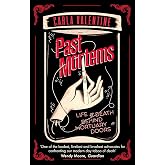
- Past Mortems: Life and death behind mortuary doorsPaperbackUSD 11.85 deliveryOnly 4 left in stock (more on the way).
Dissection and surgical instruction, like meat-eating, require a carefully maintained set of illusions and denial.Highlighted by 1,683 Kindle readers
You are a person and then you cease to be a person, and a cadaver takes your place.Highlighted by 1,663 Kindle readers
But gross anatomy lab is not just about learning anatomy. It is about confronting death.Highlighted by 904 Kindle readers
Product details
- Publisher : W. W. Norton & Company
- Publication date : 22 Jun. 2004
- Edition : Reprint
- Language : English
- Print length : 320 pages
- ISBN-10 : 0393324826
- ISBN-13 : 978-0393324822
- Item weight : 272 g
- Dimensions : 13.97 x 2.29 x 21.08 cm
- Best Sellers Rank: 1,897,500 in Books (See Top 100 in Books)
- 195 in General Medical Issues Guides
- 420 in Medicine (Books)
- Customer reviews:
About the author

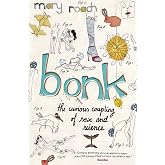
Mary Roach is the author of Grunt: The Curious Science of Humans at War, Packing for Mars: The Curious Science of Life in the Void, Bonk: The Curious Coupling of Science and Sex, Spook: Science Tackles the Afterlife, and Stiff: The Curious Lives of Human Cadavers. Her writing has appeared in Outside, Wired, National Geographic, and the New York Times Magazine, among others. She lives in Oakland, California.
Customer reviews
Customer Reviews, including Product Star Ratings, help customers to learn more about the product and decide whether it is the right product for them.
To calculate the overall star rating and percentage breakdown by star, we don’t use a simple average. Instead, our system considers things like how recent a review is and if the reviewer bought the item on Amazon. It also analyses reviews to verify trustworthiness.
Learn more how customers reviews work on AmazonCustomers say
Generated from the text of customer reviewsSelect to learn more
Top reviews from the United Kingdom
- 5 out of 5 stars
Thought Provoking
Reviewed in the United Kingdom on 2 November 2016Things I took away from this book:
(1) It's fascinating and often (more often than not in fact) quite funny, but it's also divisive, there'll be many readers who will have opposing views on the material it contains; no bad thing because it should open conversations and discussions about subjects that are little talked about.
(2) I want to leave my body to science if possible (and if required).
(3) I want as ecological an ending to my remains as possible if (2) isn't possible.
(4) Mary Roach must have had an absolute ball researching it, travelling to exotic (and not so exotic) places around the world and chatting with some wonderful characters from various fields of medical, scientific, military, and other careers related to the topic.
This brilliant book should be required reading on the curriculum at all high schools, colleges and universities to alleviate the discomfort many people have around discussing the end of life.
There should be TV documentary series made from it and educational DVDs released about it, it's that good, it dispels a lot of myths around many practices from the past and explains the laws and restraints that govern the use of the dead in modern times.
On top of all of that, it exposes the reader to cultural anomalies with regard to life and death, from Asia, the Middle East, Europe and the USA.
It isn't exhaustive but it is in depth, it's extremely well written and brings some levity to an otherwise 'grave' topic.
44 people found this helpfulSending feedback...Sending feedback...HelpfulThank you for your feedback.Sorry, we failed to record your vote. Please try againThank you. We’ll investigate in the next few days.Sorry, We failed to report this review. Please try againWe’ll check if this review meets our community guidelinesOpens in a new tab. If it does not, we will remove it.
CancelReport - 4 out of 5 stars
The Roach Approach
Reviewed in the United Kingdom on 2 September 2012Mary Roach's theme is the use of corpses in scientific research. Their best known use is in medicine, where they are employed both as a teaching aid for students and a source of organs for the living. But they are also used by car engineers in crash tests, by the military to study the effects of weapons (and protective equipment), and by forensic experts investigating crimes and disasters.
Roach's style is not to provide to an academic, library based, review of previous literature. Her style is to go see. The book opens with the author attending a demonstration in which cosmetic surgeons are practising nose jobs on 40 severed heads. Later she jets off to China in a (futile) attempt to verify a story about alleged malpractice in a crematorium, and to Sweden to meet a woman promoting ecological funerals. It's a book with a large carbon footprint.
Her technique is to use jolly, frat boy language to present macabre material (Larf n' Barf, as it's been called). It's not to everyone's taste, although personally I like her sense of humour. The scene in which she asks a stony faced director of a Chinese crematorium whether one of her employees used the buttocks of cadavers to make dumplings is a virtuosic comic performance.
The one area in which I feel she strikes a false note is in relation to experiments on live animals. While I don't see any objection to using dead humans for scientific purposes, using live animals is a different matter. When Roach describes (with evident comic intent) some of the hideous experiments that have been carried out on animals, I felt that she had passed beyond an absence of squeamishness into simple callousness.
But I enjoyed Roach's account of the euphemisms of death. Employees of mortuaries are told to call a dead body a 'decedent', not a stiff, corpse or cadaver. A project using corpses to assess what type of shoes soldiers should wear to avoid getting their feet blown off by landmines was dubbed the 'lower extremity assessment programme'.
Of course, a corpse by any other name would smell as revolting. But some of the linguistic questions she discusses are more than merely verbal. In particular, how should one define death? As Roach points out, when organ donation became a medical possibility (in the 1960s and 70s) it was neccessary to redefine death as 'brain death'. (In effect, organ donation requires a situation in which a person's brain is dead but their organs are still alive.) Otherwise, surgeons removing the living organs from brain dead patients would have been vulnerable to charges of assault or murder.
Also thought provoking was her discussion of the ethical problem raised by the concept of 'informed consent' in giving the body of a family member to science. On the one hand, the idea of 'informed' consent seems to imply that the relatives should be told exactly what will happen to the cadaver. However, this may be needlessly distressing (the relatives might approve of the cadaver being used, but not wish to know the detail).
The final question she raises is the extent to which it is reasonable to seek to control what should happen to one's own body after death, one's funeral arrangements and so on. And how far should the wishes of the dead be respected? Elaborate stipulations as to what should happen after one's death might simply add to the burden imposed on others.
I listened to the recording of Stiff made by Shelly Frasier for Tantor Media in 2003. Frasier reads the book well, but I have two complaints:
(a) she misses out the footnotes (and some of Roach's best jokes are in the footnotes!);
(b) I wish Roach herself had read the book (she has a pleasant voice, and it's always good to hear the author).
15 people found this helpfulSending feedback...Sending feedback...HelpfulThank you for your feedback.Sorry, we failed to record your vote. Please try againThank you. We’ll investigate in the next few days.Sorry, We failed to report this review. Please try againWe’ll check if this review meets our community guidelinesOpens in a new tab. If it does not, we will remove it.
CancelReport - 5 out of 5 stars
Very informative, very enjoyable
Reviewed in the United Kingdom on 1 June 2026I think I'm quite well-informed, but I learnt a lot from this not-too-serious, not-too-light-hearted book. Having already decided to donate my body to medical science (one day!), what I learnt reassured me that I had made the right decision. Thanks.
One person found this helpfulSending feedback...Sending feedback...HelpfulThank you for your feedback.Sorry, we failed to record your vote. Please try againThank you. We’ll investigate in the next few days.Sorry, We failed to report this review. Please try againWe’ll check if this review meets our community guidelinesOpens in a new tab. If it does not, we will remove it.
CancelReport - 5 out of 5 stars
Stiff
Reviewed in the United Kingdom on 2 September 2026Bought as a gift for daughter, she requested this book was very easily found on Amazon and purchased, she was very happy indeed.
Sending feedback...Sending feedback...HelpfulThank you for your feedback.Sorry, we failed to record your vote. Please try againThank you. We’ll investigate in the next few days.Sorry, We failed to report this review. Please try againWe’ll check if this review meets our community guidelinesOpens in a new tab. If it does not, we will remove it.
CancelReport - 3 out of 5 stars
Interesting but not as engaging as I had expected
Reviewed in the United Kingdom on 27 April 2015This book was recommended in a magazine and sounded fascinating. I find the process of death very interesting, with a body changing from being a person to a cadaver in a brief moment.
I am not squeamish at all - a statement which was proven as I read about the purification of bodies while eating my porridge one morning!
The author, Mary Roach, is American and the book was first published in the U.S. The historical and educational defences tend to be American rather than British and I was surprised that I found this to be less engaging than if it has been the other way round. I can't really explain why but I'm fairly certain that this did dull my enjoyment of the book.
One or two of the chapters found me skipping towards the end but there was always something good in the next chapter to pull me back in again.
I did enjoy the chatty style of the author which was irreverent and respectful, at the same time - much the same as those who deal with cadavers on a regular basis. I wonder if she developed this during her research or whether she was like it before?
It's also worth noting that the book was published in 2003. I'm sure there has been lots of changes in the technology since then and I felt that the book could do with an update.
10 people found this helpfulSending feedback...Sending feedback...HelpfulThank you for your feedback.Sorry, we failed to record your vote. Please try againThank you. We’ll investigate in the next few days.Sorry, We failed to report this review. Please try againWe’ll check if this review meets our community guidelinesOpens in a new tab. If it does not, we will remove it.
CancelReport - 4 out of 5 stars
Worth reading
Reviewed in the United Kingdom on 2 May 2011OK, as someone who takes an interest in the 'death industry' in general I didn't find much in here that was new to me but it was still a great read. Not that Mary Roach hasn't done original research of course. I find her writing very accessible and the tone light without becoming irreverant, sensationalist or flippant about a serious subject. A book that de-mystifies dead bodies perhaps can't help but seem a little blunt and insensitive since death is such a taboo subject, I think Mary Roach's approach is about right.
The book doesn't just cover contemporary death, either, there are lots of interesting historical facts. If anything I wished the book was longer and more in-depth - it certainly feels like an introduction to a subject that deserves further investigation. After all, disposal of our remains is something we should all really be considering. It may lack hard-science but that's ok, it's not supposed to be a textbook or a comprehensive guide to all things cadaver.
I've lent this book to friends and they've all said they not only found it informative and thought provoking but also an enjoyable read.
3 people found this helpfulSending feedback...Sending feedback...HelpfulThank you for your feedback.Sorry, we failed to record your vote. Please try againThank you. We’ll investigate in the next few days.Sorry, We failed to report this review. Please try againWe’ll check if this review meets our community guidelinesOpens in a new tab. If it does not, we will remove it.
CancelReport - 5 out of 5 stars
Really interesting read
Reviewed in the United Kingdom on 3 February 2026Loved this book. I used to work in police forensics for 30 years and so have an interest in all things cadaver related, but this is a good book for anyone to read - though I guess if you are super-squeamish it may not be for you. it is written in a very easy to read way and looks at a great variety of ways in which cadavers are used/were used and how they have been treated over the centuries. I found it both interesting and entertaining and I even bought an extra copy as a gift for my mother in law as she has always wanted to donate her body to science. She found it really interesting too.
2 people found this helpfulSending feedback...Sending feedback...HelpfulThank you for your feedback.Sorry, we failed to record your vote. Please try againThank you. We’ll investigate in the next few days.Sorry, We failed to report this review. Please try againWe’ll check if this review meets our community guidelinesOpens in a new tab. If it does not, we will remove it.
CancelReport - 5 out of 5 stars
Enlightening, and Surprisingly Entertaining
Reviewed in the United Kingdom on 2 October 2009Many people would shy away on principle from a book that details the uses of cadavers, and the scientific processes that are involved in the decay of the human body following death, either from squeamishness or from an instinctive avoidance of reminders of our own mortality. It is therefore understandable that few books are available, beside the desiccated tomes of dispassionate science, which provide a readable account of such things. Mary Roach's book not only offers this service, but does so in a way that is charmingly amusing, without being either coarse or disrespectful of the deceased. It is clear that the author is a journalist, rather than a scientist, but given that fewer scientists seem to find it easy to write with a light touch than journalists find it to be at least reasonably logical, this book is more than acceptable to the thinking reader. The book is entertaining and sensitive, and offers insights into the way people feel about mortality and about how they deal with it in practice.
2 people found this helpfulSending feedback...Sending feedback...HelpfulThank you for your feedback.Sorry, we failed to record your vote. Please try againThank you. We’ll investigate in the next few days.Sorry, We failed to report this review. Please try againWe’ll check if this review meets our community guidelinesOpens in a new tab. If it does not, we will remove it.
CancelReport
Top reviews from other countries
Erin5 out of 5 starsThis book is awesome. Worth the price
Reviewed in Australia on 29 January 2025Arrived safely packaged, paperback. The book itself is awesome. Grotesque details mixed with clever humour and good facts. Highly recommend. Had my eye on this book for about 6 months. Should've got a copy sooner.
Sending feedback...Thank you. We’ll investigate in the next few days.Sorry, We failed to report this review. Please try againWe’ll check if this review meets our community guidelinesOpens in a new tab. If it does not, we will remove it.
CancelReport
M. Cutler5 out of 5 starsGreat Book!
Reviewed in the United States on 26 September 2017This book is marvelously original. For starters: the subject material. The subject material is interesting to say the least as well as squeamish, gross, weird, detailed, well researched, repulsively descriptive. In summary something that a normal person would not find themselves reading in their freetime.
Imagine my utter surprise when I found myself completely enthralled in this book. I woke up deep in a world of cadavers and dead people and actually learned something as well as had a good time doing it. The exceptional reading experience stems from the tone and voice of the author, Mary Roach. Roach uses interjections with random stories, funny experiences, jokes and her personal running commentary to engage the reader. This alone made this book great to me, but another good aspect of the book is the wide variety of fields it covers. Even though some chapters I had no initial curiosity about, others piked my interest. Such as the chapters on crash dummies, promession as well as the history of taxonomy. And lastly, Roach does manage to find a conclusion among the diverse and divergent tangents, topics and fields that make up the book. But be warned, this is not a book for those who can’t stand blood and guts, although if you managed to get through the book ‘All quiet on the western front’ by Erich Maria Remarque then you will be fine.
In short, I highly recommend this funny and engaging book to all those who think they can handle it.
Sending feedback...Thank you. We’ll investigate in the next few days.Sorry, We failed to report this review. Please try againWe’ll check if this review meets our community guidelinesOpens in a new tab. If it does not, we will remove it.
CancelReport
Jojojo5 out of 5 starsStiff
Reviewed in Germany on 29 September 2015Ein sehr schönes Buch über die verschiedenen Möglichkeiten was nach dem Tod mit einer Leiche geschieht. Zum Beispiel als Crashtest-Dummies, für Schönheits-OP-Übungen, etc. Ich dachte es würde mehr um die Prozesse im Körper nach dem Tod gehen (Verwesung etc.), aber da hatte ich mich nicht genug informiert. Statt dessen habe ich dennoch viel gelernt darüber, wofür Leichen genutzt werden und kann dieses tolle und auch leicht humoristische Buch nur weiter empfehlen!
Sending feedback...Thank you. We’ll investigate in the next few days.Sorry, We failed to report this review. Please try againWe’ll check if this review meets our community guidelinesOpens in a new tab. If it does not, we will remove it.
CancelReport
Helen5 out of 5 starsAmazingly funny!
Reviewed in Italy on 18 April 2017A fascinating read about what happens when we die, interspersed with a lot of humorous comments that keep the book light and easy to read. With chapters on how science uses donated cadavers for practising operations, ballistic research and car crash investigations. While there are some gruesome parts, it is very interesting to read.
Sending feedback...Thank you. We’ll investigate in the next few days.Sorry, We failed to report this review. Please try againWe’ll check if this review meets our community guidelinesOpens in a new tab. If it does not, we will remove it.
CancelReport
TeresaGB5 out of 5 starsBuena lectura
Reviewed in Spain on 3 January 2026Un libro muy recomendable
Sending feedback...Thank you. We’ll investigate in the next few days.Sorry, We failed to report this review. Please try againWe’ll check if this review meets our community guidelinesOpens in a new tab. If it does not, we will remove it.
CancelReport