National Geographic featured artist
Jeff de Boer
Jeff de Boer is a Calgary-based Canadian artist and artifact maker whose work brings together sculpture, jewellery, armour, and historical imagination.
For more than 40 years, Jeff has explored the idea of armour made for cats and mice, creating meticulously crafted miniature suits that transform familiar historical forms into an imagined parallel world. What began in 1986 with his first armoured mouse has grown into an internationally recognized body of work encompassing thousands of unique pieces.
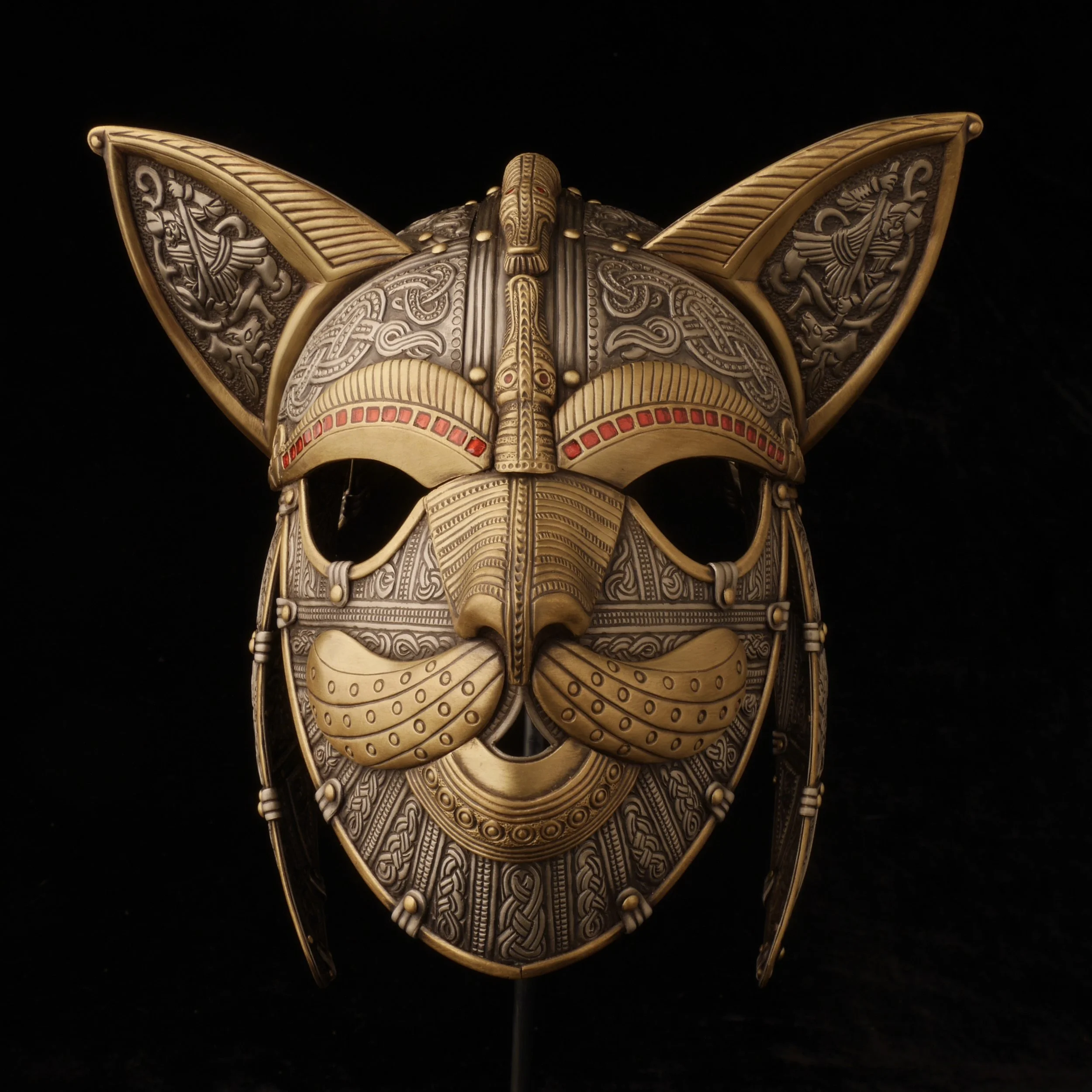
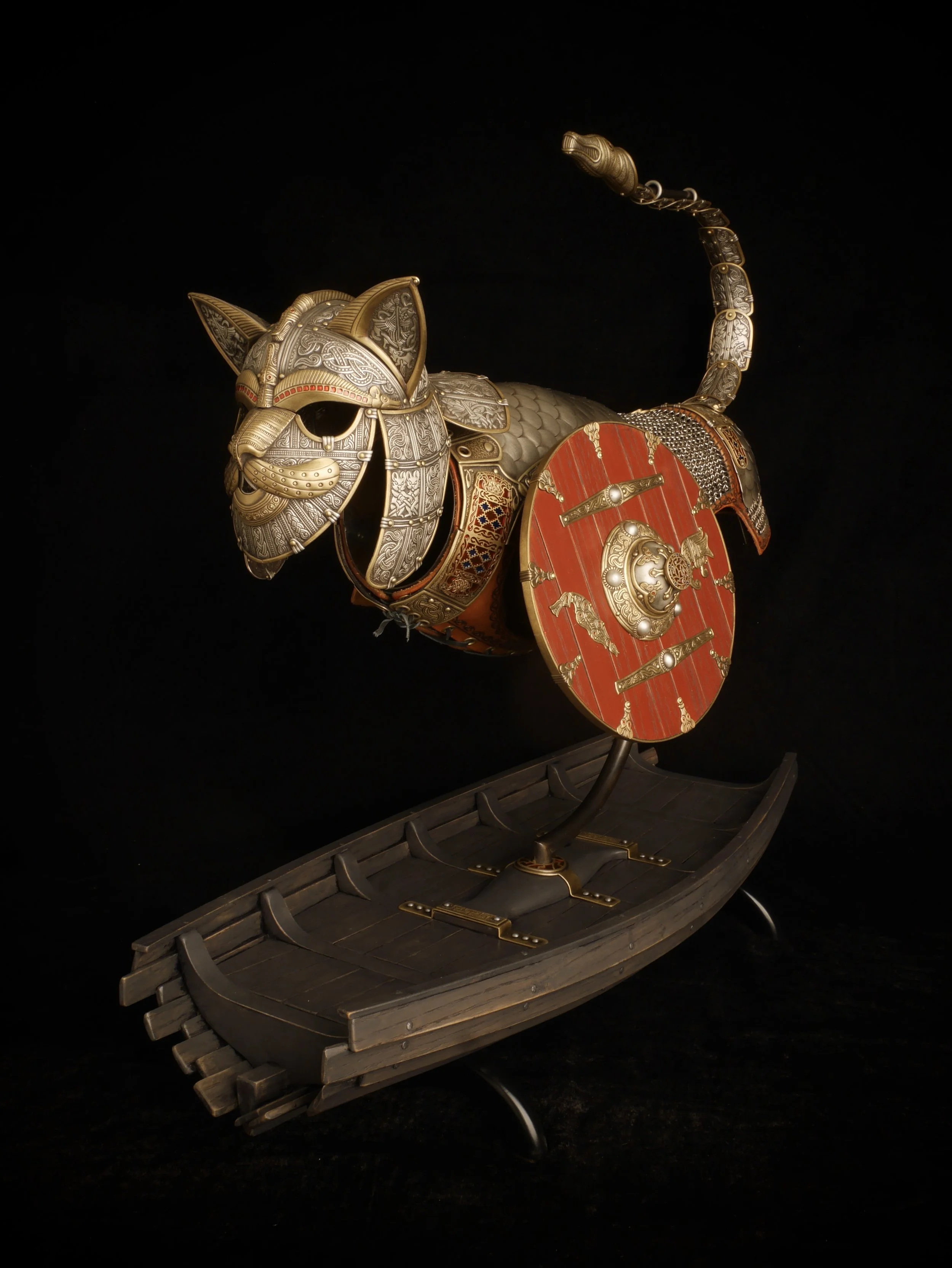
Sutton Mew
Armour inspired by the Sutton Hoo ship burial.
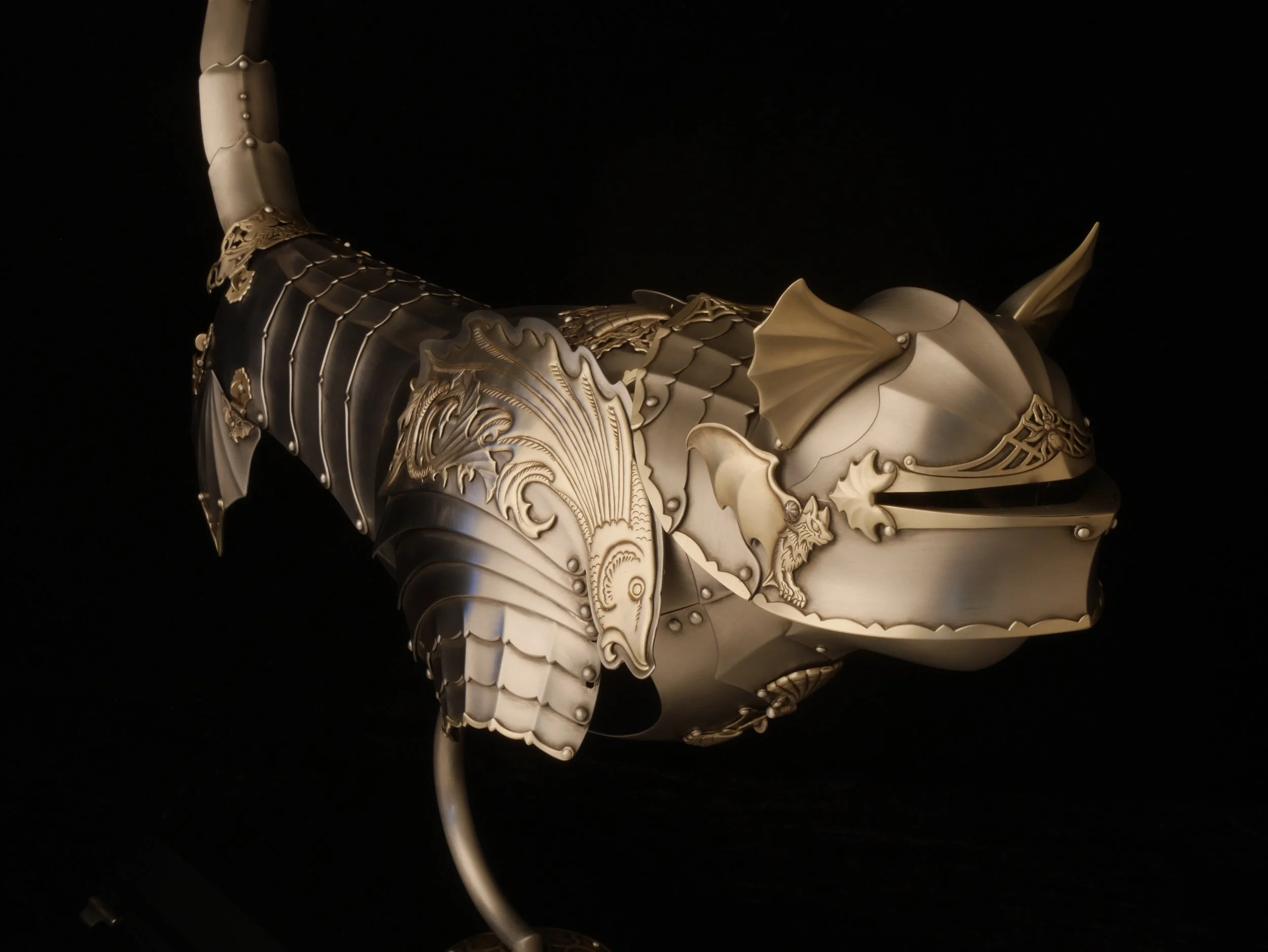
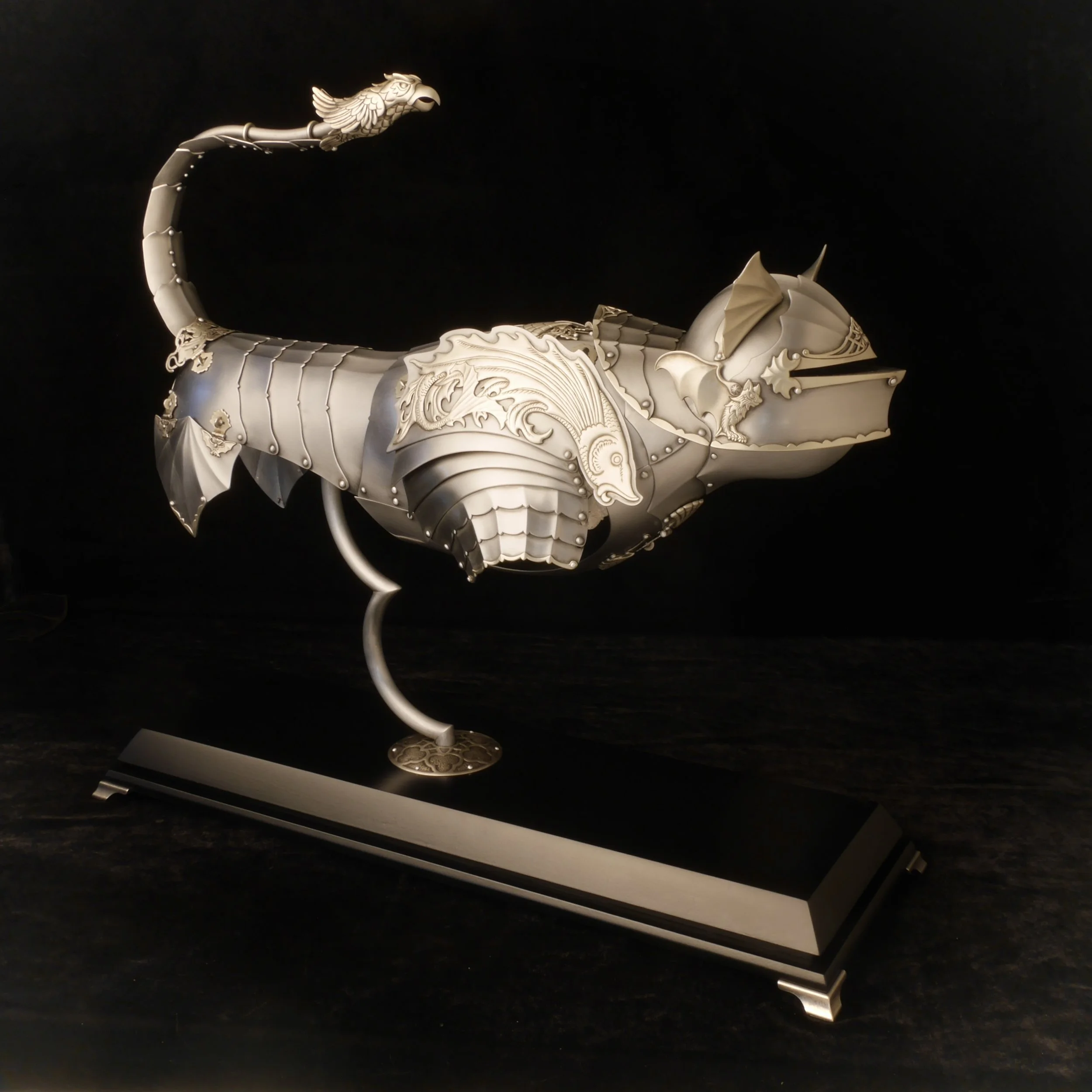
Gothic Cat
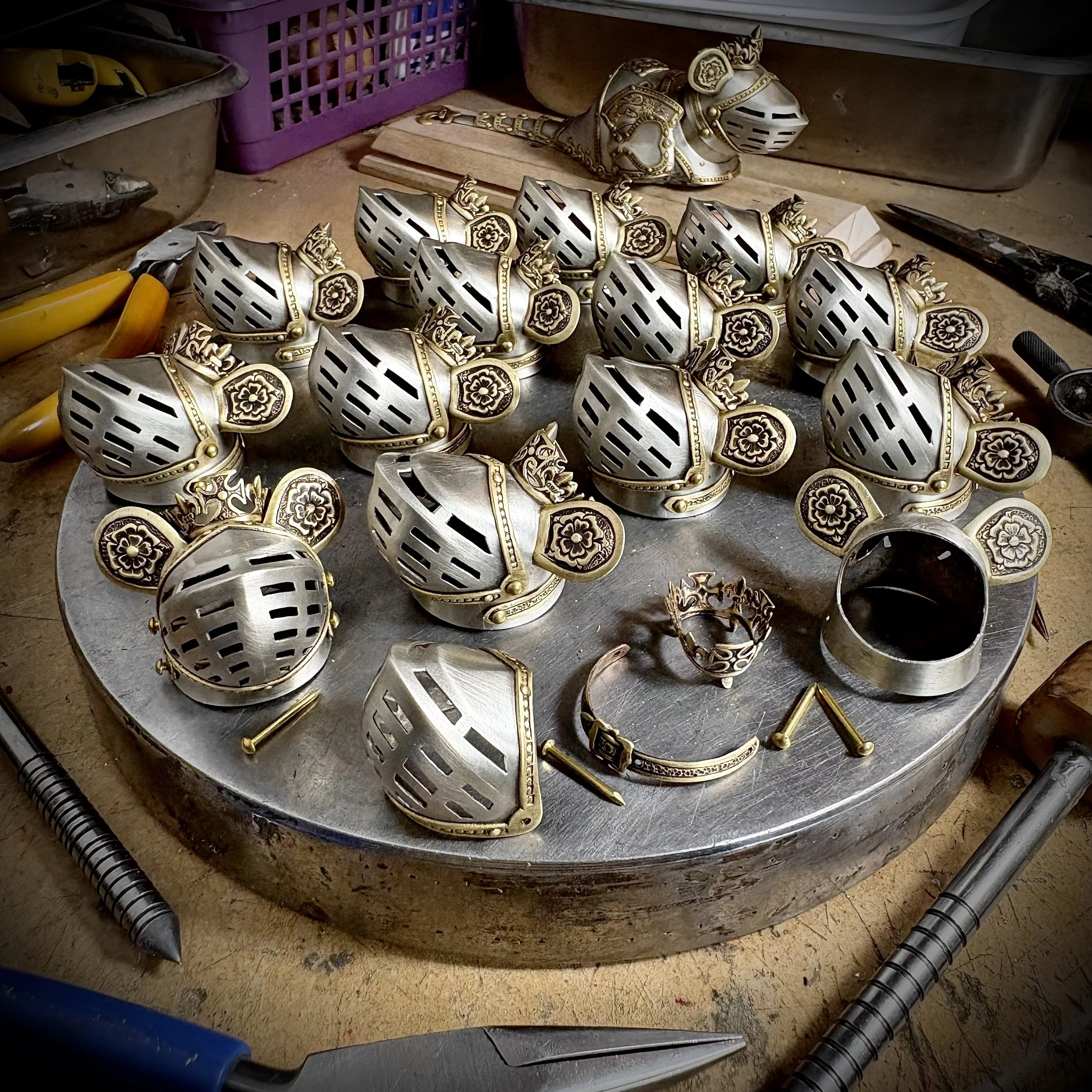
Helmets for the Fat Henry VIII Mouse Edition
My special 40th anniversary of my first mouse armour project.
Exotic Cat
A custom cat helmet created as a reliquary for a family member who just happened to be a cat.
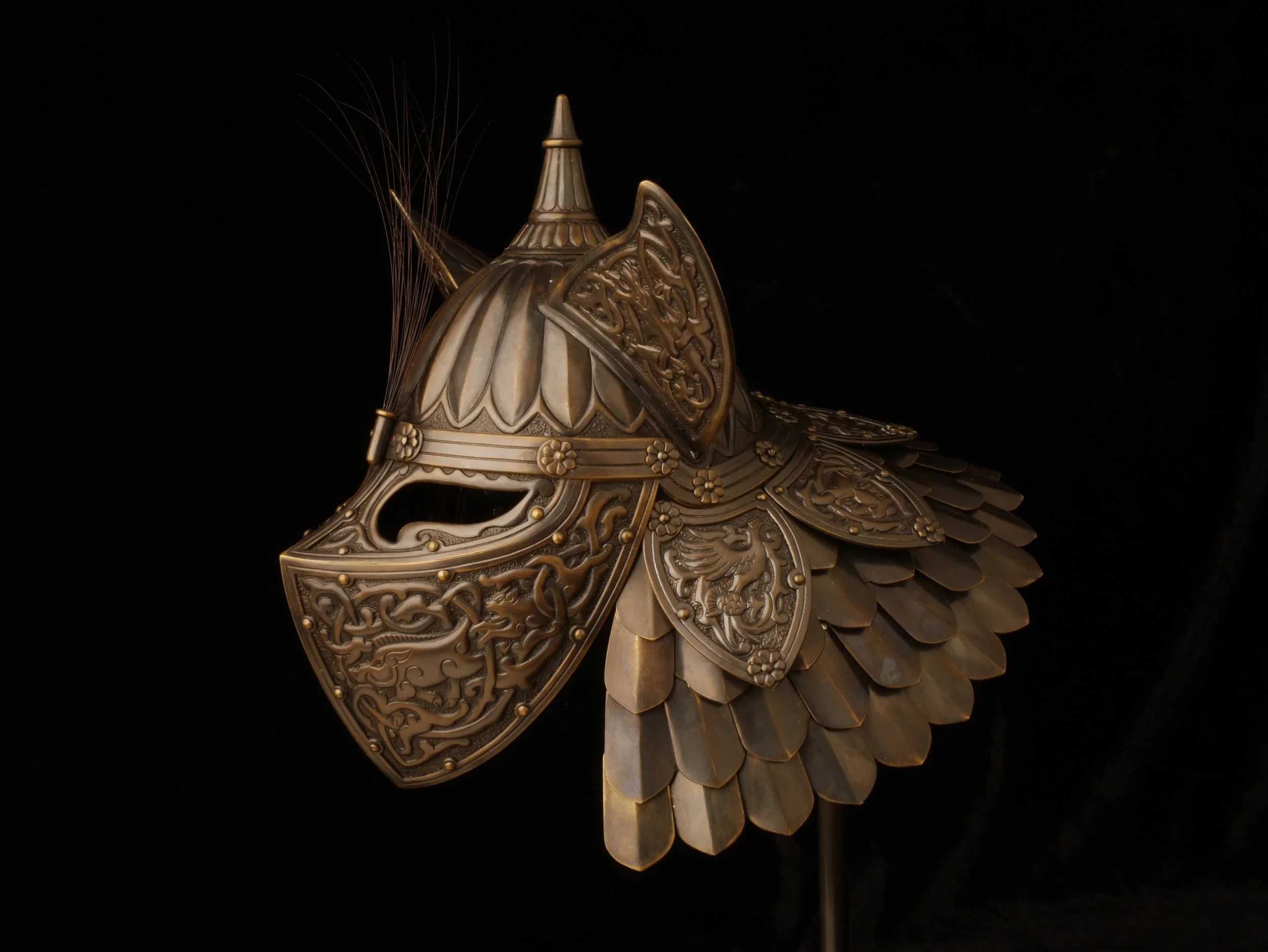
King David Mouse
Some of the most interesting projects are done at the request of a client. This was a one of kind project for a dear friend.
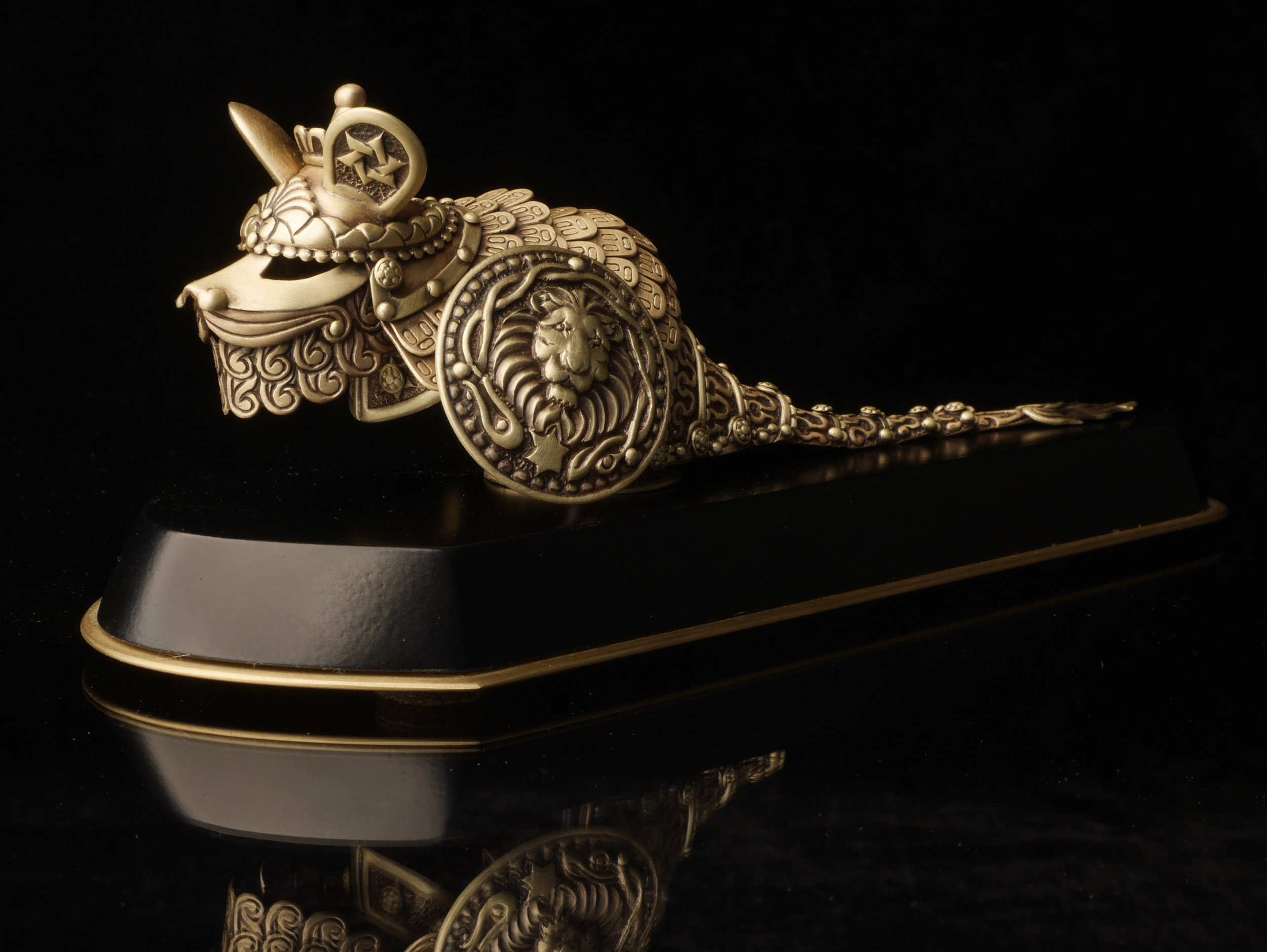
Gothic Mice
This was an edition of 12 with each mouse featuring a custom ear designs for each patron making them all original and personal.
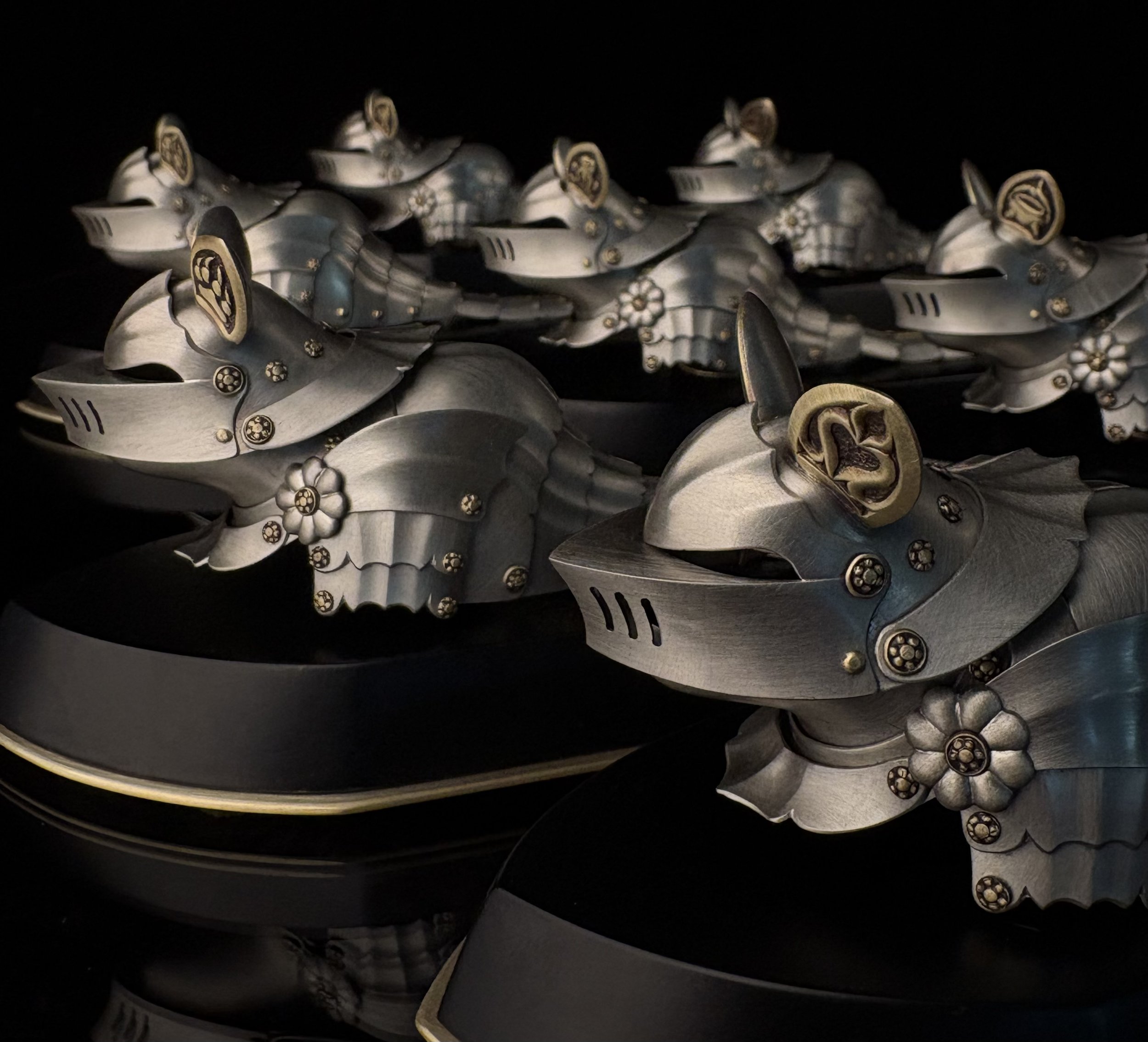
Viking Mice
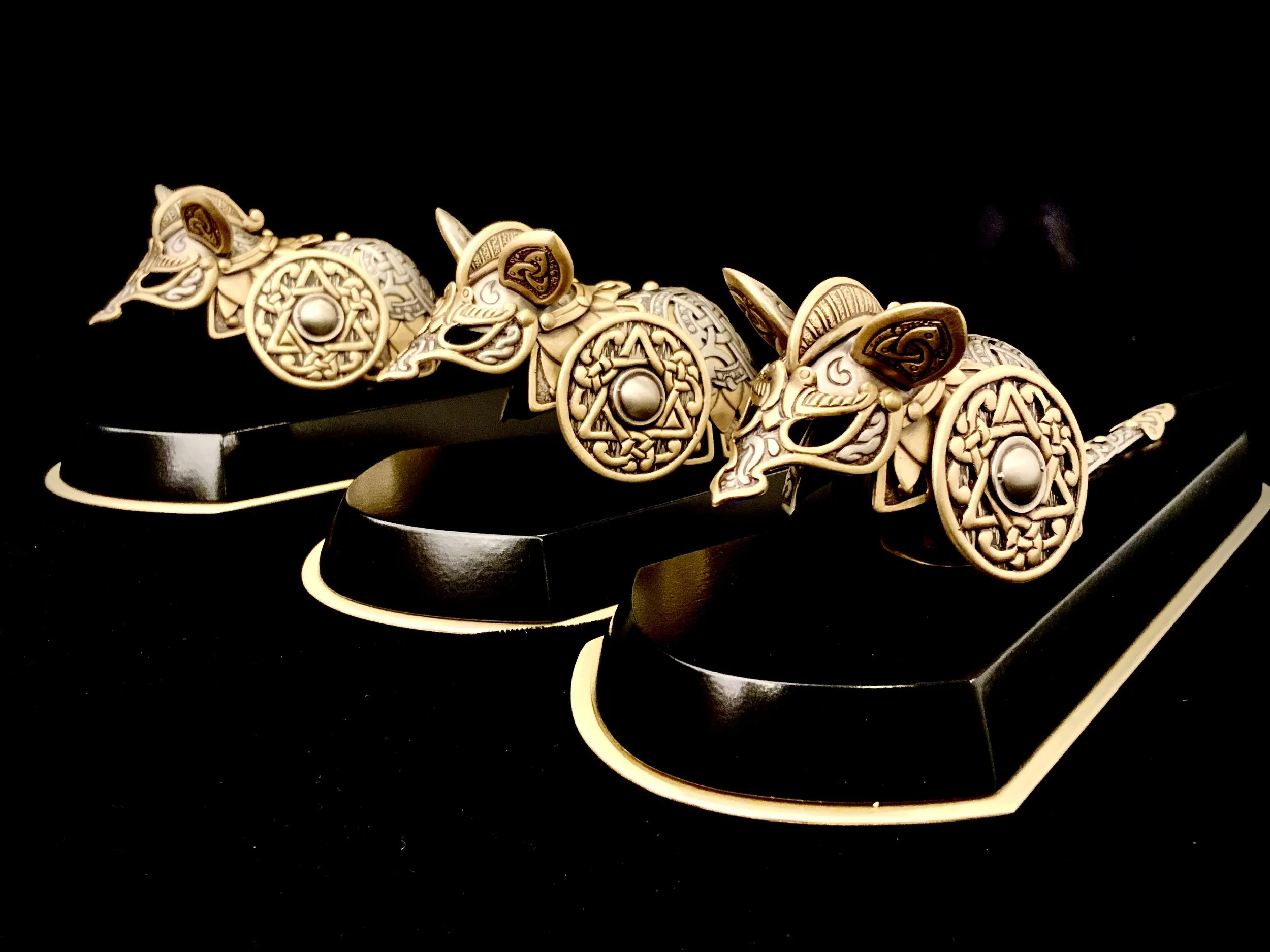
Exploring different cultures and design languages is the best part of my day.
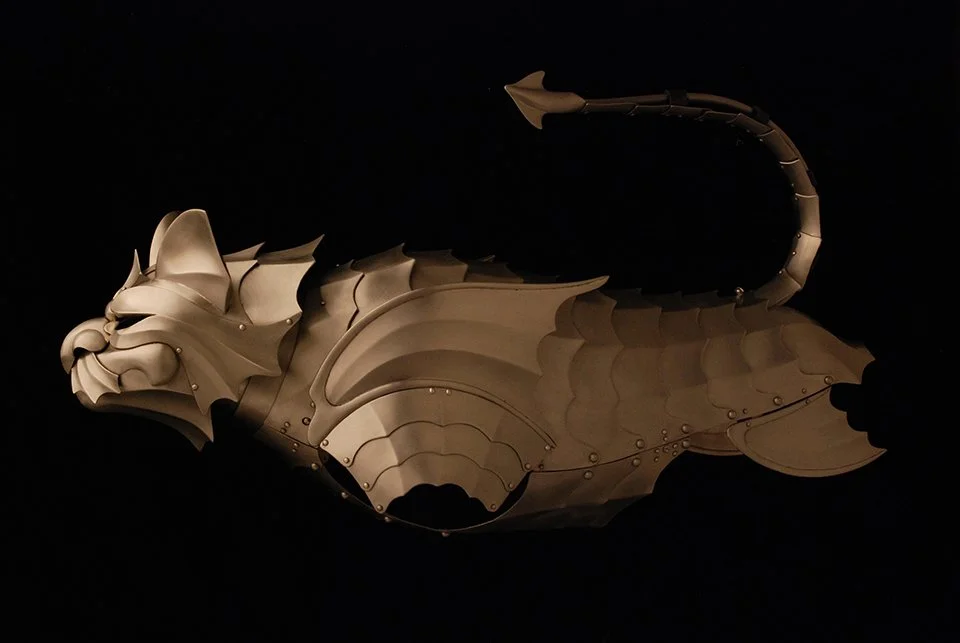
Fantasy Dragon Armour
It’s always amazing to be able to design and make a full custom project for my clients like this.
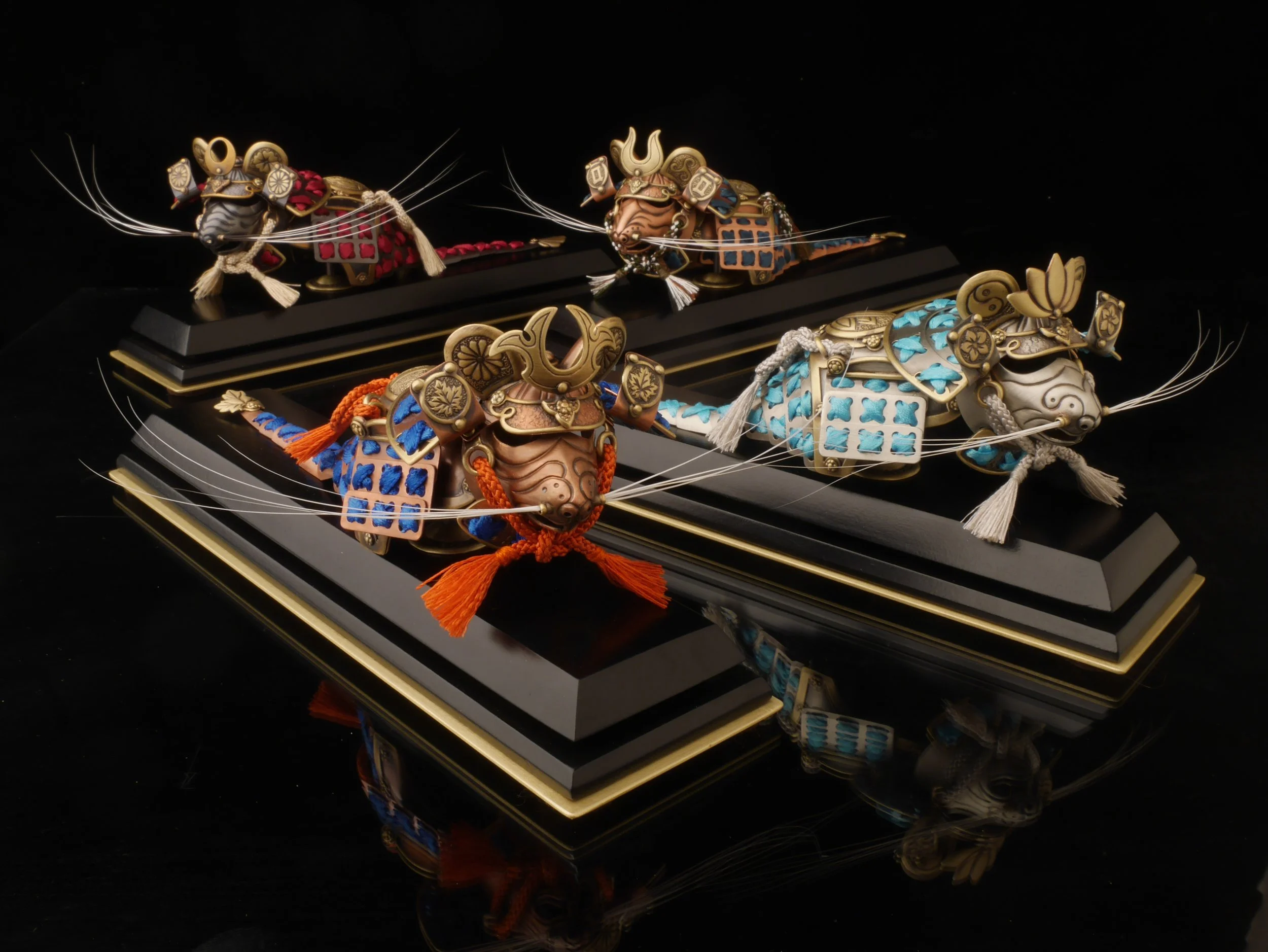
Samurai Mice
The best part of these is they can be customized with different metals, finishes, decorations and lace colours so each one is completely unique.
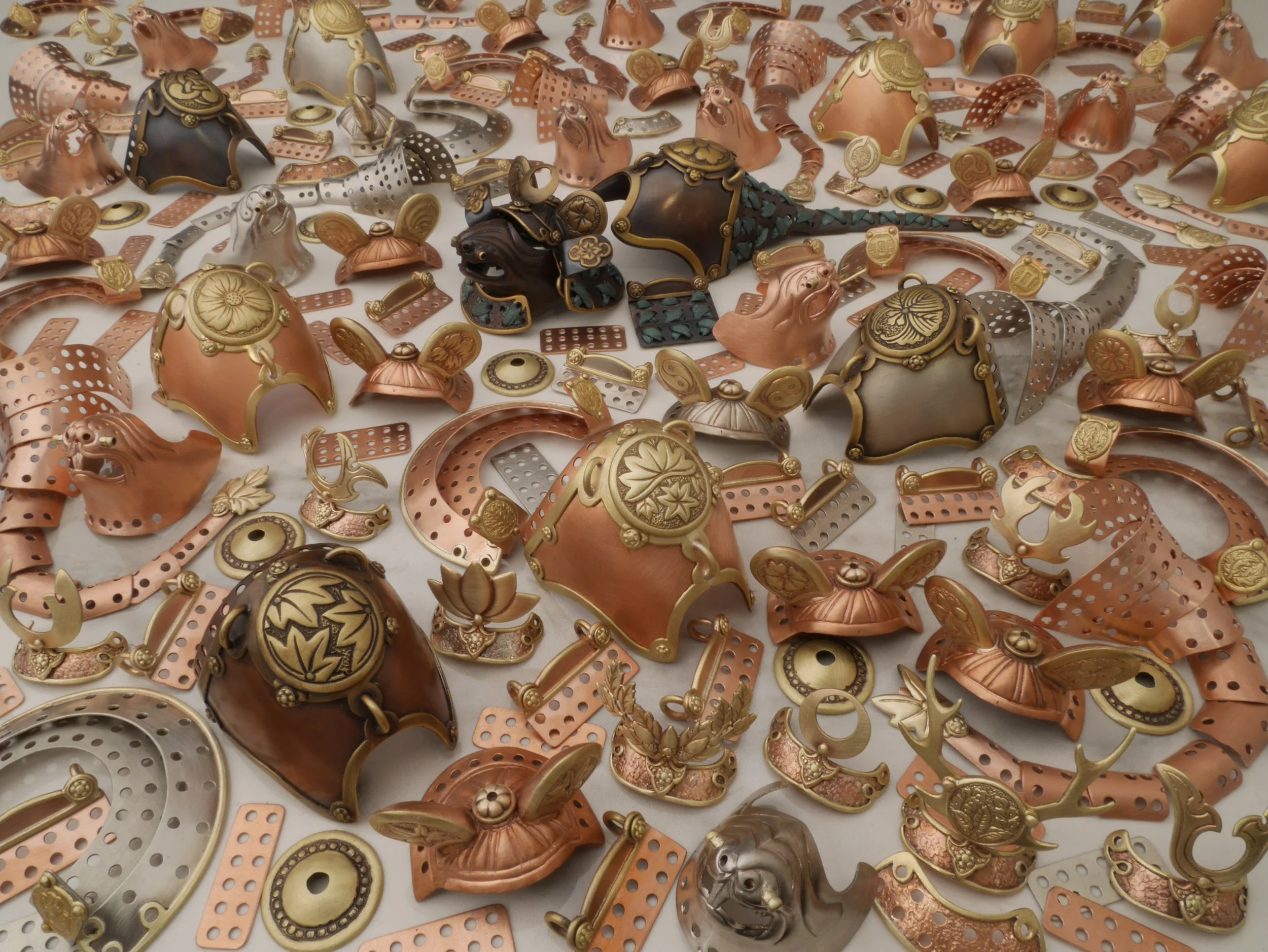
How Many Parts Does it Take to Make a Samurai Mouse?
A big part of my process is documenting my progress and key moments like this.
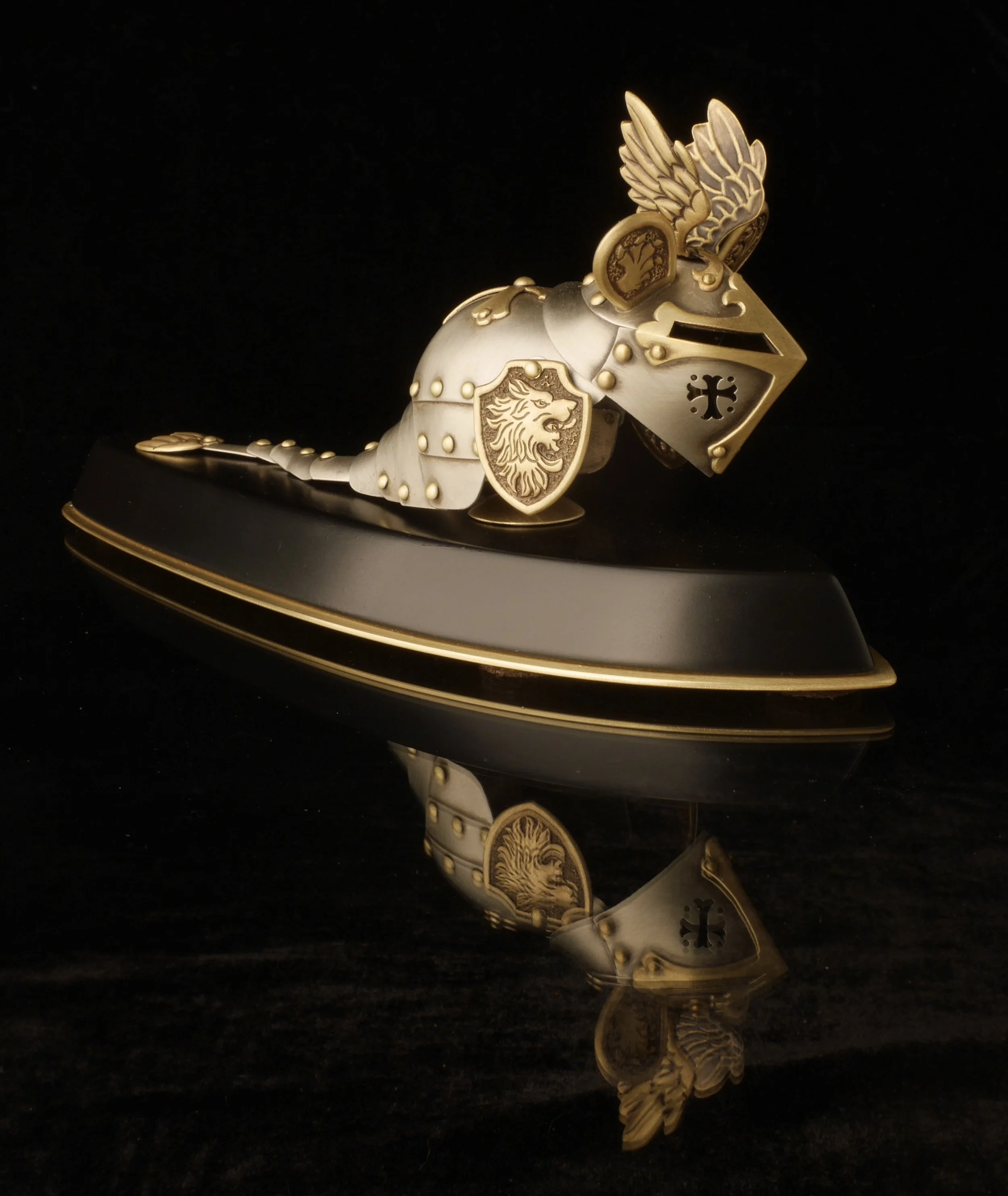
Crusader Mouse
When I produce a mouse like this my patrons have the option for a custom design in the ears as well as the shield.
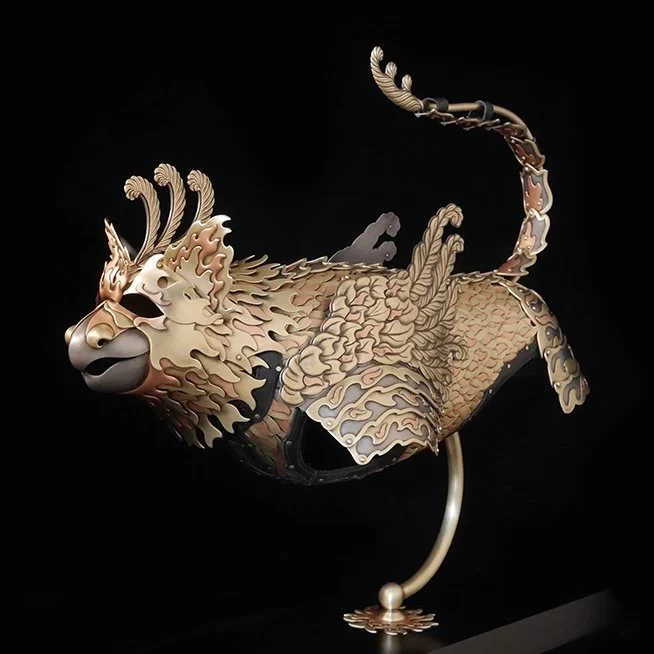
Phoenix Cat
I enjoy a project that is about the fantasy as much as one that is about historical accuracy.
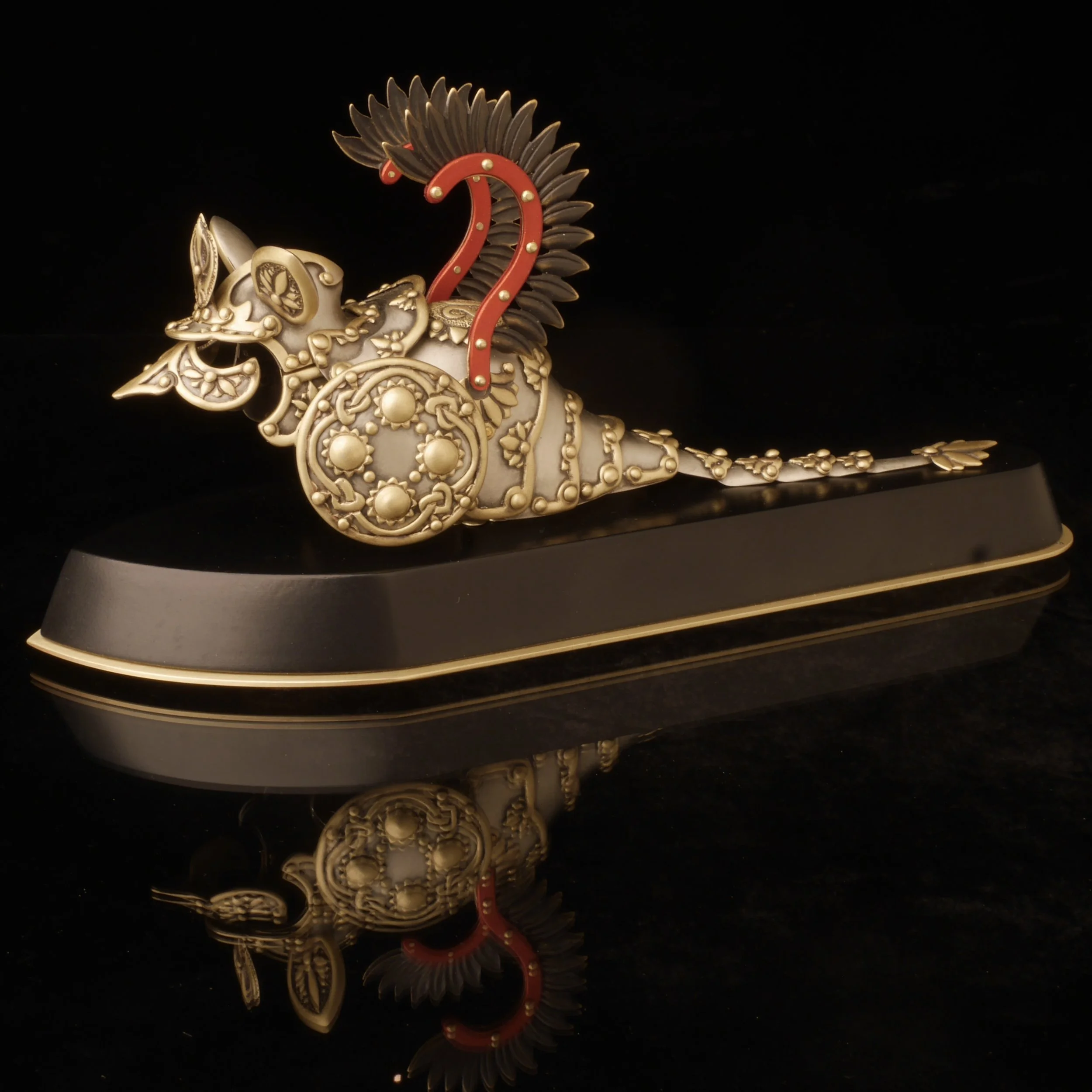
The Maratha Hussar Mouse
The fusion of two cultures, the Maratha Empire and the Polish Winged Hussars.
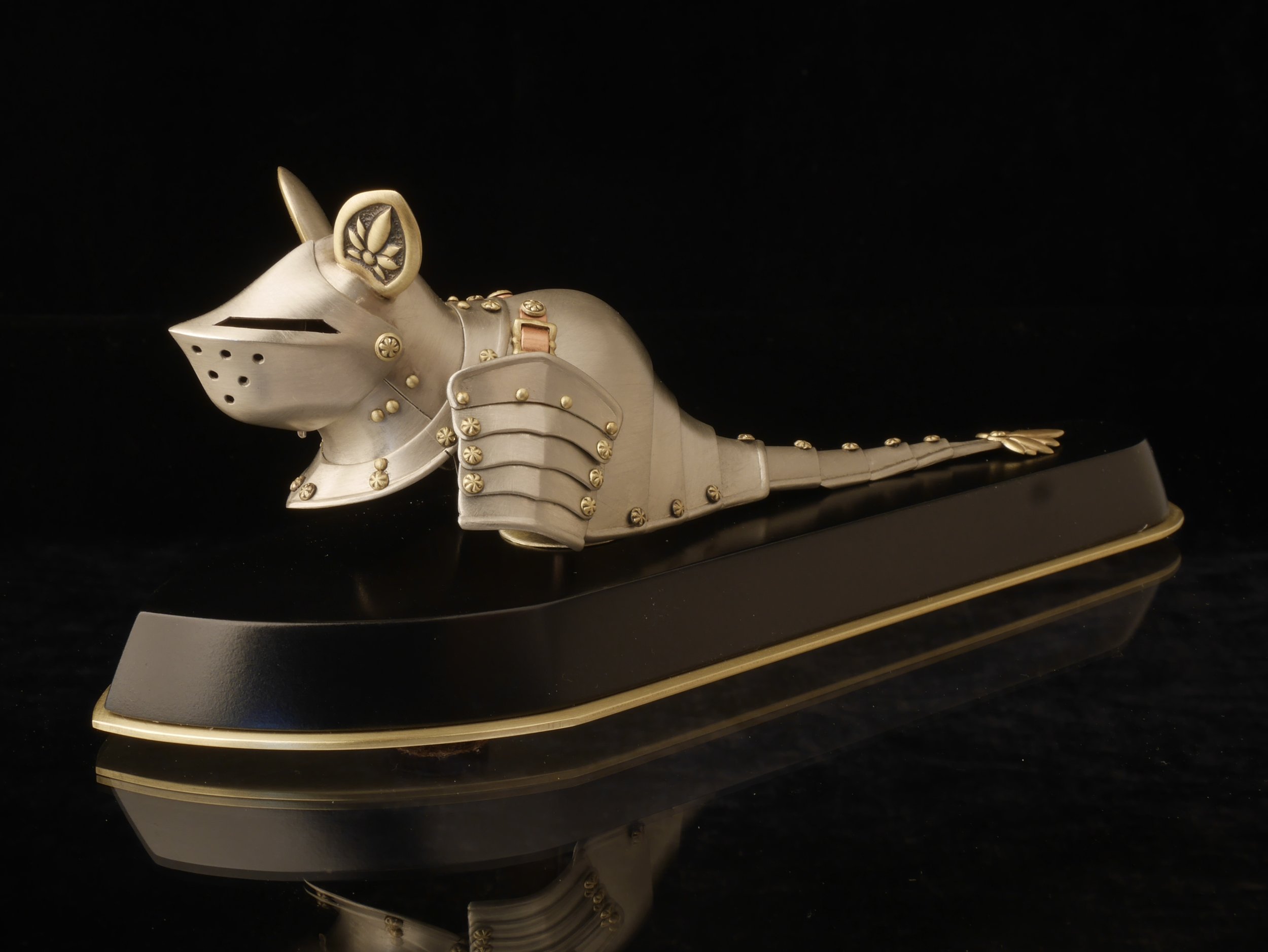
16th Century Mouse
Sometimes you get to do a project like this, which is now on display at the Veste Coburg Art and Armour museum in Germany.
Celtic Samurai Cat
If you like Japanese culture but you have a Celtic heritage I can do something like this for you.
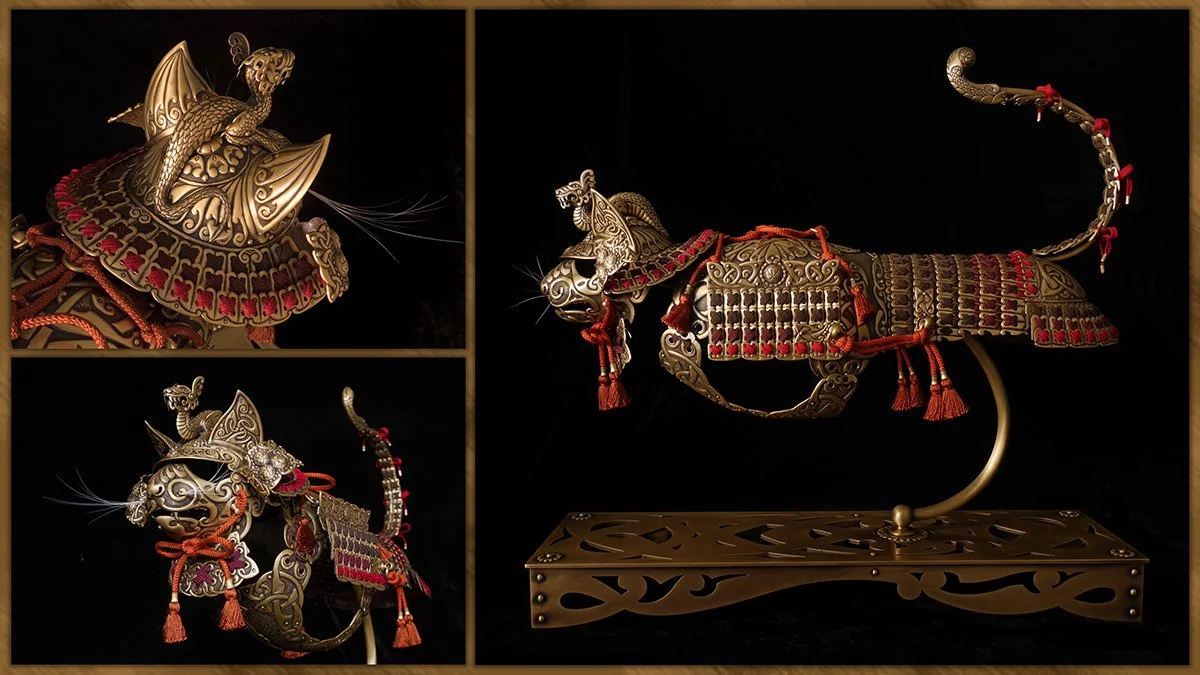
Chinese Mouse
I’m always excited to explore cultures and design.
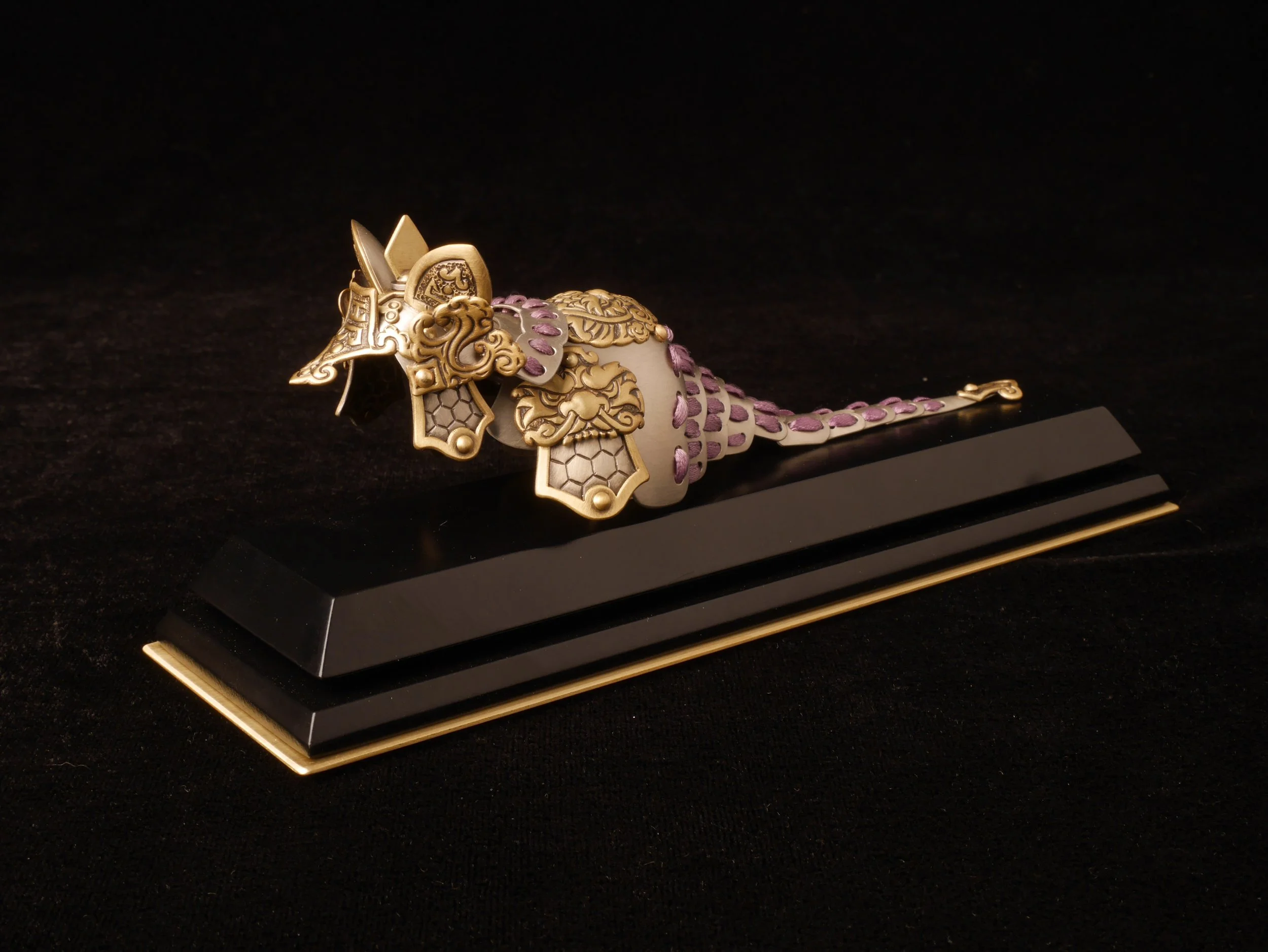
The Sutton Mew Horde
The Sutton Mew Cat took over 800 hours to complete. You only get one opportunity to document the parts like this.
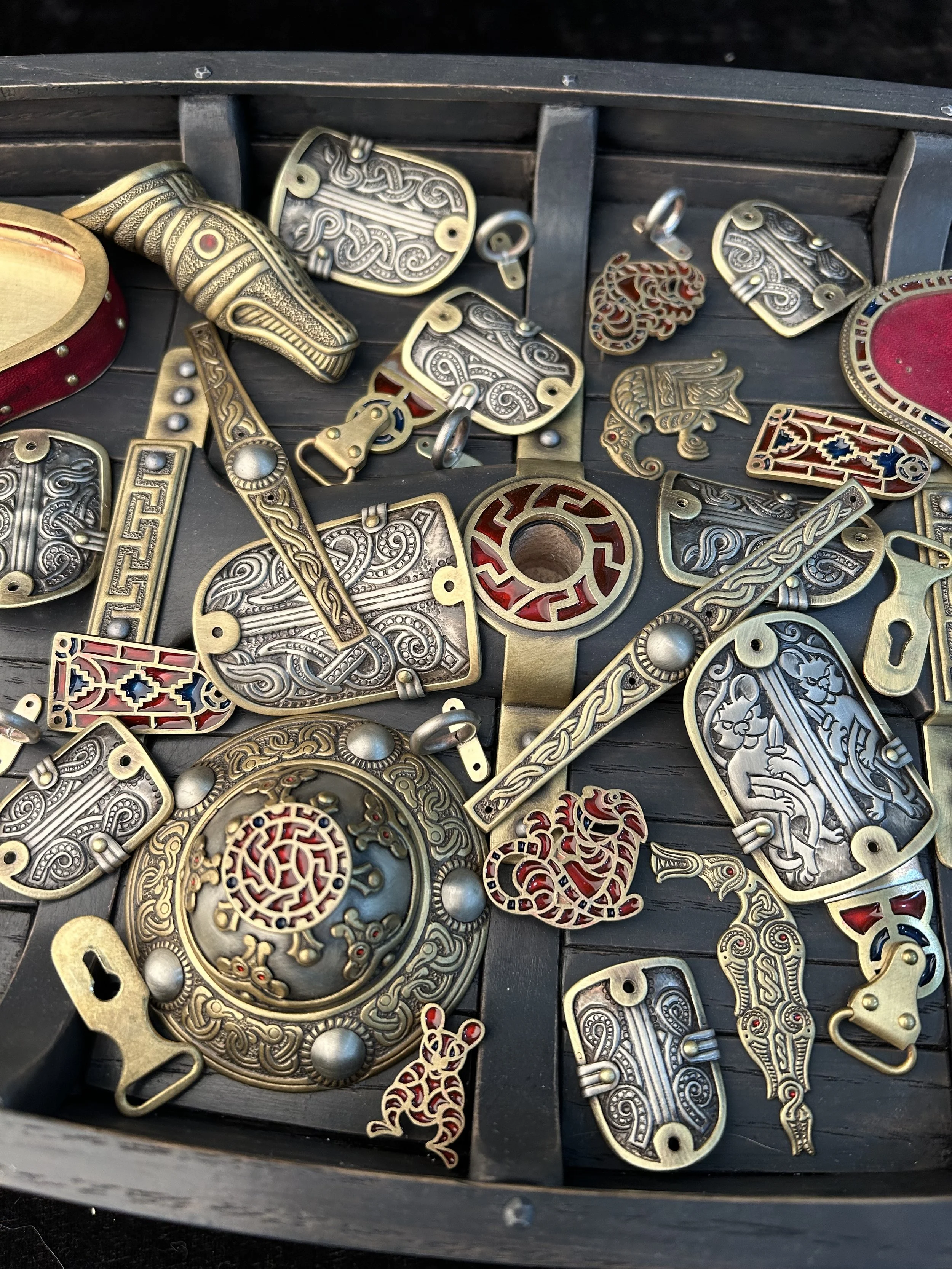
Samurai Helmet for a Police Dog
A fantastic project as a memorial for a very special dog.
About Me
Jeff de Boer RCA ASA
National Geographic featured artist Jeff de Boer is a Calgary-based Canadian artist and artifact maker whose work brings together sculpture, jewellery, armour, and historical imagination.
For more than 40 years, Jeff has explored the idea of armour made for cats and mice, creating meticulously crafted miniature suits that transform familiar historical forms into an imagined parallel world. What began in 1986 with his first armoured mouse has grown into an internationally recognized body of work encompassing thousands of unique pieces.
Jeff’s work has been exhibited and collected internationally and has attracted a global following on social media, where he shares new projects and behind-the-scenes insights into his making process.
Working from his studio in Calgary, Jeff continues to create one-of-a-kind works, limited editions, and commissioned pieces by hand. His cat and mouse armour is available for purchase, and he welcomes inquiries about commissions, available works, and his ongoing exploration of the neoartifact—the idea of creating objects with an awareness that they may one day become artifacts of our own time.
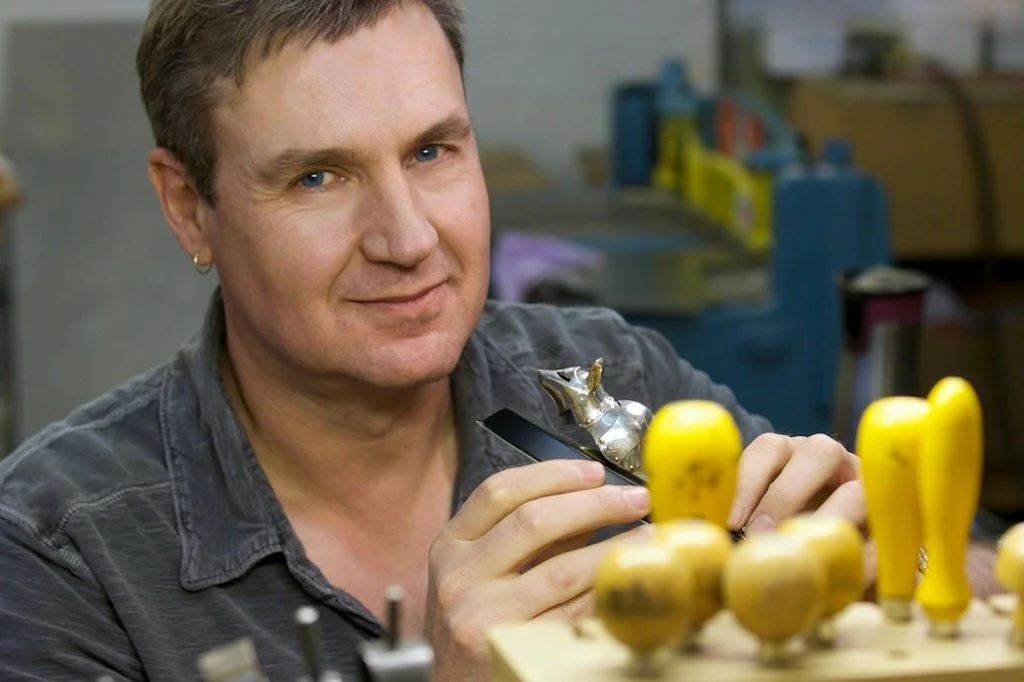
Would you like to own one of my mice?
If you would like to own one of my suits of mouse armour, I sell my work directly from my studio in Calgary, Canada, on commission. Because my work is small and carefully packaged, I can ship it virtually anywhere in the world.
Why are my mice made in editions of 12?
Today, each new mouse design is produced as a limited edition of 12.
Creating a new mouse can involve as much as 100 hours of research, design, pattern development, tooling and preparation before I even begin making the edition. By producing a limited edition of 12, I can spread that initial investment across the edition and devote more time to the quality and craftsmanship of each individual mouse.
It allows me to make better work while offering collectors something that is genuinely limited.
How I Price a Mouse
My work is priced according to the time required to make it. My current studio rate is $100 CAD per hour, which covers my time and studio overhead.
A typical suit of mouse armour takes approximately 40–60 hours to complete. That puts the usual price of a mouse between $4,000–$6,000 CAD or approximately $3,000–$4,500 USD, depending on the exchange rate.
How a New Mouse Edition Begins
When I develop a new mouse, I usually begin by sharing the concept drawing on social media. Along with the drawing, I announce the price and open a reservation list for the edition.
There are 12 places only, and they are offered on a first-come, first-served basis.
Some designs include opportunities for limited customization—for example, a particular design in the ears or on the tip of the tail. When this is offered, I work directly with the collector to create that small original detail. I like doing this because although the edition shares the same fundamental design, these details allow each mouse to become unique and personal to its owner.
Can I Commission a Special Mouse?
Yes!
Some of the most interesting projects I have made have come from ideas suggested by collectors. If you have an idea for a mouse that is outside my regular editions, I am always interested in hearing about it.
If I decide that it is a project I would like to pursue, there are two possibilities.
Option 1 — A One-of-a-Kind Mouse
I can design and make a single mouse exclusively for you.
The challenge with a one-of-a-kind piece is that all of the research, design and tooling costs have to be carried by that one mouse. For a completely unique project, I would therefore expect a budget of approximately $8,000–$12,000 CAD or more, depending on the complexity of the design.
Option 2 — Create an Edition
The other possibility is that I design the mouse for you and then produce it as a limited edition of 12.
If you are comfortable with this approach, the cost can return to my standard edition pricing because the research, design and tooling costs are spread across the edition.
You get the opportunity to help inspire an entirely new mouse, while still receiving it at the normal edition price.
How to Reserve a Mouse
Submit the form on my Contact page! It has some required information that makes it easier for us to get started.
I use this information for my studio records and to prepare your invoice.
Once I receive your information, I will send you an invoice for a 50% deposit.
Your place in the edition is officially reserved once the deposit has been received.
Then the Fun Begins!
Once you are on the list, you don’t have to simply wait for your mouse to arrive. I document my work extensively on social media, sharing photographs, drawings and videos as I research, design and build the edition.
I hope you will enjoy following along and watching your mouse come to life.
When Your Mouse Is Finished
When I complete the edition, each mouse is professionally photographed in my studio.
I will email you a photograph of your completed mouse along with the final invoice for the remaining balance and shipping. Shipping is usually under $200 CAD, depending on the destination.
Once the final payment has been received, I will contact you one final time to confirm your shipping address.
Then I carefully package your mouse and send it on its journey to you.
And that is when your piece of my little history becomes part of yours.
Would you like to commission a Suit of Cat Armour?
One-of-a-Kind Works
Every suit of cat armour I create is a completely unique work of art. These are not editions or reproductions. Each piece is designed and built specifically as an individual portrait, memorial, or reliquary celebrating a particular cat.
A full cat armour commission typically requires 150–800 hours of design and fabrication.
In the past, I have also created smaller-scale works such as cat helmets, which can be a more accessible option when a full suit is beyond budget. These helmet works typically require 75–400 hours depending on complexity and detail.
Pricing
Same rate as my mouse armour: $100 CAD per hour
Full armour typical investment: $15,000–$80,000 CAD
Cat helmet typical investment: $7,500–$40,000 CAD
The final price is determined by the concept, materials, complexity and hours required. I can also design to a set budget that you have in mind.
Commissioning
The process begins with a conversation about your cat and the story you want the work to tell. Photographs and information about your cat are used to develop the design.
Once the concept is established, I provide a price estimate and timeline. Upon approval, a 50% deposit secures the commission and work begins.
Once I begin fabrication, collectors are invited to follow the progress of the work through regular updates posted on my social media, offering a behind-the-scenes view of the development of the piece as it comes to life.
Once the work is complete, I will provide high-quality photographs of the finished piece along with a final invoice for the remaining balance, as well as shipping costs. Shipping typically ranges from $200–$500 CAD depending on destination, and I am able to ship worldwide. Once the final payment is received, the work is carefully packaged and shipped.
Because each piece is entirely unique, commissions are accepted selectively and production times vary.
As these works are rare and significant, I may also, in the future, reach out to collectors to inquire about the possibility of temporarily loaning the work for exhibition purposes.
These are not simply objects made about cats. They are one-of-a-kind artifacts made to preserve the memory of one particular cat.
How to Reserve a Cat
Submit the form on my Contact page! It has some required information that makes it easier for us to get started.
I use this information for my studio records and to prepare your invoice.
Once I receive your information, I will send you an invoice for a 50% deposit.
Your place in the edition is officially reserved once the deposit has been received.
FAQ
17 Questions & Answers
-
I have had a lifelong fascination with history, archaeology and, of course, armour. I was born in Calgary, Alberta, Canada, in 1963. My father was a metal fabricator, so I grew up around metal and making things.
In high school, I started experimenting with armour. My earliest attempts date back to 1979. In 1984, I went to art college—the Alberta College of Art, as it was called then—and became a jewellery and metals major because I wanted to learn as many techniques as possible.
It was during the first semester of my third year, in 1986, that my newly acquired skills and my interest in armour suddenly connected. I realized I could actually build a small suit of armour. But what should it be?
I didn’t want to make a miniature or a model. I wanted it to be real.
That was my lightbulb moment: I could build a life-size suit of armour for a mouse.
Disney said, “It all started with a mouse.” I guess for me, the same was true.
Cat and mouse armour opened so many doors for me as an emerging artist. It really was like winning the idea lottery.
After graduating, I participated in or had small solo shows of approximately 110 exhibitions during my first eight years. The highlight was Articulation, an exhibition that toured Western Canada from 1994 to 1996. It culminated in 1996 with the entire Canadian Museum of Craft in Vancouver devoted to my work.
The exhibition, along with its catalogue, became something of a blockbuster. It allowed me to build a new studio and establish a dedicated following of collectors.
By 1997, my work and my new website were giving me the opportunity to sell directly to clients around the world. By 2000, I had become an independent visual artist, no longer dependent on commercial galleries to represent me.
This was the beginning of what I now describe as my cat-and-mouse relationship with the fine art world.
On December 27, 2022, National Geographic published a major online article about my cats and mice titled “Meet the world’s first and only cat and mouse armourer.” It went on to receive more than 12 million views and introduced my work to an international audience.
Over more than 40 years, I have completed some 3,000 projects, from my jewellery company Armet to large public sculpture, while continuing to explore and develop my cat and mouse armour—along with a few rats and the occasional dog helmet.
Today, I spend my days working in a beautiful purpose-built studio behind my home, making things and sharing what I do with people around the world through social media.
-
I get that as the most asked question. Other than putting a suit of samurai armour on a cat for a Japanese game show….long story, I haven’t. That’s not what all this is about. My work is intended to stimulate your imagination so I leave that to just that.
-
That’s a great question. Sometimes, on social media, I get the one-word comment: “Why?”
Obviously, why not?
There are so many reasons for me to keep exploring this that, in a way, they are infinite. It’s still interesting to me to do the research, invent tools, challenge my skills and push the quality and detail of each piece.
Every new mouse allows me to explore another time period, another culture and another design language. I get to create objects that can be cherished, handed down and, with a little luck, perhaps one day end up in a museum.
That museum context has become increasingly important to me. It is one of the reasons I have started thinking of myself not simply as an artist, but as an Artifact Maker—or, more specifically, as a Neoartifact artist.
-
Neoartifact is a word I have been using to describe an emerging way of thinking about making.
In the art world, one of the first questions we often ask is, “What is the concept?”
A Neoartifact opens up an entirely different world of questions and interpretations.
My work can be seen as fantasy, jewellery, historical, archaeological, technical, craft, fashion and, of course, conceptual art.
I would rather see it in a museum context, where objects are curated but there isn’t necessarily an immediate assumption that they are art.
In a strange way, the expectation in contemporary art culture that everything must be defended or justified through an artist’s statement can sometimes get in the way. I’m not an artist who wants the statement to explain the work. I believe that if my idea isn’t clear in the work itself, I have somehow failed as a visual artist.
For a Neoartifact artist, the object doesn’t have to be art. In fact, sometimes calling it art can get in the way. Giving the viewer the freedom to interpret and label an object without predetermined assumptions is incredibly liberating. It can also create a more authentic experience for the viewer.
If someone tells me I’m an artist, it’s certainly a great compliment. But being called an artist isn’t my only goal.
We live in a strange moment in history. We have access to almost everything humans have ever discovered, and we have technologies that allow us to recreate, reinterpret and invent objects from almost any period.
I’m interested in making contemporary objects with the consciousness that they themselves could one day become artifacts. An artifact maker makes an object that suggests it has a life beyond the person who made it, that distinction is important to me.
I’m interested in objects that could be discovered 500 years from now and make someone wonder: Who made this? Why did they make it? What did it mean to them?
-
I don’t see much separation between those things. My work is rooted in craft, but the craft is there in service of an idea. I want the object to be convincing enough that you can imagine it actually existed.
The better the craftsmanship, the more believable the fiction becomes.
-
Because objects survive.
People disappear. Civilizations disappear. Languages disappear. But sometimes a tiny piece of metal survives for thousands of years.
That fascinates me.
An object can become a message from someone who has been dead for centuries. I want my work to have that same sense of presence.
-
I think they can be all of those things.
The categories are useful for institutions, galleries and art schools, but they don’t necessarily describe what an object actually is. I’m more interested in what the object does to your imagination.
If you look at one of my pieces and start wondering who owned it, who made it, what happened to it and why it survived, that is much more interesting to me than deciding which category it belongs to.
-
After doing this for more than 40 years, I’ve developed a very refined process.
I could use modern technologies such as 3D modelling, laser cutting and CNC machining, and I do use technology when it makes sense. But this work is fundamentally about making things by hand. I think there is something important and even magical about working this way in the age of AI. Not because I’m afraid of technology or unable to use it, but because this is how I have chosen to work—and how I want to be remembered.
Why would I want to make these in a way that anyone can do, when I can make them in a way that only I can do?
Everything starts with an idea.
For example, my 40th-anniversary mouse, the Fat Henry VIII, began with looking at examples of Henry’s armour, as well as the designs and visual language associated with him and the Tudor period.
From there, I go to the drawing board and create a concept illustration. This is where I work out the proportions, metals and ornamentation.
The next step is a life-size 3D model in clay. This allows me to truly understand the forms and work out the articulating sections. If something isn’t right, it’s much easier to change a clay model than to repeatedly make poorly thought-out metal parts.
Once I’m happy with the model, I decide which part should be made first. Sometimes I start with the body; sometimes the head. It depends on what makes the most sense. For Henry, I started with the body.
I cover the section of the model with thin aluminium foil and then apply a layer of small pieces of duct tape. This creates a stable but flexible shell that captures the form. I can gently remove it and then carefully flatten it, turning the three-dimensional form into a very accurate two-dimensional pattern for the first metal part.
I make the first prototype in copper because it is easy to work with.
I also draft templates from the clay model and use them to fabricate a custom stake for the part from a block of mild steel.
With the stake and copper part, I form the piece and check it against the clay model. I may have to modify the stake, change the pattern and make the part several times until I have the right combination of pattern, stake and finished form.
Once I’m satisfied, I fit the copper part to the clay model and repeat the process for the entire mouse.
When I have a complete working pattern and stake set, I destroy the copper prototype mouse. All of the parts go through a careful flattening process, and from these I have very accurate patterns. From these I make a set of pancake die punches that allow me to cut all the parts identically.
Then I build the first finished mouse in my usual nickel alloy and brass.
The decorative fittings are designed on the drafting table at 200% scale. Working larger makes it much easier to achieve the quality and detail I want. I then reduce them by 50% to their final size.
The fittings are transferred to metal and chased by hand.
A mouse may require some 60 individual parts and be assembled with a combination of silver soldering and riveting. This was the case for the Fat Henry mouse, which also required 120 rivets.
Once the first mouse is complete, I build the remaining 11 mice in the edition of 12.
After that come the display stands, bases and final photography. And, someday, perhaps, the book.
-
It varies enormously.
Some pieces take weeks. Others take hundreds of hours.
A one-of-a-kind cat armour commission, for example, can take anywhere from 150 to 800 hours.
The mice can take up to 100 hours of research, design and tooling before I even begin producing the edition. After that, each mouse takes approximately 45 to 60 hours to make.
I’ve never been particularly interested in making things quickly. I’m interested in making them convincingly.
-
Metal is at the centre of my work, particularly nickel alloy, brass, copper and steel.
Cat armour is usually made from 18- to 20-gauge metal, while mouse armour is generally 24- to 26-gauge.
-
Because the hand leaves evidence.
When you make something entirely by hand, tiny decisions, imperfections and variations become part of the object. That is one of the things that separates a handmade artifact from something produced entirely by a machine.
You can feel the person in it.
-
That making is a form of thinking.
You can have an idea in your head, but the material will challenge you. You learn by trying, failing, changing direction and trying again.
Forty years of doing that teaches you things—not just about making, but about yourself.
I have a line I often use:
For 40 years I thought I was making them. Turns out they were making me.
-
I made the work first and figured out the career around it. I didn’t wait for someone to give me permission to make the things I wanted to make.
I learned how to design, fabricate, photograph, sell, promote, teach, write and communicate about my work.
Being an independent artist means understanding that making the work and building a life and community around the work are two different skills.
You need both.
-
I treat my studio as both a creative practice and a business.
I sell directly to collectors, accept commissions, teach, lecture, publish, exhibit and use social media to communicate directly with an audience.
The internet has changed everything.
For the first time in history, an individual maker can build an international audience without waiting for a gallery or institution to discover them. That has fundamentally changed what it means to be an independent artist.
-
Because I love making things, and I love watching other people become fascinated by making things.
I’ve made hundreds of posts showing not just the finished work, but how it is made. I don’t believe that explaining how something is done diminishes the magic. I think it often makes the magic greater.
Part of what matters to me is passing knowledge forward.
The history of the metal arts has been passed down through generations by the people who came before us. Like scientists, artists and makers also stand on the shoulders of giants.
One day, at the end of my career, I hope all of my life’s drawings and the special tools I’ve developed for making my mice will be preserved in a museum and perhaps, 500 years from now, an experimental archaeologist will be able to watch my old posts, study my tools and drawings, and actually figure out how to make one of my mice.
That would be extraordinary to me.
-
We are constantly creating the archaeology of the future. Every generation leaves things behind.
The difference is that I am making objects with an awareness that they might someday be looked at in exactly the same way that we look at artifacts from the past. That thought changes how I make things.
I don’t just ask, “Does this look good?”
Sometimes I ask:
“What will someone think this meant 500 years from now?”
I have been inspired by the artifacts and armour I have seen in museums around the world. I would like to think that one day another person like me might see my work and be inspired to make something of their own.
Maybe that is a form of immortality.
I have this romantic idea that perhaps I am working on something that takes more than one lifetime to complete.
-
I hope they understand that I was curious.
That I loved making things by hand—not because I had to, but because I chose to, especially in the age of AI.
That I was fascinated by history, craftsmanship and the human imagination.
And perhaps most importantly, I hope they wonder about what they might leave behind.
If someone finds one of my pieces a thousand years from now and asks,
“What kind of person made this?”
then I will have left something behind that matters.
