The SS Watertown was a standard American oil tanker built in 1919 for the Cities Service Company and spent its early years transporting petroleum along the United States coastline and through the Gulf of Mexico. The ship lived a largely uneventful life until December 1924, when it departed New York bound for the Panama Canal.
During the voyage, crewmen James Courtney and Michael Meehan were assigned to clean a cargo tank but were tragically overcome by toxic gas fumes and suffocated. Because the ship was days away from port, the captain ordered a traditional burial at sea, and both men were committed to the ocean off the Mexican coast on December 4, 1924.
The ship became famous almost immediately after the burial when the crew began reporting a chilling phenomenon in the water. For days, multiple sailors claimed they could see the distinct, oversized faces of Courtney and Meehan staring back at them from the foam and waves in the ship’s wake, always appearing around dusk and following the vessel for miles. Skeptical but intrigued, Captain Keith Tracy purchased a camera when the ship docked in New Orleans to document the claims on their return trip.
When the faces reportedly appeared again, Captain Keith Tracy took six photographs of the water. According to the story, five showed nothing unusual. The sixth appeared to contain two humanlike faces floating among the waves. Later accounts claimed the William J. Burns Detective Agency examined the negative and found no evidence of tampering. However, the original negative disappeared, the agency’s report has not been located, and surviving copies may have been enhanced over the years.
The photograph may show nothing more than foam, shadows, and the human mind searching for familiar faces. But once you know the story of Courtney and Meehan, it becomes remarkably difficult to see only water.
A quick note: I will be publishing a short post tomorrow for Halloween.
She was born in Sweden in 1914. Her first name was Ångermanelfven. She hauled cargo between Hamburg and Sweden during World War I. After the war, Britain took her as reparations from Germany. The Hudson’s Bay Company later bought her and renamed her the SS Baychimo.
Her new job was hauling goods between Vancouver and Hudson’s Bay Company posts in the Yukon and Northwest Territories. She sometimes carried furs and other Arctic cargo. She made this run for years without much trouble. Then, in late September 1931, disaster struck. She was sailing back to Vancouver when a blizzard hit near Point Barrow, Alaska. Pack ice closed in around her. She was trapped.
The Hudson’s Bay Company flew 22 members of the crew out, but Captain John Cornwell and 14 others stayed behind. They built a wooden shelter nearby and prepared to wait through the winter. On November 24, another blizzard swept through the area. When it cleared, the ship was gone. The men assumed she had broken apart and sunk.
A few days later, an Inuk seal hunter told them he had seen her about 72 kilometers (around 45 miles) south. The men tracked her down and found her still floating. They removed the most valuable furs from her hold, but decided she would never survive the winter. They left her behind and went home. They were wrong. You can’t get much more wrong, as we will see.
That was the beginning of something strange. The Baychimo didn’t sink. She didn’t stay put either. Instead, she drifted through Arctic waters without a care, captain, or crew.
In March 1933, a group of Iñupiat hunters found her and climbed aboard. A storm arrived and trapped them on the wandering ship. Some accounts say they remained aboard for a week, while others say ten days. For that brief time, the abandoned Baychimo became a shelter again. Even without her own crew, she was still protecting people from the Arctic.
Others tried to claim her. Explorers boarded her in 1934. In 1939, Captain Hugh Polson attempted to salvage her, but the moving ice forced him to leave. Every time someone thought they had caught the Baychimo, the weather or the ice seemed to take her back.
The last confirmed sighting was in 1969, once again locked in ice. After that, nothing. No wreckage. No trace. In 2006, Alaska’s government talked about searching for her. The search never happened. Most people now believe she finally sank somewhere in the Arctic.
The Baychimo seemed willing to accept visitors. The Iñupiat hunters even found shelter aboard her during a storm. But whenever someone tried to claim her and bring her home, the ice and weather interfered. It was almost as if she were saying, “You can stay for a little while, but don’t try to take me.”
But no one has ever found her bones. So the mystery holds. Somewhere beneath the Arctic ice, the Baychimo’s story may finally have ended. Then again, perhaps she is still out there, looking for sailors or hunters who need a temporary home. So if you happen to be near the Alaskan coast, keep an eye on the ice.
Tomorrow, for Halloween, we will look at another kind of maritime ghost story, one that may have left its image behind.
If you think poor decisions by captains were confined to the early 1900s or before, this story proves otherwise. It also made me proud to be a musician: the entertainers stepped up when the ship’s leaders failed to do so.
The MTS Oceanos was a Greek-owned cruise ship that sank off the coast of South Africa in August 1991 after catastrophic flooding. Remarkably, all 571 people on board survived, largely thanks to the quick actions of the ship’s entertainers after the captain and several senior officers abandoned the ship.
She was originally built in France in the early 1950s and later acquired by Greek owner Epirotiki Line, which operated it as a leisure cruiser. In August 1991, it was chartered by South African tour operator TFC Tours for a series of coastal cruises, sailing from Cape Town eastward along the Wild Coast of the Eastern Cape.
During the voyage, the ship encountered severe weather: strong winds and very large swells battered the hull for days. Investigators later concluded that important maintenance had been neglected. Parts of the waste-disposal and seawater piping system had either been removed or not properly reinstalled. During the heavy seas, one of those weakened sections failed, allowing seawater to rush into the engine spaces. Water started to spew up in drains all over the ship. Sinks, toilets, water fountains, and anything with a water pipe. Not what you want on a ship.
Around 9:30 p.m. on 3 August, a muffled explosion was heard in the engine room; power failed as seawater flooded the engine spaces and shorted the generators. With propulsion and electricity gone, the ship began to list heavily and take on water uncontrollably.
As the situation deteriorated, Captain Yiannis Avranas and several senior officers went to the boat deck and were among the first people lifted off the deck by military helicopters that arrived. The captain and his officers left the ship without ensuring passengers were evacuated or that a proper distress call had been made. Their departure left hundreds of passengers and many junior crew members without experienced leadership during the ship’s greatest crisis.
With the bridge deserted and communications failing, the ship’s lounge band and entertainers stepped in. Guitarist Moss Hills and his wife Tracy and fellow performers found the radio room and sent out a Mayday call. They began organizing passengers and helped launch lifeboats. Hills’ calm leadership reassured frightened passengers while the entertainers organized the evacuation, moved people to safer areas, and coordinated with rescuers.
South African authorities responded quickly once the distress signal was received. The South African Navy and Air Force dispatched helicopters and naval vessels to the site. Over many hours, rescue helicopters hoisted passengers and crew from the listing deck and from lifeboats, while ships picked up others from the water. The operation was dangerous. The ship continued to roll in heavy seas, forcing helicopter crews to hover over an unstable deck while rescuers hoisted passengers to safety one by one.
By the afternoon of August 4, everyone had been taken off the Oceanos. About 45 minutes after the last person was airlifted, the ship finally fell beneath the waves, sinking bow-first until her stern stood nearly vertical before disappearing into roughly 308 feet (94 meters) of water. Footage of the final moments was captured and later broadcast internationally.
A Greek inquiry in 1992 found Captain Avranas and four senior officers guilty of negligence for abandoning the ship and failing to assist passengers. Despite the finding, they were not criminally charged and served no prison time. One reason was that no one died, something that still seems remarkable considering how close the disaster came to becoming a tragedy. Captain Yiannis Avranas: “When I order abandon ship, it doesn’t matter what time I leave. Abandon is for everybody. If some people like to stay, they can stay.”
At the time, international maritime law did not explicitly criminalize a captain abandoning a ship. Avranas was under the jurisdiction of a Greek inquiry board, which opted for professional and administrative penalties over jail time. Instead of being incarcerated, Avranas faced career problems. His master’s license was impacted by the negligence ruling, though his employer, Epirotiki Lines, chose to defend the rescue’s final success and reassigned him to command a low-profile ferry boat until his retirement.
Today, the Oceanos is remembered less for the ship that was lost than for the people who refused to give up. When leadership disappeared, ordinary entertainers became extraordinary leaders. Moss Hills and his fellow performers proved that courage is measured by actions, not rank, and because of them, every passenger and crew member made it home.
Moss Hills is now a cruise director! He also jumps on stage and plays many instruments on some of the cruises.
Sorry for the old cliché title, but hey, it fits! The SS Valencia was an American passenger steamship whose 1906 wreck off Vancouver Island became one of the most frustrating maritime disasters in Pacific Northwest history. The tragedy was not simply that the ship struck rocks. She remained close to shore for roughly a day and a half while the weather, surf, cliffs, and failed rescue attempts made help nearly impossible. Think about that. The people aboard could see land and the rescue ships offshore, but neither could reach them. The Valencia lay almost perpendicular to the coastline, with her stern close to the cliffs and her bow pointing out to sea. Some estimates placed her stern only about 60 feet from the base of the cliffs. She was close enough for those aboard to see safety, but the rocks and surf made it nearly impossible to reach.
She was built in 1882 by William Cramp & Sons of Philadelphia. She originally operated between New York and Venezuela before being sold and brought to the West Coast. In 1902, the Pacific Coast Steamship Company acquired her, and she carried passengers and cargo between California and Alaska. In January 1906, she was assigned to the route from San Francisco to Seattle by way of Victoria. She was temporarily replacing the City of Puebla, which was undergoing repairs. The Valencia left San Francisco on January 20 with 108 passengers and 65 crew members, 173 people in all.
On the night of January 22, the ship was trying to reach the Strait of Juan de Fuca in severe weather. In darkness, rain, and poor visibility, navigation became extremely difficult. She missed the strait’s entrance. Near midnight, she struck Walla Walla Reef, south of Pachena Point on the west coast of Vancouver Island, British Columbia. The Valencia initially struck a rock or ledge a few hundred yards offshore. She remained there for several minutes, pivoted on the rock, and then came free before being driven closer to shore. Captain Oscar M. Johnson attempted to save the vessel by forcing her onto the rocks. But that left the ship trapped in violent surf beneath steep cliffs, near enough to see land, yet effectively beyond reach.
The stranded ship held together for about 36 hours as waves repeatedly smashed it. Launching lifeboats was extremely dangerous: boats were overturned, swamped, or broken by the surf, and people who reached shore often could not survive the rocky coastline and pounding waves. Other ships eventually arrived, but the sea conditions prevented them from safely getting close enough to take people directly from the wreck. By Wednesday morning, those aboard could see the rescue ships offshore, and the rescuers could see people clinging to the wreck. Neither side could cross the violent water separating them.
One agonizing chance for rescue was missed. Nine men from two capsized lifeboats had managed to reach shore and climb the cliffs. Believing they were on the Washington coast, they turned west to find help. Had they gone east, they might have reached the bluff directly behind the Valencia. The crew fired a line from the ship that passed over the cliff and landed in the trees, but no one was there to retrieve it. A larger rope and breeches buoy were ready to be pulled ashore. The official investigation believed that this could have provided an escape for everyone still aboard. It did not blame the nine exhausted and injured men, who had no way of understanding what was happening. Still, only about 250 feet separated the stern from the top of the cliff. That short distance became the difference between rescue and disaster.
The investigation placed primary responsibility for the wreck on Captain Johnson’s navigation and his decision to continue when the ship’s position was uncertain. However, it also concluded that after the Valencia struck, he did everything he could for his passengers and showed courage and judgment. Johnson died with his ship and could not defend his decisions.
Only 37 people survived, all men. Historical sources commonly give 136 deaths, including 17 women and 11 children; accounts vary somewhat on the exact totals, but all women and children aboard were lost. The Valencia disaster exposed major gaps in navigation aids, communications, and coastal rescue coverage along Vancouver Island’s remote west coast. In response, Canada invested in better maritime-safety infrastructure, including the Pachena Point Lighthouse, improved mapping and communications, and stronger rescue arrangements.
It also helped inspire the Life Saving Trail, later called the West Coast Trail, intended to give shipwreck survivors and rescuers a route along this otherwise inaccessible shoreline. The trail became a public highway in 1911 and is now part of Pacific Rim National Park Reserve.
The wreck soon became part of the folklore surrounding Vancouver Island. Mariners claimed to have seen a phantom Valencia near Pachena Point, with waves breaking over the ship and figures still clinging to her rigging. Other stories told of lifeboats rowed by skeletons and one containing human remains trapped inside a sea cave. None of these accounts were ever verified, but they reveal how deeply the disaster remained in the memories of those who lived and worked along the coast. One Valencia lifeboat did survive, although its real story was not supernatural.
In 1933, 27 years after the sinking, Captain George Alexander MacFarlane discovered Valencia’s Lifeboat No. 5 in a farmer’s field along the Alberni Canal on Vancouver Island. It sat high above the normal waterline and was filled with scrap metal, suggesting that someone had salvaged and reused it. This was the same lifeboat that Boatswain Timothy McCarthy and five other crewmen had rowed through the breakers before reaching Pachena Bay in 1906.
MacFarlane removed the Valencia nameplate and No. 5 board from the abandoned boat. In 1955, MacFarlane’s widow, Doris, donated the nameplate and No. 5 board to the Maritime Museum of British Columbia, where they remain part of the collection. What happened to the lifeboat during the intervening years is unknown, but the popular story that it floated at sea for 27 years appears to be a legend.
Twelve years later, another ship would face a hauntingly similar situation: the SS Princess Sophia. The actions of Captain MacFarlane could have influenced that ship.
Every ship has a soul, but the Mauretania had one you could talk to.Franklin DelanoRoosevelt.
In 1935, President Roosevelt donated his own large-scale model of the RMS Mauretania to the Smithsonian Institution, where it remains part of the maritime collection. And now another one of Max’s love letters to these wonderful ships.
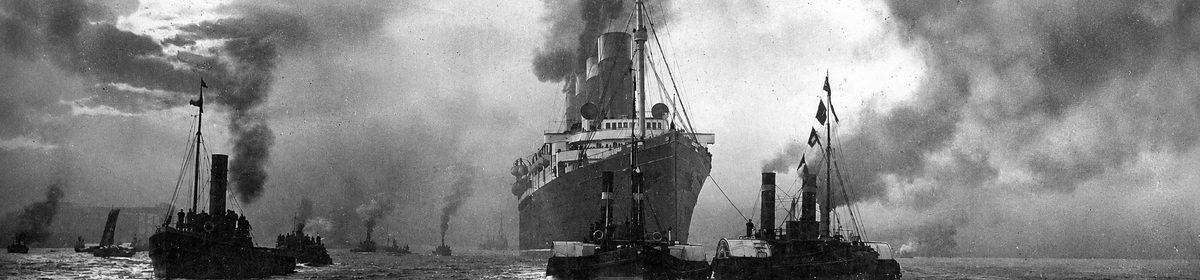
Her sister was Lusitania; the minute she sank, she became a legend. After her sister sank, Mauretania just kept working and working. There is a parallel to the RMS Olympic, which became a runner-up to her sister, Titanic. Both the Olympic and Mauretania were great ships and worked for decades, unlike their more famous sisters. The ship’s interior is incredible. There are many pictures of this one because she sailed into the 1930s after being launched in 1906. The Edwardian period had great tastes in decor.
The RMS Mauretania was the fastest passenger liner in her era, bar none. She and her sister, RMS Lusitania, would swap out as the fastest ships, but Mauretania would take the record, as we will see. She was built for the Cunard Line during a time when ocean liners were becoming symbols of national pride. Launched in 1906 and entering service in 1907, she was designed to compete with the great German liners that were dominating the Atlantic. Along with her sister ship, she represented the latest in shipbuilding technology. She was powered by steam turbines, an innovation at the time, and quickly proved herself to be one of the fastest ships in the world.
After Cunard came out with Lusitania and Mauretania, White Star Line came out with Olympic, Titanic, and Britannic. The Cunard Line and White Star were something like the Apple and Microsoft of North Atlantic travel. They were enormous rivals, and every new ship was measured against what the other company had built. Beautiful ships came out of this competition.
Not long after entering service, Mauretania captured the Blue Riband (unofficial accolade given to the passenger ocean liner that achieved the fastest average speed on a regular crossing of the North Atlantic)for the fastest crossing of the Atlantic. She held the record for more than twenty years! That is an achievement that has never been matched. Passengers were impressed not only by her speed but also by her comfort. Her interiors featured grand public rooms, elegant dining areas, and luxurious accommodations. For many travelers, sailing on Mauretania was just as much about the experience as it was about reaching New York. At the time, she was just as famous as her sister.
When World War I began, Mauretania’s career changed dramatically. Like many large liners, she was called into government service. She served as a troopship and later as a hospital ship. During the Gallipoli campaign and other military operations, she transported thousands of soldiers and wounded personnel. Mauretania survived the war and returned to civilian service.
After the war, Mauretania returned to carrying passengers across the Atlantic and remained popular with travelers. In 1927, she carried Leonard and Phil Chess, two Polish immigrant boys who later built Chess Records. Four years later, Charlie Chaplin sailed aboard her alongside Malcolm Campbell, who had just set a new land-speed record in his Blue Bird automobile. When Mauretania reached Southampton, Campbell learned that King George V had approved his knighthood.
In June 1922, the Marx Brothers crossed the Atlantic aboard the Mauretania on their way to their first British tour. Groucho, Harpo, Chico, and Zeppo were aboard, years before Hollywood made them household names. They returned to New York aboard White Star’s Cedric the following month.
However, newer ships were beginning to appear. Vessels such as the German Bremen and Europa were faster and more modern. By the early 1930s, Mauretania was showing her age. Although still admired, she could no longer compete with the newer generation of liners entering service.
In 1935, after nearly three decades on the Atlantic, Mauretania was retired and sold for scrap. Many people were saddened by the news. Crowds gathered to see her one last time as she made her final voyage. Today, she is remembered as one of the greatest ocean liners ever built. She combined speed, reliability, and elegance in a way few ships ever have. For many maritime historians, the Mauretania represents the high point of the great Edwardian liners and a time when crossing the Atlantic by ship was an adventure in itself.
Among the small group aboard for Mauretania’s final voyage was an unnamed couple who reportedly had spent their honeymoon on her maiden voyage in 1907. Nearly 28 years later, they returned to say goodbye to the ship that had helped begin their married life. I just found someone who could have been the husband. J. S. Williamson of Kirkcudbright reportedly honeymooned aboard Mauretania; he purchased a house flag at the 1935 auction. Possible connection to the farewell-voyage couple, unconfirmed.
Olympic was the reliable old friend.
Mauretania was the reliable old friend who raced you home.
A very sad picture. The two were fierce rivals for 24 years, Olympic and Mauretania, heading toward the scrapyard.Olympic is on the left and Mauretania on the right.I’ve come to hate this picture because they should be hotels/museums today, not scrappedand lost to history.
I usually don’t post during the week, but this is a post based on my experience this past weekend. On Sunday, a WWII ship came to my small town of Ashland City, to our park by the Cumberland River. The 83-year-old ship is 328 feet long and 50 feet wide. Over 4,000 showed up on Saturday, and roughly only 6,000 people live in the town. I boarded the ship on the tank deck, and it was like a warehouse. Then I walked through and up the decks. It has 6 decks in all, and it would be easy to get lost.
I explored the ship and saw the post office, the galley, the bunks, the engine room, watertight doors, the bulkhead, and most of the things I write about. The veterans were so much fun to talk to onboard. Inside, I felt like I was touching history and living it. I have a lot of pictures of the visit at the bottom. It was an incredibly massive ship inside.
After looking out from the top deck, I imagined a ship listing. How high it was above the water, and how hard it would be to lower a lifeboat. I am planning to visit some riverboats in Nashville and maybe a steamboat in Granville, Tennessee. I want to learn more so when I tell these stories I get a better idea of what I’m writing.
I also thought about the RMS Olympic and other ocean liners. LST-325 is roughly 328 feet long. Olympic was about 882 feet. You’re talking about putting nearly 2.7 LST-325s end-to-end to equal Olympic’s length and almost two side by side to get her width. It’s mind-boggling how large these ships are.
A Short History of LST-325
The Landing Ship, Tank was not designed for beauty or speed. It was designed to carry war directly onto a beach. The ship’s broad bow opened into two doors, and a heavy ramp allowed tanks, trucks, troops, and supplies to drive straight onto shore. Officially, LST meant Landing Ship, Tank. Sailors sometimes joked that it meant Large Slow Target.
LST-325 was laid down at the Philadelphia Navy Yard on August 10, 1942. She was launched on October 27 and commissioned on February 1, 1943. Her flat bottom and shallow draft allowed her to approach beaches that ordinary cargo ships could not reach. Ballast tanks helped change her trim for an ocean crossing or a landing, while a stern anchor could help pull her away from the beach after unloading.
During World War II, LST-325 served in the European theater. She participated in the invasion of Sicily in July 1943 and the landings at Salerno that September. In June 1944, she took part in the Normandy invasion at Omaha Beach. During the months that followed, she made more than forty trips across the English Channel. She carried soldiers, vehicles, equipment, and supplies into France, then returned with wounded men and prisoners. She earned two battle stars for her wartime service.
After the war, she was decommissioned in 1946. She returned to service during the 1950s as USNS LST-325, supporting the construction of early-warning radar stations in the Arctic. In 1964, she was transferred to the Greek Navy and renamed Syros. She continued serving Greece for more than three decades.
In 2000, the USS LST Ship Memorial acquired the aging vessel. A volunteer crew, many of them veterans, brought her approximately 6,500 miles from Crete to Mobile, Alabama. After an extensive restoration, she opened to the public in 2001. Evansville, Indiana, became her permanent home in 2005.
Today, LST-325 remains operational and still travels under her own power. She is the only operational LST preserved in its World War II configuration afloat in American waters. The ship was originally built to bring soldiers and machines onto distant shores. More than eighty years later, she travels to American river towns and brings that history directly to us. If she comes to your town, take a tour!
John C. Niedermair’s original pencil sketch for the LST design. Courtesy of the Society of Naval Architects and Marine Engineers (SNAME).
This fire and sinking changed the rules and laws involving steam river paddleboats. In reality, this should have happened with the Pennsylvania steamboat.
The Sultana was a wooden, side‑wheel steamboat that became the setting for one of the deadliest maritime disasters in U.S. history. It was a catastrophe that killed 1,169 but was largely overshadowed by the end of the Civil War and the assassination of Abraham Lincoln. She was built in Cincinnati in 1863 and designed to carry a few hundred passengers and freight on the Mississippi. In April 1865, she was packed with more than five times her legal capacity, mostly Union soldiers who had survived brutal Confederate prison camps such as Andersonville and Cahaba.
In late April 1865, the Sultana arrived in Vicksburg with a leaking boiler. A boilermaker recommended a more extensive repair, but a smaller patch was installed so the vessel would not lose a profitable government contract. The government paid steamboat operators according to the number of former prisoners they transported. Quartermaster Reuben Hatch had promised Captain Mason at least 1,000 men in exchange for part of the payment.
The situation then grew out of control. Poor recordkeeping, haste, and corruption led Army officials to load 1,960 paroled Union prisoners aboard the Sultana. Once the guards, crew, and civilian passengers were included, approximately 2,137 people were aboard a vessel licensed to carry only 376 passengers. The boat was so crowded that men slept on the decks, inside the cabins, and on top of the cargo, and on top of the ship.
In the early hours of 27 April 1865, about seven miles north of Memphis, three of the Sultana’s four boilers exploded with tremendous force. The blast tore through the center of the wooden hull, killing many instantly and hurling bodies and debris into the air and into the Mississippi. The shattered boat caught fire and began to sink in the cold, fast‑moving river. Survivors scrambled for anything that floated: planks, doors, pieces of wreckage, and many jumped into the water to escape the flames. With only one small lifeboat and very few life preservers, and with men already exhausted and malnourished from prison, the odds of survival were slim.
Captain James Cass Mason has often been blamed for the decisions that led to the disaster, particularly allowing a temporary boiler repair and accepting an overloaded ship. Yet several survivors also recalled seeing him after the explosion, tearing pieces of the wreckage loose and throwing them into the river so desperate men would have something to hold onto. He was last seen helping others and never escaped himself. Like much of the Sultana story, his legacy remains complicated.
Estimates vary, but modern research suggests roughly 1,160–1,170 people died, with some older accounts placing the total nearer 1,800. Most of the victims were Union soldiers from Midwestern states, many of whom had survived Confederate prisons only to die on the way home. Hundreds more were badly burned or injured; many of those who initially survived later died from their wounds or from exposure in the river.
An official inquiry blamed the disaster on boiler mismanagement, low water levels, and the faulty repair made at Vicksburg. That was compounded by severe overcrowding that made the vessel top‑heavy and unstable. No one was ever held criminally accountable; Captain Mason died in the disaster, and the government’s attention was consumed by the war’s end and Lincoln’s assassination. After that, the manhunt for John Wilkes Booth took precedence, so the Sultana tragedy received relatively little lasting attention. Today, the wreck is believed to lie buried under a soybean field in near Marion in eastern Arkansas. A small museum in Marion, Arkansas, preserves the story of what remains America’s worst maritime disaster
The Sultana disaster exposed serious weaknesses in the nation’s steamboat safety laws. Although change did not happen overnight, Congress strengthened federal oversight in the years that followed. The Steamboat Act of 1871 expanded licensing requirements to include ship masters and chief mates, not just pilots and engineers. It also created a more comprehensive marine safety code, required regular federal inspections of hulls, boilers, and equipment, and established stronger national oversight of steamboat operations. The disaster also encouraged private boiler inspection and insurance organizations to improve safety standards, helping eliminate many of the dangerous boiler designs that had contributed to tragedies like the Sultana. While these reforms came too late for those aboard, they helped make America’s waterways far safer for future generations.
Although the Army investigated the disaster and prosecuted one officer, his conviction was overturned. No one was ultimately held accountable.
Helena, Arkansas. April 27, 1865. Ill-fated Sultana. The overloaded steamboat Sultana on the Mississippi River the day before her boilers exploded and she sank on April 27th. The passengers included ca. 1,880 Union soldiers heading home at the end of the Civil War; more than 1,100 of these men died in the disaster. Phase One P 65+
In 1880, a passenger steamship named the SS Columbia was launched in Chester, Pennsylvania. She was built for the Oregon Railway and Navigation Company, and she was intended to carry passengers and freight between San Francisco and Portland. Her lasting claim to fame, however, came after the company’s president, Henry Villard, witnessed Thomas Edison’s New Year’s Eve demonstration at Menlo Park. Villard was fascinated by Edison’s new incandescent lighting system and decided to have it installed aboard his new ship. The Columbia became the first commercial installation of Edison’s system. I want to thank Jim Adams for a post about electricity that spurred me on to finish this.
In the spring of 1880, Edison’s incandescent light was still largely experimental. His team now had to install delicate glass bulbs, primitive wiring, and early dynamos aboard a ship that would constantly pitch, roll, and vibrate. Dampness and salt air presented additional problems. It was one thing to make electric bulbs glow during a demonstration at Menlo Park. It was another to keep them burning aboard a steamship traveling around South America.
Edison entrusted the shipboard installation to a team that included his associate Francis Upton. The men ran insulated wiring through the passenger spaces and connected more than one hundred lamps to dynamos below. On May 2, 1880, the system was tested in New York, and electric light filled the ship’s saloon and cabins. Passengers could not operate the cabin lights themselves; a steward controlled each one from a locked rosewood box outside the room. The system had worked at the pier. Now it had to survive a ten-week voyage around South America.
When she set sail on her maiden voyage from New York to Portland, Oregon, she was a floating wonder. The route required sailing all the way around South America, as the Panama Canal did not yet exist. During a stop in Rio de Janeiro, the Emperor of Brazil even climbed aboard just to witness the spectacle of her glowing electric interior. The voyage was a massive success; Edison’s dynamos performed flawlessly, and the ship proved to the world that electric lighting was safe and practical for everyday use.
For the next 27 years, the SS Columbia became a reliable ship of the Pacific Coast, carrying passengers and cargo between Portland and San Francisco. She braved the rough storms and even earned a reputation for heroism, rescuing survivors from the wreck of the SS Alaskan in 1889. She was a symbol of progress, smoothly bridging the gap between the old world of wooden sailing ships and the new era of steel and electricity. She was also at a dock in the 1906 San Franciso Earthquake (you can see her listing in the pictures below) but survived.
Her fate would change on a dense, foggy night on July 21, 1907. While navigating off the coast of Shelter Cove, California, the SS Columbia had a lumber schooner named the San Pedro coming at her. Both ships were going at an unsafe speed through the fog. Before Captain Peter Doran could steer clear, the San Pedro crashed directly into the Columbia’s starboard side. The San Pedro’s bow tore deeply into the Columbia’s starboard side, opening her hull to the sea. Water poured in rapidly, and the steamship began settling by the bow.
The collision jolted sleeping passengers awake and sent them rushing onto a sharply listing deck. Outside, darkness and thick fog concealed both the surrounding water and any ships that might be close enough to help. Captain Doran remained at his post while crew members and passengers tried to lower lifeboats, distribute life preservers, and throw anything that could float into the sea. Some boats were launched, but the Columbia sank too quickly for all of them to be used.
Captain Doran showed immense bravery. He stayed on the bridge, refusing to leave his post, and shouted instructions through the dark to help lower the lifeboats until the ocean rose up and carried him away. The crew and several heroic passengers worked entirely by touch. They frantically untied lifeboats, handed out life jackets, and threw anything that could float into the sea. Only a few lifeboats were successfully launched before the ship’s angle became too steep.
As the bow sank deeper, the stern of the Columbia lifted high into the air. Terrified passengers clung to the deck railings until they could no longer hold on. In roughly 8-10 minutes after the collision, the steamship slipped beneath the waves. Surviving passengers and crew were left floating in the freezing, foggy void, clinging to overturned boats, deck chairs, wooden doors, and wreckage, waiting in the dark to see if anyone would rescue them.
There were 251 aboard the ship. Tragically, 88 people lost their lives in the disaster. 163 people survived the sinking and were successfully pulled from the ocean. Three ships helped to rescue the Columbia’s passengers. Three ships took part in the rescue. The San Pedro, the vessel that had struck the Columbia, became an unexpected refuge. Her large cargo of redwood lumber helped keep her damaged hull afloat, and approximately eighty survivors reached or were pulled aboard her. The steamships George W. Elder and Roanoke also arrived and assisted at the scene. The George W. Elder took survivors aboard and later helped tow the damaged San Pedro toward shore.
A ship famous for bringing light to the sea was ultimately lost in darkness and fog.
The San Pedro after the collision… I don’t know how she made it, but she survived the collision. I can’t believe she was floating at this point!
Yes, this is another sinking, but what the passengers found themselves in after the ship went down is something no one should ever experience. I said it in my Mark Twain post, and I can’t say it enough: maritime regulations are written in blood. The sinking of the SS Princess Alice is another painful reminder of that truth. It also reminds us that some disasters are made worse not just by what happens on the water, but by conditions that should have been addressed long before tragedy struck.
On September 3, 1878, the crowded passenger paddle steamer was returning to London after a day excursion along the Kent coast. Some children were asleep, and a band was still playing as the ship rounded Tripcock Point near dusk. Then the Princess Alice and the much larger collier Bywell Castle suddenly found themselves on a collision course.
The iron bow of the Bywell Castle struck the Princess Alice near her starboard paddle box. The smaller ship broke apart and sank in about four minutes. Passengers were in the water before many of them understood what had happened.
The investigations did not produce one simple answer. The coroner’s jury found that both vessels had contributed to the collision. The Board of Trade blamed the Princess Alice for failing to follow the proper navigation rule, while the High Court later held both ships responsible.
Although the Bywell Castle survived the collision, her crew immediately turned their attention to rescuing survivors from the Thames. They were joined by police, watermen, dock workers, and ordinary citizens who rushed to help. In disasters like this, history often remembers the ships, but it should also remember those who risked their own lives trying to save people they had never met.
The ship went down at the point where enormous amounts of untreated sewage and industrial waste from London entered the Thames. About an hour before the collision, nearby outfalls had released an estimated 75 million imperial gallonsof untreated sewage, about 90 million U.S. gallons, into the Thames.
Survivors found themselves struggling not only in the water but in what contemporary accounts described as foul, polluted sludge. Some survivors who were pulled from the river later died after swallowing the polluted water. Several survivors who were pulled from the river later died from swallowing the sewage water. Between 600 and 700 people died. They didn’t keep a correct ship manifest, so the exact number is not known.
That tragedy had consequences far beyond the sinking itself. It shocked Victorian Britain and added urgency to efforts to improve London’s sewage and public health systems. In other words, the Princess Alice wasn’t just a maritime disaster; it became part of the story of modern sanitation.
The collision put hundreds of passengers into the Thames. Years of neglect made the river itself part of the disaster. After this, things started to change and raw waste would not go into the river. London built purification and treatment facilities directly at the existing Barking (Northern Outfall) and Crossness (Southern Outfall) pumping stations.
SS Princess Alice sinking after colliding with the SS Bywell Castle on the River Thames, United Kingdom, drawing by Q Michetti, engraving by Francesco Canedi from L’Illustrazione Italiana, Year 5, No 39, September 29, 1878.unknown artist; The Wreck of the ‘Princess Alice’; The Stroud District (Cowle) Museum Trust Collection; http://www.artuk.org/artworks/the-wreck-of-the-princess-alice-62554
St. Mark’s Evangelical Lutheran Church chartered the PS General Slocum for its annual outing on June 15, 1904. It was a tradition that families in New York’s German neighborhood looked forward to every year. Mothers and children dressed for a day. They carried food, greeted friends, and walked toward the East Third Street pier. A band was waiting aboard the ship.
To the families stepping onto her decks, the General Slocum looked ready for them. She was a large and familiar excursion steamer with three decks, electric lights, and a brightly decorated interior. She had carried thousands of passengers around New York Harbor.
The General Slocum had passed a government safety inspection only weeks earlier. On paper, she was ready to carry passengers. She wasn’t. Her fire hoses were old and rotten. Her lifeboats were secured in place and would prove impossible to launch. Many of her life preservers were thirteen years old. The crew had never held a proper fire drill. Everything needed to save the passengers appeared to be aboard the ship. Almost none of it could be trusted.
The families now filling her decks knew none of this. To them, the General Slocum was simply the ship that would carry them away from New York City for a day. The neighborhood was known as Kleindeutschland. German immigrants had built churches, shops, clubs, and homes there. On that Wednesday morning, families from St. Mark’s Evangelical Lutheran Church were preparing for their annual Sunday school picnic. For many of them, it was one of the happiest days of the year. The ship filled up with passengers, predominantly women and children, to have a great day out.
The General Slocum left the East Third Street pier at about 9:30 that morning. Roughly half an hour later, as she passed East 90th Street and approached the dangerous waters of Hell Gate, smoke began rising from below the main deck.
The exact cause of the fire was never established. It appears to have started in or near the lamp room, where straw, oily rags, and lamp oil gave the flames plenty of fuel. A discarded match or cigarette may have started it, but no one could say for certain.
One of the first warnings reportedly came from a teenage passenger named Frank Perditski. After noticing smoke, he rushed into the pilothouse and tried to alert Captain William Van Schaick. The captain was concentrating on navigating Hell Gate and dismissed him. Another boy warned a deckhand, who stopped to investigate before notifying the mate. The mate then went to see the fire for himself before carrying the warning to the bridge. By the time Van Schaick received an official report, several valuable minutes had been lost.
The fire spread rapidly through the wooden ship. Some mothers placed life preservers on their children, believing they would keep them afloat, only to see them sink in the river. Many of the preservers were thirteen years old. Their canvas coverings split apart and released cork that had deteriorated into powder.
The clothing worn at the time made escape even harder. Women often wore long dresses, petticoats, corsets, and heavy shoes. Once soaked, those clothes became tremendously heavy. It is a detail easily overlooked today, but it contributed to the loss of life in this and other maritime disasters of the period.
After receiving the official warning, Van Schaick ordered full speed ahead. Within approximately thirty seconds, he directed the pilot toward North Brother Island. Investigators later faulted him for passing closer places where the ship might have been beached. Van Schaick maintained that he feared setting fire to waterfront buildings and oil tanks and believed North Brother Island offered the safest landing. Whatever his intentions, the ship’s speed and the headwind drove the flames toward the crowded stern.
When the burning ship reached North Brother Island, doctors, nurses, and even patients from Riverside Hospital rushed to the shoreline. Mary McCann, a teenage patient recovering from illness, entered the water and reportedly helped save several children.
Help also came from nearby Rikers Island. Two prisoners, John Merther and Dan Casey, persuaded their supervisor, Dr. Nathan E. Broder, to take them across in a rowboat. The three repeatedly pulled victims from the river, carried them to North Brother Island, and returned for more until they were too exhausted to continue.
Tugboats, fireboats, police boats, and private vessels converged on the scene. Several tug crews pressed their boats against portions of the Slocum that had not yet been consumed, allowing passengers to jump onto their lower decks. Others pulled survivors from the water as the burning ship came to rest against the island.
The exact number aboard and the final casualty count vary among historical sources. The figures most often given are 1,021 dead and only 321 survivors. Most of the victims were women and children.
The disaster devastated Kleindeutschland. Widowers and surviving families moved away, and some people reportedly took their own lives under the weight of their grief. The neighborhood was already changing, but the loss of so many families accelerated its decline. Although most of those aboard were German American, Jewish and Italian New Yorkers were also among the dead.
The investigation uncovered one final betrayal. Some of the cork supplied for life preservers had been mixed with cheaper granulated material. Pieces of iron had been inserted to bring the cork blocks up to the required weight. The devices had been made to satisfy an inspection requirement on paper, not necessarily to keep someone alive in the water. Managers of the cork company were indicted, but none was convicted.
There was enough blame to go around. Captain Van Schaick carried responsibility for the lack of fire drills and for never discovering that the equipment aboard his ship could not be trusted. The owners had failed to maintain and replace that equipment. Government inspectors then gave the public confidence in an unsafe ship by certifying her only weeks before the disaster. None of them needed to be a villain. The system allowed each of them to behave as though someone else had checked. Sometimes that is all it takes for a disaster to happen.
Ships do not have to be perfect. Neither do people. But when lives depend on safety equipment, “good enough” is not good enough. The passengers aboard the General Slocum trusted that the hoses would work, the lifebelts would float, and the inspection meant something. They deserved better!
The General Slocum disaster remains the deadliest maritime disaster in New York City history. Until September 11, 2001, it was the deadliest man-made disaster the city had ever experienced. Yet most people have never heard of it.
Today, the Slocum Memorial Fountain stands in Tompkins Square Park. Carved into its pink marble are the faces of two children and the words:
“They were Earth’s purest children, young and fair.”