In spring 2000, Bob King, the editor of the (tragically) now-defunct Classic Images newspaper, invited his readers to share their top 25 classic movies. As a frequent contributor to the publication – and a to-my-very-soul lover of lists, I broke every speed record to send in my favorites. Fourteen years later, after coming across a copy of that list, I decided to update the movies, and was interested to see that 10 films from my original list didn’t make the 2014 version.
Today, while researching my blog for posts about the 1956 noir, The Killing, I spotted the list I did 12 years ago and quickly decided to give it another whirl. As always, every film on the list had to meet my personal criteria: (1) it had to be one of those movies that I’ve watched over and over again, and (2) when I thought of it, I had to say, “OH! I LOVE that movie!”
Interestingly, once again, a total of 10 movies that were on my 2014 list did not make the 2026 version: The Big Heat (1953), Bombshell (1933), Gaslight (1944), His Girl Friday (1940), Imitation of Life (1959), Possessed (1931), Red Dust (1932), Twentieth Century (1934), You Can’t Take It With You (1937), and Young and Willing (1943). The new 10 to this list are asterisked below.
One more thing of note: three films that were on my first list, but not on the second, are now back on my list again: A Streetcar Named Desire (1951), Sunset Blvd. (1950), and The Wizard of Oz (1939). Curiouser and curiouser . . .
So, here, after all this analysis is behind me, is my list of top 25 classic movies. I hope you’ll come up with your own list and share it in the comments below – I’d love to see if we have any in common, and if there are any films I need to add to my watchlist!
THE LIST!!!
12 Angry Men (1957) *
42nd Street (1933) *
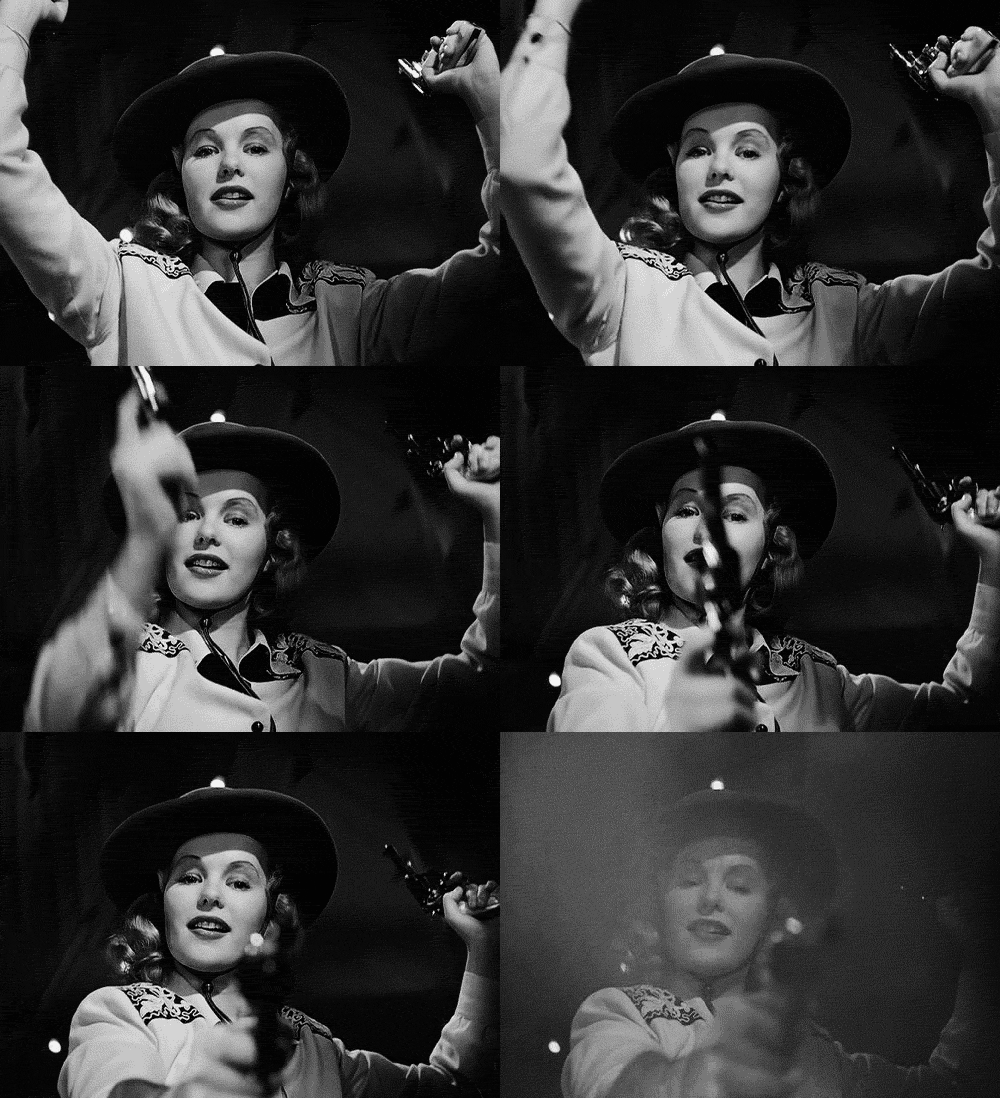
A musical? On my list of favorites? Yes, indeed, if that movie is 42nd Street! (Gif courtesy of Danny Reid over at Pre-Code.com.)
Welcome to The Film Noir Files, the noir series here at Shadows and Satin and over at Speakeasy, the blog authored by my pal Kristina, where each month we recommend a film noir feature for you to watch on TCM. We never know what the other has selected until we post, and part of the fun is trying to never pick the same movie!
As I’d expected, I faced a bit of a challenge finding a film noir to recommend for October, especially with many gems airing this month that I’ve already highlighted, like The Asphalt Jungle (1950), Crime Wave (1954), and Leave Her to Heaven (1945), which I featured in a “Noir or Not” post back in 2011.
Fortunately, after reviewing the list of offerings, one movie stood out to me – Loophole (1954), an underrated confection starring noir vets Charles McGraw, Barry Sullivan, and Dorothy Malone. After its release, the film was described by one reviewer as a “mighty respectable little melodrama,” and I heartily agree.
Sullivan, McGraw, and Malone shine in Loophole.
The film features one of noirs most familiar characteristics – the voiceover narrator who, in this case, informs the viewer at the start that Los Angeles (where the film is set) has a population of 2,100,000 residents. “The story you are about to see actually happened to one of those 2,100,000 people,” the voice intones. “It COULD happen to you!”
In Loophole, Michael Donovan (Sullivan) is the unlucky fella to which the story happens. A respected citizen and war veteran, Donovan works as chief teller at a Hollywood bank branch, but his “orderly, planned, routine” day takes a nosedive when he discovers a cash shortage of nearly $50,000. Donovan is quickly suspected of the theft, and the charge is led by a sadistic bonding company investigator, Gus Slavin (McGraw), who will stop at nothing to prove Donovan’s guilt. (“Nobody hides $49,900 from us,” Slavin tells his boss. “Nobody.”)
Donovan tries to play it off . . .
In addition to the standout characters – which, in addition to Donovan and Slavin, include Donovan’s devoted and practical wife (Malone) – the film benefits from a patented noiresque sensation of relentless doom. It starts as soon as we see Donovan trying to maintain his composure behind his cage at the bank, even while his repeated calculations indicate that something is very wrong.
And he doesn’t know the half of it.
Other Loophole Stuff
Loophole was produced by Allied Artists, a Poverty Row Studio that in future years, would go on to produce such hits as Invasion of the Body Snatchers (1956), Cabaret (1972), Papillon (1973), and The Man Who Would Be King (1975).
The picture was helmed by Harold D. Schuster, who was a film editor before becoming a director. Most notably, he was the editor for the 1927 silent classic Sunrise, which won three Oscars at the first Academy Awards ceremony, including Best Unique and Artistic Production.
What is happening??? I DON’T KNOW.
I just had to mention the very opening of the film, which flashes the name of the Sunset Strip club Mocambo, then shows a couple exiting a car and hugging excitedly as they prepare to enter the popular establishment. This has absolutely nothing to do with anything that follows – it’s almost as if it were taken from a completely different movie. It’s kinda fascinating to me.
Don’t sleep on this one – Loophole is airing on October 3rd and October 4th on TCM. Do yourself a favor and check it out. And be sure to visit Speakeasy to find out which film noir gem Kristina has chosen for this month – and see if our streak is still intact!
Pre-Code Crazy is the monthly series here at Shadows and Satin and over at the blog of my pal Kristina, Speakeasy, where each month we recommend a pre-Code film for you to watch on TCM – we never know what the other has selected until we post, and we try to never pick the same movie!
I’m usually hard-pressed to find a pre-Code recommendation for October (and a film noir pick, too, for that matter), because TCM is so jam-packed with scary selections. But this month, TCM is serving up a veritable smorgasbord of pre-Code gems, and when I saw New Morals for Old (1932) on the list, I didn’t need to look any further!
Myrna Loy? Yes, please!
This feature stars one of my cinematic sentimental favorites – Robert Young, who I knew for many years only as TV’s Marcus Welby, M.D. I was positively delighted when I discovered his classic film career and it’s always a pleasure to see his big-screen appearances (kinda like the way I feel about the films of Neil Hamilton – also known as Commissioner Gordon on Batman – but I digress).
Young plays Ralph Thomas, a young man whose life choices don’t sit well with his parents, played by Laura Hope Crews and Lewis Stone. Essentially, Ralph would rather run off to Paris to become an artist than join his father’s wallpaper business, but the behavior of his sister, Phyl (Margaret Perry) is even more galling to Mr. and Mrs. Thomas: she’s involved with (gasp!) a married man.
That’s the premise of the film in a nutshell; for the next hour or so, the movie economically demonstrates the decisions and actions of Ralph and Phyl, the reactions of their parents, and the end result of these goings-on – which might just take you by surprise. Also, in case I haven’t mentioned it (and I haven’t), the cast includes Myrna Loy, so – bonus!
Mom and Pop Thomas are something else.
I stumbled across this movie years ago – I’d set my VCR (that should give you a clue of how long ago I found it) to tape a couple of movies off of TCM but, serendipitously, I misjudged the amount of taping time and later found that I’d captured this one as well. I was hooked from the first minute, where we join the elder Thomases as they walk home from a church service. It only takes 60 seconds for the viewer to witness the judgmental, old-fashioned demeanor of these two, as Mrs. T extols the virtues of the boys’ choir, but points out the crooked teeth of one of the members (which “just spoils his solo”), and Mr. T grouses about his wife’s penchant for ringing the doorbell to their home, even though he already has the key in his hand. It’s a brief but delightful scene that left me looking forward to what was to come. And I wasn’t disappointed.
I don’t think you will be, either.
Other New Morals for Old Stuff
Jean Hersholt – also the namesake of the Academy Awards Jean Hersholt Humanitarian Award. Duh.
The cast includes, in small roles, three character actors you might recognize: Jean Hersholt (who I remember from films like Grand Hotel and Dinner at Eight) plays a writer who aids Ralph in his career pursuits; Elizabeth Patterson is the Thomas family’s Aunty Doe (who complains that the children never kiss her goodbye) – one of her best-known roles was as Mrs. Trumbull on I Love Lucy; and Louise Closser Hale plays Mrs. Warburton, a “hostess who knows everybody who is anybody” – she was also in Dinner at Eight, along with several other pre-Code greats (more about them here).
The role of Phyl’s lover, Duff Wilson, was played by David Newell – Newell had a busy screen career that began in the late 1920s, but most of his roles were uncredited. In 1949, he stepped behind the camera as a makeup artist and would go on to work in this capacity on feature films like the 1954 Ida Lupino noir Private Hell 36, and TV shows including Lassie and The Dennis O’Keefe Show. He wasn’t the first choice for the role of Duff; Donald Cook – you might remember him from The Public Enemy and Baby Face – was originally cast in the part, but he was injured in a car accident shortly after filming began.
The film was based on a play, After All, which opened in London in 1930, with Madeleine Carroll in the role of Phyl, and on Broadway the following year with a cast that included Humphrey Bogart as Duff Wilson. The latter production closed after only 20 performances. The screen version was Margaret Perry’s film debut – she reprised the part she played in the short-lived Broadway play.
One more thing – this feature was directed by Charles Brabin, who also helmed my Pre-Code Crazy pick for last month, The Secret of Madame Blanche (1933). Now you know.
Tune into TCM October 12th for New Morals for Old – and be sure to pop over to Speakeasy to find out what pre-Code gem Kristina has selected, and see if our Pre-Code Crazy streak is still intact!
I’m telling you – time keeps on slipping (slipping, slipping) into the future. One day, I’m in L.A. at the TCM film festival, swooning over Carol Burnett, and the next, I’m listing Halloween décor to my Etsy shop (shameless plug alert!) Oy.
So, before I have to start making my wardrobe plans for the next festival, I’m taking the opportunity today to recap my experience from this year’s event, which I attended – for the sixth year – with my older daughter, Veronica. I’ll try to keep this post short (ha!) and I hope you’ll come along!
DAY 1: THURSDAY
I always officially kick off my personal festival with the “So You Think You Know Movies” trivia contest, hosted by Bruce Goldstein, of New York’s Film Forum. Things were a bit off-kilter this year, though – because Goldstein was the recipient of the prestigious Robert Osborne Award, as well as introducing the 1957 Fellini movie Nights of Cabiria, he was relieved of his usual trivia hosting gig. Subbing in for Goldstein was Jeopardy game show host (and former record-setting contestant) Ken Jennings, who served up his own unique trivia contest, called Kennections. There were numerous differences from Goldstein’s contests: participants competed individually, as opposed to teams; most of the movies in question were released after 1970; and for each round, contestants answer five seemingly unrelated questions, then figure out the connection that links all five answers.
The five contestants with the highest points competed on stage!
Unfortunately, I couldn’t find my answer sheet from the contest, so I can’t share the actual questions with you, like I normally do in my annual TCM fest recap. Instead, I created my own mini-game for you to play – I think I’ll call it “Karen-nections!” Just answer the five questions and then share what you think the five films have in common – the answers will be at the end of this post.
Karen-nections:
On the set of this picture, Grace Kelly had an affair with her mustachioed, very-married co-star.
Marni Nixon dubbed Deborah Kerr’s singing in films released in back-to-back years – the first film was The King and I in 1956. What was the second?
Frank Sinatra got the chance to sing a duet with his childhood idol in this film.
This was Charlotte Greenwood’s last movie.
For her part as a Native American in this picture, Virginia Mayo wore brownish make-up on her face, arms, and legs.
Just two gals taking a little stroll on la alfombra roja . . .
On the evening of the first day, Veronica and I got all dolled up to walk the red carpet for the opening night movie: Barefoot in the Park (1967), with special guest Jane Fonda interviewed by Ben Mankiewicz. Fonda was an absolute delight – both funny and touching – and she praised her Barefoot co-star, Robert Redford, saying that he was “meant to be in the movies.”
Jane Fonda was a joy.
“He’s the only person I made four movies with, and I’d have done a lot more if I’d had the chance,” Fonda said. “I loved him and I deeply respect him . . . . I want to fight in the spirit of Robert Redford.”
DAY 2: FRIDAY
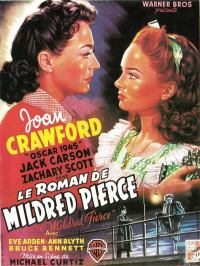
The highlight of the following day was an interview with Carol Burnett in Club TCM – I was seated in the second row, and when she was first introduced, I actually teared up a little. I couldn’t believe that she was right there, just a few feet away from me, this actress whose performances I’d loved since I was a child. Before she came out, the standing room-only crowd was treated to clips from several of the classic movie spoofs that she’d done on The Carol Burnett Show, including Mildred Fierce, A Swiped Life, and Went With the Wind. They’re still as laugh-out-loud funny as they were when they initially aired, and it was so awesome to see them with a roomful of Carol Burnett fans!
Carol Burnett is a treasure. That’s all.
Burnett’s interview with Ben Mankiewicz was an hour long – here are just a few highlights:
The audience applauded when Burnett mentioned appearing on The Gary Moore Show, and she quipped, “You’re old!”
She grew up just five or six blocks from the Hollywood Roosevelt Hotel, where the interview was conducted.
She loves the 1932 movie Rain, starring Joan Crawford – like me!
Yvonne Craig – who would later gain fame as Bat Girl on TV’s Batman series – was Burnett’s roommate at the Rehearsal Club, a rooming house for aspiring actresses in New York (and the inspiration for the play and resulting 1937 film Stage Door).
Her mother named her after Carole Lombard.
There was so much more to the interview, so many great stories told as only Burnett can tell them – it was honestly one of the best experiences I’ve had since I started going to the festival back in 2013.
Later that day, we were treated to another outstanding interview – Glenn Close was interviewed by Ben Mankiewicz at Graumann’s Chinese Theatre before the screening of the 1988 film Dangerous Liaisons (another movie that I really wanted Veronica to see) – she called it a “timeless movie . . . one of the greatest scripts ever written.”
Miss Close and Sir Pippen.
Close starred as the shrewd and calculating Marquise Isabelle de Merteuil, earning the fifth of her eight Academy Award nominations. Despite the general perception of the Marquise, however, Close said she never saw her as a villain. “She was determined not to let men treat her like they treated most women,” Close said. “She wasn’t a villain – she was a survivor.”
Fun fact about Close’s interview – she entered the theater with her little white dog, Sir Pippen of Beanfield (better known as Pip), trailing behind her. She sat in her chair and put a throw on the floor next to her, and Pip laid down on it. Close proceeded with the interview, and when it was over, the actress walked out the theater with Pip trotting behind. It was so adorable.
After seeing the the video package on Hershey’s career, I added several of her films to my watchlist, including Boxcar Bertha (1972).
Next up was yet another beloved movie I wanted to share with Veronica: Hannah and Her Sisters (1986) – it’s one of my favorite Woody Allen movies, along with Radio Days (1987), Alice (1990), and Bullets Over Broadway (1994). Festival honoree Barbara Hershey (who played one of the sisters in the film) was on hand; once again Ben Mankiewicz was the interviewer. Hershey’s responses to Ben’s questions were soft-spoken and thoughtful, and she seemed to be quite overcome after watching the video package of her career that TCM played before the interview (“I’ve just never seen anything like that before,” she said.) We learned, among other things, that Hershey got her role in the film after just a 10-minute meeting with Woody Allen, and only a few days after she’d moved from California to the East Coast; she said that getting the part was “like a welcome mat to New York. . . . The whole movie is, to me, Woody’s warmest movie. It’s life by a fireplace, that film.” Veronica, by the way, enjoyed it, but she kept insisting, “Justice for Hannah!” (If you know, you know.)
DAYS 3-4: SATURDAY AND SUNDAY
In an effort to fulfill my quest to keep this post short (too late, I know), I’m crunching the final two days of the festival into the synopsis below. (You’re welcome.)
Alan Rode was a veritable font of information.
My pal, historian and author Alan Rode introduced the Saturday morning screening of Captain Blood (1935). I didn’t stay to see the movie, but I was fascinated by the info served up by Rode, who called the film “the greatest swashbuckling movie ever made.” I learned that Robert Donat was originally cast in the starring role but he had severe asthma that prevented him from taking it on, and Jack Warner sued him. (Yikes.) Also, director Michael Curtiz and producer Hal Wallis clashed on numerous topics, from too few close-ups of Errol Flynn to too many shots of Guy Kibbee’s belly! (By the way, Curtiz and Wallis went on to become lifelong friends.) I still have never seen Captain Blood, but this intro definitely made me bump it up on my watchlist.
Watergate informant John Dean was the special guest at the screening of All the President’s Men (1976). I’m sorry to admit that, after decades of build-up, the movie just wasn’t all that great to me (except Dustin Hoffman’s hair!), but listening to Dean talk about his role in the whole Watergate scandal was fascinating. Interestingly, as he pointed out, his name was never mentioned in the entire movie.
A gorgeous print of a fabulous film — worth waiting for!
Because I’ve had a watchable copy of Letty Lynton for many years now, I skipped the initial screening of the film on Day 2 of the festival, but Veronica really wanted to see it, and as luck would have it, it was screened again on the final day. It was a joy to see this movie on the big screen, and Veronica loved it. Also, I got the chance to see Joan Crawford’s grandson Casey LaLonde, who – along with George Feltenstein of Warner Bros. – helped spearhead the legal efforts that led to the release of the film after 90 years on lockdown. “I feel like it’s a triumph for Joan fans,” LaLonde said before the movie. “It’s just an honor for me to be associated with my grandmother and preserving her legacy.” Sadly, less than two months after this screening, LaLonde died suddenly, at the age of 54 – which makes his appearance at the festival even more special.
From my basement wall . . .
I attended my last movie of the fest – Breakfast at Tiffany’s (1961) – with Dail, my longtime TCM pal, and Veronica, who selected the movie. The movie was a first-time watch for me; I’d never been especially interested in seeing it, even though I have a print of Audrey Hepburn from the movie hanging in my basement, and I’ve certainly seen numerous clips from it over the years. But aside from Hepburn’s rendition of “Moon River,” and her memorable wardrobe courtesy of Givenchy, the main thing I knew about the film was Mickey Rooney’s unbelievably offensive portrayal of Hepburn’s Japanese neighbor. This issue was addressed during the film’s introduction by director Adam Shankman, who labeled Rooney’s performance “insane.”
“At the time, they defended it, but later on, Rooney and (director) Blake Edwards regretted it,” Shankman said. “Strangely, it hasn’t ruined the iconography of the movie . . . [which] really defined a certain kind of elegance.”
The movie was okay – maybe a little better than I expected – but it made me cry at the end, when Hepburn’s character finds her missing cat. The cat (whose name was “Cat”) was orange – and my beloved orange cat of 19 years, Honey, had just died less than a month before the festival, so I was kind of a mess. (More on Honey, incidentally, in an upcoming post . . .)
Could Veronica be dreaming about next year’s fest? I know I am!
Later that night, we attended the closing night party, which gave us our last time to see our TCM friends until next year, and just like that . . . it’s a wrap! It was another fabulous festival, and it was truly elevated to another level by the trio of Carol Burnett, Jane Fonda, and Glenn Close (and her little dog, too!). I’ve already secured my hotel reservations for next year’s event and, Lord willing and the creek don’t rise, Veronica and I will be back again for more movies, more stars, and more reunions with friends who have become like family. I’m counting down the days!
Thanks for sticking with me for this recap – and don’t forget to scroll down for the answers to my “Karen-nections” quiz . . .
Answers:
Mogambo
An Affair to Remember
High Society
The Opposite Sex
Colorado Territory
What’s the “Karen-nection?” All five films are remakes of earlier classics: Red Dust, Love Affair, The Philadelphia Story, The Women, and High Sierra.
Welcome to The Film Noir Files, the noir series here at Shadows and Satin and over at Speakeasy, the blog authored by my pal Kristina, where each month we recommend a film noir feature for you to watch on TCM. We never know what the other has selected until we post, and part of the fun is trying to never pick the same movie!
In all the years that I’ve had this blog – and I started it in 2013 – I’ve never written in depth about The Big Sleep.
And I’m not going to start today!
But what I AM going to do is select it as my Film Noir Files pick of the month.
This meet cute with Gen. Sternwood kicks off the plot.
The Big Sleep, which stars Humphrey Bogart and Lauren Bacall, is notorious for its labyrinthine plot that’s so convoluted that even writer Raymond Chandler – author of the book on which the film is based – had to admit that he wasn’t sure who killed one of the characters. Still, it’s a noir favorite – one of those where you have to kinda disregard the story and just go along for the ride. And it’s such a fun ride!
Bogart plays Philip Marlowe, a savvy and hard-boiled private detective who is hired by wealthy, wheelchair-bound Gen. Sternwood, the victim of an extortion attempt by a rare book dealer . . . okay, wait. I absolutely refuse to go down the rabbit hole of this plot. I’m starting over.
Carmen was something else.
The Big Sleep features a variety of interesting characters – in addition to Marlowe (whose quickness with a quip is just one of his many appealing traits), there are the daughters of Gen. Sternwood – Vivian (Bacall) is intelligent, determined, and no-nonsense, and has an eye for Marlowe, while her younger sister Carmen (Martha Vickers) is a complete screw-up – a thumb-sucking child-woman whose misdeeds range from gambling to murder. And then there’s the girls’ father, who we see in only one scene; because of his frail health, he spends most of his time in the humid warmth of his greenhouse, and he takes vicarious pleasure from Marlowe drinking a glass of brandy, which Sternwood is no longer allowed to have. Other characters include ruthless mob boss Eddie Mars (John Ridgeley); Agnes Lowzier (Sonia Darrin), the acerbic girlfriend of small-time blackmailer Joe Brody (Louis Jean Heydt); an ill-fated grifter, Harry Jones (Elisha Cook, Jr.), who’s head over heels for Agnes; and another ill-fated chap, Gen. Sternwood’s chauffeur, Owen Taylor (Dan Wallace). Oh, and I’d be remiss if I didn’t mention the employee of the Acme Book Shop (Dorothy Malone), whose eyeglasses and updo serve to camouflage a subtly beguiling seductress.
Everything’s better with Elisha Cook in it.
In addition to the cast of colorful characters, The Big Sleep is chock full of memorable lines – one of the best comes after Vivian tells Marlowe that she doesn’t like his manners and he responds, “I’m not crazy about yours. I didn’t ask to see you. I don’t mind if you don’t like my manners. I don’t like ’em myself. They are pretty bad. I grieve over them long winter evenings.” And another favorite is directed toward Joe Brody, when Marlowe says to him, “Such a lot of guns around town and so few brains! You know, you’re the second guy I’ve met today that seems to think a gat in the hand means the world by the tail.”
You may not know what’s happening throughout The Big Sleep, but if you’re like me, you won’t really care. If you’ve never seen it, just give it a try. And if you have, treat yourself to a rewatch. Maybe this time you can figure out what happened to the chauffeur!
Other Big Sleep Stuff:
Mason’s mom.
The Big Sleep was Raymond Chandler’s first novel, published in 1939. He later wrote six other novels featuring Philip Marlowe, including Farewell, My Lovely, The High Window, The Lady in the Lake, and The Long Goodbye, all of which were made into feature films. (The High Window was released in the United States as The Brasher Doubloon.)
Sonia Darrin, who played Agnes, only appeared in a handful of feature films during her Hollywood career; she was perhaps better known as the mother of Mason Reese, a red-haired child actor who gained famed during the 1970s through a series of commercials. The most popular was for Underwood Deviled Ham, where Mason memorably (and adorably) mispronounced the word “smorgasbord.” Darrin resurfaced on screen years later, in the 2007 documentary Surfwise, which focused on her brother, Dorian “Doc” Paskowitz, his wife, and their nine children. Paskowitz championed a rigorous non-fat, non-sugar diet and moved his family from beach to beach in a 24-foot camper before opening a surf camp in Southern California. (The documentary, incidentally, is available for free on YouTube, Pluto, and Tubi and is definitely worth a look.)
The dynamic duo of Brackett and Hawks.
The screenplay for the picture was written by prolific novelist William Faulkner, Jules Furthman, and Leigh Brackett. The film’s director, Howard Hawks, first became aware of Brackett after reading the author’s 1944 detective novel, No Good From a Corpse. Hawks reportedly told his assistant to “get me that guy, Brackett,” and was shocked to learn that “that guy” was actually a woman. Nonetheless, Hawks hired her to work on the Big Sleep screenplay, kicking off a collaboration that would last for the next 24 years. Their last film together, Rio Lobo, was released in 1970.
The Big Sleep airs on TCM on September 12th — treat yourself! And be sure to visit Speakeasy to find out which film noir gem Kristina has chosen for this month – and see if our streak is still intact!
Pre-Code Crazy is the monthly series here at Shadows and Satin and over at the blog of my pal Kristina, Speakeasy, where each month we recommend a pre-Code film for you to watch on TCM – we never know what the other has selected until we post, and we try to never pick the same movie!
My Pre-Code Crazy pick for this month was a no-brainer – as soon as I saw that TCM was airing The Secret of Madame Blanche (1933), my recommendation selection was secured!
I’ve never seen this first-rate Irene Dunne starrer on TV or streaming; I bought it on DVD years ago from a classic film vendor, and I fell for it upon my first viewing. Dunne plays the title role of a showgirl who gets more than she bargained for when she falls for and marries a wealthy playboy (Phillips Holmes). The plot spans several years of melodrama and sacrifice, and along the way, there’s enough pre-Codiness to satisfy any fan, from gambling, prostitution, and sexual scandal to drunkenness, murder, and suicide. It’s like Madame X meets Stella Dallas – with a little Blonde Venus on the side, serving up a perfectly decadent pre-Code cocktail.
It’s a don’t miss, y’all.
More Madame Blanche Stuff:
The film was based on a 1923 play called The Lady by Martin Brown. It ran for two months on Broadway, with a cast that featured Mary Nash (who you might know as the cruel and inflexible Miss Minchin in The Little Princess [1939] or Katharine Hepburn’s mother in The Philadelphia Story ([1940]). Two years later, it was made into a silent film of the same name, directed by Frank Borzage and starring Norma Talmadge.
Madame Blanche was helmed by English-born director Charles Brabin; he started his career during the silent era and his pre-Code features included Beast of the City (1932), starring Walter Huston and Jean Harlow, and The Mask of Fu Manchu (1932). While directing Rasputin and the Empress (1932), Brabin was fired after reportedly clashing with the film’s stars, John and Lionel Barrymore, and he retired from the movie industry the year after directing Madame Blanche. He was married to actress Theda Bara from 1921 until her death in 1955.
Madame Blanche gave Irene Dunne her first film for MGM – she was on loan-out from her home studio, RKO.
I forgot to mention that Una Merkel is in the cast. Bonus!
Dunne’s co-star Phillips Holmes was a pre-Code fixture, appearing in more than 25 films during the era. Some of my favorites are Stolen Heaven (1931), An American Tragedy (1931) – later remade as A Place in the Sun (1951), and Night Court (1932). Holmes led a life off-screen that would rival the plot of any of his movies – I’ve intended for a few years now (time keeps on slipping into the future) to write about the actor’s personal story; I will remedy that soon. (For real!)
Turn into TCM September 28 for The Story of Madame Blanche – part of the network’s day-long tribute to madames, mademoiselles, and monsieurs.
You won’t be sorry.
And be sure to pop over to Speakeasy to find out what pre-Code gem Kristina has selected, and see if our Pre-Code Crazy streak is still intact!
Welcome to The Film Noir Files, the noir series here at Shadows and Satin and over at Speakeasy, the blog authored by my pal Kristina, where each month we recommend a film noir feature for you to watch on TCM. We never know what the other has selected until we post, and part of the fun is trying to never pick the same movie!
There are lots of great noirs airing in August – including Laura (1944), Scarlet Street (1945), and Night and the City (1950) – but my pick of the month (like my Pre-Code Crazy recommendation) stars Barbara Stanwyck: Sorry, Wrong Number (1948). This is a movie that is so close to my heart; it’s one of the first films I remember seeing as a child – and what I remember most is that the last scene scared the poop out of me. (But that didn’t stop me from watching it every time it came on The Late, Late Show!)
Leona and Henry: The Salad Days.
Stanwyck plays Leona Stevenson, a possessive, self-centered heiress who has been spoiled by her over-doting father (Ed Begley) because of a heart condition she develops as a young woman (and which worsens every time she doesn’t get her way). Now confined to her bed, Leona uses her illness to keep a tight rein on her henpecked spouse, Henry (Burt Lancaster), but her machinations take a back seat when she hears two men discussing a murder plot on the telephone party line she shares.
Scarier and scarier.
The film craftily switches between flashbacks that show the progression (and degeneration) of Leona’s relationship with Henry and Leona’s gradual discovery of her husband’s less-than-upstanding activities, as well as her growing desperation as she tries to convince authorities about the impending crime. These goings-on build up to a tension-filled climax that will have you on the figurative edge of your seat.
Leona’s no Sugarpuss O’Shea.
If you’re accustomed to seeing Stanwyck in delightful comedies like Ball of Fire and The Lady Eve (both 1941); noirs such as Double Indemnity (1944) and The Strange Love of Martha Ivers (1946), where her badassery shines like a diamond; or maybe as the matriarch on the popular TV western The Big Valley, you’ll barely recognize her here. Her Leona is really one of the most unpleasant, unlikable, unsympathetic characters I’ve ever seen her play – she’s pampered and imperious, with a blatant disregard for the feelings or desires of others, even those who are closest to her. But while Stanwyck’s memorable performance is almost certain to fill you with increasing distaste, you can’t help but pull for her in the end.
Other Sorry, Wrong Number Stuff
Not only does Google describe this picture as an “American noir thriller tragedy film,” (huh?) but it informs us that it was directed by Anatole Litvak, “based on her 1943 radio play.” Ha!
Agnes Moorehead in the radio play.
The film was, in fact, based on the 22-minute radio play penned by Lucille Fletcher. She wrote it for actress Agnes Moorehead, who played the starring role. The radio play premiered on the CBS program, Suspense, in 1943.
Stanwyck’s intense role gave her so much stress that it reportedly led to her hair turning prematurely gray. Her performance earned her the fourth of five Academy Award nominations for Best Actress; after she lost to Jane Wyman in Johnny Belinda (1948), Stanwyck told the press, “If I get nominated next year, they’ll have to give me the door prize, won’t they?” (Incidentally, the actress never won a competitive Oscar – which is so much BS – but she received an honorary statuette in 1982.)
Keep your eyes peeled for the scene with Burt Lancaster’s Henry in a restaurant with a former girlfriend, Sally (Ann Richards). At one point, Henry asks the waiter if he recognizes the man in dark glasses seated behind him. The waiter doesn’t know – but now you do: it’s the film’s director, Anatole Litvak.
Be sure to visit Speakeasy to see which film noir gem Kristina has chosen for this month – and see if our streak is still intact – and tune into TCM on August 11th to see Sorry, Wrong Number!
Pre-Code Crazy is the monthly series here at Shadows and Satin and over at the blog of my pal Kristina, Speakeasy, where each month we recommend a pre-Code film for you to watch on TCM – we never know what the other has selected until we post, and we try to never pick the same movie!
How many times can I say that a movie is one of my favorites? I really have to come up with another descriptor.
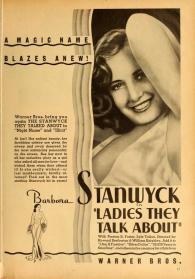
But, in the meantime, my Pre-Code Crazy recommendation for the month of August is one of my favorites: Ten Cents a Dance (1931) starring – of course – one of my favorite actresses, Barbara Stanwyck. Clocking in at an economical 75 minutes, this one packs a punch, serving up everything from extramarital attraction and class hypocrisy to financial desperation, embezzlement, and suicide.
Stanwyck with Sally Blane.
Stanwyck plays Barbara O’Neill, who works in a dance hall – where patrons are charged a dime for every twirl around the floor with the dancers. She catches the eye of wealthy businessman Bradley Carlton (Ricardo Cortez), who only wants to sit and talk to her – and sometimes pays her a cool hundred dollars for the privilege, but she winds up falling for Eddie Miller (Monrow Owsley), a ne’er-to-well who lives in the same boarding house. Barbara and Eddie wind up married, but she learns the hard way that he’s long on charm but short on honesty, integrity, and fidelity.
Other Ten Cents a Dance Stuff
According to the title card, the film was based on the popular Lorenz Hart-Richard Rodgers song of the same name.
The cast features Sally Blane, Loretta Young’s older sister, who appeared in more than 100 movies during her career. Blane was married to actor-turned-director Norman Foster (who’d previously been married to Claudette Colbert) from 1935 until Foster’s death in 1976.
The film was directed by Lionel Barrymore. The actor first stepped behind the camera in the early nineteen-tens, directing a series of shorts before moving on to feature films. Ten Cents a Dance marked his next to last directorial outing.
Monroe Owsley was pretty good at being bad.
Monroe Owsley was a master at playing immoral characters – he can be seen in similarly sleazy parts in films like Call Her Savage (1932) with Clara Bow, and The Keyhole (1933), opposite Kay Francis. His career went downhill after several years of alcohol abuse and gambling addiction, and he died at the age of 36 on June 7, 1937 – the same day as Jean Harlow.
Catch this first-rate feature on TCM on August 11th – Barbara Stanwyck Day during Summer Under the Stars – and be sure to pop over to Speakeasy to find out what pre-Code gem Kristina has selected, and see if our Pre-Code Crazy streak is still intact!
It’s that time, y’all! Time for my favorite month of the year – August, dontcha know – because that’s the month that brings us TCM’s awesome celebration, Summer Under the Stars!
To those of you who know nothing of the world in which you live (to paraphrase Addison DeWitt), it is perhaps necessary to tell you that the Summer Under the Stars celebrates 31 classic movie stars, devoting each day of the month to a different star by airing their movies for 24 straight hours. It’s a perfect way to enjoy some old favorites and discover some new gems.
During the last two years, I’ve picked a movie to recommend for each day, and I’ve also identified a movie to watch and review that I’ve never seen before. Because it LITERALLY took me all year to write about the new-to-me movies I selected last year, I’m going to stick to just recommending movies this year that I’ve seen and love. (And maybe pick out a few new-to-me movies that I’ll plan to watch and review – instead of 31!)
August 1: Doris Day
Ain’t no singing and and dancing in Storm Warning, y’all.
As much as I love Love Me or Leave Me (1955), I’m selecting Storm Warning (1951) for my first recommended movie of the month. Day’s co-star is Ginger Rogers, but this is no frothy musical or lighthearted rom com. You’ve been warned.
August 2: Humphrey Bogart
This was an easy one – I’m picking Bogart’s last movie, The Harder They Fall (1956). You can read a little about it here.
August 3: June Allyson
You may not know this about me, but I am decidedly NOT a June Allyson fan. So, it’s no surprise that I’ve seen very few of her movies. I really wish they were showing my favorite Allyson movie, The Shrike (1955) – it’s great stuff, and if you ever get the chance to see it, see it! I can, in good conscience, though, recommend Good News (1947), a musical where Allyson stars with Peter Lawford. It’s adorable!
August 4: Glenn Ford
Glenn Ford is not here to play with you, Lee.
This was a cakewalk – I’m going with The Big Heat (1953), which is not only one of my favorite Ford movies, and one of my favorite noirs, but it’s one of my favorite all-time films. (Did I put enough “favorites” in that sentence?) Ford is a totally badass cop, Gloria Grahame is unforgettable, Lee Marvin is scary, and Jeanette Nolan (my birthday twin!) is absolutely chilling. Here are some of the things I love about this memorable film. (And I’m tossing some honorable mentions to Dear Heart [1964] and Blackboard Jungle [1955], because they’re just so darned good.)
August 5: Joan Bennett
I love Bennett in several movies airing on her day, including Man Hunt (1941), Scarlet Street (1945), and Father of the Bride (1950), but my recommendation is the seldom-discussed and totally awesome noir, Hollow Triumph (1948), also known as The Scar. It’s good stuff. Trust me.
August 6: Diane Keaton
Man, I miss Diane Keaton being in the world. She always made me smile. For her day, I’m recommending the first Woody Allen movie I ever saw, and which I always thought was so funny – Sleeper (1973). It’s a hoot!
August 7: Basil Rathbone
I haven’t seen many Basil Rathbone movies, but I have seen David Copperfield (1935), and I really enjoyed him in it. (My favorite Rathbone movie is Confession [1937], starring Kay Francis. Check it out if you can – it’s a banger!)
Big meanie!!!!
August 8: Steve McQueen
I’m thrilled to be able to recommend The Great Escape (1963), which I saw for the first time as part of the 2025 SUTS event. It was so good – one of the high points of last year’s films.
August 9: Gene Tierney
The Razor’s Edge (1946) and Leave Her to Heaven (1948) were strong contenders here, but I’d love for people to see the rarely aired Toys in the Attic (1963). It’s based on a play by Lillian Hellman and has a first-rate cast that includes Geraldine Page, Wendy Hiller, Dean Martin, and Yvette Mimeux. It’s something else.
August 10: George Hamilton
Home From the Hill is a torrid, guilty pleasure!
I just saw my Hamilton recommendation about a month ago for the first time: Home from the Hill (1960). I really enjoyed it. I think you will, too.
August 11: Barbara Stanwyck
There are many outstanding films airing on Stanwyck Day, including The Lady Eve (1941), Ball of Fire (1941), and The Strange Love of Martha Ivers (1946), but my recommendation is for Ten Cents a Dance (1931), co-starring Ricardo Cortez. Don’t miss it!
August 12: Groucho Marx
The Marx Brothers did so many memorable movies, but I’m recommending Duck Soup (1933), where Groucho plays the president of the fictional country of Freedonia. It’s got so much going for it, from the song where Rufus lays out the laws of his administration (“If any form of pleasure is exhibited, report to me and it will be prohibited. I’ll put my foot down, so shall it be – this is the land of the free!”) to the iconic “mirror scene,” where Harpo Marx perfectly imitates Groucho’s every movement as though he were his reflection. And so much in between! A sheer delight.
August 13: Susan Hayward
Adding to the appeal of this one is the fact that Marsha Hunt’s character is kind of a bitch.
One of my all-time favorite Susan Hayward movies is my recommendation for the day – Smash-Up, the Story of a Woman (1947), where she plays an alcoholic singer whose marriage to a rising musical star sends her life into a heartbreaking downward spiral. It earned her the first of her five Oscar nominations for Best Actress, by the way.
August 14: Jack Lemmon
Wow, this was my first really tough choice – Jack Lemmon was such a versatile actor and in so many great films. I finally decided on the film airing on his day that I love the best: Some Like It Hot (1959). I will never see this one too many times. After all, nobody’s perfect!
August 15: Natalie Wood
I’m thrilled that TCM is airing this film that is so underrated and so seldom seen: Kings Go Forth (1958), where Wood co-stars with Tony Curtis and Frank Sinatra. Treat yourself.
August 16: Cary Grant
Myrna Loy and Melvyn Douglas team with Grant to make this a perfect comedy.
Although this day presented another hard decision – what with films airing like His Girl Friday (1940), Destination Tokyo (1943), and the one I almost picked – Mr. Lucky (1943) – I went with Mr. Blandings Builds His Dream House (1948). I can’t tell you how much I love this movie – in fact, I currently have it playing on a loop in my kitchen every time I prepare a meal or bake a sweet treat. It’s priceless.
August 17: Rosalind Russell
I love recommending the funny and touching The Trouble with Angels (1966) – it was one of the first movies I remember seeing as a child, and you can imagine my glee when I grew up to learn that it was directed by Ida Lupino. (Shout out to David, the father of my children, and Kim, one of my best girlfriends, who were both born on this date, in the same year!)
August 18: Robert Redford
Celebrating what would have been Redford’s 90th birthday, TCM is airing another film that ranks among my all-time best-loved: The Sting (1973). I’ve seen it so many times – including on the big screen at the TCM film fest a few years back – and it never fails to thrill.
August 19: Hattie McDaniel
McDaniel is a scream in this scene.
I’d love to recommend Gone With the Wind (1939), which I dearly love (and for which McDaniel won an Oscar), but I’m going with Alice Adams (1935). In this drama starring Katharine Hepburn, McDaniel has a scene that is a comedic tour de force and makes me laugh every single time I see it. And that’s a lot!
August 20: Marlon Brando
Another no-brainer – A Streetcar Named Desire (1951) – and another film that is riveting no matter how many times I see it.
August 21: Marie Windsor
Geez, how many times can I say that a movie is one of my all-time favorites?? I don’t know, but here I go again with The Killing (1956). It’s brilliant.
August 22: John Wayne
Stagecoach is the film that made Wayne a star.
I’m not really a huge John Wayne fan – although I wish TCM was airing Hondo (1953) which, in my opinion, is one of his best. Since I can’t have that one as my pick of the day, I’m recommending Stagecoach (1939). You can’t go wrong.
August 23: Katharine Hepburn
I love, love, love Stage Door (1937). Great cast, great story, great combination of comedy and drama.
August 24: Dana Andrews
Yet another easy selection – The Best Years of Our Lives (1946). It’s such a lovely film, one that I appreciate more every time I see it.
August 25: Bonita Granville
Granville’s character is absolutely awful in These Three.
I haven’t seen most of the films airing on Granville Day – fortunately, These Three (1936) is one of the offerings. Truth be told, I like this film better than the Audrey Hepburn-Shirley MacLaine remake, The Children’s Hour (1961). Because of the Production Code, the plot of These Three was altered a bit from the Lillian Hellman play upon which both films are based, but this is still a good one – and Bonita Granville was a standout.
August 26: James Stewart
My recommendation for Jimmy Stewart Day is another dearly loved film: You Can’t Take It With You (1938). This movie fills me with joy.
August 27: Bette Davis
This was the hardest day of all – and since I love Bette Davis more than another other actress, that wasn’t exactly a surprise. After lots of noodling, I decided on The Little Foxes (1941). It’s so good, y’all.
August 28: Brock Peters
The Incident. Don’t sleep on this one.
One of the TCM stars receiving his first-time recognition during Summer Under the Stars, Peters was a standout in To Kill a Mockingbird (1962), but I’m recommending the tension-filled 1967 feature, The Incident, which is another film I saw for the first time at the 2017 TCM film festival. (It was an awesome screening, by the way – the special guests featured director Larry Peerce and cast members Martin Sheen and Beau Bridges.)
August 29: Rita Hayworth
Of course, Gilda (1946) is a classic must-see, but I hope that you’ll check out Separate Tables (1958), an outstanding adaptation of two one-act plays by Terence Rattigan. I’ve seen it several times and I just love it.
August 30: Joel McCrea
I’m jazzed to pick one of my most often-watched westerns on McCrea Day: Ride the High Country (1962), where he co-stars with his fellow western veteran, Randolph Scott. It’s really good stuff – and it features the first credited film appearance of a young Mariette Hartley (who turned 86 in June).
August 31: Ava Gardner
Ava Gardner is The Barefoot Contessa.
Since, unfortunately, The Killers (1946) isn’t airing on Gardner Day, I’m going to go with The Barefoot Contessa (1954). Unlike most of my recommendations here, I’ve only seen it once, a long time ago, but I remember enjoying it.
And that brings us to the end of the month – but not the end of this post! Here are 10 new-to-me films that I’m determined to watch:
Captain Blood (1935)
The Cincinnati Kid (1965)
Papillon (1973)
I’ve been wanting to see this one for a while.
The Fortune Cookie (1966)
Night Must Fall (1937)
The Candidate (1972)
The High and the Mighty (1954)
A Walk in the Sun (1945)
Watch on the Rhine (1943)
The Night of the Iguana (1964)
So let it be written . . . so let it be done!
Do you have any recommended films for the Summer Under the Stars celebration – or movies that you’re putting on your watchlist? Leave a comment and share with the group!
I’m finally coming into the home stretch, y’all, and wrapping up my coverage of the new-to-me movies from last year’s TCM Summer Under the Stars event – just in time for this year’s event! Here goes . . .
August 18: James Gleason – Murder on the Blackboard (1934)
These two made quite a team.
This mystery-comedy stars Edna May Oliver as schoolteacher Hildegarde Withers and Gleason as gruff, world-weary inspector Oscar Piper. Murder on the Blackboard was the second of six RKO films featuring these two characters (Gleason appeared in all six; Oliver was featured in the first three. In the fourth, Helen Broderick played Hildegarde, and Zasu Pitts starred in the last two.) Here, a teacher at Hildegarde’s school is found murdered and she and Inspector Piper team up to solve the crime. I found it to be just okay – as I noted in my previous SUTS review post, I have to finally admit that, as a rule, I’m really not a mystery fan. Also, a little Edna May Oliver goes a long way with me, if you know what I mean. Gleason was fun to watch, but overall, this one was just meh.
August 19: Hedy Lamarr – Algiers (1938)
Lamarr was stunning in Algiers.
At the start of the 2025 SUTS, I listed all of the new-to-me movies I planned to watch; for Hedy Lamarr Day, I’d originally decided on Algiers (1938), but I changed my mind at the last minute in favor of The Female Animal (1958). BUT – by the time I actually got around to watching my Hedy Lamarr movie, I forgot that I’d changed my mind, and I watched Algiers (1938)! And I’m glad I did – this was a good one; better than I expected. Charles Boyer stars as notorious French jewel thief Pepe LeMoko and Lamarr is the woman who steals (get it?) his heart. I was pleasantly surprised at how involved I was in this film.
August 20: James Cagney – Tribute to a Bad Man (1956)
Don’t let the tender scene fool ya.
I had fairly high hopes for this film – one, it’s a western and two, it was directed by Robert Wise. And, of course, there’s the James Cagney of it all. He stars as a wealthy Wyoming horse rancher whose merciless, inflexible sense of justice threatens his relationship with his surrogate son (Don Dubbins) and his lady love (Irene Papas). My high hopes were fulfilled – although I must admit there was a stretch in the movie where I was like, “Damn – move ON!!” (As a former editor, surely Wise could’ve chopped a couple of minutes here and there!) Still, overall, this was good stuff – and I loved the ending.
August 21: Patricia Neal – Raton Pass (1951)
I love Patricia Neal, but this movie was wack.
Another western, this one centering on Neal’s character, the ruthlessly ambitious Ann Challon, who forms a toxic triangle with her upstanding rancher husband (Dennis Morgan) and a sociopathic gunslinger (Steve Cochran). All I can say about this one is, PEE-YEW!!! I thought the film had some promise when Neal’s character was revealed as a femme fatale, but it quickly devolved into one scene after another of boring shootouts or endless shots of men galloping, galloping, galloping their horses madly over the sagebrush (to paraphrase Countess DeLave). Blecch. It really was one of the worst westerns I’ve ever seen. (It was nice to see Dorothy Hart, though.)
August 22: Frank Sinatra – The Tender Trap (1955)
I think I prefer my Sinatra hard-boiled.
This was another day where I struggled with the movie I was going to see. I first started watching my planned movie, 4 for Texas (1963), a comedy-western with Dean Martin, but to my surprise, it just didn’t grab me. I bailed after about 20 minutes and started watching the musical comedy Higher and Higher (1943), but that didn’t last long either. In fact, I stopped watching before Frank even made his appearance. I gave High Society (1956) a fleeting thought but, like with Mogambo (1953) and The Opposite Sex (1956), I just cannot with this remake – not that I haven’t tried several times. (Hey – there’s a blog post idea: “Remakes I Cannot Abide.” But I digress.). Anyway, I finally decided to try The Tender Trap (1955). It stars Frank Sinatra as confirmed bachelor Charlie Reader, whose life is upended by a young actress, Julie Gillis (Debbie Reynolds), who is determined to marry him, and his sophisticated divorcee friend (Celeste Holm), who secretly hopes he’ll realize that she’s the one for him. As I suspected, though, this kind of sex-comedy romp is generally not my cup of tea, and Frank Sinatra’s acting was like – YIKES. So overdone, or something. Holm and Reynolds improved the proceedings, though – and I have to admit that I chuckled out loud when Julie described Charlie, to his face, as “attractive in an offbeat, beat-up sort of way.”
August 23: Gina Lollobrigida – Buona Sera, Mrs. Campbell (1968)
This movie was so good, y’all.
This was only the second movie I’ve seen starring Gina Lollobrigida; the first was Beat the Devil (1953), which I really didn’t care for, and I expected I might feel the same about Mrs. Campbell. Fortunately, I was much mistaken! Lollobrigida plays the title role of a woman who has spent the last 20 years convincing her daughter (and the Italian village where she lives) that the father of her child was an American who died a hero in WWII. In actuality, Mrs. Campbell doesn’t know who the father is – it could be any one of three men she was involved with during the war, and over the last two decades, she’s been living off of their financial support of these men, who each think that they are the father. The film kicks into high gear when all three men show up in Mrs. Campbell’s village for a reunion and she has to juggle them while trying to keep them away from each other and her daughter, and still maintain her secret. I absolutely loved this film – it was another of my favorite discoveries. It was like a crazy, sexy, funny screwball comedy and it was a sheer delight. (And I didn’t even mention the outstanding supporting cast, which included Telly Savalas, Phil Silvers, and Peter Lawford as the would-be dads; Shelley Winters and Lee Grant as the wives of Savalas and Silvers; and Janet Margolin and Mrs. Campbell’s daughter.) Great stuff.
August 24: Henry Fonda – Fail Safe (1964)
The scenes with Hagman and Fonda practically had me on the edge of my seat.
This movie – another one that was outside of my cinematic comfort zone – is a Cold War thriller focusing on a race against time by military leaders and government officials to recall an aircraft mission to attack Russia. Meanwhile, the U.S. president – played by Fonda – works to try and prevent nuclear war by convincing the Soviet premier that the attack is an accident. Although it took me a while in the beginning to understand what was going on, it turned out to be pretty awesome. Like Mrs. Campbell, Fail Safe has a first-rate supporting cast that included Walter Matthau (whose character was simply AWFUL), Larry Hagman, Dom DeLuise, and Fritz Weaver, whose action in one scene literally had me clapping my hand over my mouth.
Day 25: Shirley Jones – A Ticklish Affair (1963)
Shirley Jones was adorable, but the movie – sadly – was not.
In this romantic comedy, Jones stars as a Navy widow with three young sons who falls for a Naval commander (Gig Young) – even though she doesn’t want to get involved again with a military man. The plot was pretty flimsy and predictable, and it featured lines like, “Love doesn’t always come up and hit you smack between the eyes. Sometimes, it’s downright sneaky.” Also, the last 20 minutes of the film focused on one of the boys and a runaway balloon situation. Good grief.
Day 26: Tom Courtenay – Billy Liar (1963)
I forgot to mention that Julie Christie, in a small part, was a standout.
This film was not at all what I expected. A few years back, I asked on Twitter for recommendations for British movies, and numerous people suggested Billy Liar. Because I’d said I was partial to kitchen sink dramas, I always assumed that Billy Liar was a serious film, but it definitely was not. Tom Courtenay plays the title role of a funeral home clerk who dreams of becoming a comedy writer in London and copes with his humdrum life by making up lies and inserting himself in a series of elaborate fantasies. It was okay, but I wasn’t wild about it. In addition to not being the drama I expected, I suspect that my expectations were a bit too high as a result of all the recommendations. I’m glad I finally saw it, though.
Day 27: Joan Crawford – The Story of Esther Costello (1957)
This movie was something else. Altogether.
In this one, Crawford plays a wealthy socialite who discovers a deaf, blind, and mute young girl living in squalid conditions in a small Ireland town and takes her back to her home in Boston. I kinda just want to share the notes I took while I was watching the movie. In fact, I think I will:
“This movie is all OVER the place! Not that there’s anything wrong with that. Rossano Brazzi – YIKES! This is some wild shit. He raped her into being able to see and hear again? OMG. Who did Joan’s clothes, though? Oh, HELL no – A GUN. Now it’s noir?? This movie is CRAZY. Oh, LAWD.”
And that’s all I have to say about that.
Day 28: Donald O’Connor – That Funny Feeling (1965)
Cuter than I thought it would be!
Real-life marrieds Sandra Dee and Bobby Darin star in this romantic screwball-ish comedy with a mistaken identity foundation. Dee plays aspiring actress Joan Howell, who makes ends meet by cleaning house at a swanky New York apartment. After a meet cute and a few dates with Tom Milford (Bobby Darin), a wealthy New York publisher, she tries to impress him by passing off as her own the apartment she cleans – not knowing that it’s TOM’S apartment! Hilarity ensues! O’Connor, incidentally, plays Tom’s best friend, who’s always available with a quick quip. Overall, I enjoyed this more than I thought I would – it had a lot of funny parts and was silly, but cute.
Day 29: Alexis Smith – Whiplash (1948)
Whiplash. Nothing to write home about.
This feature is a low-budget noir with a top-notch cast: in addition to Alexis Smith, it includes Dane Clark, Zachary Scott, S.Z. Sakall, Jeffrey Lynn, Alan Hale, and Eve Arden. It focuses on Dane’s character, Michael Gordon, an American artist who gets more than he bargained for when he travels to Australia to find a woman he fell for during an ocean voyage. Good performances were turned in by Clark and Scott – who played a powerful bookmaker – but Alexis Smith basically sleepwalked through the entire proceedings, and the script was weeeeeak.
Guess what, y’all? My notes abruptly ended after Day 29! I thought that maybe I’d watched the last two movies but simply failed to take any notes, or that I’d maybe put the notes in a different notebook, but neither of these appears to be the case. I checked last year’s SUTS list of movies I planned to watch – for Day 30, Kirk Douglas Day, I’d listed Paths of Glory (1957) and scheduled for Day 31, Irene Dunne Day, was The White Cliffs of Dover (1944).
I still haven’t seen either one of these movies!
Ooops.
So – I don’t remember what happened, but I am bummed to confirm that I didn’t complete the full list of new-to-me SUTS movies for 2025! Womp womp. Sad face.
But on the positive side (and if you know me, you know I’m always going to find the positive side), I’m finished with this blog post!!!
Hopefully, before too much more time passes, I’ll get the chance to see those last two movies (which I’d really been looking forward to!). Meanwhile, thank you for reading to the end – and I hope you’ll let me know your thoughts if you’ve seen any of these.
See you soon for my recommendations for SUTS 2026!