Buy New
-5%
USD62.83USD62.83
USD 16.20 delivery Thursday, 16 July
Dispatches from: Amazon Sold by: Amazon
Used – Very Good
USD12.14USD12.14
USD 10.19 delivery 14 - 21 July
Dispatches from: World of Books Ltd Sold by: World of Books Ltd
Sorry, there was a problem.
There was an error retrieving your Wish Lists. Please try again.Sorry, there was a problem.
List unavailable.
Download the free Kindle app and start reading Kindle books instantly on your smartphone, tablet or computer – no Kindle device required.
Read instantly on your browser with Kindle for Web.
Using your mobile phone camera - scan the code below and download the Kindle app.
Follow the authors
OK
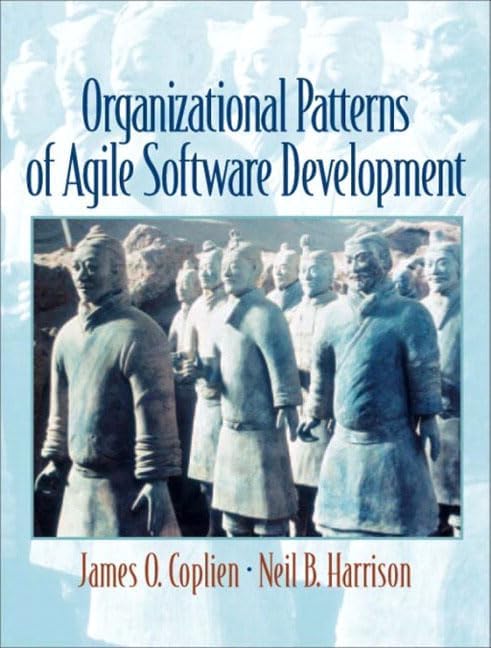
Organizational Patterns of Agile Software Development
Purchase options and add-ons
For courses in Advanced Software Engineering or Object-Oriented Design.
This book covers the human and organizational dimension of the software improvement process and software project management – whether based on the CMM or ISO 9000 or the Rational Unified Process. Drawn from a decade of research, it emphasizes common-sense practices. Its principles are general but concrete; every pattern is its own built-in example. Historical supporting material from other disciplines is provided. Though even pattern experts will appreciate the depth and currency of the material, it is self-contained and well-suited for the layperson.
- ISBN-100131467409
- ISBN-13978-0131467408
- Edition1st
- PublisherPearson
- Publication date10 Sept. 2004
- LanguageEnglish
- Dimensions17.53 x 2.54 x 23.11 cm
- Print length432 pages
Popular titles by this author
A Scrum Book: The Spirit of the GamePaperbackUSD 17.11 deliveryOnly 1 left in stock (more on the way).
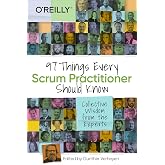
97 Things Every Scrum Practitioner Should Know: Collective Wisdom from the ExpertsPaperbackUSD 13.37 deliveryOnly 2 left in stock (more on the way).
From the brand
-
The Clean Code Series
-
Absolute Beginner's Guides
-
The Learn Enough Series
-
The From Scratch Series
-
MS Business Skills Series
-
The Adobe Classroom Series
-
Cisco's CCNA Series
Product description
From the Back Cover
"This is a remarkably wise book, full of pragmatic advice drawn from real projects. Ultimately, software development is a human experience, and Jim and Neil have captured the essence of that experience in this work. The tapestry of patterns they have woven is postively brillant, and each thread therein is a delight to read."
--Grady Booch, IBM Fellow
Do you want to really improve your software development organization instead of complying with an arbitrary standard, or trying the latest fad? This book presents the fundamentals of creating sustainable organizations, based on in-depth studies of over 100 real software development organizations.
The authors present nearly 100 organizational patterns to help you create a highly effective organization. Case studies and vignettes illustrate how these patterns work. This practical guide shows you how to reshape critical parts of your organization. Regardless of your role, you will find patterns that you can use to make your organization more effective.
"This carefully researched, artfully described, and extraordinarily useful handbook of deep wisdom on creating teams that generate terrific software should be on every software development manager's bookshelf."
--Luke Hohmann, Hohmann Consulting
Author of Beyond Software Architecture
"As soon as I had worked through these patterns, I realized that several of my clients engaged in process definition projects could make use of them."
--Ian Graham, Technical Director, trireme.com
Product details
- Publisher : Pearson
- Publication date : 10 Sept. 2004
- Edition : 1st
- Language : English
- Print length : 432 pages
- ISBN-10 : 0131467409
- ISBN-13 : 978-0131467408
- Item weight : 612 g
- Dimensions : 17.53 x 2.54 x 23.11 cm
- Best Sellers Rank: 2,109,108 in Books (See Top 100 in Books)
- Customer reviews:
About the authors

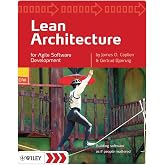
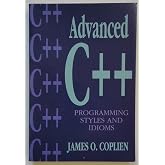
Jim ("Cope") Coplien is an author whose works range from programming and architecture to ethnography and organizational design. He is a founder of the Software Pattern discipline and of organizational patterns, which in turn were one of the foundations of Scrum. His writings mix technology and human concerns. His latest work "A Scrum Book" is about how people work effectively together, and "Lean Architecture" describes how architecture addresses the needs of both programmers and end users. His first book, "Advanced C++" took a little more than two years to write; "Multiparadigm Design" took five years and "A Scrum Book" and "Organizational Patterns" took ten.
Cope lives in Denmark with his wife Gertrud Bjørnvig.

Discover more of the author’s books, see similar authors, read book recommendations and more.
Customer reviews
- 5 star4 star3 star2 star1 star2 star74%20%6%0%0%0%
- 5 star4 star3 star2 star1 star1 star74%20%6%0%0%0%
Customer Reviews, including Product Star Ratings, help customers to learn more about the product and decide whether it is the right product for them.
To calculate the overall star rating and percentage breakdown by star, we don’t use a simple average. Instead, our system considers things like how recent a review is and if the reviewer bought the item on Amazon. It also analyses reviews to verify trustworthiness.
Learn more how customers reviews work on AmazonTop reviews from the United Kingdom
- 5 out of 5 stars
Read it
Reviewed in the United Kingdom on 7 January 2019James Coplien is one of a unique person. This is a key book in helping make a sense regarding Agile. Is not a book full of platitudes. Is a wonder for me that a lot of so called Scrum people do not know his work.
Sending feedback...Sending feedback...HelpfulThank you for your feedback.Sorry, we failed to record your vote. Please try againThank you. We’ll investigate in the next few days.Sorry, We failed to report this review. Please try again - 5 out of 5 stars
100 Best Practices
Reviewed in the United Kingdom on 24 January 2009I came across this book some time ago and, to be frank, was put off by the title. Now that I've had a chance to read it properly, and as the authors agree, there is nothing specific to "Agile" in this book at all. What I can say, is that this book is one of the best books I've ever read on organizational patterns, period. And there are 100 patterns to choose from. This book is very well written and entertaining throughout - a pleasure to read. I can't recommend it highly enough for those of us that have to deal with the politics inside organizations, as well as the technical aspects.
One person found this helpfulSending feedback...Sending feedback...HelpfulThank you for your feedback.Sorry, we failed to record your vote. Please try againThank you. We’ll investigate in the next few days.Sorry, We failed to report this review. Please try again
Top reviews from other countries
Mike Morrissey5 out of 5 starsGreat Reference
Reviewed in Canada on 18 June 2014Well organized for quick hit reads. Use it all the time to read a specific pattern or two that helps stimulate thoughts about how my teams are functioning
Sending feedback...Thank you. We’ll investigate in the next few days.Sorry, We failed to report this review. Please try again
M. R. Lauer5 out of 5 starsOutstanding distillation of experience
Reviewed in the United States on 24 November 2004This is an outstanding book that distills years of experience into a system, a pattern language, that names, organizes, and relates together, many of the experiences and realities that those of us in the world of development have to deal with all of the time. As one who has functioned at many levels in development, I was able to recognize and appreciate most of the patterns. The only cavil I might have is that section 6.2 and on really pulls together what the book is about, and it seemed that it, or some version of it, really belonged in chapter 1.
Sending feedback...Thank you. We’ll investigate in the next few days.Sorry, We failed to report this review. Please try again
Dmitri5 out of 5 starsI like the Alexander pattern language format used in this book
Reviewed in the United States on 1 April 2017I like the Alexander pattern language format used in this book. Easy to follow. Personally, first book to lay it out how to gauge organizational health and the steps needed to fix.
Sending feedback...Thank you. We’ll investigate in the next few days.Sorry, We failed to report this review. Please try again
Chris S.5 out of 5 starsInsight and practical advice for managing teams
Reviewed in the United States on 18 September 2014The most insightful guide to understanding how people operate in not just Agile teams and not just in software development but in many working groups. It's amazing to see how many patterns you've always known about and had just not named. This book has them and names them.
Sending feedback...Thank you. We’ll investigate in the next few days.Sorry, We failed to report this review. Please try again
Maurice4 out of 5 starsHow Serious Are You About a High-Performing Organization?
Reviewed in the United States on 20 August 2010This is a substantial but easy and enjoyable read due to the succinct structure of each of the 100 patterns. As other reviewers have noted, it's chock-full of nuggets. My favorites:
All the patterns are built on the foundational pattern "Community of Trust," which requires dealing honestly and courageously with personal and organizational shortcomings. For too many organizations this is not possible until the crisis of a foreign element.
"Organizations run by professional managers tend to have repeatable business processes but don't seem to reach the same productivity plateaus as organizations run by engineers." Managers are administrators, not producers. Maybe they should be paid less than the producers.
"A thread that runs through all of our patterns (and that is fundamental to the principles of the pattern languages presented here) is the focus on product...the focus explicitly is not on process."
"When I was in fourth grade...we had a spelling test every Friday. Our teacher told us that if everyone got a perfect score...she would bring each of us a candy bar...There was no hope for us with [Jimmy] in the class...we all gave special help and encouragement to Jimmy. On Friday, when everyone got a perfect score, it was hard to tell whether we were more excited about the candy bar or about Jimmy's success." Reward teams, if teams are what you want.
And "strive to tangibly tie financial rewards to the market success that results from the fruits of an individual's labor." You think you have an adequate bonus structure? How about "bonuses that are on the same order of magnitude as annual compensation?"
How serious are you about a high-performing organization? Here are 100 tried and true patterns to jump-start your success.
Sending feedback...Thank you. We’ll investigate in the next few days.Sorry, We failed to report this review. Please try again