Tytonidae
The Key to Scientific Names
Legend Overview
Tytonidae Barn-Owls
Version: 1.0 — Published March 4, 2020


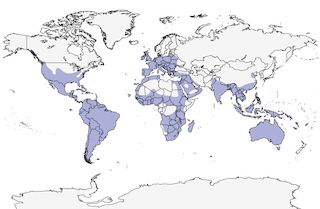
- Year-round
- Breeding
- Non-breeding
Full content is available exclusively to Birds of the World subscribers. Sign in Learn more
Introduction
The well-known Barn Owl serves as strong contrast to the ten or so similar species that are very little known: most of these occur in limited ranges on various tropical islands, and for eight the breeding biology is essentially unknown. The lighter build and longer legs of tytonids, compared to strigids, seems to suit them better to warmer climes. All of these birds share a heart-shaped facial disk, which collects sound waves, and, as in some strigids, asymmetrical ear openings, adaptations for night hunting. Their calls, often given in flight, are more hiss or scream than hoot. Everywhere, they apparently subsist on large numbers of small rodents, and the Barn Owl has a remarkable capacity to adjust its reproductive output to variation in its food supply.
General Habitat
Diet and Foraging
Breeding
Conservation Status
Systematics History
Conservation Status
| Least Concern |
30%
|
|---|---|
| Near Threatened |
5%
|
| Vulnerable |
10%
|
| Endangered |
0%
|
| Critically Endangered |
0%
|
| Extinct in the Wild |
0%
|
| Extinct |
0%
|
| Not Evaluated |
0%
|
| Data Deficient |
5%
|
| Unknown |
50%
|
Data provided by IUCN (2025) Red List. More information