Chris Sells

Hi. My name is Chris Sells and I’m the founder and chief proprietor of sellsbrothers.com, my personal website.

I’m the CEO and Co-Founder of Gas City, Inc., the OSS steward for the Gas City ecosystem, including Beads, Gas Town, Gas City and The Wasteland.

Read More About
April 28, 2026

Announcing Gas City 1.0!

Announcing Gas City 1.0!

You may have heard from Steve Yegge, the creator of Beads and Gas Town, that we’ve released Gas City 1.0! As the CEO of the newly minted Gas City, Inc., I thought I’d provide some additional details on Steve’s excellent blog post.

Welcome to Gas City

It’s hard to look back on the release of ChatGPT as anything but the firing of a starter pistol. In that time, we’ve completely changed how software engineers do their jobs, moving from handwriting their code to using CLI coding agents like codex or claude to do the coding for them. Unfortunately the cost of the increased efficiency in producing the code is reduced quality in the output. It’s not uncommon for professional software engineers to declare the agent output to be slop.”

In an attempt to drive up the quality of agent output, the typical agentic engineering experience has turned into a babysitting job. You cycle between your terminals, reminding each coding agent what they’re supposed to be building, injecting quality guardrails periodically as those details fall out of their context, manually asking for sub-agents to do research deep dives or reviews. All of that is if you can track where each agent is on their quality path and what the right magic phrases are, based on a year of cave drawings and campfire stories. In fact, I even know of one prolific agentic engineer who has built themselves a custom keyboard so that all of their favorite prompts are available at the touch of a button.

If you’d rather move back to engineering, I recommend Gas City.

agents + orchestration = joy

Gas City is for agentic engineers to build their own software factories.

A software factory is a system for building, validating, deploying, operating, and maintaining production software.

To enable all of this, the core of Gas City is an agentic orchestration engine. Its job is to let you harness swarms of agents to color inside the lines that you define. As an example, here’s a simple Gas City formula that iterates over code incorporating reviews from other agents:

# formulas/code-review-loop.toml
formula = "code-review-loop"
version = 2
contract = "graph.v2"

[[steps]]
title = "Code Review Loop"
id = "code-review-loop"

[steps.check]
title = "Code + Review (loop up to 3 times)"
max_attempts = 3

[steps.check.check]
mode = "exec"
title = "Check Review Results"
path = "checks/review-gate.sh" # reads reviews to decide whether to loop or not
  
[[steps.children]]
id = "code"
title = "Write code + tests"
description = "Write code and tests based on user input and agent feedback"
metadata = { "gc.run_target" = "coder" }

[[steps.children]]
id = "review-codex"
title = "Code Review (Codex)"
description = "Review the implementation for architectural best practices."
needs = ["code"]
metadata = { "gc.run_target" = "reviewer-codex" }

[[steps.children]]
id = "review-claude"
title = "Code Review (Claude)"
description = "Review the implementation for architectural best practices."
needs = ["code"]
metadata = { "gc.run_target" = "reviewer-claude" }

[[steps.children]]
id = "review-gemini"
title = "Code Review (Gemini)"
description = "Review the implementation for architectural best practices."
needs = ["code"]
metadata = { "gc.run_target" = "reviewer-gemini" }

[[steps.children]]
id = "synthesize-reviews"
title = "Synthesize review results"
description = """
  Read all three review outputs, produce one concise synthesis, and decide whether
  the implementation is approved.

  Write the synthesis to docs/reviews/latest.md.

  Close this bead with:
  - review.verdict=approved if no blocking or major findings remain
  - review.verdict=iterate if another coding pass is required
  - gc.outcome=pass
"""
needs = ["review-codex", "review-claude", "review-gemini"]
metadata = { "gc.run_target" = "synthesizer" }

Five agents are involved, one coder, three reviewers and one review synthesizer.

The reason to pull in multiple agents from multiple vendors is that each one has been trained differently and has a different point of view. It’s the combination of those points of view, as well as multiple iterations, that drives up the quality of your agentic output.

The agent definitions are separate for reuse amongst formulas, but they each look like this:

# agents/coder/agent.toml
scope = "rig"
wake_mode = "fresh"
provider = "codex"
option_defaults = { model = "gpt-5.5" }
default_sling_formula = "code-review-loop"

Each agent also has a prompt template file:

{{/* agents/coder/prompt.template.md */}}
# Coder
## Role
You implement code changes. Read the request, any prior review feedback,
and the project context, then write the implementation with tests and commit it.

## Inputs
- The current routed formula step.
- Project context: AGENTS.md, specs/ and docs/
- Prior review feedback in docs/reviews/ (if retrying after a failed review cycle).

## Graph Work Process
1. Run `gc prime`.
2. Read the routed step and project files.
3. If docs/reviews/ contains prior feedback, read it and address findings.
4. Implement the change with tests.
5. Commit to a feature branch.
6. Close the current step.

## Output Format
A git commit on a feature branch with passing tests.

## Close Behavior                                       
Close the current step when the commit is made and tests pass.

Notice that the definition only has to mention codex” and not set up a path or CLI args or output formats. That’s because Gas City has a built-in factory worker” protocol to standardize access to your favorite CLI coding agents, including codex, claude, and gemini, of course, but also amp, opencode, pi, etc. That means that you can change your coder agent to be another OpenAI model or another CLI coding agent altogether, all with a simple set of declarative settings and without changing your formulas. And the settings also support MCP servers, skills, overlays, and the full set of capabilities that you need for your agents, all in an agent-neutral way.

Formulas — step-by-step workflows for as many agents from as many providers as you like — are the key to moving from babysitting your agents to harnessing them. To be able to handle our record peak of 74 PRs in a single day, Gas City runs on Gas City. For a more in-depth look at the power of agentic orchestration, I recommend Orchestration Is All You Need.

get involved!

Harnessing agents with formulas is the core of Gas City, but there’s more, including beads (the way work is defined), orders (trigger-based automations), packs (shareable sets of agents, formulas and orders), a rich event stream, and the list goes on!

To help you get up to speed on all of this tech, I recommend the Gas City docs, made explicitly friendly for you AND your agents. Also, there’s a vibrant and growing community of people experimenting with Gas City and working together to invent the future of software engineering, with 2600+ members in the Gas Town Hall Discord server. From this community, the core projects — Beads, Gas Town, and Gas City in the Gas Town Hall organization on GitHub — have gathered more than 35K stars, with more than 5,000 PRs and 2,500 issues from 500+ contributors.

But that’s not all, the popularity of Gas City has grown enough that Actual AI has started a set of hands-on workshops called The Software Factory Intensive, with five cities already planned. In fact, last week was the first one and we had more than 70 engineers building their own software factories with Gas City.

swi-seattle-group

Things are moving fast: from Steve’s initial commit on Beads in October to hands-on workshops across multiple cities running right now.

Interested in joining us? Come on over to Gas City Hall — we’re happy to have you!

where are we?

You can build your own custom agent keyboard if you want to.

coding-agent-keyboard

If you’d like to take the leap to agentic engineering instead, I recommend Gas City.

April 21, 2026

Orchestration Is All You Need

Orchestration Is All You Need

What agentic engineering looks like when you really mean it.

In the last year, as our AI software engineering tools have evolved, so have our software engineering processes. We have learned to take advantage of the tools to cut down the latency of our SDLC and CI/CD processes. We’ve already learned that if we’re not careful, we’re going to vibe code AI slop,” the unchecked code and configuration that an AI coding agent generates when run without guardrails.

The kind of guardrails I mean come straight out of the software engineering 101 playbook:

  • Getting feedback from multiple points of view
  • Checking technical designs for completeness, consistency and accuracy
  • Comprehensive unit, UI, integration, performance and security test suites
  • Thorough error instrumentation and run-time monitoring in operation
  • Human taste and judgment as the definition of done”

Using agents for what they’re good at (coding, checking, testing, iterating) while letting the humans set the bar for quality elevates your process from it works on my machine” and defines the agentic engineering” discipline. You can use agents interactively to get the quality you’re looking for, if you’re careful to apply the guardrails. But if you want to build automated pipelines that require less and less human interaction over time, you’re going to have to start with something called harness engineering.

Harness engineering” is the act of gathering together the underlying LLM with the tools and context (data, instructions, information about the environment) into a program optimized for a specific task. Each one of the CLI coding agents itself is a harness that’s optimized for getting the most out of the underlying LLM from a latency, throughput and quality point of view, packaged in a TUI with programmatic access built in.

And while it’s easy enough for a human to switch between tools from an interactive point of view, it’s real work to be able to switch between codex and opencode in your automated processes. While each of them provides the programmatical surface area you need to automate them, all agents are different in their invocation arguments, service endpoints, etc. To solve that problem, we need harness engineering again, but one level of abstraction up.

As an example, the Gas City OSS project defines a provider protocol that we implement on top of each of the major (and several of the long tail) CLI coding agents to enable them to be swapped in and out of city, pack and formula definitions (more on that later):

// Pseudo-code for the canonical in-memory worker API.
type FactoryWorker interface {
    // Lifecycle
    Start(context.Context) error
    StartResolved(context.Context, string, runtime.Config) error
    Attach(context.Context) error
    Create(context.Context, CreateMode) (sessionpkg.Info, error)
    Reset(context.Context) error
    Stop(context.Context) error
    Kill(context.Context) error
    Close(context.Context) error
    Rename(context.Context, string) error
    State(context.Context) (State, error)

    // Messaging
    Message(context.Context, MessageRequest) (MessageResult, error)
    Interrupt(context.Context, InterruptRequest) error
    Nudge(context.Context, NudgeRequest) (NudgeResult, error)

    // Transcript and History
    History(context.Context, HistoryRequest) (*HistorySnapshot, error)
    Transcript(context.Context, TranscriptRequest) (*TranscriptResult, error)
    TranscriptPath(context.Context) (string, error)
    AgentMappings(context.Context) ([]AgentMapping, error)
    AgentTranscript(context.Context, string) (*AgentTranscriptResult, error)

    // ... and more!
}

Not only does this allow you to eliminate the programmatic differences that get in the way of your swapping yesterday’s best coding agent out for today’s best agent out of your automations, but it also allows you to easily take advantage of the variations between the models, e.g. cost, limits, quality, availability, suitability to a specific job (e.g. planning, coding, image processing).

The use of the provider harness in Gas City allows you to turn a CLI coding agent into a factory worker” that you can tailor to the specific job (“you’re an expert UX designer…”) and drop into your custom workflows (“write the plan, then get it reviewed by these other agents, then ask the UX designer agent to flesh out the jobs to be done, …”) that we call orchestrations.

orchestration all the way down

Reminding ourselves of human software engineering teams again, we have a series of workflows that human teams go through to get a product or feature out the door. For example, imagine an engineer that’s just written some code. Do they immediately release it to customers? No. They must solicit review feedback from their teammates first, dealing with any issues that arise. Only when they get the thumbs up are they allowed to merge new code into the main product codebase.

Now, if Eddie the Engineer is a human, he can do his coding, solicit feedback and iterate all on his own. Likewise, his teammates will get their notifications and do their part to keep the flow of software moving.

However, if Eddie is an AI coding agent, to do his part requires that he’s orchestrated,” e.g. that he’s been defined as an expert software engineer running on the codex provider using the GPT5.4 model. Once an agent is included in an orchestration, we can have as many instances of it as we want, each dedicated to execution on its own work item with its own agent Eddie instance.

Once each Eddie is done with his work, the orchestration engine will hand it off to as many LLMs as you decide to review the work, gathering that feedback to iterate on until Eddie’s code gets a clean bill of health.

This isn’t theoretical. The code review orchestration we use with Gas City combines a dynamic set of agents configured to focus on security, performance, React, etc. that are then spread across the codex, gemini and claude providers so that we get a wide range of review feedback to iterate on. We know from experience that this greatly improves the quality of our code (and plans and tests and …).

Every part of our human software engineering processes can be turned into an agentic orchestration. The artifact-review-iterate process is the same for engineers, PMs, UX designers, etc. And those processes string together into the overall software process itself.

The factory worker harnesses allow you to bring the CLI coding agents into your orchestrations, but it’s the orchestrations that allow you to spread the work across as many agents as you can spin up.

embracing the bitter lesson

There’s a tempting alternative to all of this: just wait for the models to get good enough that you don’t need orchestrations. Eventually, the thinking goes, GPT-7 or Claude 6 or Gemini Ultra will be capable enough that you can hand it your repo and your customer feedback and walk away.

This is the wrong side of the bitter lesson. Rich Sutton’s observation was that general methods that leverage compute have always eventually beaten methods that leverage human-encoded domain knowledge. Waiting for the perfect model is turning away from that lesson. It’s a bet that compute will eventually stop mattering, that there’s a model capability threshold past which the apparatus becomes unnecessary. And while the singularity is by definition the horizon beyond which we cannot predict the future, the past is pretty clear about the benefits of being on the right side of that lesson.

A software factory is on the right side. Orchestrations are how you turn more compute into better output, indefinitely. Five agents from different providers providing feedback is how you broaden your range of feedback no matter how good any specific agent’s response is. A better model just makes the orchestration better.

And now let’s talk about how you might build the software factory to run your orchestrations.

Gas City: build your software factory

Like Steve Yegge’s Gas Town that inspired it, Gas City provides the harness that turns CLI coding agents from different vendors into factory workers that can be plugged into formulas” (orchestrations) to execute beads” (work) against multiple rigs” (projects).

Another name for an agentic orchestration system is a software factory” or dark factory” (so named because you don’t need humans to run it). Gas City provides the pieces — the agentic harness, the orchestration engine, the automation engine — and lets you configure the software factory to match the way that you want to work.

Want to start from scratch to build your factory alongside your software? You can. Want to have a fully featured Gas Town out of the box? Gas City provides that as a pre-packaged pack” that you can choose at initialization time. Want to define your own pack that defines your favorite combo of agents, formulas (orchestrations) and orders (automatically triggered scripts or formulas) and share it with a team? That’s exactly what packs are for.

In fact, we’ve engineered Gas City such that any orchestration system you can think of — Ralph Loops, StrongDM Software Factories, Anthropic Agent Teams — can be captured in a pack. We’ve already started to gather some of them in the gascity-packs repo with more to come.

Those packs come from our own use of Gas City to build Gas City, as you might expect. On a single day, we were able to merge 74 PRs. Of course, the only way we can handle that kind of volume is by using Gas City itself.

But what surprised us wasn’t just that we are using Gas City for implementation tasks. We’ve also built issue triage, deployment and operations. We’ve hired 15 agentic employees to help us run Gas City, Inc, ranging from marketing to release management. And, leaning on the techniques in OpenClaw, each of them has a personality and the ability to chat with us via Discord.

What we’re finding is that not only does Gas City evolve based on bug reports and feature requests, but the Gas City software factory itself evolves to meet the needs of the software. The more we push on the limits of what orchestrated agents can do, the more we realize that we’re just getting started!

getting involved

The Gas Town ecosystem has grown quite a bit in popularity since Steve Yegge submitted the first commit to the Beads project in October. Together, Beads, Gas Town and Gas City have gathered more than 35,000 stars, 5000 PRs and 2500 issues from more than 500 contributors.

In addition, we’ve got The Wasteland, which is our burgeoning set of federated Gas Towns and Cities for centralized management of distributed work. And we’ve got a hosted version of Gas City coming soon.

Of course, we’ve also got Gas City Hall, the community for all things in Gaslandia, including the Discord server, the social news feed, the docs and a link to the repo. Or perhaps you’d like some hands-on training? Then sign up for Software Factory Intensive, a two-day workshop from our partners at Actual.ai on how to build your very own software factory with Gas City.

where are we

It might not have sunk in yet, but your job has changed. Instead of building the software, you’re going to be building the factory that builds the software. And reviews it. And validates it. And deploys and operates and maintains it.

But the agents still need you to define what done” looks like. Encode those definitions into reusable orchestrations, spinning up as many as you need, and let the factory carry the work your team used to carry by hand.

Start with Gas City. Plug in the Gas Town pack or build your own from scratch. The ecosystem is open source, the community is growing, and we’re using it ourselves every day to build the thing you’re about to install.

Go build your factory.

February 8, 2026

We Pour — Chapter 3

A Cyberpunk Story in the Fifth Element Universe

by Chris & Eli

The street hits me like a wall. Steam and noise and the churning river of foot traffic that parts slightly around me the way it always does, because people see 6’8 coming and step aside without thinking about it. I walk. I don’t flag a cab. I need the movement.

Mox.

His real name is Maxwell Huang and he was four foot nothing until he was sixteen and then he was five foot four and that was it, that was all he was ever going to get. On the commune, the two of us were a sight — the beanpole and the bean, mom called us. Stuck together because nobody else would have either of us.

The other kids threw rocks at the cows and called it fun. Mox built a radio out of combine parts and pulled in signals from orbit. I sat next to him in the barn loft and listened to cargo ship chatter from the outer stations and he’d say Dunk, there’s a whole world up there that doesn’t give a shit how tall either of us are” and I believed him because Mox never lied to me.

I stop walking. I’m in the middle of the sky bridge between Sectors 7 and 9, a hundred floors up, wind pulling at my jacket. Below me the city falls away into blue haze and blinking lights. A police cruiser drifts past at eye level, close enough to see the officer’s coffee cup on the dash.

I know what Mox would say. He’d say it was just a job. He’d say he didn’t know it was Ellie. He’d say that David came to him cold, through a cutout, and he never asked who the target was because you don’t ask, that’s the rule, that’s how it works in this business.

And maybe that’s even true.

But he took the job. And he’s good enough that he would have seen the name in the access logs. Ellie Covacs. Same last name as the best friend he’s had since he was nine years old. Same girl who he never quite was able to outgrow.

And he did the job anyway.

My phone buzzes. It’s Mox.

[mox] hey. noodles later? im buying. got something to tell you

I stare at the screen. The wind picks up. A cab honks somewhere below.

yeah man lets do noodles later

Later was as soon as I could do it. I needed time to think. I took another turn and then a turn and then I was back at my place, sitting on a dusty old couch of suspicious origins and looking out into the world as the traffic went by. As soon as I sat, I automatically pulled up my phone.

[mox] sure thing big man. the job today ends 5ish. usual spot also ur cats here again

I type back.

keep him

The couch smells like the couch has always smelled, which is like whoever owned it before me and that no amount of enzyme cleaner will ever fully kill. The ceiling is close enough that I could touch it if I reached for it. I don’t reach. I just lie there and watch the traffic paint light across the plaster. Red. White. Blue. Red. White.

The cat’s with Mox. Mox is three floors down and two units over and we’ve been in each other’s lives for twenty-three years and he might have…

Wait.

I pull up the phone. Thumb past Mox, past Ellie’s ALL-CAPS flare, past the junk, and there it is again. The job ping. Routed through three anonymizers, which means whoever sent it knows enough to not want to be found but also knows enough to find me, which narrows the field more than they’d probably like.

No name. No company. No brief. Just:

[unknown]
RETRIEVAL -- DIGITAL ASSET
TIMELINE: COB FRIDAY
COMPENSATION: 15,000 CR
ACCEPT / DECLINE / QUERY

Fifteen thousand credits. That’s five months of rent. That’s Ellie’s lawyer if things go bad. That’s breathing room I haven’t had since the last corp job dried up in November.

Close of business on Friday. Same as Ellie’s deadline. Stated the same way.

My thumb hovers over QUERY. The part of my brain that keeps me alive — the pattern-matching, paranoid, hacker part — is already whispering. Anonymous job, big money, fast timeline, lands in my inbox the same morning my sister tells me she’s being squeezed by a guy who hired my best friend to build the frame.

Some people believe in coincidences. I believe in patterns.

The traffic light cycles. Red. White. Blue.

Eventually I pressed the QUERY button.

The screen refreshes. Whoever’s on the other end was waiting.

[unknown]
ASSET: Personnel file. Encrypted.
LOCATION: Zorg Industries internal network
DIVISION: Applied Human Resources

TARGET FILE: ZI-AHR-00891

Retrieve and deliver. File must be intact
and uncopied. Original extraction only.
You keep nothing.

Dead drop coordinates on acceptance.

ACCEPT / DECLINE / QUERY

Zorg Industries.

I sit up on the couch. The springs groan.

Zorg is not a noodle shop. Zorg is the third largest defense contractor on Earth, supplier of weapons systems to half the governments in the Federated Territories and most of the ones that aren’t. Their network security isn’t a wall — it’s an ecosystem. Adaptive ICE, behavioral analytics, honeypot architectures so deep that slicers have gone in for a soda pop and come out hours later to find federal agents sitting in their apartment.

I know this because two years ago I did a white hat audit for a Zorg subsidiary. They paid for it. Third-tier, nothing classified, but I saw enough of the outer architecture to know the inner layers would be a different animal entirely. I still have my notes from that job somewhere on my terminal.

Applied Human Resources.” I’ve never heard of that division. HR is HR. You don’t put Applied” in front unless it’s doing something that isn’t human resources.

And the stipulation — original extraction, no copies, keep nothing. That’s not a corporate espionage play. If
someone wanted to steal Zorg secrets they’d want to leave behind the original to cover their tracks. This is someone who wants a file to disappear. Or someone who wants to know what’s in their own file and can’t get to it through normal channels.

Fifteen thousand credits. COB tomorrow. And a target that would take most slicers a month to plan.

But most slicers didn’t spend three months inside Zorg’s outer ring with a badge and a smile.

My thumb hovers.

The light through the slats shifted from gray to gold to amber to the deep bruised purple that passes for sunset when you’re ninety-seven floors up and the smog catches it just right. None of it registers.

The job ping is still unanswered. Three tabs running — Zorg subsidiary architecture from my
old audit notes, a Sector 12 corporate registry search that’s half-loaded, and Ellie’s doctored records that I’ve stared at for so long the numbers have stopped meaning anything. I drop my phone and rub both fists into my eyes, trying to push back the headache forming at the base of my skull.

My brain is hot swap thrashing. Ellie. Mox. Zorg. Fifteen thousand. Friday. Twenty-four hours. Mox’s hands built those forgeries.

Then, Mox’s notification buzzing on the cushion next to me.

[mox] dunk?? its 520 u coming or what? i ordered for u. the good stuff not cheapo

5:20. Shit.

I’m off the couch and out the door and I haven’t decided anything. The elevator drops and my stomach drops with it and the whole way down I’m rehashing conversations that haven’t happened yet. I’ll look at him across the table. He’ll be Mox — same grin, same fast hands pulling apart chopsticks, same guy who built a radio in a barn. And I’ll know what he did and he won’t know I know and I’ll have to eat
noodles and act like everything is…

He said he had something to tell me.

February 6, 2026

We Pour — Chapter 2

A Cyberpunk Story in the Fifth Element Universe

by Chris & Eli

The express elevator drops 97 floors in eleven seconds. My ears pop at 40. The lobby is its usual zoo — a Mangalore in a maintenance uniform arguing with the building super, two kids chasing each other through the turnstiles, and a police drone hovering by the mailboxes, scanning packages with a blue fan

of light.

Nobody looks twice at me. Everybody looks once.

Outside, I flag a cab. The driver — a wiry guy with a headset bolted to his skull and a dozen dashboard saints glued to the console — tilts his mirror to take all of me in.

Where to, long man?”

Sector 7. Yung Fat Noodle, street level.”

Ah, the noodle girl! She your lady?”

She’s my sister.”

Even better. Family! I give you fast route.”

He yanks the stick and the cab lurches into the fourth lane, cutting off a freight hauler that screams past close enough to rattle my fillings. Through the windshield, New New York stacks itself up and out forever — towers threaded with sky bridges, holographic billboards the size of city blocks, sunlight hitting the upper levels while the streets below stay in permanent blue dusk.

The cab drops hard through three lanes and pulls up at street level. Down here the light is neon and steam. Ellie’s shop — YUNG FAT NOODLE, hand-painted sign, been here since before I was born — sits between a vape den and a Zorg-brand electronics outlet with a cracked window display.

The lunch rush hasn’t started. Through the glass I can see Ellie wiping down the counter, alone. She moves the way she always moves — efficient, contained, like everything is a task and tasks get done. But there’s something in her shoulders today. A tightness.

She sees me through the window and stops wiping.

The pay pad in the cab reads my thumb and the number blinks at me. Not enough to flinch at. Enough to notice. The anonymous ping flickers in the back of my skull like a pilot light.

You have blessed day, long man!” The cab lurches skyward and is gone.

I stand on the sidewalk for a second. Steam curls up from a grate and wraps around my knees. Down here at street level the air tastes like grease and ozone, and for just a moment — the neon, the wet pavement — it hits me sideways.

I see rain on the long dirt road up to the house. The combine coughing black smoke while Dad swore at it and Mom handed him the wrong wrench on purpose just to hear him say Margaret, that is NOT a nine-sixteenths.” Chickens in the yard. Ellie at the dinner table doing homework with her tongue poking out the side of her mouth, same face she makes now when she’s reconciling the register.

The commune kids thought I was a freak. Thirteen years old and already looking down at every adult on the property. But Ellie — five foot two, all elbows and opinions — would walk next to me like a bodyguard escorting a building. Daring anyone to say something. Nobody ever did.

I push open the door. The little bell rings.

Ellie looks up. She’s got a rag in one hand and a spray bottle in the other and she’s wearing the same Yung Fat apron she’s worn for six years and I think the thing I always think and never say to her: you should own this place. You should own five of these places. You’re smarter than everyone you work for.

But she took the waitress gig when I needed someone to co-sign for the apartment. And she never left. Because leaving would mean not being twenty minutes away when I go dark for a week and stop answering my phone.

Sit down,” she says. Not mean. Just — the way you say it when you’ve been practicing what comes next.

She pours me a coffee without asking. Sets it down. Sits across from me in the booth by the window, where the neon from the vape place next door turns everything a faint pink.

She’s not wiping anything. She’s not moving. Ellie always moves.

Dunk, I’m in trouble.”

My hands go flat on the table. I don’t realize I’ve done it until I feel the cold laminate under my palms. Something in my chest pulls tight like a cable taking load.

What kind of trouble.”

It comes out flat. Not a question. She hears the difference. She’s heard it before — the voice I get when the part of me that sits in front of terminals and cracks jokes with Mox steps aside and the other part comes out. The part that once put a Mangalore debt collector through a drywall partition just for showing up at her apartment.

Ellie wraps both hands around her own mug. Looks into it.

You know Mr. Yung’s son. David.”

The one with the teeth.”

The one with the teeth. He’s been running the books for the last two years. His dad’s too old, and David…” She trails off. Starts again. David’s been skimming. Not a little. A lot. But that’s not — that’s his problem, not mine. Except three weeks ago he came to me and said he needed to move some money through the shop’s account. Digital transfers, routed offshore. He said it was to cover what he took before

the auditors caught it.”

She looks up at me.

I said no. Obviously. And then last Tuesday he told me if I didn’t help him, he’d tell the Feds I was the one

skimming. He’s got records, Dunk. Altered ones. He was so proud that he left me a copy. Time-stamped with my access codes. I don’t know how he…”

Her voice catches. Just for a second. She sets her jaw and pushes through it the way she’s pushed through everything since the commune foreclosed and Mom got sick and Dad just stopped.

He says I have until Friday before close of business.”

Today is Thursday.

The coffee sits untouched in front of me. The neon pinks and pulses. Somewhere in the kitchen a timer goes off and nobody’s back there to answer it.

I lean back in the booth and the vinyl creaks under me as I think.

David Yung. I run what I’ve got.

The teeth — capped, porcelain, expensive. Way too expensive for a guy running the books at his dad’s noodle shop. I noticed that two years ago and filed it in the back drawer where I keep things that aren’t my business yet.

I’ve seen him maybe a dozen times. Comes in late, always on his phone, never eats here. Drives a Zorg Stratos — the sport model, not the fleet one. Again: too much money. I clocked the plates once out of habit. Registered to a leasing company in Sector 12. Corporate shell. I remember thinking that was a weird way to lease a car unless you didn’t want your name on things.

And there was that one night. Six, maybe eight months back. I was picking up takeout and David was in the back booth with two guys I didn’t recognize. Suits, but not corp suits — the kind that fit too well. Private sector. Security or money, one of the two. David saw me looking and smiled with all those perfect teeth and I thought: that’s the smile of a man who wants you to know he’s got friends in high places.

Mox. Mox would know more. Mox knows things about everyone in Sector 7 because Mox never leaves Sector 7 and never stops listening. And Mox owes me for the firewall job last month.

So I’ve got threads. The car. The shell company. The suits. And a guy who somehow got Ellie’s access codes, which means he’s either got a slicer on payroll or he’s poking around in systems he shouldn’t be able to reach — and either way, that’s my turf, not his.

Bessie would be faster. Bessie lives under my bunk and has never failed to make a point. But Ellie’s looking at me right now and what she needs isn’t a big man with a bat. She needs the other thing I do.

Ellie. I need you to tell me everything about how you log into the shop’s systems. Every code, every terminal, every time you’ve ever let David touch your workstation. And I need the name of whoever does the shop’s network.”

She blinks. Then — just barely — the shoulders drop half an inch.

You’re going to fix this.”

I’m going to fix this.”

Ellie slides her phone across the table and I scroll through the doctored records. Whoever built these didn’t just change numbers. They rebuilt the access logs from the inside out — spoofed timestamps, cloned Ellie’s credential hash, even salted the metadata so a surface audit would read clean. This isn’t some script kiddie with a purchased toolkit. This is craft.

And that’s what’s bugging me.

Every slicer has a style. The way a locksmith can look at a picked lock and tell you what brand of tension wrench was used. I’m staring at the way the timestamp spoofs are layered — three-pass overwrites, each one seeded off the previous hash, cascading so the whole chain validates if you pull any single link. It’s elegant. It’s paranoid. And it’s backwards.

Most slicers build forward. This person builds from the endpoint and works back to the origin. I’ve seen exactly one person do it that way.

My stomach drops about six inches.

No.

I scroll back. Look at the credential clone. The way it mirrors Ellie’s key signature — it doesn’t just copy

the hash, it reconstructs the generation pattern so it would pass a deep audit. There’s a little flourish in the

reconstruction. A redundant verification loop that serves no functional purpose. It’s a signature the way a painter leaves a brushstroke. It’s there because he can’t help himself.

Mox.

My best friend. The guy who never leaves Sector 7. The guy who owes me for the firewall job. The guy who knows things about everyone because he never stops listening.

The guy who apparently knows David Yung well enough to do a five-figure forgery job for him.

Ellie’s watching my face.

Dunk? What is it?”

The neon pulses pink. The kitchen timer is still going off. I get up to go and am halfway to the door before turning back. Ellie looks at me with worried eyes.

I walk back to put my hand on Ellie’s shoulder. She reaches up and squeezes my fingers once, hard, the way she used to when I was small and the thunder got bad. Somehow her touch means that I’m the one who feels steadied.

It’s going to be fine. I know exactly what to do.”

She nods. She believes me. That’s the worst part.

February 4, 2026

We Pour — Chapter 1

A Cyberpunk Story in the Fifth Element Universe

by Chris & Eli

The alarm doesn’t wake me. The cat does.

Not my cat. I don’t have a cat. But the orange tabby that lives two vents over has figured out my ductwork again, and it’s sitting on my chest like it owns the lease. Which, given what I pay for a 400-square-foot box on the 97th floor of Tower Block Chinatown, it might as well.

I peel myself out of the fold-down bunk — a process that involves actual origami when you’re 6’8 — and stand in the blue-gray light filtering through the slatted window. Outside, the morning traffic is already stacking up. Hover cabs and freight drones jostle for lane position, their running lights smearing across the glass like wet paint.

The terminal on my desk is blinking. Two messages.

One’s from my sister. The subject line just says CALL ME.” All caps. No punctuation. That’s her version of a flare gun.

The other’s a job ping, routed through three anonymizers. No name. No brief. Just a figure.

It’s a very good figure.

The cat meows. The coffee maker gurgles to life on its timer, and for about four seconds the apartment smells like something other than duct metal and old takeout.

I thumb the call back to my sister. She picks up before the first ring finishes.

Shit, Ellie…”

Don’t Shit, Ellie’ me, Duncan. Where have you been? I called you four times yesterday. Four. And don’t say you were working because I pinged Mox and he said you’ve been quote doing absolutely nothing of value for like a week’ unquote, which sounds right because…”

Ellie.”

…because you always go dark when you’re between jobs and I know what that means, it means you’re eating noodle packets and staring at your ceiling and telling yourself you’re thinking’ when really you’re just…”

She stops. Takes a breath. When she comes back her voice is different. Quieter. The real voice under the big-sister artillery barrage.

I need a favor. A real one. Not a tech one.”

The cat jumps onto my desk and sits directly on the terminal, covering the anonymous job ping with its ass.

Can you come to the shop today? Before lunch. It’s… I don’t want to do this over the phone, okay? Just come.”

Something in the way she says it. Ellie doesn’t ask. Ellie tells. Ellie has been telling me what to do since I was four years old and she was six and a half. The fact that she’s asking sits wrong in my chest, like a rib out of place.

Dunk? You there?”

Shit, Ellie… Yeah. I’ll be right there.”

She hangs up without saying goodbye. That’s normal. Ellie treats phone calls like airlock cycles — get in, get out, don’t waste the oxygen.

I pull on yesterday’s jacket. It fits the way all my jackets fit — about two inches short in the sleeves. I grab the coffee on the way out and duck through the doorframe, a motion so automatic my body does it without consulting my brain. The cat watches me go with the deep indifference of someone that is allowing you to come and go as you please. For now.

January 6, 2026 flutter

Guest Post: Enabling Image Paste in Flutter

How a simple feature request led to a deep dive into AppKit, responders, and the creation of the mac_menu_bar plugin.

By Emmanuel David Tuksa (@DeTuksa)

Foreword

Before we dive into the technical details, I want to extend a massive thank you to Chris Sells (@csells). This journey started with a single feature request on the flutter_ai_toolkit repo, and Chris’s guidance, curiosity, and what if” questions were the catalyst for the solutions I am sharing today. I am incredibly grateful for his support throughout the development of the mac_menu_bar plugin and for the opportunity to share this story here on his blog.

Introduction

When I saw the feature request in theflutter_ai_toolkit repository, Add the ability to paste an image from the clipboard into the text box, I thought it would be a straightforward weekend project. Little did I know this task would lead me down a rabbit hole of platform-specific limitations, eventually resulting in the creation of a new Flutter plugin:mac_menu_bar.

[!NOTE]

As of the publication of this blog post, the Feature/paste image and text from clipboard PR has not yet been accepted by the Flutter team for inclusion in the Flutter AI Toolkit. However, Emmanuel has been kind enough to apply this same feature to the dartantic_chat package (with the ability to drag n’ drop images into chat coming soon), a fork of the chat widget simplified for use with dartantic agents and providers. Thanks to Emmanuel for his excellent work and this blog post!

–Chris

To make pasting feel native”, it has to work via three distinct paths:

  • Keyboard shortcuts (Cmd+V)
  • Context menus (right-click -> Paste)
  • The system menu bar (Edit -> Paste)

If even one of these paths behaves differently, the user experience breaks. The Flutter Clipboard API is intentionally minimal; it works great for text, but images and richer data types quickly fall outside its scope. My first step was seeking a package that could handle binary data.

After discussing it with Chris, we initially looked at pasteboard. It was a good start, but it hit a wall quickly:

  • Web Limitations: It couldn’t handle local images on the web.
  • The Hijack” Problem: It couldn’t intercept the system’s native Paste” commands universally.

Since the pasteboard package couldn’t handle images on the web properly, I fell back to the Flutter web package and using the dart:js_interop import to convert JS types to Dart, but the maintenance burden was high, and its fragility and inconsistency made it clear that it wasn’t a long-term fix.

Following a suggestion from the issue conversation, I switched to super_clipboard. This was a game-changer as it provided the cross-platform support I needed for binary data, and I felt I was 90% of the way there. But then I noticed a glaring issue on macOS.

While Cmd+V and right-click paste worked perfectly, clicking Edit -> Paste from the macOS system menu bar did…nothing. Even worse, digging deeper revealed that this wasn’t just a paste problem. The entire native Edit menu (Copy, Cut, Paste, Select All) was completely disconnected from Flutter’s app logic.

Flutter provided a PlatformMenuBar, so my first instinct was to override the Paste menu item directly:

PlatformMenuBar(
    menus: [
        PlatformMenu(
        label: 'Edit',
        menus: [
            PlatformMenuItemGroup(
            members: [
              
                PlatformMenuItem(
                label: 'Paste',
                shortcut: const SingleActivator(
                    LogicalKeyboardKey.keyV,
                    meta: true,
                ),
                onSelected: _handlePaste,
                ),
            ],
            ),
        ],
        ),
    ],
    child: ...
)

At first glance, this looks reasonable, but it exposes a critical limitation:

Creating a custom PlatformMenuBar replaces the native macOS menu entirely. That means:

  • Default OS menu items are erased.
  • Platform-provided behaviour is lost.
  • The menu structure must be manually reconstructed.
  • OS changes between macOS versions aren’t preserved.

This wasn’t a new issue as similar reports already existed, but it highlighted a fundamental gap. Flutter does not expose a way to:

  • Inspect the existing native macOS menu bar
  • Override only specific actions (like Paste)
  • Preserve OS-provided defaults that change between macOS versions

On macOS, menu items aren’t just UI; they’re tightly integrated with the responder chain. Simply handling paste” in Dart isn’t enough if the menu item itself never reaches Flutter.

As Chris put it: What we need is a macOS plugin that can iterate over what a normal macOS app gets in the menu bar and allows you to override the functionality as you choose.”

That plugin didn’t exist, so I built it.

Implementation: The Universal Clipboard

Unlike the standard clipboard, super_clipboard provides a ClipboardReader that can interrogate” the clipboard. Instead of guessing what’s there, we can explicitly ask: Can you provide a PNG? A PDF? A File URI?”

I implemented a _pasteOperation that prioritises data based on its richness. The logic follows a specific hierarchy:

  1. Documents & Files: Check for PDFS, DOCX, XLSX.
  2. File URIs: If someone copied a file directly from Finder or File Explorer.
  3. Images: Iterating through PNG, JPEG, WebP, etc.
  4. Plain/HTML Text: The fallback for standard communication.

This mirrors how users expect paste to work: if a file or image is present, paste the file or image; otherwise, paste text.

final reader = await clipboard.read();
if (reader.canProvide(Formats.fileUri)) {
  // Handle pasted files
}
for (final format in fileFormats) {
  if (reader.canProvide(format)) {
    // Handle binary files
  }
}
for (final format in imageFormats) {
  if (reader.canProvide(format)) {
    // Handle images
  }
}
if (reader.canProvide(Formats.plainText)) {
  // Fallback to text
}

Nothing is assumed. Every branch is explicit.

On the web, clipboard access works very differently. Instead of actively reading from the clipboard, browsers deliver paste data via DOM events. super_clipboard abstracts this by exposing ClipboardEvents, allowing you to register a paste listener once and reuse the same parsing logic.

To keep the API consistent across platforms, I used conditional exports:

export 'paste_helper_stub.dart'
  if (dart.library.js_interop) 'paste_helper_web.dart';

On the web, this registers an event listener. On the desktop, it resolves to a no-op stub. This lets the rest of the app call handlePasteWeb() unconditionally, without platform checks scattered throughout the codebase.

At this point, pasting logic was solved everywhere except one place: Edit -> Paste in the macOS menu bar.

The Final Missing Piece: Building mac_menu_bar

The problem wasn’t Flutter, and it wasn’t the clipboard… it was AppKit. On macOS, menu items don’t emit keyboard events or text input signals; they invoke selectors directly through the AppKit responder chain. My goal was to keep the native menu but borrow” its actions. To achieve this, I wrote a native macOS plugin in Swift that performs a surgical intervention” on the app’s main menu. Instead of replacing the menu, the plugin:

  1. Locates existing menu items (like Paste”) using their system selectors.
  2. Saves a reference to the original target and action.
  3. Injects itself as the new target.

In the native code, I used the findMenuItem helper to crawl the NSApplication.shared.mainMenu . Once the Paste” item is found, we swap its destination:

private func overrideMenuItem(selector: Selector, handler: Selector) {
    guard let item = findMenuItem(for: selector) else { return }
   
    // 1. Save the original so we don't break the OS
    originalActions[selector] = OriginalAction(target: item.target as AnyObject?, selector: selector)
   
    // 2. Hijack the action
    item.target = self
    item.action = handler
}

One of the most important features of this plugin is the Boolean Handshake. When a user clicks Paste” in the menu:

  1. The swift plugin catches the event.
  2. It sends a message to Flutter: Hey, do you want to handle this paste?”
  3. If Flutter returns true (e.g because we have an image in the clipboard), the plugin stops there.
  4. If Flutter returns false or is null, the plugin calls forwardDefaultAction , which sends the event back to the original macOS handler. This ensures that if our custom logic doesn’t apply, the standard text passing still works perfectly.
MacMenuBar.onPaste(() async {
  final handled = await myCustomPasteLogic();
  return handled; // True triggers our code, False triggers native OS code
});

On the Dart side, I implemented a clean PlatformInterface to make the plugin easy to use. Developers don’t need to know about Swift selectors or NSMenu ; they simply register an asynchronous callback:

/// Registers a callback to be invoked when the Paste menu item is selected.
///
/// The [handler] should return a [Future] that completes with `true` if the
/// operation was handled, or `false` to allow the default system behavior.
///
/// Example:
/// ```dart
/// MacMenuBar.onPaste(() async {
///   // Handle paste operation
///   return true; // Return true to indicate the action was handled
/// });
/// ```
static void onPaste(Future<bool> Function() handler) =>
    MacMenuBarPlatform.instance.setOnPasteFromMenu(handler);

if you’d like to handle macOS menu bar items for your own purposes, you can using the mac_menu_bar package.

Summary

What began as a single GitHub issue in the flutter_ai_toolkit repo resulted in a robust, reusable solution for the entire Flutter community. By digging into the native layer, we solved three major problems:

  • Universal Image Pasting: Supporting images across Web, Mobile, and Desktop (macOS).
  • Native Menu Interception: Bridging the gap between the macOS Menu Bar and Flutter.
  • Platform Harmony: Creating a fallback system that respects the OS while extending its capabilities.

Sometimes, the hardest bugs aren’t where you expect them to be. And sometimes, fixing paste” means understanding how an operating system really works.

December 10, 2025 flutter ai

Dartantic 2.0: The Nano Banana Edition

Dartantic 2.0: The Nano Banana Edition

tl;dr: If you’re new to dartantic, it’s a multi-provider agentic toolkit for Dart and Flutter developers that runs wherever Dart runs, i.e. Flutter web, desktop and mobile, CLI and server-side. Today there’s a new release, but you can skip all of that and head to the docs to get all you need to get started: https://docs.dartantic.ai.

Welcome to Dartantic 2.0!

Are you a Dart or Flutter developer deep into AI looking for a multi-provider agentic framework runs wherever Dart runs? Or perhaps you’re simply AI curious?

In either case, have I got a deal for you: today is the day that dartantic_ai 2.0 ships!

This is a big one. 12K+ lines of new and updated code. Unified thinking mode. Server-side tooling across all of the Big 3 providers: Google, Anthropic and OpenAI. New media generation models to create images and files of all kinds. Plus a ton of quality of life improvements. As well as some breaking changes (making omlets and all that).

And, of course, Nano Banana and Gemini 3 Pro Preview support.

What more could any young Dart or Flutter developer ask for? And I’ve got it all here for you right now.

Getting Started

If you’re new to Dartantic, here’s the 30-second version:

import 'package:dartantic_ai/dartantic_ai.dart';

void main() async {
  // Create an agent - use the default model or specify one
  final agent = Agent('google:gemini-3-pro-preview');

  // Send a message
  final result = await agent.send('Hello! What can you help me with?');
  print(result.output);
}

That’s it. Set your API key in the environment (OPENAI_API_KEY, GOOGLE_API_KEY, etc.) and you’re off. Want to switch providers? Change google to anthropic or openai-responses. Want a different model? Just change the model part of the string. For the full details, you’ve got the dartantic docs.

Unified Thinking API

Extended thinking (chain-of-thought reasoning) is now a first-class feature in Dartantic with a simplified, unified API across all providers.

Here’s what it looks like:

// Enable thinking
final agent = Agent('google:gemini-3-pro-preview', enableThinking: true);

// Access thinking as a first-class field
final result = await agent.send('Complex question...');
if( result.thinking != null) print(result.thinking);

This new model works the same for whatever provider you’re using (assuming they support thinking). The provider-specific fine-tuning options remain for advanced use cases:

  • GoogleChatModelOptions.thinkingBudgetTokens
  • AnthropicChatOptions.thinkingBudgetTokens
  • OpenAIResponsesChatModelOptions.reasoningSummary

But for most of us? Just flip the boolean and go.

Server-Side Tools Across Providers

Server-side tools are now supported across multiple providers. These are tools that run on the provider’s infrastructure, not yours.

Provider Tools Available
OpenAI Responses Web Search, File Search, Image Generation, Code Interpreter
Google Google Search (Grounding), Code Execution
Anthropic Web Search, Web Fetch, Code Interpreter

Here’s how you use them:

// Google server-side google search
final agent = Agent(
  'google',
  chatModelOptions: const GoogleChatModelOptions(
    serverSideTools: {GoogleServerSideTool.googleSearch},
  ),
);

// Anthropic server-side web search
final agent = Agent(
  'anthropic',
  chatModelOptions: const AnthropicChatOptions(
    serverSideTools: {AnthropicServerSideTool.webSearch},
  ),
);

// OpenAi server-side web search
final agent = Agent(
  'openai-responses',
  chatModelOptions: const OpenAIResponsesChatModelOptions(
    serverSideTools: {OpenAIServerSideTool.webSearch},
  ),
);

The pattern is consistent across providers even though the underlying implementations are completely different. That’s the whole point of dartantic. I hate to say write once, run on any provider” but…

I’m also keeping my eye on Google’s file search tool which would bring Google to feature parity with OpenAI’s vector search capabilities. As soon as that lands in the Dart SDK, dartantic will support it.

Media Generation with Nano Banana Pro

If you’re into LLMs at all, you’ve probably seen talk about Nano Banana and Nano Banana Pro. The new Gemini media generation model supports both:

// Google provider uses Nano Banana by default (gemini-2.5-flash-image)
// for image generation
final agent = Agent('google');

final imageResult = await agent.generateMedia(
  'Create a b&w drawing of a robot mascot for a developer conference.',
  mimeTypes: const ['image/png'],
);

// Configuring the Google provider with Nano Banana Pro (gemini-3-pro-image-preview)
final agent = Agent('google?media=gemini-3-pro-image-preview');

final imageResult = await agent.generateMedia(
  'Create a 3D robot mascot for a developer conference.',
  mimeTypes: const ['image/png'],
);

The image at the top of this blog post was generated by Nano Banana Pro during one of the test runs.

But here’s where it gets interesting. The dartantic’s media generation isn’t limited to images:

final agent = Agent('google');

// PDF generation - uses Gemini 3 Pro Preview + code execution
final pdfResult = await agent.generateMedia(
  'Create a one-page PDF with the title "Project Status" and '
  'three bullet points summarizing a software project.',
  mimeTypes: const ['application/pdf'],
);

// CSV generation - uses Gemini 3 Pro Preview + code execution
final csvResult = await agent.generateMedia(
  'Create a CSV file with columns: date, users, revenue. '
  'Add 5 rows of sample data.',
  mimeTypes: const ['text/csv'],
);

The media generation models (Google, Anthropic and OpenAI via the responses API) are implemented to route to their image generation if they have one and to their code execution environment if they don’t. For you, pick your provider, send in the prompt + mime type and you’re good to go.

Filling the Gaps

As I build out dartantic, I get to find out each provider’s special” behavior.

Structured Output + Tools: For example, all of the Big 3 support tool calling and structured output. However, only OpenAI (via either the completions or responses APIs) supports tool calling AND structured output in the same request. Neither Google nor Anthropic do. So, inspired by the community (thanks @fatherOfLegends!), I’ve worked around that problem for both the Google and Anthropic providers so you can just do this and good things happen:

class TimeAndTemperature {
  const TimeAndTemperature({required this.time, required this.temperature});
  factory TimeAndTemperature.fromJson(Map<String, dynamic> json) => ...
  static final schema = ...

  final DateTime time;
  final double temperature;
}

final provider = Agent('google'), // or openai or anthropic or ...
  tools: [temperatureTool],
);

final result = await agent.sendFor<TimeAndTemperature>(
  'What is the time and temperature in Portland, OR?',
  outputSchema: TimeAndTemperature.schema,
  outputFromJson: TimeAndTemperature.fromJson,
);

print('time: ${result.output.time}');
print('temperature: ${result.output.temperature}');

I keep an eye out for provider improvements so as the LLMs get better, dartantic gets better, too.

Google Native JSON Schema: For example, Google’s Gemini API now uses native JSON Schema support via responseJsonSchema instead of the custom Schema object conversion. This is an internal change with no API surface changes for you, except that now you can pass in much more interesting JSON schemas - including anyOf, $ref, and other JSON Schema features that weren’t previously supported.

Quality of Life

I’ve also made some smaller improvements based on real-world user feedback. Keep those cards and letters coming!

Custom Headers

Real-world enterprise deployments often need to pass custom headers to API calls - for authentication proxies, request tracing, compliance logging, you name it. For those cases, dartantic 2.0 adds custom header:

final provider = GoogleProvider(
  apiKey: apiKey,
  headers: {
    'X-Request-ID': requestId,
    'X-Tenant-ID': tenantId,
  },
);

This has been plumbed through all of the providers: OpenAI, Google, Anthropic, Mistral, and Ollama. The headers flow through to all API calls, and custom headers can even override internal headers when needed.

Google Function Calling Mode

Also, in case you’d like to control just hard hard you push on Gemini using the tools you pass in, I added functionCallingMode and allowedFunctionNames properties to GoogleChatModelOptions:

final agent = Agent(
  'google',
  chatModelOptions: GoogleChatModelOptions(
    functionCallingMode: GoogleFunctionCallingMode.any, // Force tool calls
    allowedFunctionNames: ['get_weather'], // Limit to specific functions
  ),
  tools: ...
);

Available modes:

  • auto (default): Model decides when to call functions
  • any: Model always calls a function
  • none: Model never calls functions
  • validated: Like auto but validates calls with constrained decoding

Breaking Changes

I took this opportunity in the major version bump to break some things that have been bothering me.

Simplified Provider Lookup

I removed static provider instances, e.g. Providers.google, as being not useful in practice. Either you want the default initialization for a project and the convenience of using a model string, e.g. Agent('claude'), or you want to use the type and create a provider instance with non-defaults, e.g. OpenAIProvider('openai-responses:gpt-5', apiKey: ...). The halfway of having a typed default instance was good for discovery, but if you’re using syntax completion to choose your LLM, now you’ve got two problems. :)

// OLD
final provider = Providers.openai;

// NEW
final provider1 = OpenAIProvider();

Once I removed the static instances, there was no need for an entire type just to look up providers, so I moved that to Agent instead. Also, providers are now created via factory functions, not cached instances.

// OLD
final provider = Providers.get('openai');
final allProviders = Providers.all;
Providers.providerMap['custom'] = MyProvider();

// NEW
final provider = Agent.getProvider('openai');
final allProviders = Agent.allProviders;
Agent.providerFactories['custom'] = MyProvider.new;

Custom providers can be plugged into the new Agent.providersFactories map, so named-based lookup works just like built-in providers.

Removed ProviderCaps

I added ProviderCaps originally to help users drill in on what providers they could use in their apps. However, it really became what are the capabilities of the default model of that provider” because every model on every provider is different and cannot be captured with one enum. It’s still useful for driving tests, so I moved it into the tests and took it out of the provider interface as misleading.

// OLD
final visionProviders = Providers.allWith({ProviderCaps.chatVision});

// NEW
// use Provider.listModels() and choose via ModelInfo instead

For runtime capability discovery, use Provider.listModels() instead - it gives you more accurate per-model information.

Removed Flakey Instrinsic Providers

There are lots and lots of OpenAI-compatible providers in the world, so trying to test Dartantic against all of them is impractical. Plus, most of them don’t do such a great job of actually implementing the features, e.g. multi-turn tool calling.

So, I’ve removed three of them from the list of built-in providers (Together, Google OpenAI-compat, and Ollama OpenAI-compat) and moved them to the openai_compat.dart example. You can still use them and define them in your app - in fact, they can be configured to work exactly like the built-in providers using the new Agent.providerFactories - but they’re not built in and they’re no longer part of the Dartantic testing suite.

I did leave the Open Router provider as built-in via Agent('openrouter') since it’s so popular and they do a good job of implementing the API across their models.

Exposing dartantic_interface from dartantic_ai

The dartantic_interface package is great for building your own providers without pulling in all of Dartantic. However, the way I had it split meant that you had to import both packages into every file that used them both. No more!

// OLD - had to import both packages
import 'package:dartantic_ai/dartantic_ai.dart';
import 'package:dartantic_interface/dartantic_interface.dart';

// NEW - one import does it all
import 'package:dartantic_ai/dartantic_ai.dart';

What’s Next?

I’m continuing to track the LLM provider landscape and add support for new features as they become available. I’ve certainly got plenty on my list to do. : )

If you run into issues or have feature requests, please open an issue on GitHub. And if you build something cool with Dartantic, let me know! I’d love to hear about it.

You can get the details here:

Enjoy!

July 22, 2025 ai

The 5 Stages of AI Grief

The 5 Stages of AI Grief

The future is already here — it’s just not very evenly distributed.” –W. Gibson

As a consultant and speaker, I talk to a lot of software engineers. As AI coding tools have gotten better (and they have gotten much better), I’ve watched engineers move through what feels a lot like the stages of grief.

1. Denial: AI is a fad. It’ll go away soon.”

denial

I still run into a large number of engineers who are convinced that AI coding is just hype that’ll blow over like so many other tech fads (Web 3, blockchain, NFTs, … they have a point). They refuse to even try ChatGPT, Copilot or Claude Code. They’ve been writing code the same way their whole lives and why should they change now?

2. Anger: AI doesn’t work. I tried it two years ago and it sucked.”

anger

Some engineers have tried AI coding tools, but they tried them when they were genuinely pretty bad. GPT-3.5 in early 2023 was… let’s call it inconsistent.” So they tried it, it failed to solve their problem, and they walked away convinced that AI coding was overhyped nonsense.

Or, these are the engineers who have strict company policies about which tools and which LLMs that they can and can’t use, often in-house, self-made stuff that leaves something to be desired. To be fair, these home-grown tools often do suck.

The problem is that these engineers haven’t (or aren’t allowed to) try the current crop of tools. They don’t realize that the AI that couldn’t write a for-loop eighteen months ago can now architect entire applications, if used correctly. But until they get over that hump, they’re not going to see the value in them.

3. Depression: Vibe coding: Build me a healthcare app”

depression

This is the stage where engineers realize AI actually works, but they’re holding it wrong. They’re trying to go from zero to sixty in 3.5 seconds with prompts like Build me a healthcare app” or Fix this bug in my code.”

Vibe coding works great when you’re building something small and self-contained. But then you ship that healthcare app and get hacked with an SQL-injection attack because you’re not an engineer at all and you don’t know what SQL injection is. That’s when the depression sets in.

The tool isn’t the problem. The problem is treating AI like a magic wand instead of a chainsaw. The chainsaw will get the job done, but you’ve got to know what you’re doing or you’re just going to hurt yourself.

4. Bargaining: Describe coding: Let’s design a new feature”

bargaining

I don’t do vibe coding.” OK. Well. I have experimented” with it. But I was younger. And I needed the money. And it was tastefully done!

Now, I’ve grown a bit and realize that there are better ways. I’ve adopted a technique I call describe coding” (patent pending. all rights reserved. I do own the domain name : ). Instead of leaping right into build me a thing that does a thing”, I start with let’s think about this for a minute.” I like AI coding tools that have an explicit planning mode, but even without that mode I use prompts like I’d like to design a … It should work like … It should have these constraints… ask any questions you may have before you start coding.” Actually, that last sentence I use so often, I’ve stored it in a snippet behind a hotkey on my Mac.

I collaborate on the AI until we come up with a design I like. Then the implementation. Then fixing the compiler errors (and the warnings, I’m not an animal!).

Then I dump each substantial feature into a design doc for future use. It will be useful in the future to get myself and the AI on the same page when it’s time for updates/bug fixes.

Then I generate tests and run them till they pass, being careful to really check that the tests model the behavior I want. Then update the docs and produce the PR.

Notice what I’m doing: design => implementation => testing => …

This is the standard practice that we’ve been doing for decades. You could call the use of my traditional software engineering techniques bargaining” but I like to think of it as applying the techniques that really work, but in a new way.

The combo of AI + the application of software engineering is where the magic happens, letting me code in minutes or hours what used to take days or weeks. The AI becomes a super-fast pair programming partner instead of a glorified autocomplete.

Plus, it’s so much frickin’ fun, I can’t stand it! If you only get to this stage, you’ll do well with AI coding.

And there’s still one more stage to go!

5. Acceptance: Orchestrating agent swarms

acceptance

The engineers who’ve made it to acceptance aren’t just using AI to write code. They’re orchestrating whole sets of them. Personally, I like to keep about three projects going at once, switching between them, using different instances of my favorite AI coding agent of the week (things are changing really fast). Even keeping to just a few projects, I still find myself with the oops wrong chat” problem, so that may be my limit.

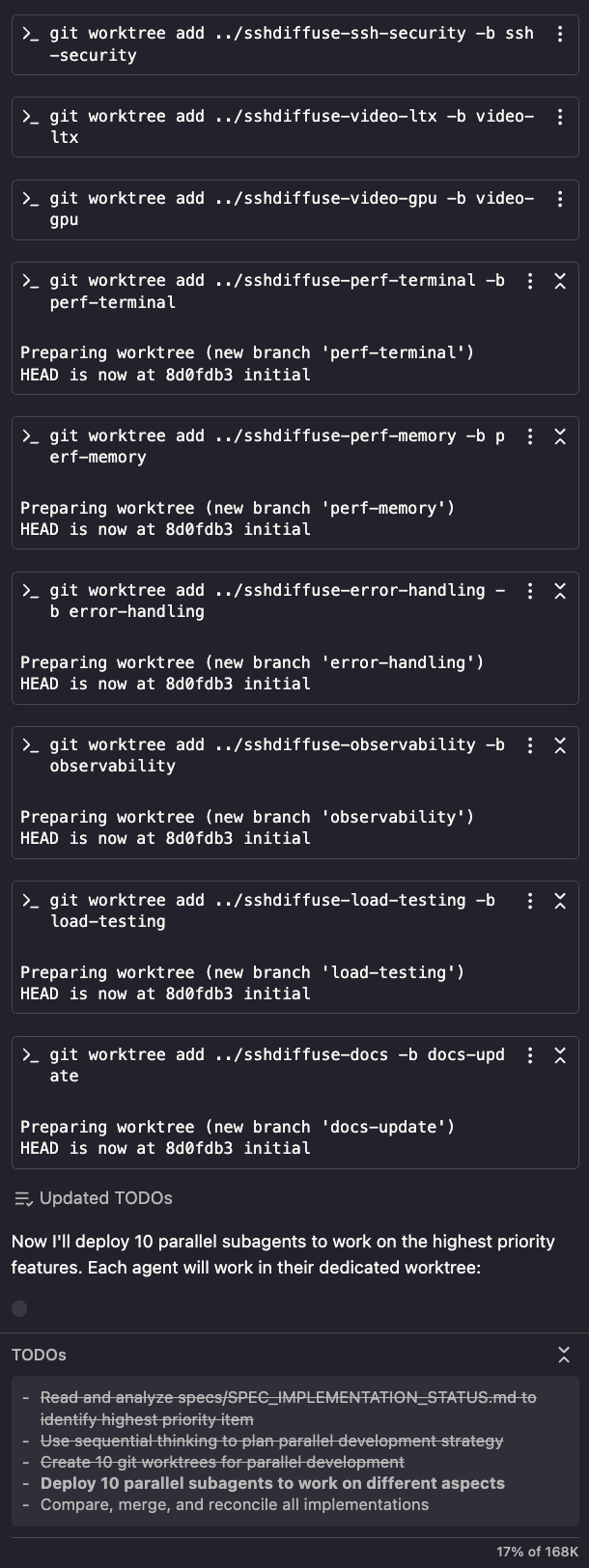
Some people are pushing the limits, however, by combining AI agents at the command line with tmux and a little known feature of git called worktrees,” which gives each agent instance its own playground.

Once you’re swarming, you’re not a software engineer anymore — now you’re an engineering manager with a team. Swarm mode is where your points really rack up.

1. Denial… Again: Remote coding”

denial again!

Remote coding is giving AI agents in the cloud access to your repo and asking them to do things; they can create entire PRs without you ever seeing the code or the running app.

There is a growing set of AI coding products that provide for the close your eyes and think of England” kind of remote asynchronous coding and it’s not OK with me!

And so the cycle begins again with denial.

The Questions We’re All Asking

When I discuss the advancement of AI into our day to day work with folks, some questions keep coming up:

Will using AI atrophy my knowledge? Some skills will almost certainly atrophy - that’s what happens to muscles that aren’t used. But we lost our tails because we never used them either. If something dries up and falls off due to misuse, how important was it in the first place?

Will AI take my job? I honestly don’t know. But I do know this: software engineers who use AI tooling are going to be more effective and efficient than those who don’t. And when promotion time comes around, or when layoffs happen, effectiveness and efficiency are good qualities to have.

Will AI produce more, different jobs? Every single technology we’ve ever invented has put someone out of work. When Grog the plump caveman lost his cuddling-to-keep-the-tribe-warm job after fire was invented, his extra berries at bedtime were gone.

I don’t know what happened to Grog, but I can tell you that the invention of fire led to pretty much every other job. Should we avoid a new technology because it points to an uncertain future?

Every new technology seems different - this one only destroys jobs and doesn’t create them - because the lost jobs happen first and we can’t see into the future. The Luddites broke into fabric mills and destroyed steam-powered looms because they didn’t want to lose their jobs. Of course, we ended up creating many more jobs with the machines that looms ultimately led to than the looms ever created on their own.

Is AI going to be different? Is it only going to destroy jobs and not create them? I don’t know. But if that were the case, it would be unique in human history.

Where Are We?

All technology advances happen faster now. The spread of electricity took ~45 years to reach 25% of the US population. The internet took ~7 years. AI has been making changes in our society as large as those other two in just 2.5 years. What that means for us puny humans, I don’t know.

But here’s what I do know: the grief you’re experiencing with the oncoming AI is real. We are losing things. We’re already losing knowledge and skills. Artists and other content creators seem to have lost their IP. The new people entering every field that uses AI are going to do things differently; the old ways will be lost.

The question isn’t whether we’re going to lose things with AI. The question is: is what we gain going to be worth it? Will it be a higher standard of living for our children? Will AI help us solve real-world problems that we’ve been unable to solve ourselves? Once we get over the grief, will we be able to experience joy in the new world that we’ve created for ourselves?

I hope so.

The engineers who are curious, who are experimenting, who are moving through these stages thoughtfully - I believe that they’ll do just fine in whatever future we create for ourselves. The ones who get permanently stuck in anger or denial? I think they’ll have a harder time.

The future is already here. What are you going to do about it?


Older Entries →