PAINTER JAILED FOR COMMITTING MASTERPIECESby Robert Anton Wilson
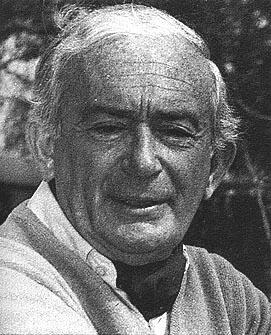
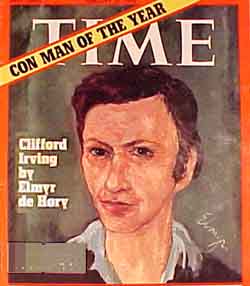
In August 1968 the Spanish government imprisoned a man on the island of Ibiza for creating a long series of sketches and paintings — beautiful, intensely lyrical works that Art Experts had universally proclaimed as masterpieces. The imprisonment of this Maker of Masterpieces did not represent censorship in the ordinary erotic or religious sense. Nobody even accused the artist of Political Incorrectness. He got jugged for a technical matter — namely, that he had signed the wrong name to his works… or several wrong names, in fact. Names like Picasso and Van Gogh and Modigliani and Matisse, for instance. Not that anybody knew then, or knows now, what name the man should have signed. Generally, when the case gets recalled at all, people refer to the prisoner of Ibiza as El Myr or Elmyr de Hory, but neither of those titles have any claim to special eminence among his many aliases. In his long career, the painter had used both of those names, but he had also used Baron Elmyr von Houry, Elmyr Herzog, Louis Cassou, Baron Elmyr Hoffman, Joseph Dory, E. Raynal, Joseph Dory-Boutin and quite a few others — perhaps as many as a hundred pseudonyms, according to François Reichenbach, an alleged Expert on this case. One trouble with Reichenbach as an Expert: he admits to buying and selling some of “Elmyr’s” forged paintings. Another problem: he later collaborated (with Orson Welles, no less) on a film — F For Fake — that either exposed “Elmyr” totally or created a whole new set of myths about “Elmyr,” depending on which other Experts you choose to believe. (Welles himself has said — in the documentary “Orson Welles: A Life in Film,” BBC-TV — that “Everything in that movie was a fake.” But to post-modernism, all art constitutes fake, or mask, in the Aristotelian sense of an imitation, or counterfeit of something else, and in a new non-Aristotelian sense we will explore as we advance deeper into the murk. We need to think slowly before deciding whether Welles spoke literally or metaphorically in describing F For Fake as itself a fake.) Whatever the facts — if we still dare to speak of “facts” in this age of situationism and deconstructionism — we will, as a matter of typographical convenience, hereafter refer to the prisoner of Ibiza as Elmyr without dubious quotes and without any guessing about his last name — if he had a last name, like ordinary humans, and didn’t arrive here by spaceship… “Elmyr” he preferred in his last years, and Elmyr we shall call him. And, for those who don’t like to repeatedly see words they can’t sound out in their heads, the Hungarian “Myr” rhymes with “deer,” and “Elmyr” has the same beat approximately as “cold beer” or “my ear.” Just say “cold beer, my ear, shake spear, Elmyr” and you’ll have no further sounding problems as you read. Elmyr served only two months in jail and then the Spanish further expressed displeasure with his chosen profession by expelling him from their country for one year, because he also had a reputation as an flamboyant homosexual, or in pop argot, an aging fairy godmother. But meanwhile, he had told his story to a young American writer, Cliff, who became his official biographer. According to Fake!, the deliberately outrageous biography concocted together by Cliff and Elmyr, this man of variable names, wobbly gender and multiple styles had committed many more masterpieces than those for which he had gotten jailed. In fact, Fake! says Elmyr had painted over a thousand of the classics of modern art. Every time you walk through a museum and see a Picasso or a Matisse that you particularly like, you should stop and ask, “Now did Picasso or Matisse do that, or did Elmyr do it?” Sort of changes your whole view of what critics call “the canon,” doesn’t it? The canon — a term borrowed from the theologians (which should make us suspicious at once: can we borrow anything of value from a corporation widely suspected for about 200 years now of intellectually bankruptcy?) — designates those works of art and literature which have achieved the rank of Masterpieces. When does a work achieve this canonicity? When the Experts say it does, of course. But the Elmyr case, far more than Deconstructionist philosophy, indicates that the Experts do not always know shit from shinola. Of course, not everybody believes that Elmyr committed quite as much great art as he gleefully confesses in the biography. Many Experts claim Fake! (a title to ponder, and ponder again) engaged in shameless bragging and exaggeration, to make Elmyr seem cleverer than the facts warrant. Unfortunately, these Experts had — many of them — authenticated some of the fakes that Elmyr undoubtedly did paint. As Elmyr’s co-author, Cliff, says, these Experts do not want their cover blown — they don’t want us to know how often, and how easily, they have gotten duped by Elmyr and other skilled forgers. According to Cliff, all Experts operate largely on bluff. Some of the Experts, however, have counter-attacked by suggesting that this alleged “co-author,” Cliff, may himself have functioned even more as a co-conspirator. And, in fact, the same co-author, Clifford Irving to give him his full name, subsequently became even more famous, and much more infamous, for persuading a New York publisher to give him a $750,000 advance for an authorized biography of Howard Hughes, i.e. a biography in which Hughes himself would talk, for the record, about all the financial, political, conspiratorial and sexual scandals in his Faustian career. $750,000 had a value, in 1969, of about $5 million now, but the publishers shelled out happily. Irving had shown them a contract and various notes in Hughes’s own handwriting… You see, even though Cliff Irving had already written Fake!, a textbook on forgery, including charming details on forged signatures as well as counterfeit paintings, he had a boyishly sincere manner and a wickedly scintillating personality. Like all good con-men. He and Hughes had met on a pyramid in Mexico, Irving said with a straight face. In the dead of night, of course… (It would make a wonderful surrealist painting, if Elmyr ever did a Dali: The ambitious young Irving and the rich old lunatic with matted hair and fingernails — or claws — like Bigfoot… signing a contract on a pyramid… under, I presume, a full moon…) Handwriting Experts later testified in court, after Irving’s own veracity came under suspicion. They said absolutely that Howard Hughes himself, and nobody else, had written the signature and notes produced by Irving. At this point, alas, many people began to share Irving’s (and Elmyr’s) low opinion of Experts, and soon the biography of Hughes got cancelled. Hughes himself speaking over a phone (he never did come out of seclusion…) denounced Irving as a fraud; but, of course, some say that the voice emanated from a Virtual Hughes — a double who had impersonated Hughes for years. The Mafia had bumped off the real Hughes, these conspiracy nuts claim, many years earlier. Had Irving faked a meeting with a man already dead and gotten “exposed” by another faker impersonating the dead man? As Swift proved to Partridge, we cannot decide matters of life and death on mere allegation. But we will deal with that kind of conspiracy later. Right now we only confront the problem of “the canon” itself as a kind of conspiracy. We simply do not know the extent to which Elmyr has entered the canon. Maybe 2 per cent of the masterpieces in modern museums emanated from his wizard’s brush, as virtually everybody now admits. Maybe the figure (at least for post-impressionism, fauvism and early cubism, Elmyr’s specialities) runs as high as 25 per cent, or 50 per cent…. An ouvre of “more than a thousand” paintings might make up something in that percentage range of canonical 20th Century Classics. These implications appear heavily suggested in Irving’s Fake! and even more stressed in the Welles-Reichenbach film… Well, then, we must re-examine the canonicity of art as skeptically as the 18th and 19th Centuries re-examined religion. Religious canonicity survived (in the Occident) only as long as the Pope qualified as the world’s leading Expert. When other Experts arose, with their own cults, religious canonicity became ambiguous and controversial. What happens when the Art Experts face a similar challenge? Some Radical Feminist critics have already begun such a “Protestant heresy,” and have dumped such Dead White European Males (DWEMs, in fashionable jargon) as Dante, Beethoven, Shakespeare, Michelangelo, etc. and replaced them with a new canon featuring a lot of long-forgotten ladies whose work, frankly, seems dreadfully inferior to me, and to most art critics. For instance, Susan McClary has found Beethoven’s Ninth Symphony a musical hymn to rape, which will no doubt surprise all those with less androphobic ears, who hear something quite different in it, something of cosmic grandeur. Says McClary, “The point of recapitulation in the first movement of the Ninth is one of the most horrifying moments in music… which finally explodes in the throttling, murderous rage of a rapist…” Sounds almost as bad as The Texas Chain Saw Massacre, doesn’t it? Although I write a lot of satire, I didn’t make this up. You can find McClary’s analysis in Minnesota Composers’ Forum Newsletter, January 1987. She also doesn’t like Western classic music in general, because of its “phallic violence” and “pelvic pounding.” I insist I did not invent McClary or any of her ravings. Honest to God. Some Femigogues just happen to sound like satire when you quote them verbatim. As for the female masterpieces set against old Ludwig, they only appear inferior, the Feminist revisionists say, because all of us have had our perceptions warped by the “patriarchal brainwashing” of our “phallocentric” culture. (“All of us” includies many female art critics, like Camille Paglia, who angrily claims this argument has crossed the line to an idiot caricature of Feminism) Maybe we all need a long de-programming at a Feminist re-education camp. Then we will realize that Hildegarde of Bingen not only outclassed Beethoven but wrote more first-rate music than Mozart, Bach and Scott Joplin together, and without any rape fantasies creeping in. Third World revisionists have raised similar objections to the canonical centrality of DWEMs. They ask us, not too gently, do we really believe that all the great art of humanity came out of one sub-continent, created by white males only? Hmmm? Do we trust these revisionists or do we trust our own sensibilities? After Elmyr, do we dare trust anybody? As a famous bard wrote He stood in his socks and he wondered, he wondered At the end of Welles’s F For Fake, after we have suffered prolonged doubt about how many Picassos should get reclassified as Elmyrs, one character cries passionately “I must believe, at least, that art is real!” — a noble thought with which I might finish this chapter… But this voice of Faith and Tradition belongs to another art forger, one who allegedly faked even more of the canonical Rennaisance masterpieces than Elmyr had faked of the canonical Moderns. We cannot have faith in this faker’s faith… |
From Cosmic Trigger: Volume 3 by Robert Anton Wilson, New Falcon Press 1996. For more information about this book, see The Robert Anton Wilson Bookstore.
|
 |  |
| On This Day in Snigglery | October 31, 1974: A radio drama about deadly bacteria from outer space gets misinterpreted as a news event by hundreds of panicky listeners. (See News Trolls for more of this sort of thing) |
|---|---|
 |