

Paul Mueller
Catholic Integralism Is a Brutal Dead End. Will Gen Z Repeat It?
A growing subculture is determined to subordinate America to the authority of Catholic theology. But this project has been tried before: it ends in predictable horrors.

Elon Musk’s Paper Billions Are Vanishing
The global trillionaire count returned to zero not long after SpaceX's IPO. Market fluctuations show the danger of imposing cash tax bills on stock-price wealth.

Good Intentions Paved the Road to the 2008 Financial Crisis
The financial crisis demonstrated how regulations can produce dangerous incentives — and how discretionary intervention can magnify uncertainty. Eighteen years later, policymakers remain tempted by both.

Will Trump Accounts Make Every Kid a Millionaire?
The $1,000 seed can grow substantially, but seven-figure wealth requires decades of compounding, continued contributions, and strong market returns.

Sound Money, Explained
The more people understand the nature and functions of money, the better they can hold their elected officials accountable for maintaining sound money.

The Myth of the Free-Riding Billionaire: Ray Madoff’s ‘The Second Estate’
In her new book, Ray Madoff argues that America's wealthiest exploit the tax code at the public's expense. But her critique understates both what the rich pay and what they…

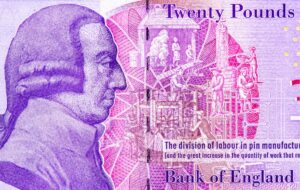
Sabotaging the Invisible Hand: Adam Smith Predicted Modern Policy Failures
Smith observed that significant economic inequalities arise not from voluntary exchange but from distortions that restrict competition, channel resources toward favored interests, and limit economic mobility.
Recessions as Murder Mysteries: Are Business Cycles Just a Myth?
In his new book 'Recession,' economist Tyler Goodspeed argues that economic downturns are caused by real shocks, not predictable business cycles.

Stigler’s Blunder: Did a Nobel Laureate Misread Adam Smith?
Smith recognized self-interest and political corruption, but he also believed people could be persuaded. That distinction is lost in modern reductionism.

Is Silicon Valley Shifting Right, Or Just Toward Power?
The tech industry’s growing dependence on government contracts and its fear of a 'billionaire' tax are reshaping political terrain.

