

Download the free Kindle app and start reading Kindle books instantly on your smartphone, tablet, or computer - no Kindle device required.
Read instantly on your browser with Kindle for Web.
Using your mobile phone camera - scan the code below and download the Kindle app.

Follow the author
OK
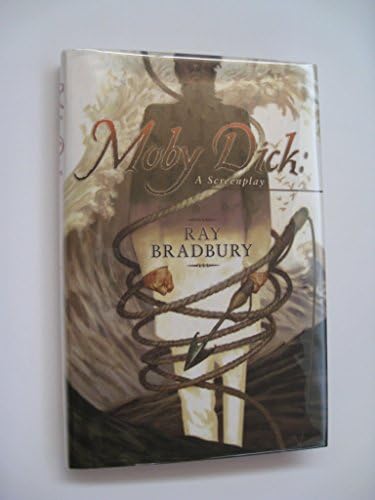
Moby Dick: A Screenplay
- Print length191 pages
- LanguageEnglish
- PublisherSubterranean
- Publication dateJune 30, 2008
- Dimensions5.75 x 1 x 8.75 inches
- ISBN-101596061804
- ISBN-13978-1596061804
![]() |
Frequently purchased items with fast delivery
Screwjack: A Short StoryPaperbackFREE Shipping on orders over $35 shipped by AmazonGet it as soon as Wednesday, Jun 24
Nightjohn (Sarny)Mass Market PaperbackFREE Shipping on orders over $35 shipped by AmazonGet it as soon as Wednesday, Jun 24
PulpPaperbackFREE Shipping on orders over $35 shipped by AmazonGet it as soon as Wednesday, Jun 24Only 10 left in stock (more on the way).
Bad MonkeyPaperbackFREE Shipping on orders over $35 shipped by AmazonGet it as soon as Wednesday, Jun 24
Fish KillDennis Mitch MaleyPaperbackFREE Shipping on orders over $35 shipped by AmazonGet it as soon as Wednesday, Jun 24
Product details
- Publisher : Subterranean
- Publication date : June 30, 2008
- Edition : First Edition
- Language : English
- Print length : 191 pages
- ISBN-10 : 1596061804
- ISBN-13 : 978-1596061804
- Item Weight : 1 pounds
- Dimensions : 5.75 x 1 x 8.75 inches
- Customer Reviews:
About the author

In a career spanning more than seventy years, Ray Bradbury, who died on June 5, 2012, at the age of 91, inspired generations of readers to dream, think, and create. A prolific author of hundreds of short stories and close to fifty books, as well as numerous poems, essays, operas, plays, teleplays, and screenplays, Bradbury was one of the most celebrated writers of our time. His groundbreaking works include Fahrenheit 451, The Martian Chronicles, The Illustrated Man, Dandelion Wine, and Something Wicked This Way Comes. He wrote the screen play for John Huston's classic film adaptation of Moby Dick, and was nominated for an Academy Award. He adapted sixty-five of his stories for television's The Ray Bradbury Theater, and won an Emmy for his teleplay of The Halloween Tree. He was the recipient of the 2000 National Book Foundation Medal for Distinguished Contribution to American Letters, the 2004 National Medal of Arts, and the 2007 Pulitzer Prize Special Citation, among many honors.
Throughout his life, Bradbury liked to recount the story of meeting a carnival magician, Mr. Electrico, in 1932. At the end of his performance Electrico reached out to the twelve-year-old Bradbury, touched the boy with his sword, and commanded, "Live forever!" Bradbury later said, "I decided that was the greatest idea I had ever heard. I started writing every day. I never stopped."
Customer reviews
- 5 star4 star3 star2 star1 star3 star57%43%0%0%0%0%
- 5 star4 star3 star2 star1 star2 star57%43%0%0%0%0%
- 5 star4 star3 star2 star1 star1 star57%43%0%0%0%0%
Customer Reviews, including Product Star Ratings help customers to learn more about the product and decide whether it is the right product for them.
To calculate the overall star rating and percentage breakdown by star, we don’t use a simple average. Instead, our system considers things like how recent a review is and if the reviewer bought the item on Amazon. It also analyzed reviews to verify trustworthiness.
Learn more how customers reviews work on AmazonTop reviews from the United States
- 4 out of 5 stars
Perhaps the greatest screenplay ever wriiten.
Reviewed in the United States on December 11, 2008The only thing that they could of added to this book was Bradbury's essay on how he overcame the struggles to write the screenplay, which is very intriguing. Buyer Beware...you can find the screenplay online for free but I wanted to have something I can hold and take with me. I also thought that maybe there would be essays in the book detailing either Bradbury's struggle or a profound synopsis to act as a companion but alas, there is not. Still a great read though.
9 people found this helpfulSending feedback...Sending feedback...HelpfulThank you for your feedback.Sorry, we failed to record your vote. Please try againThanks, we'll investigate in the next few days.Sorry, We failed to report this review. Please try again - 5 out of 5 stars
Great Screenplay
Reviewed in the United States on December 2, 2020I don't have this edition; I have a xeroxed copy of the screenplay as typed. It's the best adaptation into screenplay form from another source I've ever seen. I think it's better than the book, which almost never happens in movies. It was a great movie, and undergirded by a this great screenplay. It would have been a better movie had the screenplay been followed more closely. For instance when the Pequod is leaving the harbor Starbuck's wife is waving from her house. The movie has a shot of this, but Mrs. Starbuck isn't identified, and is so small as to be hardly noticeable.
3 people found this helpfulSending feedback...Sending feedback...HelpfulThank you for your feedback.Sorry, we failed to record your vote. Please try againThanks, we'll investigate in the next few days.Sorry, We failed to report this review. Please try again - 5 out of 5 stars
A Great Screenplay
Reviewed in the United States on January 18, 2009"Moby Dick" is both my favorite novel and a favorite movie of mine. Recently, I re-read the novel and then sat down yesterday with Bradbury's screenplay and John Huston's movie. I wondered who did what and how much of the book had found its way into the movie. Most of the movie comes from the book. It is one of the best adaptations of a great novel I have ever seen. I know there was an authorship dispute between Bradbury and Huston. Consequently, I did a line by line comparison. The movie's dialogue is roughly sixty percent Bradbury and forty percent Huston. Additionally, Father Mapple's sermon was rewritten by Orson Welles. Huston greatly expanded Ahab's "... mild, mild day..." speech, which he took from the book. Another addition from the book was Huston's inclusion of the blacksmith's remaking of the harpoon blades. He also created the "Ahab beckons..." sequence. He specifically added a "...beckons..." statement to Elijah's prophecy. This he developed from Bradbury's dialogue on page 159 "...he will rise from the grave and beckon..." Huston made this line literally true instead of being implied. Huston cut out Bradbury's sailor songs and added his own. He also increased the number of songs. On page 180 of his script Bradbury kills Moby Dick "...the dying whale." Huston decided to return to the book and have Moby Dick survive. Thus I believe the title card at the beginning of the movie that says Screen play by Ray Bradbury and John Huston is an accurate reflection of the significant contributions by both men. Bradbury's name is rightly first because he was the majority author.
12 people found this helpfulSending feedback...Sending feedback...HelpfulThank you for your feedback.Sorry, we failed to record your vote. Please try againThanks, we'll investigate in the next few days.Sorry, We failed to report this review. Please try again