


 这篇博客介绍了三种不同的链表排序方法:归并排序、堆排序和利用Collections工具类。每种方法都详细阐述了实现过程,包括如何断开链表、创建虚拟节点以及如何在限定的时间和空间复杂度内完成排序。对于归并排序,通过递归将链表分为两半并排序,然后合并;堆排序则利用PriorityQueue实现;Collections工具类方法则是将链表转换为ArrayList,排序后再重建链表。
给你链表的头结点 head ,请将其按 升序 排列并返回 排序后的链表 。
进阶:
你可以在 O(n log n) 时间复杂度和常数级空间复杂度下,对链表进行排序吗?
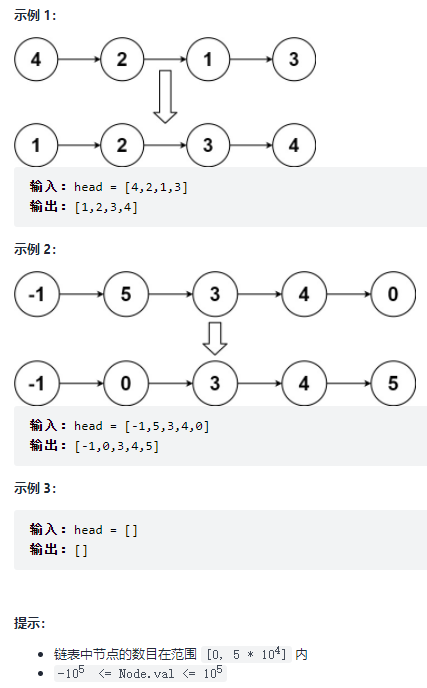
方法1:归并排序+使用辅助函数
import java.util.*;

/*
 * public class ListNode {
 *   int val;
 *   ListNode next = null;
 * }
 */

public class Solution {
    /**
     *
     * @param head ListNode类 the head node
     * @return ListNode类
     */
    public ListNode sortInList (ListNode head) {
        return head == null ? null : mergeSort(head);
    }

    public ListNode mergeSort(ListNode head) {
        if(head.next == null) {
            return head;
        }
        ListNode slow = head, fast = head;
        //需要断开两个链表!!!
        ListNode pre = null;
        //注意:fast指针判断时要分别判断
        while(fast != null && fast.next != null) {
            pre = slow;
            slow = slow.next;
            fast = fast.next.next;
        }
        pre.next = null; //将链表分成两部分,才能分别递归计算
        ListNode left = mergeSort(head);
        ListNode right = mergeSort(slow);
        return merge(left, right);
    }

    public ListNode merge(ListNode left, ListNode right) {
        ListNode dummy = new ListNode(-1);
        ListNode cur = dummy;
        while(left != null && right != null) {
            if(left.val < right.val) {
                cur.next = left;
                cur = cur.next;
                left = left.next;
            } else {
                cur.next = right;
                cur = cur.next;
                right = right.next;
            }
        }
        if(left != null) {
            cur.next = left;
        }
        if(right != null) {
            cur.next = right;
        }
        return dummy.next;
    }
}
方法2:堆排序&确定虚拟节点
import java.util.*;
/*
 * public class ListNode {
 *   int val;
 *   ListNode next = null;
 * }
 */

public class Solution {
    /**
     *
     * @param head ListNode类 the head node
     * @return ListNode类
     */
    //会超时
    public ListNode sortInList (ListNode head) {
        PriorityQueue<ListNode> queue = new PriorityQueue<>((o1, o2) -> o1.val - o2.val);
        while(head != null) {
            queue.offer(head);
            head = head.next;
        }
        //虚拟节点与cur节点的确定
        ListNode dummy = new ListNode(-1);
        ListNode cur = queue.poll();
        dummy.next = cur;
        while(!queue.isEmpty()) {
            cur.next = queue.poll();
            cur = cur.next;
        }
     cur.next = null; //入队时next指针存着下一个元素,要断掉指针指向,否则会产生超时(环形链表)
        return dummy.next;
    }
}
如何确定虚拟头结点和cur节点之间的关系?
前提:head不为空
ListNode dummy = new ListNode(-1);
dummy.next = head;
ListNode cur = dummy.next;
ListNode pre = dummy;
方法3:使用Collections集合工具类排序
新建节点并返回
import java.util.*;

/*
 * public class ListNode {
 *   int val;
 *   ListNode next = null;
 * }
 */

public class Solution {
    /**
     *
     * @param head ListNode类 the head node
     * @return ListNode类
     */
    //方法3:ArrayList存值后,使用工具类排序,建新节点
    public ListNode sortInList (ListNode head) {
        if(head == null || head.next == null) {
            return head;
        }
        ListNode cur = new ListNode(0);
        ArrayList<Integer> list = new ArrayList<>();
        while(head != null) {
            list.add(head.val);
            head = head.next;
        }
        Collections.sort(list);
        ListNode p = cur;
        for(int i = 0; i < list.size(); i++) {
            ListNode node = new ListNode(list.get(i));
            p.next = node;
            p = p.next;
        }
        return cur.next;
    }
}





 扫一扫
扫一扫


 6405
6405

 被折叠的 条评论
为什么被折叠?
被折叠的 条评论
为什么被折叠?
 到【灌水乐园】发言





