



1,拷贝jar包
junit-3.8.2.jar(4.x主要增加注解应用)
2,写业务类
package test.entity;

import test.service.UserService;

import java.util.List;
import java.util.Properties;

public class User {
    private int id;
    private String userName;
    private UserService userService;
    private List<String> userNameList;
    private Properties props;
    private String userCode;

    public User(String userCode){
        this.userCode = userCode;
    }

    public void setId(int id){
        this.id = id;
    }

    public int getId(){
        return id;
    }

    public void setUserName(String userName){
        this.userName = userName;
    }

    public String getUserName(){
        return userName;
    }

    public void setUserService(UserService userService){
        this.userService = userService;
    }
    public UserService getUserService(){
        return userService;
    }
    public void setUserNameList(List<String> userNameList){
        this.userNameList = userNameList;
    }
    public List<String> getUserNameList(){
        return userNameList;
    }

    public void setProps(Properties props){
        this.props = props;
    }
    public Properties getProps(){
        return props;
    }

    public String login(){
        if("admin".equals(userName)) {
            return "Success";
        }else {
            return "false";
        }
    }
}
3,定义测试类
测试类最好单独建立项目,或者单独定义文件夹存储,需要继承junit.framework.TestCase
4,增加测试方法
测试方法必须是public,不应该有返回值,方法名必须以test开头,无参数
测试方法是有执行先后顺序,按照方法的定义先后顺序
多个测试方法对同一个业务方法进行测试,一般每个逻辑分支结构都有测试到。
import junit.framework.TestCase;
import test.entity.User;

public class TestUser extends TestCase {

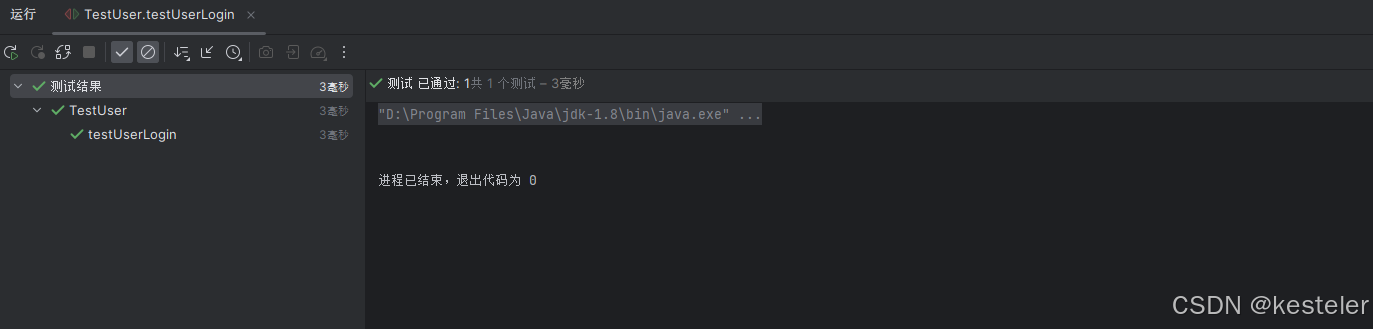
    public void testUserLogin(){
        User user = new User("1");
        user.setUserName("admin");
        String result = user.login();
        assertEquals("Success",result);
    }
}
5,测试类的生命周期方法
    @Override
    protected void setUp() throws Exception {
        super.setUp();
        System.out.println("start>>>>>>>");
    }

    @Override
    protected void tearDown() throws Exception {
        super.tearDown();
        System.out.println("end>>>>>>>");
    }
setUp方法会在每一个测试方法前执行一次。tearDown方法会在每一个测试方法后执行一次





 扫一扫
扫一扫


Junit单元测试&spm=1001.2101.3001.5002&articleId=142325342&d=1&t=3&u=7450830a428a470c805bdb01ff5afc7f)

 被折叠的 条评论
为什么被折叠?
被折叠的 条评论
为什么被折叠?
 到【灌水乐园】发言





