


本系列为笔者的 Leetcode 刷题记录,顺序为 Hot 100 题官方顺序,根据标签命名,记录笔者总结的做题思路,附部分代码解释和疑问解答,01~07为C++语言,08及以后为Java语言。
01 二叉树展开为链表
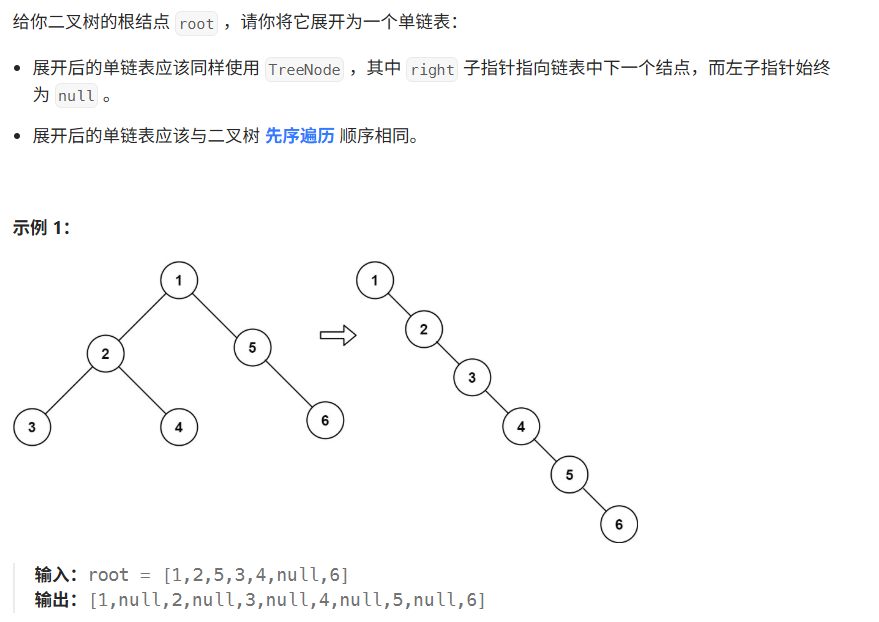
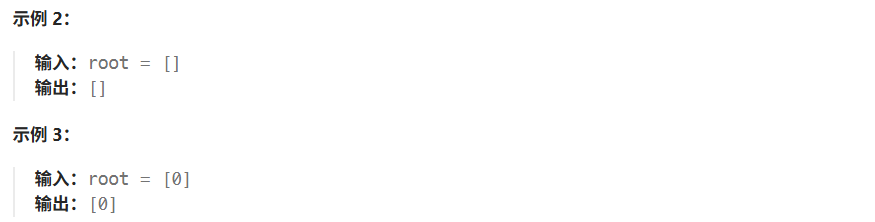
/**
 * Definition for a binary tree node.
 * public class TreeNode {
 *     int val;
 *     TreeNode left;
 *     TreeNode right;
 *     TreeNode() {}
 *     TreeNode(int val) { this.val = val; }
 *     TreeNode(int val, TreeNode left, TreeNode right) {
 *         this.val = val;
 *         this.left = left;
 *         this.right = right;
 *     }
 * }
 */
class Solution {
    public void flatten(TreeNode root) {

    }
}
方法一:递归
class Solution {
    public void flatten(TreeNode root) {
        List<TreeNode> list = new ArrayList<>();
        preOrder(root, list);

        //⭐
        int size = list.size();
        for(int i=1; i<size; i++){
            TreeNode prev = list.get(i-1);
            TreeNode curr = list.get(i);

            prev.left = null;
            prev.right = curr;
        }
    }

    public void preOrder(TreeNode root, List<TreeNode> list){
        if(root == null){
            return;
        }

        list.add(root);
        preOrder(root.left, list);
        preOrder(root.right, list);
    }
}
方法二:栈
class Solution {
    public void flatten(TreeNode root) {
        List<TreeNode> list = new ArrayList<>();
        Deque<TreeNode> stack = new LinkedList<>();

        while(root != null || !stack.isEmpty()){
            while(root != null){
                list.add(root);
                stack.push(root);
                root = root.left;
            }
            root = stack.pop();
            root = root.right;
        }

        //⭐
        int size = list.size();
        for(int i=1; i<size; i++){
            TreeNode prev = list.get(i-1);
            TreeNode curr = list.get(i);

            prev.left = null;
            prev.right = curr;
        }
    }
}
方法三:改良版栈
class Solution {
    public void flatten(TreeNode root) {
        if(root == null){
            return;
        }

        Deque<TreeNode> stack = new LinkedList<>();
        stack.push(root);
        TreeNode prev = null;

        while(!stack.isEmpty()){
            TreeNode curr = stack.pop();

            if(prev != null){
                prev.left = null;
                prev.right = curr;
            }

            TreeNode left = curr.left;
            TreeNode right = curr.right;
            if(right != null){
                stack.push(right);
            }
            if(left != null){
                stack.push(left);
            }

            prev = curr;
        }
    }
}
方法四:寻找前驱结点
class Solution {
    public void flatten(TreeNode root) {
        TreeNode curr = root;

        while(curr != null){
            if(curr.left != null){
                TreeNode prev = curr.left;
                while(prev.right != null){
                    prev = prev.right;
                }

                prev.right = curr.right;
                curr.right = curr.left;
                curr.left = null;
            }
            curr = curr.right;
        }
    }
}
02 从前序与中序遍历序列构造二叉树
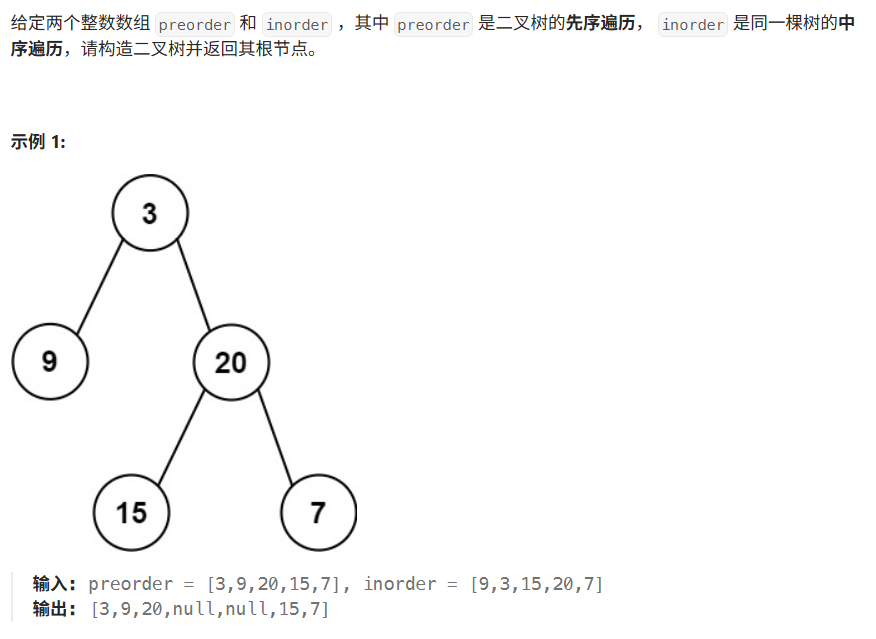

/**
 * Definition for a binary tree node.
 * public class TreeNode {
 *     int val;
 *     TreeNode left;
 *     TreeNode right;
 *     TreeNode() {}
 *     TreeNode(int val) { this.val = val; }
 *     TreeNode(int val, TreeNode left, TreeNode right) {
 *         this.val = val;
 *         this.left = left;
 *         this.right = right;
 *     }
 * }
 */
class Solution {
    public TreeNode buildTree(int[] preorder, int[] inorder) {

    }
}
方法一:递归
class Solution {
    Map<Integer, Integer> indexMap; //值,下标
    public TreeNode myBuildTree(int[] preorder, int[] inorder, int prel, int prer, int inl, int inr){
        if(prel > prer){
            return null;
        }

        int pre_root = prel; //前序根节点下标
        int in_root = indexMap.get(preorder[prel]); //中序根节点下标

        TreeNode root = new TreeNode(preorder[prel]); //⭐
        int size = in_root - inl;

        root.left = myBuildTree(preorder, inorder, prel+1, prel+size, inl, in_root-1);
        root.right = myBuildTree(preorder, inorder, prel+size+1, prer, in_root+1, inr);

        return root;
    }

    public TreeNode buildTree(int[] preorder, int[] inorder) {
        int n = preorder.length;
        indexMap = new HashMap<>();
        for(int i=0; i<n; i++){
            indexMap.put(inorder[i], i);
        }
        return myBuildTree(preorder, inorder, 0, n-1, 0, n-1);
    }
}
| 问题 | 答案简述 |
|---|---|
| 1. 为什么要建立哈希表? | 为了快速定位根节点在中序数组的位置,避免线性查找,提高时间效率。 |
2. 为什么 indexMap 要全局定义? | 递归层层调用都需要访问,定义为全局成员变量方便统一管理,避免反复传参或创建。 |
3. 为什么比较 prel 和 prer 判断递归结束? | 递归分割以前序序列区域为准,prel > prer时表示无节点,终止递归更准确。 |
03 路径总和 Ⅲ
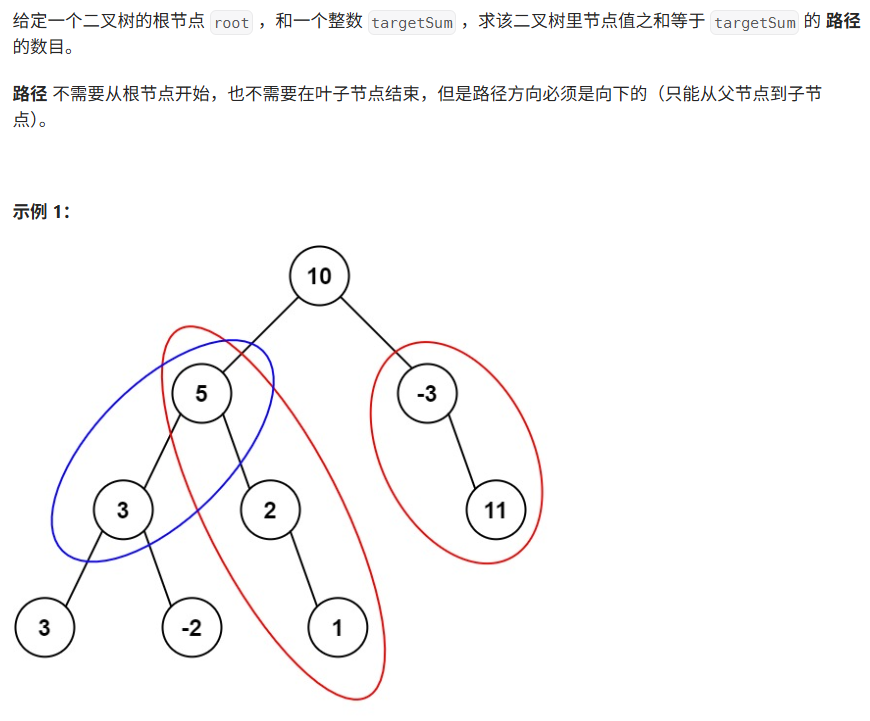
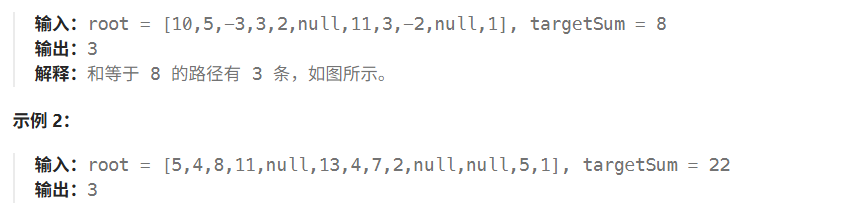
/**
 * Definition for a binary tree node.
 * public class TreeNode {
 *     int val;
 *     TreeNode left;
 *     TreeNode right;
 *     TreeNode() {}
 *     TreeNode(int val) { this.val = val; }
 *     TreeNode(int val, TreeNode left, TreeNode right) {
 *         this.val = val;
 *         this.left = left;
 *         this.right = right;
 *     }
 * }
 */
class Solution {
    public int pathSum(TreeNode root, int targetSum) {

    }
}
方法一:递归
class Solution {
    public int pathSum(TreeNode root, long targetSum) {
        if(root == null){
            return 0;
        }

        int ret = rootSum(root, targetSum);
        ret += pathSum(root.left, targetSum);
        ret += pathSum(root.right, targetSum);

        return ret;
    }

    public int rootSum(TreeNode root, long targetSum){
        if(root == null){
            return 0;
        }

        int ret = 0;
        int val = root.val;
        if(val == targetSum){
            ret++;
        }

        ret += rootSum(root.left, targetSum - val);
        ret += rootSum(root.right, targetSum - val);

        return ret;
    }
}
方法二:前缀和
class Solution {
    public int pathSum(TreeNode root, long targetSum) {
        Map<Long, Integer> prefix = new HashMap<>(); //当前路径总和,出现次数
        prefix.put(0L, 1);

        return dfs(root, prefix, 0, targetSum);
    }

    public int dfs(TreeNode root, Map<Long, Integer> prefix, long curr, long targetSum){
        if(root == null){
            return 0;
        }

        int ret = 0;
        curr += root.val;
        ret = prefix.getOrDefault(curr-targetSum, 0);
        prefix.put(curr, prefix.getOrDefault(curr, 0) + 1);

        ret += dfs(root.left, prefix, curr, targetSum);
        ret += dfs(root.right, prefix, curr, targetSum);

        prefix.put(curr, prefix.getOrDefault(curr, 0) - 1);

        return ret;
    }
}
① prefix.getOrDefault(curr, 0) 为啥是0啊
prefix.getOrDefault(curr, 0)的作用是取出当前前缀和curr在哈希表里出现的次数。- 如果这个
curr第一次出现,prefix里就没有对应的key,因此用getOrDefault(curr, 0)返回默认值0,表示之前没有出现过这个前缀和。
② prefix.put(curr, prefix.get(curr) - 1);为啥呀?
当左、右子树递归完成后,递归函数就要回退到父节点继续处理父节点的其他分支 / 返回父节点。
如果不将当前路径和 curr 的出现次数 -1,那么在返回父节点后,哈希表会错误地保留了当前路径的状态,导致其他路径的统计被污染,出现错误的计数。
③ prefix.put(curr, prefix.getOrDefault(curr, 0) + 1);这里是不断更新吗?
是的,
prefix.put(curr, prefix.getOrDefault(curr, 0) + 1);
这行代码是在递归过程中不断更新当前路径和 curr 出现的次数。
04 二叉树的最近公共祖先
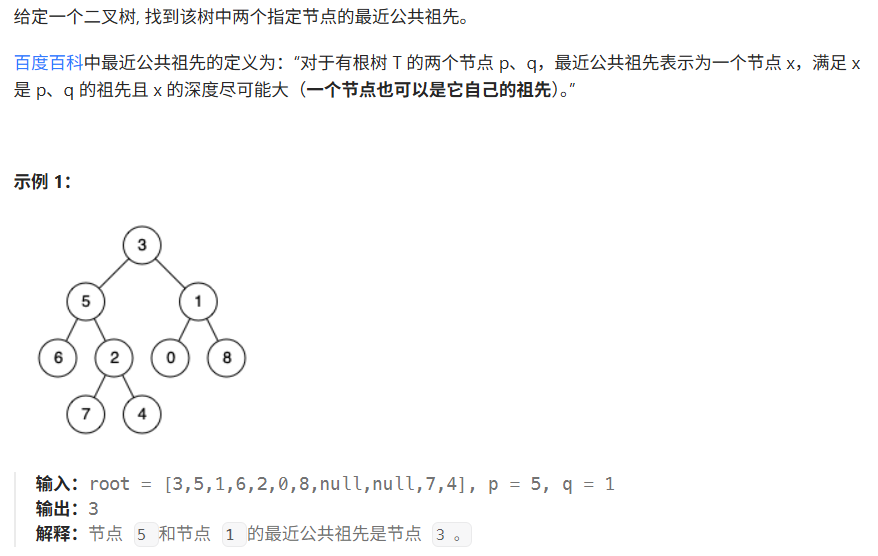
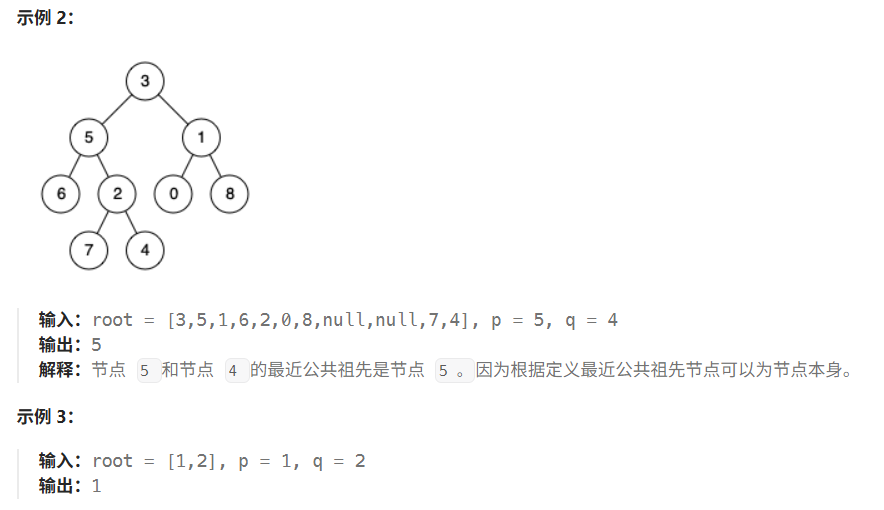
/**
 * Definition for a binary tree node.
 * public class TreeNode {
 *     int val;
 *     TreeNode left;
 *     TreeNode right;
 *     TreeNode(int x) { val = x; }
 * }
 */
class Solution {
    public TreeNode lowestCommonAncestor(TreeNode root, TreeNode p, TreeNode q) {

    }
}
方法一:递归
class Solution {
    private TreeNode ans;
    public Solution(){
        this.ans = null;
    }

    //1.创建递归方法dfs
    public boolean dfs(TreeNode root, TreeNode p, TreeNode q){
        if(root == null){
            return false;
        }

        //2.左右孩子结点
        boolean lson = dfs(root.left, p, q);
        boolean rson = dfs(root.right, p, q);

        //⭐
        if((lson && rson) || ((root.val == p.val || root.val == q.val) && (lson || rson))){
            ans = root;
        }

        //3.return包含递归式
        return lson || rson || (root.val == p.val || root.val == q.val);
    }

    public TreeNode lowestCommonAncestor(TreeNode root, TreeNode p, TreeNode q) {
        this.dfs(root, p, q);
        return this.ans;
    }
}
① ans 和 dfs 为啥都是 private?
把实现细节隐藏起来,不希望外部代码直接访问递归实现细节和存储结果的变量,避免外部误用或者干扰。ans 是实现变量,dfs 是实现细节的递归函数,外部只需调用公开接口 lowestCommonAncestor。
② 为啥ans一旦赋值,不会改变
dfs 从树的根节点开始,递归访问左右子树后回到根节点。这是一种自底向上的查找方式——当递归顺序回溯到某个节点时,说明这个节点是中间某一层的节点。并且,最近公共祖先是“最低”的公共祖先,即离 p 和 q 最近的那个节点。
05 二叉树中的最大路径和
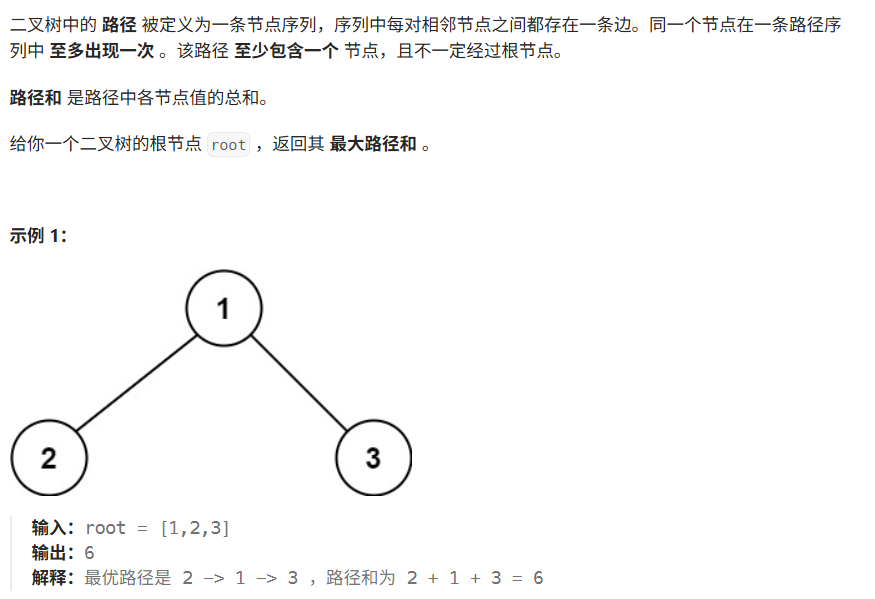
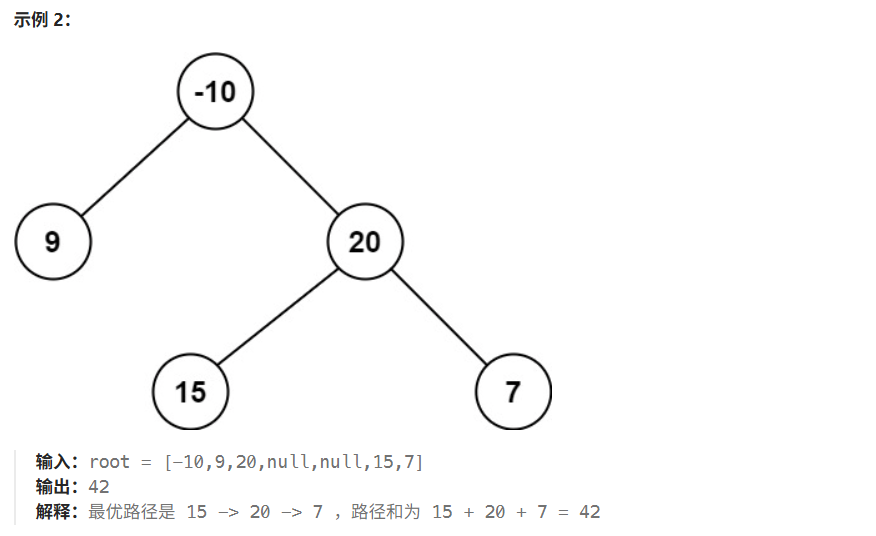
/**
 * Definition for a binary tree node.
 * public class TreeNode {
 *     int val;
 *     TreeNode left;
 *     TreeNode right;
 *     TreeNode() {}
 *     TreeNode(int val) { this.val = val; }
 *     TreeNode(int val, TreeNode left, TreeNode right) {
 *         this.val = val;
 *         this.left = left;
 *         this.right = right;
 *     }
 * }
 */
class Solution {
    public int maxPathSum(TreeNode root) {

    }
}
方法:递归
class Solution {
    int max = Integer.MIN_VALUE;
    public int maxPathSum(TreeNode root) {
        myFunction(root);
        return max;
    }

    public int myFunction(TreeNode root){
        if(root == null){
            return 0;
        }

        int L = Math.max(0, myFunction(root.left));
        int R = Math.max(0, myFunction(root.right));

        //⭐
        max = Math.max(max, L + R + root.val);

        return Math.max(L, R) + root.val;
    }
}
万一 root.val 是负的怎么办?
如果 root.val 是负数我们也必须加上它!因为这是这个路径的「根」,路径中必须包含它(因为题目定义路径一定是一个起点到终点连续的节点链),所以这个 L + R + root.val 是整条路径必须包含的值。





 扫一扫
扫一扫


 1158
1158

 被折叠的 条评论
为什么被折叠?
被折叠的 条评论
为什么被折叠?
 到【灌水乐园】发言





