
PageRank Algorithm for Graph Databases
The most famous application of PageRank is the one that sparked its creation. Google search engine founders Larry Page and Sergey Brin needed an algorithm to rank web pages and provide users with the best possible search engine results for a particular page.
With PageRank, each page gets a boost from the number and importance of its incoming links, meaning the other pages that link to it. A link from a high-ranking page counts for more, and that page’s rank is split across every page it links to.
In this post, you’ll learn what PageRank measures, where it helps beyond web search, and which Memgraph PageRank procedure to run on your graph.
What Is the Pagerank Algorithm Used For?
In graph database terminology, the PageRank algorithm is used to measure the importance of each node based on the number of incoming relationships and the rank of the related source nodes. What the PageRank algorithm actually outputs is a probability distribution that represents the likelihood of visiting any particular node by randomly traversing the graph.
So, it's basically a node popularity contest.
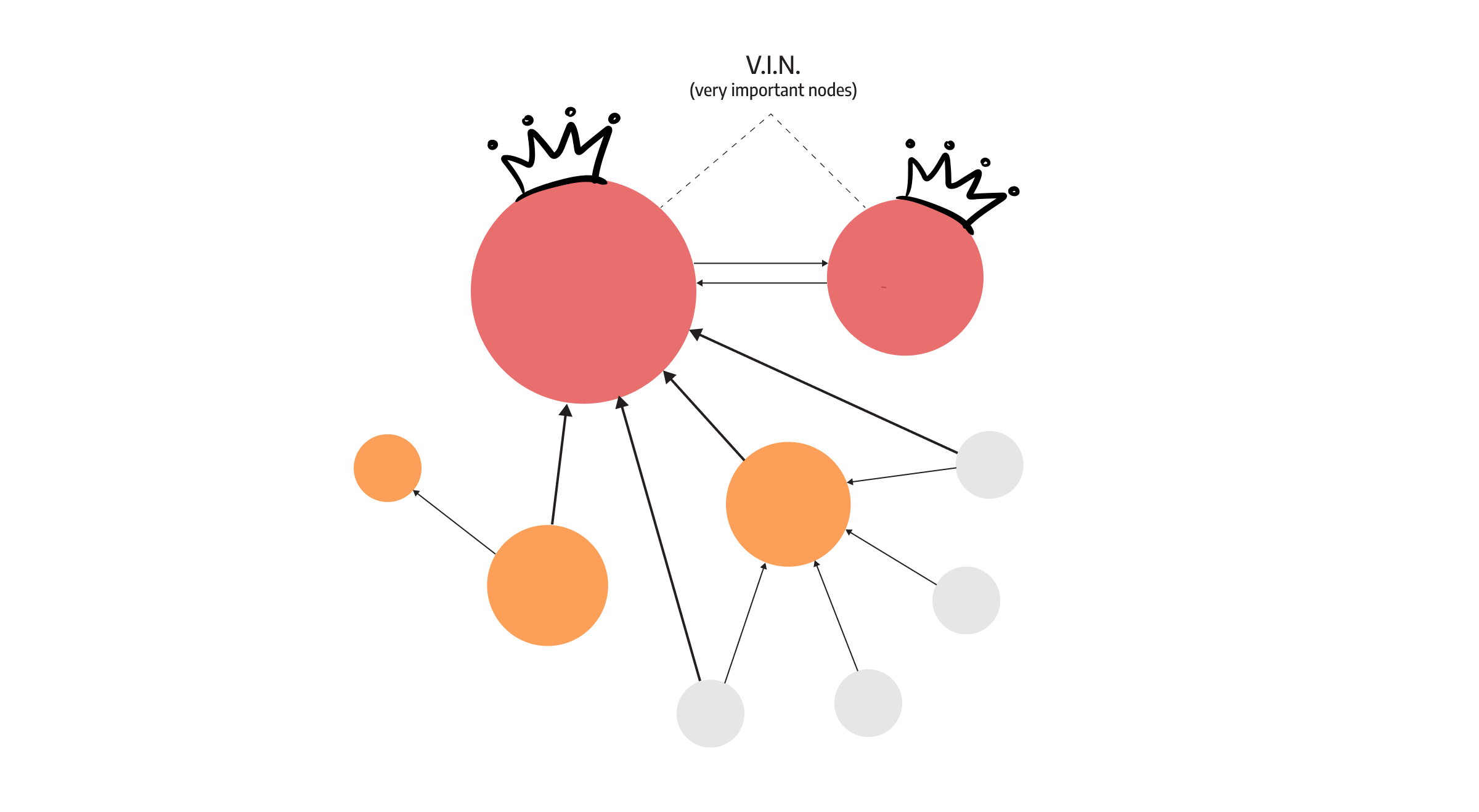
The animation below shows the results of PageRank on a simple network. A sequel to a well-liked movie starts out more popular than a random new title because it already has a fan base. In graph terms, a node linked from a high-ranking node ranks higher itself.

Personalized PageRank
A widely used type of PageRank is Personalized PageRank, which is especially useful in recommendation systems. Personalized PageRank restricts the random walk to a set of nodes you choose. The walk starts from one of those nodes, and when it jumps, it lands on one of them. This type of PageRank brings out central nodes from the perspective of that set of specific nodes.
For example, Twitter’s Who to Follow service used a random walk similar to Personalized PageRank to find each user’s “circle of trust,” the accounts most closely connected to them, and built its follow recommendations from that set. Similarly, PageRank can be used as a measure of influence for a variety of applications, not just for website pages and movie rankings.
PageRank Algorithm Applications
If a social network or a search engine is not the product you are developing, check out how you can utilize PageRank in various other use cases or knowledge graphs built to infer knowledge in these niches.
Recommendation Engines
In recommendation and search engines, the PageRank algorithm can be utilized to recommend products that match the target user's preferences or are currently trending among all the other users. The algorithm considers the number of purchases and the reliability of the users who bought or reviewed the product.
A reliable user has a valid usage history and reviews, while unreliable users are fake customers whose purpose is to artificially inflate the metrics of certain products to make them appear more desirable.
Data Lineage
Knowing the importance of documents in the data lineage graph has two important applications: impact analysis and system reliability.
When you add a new data property, migrate data, or make a major update such as merging data sources after an acquisition, impact analysis helps you assess the upstream and downstream effects.
PageRank can also help identify high-impact nodes that are required to remain highly reliable because they are used in many other places throughout the organization.
Fraud Detection
In fraud detection, PageRank can be used as an additional feature (input) to a machine learning algorithm to improve classification and reduce false positives.
Users who are involved in fraudulent transactions with shared cards are more likely to be fraudsters. So the node ranks involved in these particular transactions can be a piece of valuable information that can be used in machine learning models to predict and detect fraud among individuals that have connections with known fraudsters in the network.
Identity and Access Management
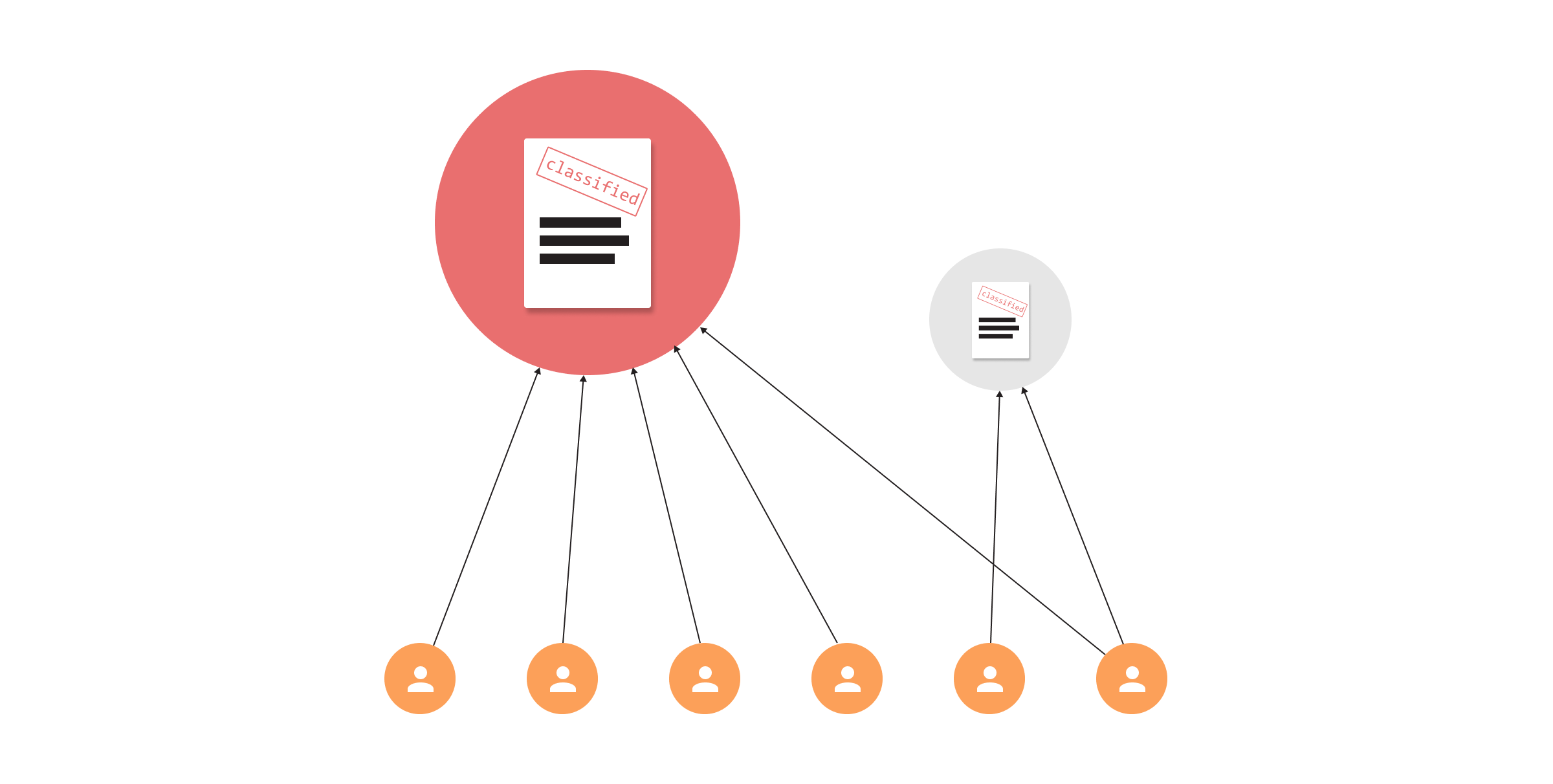
While managing permission, it is important to restrict access to sensitive assets, as their exploitation could cause expensive damage to the company. In many systems, due to a lack of time and resources, high permissions are often given to people that don't actually need them.
A PageRank algorithm can help identify which sensitive assets are accessible by many users to determine who, in fact, requires access and remove permissions for the rest of the users.
Network Optimization
Critical infrastructures are systems that can be represented as a network of highly interdependent nodes and relationships. Due to their nature, failure in one node may result in a cascade of failures in other nodes. PageRank can help identify the nodes many others depend on, so you can see which failures would cascade furthest.
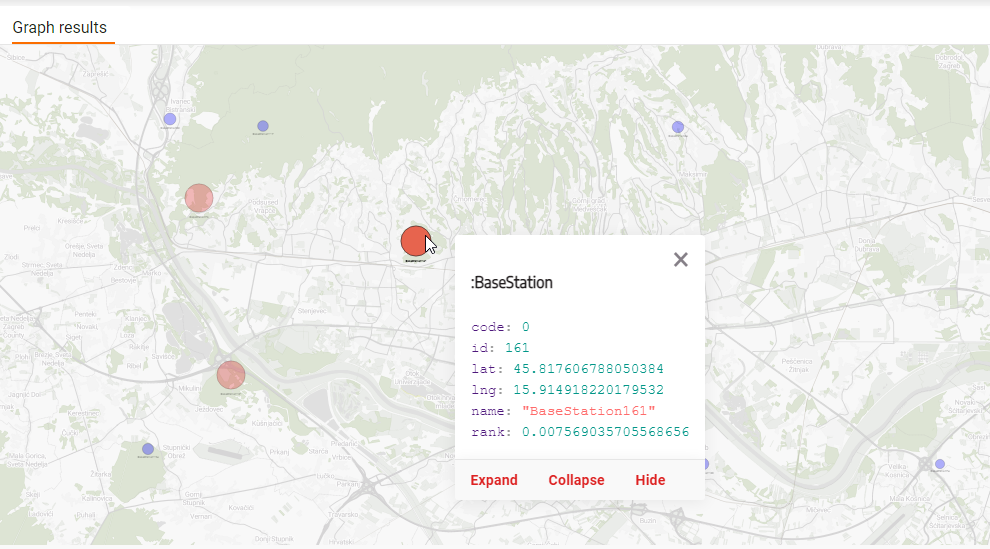
As energy infrastructure is also a network, using PageRank algorithm outputs to identify vulnerabilities in the topology is invaluable and can save time, money, and frustration for both companies and users.
Cybersecurity
Because it’s not feasible to remove every threat in a system, PageRank can help calculate the probability that certain malicious events lead to severe attacks. Just as PageRank's original purpose was to determine which sites will more probably be randomly clicked on due to all the other sites pointing at it, in the security system, it can be used to point out which attack will more probably be performed and consequences of which attacks will be more severe.
PageRank Algorithm Implementation in Memgraph
Memgraph has implemented PageRank using C++, which makes it ideal for use cases where performance is highly valuable. The graph needs to be directed, and the algorithm doesn't take relationships' weight into account.
Default arguments are the same as in the NetworkX PageRank implementation, so if you are a NetworkX user, it will be smooth sailing:
- max_iterations: integer (default = 100) ➡ The maximum number of iterations within the PageRank algorithm.
- damping_factor: double (default = 0.85) ➡ PageRanks damping factor. This is the probability of continuing the random walk from a random node within the graph.
- stop_epsilon: double (default = 1e-5) ➡ Value used to terminate the iterations of PageRank. If the change from one iteration to another is lower than
stop_epsilon, execution is stopped.
To call PageRank in Memgraph use the following query:
CALL pagerank.get()
YIELD node, rank
RETURN node, rank;
You can try it out on the Europe gas pipelines dataset in Memgraph Lab. Check the nodes with the highest value that could cause problems if they fail with the following query:
CALL pagerank.get()
YIELD node, rank
RETURN node, rank
ORDER BY rank DESC
LIMIT 10;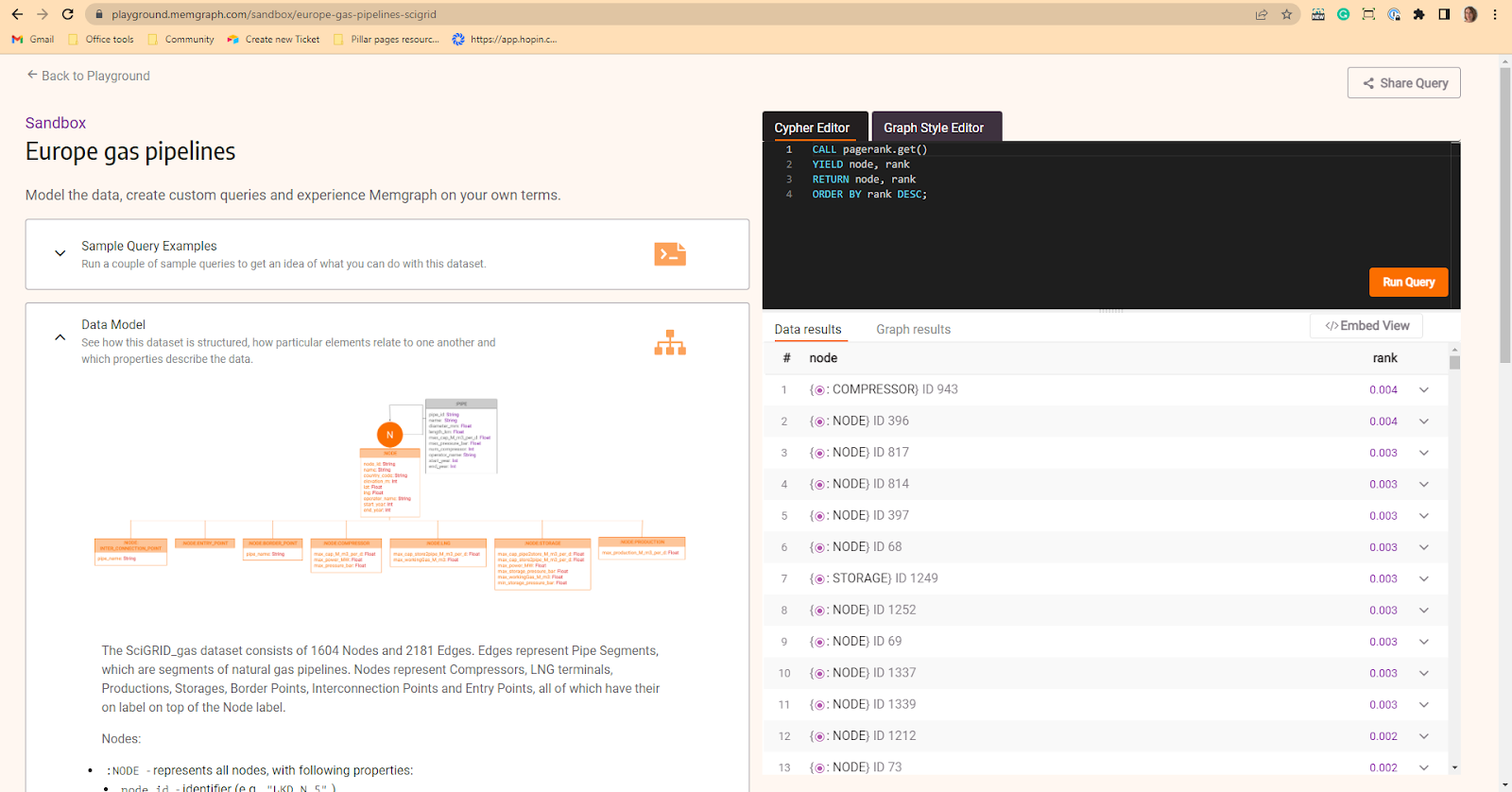
Running the PageRank Algorithm on a Subgraph
As with other algorithms in the MAGE library, you can run PageRank only on a specific group of nodes with the project() function. Save the sub-graph in a variable, then provide it as a first argument of the algorithm:
MATCH p=(n:SpecificLabel)-[r]->(m)
WITH project(p) AS subgraph
CALL pagerank.get(subgraph)
YIELD node, rank
RETURN node, rank;
If your application is highly time-sensitive and nodes and relationships arrive in a short period of time, use Dynamic PageRank. It preserves the previously processed state, so when entities are updated or new ones arrive, it incrementally updates an approximate PageRank instead of restarting the algorithm over the whole graph.
Final Thoughts
PageRank is a mature graph algorithm that's still relevant wherever you need to know which nodes matter most, from fraud rings and access rights to pipelines and product recommendations.
In Memgraph, you can run it with a single Cypher query, limit it to a subgraph with project(), or keep ranks current on streaming data with Dynamic PageRank in Memgraph Enterprise. If you work in Python, you can also call PageRank and other MAGE algorithms from Python with GQLAlchemy.
If you're unsure whether you're using PageRank correctly or need help applying it to your use case, the community on Memgraph's Discord server is happy to help.