Category: From The Archives
O’Brien has not fundamentally changed from the man who took over his local union in 2006 as an anti-reform candidate.

In his first two week in office, President Donald Trump has violated the Constitution and broken the law to carry out measures that threaten millions working peoples’ jobs and the health, education, and social welfare programs of the elderly, children and the poor.
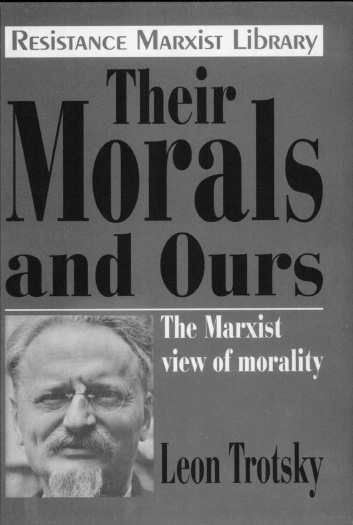
A critical examination of Trotsky’s evolving views on revolutionary morality and democracy in revolutionary movements.

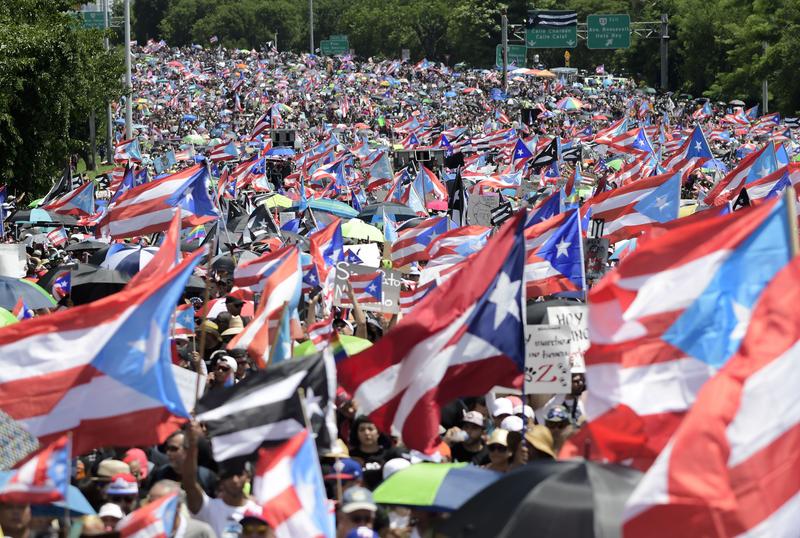
The discredit attained by the dominant parties, by the legislature, by the “politicians” and even “politics” itself, defined inaccurately, but viscerally despised by many people, recalls the concept of “organic crisis” advanced by the Italian Marxist Antonio Gramsci. Authors such

Joanne Landy (1941-2017) and Thomas Harrison (1948-) became socialists as teenagers and have remained involved in the democratic left ever since. They were active in the student protest movement at the University of California at Berkeley in the 1960s, where they met and became close friends and collaborators. During the 1970s, they became increasingly interested in the issue of labor rights in Central and Eastern Europe, and they worked to link democratic and social justice struggles in the Eastern Bloc with social movements in the United States, the West, and the Third World. Until Joanne Landy’s death in October 2017, they were co-directors of the Campaign for Peace and Democracy (CPD), which was founded in 1982. Initially, the organization was called the Campaign for Peace and Democracy/East and West, but with the end of the Cold War the title was shortened.
 For Iran, the U.S. withdrawal from the 2015 Nuclear Agreement will mean crushing sanctions and direct or continued indirect war declared by Israel and Saudi Arabia with U.S. support. For the Middle East, it will mean further destruction and regional imperialist competition. For the world, it will mean further division between the U.S. and the European Union and further global imperialist competition.

Looking back on nearly 25 years of involvement in the LGBT movement, and 45+ years in the labor movement, I am struck by the way those paths have crossed, intertwined and separated over the long term.

In an era when the federal government is increasingly dominated by fossil-fuel interests that limit regulation of oil rigs and pipelines, the environmental justice movement seems to have diminished significantly.

We working people live in darkening times. When the Trump presidency ends in four years—if it does—we may no longer have an organized labor movement. As one of my colleagues, Ed Ott of the Murphy Institute, the City University of New York’s labor school, said to me, “We are at the beginning of the end of the U.S. labor movement based on a partnership with capital.” We are at the twilight of an era. Labor unions and collective bargaining stand to be swept away, and with them the institutions that have sheltered us in the workplace and provided us with a modicum of job security, living wages, health insurance, and pension benefits.
 In June 2017, the New Politics editorial board organized an event to honor Joanne Landy. She had been diagnosed almost a year before with stage 4 lung cancer. We all knew her prognosis was very grim and thought it would be a fine thing to show Joanne, while she was still with us, how much she was loved and admired by so many, many people.

Do we need the police? Brooklyn College sociologist Alex S. Vitale poses that question vividly in his book: Are the police guarantors of social peace or its disruptors? Is the force’s mandate to serve the public equally and fairly, or to act as social-control agents, protecting property and its few owners at the expense of the many?
Heather Ann Thompson has written a magnificent history of the Attica Prison uprising, the deadliest prison rebellion in U.S. history.
 For some time now, many of us have wondered how it is that a number of left-wing writers and some political organizations could support Vladimir Putin and the Russian government’s role in international affairs.
This year’s elections are the culmination of the long-standing economic and cultural grievances of America’s industrial workers, a subclass largely composed of white men from the Rust Belt whose factories have been asset-stripped and sent abroad and whose unions or small businesses, pensions, and prospects have been decimated. They are not the poorest of the poor—not even the poorest of the white poor. They are not from places where the economic conditions are the worst, but they are from places where uncertainty about the future of industrial jobs is most acute.
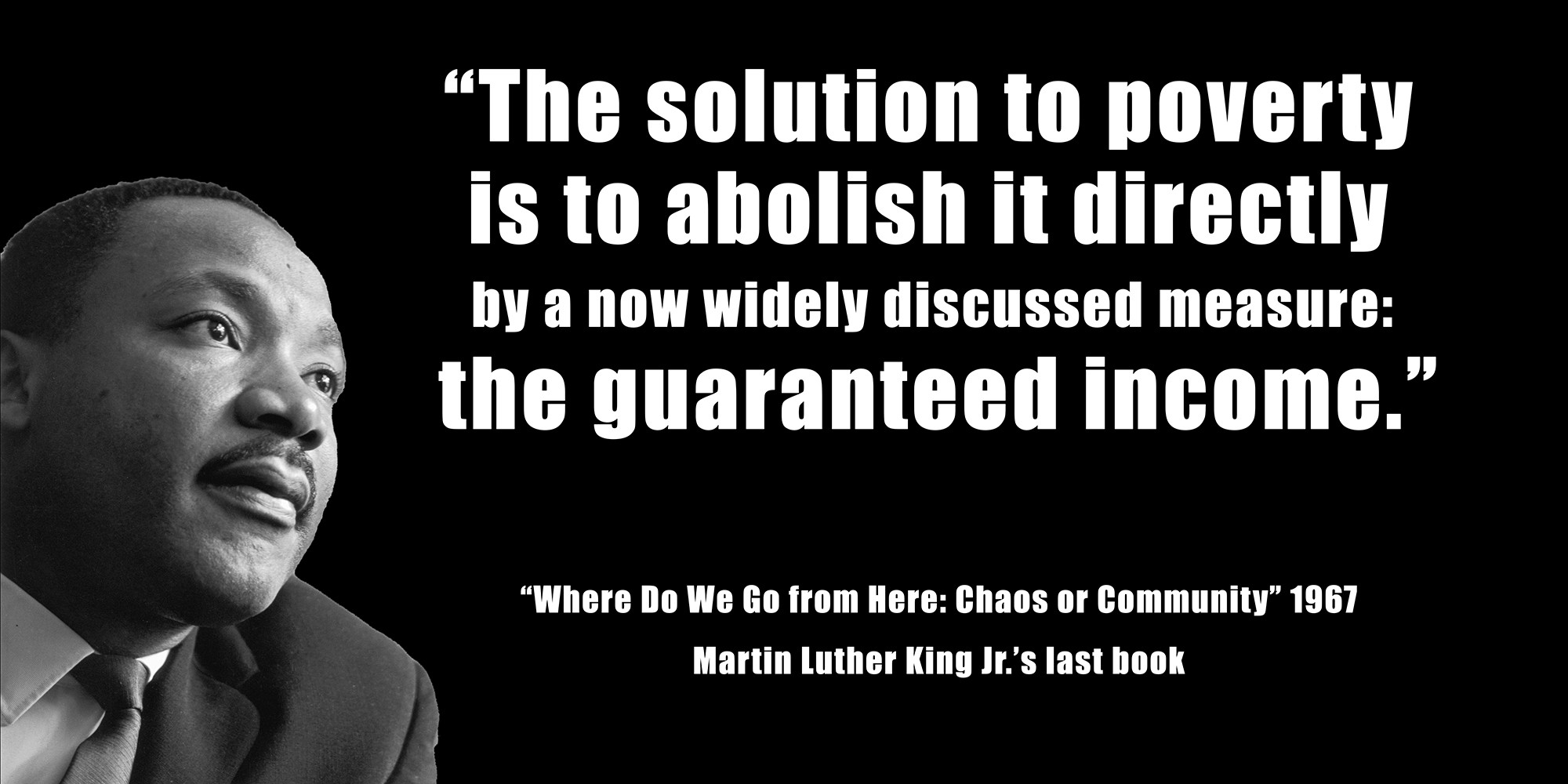
Marking an anniversary of a book’s publication is, appropriately, reserved for books that were widely read when they first appeared many years ago. Books we commemorate with an anniversary are ones that ushered in a new way of thinking and influenced the way society tries to make sense of the world. Martin Luther King Jr.’s last book, Where Do We Go from Here: Chaos or Community did neither of these things.

What explains the enthusiasm in certain quarters of the left for Vladimir Putin and Russia?
 Rosa Luxemburg’s defense of socialist democracy and her critique of the Bolsheviks in her pamphlet The Russian Revolution (1918) are well known. Less well known and often forgotten is her critique of bourgeois democracy, its limits, its contradictions, and its narrow and partial character. We propose to examine this critical line of thought in some of her political writings without any pretentions to completeness.

Wilson’s recollections of his association with Correspondence newsletter that was published in Detroit, Michigan, from 1959 to 1967, and of C.L.R. James.
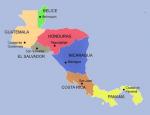
The colonization of Latin America never ended, it merely changed forms. Today this conquest continues, with transnational companies driving neo-colonization grounded in the continued exploitation of natural resources. This is nowhere more true than in Central America. The force of neo-colonization is strengthened by free-trade agreements and development plans that guarantee a company’s right to investment above the rights of the citizenry. Meanwhile, the indigenous populations face renewed dispossession and eviction to make way for global capital’s conquest.
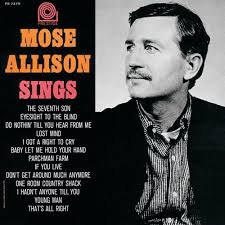
In October 1969, pianist/ singer/composer Mose Allison recorded “Monsters of the Id.” At a time when recent history had witnessed a police riot at the 1968 Democratic Party Convention, the police crackdown on protesters at Berkeley’s People’s Park, and popular backlash against anti-war, New Left, counter-culture, and Black Power sentiment, Allison began by warning that the title characters no longer remain hidden, but have come out in full view. To the accompaniment of a slightly discordant horn section, Allison—singing in his characteristic style, with its idiosyncratic pauses and accents—spins a variety of often ghoulish metaphors that remain just as timely in today’s era of Tea Party, torture reports, Stand Your Ground, and Donald Trump: “They’re sprouting through the cracks … They’re deputizing maniacs / Creatures from the swamp rewrite their own Mein Kampf.”
- 1
- 2
- 3
- Older Posts »