#92 【そろばん1級・段】両手はじき&省略算のやり方 -Abacus Level 1 & Dan: Two-Hand Method & Shortcut Calculation-

こんにちは!「100日後にそろばん完全マスター!」の主です。
Youtube92日目の動画「そろばん1級・段 両手はじき&省略算のやり方」の内容を簡単に解説します。
そろばんは、基本的には右手ではじきますが、両手を使えるとスピードアップできます。
最初はむずかしく感じるかもしれませんが、慣れると両手の方が楽に速くできるようになります。
Hello! I’m the creator of “Abacus Master in 100 Days.”
Day 92: How to Use Both Hands & Shortcuts for Abacus Level 1 and Dan
Normally, we use the right hand on the abacus, but using both hands makes you faster.
It may feel tricky at first, but once you get used to it, it becomes easier and quicker.
両手はじき -Two-Hand Technique-
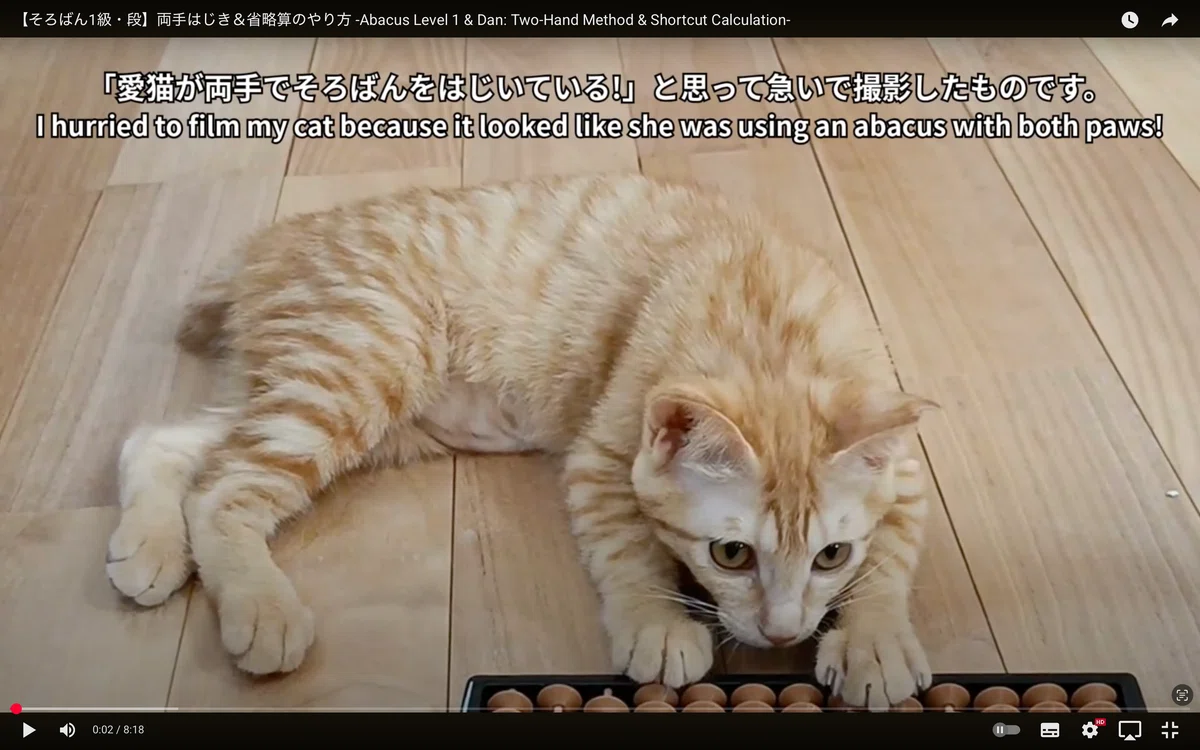
両手はじきとは、名前のとおり、両手を使ってそろばんをはじく方法です。
The two-hand technique means using both hands to move the beads on the abacus.
両手はじきはいつから始めればよい? -When should you start using both hands?-
片手だけだとスピードに限界を感じてきたときから、両手を使うのがオススメです。
また、両手でしっかりとそろばんを置くというよりも、ある程度頭の中で暗算で計算したものを両手で置いていく、というイメージになります。
具体的には、暗算1級・段位頃から、両手はじきにチャレンジしても良いかと思います。
ちなみに、そろばん1級は、片手だけで十分合格できます。
It’s recommended to start using both hands when you feel that one hand alone limits your speed.
Rather than moving the beads with both hands for every step, you’ll be placing the results of mental calculations using both hands.
Typically, you can start trying the two-hand technique around the Mental Abacus Level 1 or Dan level.
By the way, you can still pass the Abacus Level 1 exam using only one hand.
両手はじきのやり方 -How to Use Both Hands-
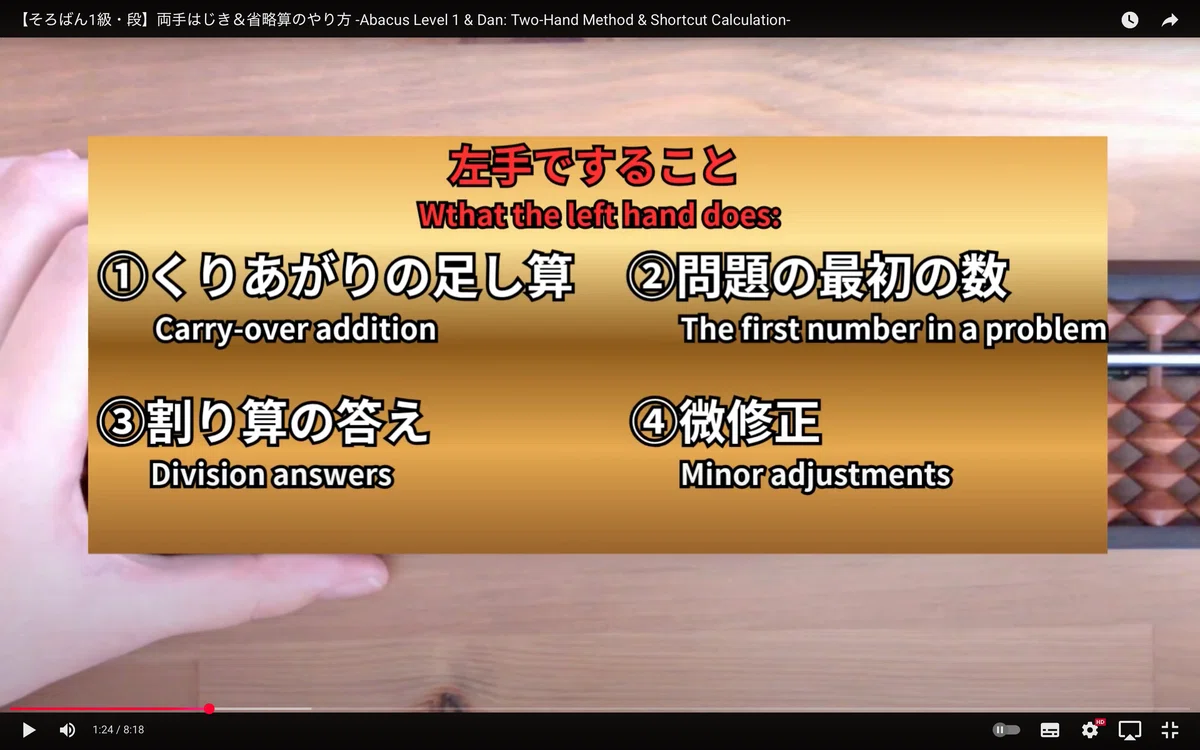
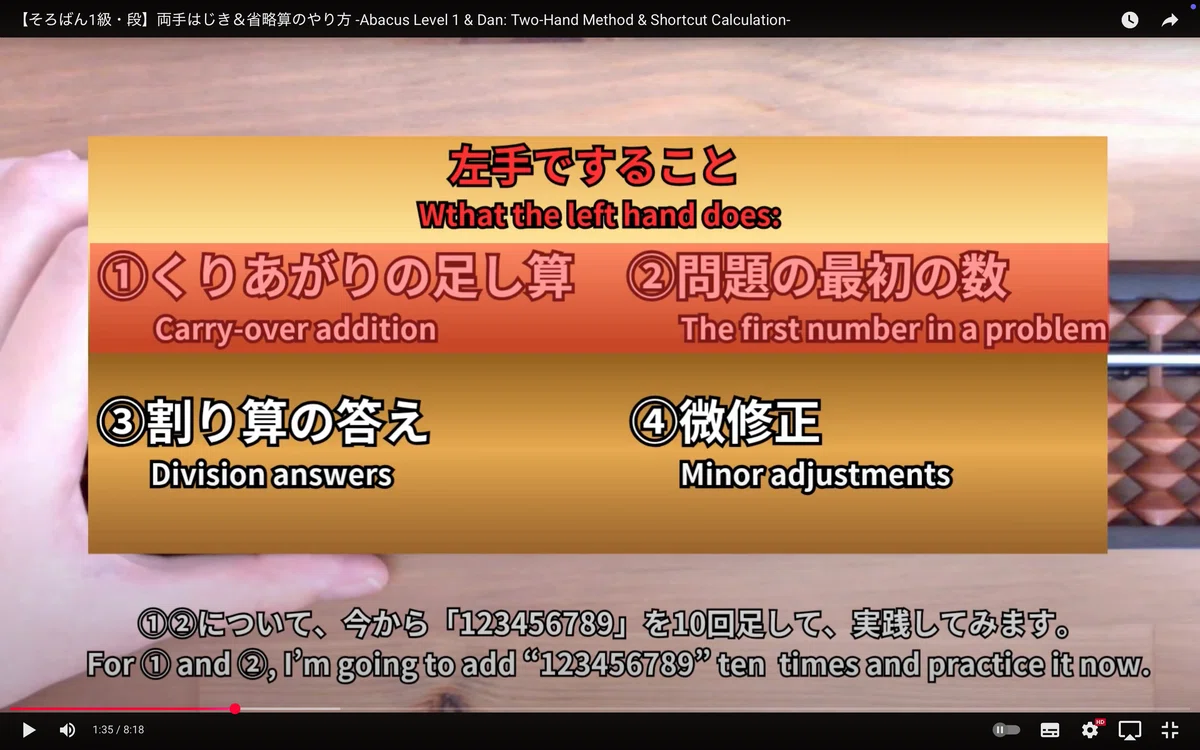
左手ですることは、主に4つになります。
繰り上がりの足し算
問題の最初の数
割り算の答え
微修正
「補足」
動画では解説し忘れましたが、繰り下がりの引き算でも使えます。
(たとえば10−1のとき、10を左手で引いて1を右手で足します)
The left hand mainly handles four things:
Carrying in addition
The first number of a problem
The quotient in division
Small adjustments
A note/supplementary explanation: Although it wasn't explained in the video, this technique can also be used for subtraction with borrowing (regrouping). (For example, in the case of 10−1, you subtract 10 with your left hand and add 1 with your right hand.)
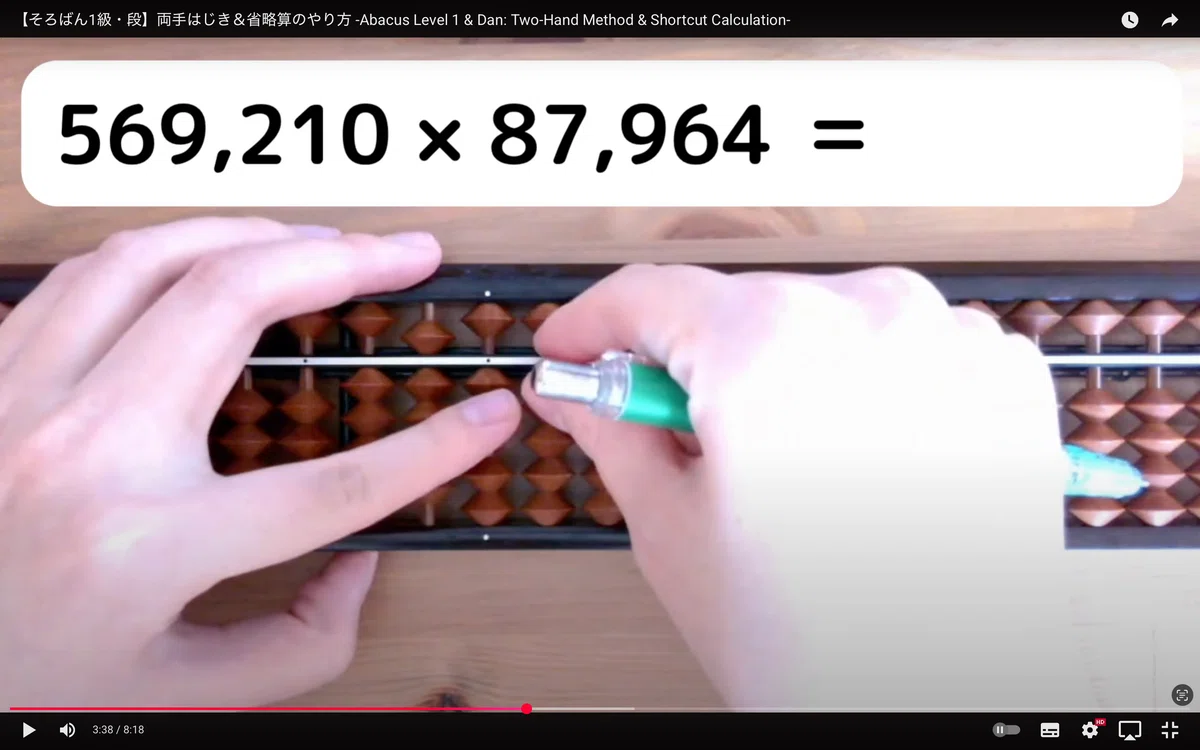
画像のように、Youtubeの主は、左手は人差し指だけ使っています。
ただ、左手の使い方にルールはありませんので、中指や親指なども使えそうな人は使って良いと思います。
As shown in the image, the YouTube host only uses the left index finger.
However, there’s no strict rule for the left hand, so you can use your middle or thumb if it feels comfortable.
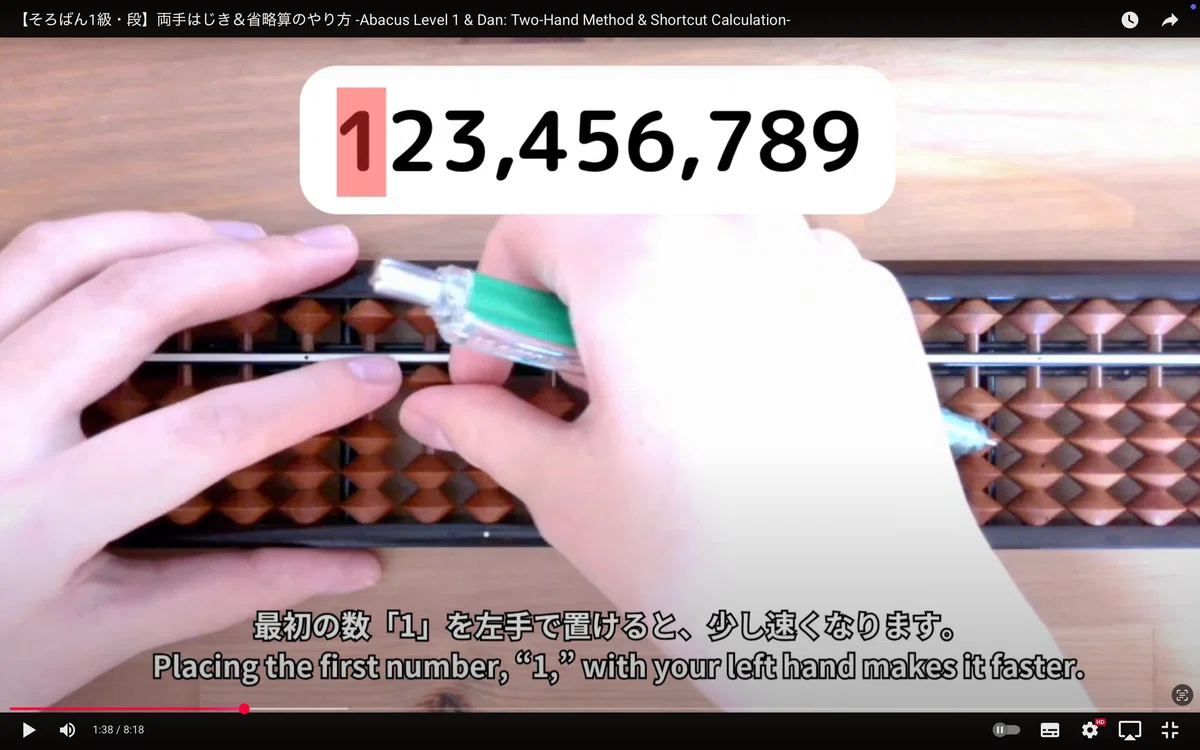
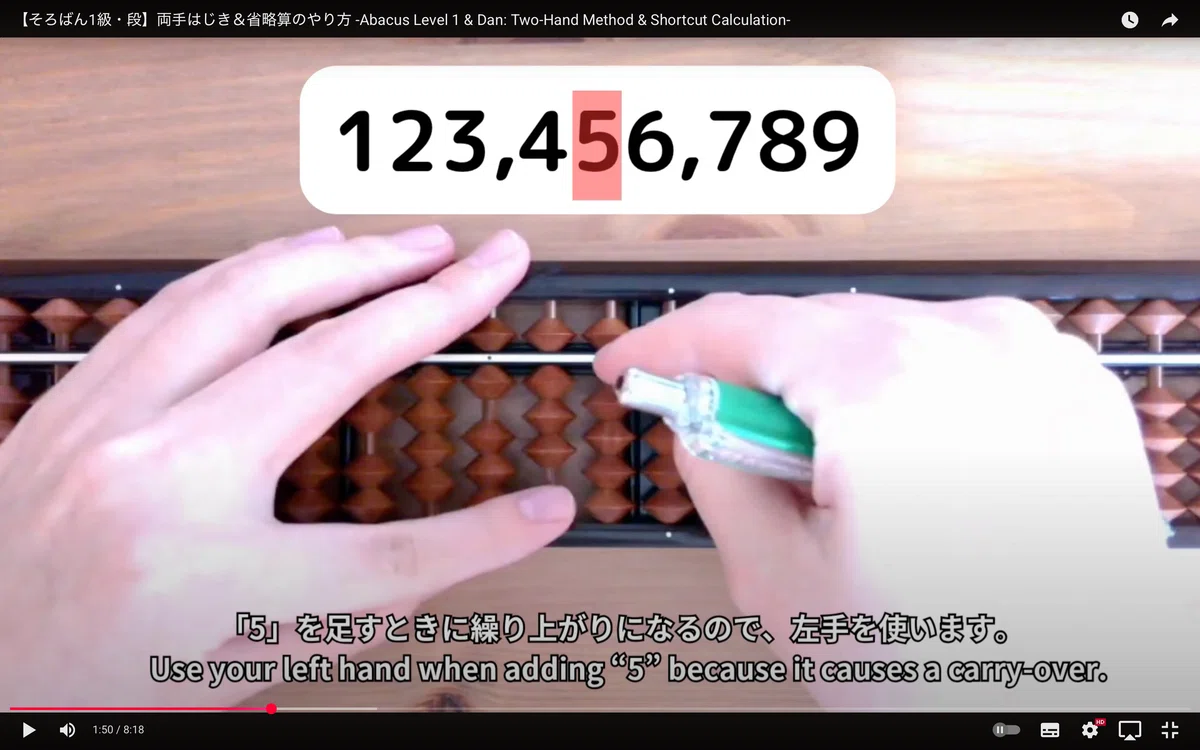
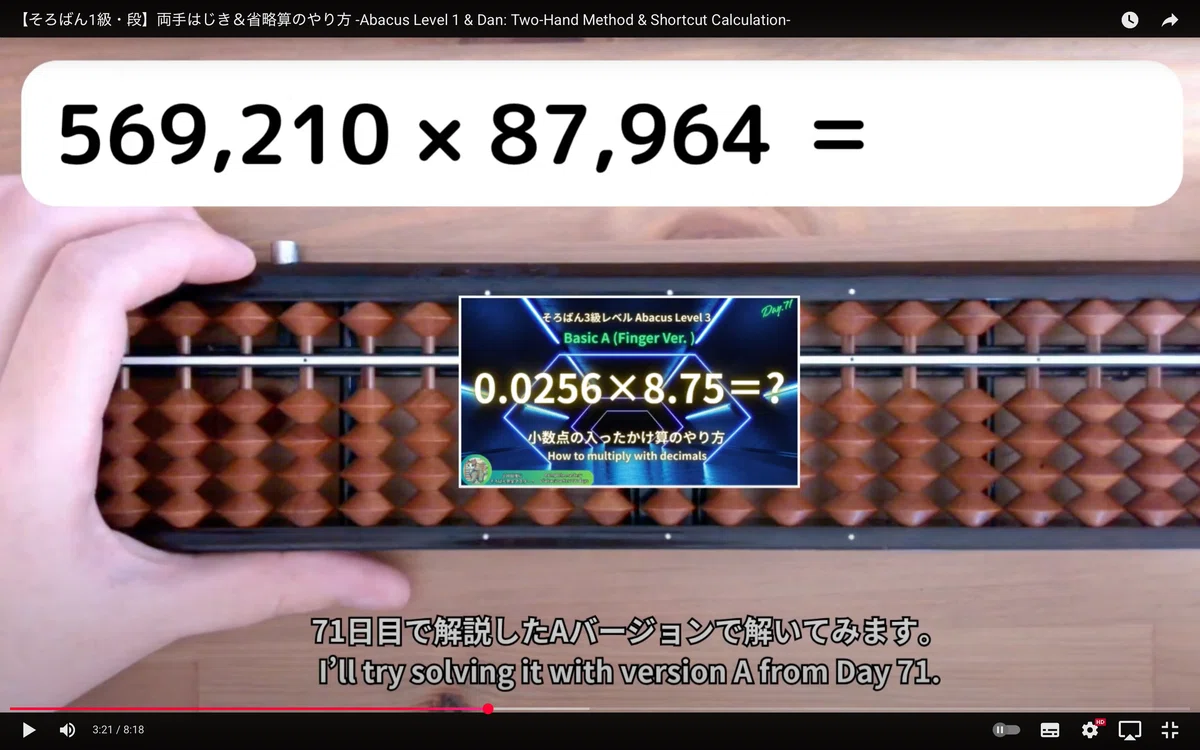
そろばん1級・段位レベルのかけ算の問題を、実際に両手を使って解いています。
ちなみに、段位とは、1級よりも上のレベルで、初段から最高10段まであります。
段位は、問題数が多いだけで、問題のレベル自体はそろばん1級とまったく同じです!
In this video, we solve multiplication problems at the Abacus Level 1 and Dan levels using both hands.
By the way, “Dan” ranks are higher than Level 1, ranging from 1st Dan up to 10th Dan.
The problems themselves are the same level as Level 1—the only difference is that there are more of them!
省略算 -Shortcut Calculation-
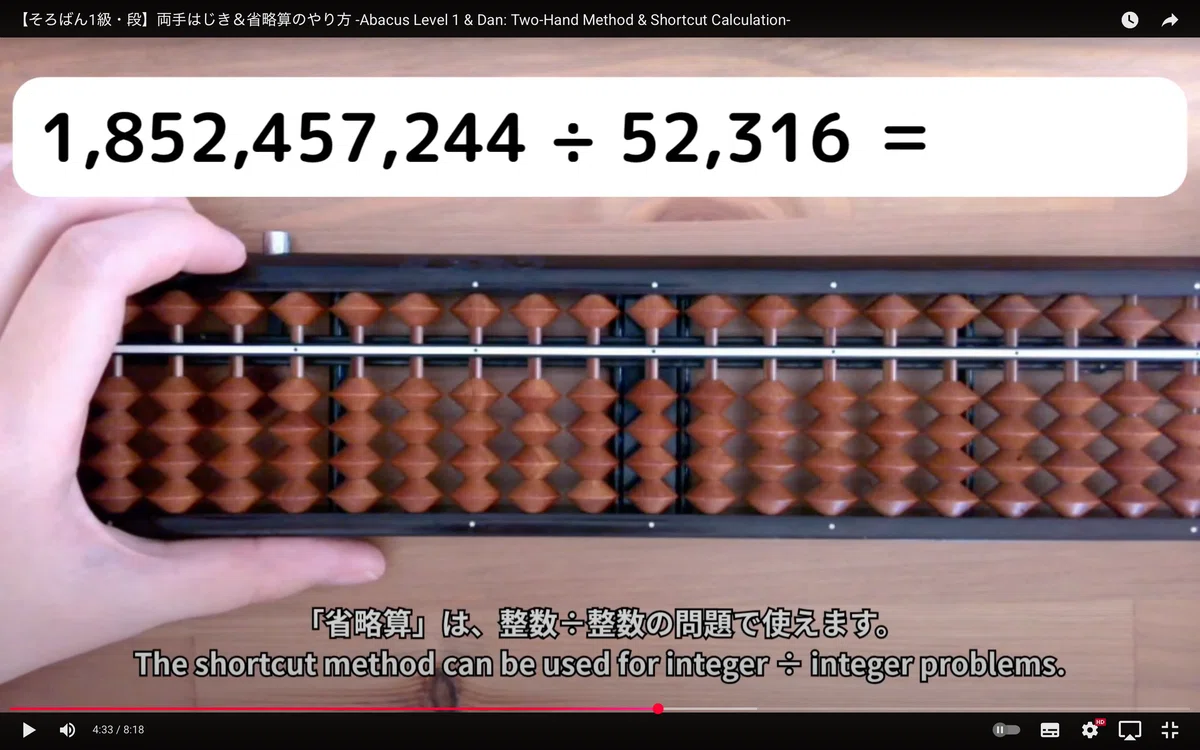
「省略算」は、整数÷整数の問題で使えます。
では、そろばん1級・段位レベルの割り算の問題を使って、解説します。
“Shortcut calculation” can be used for integer ÷ integer problems.
Now, let’s go over how it works using a division problem from the Abacus Level 1 or Dan level.
省略算のやり方 -How to Do Shortcut Calculation-
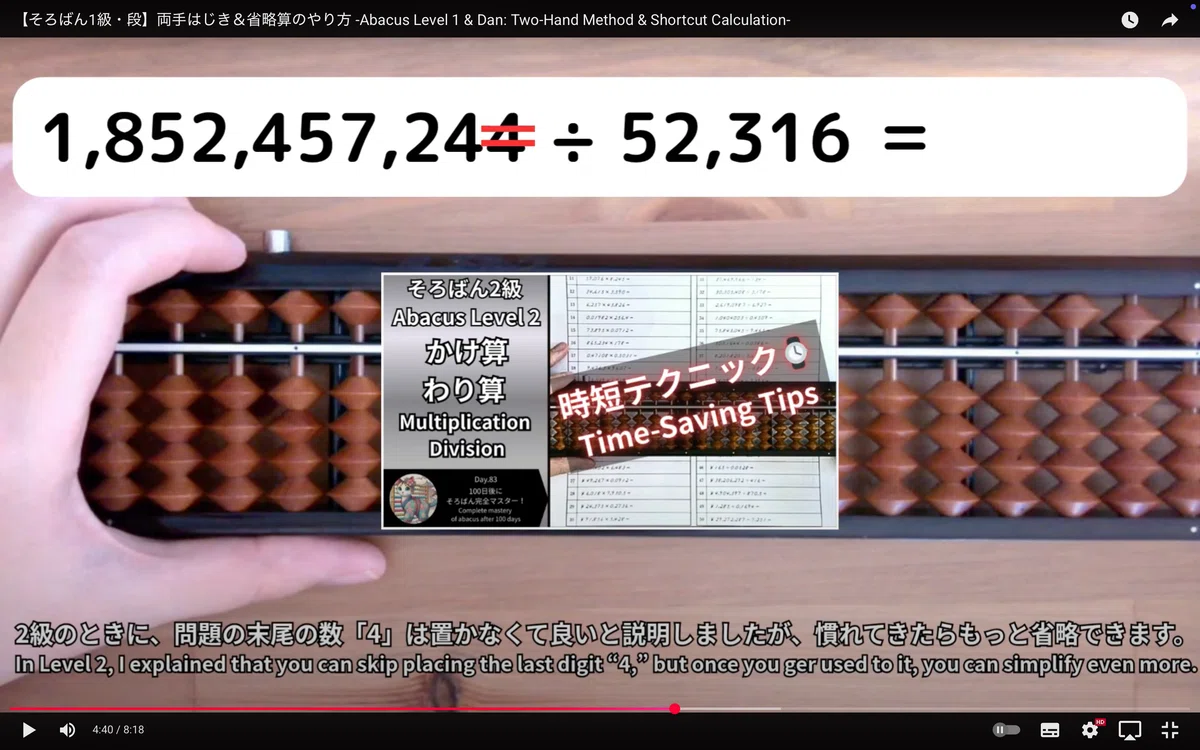

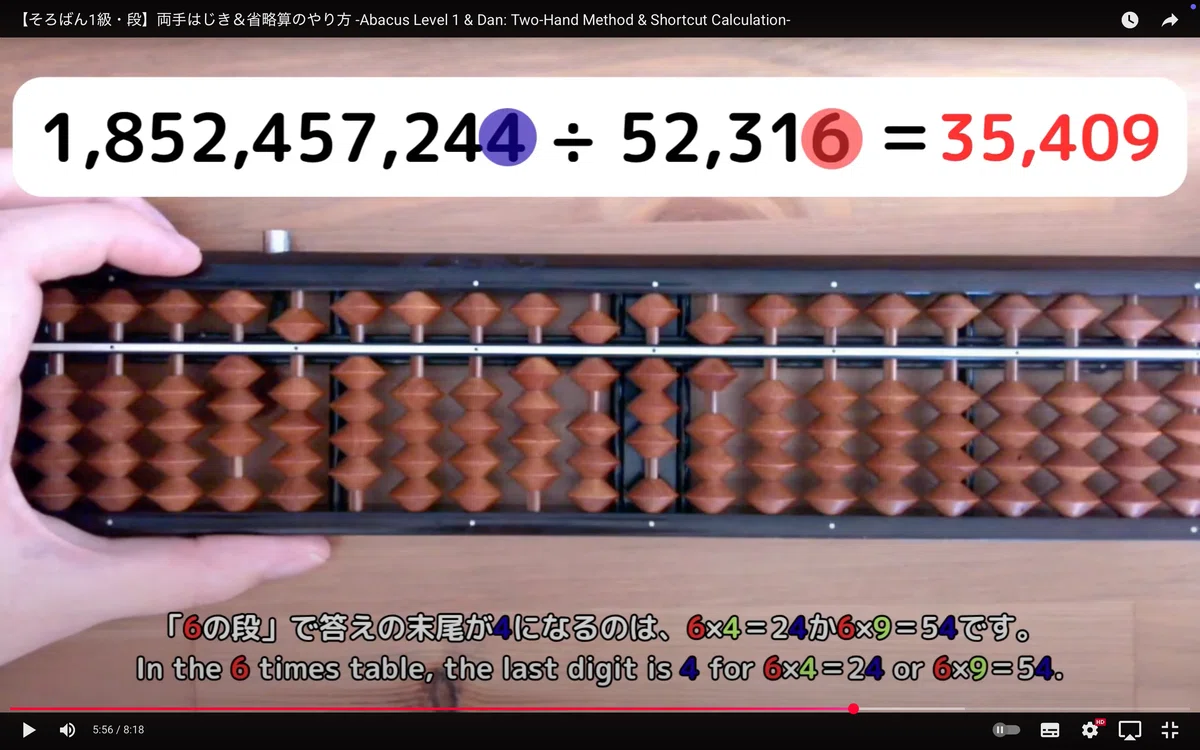
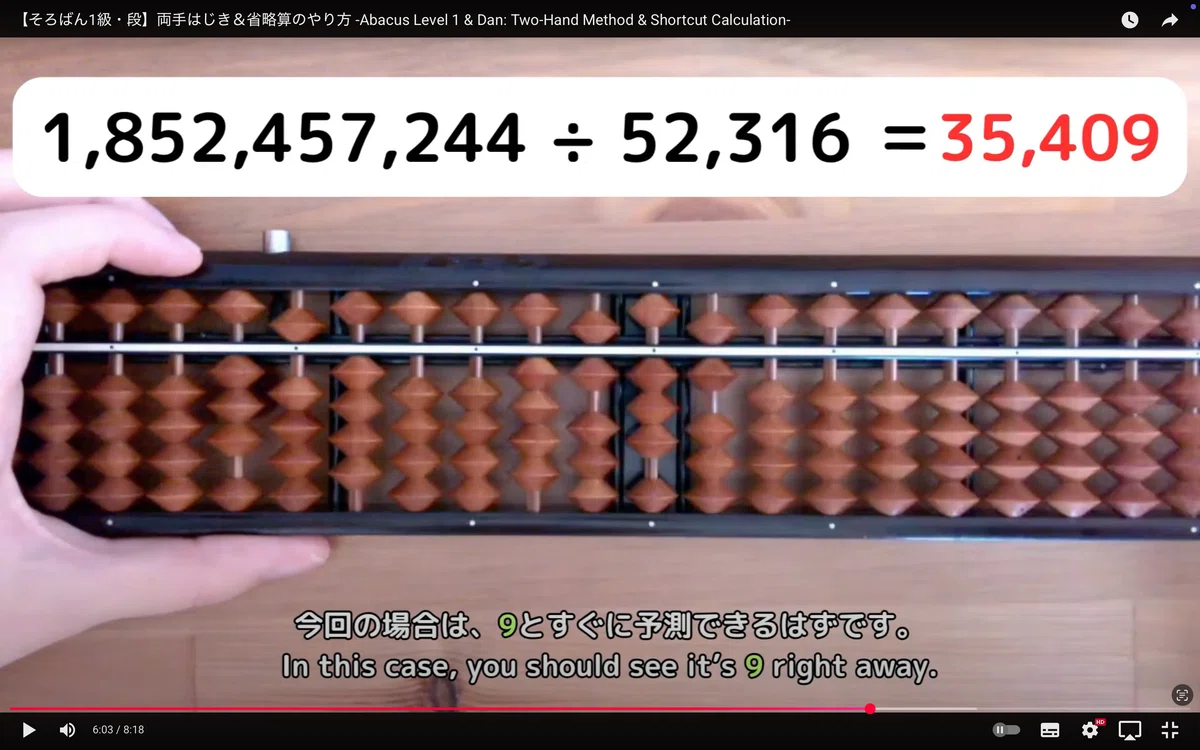
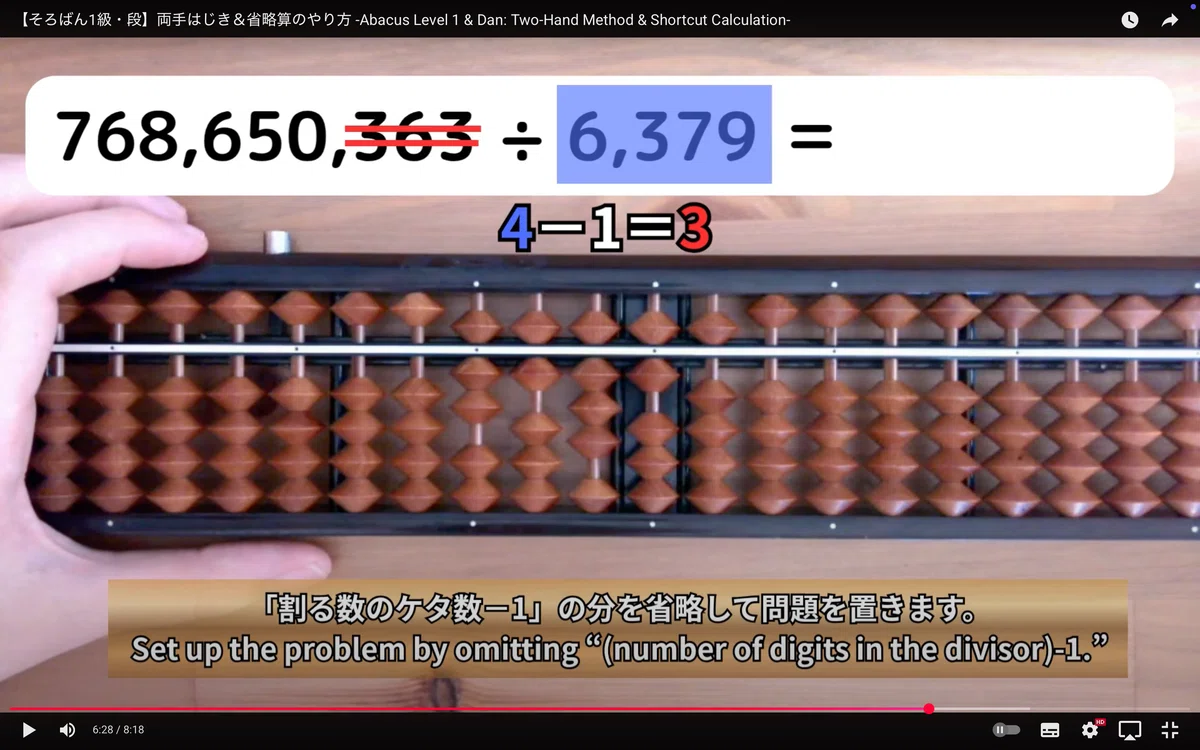
「割る数のケタ数−1」の分を省略して問題を置きます。
まず、指を押さえるAバージョンで解説しています。
Place the problem while omitting “(number of digits in the divisor) − 1.”
First, I’ll explain it using Version A, where we hold down the finger as we calculate.
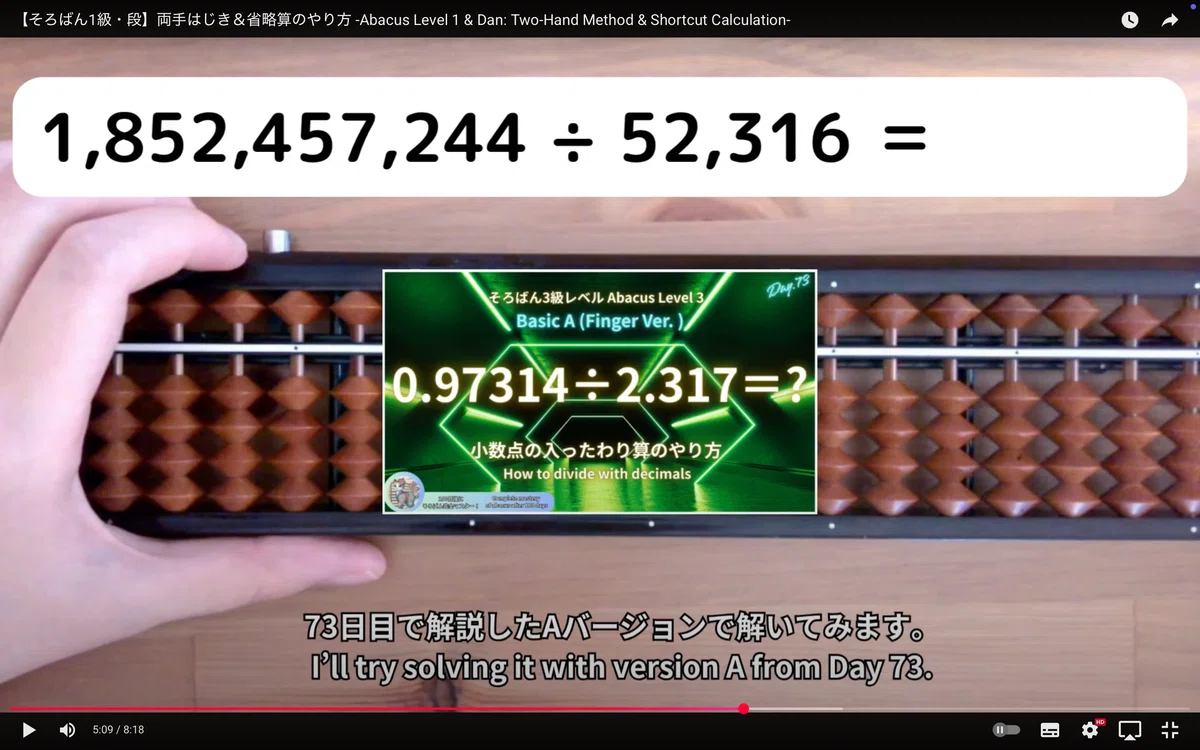
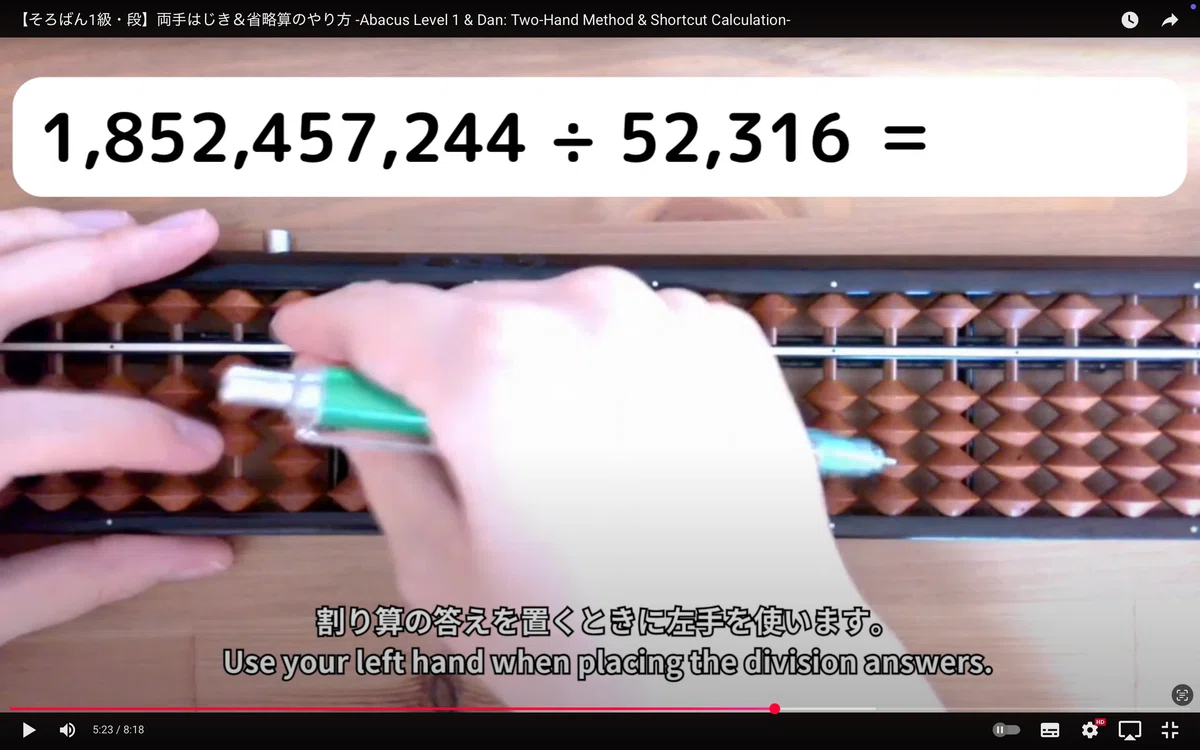
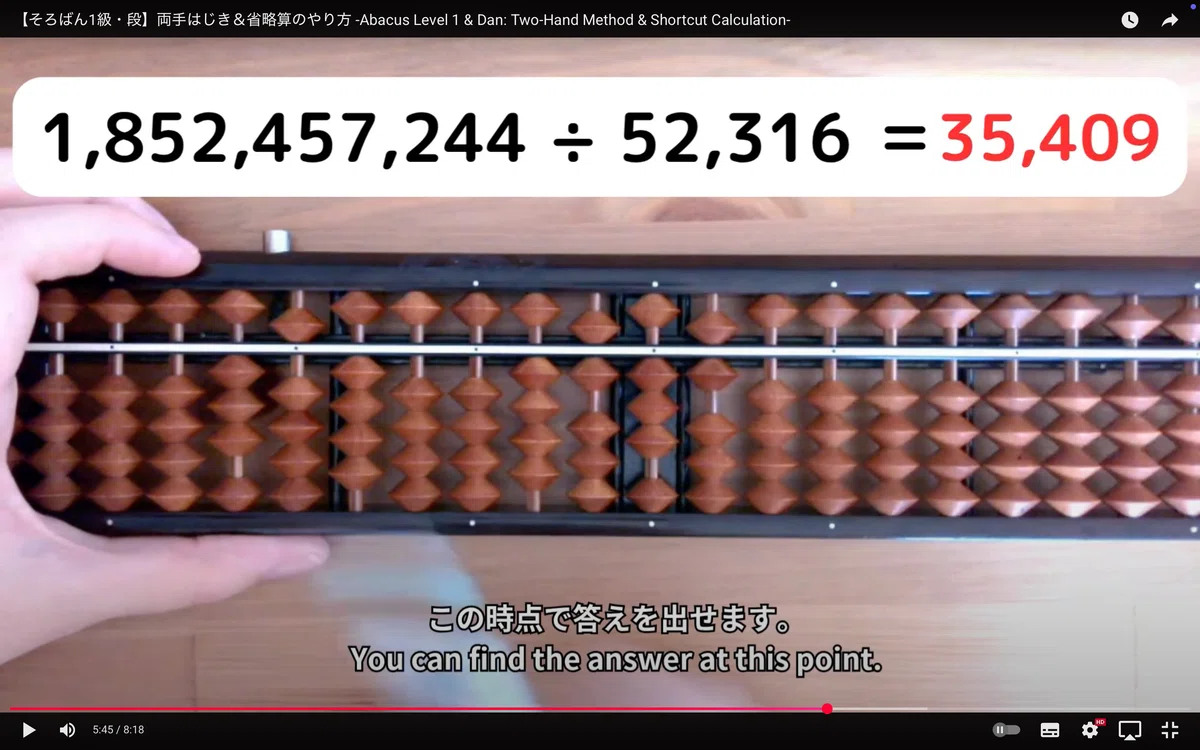
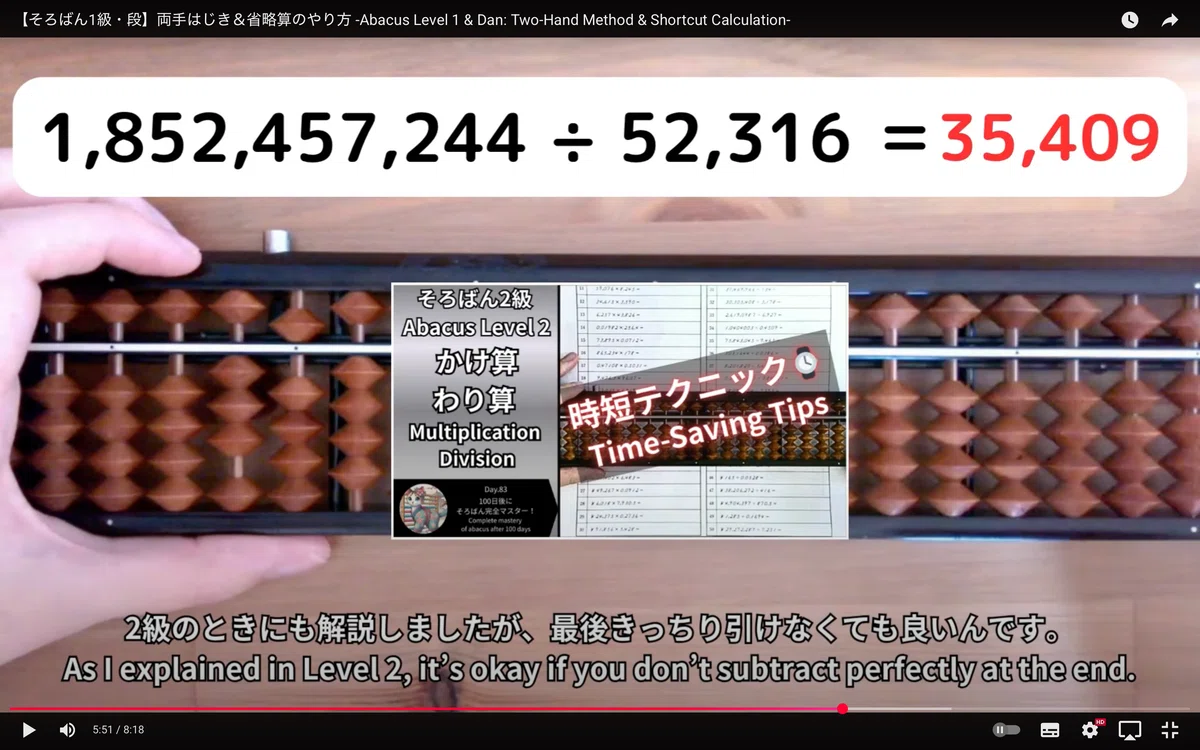
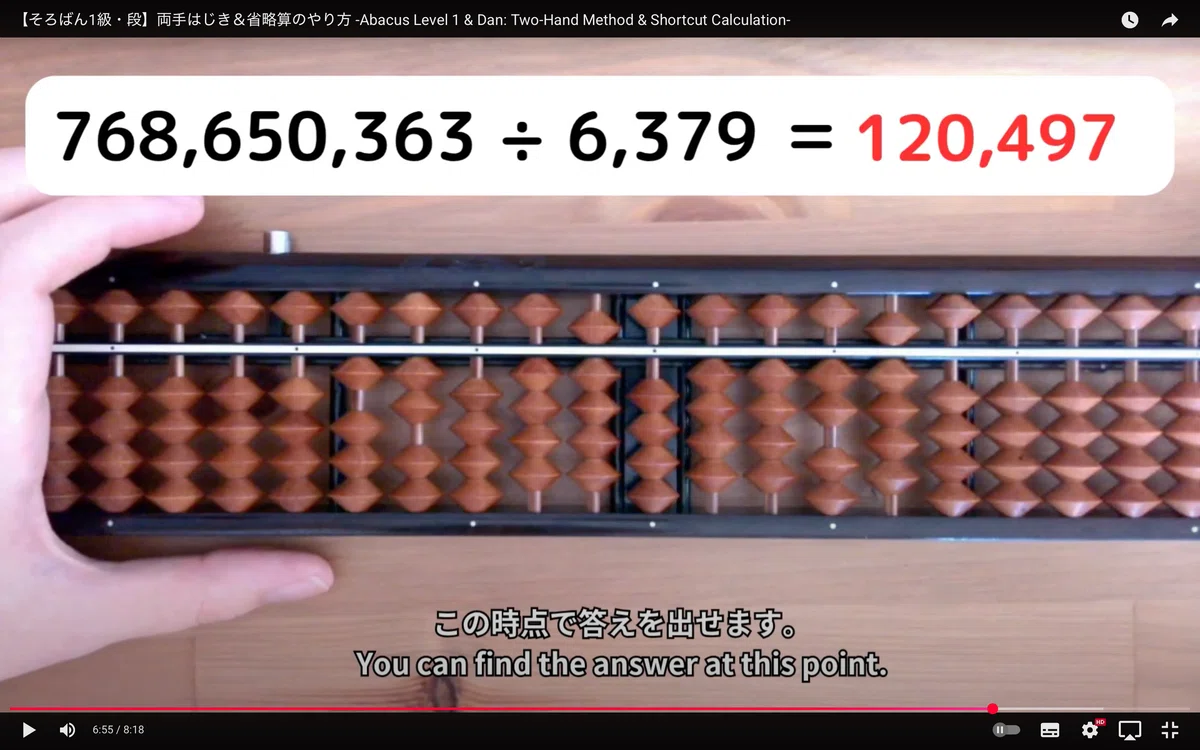
画像のように、答えの一の位は予測して書きましょう。
As shown in the image, predict the ones place of the answer before writing it down.
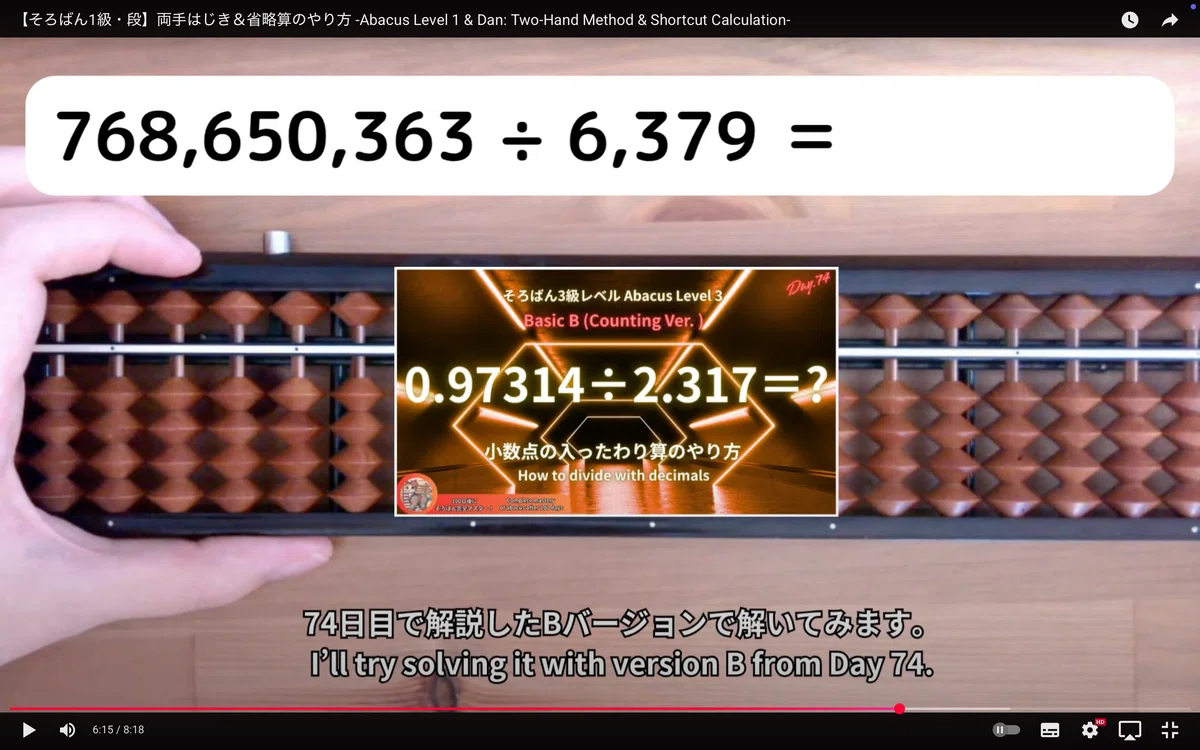
もう1問、桁を数えるBバージョンでも解説しています。
I also explain another example using Version B, where we count the digits.
その他、時短テクニック -Other Time-Saving Tips-
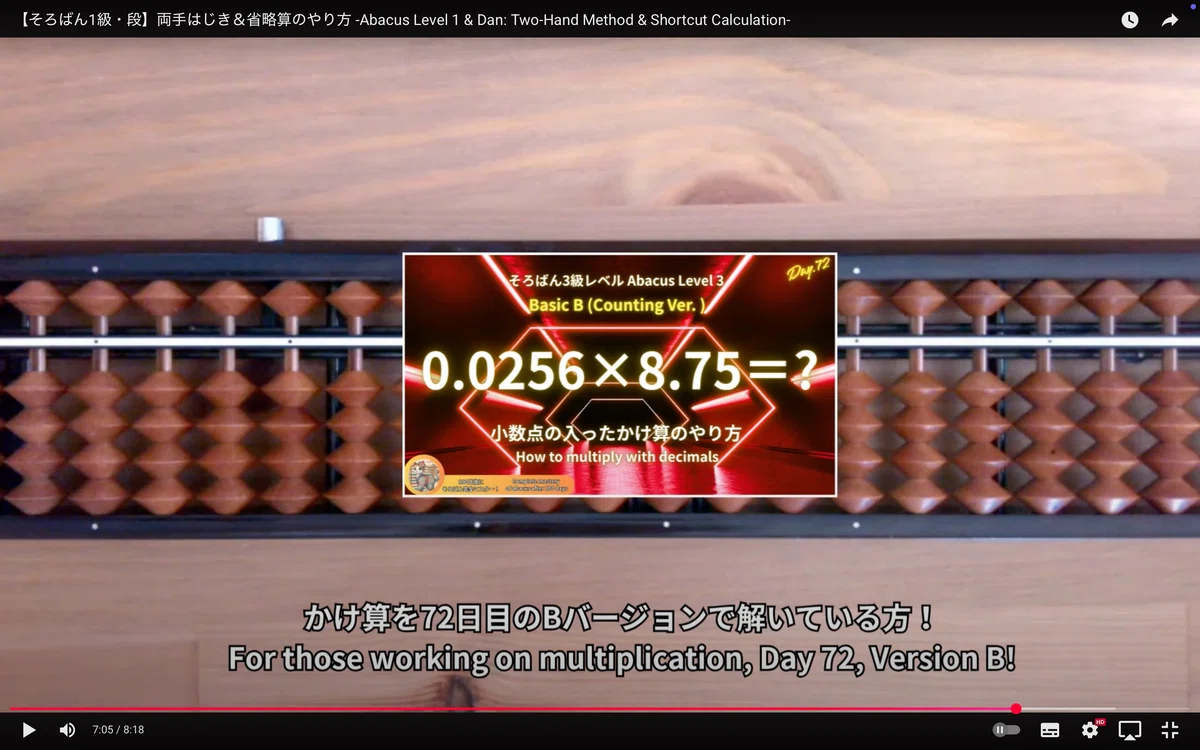
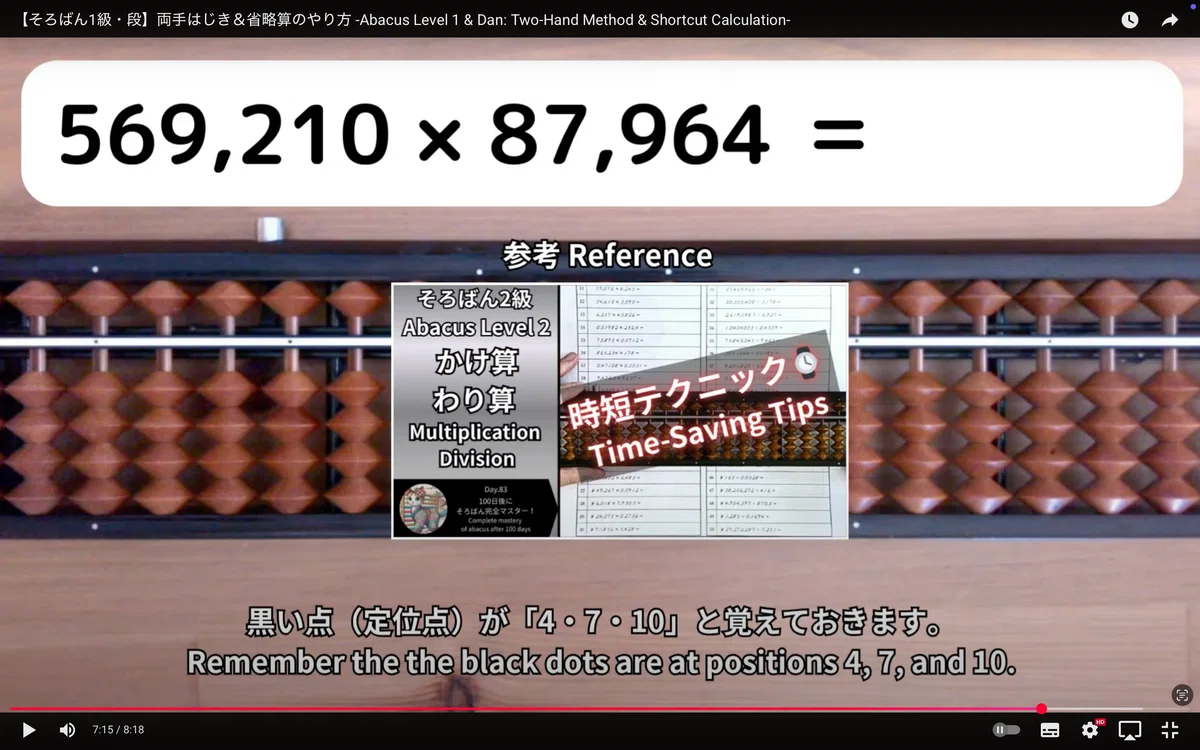
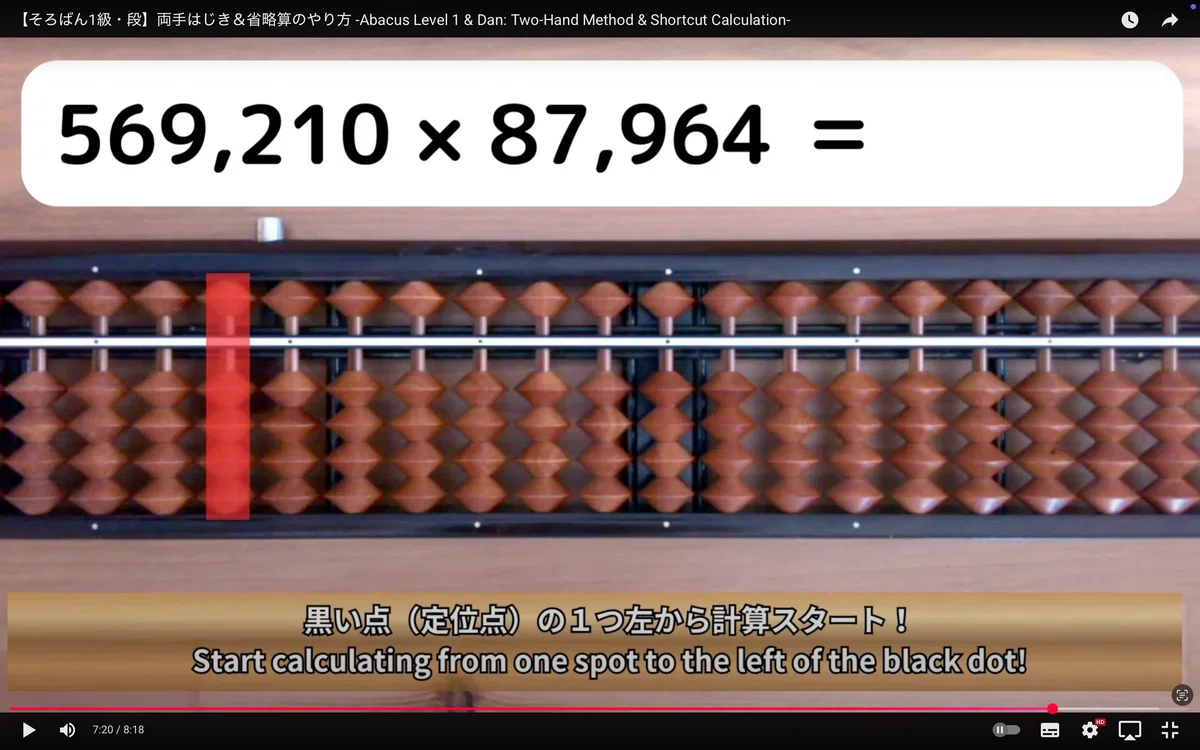
そろばん1級・段位の整数×整数の問題は、11ケタ目から計算スタートと決まっているので、黒い点(定位点)の一つ左から始める、と覚えておきましょう。
For integer × integer problems at the Abacus Level 1 and Dan levels, the calculation always starts from the 11th digit.
So remember — start one bead to the left of the black dot (the unit marker).
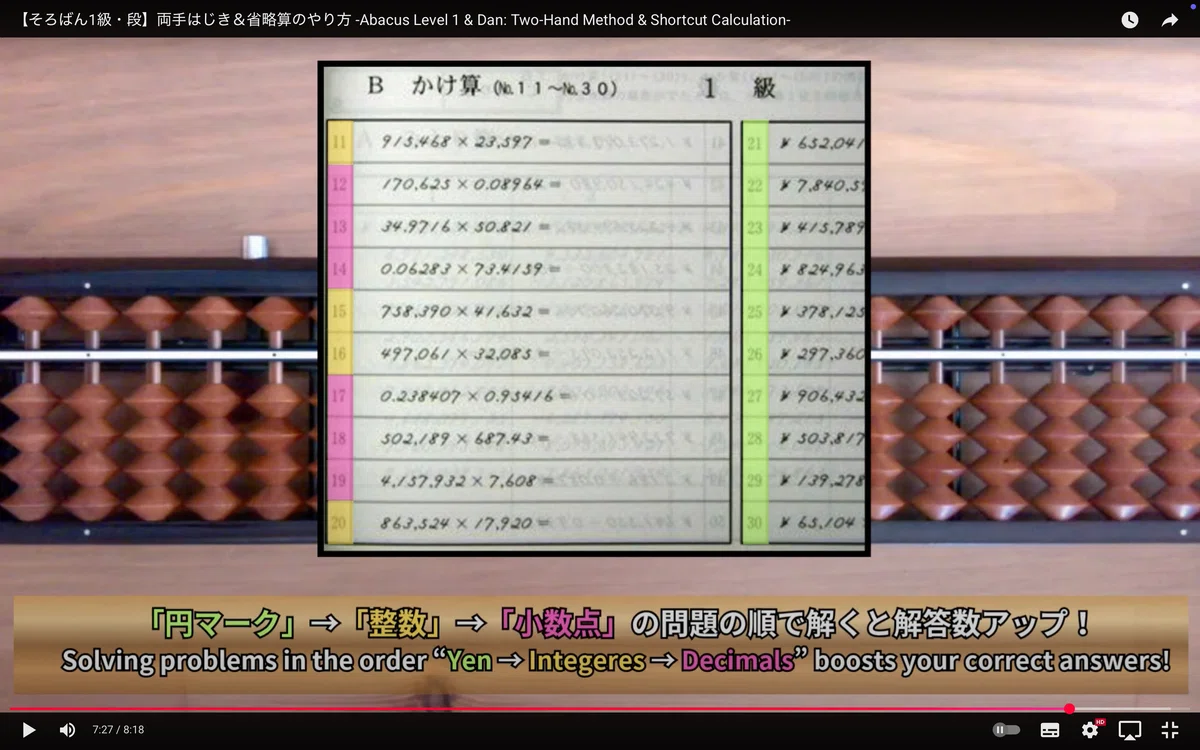
とくに段位の方は、「円マーク」→「整数」→「小数点」の問題の順で解くと、少しでも解答数をアップできるかと思います。
Especially at the Dan level, try solving problems in this order: “Yen symbol → integers → decimals.”
This can help you increase the number of correct answers.
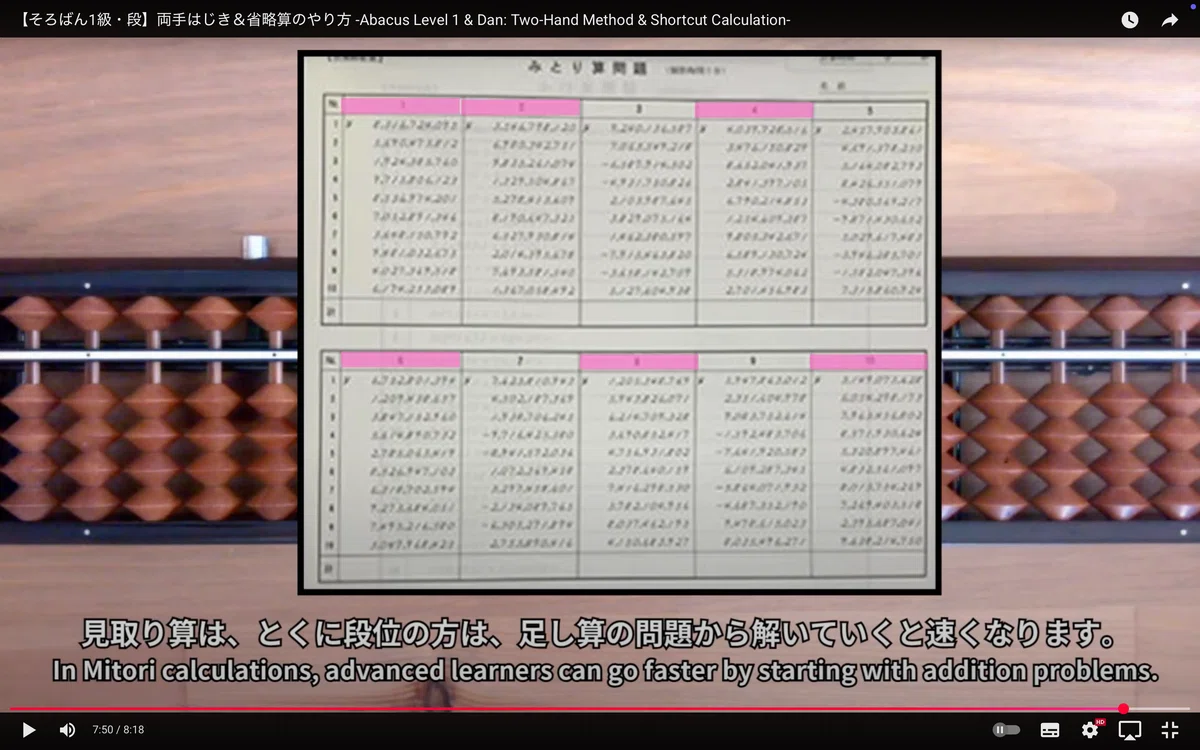
また、とくに段位の方は、見取り算は足し算から解いていくとスピードアップできます。
Also, for Dan-level problems, starting with addition calculation exercises can help speed up your work.
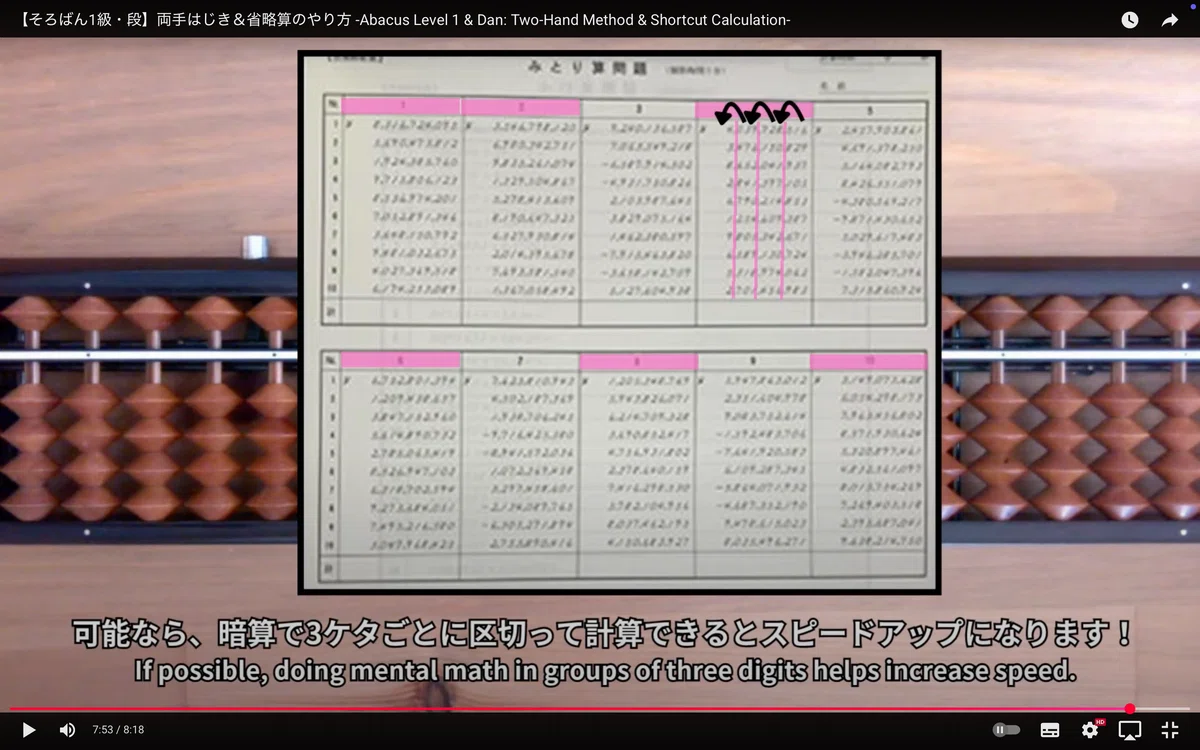
3けたごとに区切って暗算で計算できると、スピードを上げられますが、1級では、まだそろばんをしっかり使って解く方が高得点になると思います。
If you can mentally calculate by grouping digits in sets of three, you can work faster.
However, at Level 1, it’s still better to solve carefully using the abacus to get a higher score.
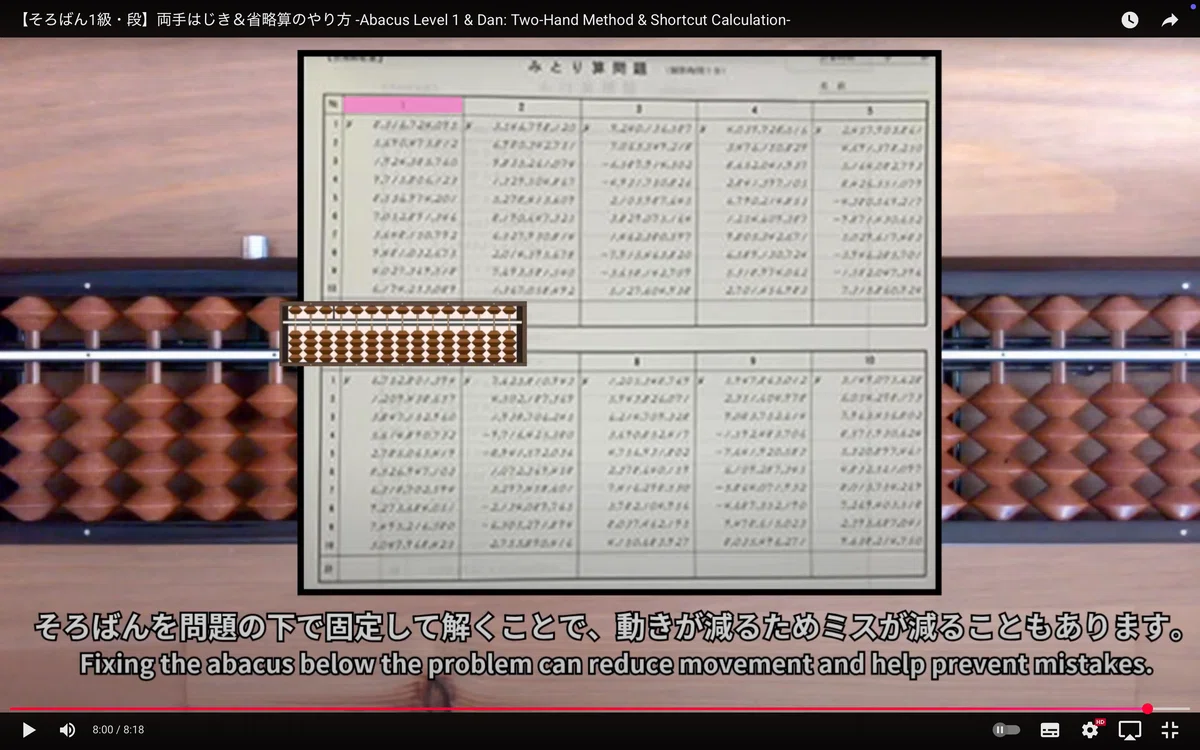
見取り算は、足したら下にズラしていく方法で計算している方が多いと思いますが、そろばん1級・段位まできましたら、そろばんを問題の下で固定して、動かさずに計算するのも一つの手です。
動作が減るので、案外置きやすくなることがあります。
In calculation exercises, many people shift beads downward as they add.
But once you reach Abacus Level 1 or Dan level, you can also try keeping the abacus fixed below the problem and calculating without moving it.
Reducing movement can actually make placing the beads easier.