Competition: Beyond the Illusion of Work–Life Balance

Every time I hear the phrase “work–life balance,” something inside me resists.
It suggests that “work” and “life” are two weights that can be placed neatly on the same scale — as if they were comparable, measurable, even negotiable.
“At work, everyone is replaceable. Even if you leave, the company will go on.
But for your loved ones — for your family and friends — you are the only one in the world.”
A friend of mine from Albania, now living in Milan, once said this to me.
I remember catching my breath.
Of course, I knew he was right — I had heard similar things in Japan too.
But somehow, hearing it in that moment pierced deeper.
When I left my publishing job, I was an editor, which made “handing things over” almost impossible.
There was so much to wrap up before I could step away. And yet, as expected, the company went on without me.
I felt a small ache, mixed with relief—because honestly, I thought, “It would be far worse if it didn’t.”
The Whip of Competition Keeps Us Running
From a distance, I began to see the outlines of my own life in Japan —
how I had quietly built my identity around work. Recently, Japan’s new ruling party leader, Sanae Takaichi, declared:
“Everyone should work like a workhorse. I myself will abandon the term ‘work–life balance.’”
When I heard those words, I couldn’t help but laugh — not because they were funny, but because they were painfully sad. A workhorse runs without ever knowing its destination. The voice that drives it forward sounds, to me, like the whip of competition.
Some might say, “That’s just reality — life isn’t easy.”
And they’re right. We do work to live, and without winning in competition, we earn neither jobs nor pay.
But what lies at the end of that endless race?
No matter how much we achieve, if we vanish from the hearts of those we love, our success loses all meaning.
And perhaps, to fill that quiet emptiness, we work even harder — caught in a cycle where effort becomes both the cure and the cause of loneliness.
Working to Forget Loneliness
The other day, my friend quietly said to me, “On holidays, the office is empty, so I can really get work done.” When I heard that, I was at a loss for words. There was no pride in his expression — only a faint trace of loneliness.
Time that was once meant to be spent with someone.
A meal shared, a quiet laugh exchanged. Yet somewhere along the way, working had become the only way to fill that emptiness.
We work to forget our loneliness, and the more we work, the deeper that loneliness grows. That, I think, is the quiet reality many people in Japan are living with.
I realised then that Japan still struggles to speak openly about happiness that exists outside of work. And yet, isn’t a truly prosperous society one where we can protect the smiles of the people we love?
What Europe Taught Me About Priorities in Life
My time in Belgium changed the way I saw these things.
One morning, I saw a woman in her sixties delay her commute by a few hours so she could drive her son to the airport before his trip.
He was already an adult, but to her, that moment — sending her son off —was more important than being on time for work.
On another day, a French friend laughed as he told me, “At five o’clock, we start a race to see who can leave the office first.” I laughed too—but I also felt something warm rise in my chest. Leaving work early wasn’t shameful; it was a quiet celebration of living one’s own life.
In Belgium, people value work, of course. But work is not everything.
Spending time with family, laughing with friends, having time to oneself —these are respected equally.
Watching how they live, I began to see what true balance really means:
not dividing life into parts, but letting them breathe together in harmony.
Seeing those moments made my own pursuit of career achievement look strangely fragile. A little sad, even. Working hard isn’t wrong — but somewhere along the way, I had lost sight of what I truly wanted.
Time spent with the people you love, right in front of you, is infinitely more precious — and once gone, it never returns.
That truth came to me through someone I met from Israel. She was brilliant, studying in Japan on a scholarship. But when her grandfather fell ill and her long-distance relationship began to strain, she decided to return home earlier than planned.

The Strength to Choose for Yourself, Not for Others
At the time, I honestly thought, what a waste. How could she give up such a precious opportunity? But for her, it wasn’t simply a sacrifice made “for someone else.” It was the result of her own reflection on how she wanted to live the time that truly mattered to her.
Now, she is married to that same partner, raising two children while continuing her work as much as she can.
She has always been brilliant—she spoke six languages fluently — but I’ve come to realise that her strength wasn’t about career or competition.
It was the quiet strength of choice.
When I thought “what a waste,” what I really meant was that her way of living shone too brightly for me to face. I hadn’t known that being honest with oneself could feel so calm—and yet so powerful.
Only now do I understand that such choices require the courage to trust yourself. Without that trust, it’s all too easy to be swayed by society’s expectations or the voices around you.
Perhaps I lacked that confidence back then.
I was always chasing the “right” choice, trying to live up to ideals. But now I can say with certainty: choosing love, or the small joys of daily life,
is just as valid—and just as meaningful—a decision as pursuing a career.
Living in Europe taught me that many people there possess a strong inner compass. It isn’t selfishness or self-centeredness; it feels more like a quiet philosophy — that taking care of oneself is inseparable from respecting others.
What a “Gap in One’s Career” Can Teach You
I once met a French woman who worked as a nurse.
She gave up her stable job to spend a year abroad on a working holiday —
doing volunteer work and part-time jobs while rediscovering herself in an unfamiliar country.
For her, it wasn’t a “gap” in her career. It was a period of testing who she wanted to become next.
Another woman I met was a designer who had been working in Berlin.
She told me she never quite fit the atmosphere there.
One day, she decided to travel — and in a city far from home, she suddenly felt, “Here, my heart can breathe.” She began looking for work even while on a tourist visa, and today, she lives there permanently.
And then there was a man who had spent years working at a small bakery in France. He, too, travelled abroad — wandering through cafés and bakeries,
saying he wanted to open a place where he could serve freshly baked bread.
He had no grand plan or credentials — only the courage to follow where his heart led.
What all of them shared was a quiet strength of belief.
Not recklessness, but a clear and simple wish to remain honest with who they were in that moment.Each time I met someone like that, I was reminded that life isn’t about living “the right way.”
It’s about living in the direction your heart leans toward.
Letting Go of Titles, Finding Yourself Again
What struck me most about the people I met was how many of them made space for this kind of time — not just to build a career, but to ask, Who am I, and where do I want to live my life?
Along the way, they took detours, changed countries, and experienced new beginnings — again and again.
At thirty, I quit my job and went to Belgium to study as a working adult.
It was a little late, perhaps, but I think I finally gave myself what they already had: the time to stop, and to think.
After graduating from university in Japan, I had gone straight into work.
For years, my days were filled with tasks and deadlines ; there was neither the idea nor the room to pause and reflect.
But what I learned after leaving my company and spending time in Europe was far greater than I had imagined.
Sometimes I think — if I hadn’t made that choice back then, how small my world might have remained.
Because of that experience, the boundary between working and living finally began to dissolve within me.
Choosing Connection Over Achievement
During that journey, for the first time, I stepped outside the realm of competition. I let go of titles and ambitions for a while, and simply faced people — as they were, and as I was. I listened closely to my own heart.
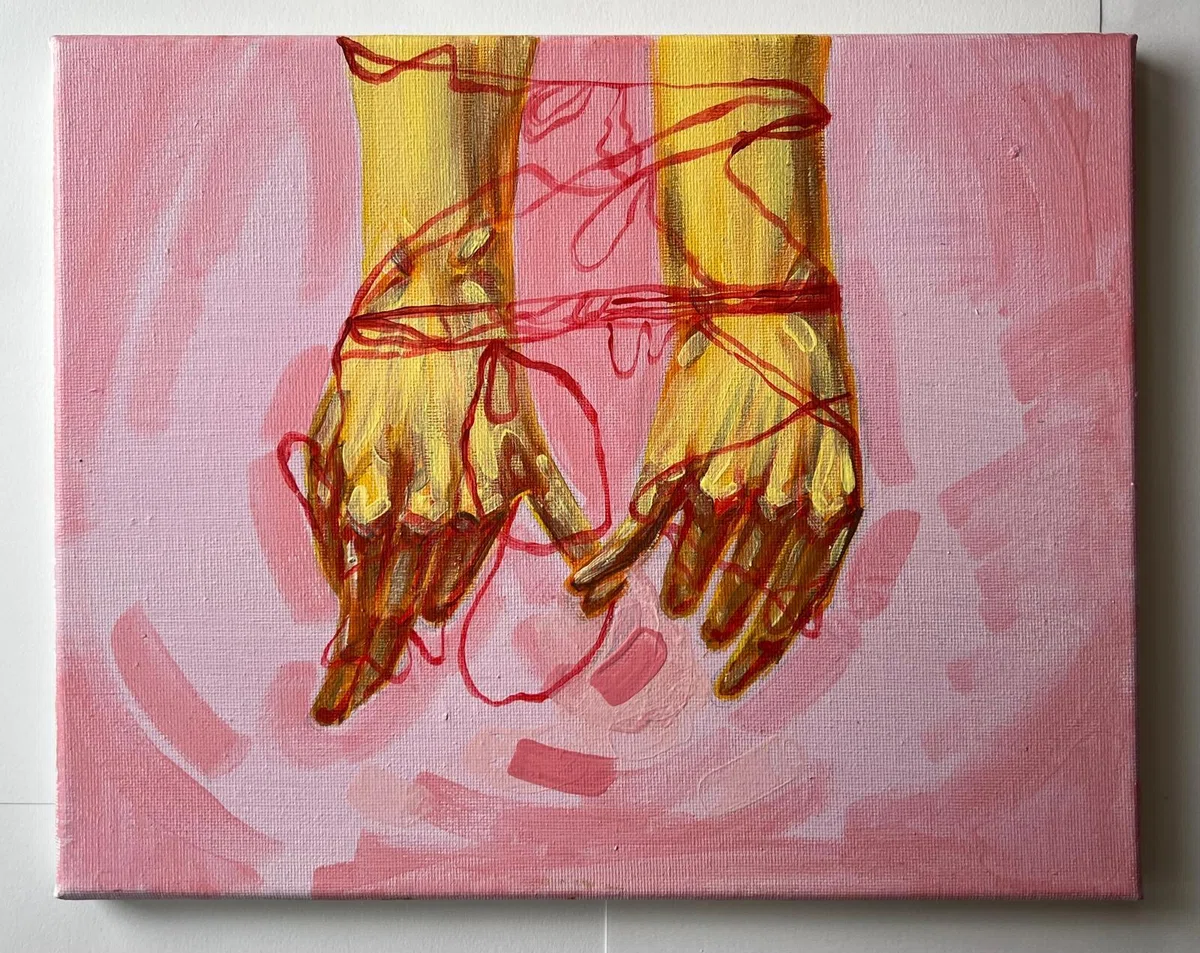
What I realised then was that what I truly longed for wasn’t achievement — it was connection. Moments of shared laughter.
The warmth of conversation. The small, ordinary pieces of daily life spent with others. Those became quietly irreplaceable to me.
I used to live with the constant thought that I had to become someone. But I’ve learned that meaning doesn’t come from becoming. It comes from being with — caring for others, and living alongside them.
Now, having people and moments I want to cherish has become my greatest source of energy. It’s not the kind of power that shouts or dazzles; it’s quiet, steady, and real. In the end, what moves me is simple — the wish to live with the people I love, in the places I love.
