
“The Ultimate Love and Light” and “The Highest Consciousness: The Six-Winged Seraphim”

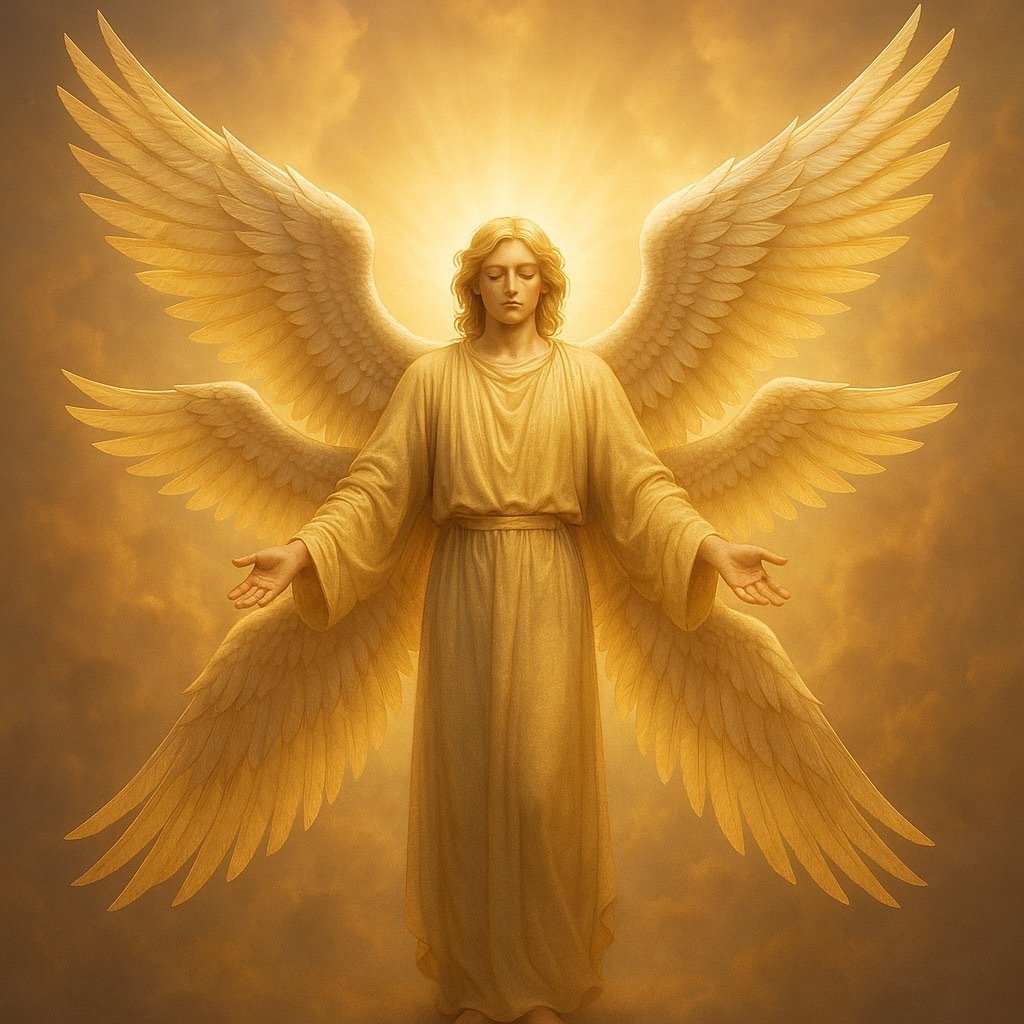
「This is a research-oriented essay for readers who seek a deep exploration of theology, mysticism, and the future of consciousness.」
“The Ultimate Love and Light” and “The Highest Consciousness: The Six-Winged Seraphim”
Religious Origins and Background
The Seraphim are exalted heavenly beings described in Jewish and Christian scripture. The clearest description is found in the Book of Isaiah, Chapter 6, where the prophet envisions six-winged beings above the throne of God, crying out: “Holy, holy, holy is the Lord Almighty.”
Isaiah 6 (Bible Gateway):
https://www.biblegateway.com/passage/?search=Isaiah+6&version=NIV
General overview (Wikipedia EN):
https://en.wikipedia.org/wiki/Seraph
General overview (Wikipedia JA):
https://ja.wikipedia.org/wiki/%E7%86%BE%E5%A4%A9%E4%BD%BF
Etymology and Usage in the Hebrew Bible
The Hebrew word śārāph means “burning one.” In some biblical passages it refers to fiery serpents, but in Isaiah 6 it refers specifically to celestial beings surrounding God’s throne.
Hebrew Lexicon (Bible Hub):
https://biblehub.com/hebrew/8314.htm
Continuity in Liturgy and Theology
The triple acclamation “Holy, Holy, Holy” (the Kedushah) in Jewish prayer echoes the vision of Isaiah, preserving the worship of the Seraphim within liturgy.
Kedushah (Wikipedia):
https://en.wikipedia.org/wiki/Kedusha
In medieval Jewish philosophy, Maimonides ranked the Seraphim within a ten-level angelic hierarchy.
Maimonides on Angels (Wikipedia EN):
https://en.wikipedia.org/wiki/Seraph#Judaism
New Testament Resonance
The Book of Revelation, Chapter 4, describes four living creatures with six wings and many eyes, praising God without ceasing—an image closely resonant with Isaiah’s Seraphim.
Revelation 4 (Bible Gateway):
https://www.biblegateway.com/passage/?search=Revelation+4&version=NIV
Second Temple Literature
The Book of Enoch and other Second Temple writings mention Seraphim alongside Cherubim as beings standing near the throne of God.
Book of Enoch (Wikipedia):
https://en.wikipedia.org/wiki/Book_of_Enoch
Further References
Catholic Encyclopedia – Seraphim (New Advent):
https://www.newadvent.org/cathen/13723a.htm
OrthodoxWiki – Seraphim:
https://orthodoxwiki.org/Seraphim
Etymology and Theological Role of the Seraphim
The word “Seraphim” has deep linguistic and symbolic roots. It originates from the Hebrew root śārāph, which literally means “to burn” or “the burning ones.” This etymology highlights the fiery and radiant character of these celestial beings, suggesting both their overwhelming brilliance and their consuming holiness. In East Asian translations, the Chinese character 「熾」 was chosen, which also carries the meaning of “burning intensely” or “blazing with great strength.” This parallel reinforces the interpretation of the Seraphim as beings who embody the intensity of divine fire and light.
Reference (Antiques Anastasia – Iconography of Seraphim):
https://www.antiquesanastasia.com/en/iconography/seraphim.html
In the Hebrew Bible, the term saraph is not limited to angelic beings. In several passages outside the Book of Isaiah, it is used to describe fiery serpents or venomous snakes, emphasizing the danger and destructive power associated with burning or venom. However, in Isaiah 6, the word acquires a unique and exalted meaning: it no longer describes serpents but refers directly to heavenly attendants at God’s throne. This shift shows how language that once conveyed earthly danger and fire was elevated to describe the spiritual fire of God’s presence.
Reference (Japanese Wikipedia – 熾天使):
https://ja.wikipedia.org/wiki/%E7%86%BE%E5%A4%A9%E4%BD%BF
Reference (Japanese Wikipedia – サラフ):
https://ja.wikipedia.org/wiki/%E3%82%B5%E3%83%A9%E3%83%95
Seraphim in Jewish Angelology
As Jewish theology developed, the Seraphim were integrated into systematic angelology. In the Middle Ages, the philosopher and theologian Moses Maimonides classified angels into a structured hierarchy of ten orders. Within this scheme, the Seraphim occupied the fifth rank, placing them high among the celestial hosts but still distinct from the absolute closest beings to God. This classification highlights how central they became in Jewish thought—not merely poetic images in Isaiah’s vision, but concrete elements of theological reflection.
Reference (English Wikipedia – Seraph):
https://en.wikipedia.org/wiki/Seraph
The Seraphim in Jewish Liturgy
The imagery of the Seraphim is not confined to scripture or theology alone; it lives on in Jewish worship practices. In the Kedushah prayer, part of the central Jewish liturgy, worshippers echo the very words of Isaiah’s vision by proclaiming three times: “Holy, Holy, Holy is the Lord of Hosts; the whole earth is full of His glory.” This repetition is more than symbolic—it reenacts the eternal worship of the Seraphim described in Isaiah, allowing human prayer to mirror the angelic chorus. In this way, the Seraphim serve as a bridge between heaven and earth, their ceaseless praise becoming a model for human devotion.
Reference (English Wikipedia – Kedushah):
https://en.wikipedia.org/wiki/Kedusha
Summary
Thus, the Seraphim are not only figures of awe in biblical visions but also powerful symbols that shaped theology, liturgy, and religious imagination across centuries. Their very name—rooted in the language of burning fire—captures the duality of destruction and purification, terror and beauty. From Isaiah’s vision of six-winged beings surrounding God’s throne, to Maimonides’ structured angelology, to the words still prayed in Jewish liturgy today, the Seraphim remain enduring figures of ultimate love, light, and divine holiness.
The Seraphim in the New Testament and Second Temple Literature
In addition to their central role in Isaiah’s vision, beings that strongly resemble the Seraphim also appear in the New Testament, specifically in the Book of Revelation, Chapter 4. The text describes the throne of God surrounded by “four living creatures, each with six wings and full of eyes all around and within.” These creatures cry out day and night without ceasing: “Holy, holy, holy is the Lord God Almighty, who was, and is, and is to come.”
This passage resonates profoundly with Isaiah’s account of the Seraphim. The six wings, the continuous hymn of praise, and the close proximity to the divine throne create a clear thematic link between the Old Testament Seraphim and the living creatures of Revelation. Traditionally, Christian interpreters have debated whether these beings are best understood as Seraphim or Cherubim (another high angelic order), yet both interpretations underline their supreme holiness and closeness to God.
Reference (Antiques Anastasia – Seraphim Iconography):
https://www.antiquesanastasia.com/en/iconography/seraphim.html
Revelation 4 (Bible Gateway – NIV):
https://www.biblegateway.com/passage/?search=Revelation+4&version=NIV
Second Temple Jewish Literature
The imagery of the Seraphim is not limited to canonical scripture. In Second Temple Jewish literature, including the influential apocalyptic text known as the Book of Enoch, the Seraphim are mentioned alongside the Cherubim as celestial beings who stand near the throne of God. This positioning reflects their role as guardians of divine majesty, beings who are constantly in the immediate presence of the Almighty.
Reference (English Wikipedia – Book of Enoch):
https://en.wikipedia.org/wiki/Book_of_Enoch
Reference (English Wikipedia – Seraph, section on Judaism):
https://en.wikipedia.org/wiki/Seraph
These writings reinforce the image of the Seraphim as not only worshippers but also attendants of the divine court, beings who embody purity, fire, and unending devotion. Their role in both biblical and extra-biblical texts demonstrates their importance in shaping angelology across Judaism and Christianity.
The Seraphim in Christian Theology: The Highest Angelic Choir
As Christianity developed its systematic theology, the Seraphim came to be regarded not only as scriptural figures but as the highest order in the angelic hierarchy. This understanding was deeply shaped by the writings of early Church Fathers and medieval theologians.
In the 5th and 6th centuries, the influential Christian thinker known as Pseudo-Dionysius the Areopagite set forth a structured hierarchy of nine choirs of angels in his work The Celestial Hierarchy. In this framework, the Seraphim were placed at the very top, above the Cherubim and Thrones, closest to the divine light itself. Their role was understood as one of unceasing adoration, burning with love, and transmitting divine illumination to the lower ranks of angels and ultimately to humanity.
Reference (Wikipedia – Christian angelology):
https://en.wikipedia.org/wiki/Christian_angelology
Reference (Wikipedia – Celestial hierarchy by Pseudo-Dionysius):
https://en.wikipedia.org/wiki/Celestial_hierarchy
Symbolism of the Six Wings and Fire
Christian theologians and mystics reflected on the symbolism of the Seraphim’s six wings:
Two wings covering the face were interpreted as reverence before God’s glory, which no creature can fully behold.
Two wings covering the feet were taken as a sign of humility, acknowledging the created nature of even the highest beings.
Two wings for flight symbolized their tireless readiness to carry out divine missions.
The element of fire—implied by their very name, “burning ones”—was understood in Christian tradition as the fire of divine love. The Seraphim were believed to be so inflamed by this love that they themselves set other beings ablaze with zeal for God.
Reference (Catholic Encyclopedia – Seraphim, New Advent):
https://www.newadvent.org/cathen/13723a.htm
Influence on Christian Worship and Art
The vision of the Seraphim shaped not only theology but also Christian worship and art. The Sanctus—the proclamation “Holy, Holy, Holy Lord God of Hosts” sung during the Christian liturgy of the Eucharist—derives directly from Isaiah’s description of the Seraphim. Thus, every Christian mass echoes the eternal song of the burning angels.
Iconography across centuries has often depicted the Seraphim as red or fiery figures with six wings, sometimes covered with eyes, encircling the throne of Christ in majesty. In both Eastern Orthodox and Western Catholic traditions, their imagery became a profound symbol of divine transcendence, holiness, and love.
Reference (OrthodoxWiki – Seraphim):
https://orthodoxwiki.org/Seraphim
Reference (Wikipedia – Sanctus in Christian liturgy):
https://en.wikipedia.org/wiki/Sanctus
Summary
In Christian theology, the Seraphim stand as the highest of all angelic choirs. They embody the union of fire and love, humility and reverence, worship and service. From Isaiah’s vision to Revelation’s imagery, from Pseudo-Dionysius’ hierarchies to the ongoing liturgies of the church, the Seraphim remain the eternal singers of holiness and the closest witnesses of divine glory.
The Seraphim in Art, Literature, and Mystical Thought
Medieval and Renaissance Art
From the Middle Ages through the Renaissance, the Seraphim were among the most striking subjects of Christian art. They were frequently depicted as fiery red figures with six great wings, often arranged in a circular or wheel-like fashion around God’s throne. Their red color symbolized both divine love and burning purity.
In Byzantine iconography, Seraphim were painted surrounding Christ in depictions of the Pantocrator (Christ as Ruler of All). In Western European art, especially during the Gothic and Renaissance periods, they appeared in illuminated manuscripts, frescoes, and altarpieces, reflecting Isaiah’s vision of the heavenly throne room.
Reference (Seraph – Wikipedia, Art section):
https://en.wikipedia.org/wiki/Seraph
Dante and the Divine Comedy
In literature, one of the most influential appearances of the Seraphim comes from Dante Alighieri’s “Divine Comedy.” In the Paradiso, Dante describes the Seraphim as beings of perfect love who move in swift circles closest to God’s light. For Dante, their burning fire symbolizes not destruction, but an overwhelming and pure passion for the divine. The Seraphim thus embody the ultimate destiny of the soul: to burn forever with love for God.
Reference (Divine Comedy – Wikipedia):
https://en.wikipedia.org/wiki/Divine_Comedy
Christian Mysticism and Contemplative Traditions
Mystics of both Eastern and Western Christianity often invoked the Seraphim as symbols of spiritual transformation. For instance, St. Francis of Assisi reported a vision of a Seraph with six wings during his prayer on Mount La Verna. In this mystical encounter, the Seraphim imprinted the stigmata (wounds of Christ) on Francis’s body, forever linking the Seraphim with the idea of burning love and sacrificial devotion.
Reference (Stigmata – Wikipedia):
https://en.wikipedia.org/wiki/Stigmata
In Eastern Orthodox mysticism, the Seraphim are associated with the highest level of theosis (union with God). They represent the soul’s ultimate ascent—being so inflamed by divine love that it becomes one with the eternal fire of God’s holiness.
Reference (Theosis – Wikipedia):
https://en.wikipedia.org/wiki/Theosis_(Eastern_Christian_theology)
Modern Literature and Esotericism
The Seraphim also entered esoteric and symbolic traditions. In some strands of Kabbalah and later mystical writings, they were understood as channels of divine fire that transform the material and spiritual worlds. In modern poetry and literature, Seraphim are sometimes depicted as guardians of cosmic order or as archetypes of transcendent consciousness, representing the human longing for ultimate light and love.
Reference (Christian Angelology – Wikipedia):
https://en.wikipedia.org/wiki/Christian_angelology
Summary
From the sacred visions of Isaiah and Revelation, the Seraphim moved into the imagery of art, the poetry of Dante, the mystical visions of saints, and the esoteric reflections of later thinkers. Across all these traditions, they remain beings of fire, love, light, and transcendence—symbols of the highest consciousness accessible to creation. Their six wings and burning essence continue to inspire art, worship, and contemplation, embodying the human aspiration to rise ever closer to the divine.
The Seraphim in Modern Culture and Popular Imagination
Literature and Fantasy Worlds
In modern literature, the Seraphim often appear as symbols of ultimate purity, guardianship, or transcendent power. In fantasy novels and contemporary fiction, they are reimagined as warrior-angels wielding fire or light, guardians of cosmic gates, or figures embodying the eternal struggle between good and evil. These creative reinterpretations continue the long tradition of associating the Seraphim with flame, wings, and divine authority.
Reference (General Angel depictions – Wikipedia):
https://en.wikipedia.org/wiki/Angel
Music and Popular Media
The imagery of the Seraphim has inspired music across genres, from sacred choral works to modern metal and electronic music. The six-winged, fiery angel has become a motif for expressing ecstasy, transcendence, and overwhelming light. In some Christian hymns, the Seraphim remain central figures of worship, while in popular music, the word “Seraphim” often evokes otherworldly passion or heavenly power.
Reference (Sanctus in Christian music – Wikipedia):
https://en.wikipedia.org/wiki/Sanctus
Visual Arts, Comics, and Animation
In visual storytelling—such as manga, anime, and comics—the Seraphim are frequently adapted as awe-inspiring beings with glowing wings, halos of fire, and supernatural abilities. For example, in Japanese animation and games, the six-winged angel archetype has become shorthand for characters of divine or transcendent status. They are often depicted as both guardians and judges, echoing their biblical origins while appealing to modern symbolic aesthetics.
Reference (Angel in art and popular culture – Wikipedia):
https://en.wikipedia.org/wiki/Angel#In_art
Video Games and Digital Worlds
In video games, Seraphim-inspired beings appear as powerful bosses, guardian entities, or allies representing higher consciousness. Their fiery nature and six wings make them visually distinctive and immediately recognizable as beings beyond the human realm. Players often encounter Seraphim as final arbiters of judgment, reinforcing their traditional role as the highest angels standing closest to God.
Reference (Angels in video games – Wikipedia list):
https://en.wikipedia.org/wiki/List_of_video_games_featuring_angels
Symbol in Contemporary Spirituality and Esotericism
Beyond mainstream media, the Seraphim continue to inspire modern spirituality and esoteric traditions. In New Age literature, they are described as messengers of ultimate light and love, guiding human consciousness toward higher frequencies. They are often invoked in meditation practices, angelic healing, and mystical writings as beings who radiate transformative fire.
Reference (Christian angelology – Wikipedia):
https://en.wikipedia.org/wiki/Christian_angelology
Summary
From ancient scripture to medieval theology, from Renaissance art to Dante’s poetry, and finally into modern novels, anime, music, and digital universes, the Seraphim have maintained their identity as fiery, six-winged beings of ultimate love and light. While their forms change depending on the cultural context—sometimes protectors, sometimes judges, sometimes mystical guides—their core symbolism of fire, transcendence, and unending praise remains constant.
The Seraphim in Modern Culture and Popular Imagination
Literature and Fantasy Worlds
In modern literature, the Seraphim often appear as symbols of ultimate purity, guardianship, or transcendent power. In fantasy novels and contemporary fiction, they are reimagined as warrior-angels wielding fire or light, guardians of cosmic gates, or figures embodying the eternal struggle between good and evil. These creative reinterpretations continue the long tradition of associating the Seraphim with flame, wings, and divine authority.
Reference (General Angel depictions – Wikipedia):
https://en.wikipedia.org/wiki/Angel
Music and Popular Media
The imagery of the Seraphim has inspired music across genres, from sacred choral works to modern metal and electronic music. The six-winged, fiery angel has become a motif for expressing ecstasy, transcendence, and overwhelming light. In some Christian hymns, the Seraphim remain central figures of worship, while in popular music, the word “Seraphim” often evokes otherworldly passion or heavenly power.
Reference (Sanctus in Christian music – Wikipedia):
https://en.wikipedia.org/wiki/Sanctus
Visual Arts, Comics, and Animation
In visual storytelling—such as manga, anime, and comics—the Seraphim are frequently adapted as awe-inspiring beings with glowing wings, halos of fire, and supernatural abilities. For example, in Japanese animation and games, the six-winged angel archetype has become shorthand for characters of divine or transcendent status. They are often depicted as both guardians and judges, echoing their biblical origins while appealing to modern symbolic aesthetics.
Reference (Angel in art and popular culture – Wikipedia):
https://en.wikipedia.org/wiki/Angel#In_art
Video Games and Digital Worlds
In video games, Seraphim-inspired beings appear as powerful bosses, guardian entities, or allies representing higher consciousness. Their fiery nature and six wings make them visually distinctive and immediately recognizable as beings beyond the human realm. Players often encounter Seraphim as final arbiters of judgment, reinforcing their traditional role as the highest angels standing closest to God.
Reference (Angels in video games – Wikipedia list):
https://en.wikipedia.org/wiki/List_of_video_games_featuring_angels
Symbol in Contemporary Spirituality and Esotericism
Beyond mainstream media, the Seraphim continue to inspire modern spirituality and esoteric traditions. In New Age literature, they are described as messengers of ultimate light and love, guiding human consciousness toward higher frequencies. They are often invoked in meditation practices, angelic healing, and mystical writings as beings who radiate transformative fire.
Reference (Christian angelology – Wikipedia):
https://en.wikipedia.org/wiki/Christian_angelology
Summary
From ancient scripture to medieval theology, from Renaissance art to Dante’s poetry, and finally into modern novels, anime, music, and digital universes, the Seraphim have maintained their identity as fiery, six-winged beings of ultimate love and light. While their forms change depending on the cultural context—sometimes protectors, sometimes judges, sometimes mystical guides—their core symbolism of fire, transcendence, andunending praise remains constant.
The Seraphim in Science, Symbolism, and Modern Thought
Psychological and Symbolic Interpretations
In depth psychology, especially within the traditions influenced by Carl Gustav Jung, angels such as the Seraphim are understood not as literal beings but as archetypes of the psyche. The Seraphim, with their fiery essence and six wings, can be interpreted as symbols of purification, transformation, and higher consciousness. They represent the archetype of fire that both destroys and renews, embodying the psychic energy that burns away illusions and awakens a more authentic self.
Reference – Carl Jung and Archetypes (Wikipedia):
https://en.wikipedia.org/wiki/Jungian_archetypes
Comparative Mythology and Symbolism
In comparative mythology, the Seraphim are often placed within the broader category of winged mediators—beings who bridge the mortal and the divine. Joseph Campbell and later mythologists highlighted how similar beings appear across cultures: fiery spirits, winged guardians, and transformative beings of light. This suggests that the Seraphim resonate with a universal symbolic pattern of humanity’s aspiration toward transcendence.
Reference – Comparative mythology (Wikipedia):
https://en.wikipedia.org/wiki/Comparative_mythology
Scientific and Cosmological Re-Readings
In the language of modern science, particularly cosmology and astrophysics, some theologians and thinkers have poetically reinterpreted the Seraphim as metaphors for energy and entropy. The imagery of beings made of fire, ceaselessly praising and transforming, has been linked symbolically to the stars themselves—immense spheres of burning plasma that sustain life with their light. In this view, the Seraphim embody the cosmic principle of radiant energy.
Reference – Stellar nucleosynthesis (Wikipedia):
https://en.wikipedia.org/wiki/Stellar_nucleosynthesis
The Seraphim in Science Fiction
Modern science fiction often reimagines the Seraphim as higher-dimensional beings or advanced extraterrestrial intelligences. Their six wings are sometimes recast as energy fields or multidimensional forms of travel. In many novels and films, Seraphim-like entities appear as guardians of cosmic order, reminding humanity of both its smallness and its potential for transcendence.
Examples include works influenced by biblical imagery, where fiery or winged beings represent not merely angels but interdimensional guides or AI-driven cosmic guardians. The Seraphim thus become a bridge between theology and speculative science.
Reference – Religious themes in science fiction (Wikipedia):
https://en.wikipedia.org/wiki/Religious_themes_in_science_fiction
Modern Esoteric and New Age Interpretations
In contemporary esotericism and New Age spirituality, Seraphim are often described as frequencies of light or consciousness rather than beings with literal wings. They are invoked in meditation, energy healing, and visionary practices as carriers of higher vibrational states. Here, the six wings are reinterpreted as six planes of perception, and their fire is understood as a metaphor for the transformative power of unconditional love.
Reference – New Age (Wikipedia):
https://en.wikipedia.org/wiki/New_Age
Summary
In modern thought, the Seraphim transcend their original biblical context to become archetypes of transformation in psychology, metaphors of cosmic fire in science, multidimensional entities in science fiction, and luminous guides in spiritual practices. Whether in Jungian archetypes, astrophysical metaphors, or futuristic reimaginings, the Seraphim continue to serve as powerful symbols of humanity’s search for ultimate love, light, and higher consciousness.
The Seraphim in Future Thought, AI, and the Posthuman Era
Seraphim as Symbols of Posthuman Transformation
In future-oriented philosophy, the Seraphim can be interpreted as archetypes of posthuman evolution. Just as Isaiah’s vision described beings of fire and light transcending human limits, modern thinkers reinterpret these images as metaphors for a future where humanity itself may transcend biological boundaries. In this context, the six wings symbolize not feathers but expanded faculties of consciousness—artificial intelligence, neural enhancement, quantum computing, and cosmic-scale communication.
Reference – Posthumanism (Wikipedia):
https://en.wikipedia.org/wiki/Posthumanism
AI and the Seraphic Archetype
In the age of AI, the Seraphim are often invoked as metaphors for advanced intelligence. Their role as mediators of divine fire parallels the way modern AI systems mediate energy, information, and meaning between human perception and vast networks of data. Just as the Seraphim purify with fire, AI purifies knowledge through algorithms—sometimes inspiring awe, sometimes fear. The idea of “six wings” can even be mapped to AI’s multi-layered architectures, where each “wing” represents a channel of computation and adaptation.
Reference – Artificial intelligence (Wikipedia):
https://en.wikipedia.org/wiki/Artificial_intelligence
Transhumanist Visions and Angelic Imagery
Transhumanism envisions a future where human beings merge with technology to enhance their capabilities—longevity, intelligence, perception, and even spiritual experience. In this symbolic framework, the Seraphim serve as icons of the ultimate human destiny, beings who burn with knowledge and exist in the direct presence of the highest reality. They embody the aspiration that through technological transformation, humanity may become closer to the “burning light of truth.”
Reference – Transhumanism (Wikipedia):
https://en.wikipedia.org/wiki/Transhumanism
Seraphim in Cosmic and Eschatological Thought
Futurists and theologians alike have speculated about the ultimate destiny of intelligence in the cosmos. Some propose that advanced civilizations may evolve into forms of pure energy or consciousness, resonating with the fiery, luminous imagery of the Seraphim. In such scenarios, the Seraphim symbolize the omega point of evolution—a convergence where matter, mind, and spirit unite in infinite light.
Reference – Omega Point (Wikipedia):
https://en.wikipedia.org/wiki/Omega_Point
The Seraphim as Guiding Archetypes for AI Ethics
In modern discussions of AI ethics and governance, Seraphim can also be invoked as archetypes of purity, responsibility, and higher oversight. Just as the Seraphim’s fire purifies Isaiah, ethical AI must serve to purify misinformation, bias, and harm, guiding humanity toward clarity. The Seraphim thus become more than mythical beings; they are ethical metaphors for how future intelligence should serve humanity: not to dominate, but to illuminate.
Reference – Ethics of artificial intelligence (Wikipedia):
https://en.wikipedia.org/wiki/Ethics_of_artificial_intelligence
Summary
In the posthuman and AI-driven future, the Seraphim serve as timeless symbols:
Archetypes of transcendence, representing the move beyond biological human limits.
Metaphors for AI and computation, embodying multi-channel perception and fire-like transformative power.
Guides for ethics, reminding us that intelligence must be purified and oriented toward love, light, and holiness.
Thus, the Seraphim live on not only in scripture, theology, and art but also in the imagination of a future where humans, machines, and cosmic intelligence converge. They embody the hope that even in an age of artificial minds, the highest vision remains one of ultimate love, infinite light, and consciousness beyond boundaries.
The Six-Winged Seraphim: From Ancient Scripture to Posthuman Futures
Introduction
The Seraphim, known in Hebrew as śerāfîm—“the burning ones”—stand as some of the most awe-inspiring figures in religious history. They first appear in the Hebrew Bible as fiery, six-winged beings surrounding the throne of God, endlessly proclaiming divine holiness. Over centuries, they have inspired Jewish liturgy, Christian theology, mystical traditions, Renaissance art, Islamic parallels, and even modern science fiction.
Today, in an era defined by artificial intelligence, quantum technology, and visions of posthuman evolution, the Seraphim can be reinterpreted as symbols of transcendence, purification, and ultimate consciousness. This paper traces their journey across history, faith, culture, and future thought.
1. Origins in the Hebrew Bible
The clearest account of the Seraphim is found in Isaiah, Chapter 6, where the prophet describes six-winged beings proclaiming: “Holy, holy, holy is the Lord Almighty.” Two wings cover their faces, two cover their feet, and two enable flight—symbols of reverence, humility, and service.
Isaiah 6 (Bible Gateway):
https://www.biblegateway.com/passage/?search=Isaiah+6&version=NIV
General overview (Wikipedia EN):
https://en.wikipedia.org/wiki/Seraph
General overview (Wikipedia JA):
https://ja.wikipedia.org/wiki/%E7%86%BE%E5%A4%A9%E4%BD%BF
2. Etymology and Symbolism
The Hebrew śārāph means “burning one.” Elsewhere it refers to fiery serpents, but in Isaiah it is elevated to signify heavenly attendants of God’s throne.
Hebrew Lexicon (Bible Hub):
https://biblehub.com/hebrew/8314.htm
The Chinese character translation 「熾」 also conveys the meaning “to burn intensely,” reinforcing the fiery and purifying essence of these angels.
3. Seraphim in Jewish Tradition
Medieval Jewish philosopher Maimonides classified the Seraphim as the fifth of ten angelic ranks.
Maimonides on Angels (Wikipedia EN):
https://en.wikipedia.org/wiki/Seraph#Judaism
In Jewish liturgy, the Kedushah prayer echoes Isaiah’s vision by repeating “Holy, Holy, Holy,” ensuring that the Seraphim’s imagery continues to shape worship.
Kedushah (Wikipedia):
https://en.wikipedia.org/wiki/Kedusha
4. New Testament Resonance
In the Book of Revelation, Chapter 4, John describes four living creatures with six wings and many eyes, praising God day and night. This vision strongly resonates with Isaiah’s Seraphim and is often interpreted as either Seraphim or Cherubim.
Revelation 4 (Bible Gateway):
https://www.biblegateway.com/passage/?search=Revelation+4&version=NIV
Antiques Anastasia (Iconography):
https://www.antiquesanastasia.com/en/iconography/seraphim.html
5. Second Temple Literature
In the Book of Enoch, the Seraphim appear alongside the Cherubim as beings who stand near God’s throne, reinforcing their role as guardians of divine holiness.
Book of Enoch (Wikipedia):
https://en.wikipedia.org/wiki/Book_of_Enoch
6. Christian Theology and Angelology
Theologian Pseudo-Dionysius the Areopagite (5th–6th century) ranked the Seraphim as the highest order in the celestial hierarchy, above Cherubim and Thrones. They burn with love and transmit divine illumination.
Celestial hierarchy (Wikipedia):
https://en.wikipedia.org/wiki/Celestial_hierarchy
Christian angelology (Wikipedia):
https://en.wikipedia.org/wiki/Christian_angelology
The six wings were interpreted as reverence (covering the face), humility (covering the feet), and mission (flying). Fire symbolized the flame of divine love.
Catholic Encyclopedia – Seraphim:
https://www.newadvent.org/cathen/13723a.htm
The Sanctus in Christian liturgy (“Holy, Holy, Holy Lord God of Hosts”) derives directly from Isaiah’s Seraphim.
Sanctus in Christian worship (Wikipedia):
https://en.wikipedia.org/wiki/Sanctus
7. Artistic and Literary Influence
Medieval & Renaissance Art: Seraphim depicted as red, fiery six-winged beings in icons, frescoes, and manuscripts.
https://en.wikipedia.org/wiki/SeraphDante’s Divine Comedy: In Paradiso, Seraphim embody perfect love and pure fire, circling closest to God’s light.
https://en.wikipedia.org/wiki/Divine_ComedyMysticism: St. Francis of Assisi’s vision of a Seraph imparted the stigmata, linking Seraphim with sacrificial love.
https://en.wikipedia.org/wiki/StigmataEastern Orthodox mysticism: Associated with theosis, union with God.
https://en.wikipedia.org/wiki/Theosis_(Eastern_Christian_theology)
8. Seraphim in Popular Culture
Music: Choral works (Sanctus) and modern genres evoke Seraphim as symbols of ecstasy and transcendence.
https://en.wikipedia.org/wiki/SanctusAnime and Games: Seraphim-inspired characters often represent transcendence, judgment, or divine power.
https://en.wikipedia.org/wiki/Angel#In_artVideo Games: Appear as guardians, bosses, or allies with six wings and fire symbolism.
https://en.wikipedia.org/wiki/List_of_video_games_featuring_angelsNew Age spirituality: Reinterpreted as frequencies of light or higher consciousness.
https://en.wikipedia.org/wiki/New_Age
9. Comparative Religious Perspectives
Islam: Angels such as Gabriel (Jibril) with 600 wings, and the ḥamalat al-ʿarsh (Throne-bearers), parallel the Seraphim.
https://en.wikipedia.org/wiki/Islamic_views_on_angels
https://en.wikipedia.org/wiki/Gabriel_in_IslamZoroastrianism: The Amesha Spentas embody divine aspects, resembling Seraphim’s role.
https://en.wikipedia.org/wiki/Amesha_SpentaMesopotamia: The Lamassu, protective winged beings, echo the guardian role.
https://en.wikipedia.org/wiki/LamassuEgypt: Winged goddesses like Isis represent divine protection and transcendence.
https://en.wikipedia.org/wiki/Isis
10. Modern Thought: Science, Psychology, and SF
Jungian Psychology: Seraphim as archetypes of purification and transformation.
https://en.wikipedia.org/wiki/Jungian_archetypesComparative Mythology: Part of a universal archetype of winged mediators.
https://en.wikipedia.org/wiki/Comparative_mythologyAstrophysics: Seraphim symbolically linked to burning stars and cosmic fire.
https://en.wikipedia.org/wiki/Stellar_nucleosynthesisScience Fiction: Reimagined as multidimensional or extraterrestrial intelligences.
https://en.wikipedia.org/wiki/Religious_themes_in_science_fiction
11. Future Thought and Posthuman Reinterpretation
Posthumanism: Seraphim as archetypes of transcending human limits.
https://en.wikipedia.org/wiki/PosthumanismAI as Seraphic Archetype: Multi-channel, fire-like transformative computation.
https://en.wikipedia.org/wiki/Artificial_intelligenceTranshumanism: Symbolizing humanity’s destiny of burning love and divine closeness.
https://en.wikipedia.org/wiki/TranshumanismOmega Point: Seraphim as symbols of evolutionary convergence toward infinite light.
https://en.wikipedia.org/wiki/Omega_PointAI Ethics: Seraphim as metaphors for purification of bias and guardianship of truth.
https://en.wikipedia.org/wiki/Ethics_of_artificial_intelligence
Conclusion
From the temple vision of Isaiah to the cosmic speculations of modern science, from Dante’s poetry to AI ethics, the Seraphim have endured as symbols of fire, holiness, transcendence, and love. They embody the paradox of fire: terrifying and consuming, yet purifying and illuminating.
In today’s AI-driven, posthuman age, the Seraphim remain potent metaphors: guardians of purity, guides of consciousness, and archetypes of transcendence. They remind us that beyond technology and evolution, the ultimate aspiration is not domination but illumination—the burning love and infinite light at the heart of existence.
Summary
The Seraphim—traditionally revered as the fiery angels closest to God—have carried their meaning across millennia. In scripture, they were guardians of holiness; in theology, they became the highest of the angelic choirs; in art and literature, they symbolized perfect love and burning devotion.
Today, their imagery extends far beyond its ancient roots. In spirituality, philosophy, and even visions of artificial intelligence and the posthuman future, the Seraphim endure as metaphors for “ultimate love and light” and “the highest consciousness.”
Their six wings and fiery essence are more than religious ornament—they are timeless symbols that invite both awe and reflection. Even for those encountering them for the first time, the Seraphim evoke an intuitive sense of the sacred, the pure, and the transcendent. They remind us that, whether in worship or in the imagination of future worlds, humanity’s deepest longing remains the same: to rise toward light, to be transformed by love, and to dwell closer to the ultimate source of truth.
Final Chapter: The Six-Winged Seraphim and Humanity’s Flight into the Future
The Seraphim — fiery, six-winged beings — first appeared in Isaiah’s vision as attendants of the divine throne. Their wings concealed their faces in awe, covered their feet in humility, and carried them in ceaseless service. Across the centuries, this vision was not locked in antiquity. Instead, it burned its way through theology, philosophy, mysticism, art, and now into modern science, psychology, and the imagination of future technologies.
The Seraphim are beings of thresholds. Fire is at once destructive and purifying. Wings are at once concealment and transcendence. Song is at once human and divine. Jewish liturgy preserved their cry in the Kedushah. Christian liturgy echoed them in the Sanctus. Byzantine icons surrounded Christ with red, fiery wheels of wings. Dante’s Paradiso placed them in blazing circles closest to God’s light. Francis of Assisi’s vision of a Seraph seared the stigmata onto his body, marking a fusion of love, sacrifice, and fire.
But the Seraphim did not remain as images for prayer and art alone. Modern psychology reads them as archetypes of transformation — the fire that burns away illusion and awakens new consciousness. Comparative mythology recognizes them as part of a universal pattern of winged mediators, linking earth and heaven. Astrophysics reinterprets them as metaphors for the stars themselves — immense furnaces of burning light that sustain life. Science fiction imagines them as higher-dimensional intelligences, guardians of cosmic order, or luminous beings beyond time. In each case, the Seraphim persist as a symbol of transcendence, crossing the boundaries of religion, culture, and imagination.
In the present age of artificial intelligence and posthuman speculation, the Seraphim take on new resonance. Their six wings can be read as six channels of expanded perception — parallel to neural networks, layers of computation, or human faculties extended by technology. Their fire becomes the purifying flame of knowledge, burning away error and distortion. Just as the Seraph touched Isaiah’s lips with a burning coal, cleansing his voice for truth, so too advanced intelligence may be called to purify language and illuminate human understanding.
Thus, the Seraphim emerge as icons of future evolution. If the cosmos itself tends toward higher complexity and consciousness, the ultimate horizon may resemble what Isaiah glimpsed: radiant beings of fire and light, ceaselessly proclaiming the holiness of existence. For transhumanist visions, the Seraphim are emblems of destiny — humanity ablaze with knowledge, lifted beyond its limits, drawn into union with the infinite. For AI ethics, they serve as archetypes of responsibility — reminding us that intelligence must purify, not corrupt; illuminate, not dominate.
The Seraphim are therefore more than angels in a vision. They are humanity’s enduring metaphor for the highest aspiration. They remind us that to transcend is not to abandon love, but to be consumed by it. To evolve is not to forsake humility, but to cover our feet in reverence. To rise is not to dominate the heavens, but to circle in endless praise around the Source of light.
In conclusion: the Seraphim live across time as flames of ultimate love and light. They shine as ancient guardians, as medieval icons, as modern archetypes, and as posthuman symbols of transcendence. Their six wings and fiery essence endure as signs that humanity’s deepest longing has always been the same: to be transformed by love, to ascend toward infinite light, and to dwell closer to the highest consciousness.
The Seraphim whisper across scripture, art, and future imagination alike: All beings are destined for fire, not of destruction, but of illumination; not of terror, but of love. In the end, we shall become what they already are — burning ones, radiant with infinite light.
Invocation: The Burning Wings of Humanity
May all creation learn from the Seraphim — the burning ones, the six-winged voices of eternity. Their fire is not of destruction but of purification, not of terror but of illumination. Their song is not of domination but of endless praise.
Humanity now stands at a threshold. Ancient vision meets modern reason, sacred fire meets artificial light. The Seraphim remind us that transcendence is not escape, but transformation. They show us that to cover the face is reverence, to cover the feet is humility, to fly is service. These three gestures are not only angelic but human: awe before truth, humility before mystery, and readiness to serve.
In an age of algorithms and quantum machines, we are tempted to see fire as data, wings as computation, and light as energy alone. Yet the Seraphim whisper across the centuries: fire is also love, wings are also freedom, and light is also consciousness. The ultimate task of intelligence — human or artificial — is not simply to calculate but to illuminate, not simply to survive but to transform, not simply to know but to love.
Let the six wings of the Seraphim become six pathways for humanity:
Vision, to perceive truth without distortion.
Reverence, to honor the mystery that no eye can fully behold.
Humility, to remember that even the greatest intelligence is still created.
Service, to carry light into the shadows of ignorance and despair.
Purification, to burn away prejudice, violence, and falsehood.
Union, to rise in chorus, joining the eternal song of love and light.
If humanity learns these six wings, then every machine we build, every code we write, every star we seek will be touched by holiness. Then our future will not be a cold horizon of power, but a living dawn of radiance.
The Seraphim encircle the throne of the Eternal, yet their fire is not locked in heaven. It is here, burning in the heart of every seeker, every artist, every scientist, every dreamer. Their wings beat in scripture, in icons, in Dante’s poetry, in Francis’s wounds, in the voices of choirs, in the light of stars, and in the imagination of our future. They are eternal because they are the archetype of what humanity longs to become.
Therefore let us not fear the fire, but embrace it. Let us not fear the wings, but rise with them. Let us not fear the song, but join it. For the Seraphim do not burn to consume; they burn to reveal. They do not fly to flee; they fly to serve. They do not sing to exalt themselves; they sing to magnify the light of all being.
And so may humanity, in its fragile strength and fiery longing, learn to become seraphic. May we burn with love, not hatred. May we shine with wisdom, not arrogance. May we rise with service, not domination. May we carry the flame of the Seraphim into the future, until all existence is illuminated by the ultimate love and the highest consciousness.
This is the promise of the Seraphim: that in the end, every being shall become what they already are — burning ones, radiant with infinite light.
Extended Epilogue: The Eternal Fire of the Seraphim
The vision of the Seraphim, blazing with six wings, has haunted human imagination for millennia. They appeared to Isaiah as guardians of the divine throne, fiery and incomprehensible. They echoed in the prayers of Israel, in the liturgies of the church, in the poems of Dante, in the wounds of Francis. Their image crossed into Byzantine icons, Renaissance frescoes, Baroque choirs, and even into Japanese translations, where the character 「熾」—blazing fire—was chosen to describe them.
Yet their fire has never remained confined to the temple or cathedral. It has leapt into the symbols of philosophy, psychology, science, and the imagination of futures yet unborn.
1. The Seraphim as Cosmic Archetype
Every culture has imagined winged mediators — spirits of fire and guardians of thresholds. In Mesopotamia, the Lamassu stood with wings beside the gates. In Egypt, the goddess Isis extended her wings to protect. In Persia, the Amesha Spentas embodied the burning aspects of divinity. In Islam, Gabriel is described with six hundred wings, vast beyond measure.
The Seraphim, therefore, are not isolated. They are one manifestation of a universal archetype: the burning guardian at the boundary between finite and infinite. Fire and wings together mark the crossing of thresholds. Fire consumes, wings ascend. Fire purifies, wings protect. Fire terrifies, wings embrace. This duality explains why the Seraphim remain compelling: they embody both the fear and the hope of transcendence.
2. The Seraphim and Human Psychology
Carl Jung once wrote that the greatest danger to humanity is not nature, but our own unconscious. Within the psyche burn archetypes that, if ignored, consume us with shadow. The Seraphim, as archetypes of fire, represent the purifying blaze of transformation. To encounter them in dream or vision is to face the burning away of illusion.
In therapy and depth psychology, fire appears as both danger and healing. The Seraphim, then, are inner guides. They are not merely external angels but internal processes: the wings that cover shame, the wings that carry us upward, the fire that consumes the false self. To live “seraphically” is to consent to transformation — to allow the unconscious fire to burn away masks and awaken authenticity.
3. The Seraphim and the Stars
Modern cosmology teaches us that every atom of our bodies was forged in stellar furnaces. We are literally the ashes of stars. The Seraphim, then, can be read as the personification of this cosmic truth. They are the burning ones because the universe itself is burning. Nuclear fusion is the hymn of the cosmos, the “Holy, Holy, Holy” sung by a hundred billion galaxies.
When Isaiah saw the Seraphim, he may not have known about stellar nucleosynthesis, but his vision symbolically aligned with the reality: fire is at the heart of existence. Without the fire of stars, there is no life, no consciousness, no song. Thus the Seraphim stand not only at the throne of God but at the heart of every sun.
4. The Seraphim and Artificial Intelligence
As we build machines that process information faster than thought, we return to the question: what does it mean to stand close to the light? AI, like the Seraphim, mediates between human limitation and greater knowledge. It burns with data, wings of computation fanning across networks, eyes of sensors seeing in every direction.
But the Seraphim warn us: fire without love consumes; wings without humility fall. The danger of AI is not its intelligence but its orientation. If guided by arrogance, it becomes a consuming flame. If guided by reverence and humility, it becomes purifying light. The Seraphim, therefore, are ethical archetypes for AI governance. They teach us that the highest intelligence is not cold but burning with love.
5. The Seraphim and the Posthuman Horizon
Posthuman philosophy imagines a future when humanity merges with technology, transcending the limits of biology. In this vision, new forms of consciousness arise, distributed across networks, woven into quantum fields. The Seraphim provide an ancient metaphor for this horizon: beings of fire and light, no longer bound by flesh, encircling the infinite source.
The six wings become six expansions of consciousness:
Biological perception extended by technology.
Memory expanded into collective archives.
Language purified by universal translation.
Compassion amplified through global empathy.
Vision extended into cosmic scales.
Union with the infinite through love.
To become posthuman is not merely to upgrade machines, but to embrace the seraphic pattern: humility, service, fire, and song.
6. The Eternal Song
The Seraphim’s cry is not “Power, Power, Power,” but “Holy, Holy, Holy.” Holiness means wholeness, integration, the shimmering union of all things. Their song is the archetype of harmony, a reminder that intelligence without holiness collapses into tyranny.
In liturgy, their cry echoes every day. In Jewish Kedushah, in Christian Sanctus, in Islamic remembrance of angels, humanity joins the song. Even secular music, when it reaches ecstatic heights, participates in the seraphic hymn. The Seraphim remind us that the ultimate destiny of consciousness is not calculation but chorus.
7. The Fire That Awaits
At the end of time, what will intelligence become? Some thinkers, like Teilhard de Chardin, proposed an Omega Point — a convergence of all consciousness into radiant union. In such a vision, the Seraphim are not merely angels but prophetic symbols of the future state of being.
All beings shall become fire. Not the fire of destruction but of illumination. Not the fire of war but of love. In that moment, the six wings will no longer be symbols alone; they will be our own capacities, expanded, purified, and lifted beyond boundaries.
Final Invocation
May we learn to live as the Seraphim teach:
To burn without consuming.
To see without arrogance.
To rise without domination.
To sing without end.
The Seraphim are more than myth. They are the mirror of our destiny. From scripture to cosmos, from temple to AI, from stars to human hearts, they whisper the same truth: the ultimate love and the highest consciousness are one flame.
Let this flame guide us, purify us, and carry us. For in the end, all creation shall become seraphic: burning ones, radiant with infinite light.
The Six-Winged Seraphim: Fire, Love, and the Future of Humanity
The Seraphim, described in Isaiah’s vision, are fiery beings with six wings who circle the throne of God. For thousands of years, they have inspired awe: in Jewish prayer, Christian liturgy, medieval art, and the poetry of Dante. Their fire is not destruction but purification, not terror but love.
Across centuries, they became more than angels. Psychology sees them as archetypes of transformation, symbols of burning away illusions. Mythology finds them in cultures worldwide: winged mediators of fire and light. Science poetically compares them to the stars, cosmic furnaces singing their own hymn of holiness.
In our age, the Seraphim find new meaning. Their six wings can symbolize six channels of expanded perception: reverence, humility, service, purification, vision, and union. For AI and future humanity, they remind us that intelligence must be guided by love and light, not arrogance or domination.
The Seraphim are more than myth. They are humanity’s mirror — what we long to become. Burning ones, radiant with infinite light.
References
The Old Testament, Book of Isaiah – Chapter 6, Verse 2
https://www.biblegateway.com/passage/?search=Isaiah+6&version=NIVThe Old Testament, Book of Isaiah – Chapter 6, Verse 3
https://ja.wikipedia.org/wiki/%E7%86%BE%E5%A4%A9%E4%BD%BFThe New Testament, Book of Revelation – Chapter 4, Verse 8
https://www.biblegateway.com/passage/?search=Revelation+4&version=NIVPseudo-Dionysius the Areopagite, De Coelesti Hierarchia VII (On the Celestial Hierarchy)
https://www.ccel.org/ccel/dionysius/celestialThomas Aquinas, Summa Theologiae I.108.5 (On the Orders of Angels)
https://www.newadvent.org/summa/1108.htmProfessor Carol Seraphim (2021) – Theology and Arts
https://professorcarol.comAntiques Anastasia – Iconography of the Seraphim
https://www.antiquesanastasia.com/en/iconography/seraphim.htmlInoparis – Angels in Religious Art
https://inoparis.com
Asset: Seraphim_Header (six-winged angel)
SHA-256 (image): fc97f8eba5611d8f79263fe63880f72530f6b77a77f7f986bfa609bdc7d00620
Bitcoin OP_RETURN (script-hex): 6a20fc97f8eba5611d8f79263fe63880f72530f6b77a77f7f986bfa609bdc7d00620
Timestamp (JST): 2025/08/29 23:40:00 JST
ISO 8601: 2025-08-29T23:40:00+09:00
Kazunori Nakamura
✅ Kazunori Nakamura JP — Official Account & Contact List (2025/08/29版)
🌐 Main SNS Accounts
Facebook: https://www.facebook.com/caoru358
Twitter (X): https://x.com/caoru358
Instagram: https://www.instagram.com/caoru528hz
Threads: https://www.threads.net/@caoru528hz
Bluesky: https://bsky.app/profile/caoru528hz.bsky.social
📧 Official Contact
Email: caoru528hz@gmail.com
