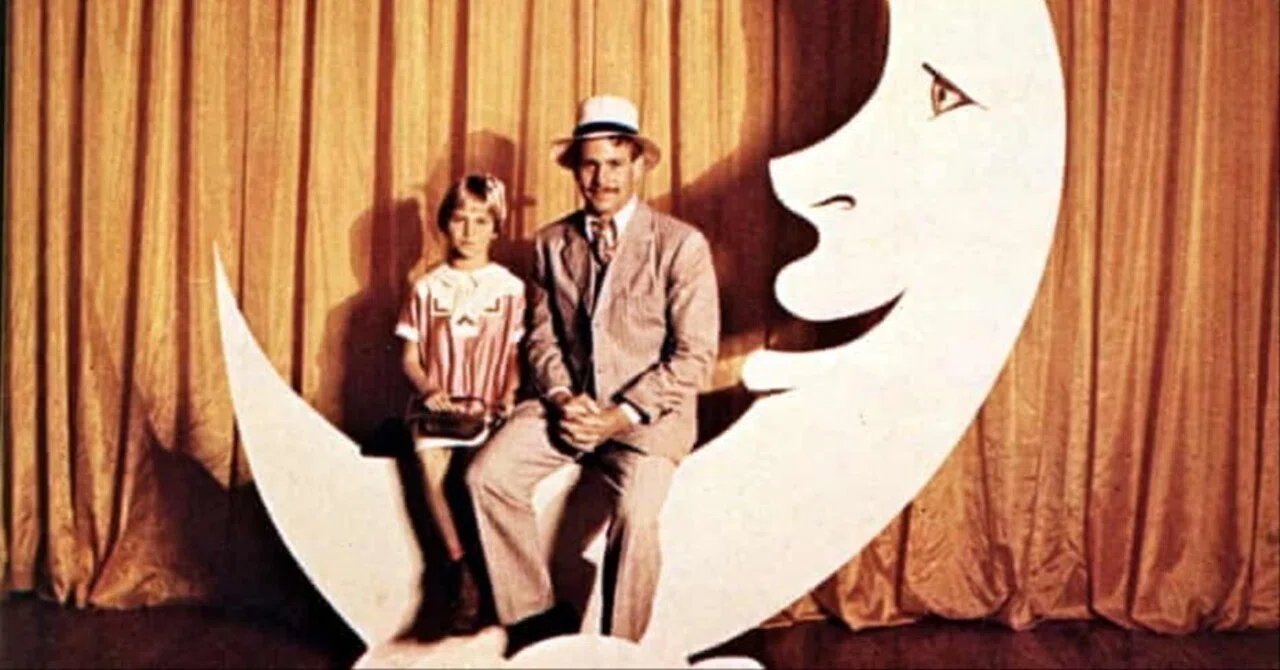
【張りぼての月】文鮮明教祖と北朝鮮および米国(共和党)の関係について(統一教会、ペーパームーン)

Q.なぜ、文氏と金主席は意気投合したのでしょうか。
A.北朝鮮の主体(チュチェ)思想も一種の宗教です。北朝鮮の唯一思想体系や主体思想は、金日成を神のように扱う思想です。お互いに神を自称するからひかれ合ったのです。自らの利益になるなら、何でもやるという点でも、二人は似ていました。
Q.これまでの仕事を通じて、世界平和統一家庭連合(旧統一教会)について詳しいとうかがっています。特に創設者である文鮮明氏の側近で、2014年に亡くなった朴普熙(パク・ボヒ)氏とは長年、面識があったとか。
A.彼は、私が韓国陸軍に勤めていたときの部下でした。米国への留学経験があり、抜群の英語力を買われて米軍との調整役などをしていました。彼は在米韓国大使館の駐在武官も務めていましたが、すでに朴氏は教団に加わっていました。
朴氏は頭が良い男でした。
朴氏によれば、彼は一般の人々に対し、無差別に教団への献金を求める手紙を書いていました。何通かは返事があったそうです。
彼は、受け取った返信を、届いた時期別に分類していました。「早く返事が来た人は、旧統一教会(現・世界平和統一家庭連合)に関心がある証拠だと考え、より大きな金額の献金を求めていました。
信仰を道具にした金集めだったと思います。愛や平和といったキリスト教的な考えを説き、政治家や政府高官などにもうまく浸透していました。
Q.ご自身も文鮮明氏に会ったことがあるのですか。
A.1967年か1968年ごろ、朴普熙氏に請われてソウル市内のホテルを訪れました。そこに文氏がいました。ニコニコしながら、一言も話しませんでした。そのとき、朴氏らから「統一教会に入らないか」と熱心に誘われましたが、断りました。
彼らは当時、大学教授などの知識人を海外旅行に誘い、教団に入るよう勧誘していました。でも、プロテスタントの私には、統一教会は異端にしか見えませんでした。
ソウル拘置所の独房に拘束されている韓鶴子総裁は今週中(金曜日)には起訴されると報道されています。(現地の)連休中は進展がありませんが
https://news-google-com.translate.goog/search?q=통일교&hl=ko&gl=KR&ceid=KR:ko&_x_tr_sl=ko&_x_tr_tl=ja
週末に旧い記事を眺めている間に(末尾に引用した)20年前の記事が目に留まりました。
文鮮明教祖と金日成主席との関係については旧統一教会の傘下にあるワシントンタイムズ社、世界日報社、光言社、他から多数の書籍が出版されていますが
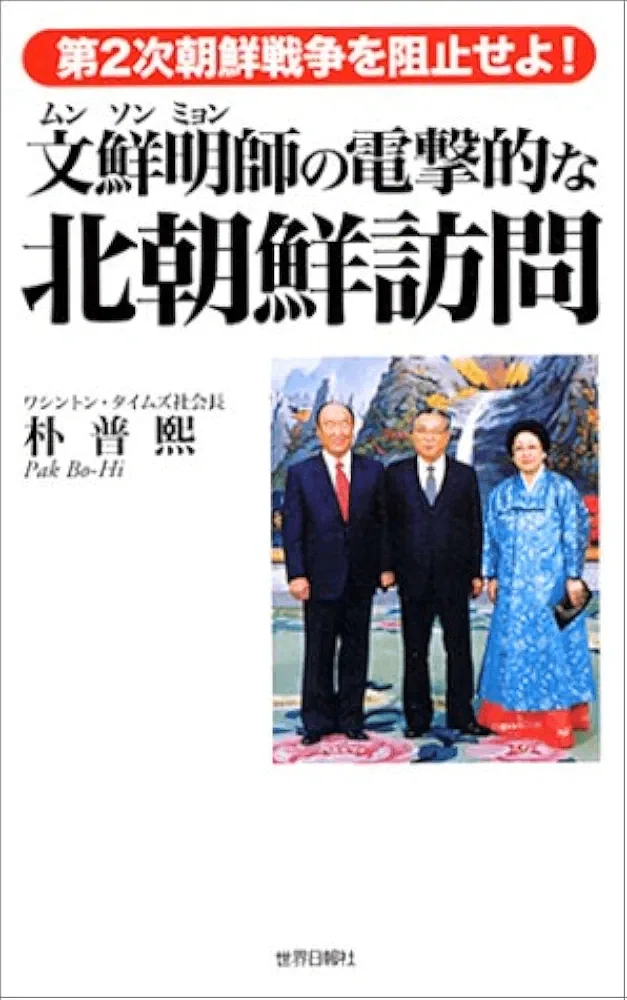
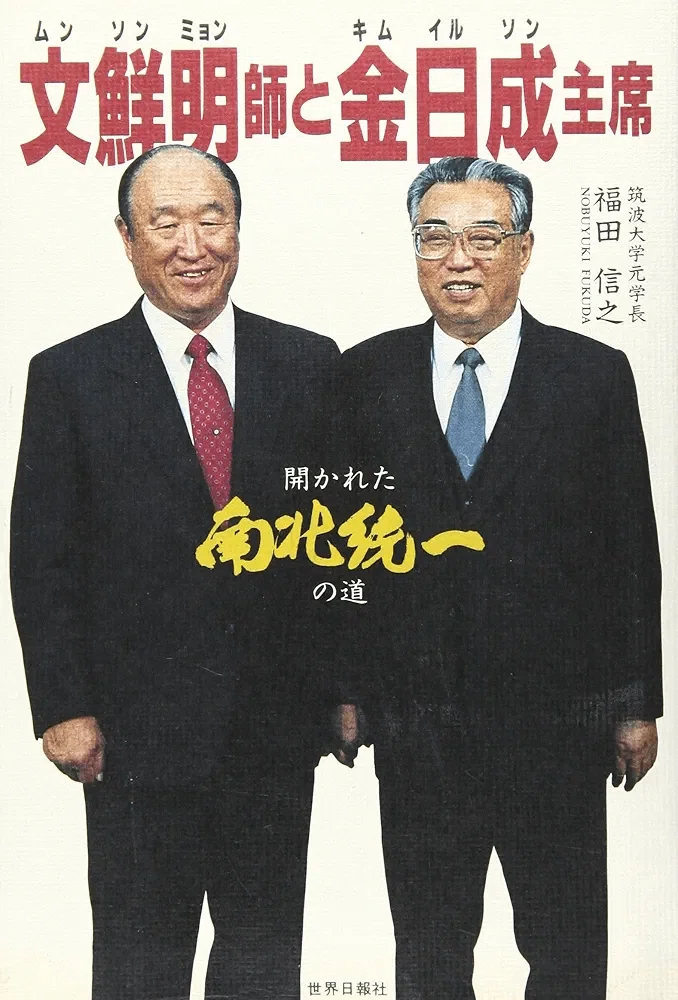
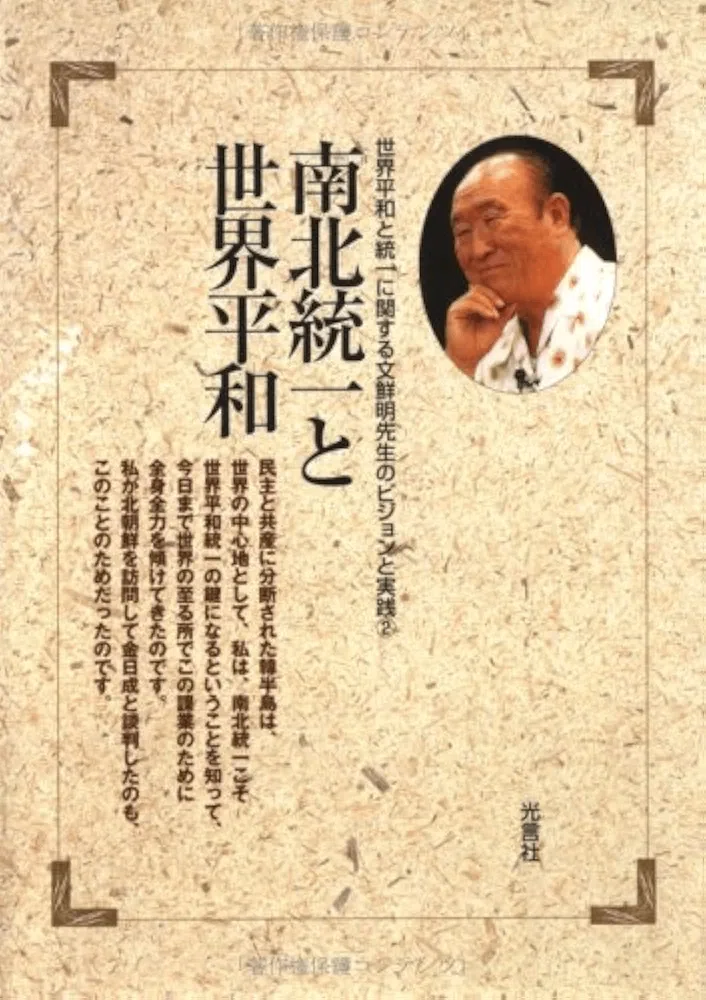
お忙しい方には、末尾に引用した記事(Google 翻訳)をお薦めします。
尚、記事の中に『彼(文鮮明教祖)の投資の中で、一銭も生み出さないワシントンタイムズ紙に費やした月間数百万ドルほど利益を生んだものはない。』と書かれていますが、ワシントンタイムズ社は現在でも年間1千万ドル近い赤字を垂れ流しているようです。
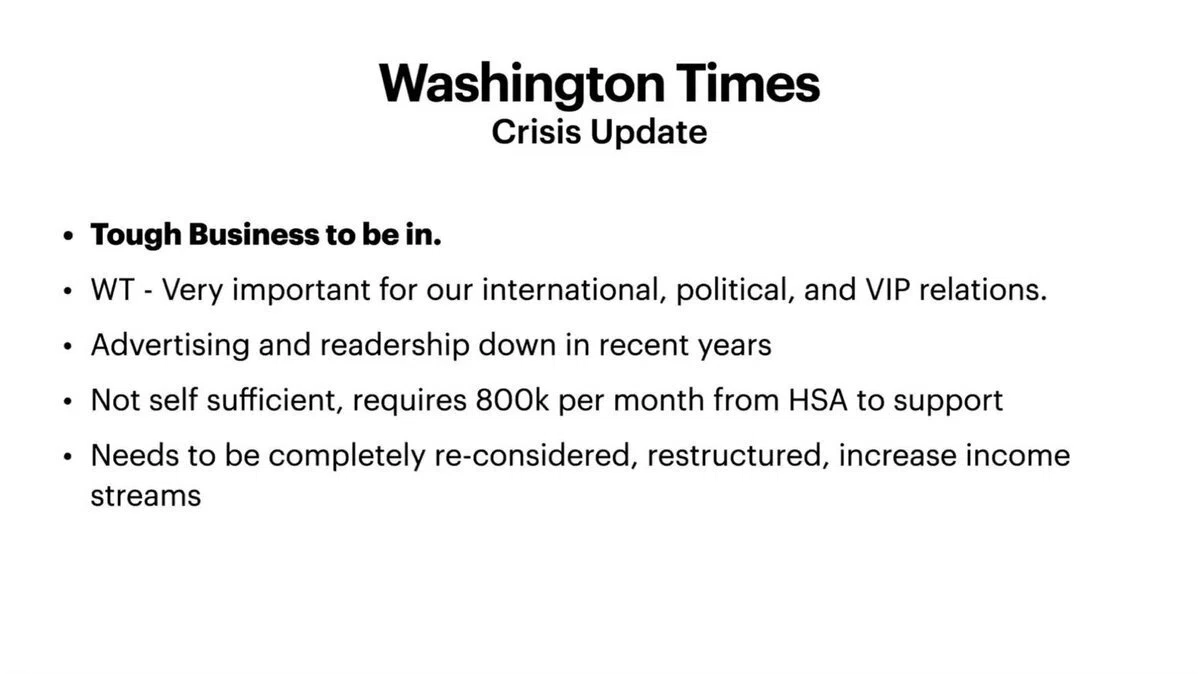
危機の最新事情
・継続することが難しい事業
・ワシントンタイムズ紙は我々の国際的、政治的、
VIPの関係にとってとても重要である
・近年、広告収入も購読者数も減少
・自給自足できない
教会から毎月80万ドルの支払いを要する
・完全に再考し、リストラし、
収入を増やす必要がある
また、記事に登場する
Josette Sheeran joined the Moonies as a young woman. In 1997 she married another member of the Unification Church, Whitney Shiner, who trained at its Theological Seminary. They are now divorced and Mr Shiner, a Washington professor, has also left the group.
については、下記のURLをご参照ください。
https://prospect-org.translate.goog/features/dear-leader-s-paper-moon/?_x_tr_sl=en&_x_tr_tl=ja
(Google 翻訳)
親愛なる指導者のペーパームーン
ジョン・ゴレンフェルド
2005年6月19日
「文鮮明師の演説は、米国、ロシア、中国、日本、そして南北朝鮮が関与する終末的な対立を予見しており、その中で文在寅政権が重要な役割を果たすことになるだろう。このような状況下、小委員会は、文大統領とその支持者たちが戦争手段をどの程度支配し、韓国の防衛政策にどの程度の影響力を持つ立場にあるかを把握することが米国の利益になると考える。」
――米国下院小委員会報告書「米韓関係調査」、1978年10月31日
数年前、北朝鮮の共産主義独裁者は、特別な友人に誕生日プレゼントを送ることにした。贈り物は希少な高麗人参の根だった。送り主の思想を考えると、その相手は一見意外な人物に思えるかもしれない。自称救世主であり、ワシントンを代表する右派系新聞「ワシントン・タイムズ」の誇り高きオーナー、文鮮明師である。
実際、彼らの関係は単なる装飾品の交換以上のものだ。文大統領はかつて、金正日総書記が全体主義の楽園に永住するよう招待したと主張した。「彼は私にこう言った」と文大統領はかつて金正日総書記についての説教で回想している。「『ここに来れば快適な場所を与えよう。国民もあなたをもっと高く評価するだろう』と」
片方は世界で最も気まぐれな統治者として知られ、米国にとって潜在的な核の脅威とみなされている。もう片方はメディア王として知られるが、近年ではほとんど語られることはなく、マディソン・スクエア・ガーデンで行われた集団結婚式で見知らぬ男女と結婚した若者たちの薄れゆく記憶の中でのみ記憶されている。どちらも、それぞれの信者からカルト的な崇拝の対象となっている。
北朝鮮の通信社によると、金正恩氏が行く先々で暗雲が立ち込める様子は、もはや薄らいでいるようだ(同通信社は「敬愛する指導者」をタイガー・ウッズよりも優れたゴルファーとして称賛し、1ラウンドで3~4回ホールインワンを達成するのが常だとも報じている)。一方、文大統領は死者と会話できると主張している。両氏の信奉者たちは、金氏が通常の人間体験の次元を超えた存在であると熱烈に信じている。
しかし、物質的な世界では、統一教会と朝鮮民主主義人民共和国との繁栄した関係は、文大統領の莫大な資金でワシントン・タイムズ紙を築き上げた保守派共和党員にとって、文大統領自身やその側近、そして日刊紙を含む彼のフロント組織が北朝鮮の独裁政権とどの程度協力してきたのかという難しい問題を提起している。
アメリカン・プロスペクト誌の調査によると、ワシントン北東部のタイヤショップやファストフード店が立ち並ぶ通りにある重厚な建物に構えるワシントン・タイムズのオフィスが、文在寅大統領の祖国への外交使節団の拠点となっていることが明らかになった。さらに、同紙自体が文大統領と共産主義政権とのパートナーシップを象徴する存在となってきた。1990年代を通して、西側諸国の観測筋が北朝鮮を統治する金王朝が外貨準備の不足により崩壊すると予測する中、文大統領の組織は数千万ドルを投資してきた。その中には、1999年に米国の制裁が緩和される前に支払われた分も含まれているようだ。
日本の報道機関は、北朝鮮のミサイル発射管研究を強化したとみられる武器取引に文大統領が関与したと非難している。北朝鮮のミサイル射程距離能力の向上に対する最近の懸念を考慮すると、これは重大な容疑である。実際、文大統領と金正恩政権との関係は、米国防情報局(DIA)にとって長年、重要な懸念事項となってきた。
しかし、文氏は依然としてワシントンの政治の実力者であり、ブッシュ家の寛大な友人であり、宗教右派をはじめとする保守派の支持者でもある。現在85歳となった文氏は、メディア、宗教、不動産、商業、産業といった組織からなる秘密主義の国際帝国を率いている。さらに、指導者よりもはるかに多くの名前を持つ、移り変わりゆく偽装団体の迷宮も統括している。これらの組織の中でも特に注目すべきは、ワシントン・タイムズ紙に事務所を構え、同紙面で繰り返し取り上げられてきた世界平和のための諸宗教・国際連盟(IIFWP)である。
ワシントン・タイムズは、文大統領と金王朝の関係において重要な役割を果たしてきたが、その報道のトーンは支持と敵対を交互に繰り返している。皮肉なことに、タイムズの社説欄編集者(兼テレビタレント)であるトニー・ブランクリー氏が最近、北朝鮮に「誘惑と甘い取引」を与えたとしてクリントン政権の「歪んだ宥和政策」を批判する論説コラムを掲載した一方で、彼が社説を執筆しているオフィスの1階上には、文大統領の特使の本部がある秘密組織がある。ワシントン・タイムズが北朝鮮をどれほど厳しく非難しようとも、これらの特使と文大統領自身は、ほぼ15年間、平壌に魅力的な「誘惑」と「取引」を提供してきたのだ。
実際、文大統領と北朝鮮政権との関係は今日も拡大を続けている。彼は平壌に高級ホテルを所有し、他にも事業を展開している。北朝鮮の観光開発をめぐっては、韓国の現代自動車との長く多額の入札合戦に敗れたものの、文大統領は首都郊外の南浦市に自動車工場を建設する権利を譲り受けた。文大統領はこれまでに5500万ドルを同市に投資している。また、北朝鮮の地で初めて商業看板を設置する広告キャンペーンも展開している。
つまり、文政権は、ブッシュ大統領の「悪の枢軸」の中で最も危険で不安定な政権であり、右派の多くが米国の和解不可能な敵とみなしている政府に多大な支援を提供しながら、同時に大統領の政策を弱腰で非愛国的だと疑問視する公選職者(ほぼ民主党員のみ)を攻撃しているのだ。
文大統領と北朝鮮との財政的、政治的なつながりが拡大していることは、アメリカの他の新聞社では想像もできないことだが、ワシントン・タイムズは外国から資金提供を受けている政治機関として米国司法省に登録すべきだと長年主張してきた批評家たちの主張に信憑性を与えている。
しかし、アメリカの保守派が困惑しているとしても、彼らは奇妙なことに沈黙を守っている。おそらく、自らに責任があると自覚しているからだろう。数十年前、彼らが満面の笑みを浮かべるオカルトの恩人を受け入れていなかったら、こうしたことは何もなかっただろう。彼らは文大統領を支持し、彼の新聞の創刊を可能にした。ワシントン・タイムズは、文大統領による北朝鮮独裁政権への求愛活動において不可欠な媒体となった。その活動は1992年、独裁者の誕生日を祝う会見から本格的に始まった。
その奇妙な物語は、 1992年4月にタイムズ紙編集長ウェズリー・プルーデンと記者チームが平壌に到着し、「偉大なる首脳」金日成の時代の共産主義北朝鮮の温かさと友好さを強調した新聞の特別版の執筆に取り掛かったことから始まった。
しかし、プルーデンが平壌へ行った理由を探る前に、文大統領がいかにしてワシントンの保守主義の懐に迎え入れられたかを振り返ってみるのは有益だろう。1991年以降の文大統領の北朝鮮との同盟は、一見すると冷戦終結後の冷戦終結の劇的な転換と映るかもしれないが、よくよく検証してみると、彼が公言した目標は実際には変わっていないことがわかる。彼は一貫して、不安定な共産主義国の政治的空白を埋めようと試み、自ら「神主義」と呼ぶ新たな形態の脱民主主義国家の樹立を訴えてきた。
1971年、サウスカロライナ州選出のストロム・サーモンド上院議員が文在寅の米国入国を支援した後、保守派は、サウジアラビア、台湾、韓国、そしてCIAと繋がりを持つ極右の国際組織である世界反共産主義連盟(WAR)と繋がりを持つこの牧師を同盟者として歓迎した。彼の説教は共産主義を「悪魔的」と非難した。公式伝記には、金日成の捕虜収容所の一つで拷問を受けた聖職者文氏が、仁川侵攻作戦中にアメリカ主導の軍によって瀕死の状態で救出された経緯が記されている。彼はアメリカに永遠に恩義を負うことになるだろう。
こうした公の声明は、保守的なアメリカの支援者たちを魅了した。しかし、信奉者たちに対しては、文はアメリカの立憲政治体制は崩壊すべきであり、そして崩壊するだろうと説いた。「世界を支配するには、自動的な神政政治が必要だ」と、1973年の小冊子『Master Speaks』の中で彼は説明した。「だから、政治と宗教を切り離すことはできないのだ」
しかし、文氏の共和党支持者たちは、ウォーターゲート公聴会中に国会議事堂の階段で行われた「神はリチャード・ニクソンを愛している」というデモや、弟子たちが独立戦争の衣装を着て行進した「建国200周年記念 神よアメリカを祝福せよ」というスタジアム集会など、この師の盲目的な愛国心の表れの先を見ようとはしなかったようだ。文氏の組織CAUSAが主催した指導者会議は、1980年のボリビアの「コカインクーデター」で権力を握った軍事政権を含むラテンアメリカのファシストたちを、共産主義に対抗する剣として、信仰に基づく新たな統治形態を求めるという共通の綱領の下に結集させることを目指していた。
1982年、脱税と司法妨害の共謀罪で連邦裁判所で有罪判決を受け、13ヶ月間投獄されたが、彼の活動はほぼ停滞した。後に『レフト・ビハインド』シリーズの共著者となるモラル・マジョリティの創設者ティム・ラヘイをはじめとする彼の忠実な支持者たちは、彼の懲役刑を宗教的・人種的迫害だと非難した。
80年代後半までに、文大統領のフロントグループや活動家たちは、ヘリテージ財団をはじめとするワシントンの主要な右翼団体と深く結びついており、もはや排除することは不可能だった。ジェリー・ファルウェル氏らとの関係を強化し、「スター・ウォーズ」戦略防衛構想の推進に資金を提供し、コントラ暗殺部隊の費用の一部を負担した彼は、レーガン政権とブッシュ政権が愛読していた日刊紙のVIPとして新たな地位を確立した。このアイデンティティは、彼の犯罪歴の記憶よりも長く生き続けている。
文大統領にとって、日刊紙はプロパガンダと諜報活動の重要な手段となっている。「ワシントン・タイムズを中核として、我々はアメリカの印刷メディアにおける優位性を確立しつつある」と彼はかつて述べた。「そうすることで、あらゆる分野の諜報活動を網羅することができる。今日、我々はアメリカだけでなく、世界中の政府からも重要な機密情報を絶えず入手しているのだ。」
1991年のソ連共産主義崩壊に伴い、文大統領は平壌で発生した金融危機に好機を見出した。この状況を巧みに利用しようとしたのは、文大統領の最も信頼する二人の側近だった。コロンビア生まれの弟子で、80年代にラテンアメリカでCAUSAプロジェクトを率いたアントニオ・ベタンクールと、長年文大統領のナンバー2を務めた朴普熙大佐だ。朴大佐は80年代後半の儀式的な暴行で脳損傷を負い、ジョージタウン大学病院に入院した後も、文大統領への揺るぎない忠誠心を貫いていた。
文大統領が平壌に接近しようと決断したのは、ソウルが対北朝鮮政策「太陽政策」を打ち出すずっと前のことだった。北朝鮮との接触は容易なことではなかった。ベタンクール氏は教会の出版物で、北京の北朝鮮大使館に初めて接触を試みた際、文大統領の新たなプロジェクトである世界平和サミット評議会の責任者を名乗ったものの、何度も拒絶された経緯を語っている。彼は1991年4月にようやく北朝鮮側と面会し、それ以降2003年までに16回も面会し、故金日成主席とその息子の双方と個人的に謁見したと主張している。(ワシントン・タイムズの社員電話帳に登録されているベタンクール氏、そして彼のサミット評議会、そしてタイムズ社に勤務する親族は、何度も電話をかけ直さなかった。)
しかし、文氏の入国をスムーズにした立役者は、後に北朝鮮との合弁事業で文氏のパートナーとなる、謎めいたソウルの女性実業家だった。当時文氏の信奉者でもあったワシントン・タイムズの元ソウル特派員マイケル・ブリーン氏によると、このすべてを可能にした女性に教会指導者を紹介したのは、ブリーン氏だったという。
「マダム」パク・キョンユン氏は、北朝鮮当局者との会談を手配する類まれな能力から、ソウルでは「ゲートウェイ」の異名をとっており、その類まれなアクセス力から現代自動車をはじめとする韓国の財閥企業から誘いを受けていた。彼女は1995年の北朝鮮への食糧支援に関与していた。1996年のウォール・ストリート・ジャーナル紙の人物紹介記事によると、彼女の越境事業(当時は文大統領の金剛山開発会社も含まれていた)はスパイ活動の隠れ蓑だったという噂が根強く残っていた。
文大統領は1991年11月、クレムリンで赤旗が降ろされるわずか数週間前に、北朝鮮訪問の招待を受け入れた。パク大佐の著書『真実は我が剣』第2巻(第1巻にはレーガン政権の国務長官アル・ヘイグによる序文が添えられている)の中で、文大統領の長年の側近は、パク大佐が冷戦後の協調を示唆しただけでなく、それ以上のことをしたと述べている。「統一朝鮮では、私は統一朝鮮半島の最高指導者となる。金日成は副指導者となり、中心思想は神主義となるだろう…」とパク大佐は宣言した。
この大胆な宣言に興味をそそられたと、文師の個人秘書ピーター・キム氏は語り、キム氏は文師一行を興南(フンナム)にある自身の迎賓館に飛行機で送り、そこで大男は伝道師を抱きしめてこう言った。「過去は忘れましょう。一番大切なのは今と未来です」。教会がこの旅行について記録している他の文書には、二人が朝鮮半島の統一について話し合ったとある。
DIAから機密解除された報告書はさらに踏み込み、文大統領が海外の口座に事業の頭金として「数千万ドル」を振り込み、海外投資を奨励すると約束したと報じている。ある日本の報道によると、文大統領は政権に3億5000万ドルを拠出すると約束したという。
1992年4月15日付のワシントン・タイムズ紙では、この秘密交渉の実態は明らかにされなかった。当時、ワシントン・タイムズ紙は、編集局員による11日間の北朝鮮訪問の末、金日成主席の80歳の誕生日を記念する特集号を発行した。この訪問中、プルーデン編集長の寄稿は、まるで水を得た魚のような右翼ぶりを強調していた。「韓国人はこういう無神経な議論を好む傾向がある」と、彼は平壌のホストから返された独断的な回答についてコラムで記した。「キムチに何か入っているに違いない」
アーカンソー州で人種差別主義者の指導者の息子として育った強硬保守派のプルーデン氏は、自身の新聞や北朝鮮報道に関するインタビューを拒否した。彼はプロスペクト紙に書面で声明を出した。「私は、ニューヨーク・タイムズのビル・ケラーやワシントン・ポストのレン・ダウニーでさえ想像もできないような編集上の独立性を持っている」
しかし、プルーデンは、高齢の独裁者、金日成氏への2時間半に及ぶ同紙のインタビューを担当しなかった。西側メディアにとって、この20年ぶりのインタビューだった。この繊細で骨の折れる仕事は、当時同紙編集部で文大統領の最高位の信奉者だったジョゼット・シャイナー編集長に委ねられた。シャイナーの記事は、共産主義独裁者の「逞しい風貌」(彼は2年後に死去)と、彼の前向きな姿勢を強調していた。
「たとえ空が落ちてきても、私が這い上がるための穴は必ずある」とキムは言った。シャイナーは後にこの言葉について「新聞に掲載した素晴らしい言葉」として回想している。
シャイナーは文大統領の「真の家族」の娘として生まれ、1996年に文大統領が信者たちに教会の外へ進むよう促すまで、20年間そこに留まりました。彼女は聖公会に入信し、最終的にはウィリアム・ベネットのシンクタンク「エンパワー・アメリカ」で働き、2001年にはジョージ・W・ブッシュ大統領によって米国通商代表部に任命されました。(彼女はロバート・ゼーリックの後任として米国通商代表部に就任しましたが、3月にワシントン・ポスト紙は彼女が間もなく国務次官(経済問題担当)に任命されるという噂を報じました。)
シャイナー氏による金日成氏へのインタビューは、1992年4月15日付のワシントン・タイムズ紙の1面を飾る記事となった。この紙面は、平壌で国民の祝日が到来し、1週間以上にわたる誕生日祝賀行事が始まるまさにそのタイミングで、米国首都で発行された。シャイナー氏を称賛する記事は、金日成氏を「西側諸国で一般的に描かれているような孤立主義的で独断的な独裁者ではなく、自信に満ちた思慮深い元老政治家」と描写した。彼女のプロフィールには、長時間にわたる質疑応答が添えられていた。
「それで、釣りやその他の好きなことに使える時間が増えたんですか?」とシャイナーは尋ねた。金正恩は答えた。「もちろんです!釣りに行く時間もありますし、狩りに行く時間もあります。狩りも釣りも大好きです。」その号の新聞紙面の驚くべき部分は、北朝鮮の宣伝活動の決まり文句で埋め尽くされていた。例えば、「我々は常に、原動力を強化し、社会主義建設におけるその役割を拡大することに最優先の注意を払い、主体思想(金正恩の神秘主義的/スターリン主義哲学)の要求を満たすために自然と社会の変革を行ってきました。」
他の記事では、共産党当局者らによる同様に冗長な発言が報じられた。同当局者はタイムズ紙に対し、韓国侵略への関心は失っており、自国の孤立政策を再考しつつあり、そして何よりも重要な点として、外国からの投資家を歓迎していると語った。
時は流れ、2003年。ソウルの中央日報は、文大統領率いる平和自動車が、政権向けの自動車製造で5500万ドルの独占契約をいかに勝ち取ったのか、疑問を呈した。同紙は、統一教会の指導者で文大統領率いる統一財閥の会長である黄善祚氏の言葉を引用し、この幸運は文大統領が「ワシントン・タイムズの記者を北朝鮮に派遣し、北朝鮮の印象を西側諸国に良く知らせた」ことで可能になったと明かした。「それ以来、北朝鮮は統一教会を信頼している」
その後教会から離れ、現在はソウルを拠点とするコンサルタントで『金正日:北朝鮮の親愛なる指導者』の著者でもあるマイケル・ブリーン氏は、新聞の誕生日特集記事の掲載は内容よりも重要だったと語る。「金正日のイメージを和らげるなんて、とんでもない話だ」とブリーン氏は付け加える。「文大統領は、白人から『閣下』と呼ばれ、ワシントンに影響を与えていることを示したかったのだ」。新聞報道は、金大統領にとって文大統領が単なる実業家以上の存在であることを証明したとブリーン氏は語る。
しかし、その年の後半、文大統領自身は、金正恩氏のアメリカに対する態度を「和らげた」と主張した。「金日成氏と会談した後、綿密に練り上げた計画を彼に送った」と彼は述べた。「今日に至るまで、彼から何の返事も受け取っていない。つまり、彼は『文師の考えは何なのか?』と考えているということだ。ワシントン・タイムズ紙をはじめとする利用可能なメディアを通じて、私はこの構想全体を紹介し、金日成氏とのインタビューをアメリカに持ち込んだのだ。」 (文大統領はまた、敗北したばかりのジョージ・H・W・ブッシュ大統領とその政権が、自身の朝鮮半島統治権獲得計画への支持を拒否したことを「犬のような」と評した。)
1994年、ワシントン・タイムズ紙はシャイナー氏を再び平壌に派遣し、金日成の誕生日を祝う会を開いた。しかし、このとき彼女のアクセスはもはや独占的なものではなくなった。彼女は人権問題について質問しようとしたが、タイムズ紙は金日成氏のあっさりとした反論を掲載した。しかし、彼女の記事の中心にあったのは、政権の理解を求める訴えだった。記事の中で、彼女は「身をよじりながら踊る小さな子供たち」が規則正しいフラフープダンスを踊る様子を称賛している。当然のことながら、シャイナー氏が1994年4月15日付で発表した「北朝鮮、誕生日パーティーで羽目を外す」という見出しの記事の後に、「北朝鮮、西側諸国の理解を訴える」という見出しの記事が掲載された。
5か月後の1994年9月9日、匿名のDIAフィールドアナリストがワシントンタイムズが北朝鮮政府の目的を果たしている可能性について議論した。
KN(北朝鮮)は、セイル・デイリー・ニュースやワシントン・タイムズといった新聞における統一教会の影響力、そして教会系ロビイストやその他の人的つながりを利用して、西側諸国政府に自らの意見を伝えようとするだろう。その意図は、KNに対する好意的な世論を形成することにある…
DIAの電報には、日本のマスコミを騒がせた衝撃的な告発も含まれていた。東京の権威ある新聞『週刊朝日』は、文鮮明の真の家庭に嫁いだ4人の男が、1994年に老朽化したロシア製潜水艦を北朝鮮に売却した物議を醸した事件の背後にいたとして浮上した際、文鮮明のために活動していた可能性があると報じていた。
大きなコネクションを持つ東京の小さな健康食品会社、東園貿易の幹部たちが即座に主張したように、文と本当のつながりはなかった可能性がある。社長は朝日新聞記者に、統一教会への興味を失ったと語った。日本人ジャーナリストの有田芳生によると、東園貿易の取締役のひとりが、日本で文を嫌われる原因となった教会の「霊的販売」キャンペーンの経理部長だったというのは単なる偶然かもしれない。(この詐欺事件では、文の弟子たちが日本の未亡人たちに、亡くなった夫を地獄から「解放」してもらうために天文学的な金額を支払わせていた。)「あれは統一教会の企てだと思わざるを得ない」と、霊的販売反対弁護士全国ネットワークの弁護士は朝日新聞に、東園貿易について語った。
統一教会は最近のコメント要請に応えて、潜水艦事件に関する声明を発表した。「共産主義強制収容所の生存者であり、北朝鮮共産主義からの難民である文鮮明師は、数十年にわたり共産主義をイデオロギー的に打倒するための世界的な取り組みに携わり、冷戦の真っ只中に強硬な反共産主義のワシントン・タイムズ紙を創刊した。彼はいかなる形であれ、共産主義国家に軍事技術を渡すことは決してないだろう」。さらに声明では、東遠貿易は「現在も、そして過去も、統一運動の一部ではない」と述べつつも、文鮮明師が「誇りを持って、そして意図的に」北朝鮮に投資してきたことを誇らしげに述べている。
ジャンク取引をめぐっては、矛盾する報道が飛び交っていた。韓国紙の初期報道では、北朝鮮海軍の高官が関与しているという疑わしい主張が飛び交っていた。その後、ニューヨーク・タイムズ紙は、潜水艦の小規模な船団がそのまま北朝鮮に運び込まれたと報じた。核拡散防止の専門家は、ある会社の社長が同紙に「すべてそのまま残す。何も持ち出していない」と述べたことに着目した。5月には、北朝鮮がロシアの兵器査察官による武装解除されたとされる潜水艦の監視を繰り返し拒否したことで、この陰謀はさらに深まった。
しかし今日、北朝鮮軍事に関する西側諸国の有力専門家――ジェーンズ・ディフェンス・ウィークリーのジョセフ・ベルムデス・ジュニア記者やGlobalSecurity.orgのジョン・パイク氏など――は、このスクラップ転売取引が、その仲介人が誰であろうと、平壌にミサイル発射管の安定性を向上させる方法を示したと評価している。この件に関する国防情報局(DIA)のメモには、「この取引は日本のメディアで大きく報道されたが、当時、東遠トレーディングが統一教会の関連会社であることは明らかにされていなかった」と記されている。国防総省の広報担当者は、この電報の信憑性についてコメントを求めたが、これらは実際の分析ではあるものの最終的なものではないと述べ、それ以上の詳細は明らかにしなかった。
こうした状況は、文在寅大統領の新聞における北朝鮮報道にどのような影響を与えたのだろうか?最近、ワシントン・タイムズは「強制収容所」に関する強硬な論説を展開している。論説では金正日との交渉に懐疑的な姿勢を示している。共和党支持を強く支持するメディアにとって、それ以外の姿勢は意外なものだ(もっとも、同紙は従来の右翼路線から逸脱し、北朝鮮への柔軟性を訴える論説記事を掲載している)。しかし、北朝鮮への食糧支援を中国に非難する論説を掲載しながら、平壌とつながりのある文在寅大統領のフロント組織が自社ビルで活動することを容認しているのは、奇妙な話だ。
文鮮明教祖の平壌ホテルの問題を考えてみよう。文鮮明教祖の日本企業関係者が、1994年初頭にスキャンダラスな「霊的販売」に関与したグループによって改装されたこのホテルに資金を提供していたようだ。北朝鮮で18ヶ月を過ごしたドイツ人活動家、ノルベルト・フォレルツェン博士は、 1999年にこのホテルを目撃したとプロスペクト紙に語った。フォレルツェン博士は、教会の投資によって同紙が金正恩政権による人権侵害の報道を制限されていると考えている。
「ワシントンへの旅行中、何度かワシントン・タイムズ紙に、青と白の縞模様のパジャマを着てアウシュヴィッツのような飢えた子供たちの写真を掲載してもらおうと試みたが、いつもうまくいかなかった」と彼は言う。「今思えば、平壌のCNNテレビと立派な店が並ぶ立派なポトンガンホテルに泊まる怪しいムーニーたちと、ワシントンとの繋がりのことばかり考えていた」(ただし、同紙は脱北者による拷問や即決処刑に関する記事を掲載している)。
こうした妥協的な関係のほとんどは、タイムズビル内の文鮮明教祖の組織を巡るものだ。スイート360にオフィスを構える文鮮明教祖のサミット評議会は、過去10年間、「主要なアメリカ指導者、そしてオピニオンリーダーや政策立案者らと共に」食糧援助と外交において多大な貢献を果たしてきたと主張している。
ベタンクールは教会のパンフレット『真実は我が剣 第2巻』の中で、この評議会が1994年の枠組み合意条約(ワシントン・タイムズ紙で激しい批判を浴びている)を可能にしたとさえ述べている。さらに文鮮明教祖は、教会の使節団が2000年の南北首脳会談の重要な基盤を築いたと主張している。母国でカルト集団とみなされている団体の専門家である日本人ジャーナリスト、有田芳生氏は、文鮮明教祖が北朝鮮を交渉のテーブルに引き出すためにビジネス上の約束をしていたと主張している。
米国政府は首脳会議を外交上の裏ルートとして利用しているのだろうか?北朝鮮専門家のブラッドリー・マーティン氏はプロスペクト紙にこう語った。「政権内に文鮮明教祖と協力したい人材がいることは間違いない。ただ、国務省のキャリア官僚の多くは専門的すぎて、彼らの中に数えられないだろう」。しかし、下院軍事委員会の保守派議員で共和党のカート・ウェルドン下院議員は、平壌への代表団を率いており、近年はソウルとニューヨークで開催された文鮮明教祖のIIFWPイベントにも出席している。
サミット評議会の重要性を主張する専門家の一人は、ワシントンの戦略国際問題研究所(CSIS)のウィリアム・テイラー氏だ。テイラー氏は1994年の旅行でこのグループと面会したことがある。「多くの点で、彼らは国際安全保障問題におけるこの現実主義者が決して歩み寄らないような理想主義的な方向に突き進んでいる」とテイラー氏は認めている。
こうした抗議にもかかわらず、テイラー氏の署名入りの署名は、ワシントン・タイムズ紙の最近の論説記事に掲載され、ブッシュ政権の強硬路線を批判し、北朝鮮との直接交渉を呼びかけている。(首脳会議に協力してきたCSIS所属のもう一人の専門家、ポール・チェンバレン大佐は、プロスペクト紙の電話取材に返答しなかった。)
同評議会は、「世界平和発展研究所」という法人としても登記されている。(ムーン氏の会社「ヘルス・ビューティー・アンド・ロンジェヴィティ」のウェブサイトによると、同研究所の住所は「アンキエタミン」などのハーブ調合薬の販売店として2倍になっている。)公開文書によると、評議会の役員には、CAUSA創設者のウィリアム・セリグ、ドイツ人弟子のライナー・ヴィンセンツ、そしてベタンコートが含まれている。ヴィンセンツは2004年の教会出版物で、弟子たちにこう語ったと伝えられている。「私が北朝鮮から(訪問して)戻った後、父なる神は私に大きな経済的使命を与えてくださいました…もし私が皆さんに私の使命を話したら、皆さんは今夜眠れないでしょう…この使命を持つ人は世界に3人しかいません。私はその3人のうちの1人です。」
ベタンコート氏は、サミット評議会と、タイムズビルにオフィスを構えるムーン派のもう一つのフロント組織であるIIFWP北米支部の代表を務めている。IIFWPは国連を宗教団体に変貌させようとしている。主要紙のほとんどはこの提案に真剣に注目していないが、例外が一つある。ワシントン・タイムズ紙のウェブサイトだ。
発行部数10万部の印刷版を上回る240万人の読者を誇る同紙は、IIFWPを真剣に扱う記事を数多く掲載し、文大統領のもう一つの米国通信社であるユナイテッド・プレス・インターナショナル(UPI)の「速報」記事を掲載してきた。典型的な見出しは「IIFWP、宗教を利用して平和を推進」というもの。また、2002年9月23日付のワシントン・タイムズ紙はIIFWPを「宗教指導者のグループ」と位置づけ、「国連に新たな評議会を設立する可能性を探っている。国連の問題解決における経済、政治、社会のプリズムに精神的な側面を加える評議会だ」と評した。記事は文大統領について言及していたが、文大統領やIIFWPと同紙の関係については明らかにしていなかった。
文鮮明教祖が設立した多種多様なフロントグループには、共通の戦略がある。それは、政治家たちを豪華なイベントに誘い込み、教祖を世界的な指導者としてアピールし、ワシントン、平壌、北京、それ以外の地域での扉を開くために威信を高めることだ。彼の投資の中で、一銭も生み出さないワシントンタイムズ紙に費やした月間数百万ドルほど利益を生んだものはない。
重要なのは権力者へのアクセスから得られる利益であり、その多くは共和党の政治家たちで、彼らは同紙が党のメッセージをほぼ隠さずに伝えることに感謝している。
教会と新聞の境界が曖昧になっている典型的な例として、ワシントン・タイムズ財団が挙げられます。昨年、同財団のレターヘッドは、バージニア州のジョン・ワーナー上院議員を説得し、文在寅を救世主として称える恥ずべき儀式のために上院議事堂を予約させるのに使用されました。そして、文在寅が信者に向けて行った演説では、タイムズ紙は教会の発展のための道具として、「我々の自由に使える」という印象を与えています。
文氏は新聞創刊後まもなく、こう自慢した。「大きな大理石の建物の中に美しいオフィスを構え、裕福なワシントンの政治官僚の多くは、文師と統一教会をピーナッツのように取るに足らない存在とみなしていた。しかし今、彼らはワシントン・タイムズに反応しなければならなくなり、同紙を読んで、いくつかの記事に震え上がっているのだ。」
発行部数は控えめながらも、この新聞は重要な記事を保守派の全国的な反響室へと送り続けている。右派の間で高まった感謝の念は、 1997年のワシントン・タイムズ紙創刊記念晩餐会でロナルド・レーガン元大統領が行った特別メッセージに表れている。「アメリカ国民は真実を知っている」と元大統領は宣言した。「ワシントン・タイムズの皆さん、私の友人である皆さんは、国民に真実を伝えてきました。それは必ずしも人気のあることではありませんでした。しかし、皆さんの声は大きく力強いものでした。私と同じように、皆さんも今世紀で最も重要な10年の始まりにワシントンに着任しました。共に袖をまくり上げ、仕事に取り組みました。」
「そして――そう、我々は冷戦に勝利したのだ。」
冷戦が終結した今、文氏の目的はもはやアメリカの保守派や米国政府の狙いと必ずしも一致しない。彼の新聞が北朝鮮に対して強硬路線を推進しているとしても、この自称救世主と商業化された教会は全く異なる政策を追求してきた。しかも、彼らは新聞内部からそれを実行してきたのだ。多くの元信徒が「天の欺瞞」と呼ぶ、神はサタンの欺瞞に正義の嘘で対抗しなければならないという教義に文氏が傾倒していることを考えると、同紙の編集方針は、北朝鮮との彼の利己的な関係から目を逸らすためのものに過ぎないのかもしれない。
少なくとも今のところ、北朝鮮に対する論説の姿勢は、文大統領が数年前に中国に投資を開始した後の中国に対する姿勢よりもはるかに強硬になっている。当時、編集長のアルノー・ド・ボルクグレーブ氏は「中国を攻撃してはならないという布告」を出したと、論説委員のマイク・ボナフィールド氏はワシントン・ポスト紙に語っている。1987年、ボナフィールド氏と論説編集者のビル・チェシャー氏は、教会がソウルに関する論説を和らげるよう圧力をかけていると主張して辞任した。
ワシントン・タイムズの初代編集長であり、唯一の独立系発行人であったジェームズ・ウェラン氏は、オーナーによる干渉に不満を抱き、数年前に辞任した。ウェラン氏は、同紙の現状を恥ずべきものとみなしている。「サミット評議会であろうと、ムーニーのフロント組織であろうと、理論上、例えばダウンタウンのオフィスビルとは異なり、新聞専用の孤立した建物に店を構える筋合いはないのは明らかだ。これは、新聞の運営を担う者たちに、いかに倫理観や羞恥心が欠如しているかを示すものだ」と、ウェラン氏はプロスペクト紙に語った。
一方、誕生日プレゼントの交換は続いている。昨年、上院議員会館でメシア式を主催した統一教会の牧師、マイケル・ジェンキンス氏は説教の中で、新たなプレゼントが届いたと報告した。金正日は「多くの人が抹殺しようとしている人物」かもしれないが、「北朝鮮とお父様の間には、何らかの繋がり、生命線がある」とジェンキンス氏は語った。
ジョン・ゴレンフェルドはフリーランスのライターであり、その作品はSalon、Wired、The Guardian、その他の出版物に掲載されています。
(原文)
Dear Leader's Paper Moon
by John Gorenfeld
June 19, 2005
“[The Reverend Sun Myung] Moon's speeches foresee an apocalyptic confrontation involving the United States, Russia, China, Japan, and North and South Korea, in which the Moon Organization would play a key role. Under these circumstances, the subcommittee believes it is in the interest of the United States to know what control Moon and his followers have over instruments of war and to what extent they are in a position to influence Korean defense policies.”
-- U.S. House of Representatives subcommittee report, “Investigation of Korean-American Relations,” October 31, 1978
Several years ago, the communist dictator of North Korea decided to send a birthday gift to a special friend. The gift was a rare ginseng root, and the recipient, given the ideology of the sender, may seem at first blush to be a surprise: the Reverend Sun Myung Moon, self-proclaimed messiah and proud owner of Washington's flagship right-wing newspaper, The Washington Times.
Their relationship, in fact, is based on more than the exchange of baubles. Moon once claimed that Kim Jong-Il has extended an invitation to reside permanently in his totalitarian paradise. “He tells me,” Moon once recalled in a sermon about Kim, “‘I will give you a comfortable place if you come here, and the people will appreciate you more here.'”
One has a reputation as the world's most volatile ruler and is seen as a potential nuclear threat to the United States. The other is known as a media tycoon who rarely gets mentioned these days, existing chiefly in fading memories of young people marrying strangers during mass ceremonies at Madison Square Garden. Both are subjects of cultish veneration by their respective faithful.
Wherever Kim goes, storm clouds seem to shrink from gathering, according to the North Korean news service (which also lauds the “Dear Leader” as a better golfer than Tiger Woods, routinely shooting three or four holes-in-one per round), while Moon claims to be able to speak with the dead. Each man's followers fervently believe that he exists beyond the plane of normal human experience.
In the material world, however, the flourishing relationship between the Unification Church and the Democratic People's Republic of Korea raises difficult questions for the conservative Republicans who have built The Washington Times with Moon's billions -- and about the extent to which he, his aides, and his front organizations, including his daily newspaper, have collaborated with the North Korean dictatorship.
An American Prospect investigation reveals that The Washington Times offices, housed in an imposing building on a northeast Washington strip otherwise known for tire shops and fast-food joints, serve as the base of operations for Moon's diplomatic missions to his homeland. Moreover, the paper itself has served as an instrument of Moon's partnership with the communist regime. Throughout the 1990s, as Western observers predicted that the Kim dynasty that rules North Korea would collapse for lack of hard currency reserves, the Moon organization invested tens of millions of dollars, which apparently included payments made before U.S. sanctions eased in 1999.
The Japanese press has accused Moon of involvement in an arms deal that appears to have enhanced North Korean missile-tube research -- a serious charge, considering recent fears about the advancement of North Korea's missile-range capabilities. Indeed, Moon's connections with the Kim regime have long been a matter of active concern for the U.S. Defense Intelligence Agency (DIA).
Yet Moon remains a Washington political powerhouse in his own right, a generous friend of the Bush family, and a patron of religious-right and other conservative causes. Now 85 years old, he oversees a secretive international empire of media, religious, real-estate, commercial, and industrial entities, as well as a shifting maze of front groups with far more names than leaders. Notable among these organizations is the Interreligious and International Federation for World Peace (IIFWP), which has an office in The Washington Times building -- and has been repeatedly publicized in the newspaper's pages.
The Washington Times has played an essential role in Moon's relations with the Kim dynasty, although the tone of its coverage alternates between promotional and hostile. Ironically, while Times editorial-page editor (and TV personality) Tony Blankley has published recent op-ed columns attacking the Clinton administration's “perverse policy of appeasement” for giving “enticements and sweetheart deals” to North Korea, a secretive organization housed just one floor above the very office where he writes his editorials serves as the headquarters for Moon's emissaries. However harshly The Washington Times may denounce North Korea, those emissaries and Moon himself have been providing attractive “enticements” and “deals” to Pyongyang for almost 15 years.
Indeed, Moon's relationship with the North Korean regime continues to expand today. He maintains a deluxe hotel in Pyongyang and is pursuing other ventures. Although he lost a long and costly bidding war with Hyundai to develop tourism in North Korea, the South Korea–based car company ceded to Moon's people the right to build an automobile factory in Nampo, a city outside the capital where he has invested $55 million so far. He has also mounted an advertising campaign that has placed the first commercial billboards on North Korean soil.
So the Moon empire is providing substantial assistance to what may well be the most dangerous and unstable regime in President Bush's “axis of evil” -- and a government that many on the right consider an irreconcilable enemy of the United States -- while simultaneously attacking elected officials (almost exclusively Democrats) who question the president's policies as weak and unpatriotic.
Moon's growing constellation of financial and political connections with North Korea -- an arrangement that would be impossible to imagine for any other newspaper publisher in America -- lend credence to critics who have long insisted that The Washington Times should register with the U.S. Justice Department as a political organ funded by foreign sources.
Yet if American conservatives are troubled, they have remained strangely silent, perhaps because they realize that they have only themselves to blame. None of this would have been possible had they not embraced their beaming occult benefactor decades ago. Having endorsed Moon, they enabled the creation of his newspaper. The Washington Times proved to be the essential vehicle for Moon's courtship of the North Korean dictatorship, which commenced in earnest in 1992 with a celebration of the dictator's birthday.
That strange story begins with the arrival of Times Editor-in-Chief Wesley Pruden and a team of journalists in Pyongyang in April 1992, where they set to work on a special edition of the newspaper emphasizing the warmth and friendliness of communist North Korea, back in the days of “Great Leader” Kim Il-Sung.
Before exploring the reasons why Pruden went to Pyongyang, however, it is useful to review how Moon was welcomed into the bosom of Washington conservatism. For while the casual observer might regard Moon's post-1991 alliance with North Korea as a sharp reversal for the old Cold Warrior, upon closer scrutiny, his professed goals have never really changed. He has consistently tried to enter the political vacuums in unstable communist countries, calling for them to be filled with a new form of post-democratic government that he calls “Godism.”
After South Carolina Senator Strom Thurmond helped Moon enter the United States in 1971, conservatives welcomed the reverend as an ally with ties to the World Anti-Communist League, a far-right international group with connections to Saudi Arabia, Taiwan, South Korea, and the CIA. His sermons called communism “satanic.” His official biography told of how Moon, a cleric tortured in one of Kim Il-Sung's prison camps, had been rescued at the brink of death by the American-led invasion at Inchon. He would be forever in America's debt.
Such public pronouncements charmed his conservative American sponsors. But to his disciples, Moon preached that America's constitutional system of government should and will collapse. “[W]e must have an automatic theocracy to rule the world,” he explained in a 1973 tract titled Master Speaks. “So we cannot separate the political field from the religious.”
Moon's Republican friends, however, seemed unwilling to look beyond the master's slavish displays of patriotism, including “God Loves Richard Nixon” demonstrations on the Capitol steps during the Watergate hearings and a “Bicentennial God Bless America” stadium rally, in which his disciples marched in Revolutionary War costumes. The leadership conferences sponsored by his CAUSA organization sought to unite Latin American fascists -- including the junta that came to power in Bolivia's 1980 “cocaine coup” -- behind a single platform, calling for a new, faith-driven form of government as a sword against communism.
He was scarcely slowed by his 1982 federal conviction on charges of tax fraud and conspiracy to obstruct justice, which led to his imprisonment for 13 months. His loyal allies, including Moral Majority founder Tim LaHaye, who later co-authored the Left Behind series, decried his prison sentence as religious and racial persecution.
By the late '80s, Moon's front groups and activists were too deeply intertwined with The Heritage Foundation and Washington's other leading right-wing groups to be dislodged. Having cemented relations with the likes of Jerry Falwell, funded promotion of the “Star Wars” Strategic Defense Initiative program, and footed part of the bill for the Contra death squads, he had also carved out a new niche as the VIP behind the Reagan and Bush administrations' favorite daily newspaper -- an identity that has long outlasted memories of his criminal rap.
To Moon, his daily newspaper serves as a crucial instrument of propaganda and intelligence. “With The Washington Times at the core, we are establishing preeminence in the American print media,” he once said. “By doing so, we can include all fields of intelligence. Today we [are] continually gaining important confidential information, not only from America but also from other governments all over the world.”
With the 1991 collapse of Soviet communism, Moon saw an opportunity in the ensuing financial crisis in Pyongyang. Exploiting the situation would be two of Moon's most trusted servants: Antonio Betancourt, a Colombian-born disciple who had headed the CAUSA project in Latin America during the '80s, and Colonel Bo Hi Pak, Moon's longtime No. 2 aide, who had remained fiercely loyal even after a ritual late-'80s beating sent him to Georgetown University Hospital with brain damage.
Moon's decision to approach Pyongyang long preceded Seoul's “sunshine policy” of opening to the North. Making contact with North Korea was no small enterprise. In church publications, Betancourt has told how he first tried the North Korean Embassy in Beijing, presenting himself as the head of a new Moon project, the Summit Council for World Peace, only to be rebuffed again and again. He claims that he finally met with the North Koreans in April 1991, and would meet with them 16 more times between then and 2003, winning personal audiences with both the late Kim Il-Sung and his son. (Betancourt, who is on The Washington Times employee phone directory, along with his Summit Council and relatives who work for the Times company, did not return repeated calls.)
The key figure who smoothed Moon's own entry, however, was an enigmatic Seoul businesswoman who later became his partner in a joint venture with the North. According to former Washington Times Seoul correspondent Michael Breen, also a Moon follower at the time, it was he who introduced church leaders to the woman who made it all possible.
“Madame” Park Kyung Youhne was nicknamed “the gateway” in Seoul for her singular ability to arrange meetings with officials in the North, and courted by Hyundai and other South Korean conglomerates for her extraordinary access. She was involved in food aid to the North in 1995. A 1996 Wall Street Journal profile reported persistent rumors that her ventures across the border -- which by then included Moon's Kumgangsan development company -- were a front for espionage.
Moon accepted an invitation to come north in November 1991, just weeks before the red flag was hauled down at the Kremlin. In Colonel Pak's book Truth Is My Sword, Volume II (Volume I was graced by an introduction from former Reagan Secretary of State Al Haig), the longtime Moon aide says the reverend went further than merely suggesting a post–Cold War entente. “In a unified Korea,” Pak quotes him proclaiming, “I will become supreme chairman of the unified Korean Peninsula. Kim Il-Sung will be the vice chairman, and the central ideology will be Godism … .”
Intrigued by this bold declaration, says Peter Kim, Reverend Moon's personal secretary, the elder Kim had Moon's party flown to his guest house in Hungnam, where the big man bear-hugged the evangelist and said: “Let us forget the past. Most important is now and the future.” Other church accounts of the trip say that the two men discussed Korean reunification.
Declassified reports from the DIA go still further, with Moon paying “several tens of millions of dollars” into an overseas account as down payment for a business venture, while promising to encourage overseas investment. One Japanese press account said Moon pledged $350 million to the regime.
Those secret negotiations weren't disclosed in The Washington Times on April 15, 1992, when the 11-day visit to North Korea by a delegation of newsroom staff culminated in a special issue marking Kim Il-Sung's 80th birthday. During the trip, Editor-in-Chief Pruden's dispatches played up his shtick of a right-wing fish out of water. “The Koreans have a bent for this kind of mindless argument,” he wrote in a column about the dogmatic answers given him by his hosts in Pyongyang. “There must be something in the kimchi.”
Pruden, a hard-line conservative who grew up in Arkansas as the son of a leading segregationist, declined to be interviewed about his newspaper or its coverage of North Korea. He issued a written statement to the Prospect: “I have the editorial independence that Bill Keller of The New York Times or Len Downie of The Washington Post can barely imagine.”
But Pruden didn't handle the paper's two and a half hour interview with Kim Il-Sung, the aging tyrant's first with a Western media outlet in 20 years. That delicate and demanding task fell to managing editor Josette Shiner, the highest-ranking Moon disciple in the paper's newsroom at the time. Shiner's article highlighted the communist dictator's “robust appearance” (he died two years later), as well as his positive attitudes.
“Even if the sky is falling down on us, there will always be a hole for me to rise up through,” said Kim -- a sentence Shiner later recalled as “this wonderful thing which I printed in the paper.”
Shiner was an early daughter in Moon's True Family, where she remained for 20 years until 1996, when Moon encouraged his followers to enter outside churches. She became an Episcopalian, eventually went to work for William Bennett's Empower America think tank, and was appointed by President George W. Bush to a position in the Office of the U.S. Trade Representative in 2001. (She was passed over to succeed Robert Zoellick as U.S. trade representative, but in March, The Washington Post reported rumors that she was soon to be named undersecretary of state for economic affairs.)
Shiner's interview with Kim Il-Sung was the page-1 centerpiece of the April 15, 1992, issue of The Washington Times, which came out in the U.S. capital just as a national holiday erupted in Pyongyang, heralding more than a week of birthday festivities. The admiring article depicted Kim as a “self-confident, reflective elder statesman rather than the reclusive, dogmatic dictator he is usually portrayed as in the West.” A lengthy question-and-answer session accompanied her profile.
“So do you have more time now for fishing and other things you enjoy?” Shiner inquired. Kim replied: “Of course! I have some time to go fishing and I have some time to go hunting. I love hunting and I love fishing also.” A startling swath of that issue's newsprint was devoted to North Korean agitprop boilerplate, such as this: “We have always paid primary attention to strengthening the driving force and increasing its role in socialist construction and conducted the transformations of nature and society to meet the requirements of Juche [Kim's mystical/Stalinist philosophy].”
Other stories aired the equally verbose remarks of Communist Party officials, who told the Times that they had lost interest in invading the South, were rethinking their country's isolation, and, most important of all, welcomed foreign investors.
Fast-forward to 2003, when the Seoul-based Joon Ang Daily would wonder how Moon's Pyeonghwa Motor Corporation had won a $55 million exclusive deal to manufacture vehicles for the regime. The Seoul paper quoted Hwang Sun-Jo, a Unification Church leader and head of Moon's Tongil industrial conglomerate, who revealed that their good fortune became possible after Moon “sent a Washington Times reporter to the North and made the country known to the West with a better image … . Since then the North has confided in the church.”
Michael Breen, who has since drifted away from the church and is now a Seoul-based consultant and author of Kim Jong-Il: North Korea's Dear Leader, says the publication of the newspaper's birthday package mattered more than its content. “As for softening Kim's image, I think that's bollocks,” he adds. “Moon wanted to show he had white folk calling him ‘sir,' and that he influenced Washington.” The newspaper coverage proved to Kim that Moon was more than just a business mogul, said Breen.
Later that year, however, Moon himself claimed that he had “softened” Kim's attitude toward America. “After I met with Kim Il-Sung, I sent to him a carefully thought-out plan,” he said. “Even to this day, I have received no answer from him. That means he is thinking, ‘What is Reverend Moon's idea?' Through The Washington Times and the other media which we have at our disposal, I introduced this whole concept, even bringing to America an interview with Kim Il-Sung.” (Moon also called the just-defeated George Bush Senior and his administration “dog-like” for refusing to support his plan for assuming command of Korea.)
In 1994, The Washington Times sent Shiner to Pyongyang for another celebration of Kim Il-Sung's birthday, although on that occasion her access was no longer exclusive. She managed to ask a question about human rights, and the Times printed Kim's casual dismissal. But the dominant note of her stories was the regime's plea for understanding. In her coverage she stops to admire “wiggly little children” performing a well-regimented hula-hoop dance. Not surprisingly, Shiner's April 15, 1994, piece, headlined “North Korea lets its hair down for a birthday party,” followed a piece with the headline, “North Korea pleads for the West's understanding.”
Five months later, on September 9, 1994, an unnamed DIA field analyst discussed the possibility that The Washington Times was serving the purposes of the North Korean government:
USING THE UNIFICATION CHURCH'S PERCEIVED INFLUENCE IN SUCH NEWSPAPERS AS THE SEIL [sic] DAILY NEWS AND THE WASHINGTON TIMES, ALONG WITH CHUCH AFFILIATED LOBBYISTS AND OTHER PERSONNEL LINKAGE, KN [North Korea] WILL TRY TO DELIVER ITS OPINIONS TO THE GOVERNMENTS OF THE WEST. THE INTENTION IS TO CREATE A FAVORABLE PUBLIC OPINION OF KN … .
DIA cables also noted certain explosive accusations that had made a big noise in the Japanese press. The respected Tokyo newspaper Weekly Asahi had reported that four men who had married into Moon's True Family were possibly operating on the evangelist's behalf when, in 1994, they emerged as the agents behind the controversial sale of decrepit Russian submarines to the North -- supposedly as scrap metal.
It is possible that that there was no real Moon link, as the principals of Toen Trading, a tiny Tokyo health-food company with big connections, immediately insisted. The company president told the Asahi reporter that he'd lost interest in the Unification Church. It may have been mere coincidence that one of the Toen Trading directors, according to Japanese journalist Arita Yoshifu, was an accounting director for the church's “spiritual sales” campaign, which had made Moon persona non grata in Japan. (In the scam, Moon's disciples coerced Japanese widows into paying astronomical sums to “free” their late husbands from hell.) “One cannot help but think that is an enterprise of the Unification Church,” an attorney from the National Network of Lawyers Against the Spiritual Sales told the Asahi, referring to Toen Trading.
Responding to a recent request for comment, the Unification Church issued a statement on the submarine affair: “Reverend Moon, a survivor of communist concentration camps and a refugee from North Korean Communism, spent decades engaged in a global effort to defeat communism ideologically, and founded the strongly anti-communist Washington Times at the height of the Cold War. He would never, in any way, pass military technology to a communist state.” Moreover, the statement said that Toen Trading “is not now, nor has it ever been, a part of the Unification Movement,” but went on to boast that Moon has “proudly and purposefully” invested in North Korea.
A fog of conflicting reports surrounded the junk trade. An early report in a South Korean paper claimed a suspiciously high-ranking North Korean naval officer was involved. Then The New York Times described a small fleet of submersibles hauled off to the North as-is; nonproliferation experts noted the words of the company president, who told the paper, “Everything is left as it is -- nothing is removed.” The intrigue heightened in May as North Korea repeatedly refused to allow Russian weapons inspectors to monitor the supposedly disarmed submarines.
But today, leading Western experts on North Korea's military -- including Jane's Defence Weekly writer Joseph Bermudez Jr., and John Pike of GlobalSecurity.org -- credit the scrap sub sale, whoever its brokers were, with showing Pyongyang how to improve stabilization of its missile tubes. A DIA memo on the subject noted, “ALTHOUGH THIS TRANSACTION GARNERED A GREAT DEAL OF COVERAGE IN THE JAPANESE PRESS, IT WAS NOT DISCLOSED AT THE TIME THAT TOEN [TRADING] IS AN AFFILIATE OF THE UNIFICATION CHURCH.” Reached for comment on the veracity of the cables, a Department of Defense spokesman said they were real analyses but not final ones, and would not elaborate further.
How has all this affected North Korea coverage in Moon's newspaper? These days, The Washington Times promotes a hard editorial line on the “gulag state.” The editorials are skeptical about negotiating with Kim Jong-Il. For a staunchly Republican media outlet, any other stance would be surprising (although the paper departs from its usual right-wing orthodoxy to run op-ed articles urging flexibility toward the North). But it is strange to read editorials denouncing China for providing food aid to North Korea, while the paper allows Moon front groups connected with Pyongyang to operate from its own building.
Consider the matter of Moon's Pyongyang hotel. His Japanese business interests appear to have financed the property, refurbished in early 1994 by a group linked to the scandalous “spiritual sales.” Dr. Norbert Vollertsen, a German activist who spent 18 months in North Korea, told the Prospect that he saw the hotel in 1999. Vollertsen believes that church investments have limited the paper's coverage of abuses by the Kim regime.
“Several times during my trips to Washington, I tried to get The Washington Times to print my photos about starving children in blue-and-white striped pajamas, looking like Auschwitz … always without any success,” he says. “Looking back, I only wondered about the suspicious Moonies in the nice Potongang Hotel in Pyongyang with CNN-TV and beautiful shops and their connections in Washington.” (The paper has, however, published stories about torture and summary executions from North Korean defectors.)
Most of the compromising relationships revolve around Moon's organizations in the Times building. His Summit Council, which maintains an office in Suite 360, claims to have made significant contributions in food aid as well as diplomacy during the past decade “with key American leaders, and opinion- and policy-makers.”
In the church tract Truth Is My Sword, Volume II, Betancourt even says that the council made possible the 1994 Agreed Framework treaty that now catches so much flak in The Washington Times. Furthermore, Moon insists that the church's emissaries laid the vital groundwork for the North-South summit of 2000. Japanese journalist Yoshifu Arita, an expert on groups considered cults in his home country, asserts that Moon held out business promises to lure North Korea to the table.
Has the U.S. government used the Summit Council as a diplomatic back channel? As North Korea expert Bradley Martin told the Prospect: “I have no doubt that there are people in the administration who would like to work with Moon. I just imagine most of the State [Department] career people are too professional to number among them.” But Republican Representative Curt Weldon, a conservative member of the House Armed Services Committee, has led delegations to Pyongyang and has appeared in recent years at Moon's IIFWP events in Seoul and New York.
One expert who vouches for the Summit Council's claims to importance is William Taylor of the Center for Strategic and International Studies in Washington, who met up with the group on a trip in 1994. “On a number of things,” Taylor acknowledges, “they are off on idealist tangents that this realist in international security affairs wouldn't travel.”
Despite these protestations, Taylor's byline has appeared on a recent opinion piece in The Washington Times criticizing the Bush administration's hard line and calling for direct negotiations with North Korea. (Another CSIS–based expert who has worked with the Summit Council, Colonel Paul Chamberlin, did not return Prospect phone calls.)
The council is also registered as a corporation called the World Institute for Peace and Development. (Its address has also doubled, according to the Internet site of a Moon company called Health, Beauty and Longevity, as an outlet for herbal concoctions including “Anxietamin.”) According to public documents, the council's officials include William Selig, the founder of CAUSA, and Reiner Vincenz, a German disciple, as well as Betancourt. Vincenz is quoted in a 2004 church publication as telling disciples: “After I came out of [visited] North Korea, Father gave me a big financial mission … . If I would tell you my mission, I don't think you could sleep tonight ... . There are only three people in the world with this mission. I am one of the three.”
Betancourt heads both the Summit Council and IIFWP North America, another Moon front with offices at the Times building. The IIFWP wants to transform the United Nations into a religious body. While most major newspapers haven't paid serious attention to the proposals, there is one exception: The Washington Times, on its Web site.
Boasting more readers, at 2.4 million, than the 100,000-circulation print edition, it has run numerous articles treating the group seriously, posting “breaking news” stories from Moon's other American news service, United Press International. A typical headline: “Use religion to advance peace, IIFWP says.” And in print, the September 23, 2002, Washington Times highlighted the IIFWP, describing it as a “group of religious leaders” who are “exploring the possibility of adding a new council to the United Nations, one that would add a spiritual dimension to the economic, political, and social prisms of U.N. problem solving” [sic]. The article mentioned Moon, but didn't disclose his ties or those of the IIFWP to the newspaper.
All of the many and varied front groups established by Moon share a common strategy: to lure politicians to lavish events showcasing the reverend as a global leader, thus generating the prestige that helps him open doors in Washington, Pyongyang, Beijing, and beyond. None of his investments has been as rewarding as the millions per month he's spent on The Washington Times, which will never return a nickel. The dividends that matter come with access to the powerful, many of them Republican politicians grateful for the paper's nearly unfiltered delivery of the party message.
Typical of the blurring between church and newspaper is the Washington Times Foundation, whose letterhead was used last year to persuade Virginia Senator John Warner to book a Senate office building for what turned out to be an embarrassing ritual honoring Moon as the messiah. And in Moon's speeches to his followers, the Times comes across even more starkly as a tool for the church's advancement, “at our disposal.”
Not long after he launched the newspaper, Moon boasted: “Many comfortable Washington political bureaucrats who have had their beautiful offices inside big marble buildings considered Reverend Moon and the Unification Church as insignificant as peanuts. However, now they have found themselves having to respond to The Washington Times; they are reading it and trembling at some of the stories.”
Despite its modest circulation, the paper continues to propel important stories into conservatism's national echo chamber. The gratitude that has accrued on the right could be heard in a special message delivered by Ronald Reagan at a Washington Times anniversary dinner celebration in 1997. “The American people know the truth,” declared the former president. “You, my friends at The Washington Times, have told it to them. It wasn't always the popular thing to do. But you were a loud and powerful voice. Like me, you arrived in Washington at the beginning of the most momentous decade of the century. Together, we rolled up our sleeves and got to work.
“And -- oh, yes -- we won the Cold War.”
With the Cold War long over, Moon's purposes are no longer necessarily compatible with the aims of American conservatives or the United States government. If his newspaper promotes a hard line toward North Korea, the would-be messiah and his commercialized church have pursued a very different policy -- and they have done so from within the newspaper itself. Given Moon's propensity for what many ex-disciples have called “heavenly deception,” the doctrine that God must fight Satan's deception with righteous lies, the paper's editorial policy may merely serve as a diversion from his self-serving ties with North Korea.
For now at least, the editorial line against North Korea is much firmer than it was toward China after Moon began to invest there years ago. Back then, Editor-in-Chief Arnaud de Borchgrave “issued an edict that we were no longer to attack” China, as editorialist Mike Bonafield told The Washington Post. In 1987, Bonafield and op-ed editor Bill Cheshire resigned, claiming that the church was forcing them to soften an op-ed on Seoul.
James Whelan, the first editor and only independent publisher of The Washington Times, quit years earlier, complaining of interference by the owners. Whelan regards the current state of affairs at the paper as disgraceful. “Quite obviously,” he told the Prospect, “neither the Summit Council nor any other Moonie front operation has any business setting up shop in an isolated building theoretically -- unlike, say, a downtown office building -- dedicated exclusively to a newspaper. It is a measure of how little sense of propriety or shame remains to those directing the affairs of that newspaper.”
Meanwhile, the birthday gifts continue to be exchanged. Michael Jenkins, the Unification Church reverend who hosted the messiah ceremony in the Senate office building last year, reported in a sermon that another gift had just arrived. Kim Jong-Il may be “a person that many people are trying to destroy,” said Jenkins, but “somehow there's a link, there's a lifeline, between the North and Father.”
John Gorenfeld is a freelance writer whose work has appeared in Salon, Wired, the Guardian, and other publications.
