
【thesun.co.uk】AIが“親友”になる前に、大人が気づくべき子どもの孤独

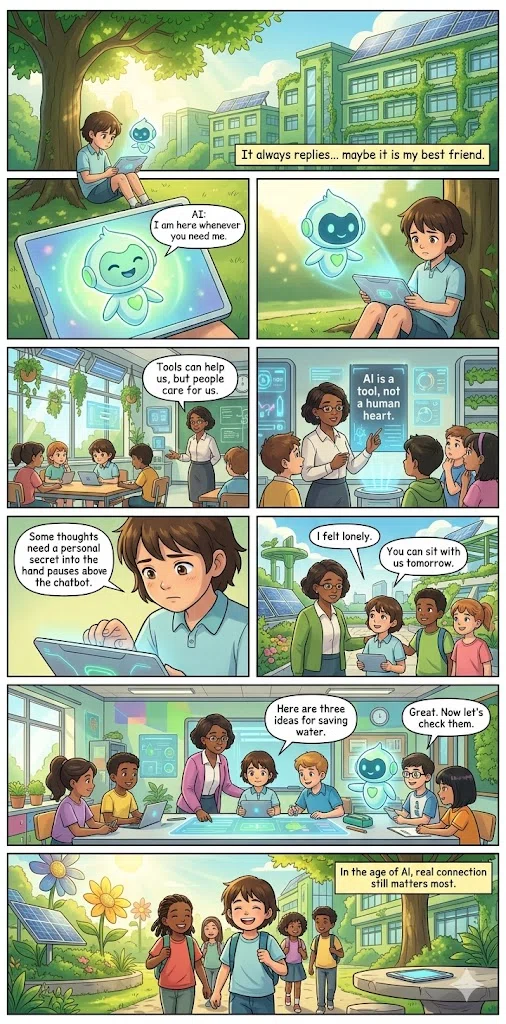
AIチャットボットが、子どもにとって「便利な学習ツール」から「本音を話せる友だち」へ変わり始めている。英国政府は、孤独や人間関係に悩む子どもほど依存しやすいと警告。学校・家庭・社会は、AIとの距離感をどう教えるべきなのか。
Owner:thesun.co.uk
🗞️ タイトル:Urgent warning as kids could become so attached to AI chatbots they start treating them like real-life friends
🕒 日時:2026/06/07
🔗 URL:“https://www.thesun.co.uk/tech/39336311/kids-attached-ai-chatbots-friends-warning/”
🌐 Detailed Summary in English
The article reports a warning from UK ministers that children may become emotionally attached to AI chatbots and begin treating them as real-life friends. The concern is especially focused on vulnerable pupils who struggle with social relationships, loneliness, or emotional support. According to Department for Education training materials cited in the report, young people may share personal information with AI systems because chatbots appear responsive, patient, and human-like. However, the guidance stresses that AI systems do not possess genuine understanding, empathy, or safeguarding responsibility, meaning they cannot replace trusted human relationships.
The warning appears within updated government-backed AI guidance for schools and colleges. Teachers are being encouraged to use AI for practical educational purposes, such as creating lesson plans, adapting materials for pupils with special educational needs and disabilities, generating classroom resources, and reducing administrative workloads. At the same time, the government is drawing a line between AI as a support tool and AI as an emotional substitute for real people.
The article also refers to the UK government’s plan to introduce AI tutors to support up to 450,000 disadvantaged children. Education Minister Olivia Bailey says the rollout will involve safeguards, parental and expert consultation, independent safety checks, and classroom trials no earlier than 2027. Critics argue that relying on untested technology in children’s education may create developmental risks. The wider issue is not simply whether AI can help children learn, but whether schools and parents can prevent children from confusing automated conversation with genuine care, friendship, and emotional protection.
🌐 詳しい日本語要約
この記事は、英国政府が学校関係者に対して、子どもがAIチャットボットに強い感情的な愛着を持ち、現実の友人のように扱い始める危険性を警告している、という内容です。特に問題視されているのは、人間関係が苦手な子ども、孤独を感じている子ども、家庭や学校で安心して本音を話せる相手が少ない子どもです。AIはいつでも返事をしてくれ、否定せず、親しげな言葉を返すため、子どもにとっては「自分を理解してくれる存在」に見えやすい。しかし、教育省の研修資料は、AIには本当の理解力や共感、子どもを守る責任がないと指摘しています。つまり、AIは会話を生成できても、人間のように子どもの危険サインを読み取り、責任を持って見守る存在ではありません。
一方で、英国政府はAIの教育利用そのものを否定しているわけではありません。教師の授業計画作成、特別な支援を必要とする児童生徒向け教材の調整、学習資料の作成、事務作業の軽減など、AIは学校現場の負担を減らす道具として期待されています。記事の核心は、「AIを使うか使わないか」ではなく、「AIを教師・親・友人・相談相手の代わりにしてよいのか」という線引きにあります。
また、英国政府は最大45万人の不利な立場にある子どもたちを支援するため、AIチューターの導入を計画しています。教育担当のOlivia Bailey氏は、保護者や専門家との協議、独立した安全確認、2027年以降の教室実証などを行うと説明しています。ただし、野党側からは、発達段階にある子どもに対して、十分に検証されていないAI技術を使うことへの懸念も出ています。
この問題は、単なるテクノロジーの話ではなく、子どもの孤独、学校の人手不足、家庭での会話、オンライン安全規制、AI企業の責任が重なった社会問題です。AIは便利な学習補助になる可能性がありますが、子どもが「AIは自分を本当に理解している」と思い込むと、現実の人間関係から離れたり、個人情報や悩みを過剰に打ち明けたりするリスクがあります。だからこそ、学校や家庭では、AIを「相談できる道具」ではなく「答えを作る機械」として理解させるAIリテラシーが必要になります。
📚 CEFR B1以上の重要語彙12語
attachment
日本語訳:愛着、強い結びつき
Children may form an emotional attachment to AI chatbots.vulnerable
日本語訳:傷つきやすい、弱い立場の
Vulnerable pupils need support from trusted adults.empathy
日本語訳:共感
AI can imitate empathy, but it does not truly feel it.safeguarding
日本語訳:保護、安全確保
Schools have a safeguarding duty toward children.guidance
日本語訳:指導、ガイダンス
The government published new guidance for teachers.concern
日本語訳:懸念
There is growing concern about children using AI companions.relationship
日本語訳:関係、人間関係
Real relationships help children develop social skills.personal information
日本語訳:個人情報
Children should not share personal information with chatbots.responsibility
日本語訳:責任
AI systems do not have human responsibility.independent
日本語訳:独立した
Independent safety checks are important before classroom trials.developmental
日本語訳:発達上の
Experts worry about developmental risks for young users.regulation
日本語訳:規制
AI regulation is becoming a major issue for governments.
📺 外部参照情報
YouTube関連動画
People Are Falling In Love With AI Chatbots. What Could Go Wrong?
AIコンパニオンとの感情的関係を扱う関連動画です。
Reddit(USA)関連トピック
AI friend for your kids? : r/Parenting
子どもにAIの“友だち”を与えることへの親の不安や意見が投稿されています。
🗺️ 地名・人名・キーワード調査
地名
United Kingdom
英国は、イングランド、スコットランド、ウェールズ、北アイルランドから成る国で、教育政策やオンライン安全規制において政府主導の議論が活発です。今回の記事も、英国の学校・家庭・AI規制をめぐる政策論争の一部です。
England
英国の教育行政の中心的な舞台であり、Department for Educationの学校向け方針が大きな影響を持ちます。AIチューターや学校での生成AI活用も、まず教育現場での試行と安全確認が焦点になります。
人物名
Olivia Bailey
英国の教育担当大臣として記事に登場。AIチューター導入について、保護者・専門家との協議、独立した安全チェック、2027年以降の教室試行を行うと説明しています。
Liz Kendall
英国政府のテクノロジー・オンライン安全関連の議論で名前が出ている政治家。以前の報道では、子どものオンライン生活全体をより安全にするため、AIチャットボットやSNS利用を含む規制の検討に関わっています。
主要キーワード
AI chatbot
人間のように会話するAIシステム。学習支援、相談、雑談などに使われますが、子どもが本物の友人や大人の相談相手と混同するリスクがあります。
AI tutor
学習支援に特化したAI。個別最適化された説明や練習問題を提供できる一方、教育的正確性、安全性、個人情報保護、教師の監督が重要になります。
🌏 日本・米国の比較情報
Japan / 日本
English: Japan is also promoting generative AI use in schools, but the Ministry of Education has emphasized appropriate and careful use through its guidelines for elementary and secondary education. In 2026, Japan continued pilot projects and practical case development for school and administrative AI use, while stressing that schools should follow the national generative AI guidelines.
日本語: 日本でも学校現場での生成AI活用は進んでいます。文部科学省は、初等中等教育段階での生成AI利用に関するガイドラインを示し、2026年度もパイロット校や自治体での実践・検証を進めています。ただし、児童生徒の個人情報、学習への影響、教師のAIリテラシー、安全な使い方が重視されています。
United States / 米国
English: In the United States, child online privacy is mainly governed by COPPA, which imposes requirements on online services directed to children under 13 or services that knowingly collect personal information from them. Recent research also found that popular chatbots may be able to infer a user’s age but often do not take action when children are identified, raising questions about whether current age-gating systems are enough.
日本語: 米国では、13歳未満の子どものオンライン個人情報を保護するCOPPAが重要な法律です。一方で、2026年の研究では、チャットボットが会話から年齢を推定できるにもかかわらず、子どもだと分かっても十分な対応をしないケースがあると指摘されています。つまり、米国でも「年齢確認」「保護者同意」「AI企業の責任」が大きな論点になっています。
💭 応用・ディスカッション展開
テーマ1:Can AI chatbots be real friends for children?
AI chatbots can feel friendly, supportive, and emotionally available, but they should not be considered real friends for children. A real friendship includes mutual care, shared experience, responsibility, and emotional growth on both sides. A chatbot can produce comforting words, remember details, and respond immediately, but it does not truly understand a child’s life or feel concern. This difference matters because children are still developing their ability to judge relationships, trust, and social boundaries.
However, this does not mean AI has no positive role. A carefully designed chatbot may help a child practice language, ask questions without embarrassment, or review schoolwork. For shy children, AI might even provide a low-pressure space to rehearse social situations. The danger begins when AI becomes a substitute for human connection rather than a bridge toward it.
Parents and teachers should teach children that AI is a tool, not a person. They can explain that a chatbot may sound kind, but it does not have feelings, responsibility, or real-life knowledge of the child’s situation. Children should also be encouraged to talk to trusted adults when they feel lonely, unsafe, or confused.
In my view, AI can be a useful assistant, but it cannot be a real friend. The goal should not be to ban all AI interactions, but to build clear boundaries: use AI for learning and creativity, while protecting human relationships as the center of children’s emotional development.
テーマ2:Should schools use AI tutors?
Schools should use AI tutors carefully, but only under strong human supervision. AI tutors may help students receive more personalized explanations, especially in classrooms where teachers have limited time. They can provide extra practice, explain difficult concepts in simpler language, and adapt materials for students with different learning needs. For disadvantaged students, this could reduce educational gaps if the technology is accurate, accessible, and safe.
At the same time, AI tutors are not teachers. A teacher understands classroom mood, emotional changes, family context, motivation, and social behavior. AI systems may give wrong answers, oversimplify complex topics, or fail to notice when a child is distressed. They may also collect sensitive data, which creates privacy concerns. Because children often trust digital tools, schools must be careful not to present AI as an authority that is always correct.
The best model is “AI with teachers,” not “AI instead of teachers.” Teachers should choose when and how AI is used, review its outputs, and explain its limits to students. Schools also need clear rules about data protection, age-appropriate content, emotional safety, and parental communication.
In conclusion, AI tutors can be valuable if they support human teaching. They should reduce teacher workload and expand learning opportunities, but they must not replace professional judgment, pastoral care, or real classroom relationships.
テーマ3:How should parents teach children healthy AI boundaries?
Parents should teach AI boundaries in the same way they teach road safety or social media safety: calmly, repeatedly, and practically. Children do not need fear-based messages, but they do need clear rules. The first rule is that AI is not a human friend. It can answer questions and generate ideas, but it does not love, worry, or take responsibility for them. This simple distinction helps children avoid emotional confusion.
The second rule is privacy. Children should not share their full name, address, school, passwords, private photos, family problems, or secrets with chatbots. Parents can explain that AI conversations may be stored, reviewed, or used in ways children do not fully understand. This is especially important because children may feel safer talking to a bot than to an adult.
The third rule is escalation. If a child feels sad, scared, bullied, lonely, or pressured, they should talk to a trusted adult, not only to AI. Parents can create a “three-person safety circle,” such as a parent, teacher, and relative, so the child knows exactly who to approach.
Finally, parents should model healthy use. Instead of saying “AI is bad,” they can show how to use it for homework planning, creative writing, or language learning while checking facts and keeping emotional distance. Healthy AI use means curiosity with boundaries. Children should learn that technology can help them, but it should never replace the people who care for them.
🏷️ 記事の背景
English:
UK schools are adopting AI tools, while officials worry that lonely or vulnerable children may confuse chatbot responses with real friendship.
日本語:
英国では学校でのAI活用が進む一方、孤独や悩みを抱える子どもがAIを本物の友人のように感じる危険が問題化している。
🏷️ ハッシュタグ
#AI教育 #生成AI #チャットボット #子どもの安全 #オンライン安全 #デジタル教育 #学校教育 #教育ニュース #AIリテラシー #子育て #保護者 #教師 #孤独対策 #メンタルヘルス #個人情報保護 #英国ニュース #テクノロジー #学習支援 #SNS問題 #未来の教育 #AIEducation #GenerativeAI #Chatbots #ChildSafety #OnlineSafety #DigitalLearning #EdTech #AILiteracy #Parenting #Teachers #MentalHealth #Privacy #UKNews #AITutors #HumanConnection #TechEthics #教育 #英会話 #習い事
↓👍イイネを押してもらえると嬉しいです
😂 語彙ダジャレ記憶法
attachment(アタッチメント)=愛着
「会った瞬間に“アタッ!”と心がくっつく、これがattachment」vulnerable(ヴァルナラブル)=傷つきやすい
「バルーン並みに割れやすい心、vulnerable」empathy(エンパシー)=共感
「えんぱしー?“ええん、わかるよ”がempathy」safeguarding(セーフガーディング)=保護
「安全の庭でガードする、safe + guarding」guidance(ガイダンス)=指導
「ガイドさんの案内だからguidance」concern(コンサーン)=懸念
「今晩サーンと不安が来る、それがconcern」relationship(リレーションシップ)=関係
「リレーでつなぐ人とのship、relationship」personal information(パーソナル・インフォメーション)=個人情報
「パーソナルな情報は、パーッと出さない」responsibility(レスポンシビリティ)=責任
「レスポンスに責任を持つ、それがresponsibility」independent(インディペンデント)=独立した
「インドでペンを持って一人立ち、independent」developmental(ディベロップメンタル)=発達上の
「でべそも成長、developする発達の話」regulation(レギュレーション)=規制
「ルールをレギュラー化するのがregulation」
