
【skysports.com】追いつく国、日本。鎌田の89分が世界を黙らせた夜

勝ち切る強豪オランダ、諦めない日本。W杯初戦は、2度リードされた日本が終盤に追いつく劇的ドローへ。鎌田大地の同点弾は、ただの1点ではなく「日本は世界で戦える」という空気を変える一撃だった。
Owner: skysports.com
タイトル: World Cup 2026: Netherlands 2-2 Japan - Daichi Kamada's 89th-minute equaliser denies the Dutch in Dallas
日時: 2026/06/14
URL: “https://www.skysports.com/football/news/11095/13552697/world-cup-2026-netherlands-2-2-japan-daichi-kamadas-89th-minute-equaliser-denies-the-dutch-in-dallas”
🧩 英語要約
Japan began their 2026 World Cup campaign with a dramatic 2-2 draw against the Netherlands in Dallas. The first half was relatively quiet, but the match exploded after the interval. Virgil van Dijk put the Dutch ahead with a header from Ryan Gravenberch’s cross, only for Keito Nakamura to equalise seven minutes later with a low shot that deflected off Jan Paul van Hecke. Crysencio Summerville then restored the Netherlands’ lead with a curling left-footed finish, appearing to give Ronald Koeman’s side control. However, Japan refused to disappear. In the final minutes, Koki Ogawa’s header deflected off Daichi Kamada and forced Bart Verbruggen into an awkward parry, sending the ball into the net for Japan’s late equaliser. Sky Sports framed the result as both a sign of Japan’s resilience and a warning about their slow start: Japan produced their best football only after falling behind. The article also criticised the Netherlands for becoming too cautious, especially after Nathan Ake replaced Ryan Gravenberch in the 81st minute. Roy Keane suggested the Dutch still looked more threatening overall, but he also praised Japan for hanging in. For both teams, the result was valuable but imperfect: Japan showed mentality, while the Netherlands showed quality without game management.
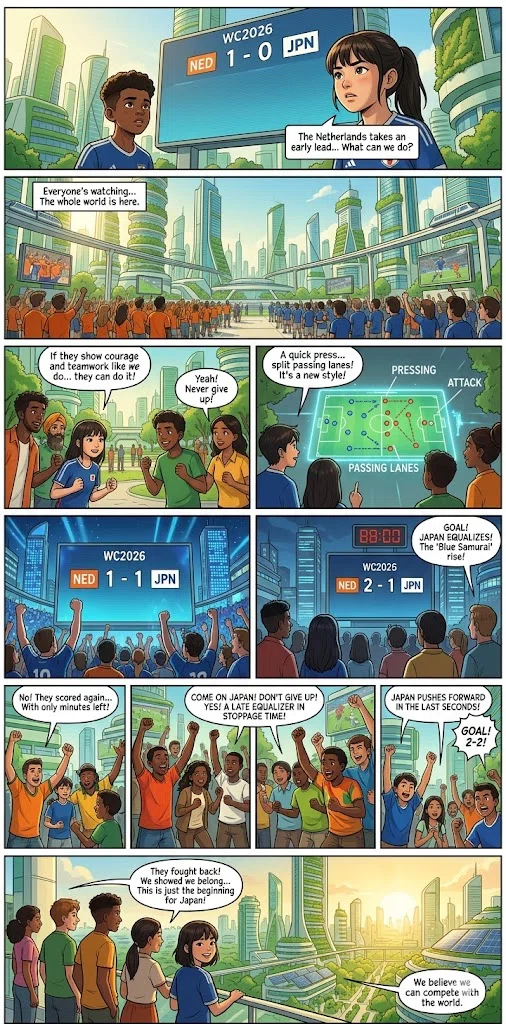
🧩 日本語要約
2026年ワールドカップ・グループF初戦、オランダ対日本は2-2の引き分けに終わった。舞台は米国テキサス州アーリントン近郊のダラス・スタジアム。前半は両チームとも慎重な入りとなり、大きな決定機は少なかったが、後半に入ると試合は一気に激しさを増した。51分、オランダはライアン・フラーフェンベルフのクロスから、主将フィルジル・ファン・ダイクがヘディングで先制。高さと経験を生かした、いかにもオランダらしい得点だった。
日本は苦しい展開に追い込まれたが、すぐに反撃する。57分、中村敬斗が低いシュートを放つと、ボールは相手DFヤン・ポール・ファンヘッケに当たってコースが変わり、ゴールへ。日本が短時間で同点に追いついた。この場面は、日本がリードされた後にようやく攻撃のテンポを上げ、自分たちのリズムを取り戻した象徴的なシーンだった。
しかし64分、オランダはクリセンシオ・サマーフィルが左足で美しいカーブシュートを決め、再び勝ち越しに成功する。オランダがこのまま試合を締めるかに見えたが、日本は最後まで諦めなかった。89分、ゴール前の混戦から小川航基のヘディングが鎌田大地に当たり、GKバルト・フェルブルッヘンが処理し切れず、ボールはネットへ。土壇場で日本が2度目の同点に追いつき、貴重な勝ち点1を手にした。
Sky Sportsは、日本が三笘薫を負傷で欠きながらも高い期待を集めるチームだと紹介している。一方で、日本は失点してから攻撃的になる傾向があり、より上位進出を狙うなら、試合開始から自信を持って主導権を取りに行く必要があるとも指摘した。オランダ側にも課題は残る。81分にフラーフェンベルフを下げ、ネイサン・アケを投入した守備的な交代は、結果的に日本の圧力を強める流れを生んだと分析されている。
日本にとってこの引き分けは、単なる勝ち点1以上の意味を持つ。欧州の強豪を相手に2度追いついた粘り強さは、チームの精神力と成長を示した。一方で、最初から自分たちのサッカーを出し切れなかった点は今後の課題である。オランダにとっては勝てた試合を逃した悔しいドロー、日本にとっては世界と戦える手応えを得た価値あるドロー。両チームの可能性と弱点が同時に見えた、グループFの行方を占う象徴的な初戦となった。
🧩 CEFR B1以上の重要語彙 12語
🧩 01|equaliser
日本語訳:同点ゴール
Example: Kamada scored a late equaliser for Japan.
🧩 02|secure
日本語訳:確保する
Example: Japan secured one point with a dramatic draw.
🧩 03|deflect
日本語訳:方向が変わる、当たってそれる
Example: The shot deflected off a defender.
🧩04|curl
日本語訳:カーブをかける
Example: Summerville curled the ball into the far corner.
🧩05|parry
日本語訳:はじく、受け流す
Example: The goalkeeper tried to parry the ball away.
🧩06|advantage
日本語訳:優位、リード
Example: The Netherlands failed to protect their advantage.
🧩07|pressure
日本語訳:圧力、プレッシャー
Example: Japan created pressure in the final minutes.
🧩08|mentality
日本語訳:精神力、考え方
Example: Japan showed strong mentality after falling behind.
🧩09|resilience
日本語訳:粘り強さ、回復力
Example: The result showed Japan’s resilience.
🧩10|tactical
日本語訳:戦術的な
Example: The coach made a tactical change late in the game.
🧩11|substitution
日本語訳:選手交代
Example: A late substitution changed the rhythm of the match.
🧩12|contender
日本語訳:優勝候補、競争相手
Example: The Dutch are still seen as serious contenders.
🧩 外部参照情報
🧩 01|YouTube関連動画
Netherlands vs Japan Highlights 2026 FIFA World Cup™
🧩 02|Reddit(USA)関連トピック
Post Match Thread: Netherlands 2 - 2 Japan | FIFA World Cup 2026 | Group Stage, Group F
🧩 地名・人名・キーワード調査
🧩 記事内の地名
Dallas / Arlington
試合会場は記事上ではDallas Stadium、所在地は米国テキサス州アーリントン。FIFAによると、ダラス会場は2026年W杯で9試合を開催する予定の重要会場である。
Netherlands / オランダ
ヨーロッパ北西部の国。サッカーでは「Oranje」と呼ばれる代表チームで知られ、堅守とテクニックを兼ね備えた強豪国として長い歴史を持つ。
Japan / 日本
SAMURAI BLUEとして知られる日本代表は、2026年W杯メンバーに鎌田大地、中村敬斗、小川航基、久保建英、鈴木彩艶らを招集している。
🧩 記事に登場する人物名
鎌田大地 / Daichi Kamada
日本代表のMF/FW。終盤の同点弾に関わり、日本に勝ち点1をもたらした中心人物。JFAの2026年W杯招集選手一覧にも掲載されている。
中村敬斗 / Keito Nakamura
日本代表の攻撃的選手。57分に日本の1点目を決め、オランダの先制をすぐに帳消しにした。
フィルジル・ファン・ダイク / Virgil van Dijk
オランダ代表の守備の柱。51分にヘディングで先制点を奪い、オランダの試合運びを一時優位にした。
クリセンシオ・サマーフィル / Crysencio Summerville
オランダ代表のアタッカー。64分に左足のカーブシュートで勝ち越し点を決めたが、チームは終盤に追いつかれた。
ロナルド・クーマン / Ronald Koeman
オランダ代表監督。終盤に守備的な交代を行ったが、その判断が日本の反撃を招いたと記事内で分析されている。
🧩 その他の主要キーワード
Group F
日本、オランダ、スウェーデン、チュニジアが関わるグループ。初戦で日本とオランダが勝ち点1を分け合ったため、序盤から混戦の可能性が高まった。
2026 FIFA World Cup
2026年大会はカナダ、メキシコ、米国の3か国共催で、48チーム制として初めて行われるワールドカップである。
🧩 日本・米国の比較情報
🧩 01|Japan / 日本
English:
Japan enters the 2026 World Cup as an ambitious challenger. The squad includes many internationally experienced players, such as Kamada, Nakamura, Kubo, Suzuki, and Ogawa, showing how Japanese football has become more global and competitive. The draw with the Netherlands reflects both progress and a remaining challenge: Japan can fight back against elite teams, but must start games with more confidence.
日本語:
日本は2026年W杯で「挑戦者」から「勝ち上がりを狙う現実的なチーム」へと進化している。JFAの招集リストには鎌田、中村、久保、鈴木、小川らが入り、海外経験を持つ選手層の厚さが目立つ。オランダ戦の引き分けは、日本の粘り強さを示す一方で、序盤から主導権を握る勇気が課題であることも示した。
🧩 02|United States / 米国
English:
The United States is not only a host country but also a central stage for the 2026 World Cup. The U.S. men’s national team automatically qualified as a host, and the expanded 48-team format gives the tournament a broader global scale. Hosting matches in major U.S. cities also reflects the country’s growing soccer culture.
日本語:
米国は2026年W杯の主要開催国であり、男子代表は開催国枠で自動出場している。大会は48チーム制に拡大され、米国の複数都市が世界中のサポーターを受け入れる舞台となる。サッカー人気が拡大する米国にとって、2026年大会はスポーツ文化をさらに広げる大きな機会である。
🧩 応用・ディスカッション展開
🧩 01|Theme 1: Why does Japan often perform better after falling behind?
Japan’s draw against the Netherlands raises an interesting question: why did the team look more dangerous only after conceding? One possible answer is mentality. When Japan falls behind, the players no longer have the option of being cautious. They must attack, take risks, and trust their technical ability. Against the Netherlands, Japan’s best moments came after each Dutch goal. Nakamura’s equaliser arrived quickly after Van Dijk’s opener, and Kamada’s late goal came when Japan had no choice but to push forward. This suggests that Japan has the quality to challenge elite teams, but the team may still hesitate to take control from the beginning. Another factor is tactical balance. Starting carefully can protect the team from early mistakes, especially against strong opponents. However, too much caution can also give the opponent control of the rhythm. The lesson is not that Japan should play recklessly, but that confidence matters. If Japan can combine defensive discipline with proactive attacking from the first minute, they may become more than a resilient underdog. They could become a team that controls matches, not just survives them.
🧩 02|Theme 2: Did the Netherlands lose control because they became too defensive?
The Netherlands had enough quality to win this match, but game management became the key problem. After taking a 2-1 lead, the Dutch appeared to move toward protecting the result rather than extending it. The substitution of Nathan Ake for Ryan Gravenberch in the 81st minute symbolised that shift. On paper, adding a defender can make sense when a team is leading late in a World Cup match. In reality, it can invite pressure if the team loses its ability to keep the ball and threaten on the counterattack. Japan sensed that the Netherlands were becoming less aggressive and pushed forward. This is a common football dilemma: should a team protect a lead or continue attacking? The safest-looking choice is not always the safest in practice. If a team defends too deep, every cross, corner, and second ball becomes dangerous. The Dutch still showed technical quality through Van Dijk, Gravenberch, and Summerville, but their late caution allowed Japan back into the game. For a team with ambitions to go deep in the tournament, that is a serious warning.
🧩 03|Theme 3: What does this result mean for Asian football?
Japan’s 2-2 draw with the Netherlands is meaningful beyond one group-stage result. It shows that Asian teams can compete with Europe’s traditional powers not only through hard work, but also through technique, tactical maturity, and mental resilience. Japan did not dominate the match, and the Netherlands had long periods of control. Still, Japan answered twice. That matters because international football is often shaped by reputation. European and South American teams are usually expected to control big tournaments, while Asian teams are often treated as outsiders. Results like this challenge that old view. Japan’s squad includes players comfortable in high-level international environments, and their ability to stay calm after conceding suggests a growing belief. However, the match also shows the next step for Asian football. Competing is no longer enough. Japan must learn how to impose its style earlier, create more chances, and avoid needing a crisis to unlock its best football. If Japan can do that, this draw may be remembered not as a lucky escape, but as another sign that the global balance of football is changing.
🧩 記事の背景
🧩 01|English Background
The 2026 World Cup is the first 48-team edition, co-hosted by the USA, Canada, and Mexico, creating a larger and more global tournament stage.
🧩 02|日本語背景
2026年W杯は48チーム制で初開催され、米国・カナダ・メキシコの3か国共催。日本にとっては世界上位との差を測る大会である。
🧩 ハッシュタグ
#サッカー日本代表 #SAMURAIBLUE #鎌田大地 #中村敬斗 #ワールドカップ2026 #W杯2026 #日本代表 #オランダ代表 #グループF #サッカー英語 #英語学習 #スポーツ英語 #海外サッカー #試合分析 #若者とスポーツ #勝ち点1 #劇的同点弾 #ダラス #フットボール #粘り強さ
#Japan #Netherlands #WorldCup2026 #FIFAWorldCup #DaichiKamada #KeitoNakamura #Football #Soccer #GroupF #Dallas #SamuraiBlue #MatchReport #SportsEnglish #FootballAnalysis #Resilience #Equaliser
#教育 #英会話 #習い事
🧩↓👍イイネを押してもらえると嬉しいです
🧩 語彙ダジャレ記憶
🧩01|equaliser
読み:イコライザー
意味:同点ゴール
ダジャレ:イコールにするザー!だからequaliser=同点弾。
🧩02|secure
読み:セキュア
意味:確保する
ダジャレ:席をキュアっと確保、secure。
🧩03|deflect
読み:ディフレクト
意味:それる
ダジャレ:ディフェンスに触れ苦闘、ボールがdeflect。
🧩04|curl
読み:カール
意味:カーブする
ダジャレ:カールおじさんみたいに曲がる、curl。
🧩05|parry
読み:パリー
意味:はじく
ダジャレ:パリッとはじく、parry。
🧩06|advantage
読み:アドバンテージ
意味:優位
ダジャレ:あと半点で優位、advantage。
🧩07|pressure
読み:プレッシャー
意味:圧力
ダジャレ:プレー中にシャーっと迫る圧、pressure。
🧩08|mentality
読み:メンタリティ
意味:精神力
ダジャレ:メンタルありて勝負する、mentality。
🧩 09|resilience
読み:レジリエンス
意味:粘り強さ
ダジャレ:レジで列でも粘る、resilience。
🧩 10|tactical
読み:タクティカル
意味:戦術的な
ダジャレ:宅地を狩るほど計画的、tactical。
🧩11|substitution
読み:サブスティテューション
意味:選手交代
ダジャレ:サブが出てチューっと流れ変更、substitution。
🧩12|contender
読み:コンテンダー
意味:優勝候補、競争相手
ダジャレ:今度こそ勝てんだー、contender。
