
📰【inewsource】サンディエゴ空港アクセス、空中無人列車が変える都市移動

空港まで電車で行けない大都市、サンディエゴ。渋滞、観光、通勤、税金、環境——その全部をつなぐ答えとして浮上したのが、自動運転の空中ピープルムーバー。車社会の未来を変える都市交通のリアルな議論です。
Owner:inewsource.org
タイトル:San Diego’s airport needs more public transit, officials say. An aerial train might be the multibillion-dollar answer.
📅 日時:2023/08/02
🔗 URL“https://inewsource.org/2023/08/02/san-diego-airport-public-transit-sandag-trolley-people-mover/”
🌐 English Summary
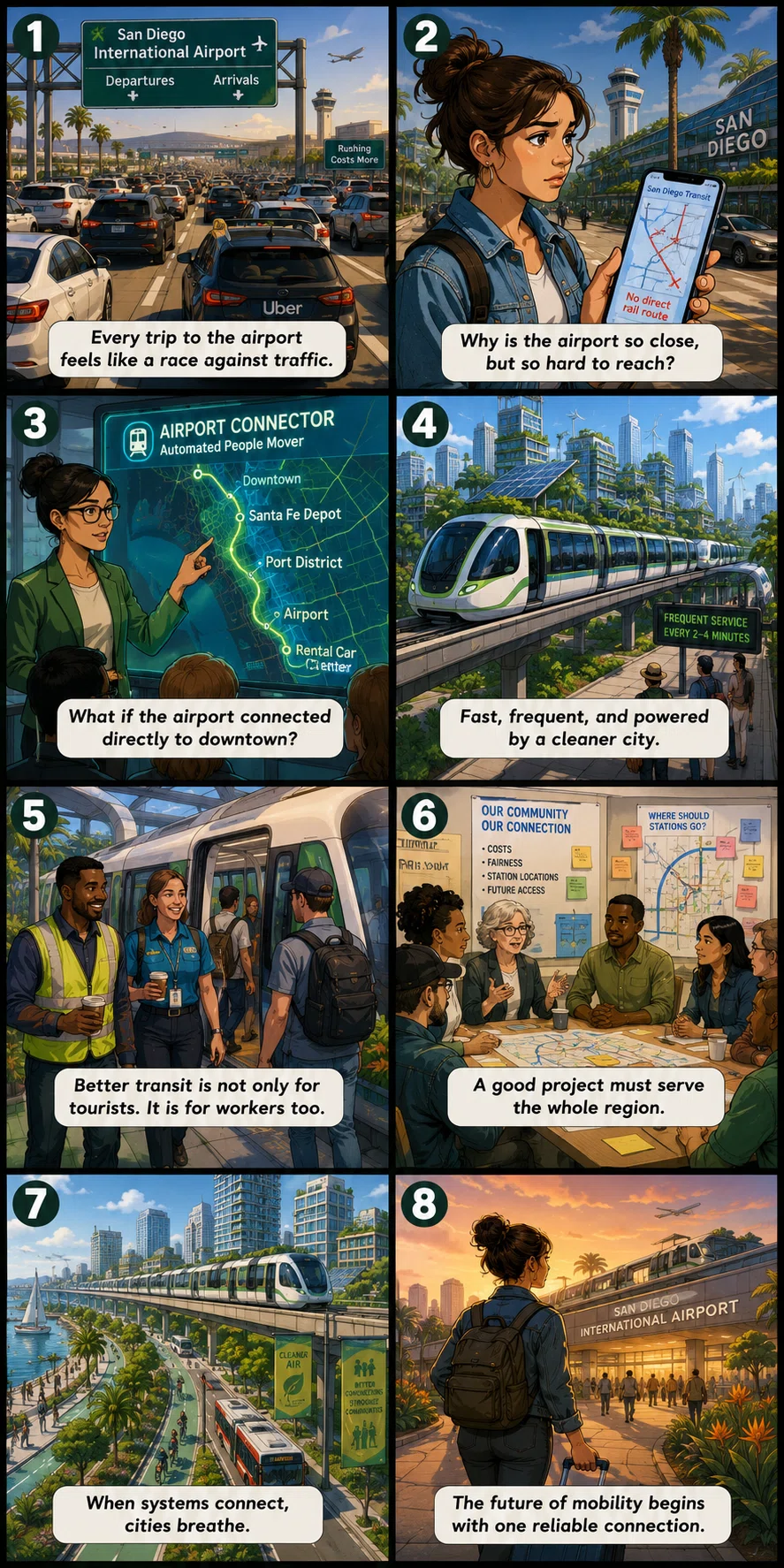
The article reports that the San Diego Association of Governments, known as SANDAG, is moving closer to choosing a major public transit connection for San Diego International Airport. Officials have long argued that the airport lacks efficient transit access, even though it is described as the busiest single-runway airport in the United States and is expected to serve far more passengers in coming decades. A 92-page SANDAG study found that an automated people mover running south of the airport appears to be the most realistic and financially feasible option. The proposed driverless shuttle would operate like a train and could cost between $2.4 billion and $6.3 billion, depending on whether it is built above ground or underground and whether extra stops are added.
The route would be nearly two miles long and could connect Broadway, Santa Fe Depot, the Port of San Diego headquarters, and the airport’s Rental Car Center. Optional stops at the County Administration Center and Harbor Island have also been discussed. SANDAG staff said the people mover could arrive every two to four minutes, potentially reduce airport-area traffic by more than 20%, and serve thousands of people living or working near the stations.
However, funding and fairness remain unresolved. Some board members questioned whether northern county residents would benefit enough, while others argued that airport users and employers should pay much of the cost. The article also notes political uncertainty at SANDAG, including the planned resignation of then-CEO Hasan Ikhrata and past controversy over audits and spending practices.
🌐 日本語要約
この記事は、サンディエゴ国際空港と地域公共交通を結ぶ新たなアクセス計画について報じている。サンディエゴ国際空港は、米国で最も利用者の多い単一滑走路空港とされ、今後数十年でさらに多くの旅客を受け入れる見通しだ。しかし、空港周辺の道路は混雑し、公共交通で空港へ向かう手段は不十分だと長年指摘されてきた。そこで、地域計画機関SANDAGは、空港と市内中心部を結ぶ新しい交通手段として、自動運転の「ピープルムーバー」を有力案として検討している。これは電車のように走る無人シャトルで、空港南側を通る約2マイルのルートが想定されている。
SANDAGの調査では、既存のトロリー延伸や強化型バスも比較されたが、現時点では空中または地下式のピープルムーバーが、現実性と財政面のバランスで最も有望とされた。費用は建設方式や追加駅の有無によって、24億ドルから63億ドルに及ぶ可能性がある。想定ルートには、ブロードウェイ、サンタフェ・デポ、サンディエゴ港本部、空港レンタカーセンターなどが含まれ、郡庁舎やハーバーアイランドへの追加停車も議論されている。運行間隔は2〜4分とされ、空港周辺の交通量を20%以上減らせる可能性も示された。
一方で、課題も多い。資金調達方法は未定であり、完成時期も明確ではない。北部地域の住民に十分な利益があるのか、費用負担は地域全体か空港利用者中心か、といった公平性の議論も起きている。デルマー選出のテリー・ガースターランド氏は、北部地域との接続強化を求め、ラメサ市議のジャック・シュー氏は、空港利用者や雇用主が費用の大きな部分を負担すべきだと主張した。公共交通の整備は、単なる移動手段の問題ではなく、都市の成長、観光、通勤、税負担、環境政策、地域間格差が交差するテーマであることを記事は示している。
📚 CEFR B1以上の重要語彙 12語
public transit
公共交通
Public transit can reduce traffic around busy airports.feasible
実行可能な、現実的な
The people mover was considered the most feasible option.automated
自動化された
An automated train can operate without a driver.congestion
渋滞、混雑
Airport congestion gets worse during holiday seasons.route
経路、路線
The proposed route would connect downtown with the airport.funding
資金調達、財源
Funding is one of the biggest challenges for large transit projects.residents
住民
Local residents want better access to the airport.tourists
観光客
Tourists often prefer simple and reliable airport transportation.estimate
見積もり、推定
The cost estimate depends on whether the system is elevated or underground.environmental review
環境審査
The project must go through an environmental review before construction.regional
地域の、広域の
SANDAG is responsible for regional transportation planning.shuttle
シャトル、短距離連絡交通
A driverless shuttle could arrive every few minutes.
📺 外部参照情報
YouTube関連動画:
SANDAG Board of Directors - July 28, 2023
記事内で言及されたSANDAGのスタッフ説明に関連する会議動画です。
Reddit(USA)関連トピック:
Airport Transit Connection: People Mover > Trolley Branch
r/sandiegoで、ピープルムーバー案とトロリー分岐案の利点・懸念が議論されています。
🗺️ 地名・人名・キーワード調査
地名
San Diego / サンディエゴ
米カリフォルニア州南部の海沿いの都市で、メキシコ国境に近く、観光、軍事、港湾、バイオ産業が発達している。温暖な気候とビーチ文化で知られる一方、都市圏の移動は車に依存しやすく、空港アクセス改善は長年の課題になっている。
Santa Fe Depot / サンタフェ・デポ
サンディエゴ中心部にある歴史的な鉄道駅で、空港アクセス案の重要な接続点として記事に登場する。アムトラック、地域鉄道、トロリーとの結節点になり得るため、空港と都市中心部をつなぐ交通ハブとして注目されている。
人物名
Crystal Niebla
この記事の記者。inewsourceでサウスベイ地域、インフラ、行政説明責任を中心に取材している。2022年6月にinewsourceへ加わり、Report for Americaの支援も受けていると紹介されている。
Ryan Kohut
SANDAGの戦略プロジェクト担当ディレクター。記事では、空港アクセス問題が悪化する前に重要プロジェクトを前進させる好機だと述べている。
Hasan Ikhrata
当時のSANDAG CEO。2018年から同機関を率い、公共交通拡張を推進した一方、走行距離課金案や内部監査をめぐる批判にも直面し、記事では2023年末に辞任予定と報じられている。
主要キーワード
Automated People Mover / 自動運転ピープルムーバー
空港、駅、駐車場、都市中心部などを短距離・高頻度で結ぶ無人交通システム。サンディエゴ案では2〜4分間隔の運行が想定され、乗客の待ち時間短縮と道路混雑の軽減が期待されている。
SANDAG
San Diego Association of Governmentsの略。サンディエゴ地域の交通・都市計画を担う広域機関。現在の公式プロジェクトページでも、空港と地域交通網を直接結ぶAirport Transit Connectionを進める方針が示されている。
🌏 日本・米国の比較情報
United States / 米国側
In San Diego, the airport transit debate is still about how to create a direct, reliable link between the airport and the broader regional transit network. SANDAG’s current Airport Transit Connection page says the project aims to connect San Diego International Airport with Rapid buses, shuttles, regional rail, Trolley service, and walking and biking improvements. It also notes near- and mid-term options such as improving MTS Route 992, the San Diego Flyer, and possible bus-priority lanes, while longer-term rail concepts are still being refined through planning expected to conclude in mid-2026.
米国側では、サンディエゴの空港アクセスはまだ「どの方式で地域交通網と直結させるか」という段階にある。SANDAGの公式ページでは、既存バス、シャトル、地域鉄道、トロリー、自転車・徒歩環境を組み合わせた接続改善が示され、短中期ではバス強化や専用レーン、長期では鉄道接続の検討が続いている。計画の絞り込みは2026年半ばに完了予定とされている。
Japan / 日本側
Japan’s major urban airports tend to have stronger rail access than San Diego currently does. Haneda Airport is directly connected to both the Keikyu Line and Tokyo Monorail, with listed travel times of about 15 minutes to Shinagawa and about 20 minutes to Hamamatsucho. JR East is also promoting the Haneda Airport Access Line concept to enable more direct access from multiple directions by using the Tokyo metropolitan rail network.
日本では、主要都市空港への鉄道アクセスが比較的整っている。羽田空港は京急線と東京モノレールに直結しており、羽田から品川までは約15分、浜松町までは約20分と案内されている。さらにJR東日本は、首都圏鉄道網を活用して複数方面から羽田へ直接アクセスできる羽田空港アクセス線構想を進めている。
💭 応用・ディスカッション展開
Theme 1: Should cities prioritize airport rail over road expansion?
A strong argument can be made that cities should prioritize airport rail or high-quality transit over simply expanding roads. Airports create predictable and concentrated travel demand: passengers, airport workers, airline staff, hotel employees, taxi drivers, and tourists all need to reach the same limited area every day. When most of those trips depend on private cars or ride-hailing vehicles, congestion becomes almost unavoidable. Road expansion may offer temporary relief, but it often encourages more driving and eventually fills up again.
Airport rail, by contrast, can give people a reliable alternative. The value is not only environmental; it is also practical. Travelers care about predictability. A train or automated people mover that arrives every few minutes can reduce the stress of missing a flight because of traffic. It can also help airport employees who may not be able to afford parking or ride-hailing costs every day. In this sense, airport transit is not just a tourist amenity but also a labor and equity issue.
However, cities should not build rail only for prestige. A project must connect to useful destinations, operate frequently, be easy to understand, and integrate fares and luggage-friendly design. A poorly connected airport train can become an expensive symbol rather than a useful service. Therefore, the best policy is not simply “rail instead of roads,” but “reliable, frequent, integrated transit before more car dependency.” San Diego’s debate shows that the real challenge is choosing a system that serves both visitors and residents over the long term.
Theme 2: Who should pay for expensive airport transit projects?
The question of who should pay for airport transit is difficult because the benefits are shared, but not equally. Airport passengers clearly benefit from faster and more predictable access. Airlines, airport employers, hotels, convention centers, and tourism businesses also benefit because a better connection makes the region easier to visit and work in. Local residents benefit too, especially if the project reduces traffic, improves air quality, and creates better links to jobs. Because the benefits are distributed, the funding should probably be distributed as well.
One reasonable model is a mixed funding approach. Airport authorities could contribute because the project directly improves airport operations. Regional transportation agencies could seek state and federal grants because airport access is part of a larger mobility network. Local tax revenue might also be justified if the system improves everyday transit for residents, not just travelers. Employers and developers near stations might contribute through special assessment districts if property values or business activity increase.
Still, fairness matters. People who rarely fly should not carry most of the cost for a system designed mainly for air travelers. At the same time, charging only airport users could make the project politically weaker and financially unstable. The most defensible approach is to match funding sources to benefits. If a station serves workers and neighborhoods, public funds make sense. If airport operations gain major advantages, airport revenues should play a larger role. Transparency is essential: voters need to know who pays, who benefits, and what happens if costs rise.
Theme 3: How can transit projects avoid leaving some communities behind?
Large transit projects often promise regional benefits, but the actual gains can be uneven. A new airport connector may help downtown travelers, tourists, and workers near selected stations, while residents in farther neighborhoods may see little direct improvement. This is why equity must be built into the planning process from the beginning, not added later as a slogan. The key question is not only “Does the project reduce traffic?” but also “Whose trips become easier, cheaper, and more reliable?”
One way to avoid exclusion is to design the project as part of a network rather than a single line. If the people mover connects smoothly to commuter rail, buses, trolleys, bike routes, and pedestrian paths, more communities can benefit. Timed transfers, clear signs, affordable fares, and luggage-friendly station design all matter. A fast airport train is less useful if the first or last mile remains inconvenient.
Another strategy is to compare alternatives using equity metrics, not only ridership and cost. Planners can measure whether low-income workers, airport employees, seniors, students, and car-free households gain better access. Public meetings should also be held in multiple neighborhoods and languages so that the loudest or wealthiest groups do not dominate the conversation.
Finally, cities should be honest about trade-offs. No single project can serve everyone equally. But a project can be fairer if it improves the wider network, protects vulnerable communities from displacement, and includes future extensions. In San Diego’s case, concerns from northern county representatives show why regional trust is as important as engineering.
🏷️ 記事の背景
English
San Diego has debated airport transit for decades as passenger growth, road congestion, and climate goals pressure leaders to reduce car dependence.
日本語
サンディエゴでは長年、空港と鉄道網の接続が課題だった。旅客増加、道路混雑、環境対策、地域間公平性が重なり、新交通案が再び注目されている。
🏷️ ハッシュタグ
#サンディエゴ #空港アクセス #公共交通 #都市計画 #交通インフラ #自動運転 #ピープルムーバー #トロリー #渋滞対策 #脱車社会 #観光交通 #地域政策 #環境レビュー #SANDAG #カリフォルニア #海外ニュース #英語学習 #ニュース英語 #社会問題 #未来の移動 #SanDiego #AirportTransit #PublicTransit #UrbanPlanning #Infrastructure #PeopleMover #TransitEquity #Mobility #SANDAG #California #TrafficRelief #SustainableTransport #AirportRail #CivicPolicy #NewsEnglish #TransitPlanning #教育 #英会話 #習い事
↓👍イイネを押してもらえると嬉しいです
