📰 【wikipedia.org】木版印刷がひらいた“情報の量産革命”

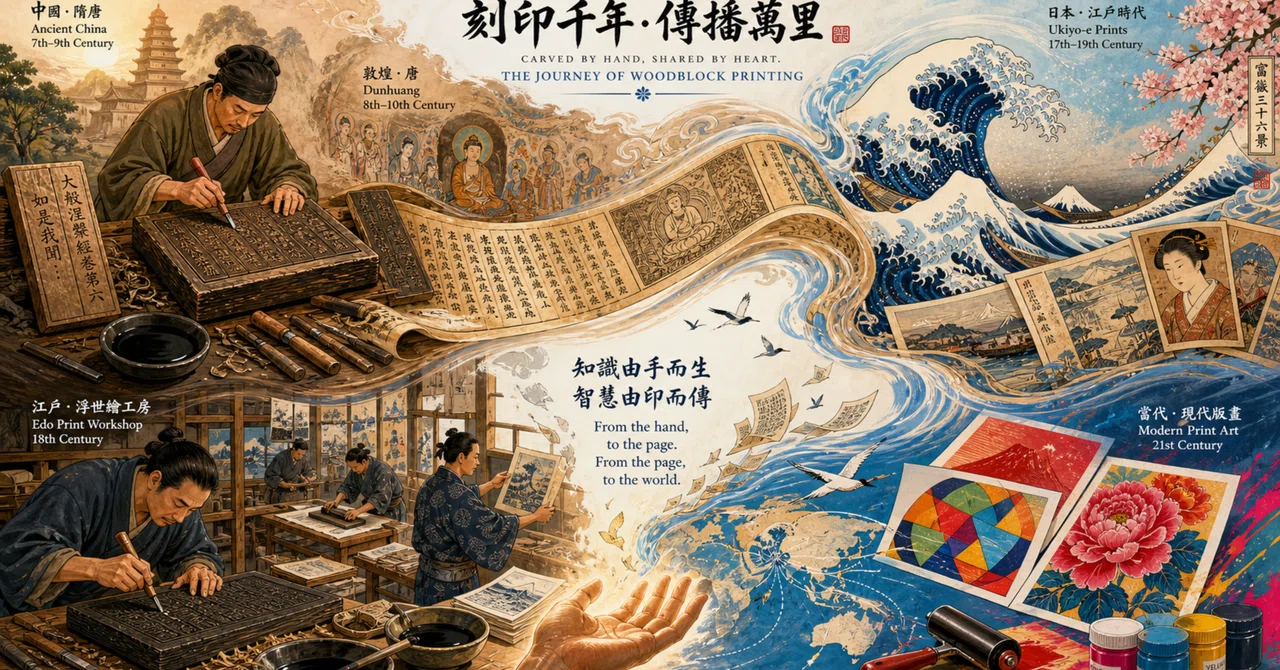
版木を彫り、紙や布へ刷る。たったそれだけの技術が、宗教、学び、アート、広告、出版の未来を変えた。木版印刷の歴史は、いまのSNSやデジタル複製にもつながる「情報を届ける力」の原点だ。
Owner:wikipedia.org
タイトル: Woodblock printing
日時:2005/03/18
URL: “https://en.wikipedia.org/wiki/Woodblock_printing”
🌐 Detailed Summary in English
Woodblock printing, also called block printing, is a relief-printing technique in which text, images, or patterns are carved into a wooden block. Ink is applied to the raised surfaces, and the design is transferred onto cloth or paper. The method originated in ancient China and became widely used across East Asia, especially for religious texts, books, images, and later commercial publishing. The earliest surviving examples on cloth from China date to before 220 CE, while paper-based woodblock printing was established in Tang China by the 7th century. The famous Diamond Sutra, printed in 868 CE, is considered the world’s earliest printed text with a secure date of production.
The article shows that Buddhism played a major role in spreading the technology because printed sutras and dhāraṇī texts were valued as sacred objects and tools for accumulating merit. Woodblock printing then spread to Korea and Japan, where it supported Buddhist culture and later mass publishing. In Japan, woodblock printing flourished in temples and, during the Edo period, became central to illustrated books and ukiyo-e prints.
The technique also influenced book formats, literacy, and the economics of publishing. Although movable type appeared in China around 1041, woodblock printing remained dominant in much of East Asia for centuries because it was practical for Chinese characters and large-scale book production. Colour printing developed strongly in Asia, with notable Chinese and Japanese examples. Today, woodblock printing survives as craft, heritage, fine art, and contemporary printmaking practice.
🌐 日本語詳細要約
木版印刷とは、木の板に文字や絵柄を彫り、残った凸部に墨や顔料をのせて紙や布に転写する印刷技術である。記事では、この技術が古代中国に起源をもち、東アジア全体で広く使われたことが説明されている。布への木版印刷は中国で紀元220年以前の例が残り、紙への印刷は唐代の7世紀には存在していた。なかでも868年の『金剛般若波羅蜜経(Diamond Sutra)』は、制作年が明確に記された現存最古級の印刷物として知られる。
この技術の普及には仏教が大きく関わった。経典や陀羅尼を複製することは、仏の言葉を広めるだけでなく、功徳を積む宗教的行為でもあった。そのため、早い時期の印刷物は読書用というより、儀礼・護符・奉納の意味をもつものが多かった。中国の西安や敦煌で見つかった仏教文書は、印刷が信仰と密接に結びついていたことを示している。
木版印刷はその後、朝鮮半島や日本にも広がった。韓国では高麗大蔵経のような大規模な仏教出版事業が行われ、日本では奈良時代の百万塔陀羅尼、さらに中世の寺院出版、江戸時代の浮世絵や草双紙へと発展した。江戸では貸本屋や寺子屋文化の広がりもあり、木版印刷は知識、娯楽、ニュース、ファッション感覚を人々へ届けるメディアとなった。
一方で、木版印刷は単に「古い技術」ではない。可動活字が中国で1041年頃に発明されても、東アジアでは木版印刷が長く主流であり続けた。これは漢字文化圏では一文字ずつ活字を組むより、ページ全体を彫る木版のほうが実用的な場面が多かったためである。大量印刷が可能になったことで書物の価格は下がり、蔵書や読書人口の拡大にもつながった。さらに色刷りの技法は、中国の画譜や日本の浮世絵で高度に発達した。
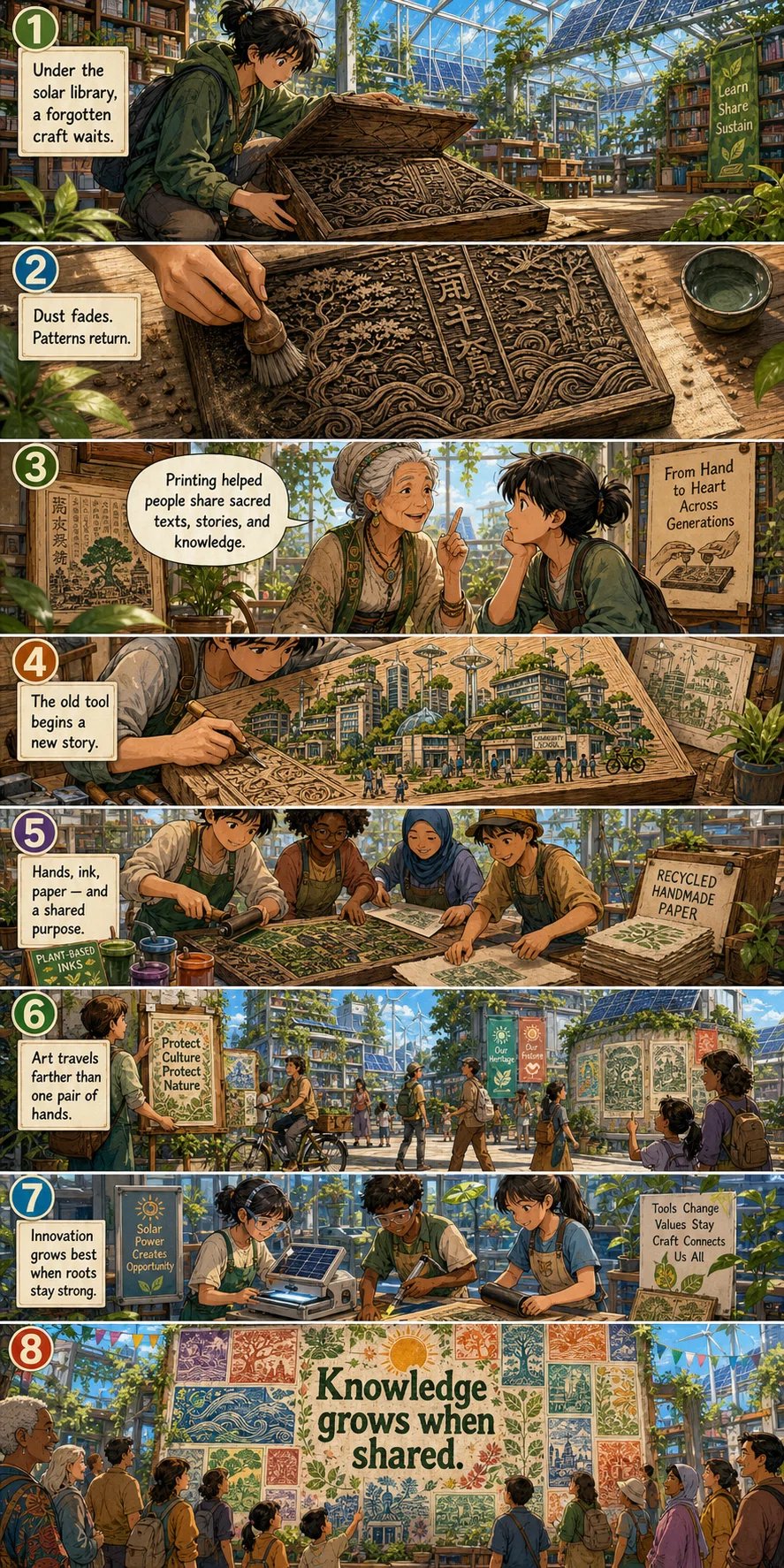
現代では、木版印刷は歴史遺産であると同時に、工芸、現代美術、デザイン、教育の分野で再評価されている。手で彫り、刷るプロセスには、デジタル複製とは異なる偶然性、身体性、素材感がある。この記事は、木版印刷を「古代の印刷技術」としてだけでなく、人類が情報を複製し、保存し、共有してきた長い歴史の起点として読むことができる。
🌍 CEFR B1以上の重要語彙 12語
technique
日本語訳:技術、技法
Example: Woodblock printing is an old technique for copying images and texts.carve
日本語訳:彫る
Example: The artist must carve the design carefully into the wooden block.impression
日本語訳:刷り、印刷されたもの
Example: One carved block can produce many impressions.origin
日本語訳:起源
Example: The origin of woodblock printing is often linked to ancient China.survive
日本語訳:残る、生き残る
Example: Some early printed texts still survive today.sacred
日本語訳:神聖な
Example: Buddhist texts were treated as sacred objects.spread
日本語訳:広がる
Example: The technique spread from China to Korea and Japan.manuscript
日本語訳:写本、手書き文書
Example: Printed books slowly changed the role of manuscripts.literacy
日本語訳:読み書き能力
Example: Cheaper books helped improve literacy.dominant
日本語訳:支配的な、主流の
Example: Woodblock printing remained dominant in East Asia for centuries.heritage
日本語訳:遺産、伝統文化
Example: Woodblock printing is now valued as cultural heritage.collaboration
日本語訳:協働、共同作業
Example: Ukiyo-e was made through collaboration between artists, carvers, and printers.
📺 外部参照情報
YouTube関連動画:
Woodblock Printing Process - A Japan Journey(Tokyo-based woodblock printmaker David Bullによる工程紹介)
Reddit(USA)関連トピック:
r/printmaking「I am a complete beginner with an interest in learning woodblock printmaking.」初心者向け道具・コツの相談スレッド。
🗺️ 地名・人名・キーワード調査
地名 1:China/中国
木版印刷の起源とされる地域。古代から紙、墨、印章、仏教文書の文化が発達し、唐代には紙への木版印刷が確認される。UNESCOも中国の雕版印刷技術を無形文化遺産として扱っている。
地名 2:Dunhuang/敦煌
中国北西部、シルクロード上のオアシス都市。莫高窟の文書群から『Diamond Sutra』など重要な仏教写本・印刷物が発見された。東西交流、仏教美術、書物文化の交差点として知られる。
人物 1:Wang Jie/王玠
868年の『Diamond Sutra』の奥付に名が記される人物。両親のため、また広く配布する目的で経典を作らせたとされ、印刷物と信仰・寄進文化の関係を示す重要人物。
人物 2:Bi Sheng/畢昇
北宋期、1041年頃に陶製の可動活字を発明した人物として知られる。ただし東アジアでは、その後も木版印刷が長く主流であり続けた。
人物 3:Hokusai/葛飾北斎
日本の浮世絵師。記事では『神奈川沖浪裏』で知られる木版画家として触れられる。浮世絵は日本の木版印刷を世界的に知らしめた代表的ジャンルである。
キーワード 1:Diamond Sutra/金剛般若波羅蜜経
868年に印刷された仏教経典で、制作年が明確な世界最古級の印刷本として有名。敦煌の莫高窟で発見され、木版印刷史を語るうえで欠かせない資料。
キーワード 2:Ukiyo-e/浮世絵
江戸時代に発展した日本の木版画文化。絵師、彫師、摺師、版元の分業によって作られ、役者、美人、名所、物語など都市文化を広く流通させた。東京都の伝統工芸紹介でも、絵師・彫師・摺師の協働が説明されている。
🌏 日本・米国の比較情報
Japan — English
In Japan, woodblock printing developed into a highly organized craft system, especially through ukiyo-e. Traditional Edo mokuhanga involves collaboration among the artist, carver, and printer, often using washi paper and cherry wood blocks. Today, the technique remains part of Japanese craft heritage and contemporary art practice.
日本 — 日本語
日本では、木版印刷は浮世絵を中心に高度な分業制へ発展した。絵師が下絵を描き、彫師が版木を彫り、摺師が色を重ねて仕上げる。現在も江戸木版画や現代浮世絵、ワークショップ、美術館展示を通じて継承されている。
United States — English
In the United States, woodblock printing is often practiced as fine art, studio printmaking, and Japanese-style mokuhanga. Recent exhibitions in places such as Portland and Honolulu present contemporary woodblock prints and show how artists around the world are reviving and reinterpreting the medium.
米国 — 日本語
米国では、木版印刷は美術大学、工房、ギャラリー、日系文化施設などで、現代版画やモクハンガとして実践されている。近年はポートランドやホノルルの展示でも、自然、環境、現代表現と結びついた木版画が紹介されている。
💭 応用・ディスカッション展開
Theme 1: How did woodblock printing change the way people shared knowledge?
Woodblock printing changed knowledge sharing by making repeated copies possible without rewriting every text by hand. Before printing, manuscripts required time, skill, and labor. A single handwritten copy could be expensive and difficult to obtain. With woodblock printing, once a page was carved, many impressions could be produced from the same block. This did not make books instantly universal, but it lowered barriers over time and helped religious, educational, and literary materials circulate more widely.
One important point is that early printing was not only commercial. In East Asia, Buddhism strongly encouraged the reproduction of sacred texts. Printing sutras was a religious act as well as a communication technology. This means that the first major users of printing were often motivated by belief, merit, and preservation, not simply profit. Later, however, the same technology supported broader publishing markets, including classics, medical books, illustrated books, and popular entertainment.
The case of East Asia also reminds us that technological revolutions do not happen in a straight line. Movable type was invented early in China, but woodblock printing remained practical for centuries because it suited the writing system, the publishing economy, and the needs of readers. In this sense, woodblock printing was not a primitive step before “real” printing. It was a powerful system that matched its cultural environment.
Today, we can compare woodblock printing with digital sharing. Both technologies raise similar questions: Who can copy information? Who controls distribution? How does easy access change learning? Woodblock printing shows that media technology can reshape society slowly but deeply.
Theme 2: Why did woodblock printing become closely connected with religion and art?
Woodblock printing became closely connected with religion because it allowed sacred texts and images to be reproduced accurately and repeatedly. In Buddhist cultures, copying a sutra was not only a practical act but also a spiritual one. A printed text could carry religious value, serve as an offering, and help believers accumulate merit. Because of this, many early printed objects were not ordinary books for casual reading. They were devotional objects, ritual items, or protective texts.
At the same time, the technique naturally supported visual art. A carved block could reproduce fine lines, patterns, and symbolic images. The Diamond Sutra’s frontispiece, for example, shows that early woodblock printing could combine text and image in a sophisticated way. In Japan, this artistic potential later became central to ukiyo-e. Prints could show actors, landscapes, beauties, legends, and city life. They were more affordable than unique paintings and could reach a wider public.
This link between religion and art also reveals something important about media. Technologies spread when they answer emotional and cultural needs. People did not adopt woodblock printing only because it was efficient. They used it because it helped preserve sacred words, create beauty, teach stories, and build shared memory.
In modern life, we often separate technology from culture, but woodblock printing shows that they are deeply connected. A printing block is a tool, but it is also a carrier of belief, taste, and identity. This is why woodblock printing still matters today. It reminds us that communication technologies are never neutral; they shape what people value and remember.
Theme 3: What can handmade printing teach us in the digital age?
Handmade printing can teach us patience, material awareness, and respect for process in the digital age. Digital media makes copying almost instant. We can save, share, edit, and repost images in seconds. This speed is useful, but it can also make creative work feel weightless. Woodblock printing is different. Every step requires physical attention: drawing, transferring, carving, inking, aligning paper, rubbing, drying, and sometimes repeating the process for many colors.
This slow process changes the relationship between maker and image. A mistake in carving cannot always be undone, so the artist must think carefully. The grain of wood, the pressure of the hand, the moisture of paper, and the density of pigment all affect the final result. Even when prints come from the same block, each impression can have subtle differences. This gives the work a human presence that digital copies often lack.
Woodblock printing also challenges the idea that old technology is obsolete. In fact, many contemporary artists use mokuhanga because it is sustainable, water-based, tactile, and visually distinctive. It allows artists to combine tradition with modern themes such as ecology, identity, memory, and place.
In a broader sense, woodblock printing asks us to rethink progress. Faster is not always better. Perfect sameness is not always more beautiful. Handmade printing teaches that communication can be meaningful because it takes time. In an age of endless scrolling, the carved block offers another rhythm: slower, deeper, and more connected to the body and the natural world.
🏷️ 記事の背景
English:
Woodblock printing began in ancient China and transformed religion, books, art, and public knowledge across East Asia.
日本語 :
木版印刷は古代中国に始まり、仏教経典、書物、浮世絵、出版文化を通じて、東アジアの知識共有と芸術表現を大きく変えた技術である。
🏷️ ハッシュタグ
#木版印刷 #版画 #浮世絵 #印刷史 #東アジア史 #中国史 #日本文化 #仏教美術 #金剛般若経 #敦煌 #莫高窟 #江戸文化 #伝統工芸 #アート #美術史 #本の歴史 #メディア史 #文化遺産 #学び直し #Note記事 #WoodblockPrinting #Printmaking #Ukiyoe #HistoryOfPrinting #EastAsianHistory #ChineseHistory #JapaneseArt #BuddhistArt #DiamondSutra #Dunhuang #Mokuhanga #TraditionalCraft #ArtHistory #BookHistory #CulturalHeritage #MediaHistory #教育 #英会話 #習い事
↓👍イイネを押してもらえると嬉しいです
