
クチナシ 古今和歌集の歌に『口無』を愉しむ

口無 (クチナシ)
『山吹の 花色衣 ぬしや誰
問へど答へず くちなしにして』
謳ったのは、素性法師(ソセイホウシ)で
古今和歌集の中に収まっているものである。
現代の言葉に分かりやすく訳してみよう。
山吹の花の様な黄色の着物を纏っているもの、
その主は誰であるのかを尋ねてみたのだけれど
返事が無い。それを問いかけた相手から返事が
ないのも無理もない事、相手は口無だったから
である。
これは、当時の俳諧歌(ハイカイカ)のひとつで
世の中の事象などを面白可笑しく詠んでいるもの
であり、今のこの世に於いても楽しめるものにも
なっている。
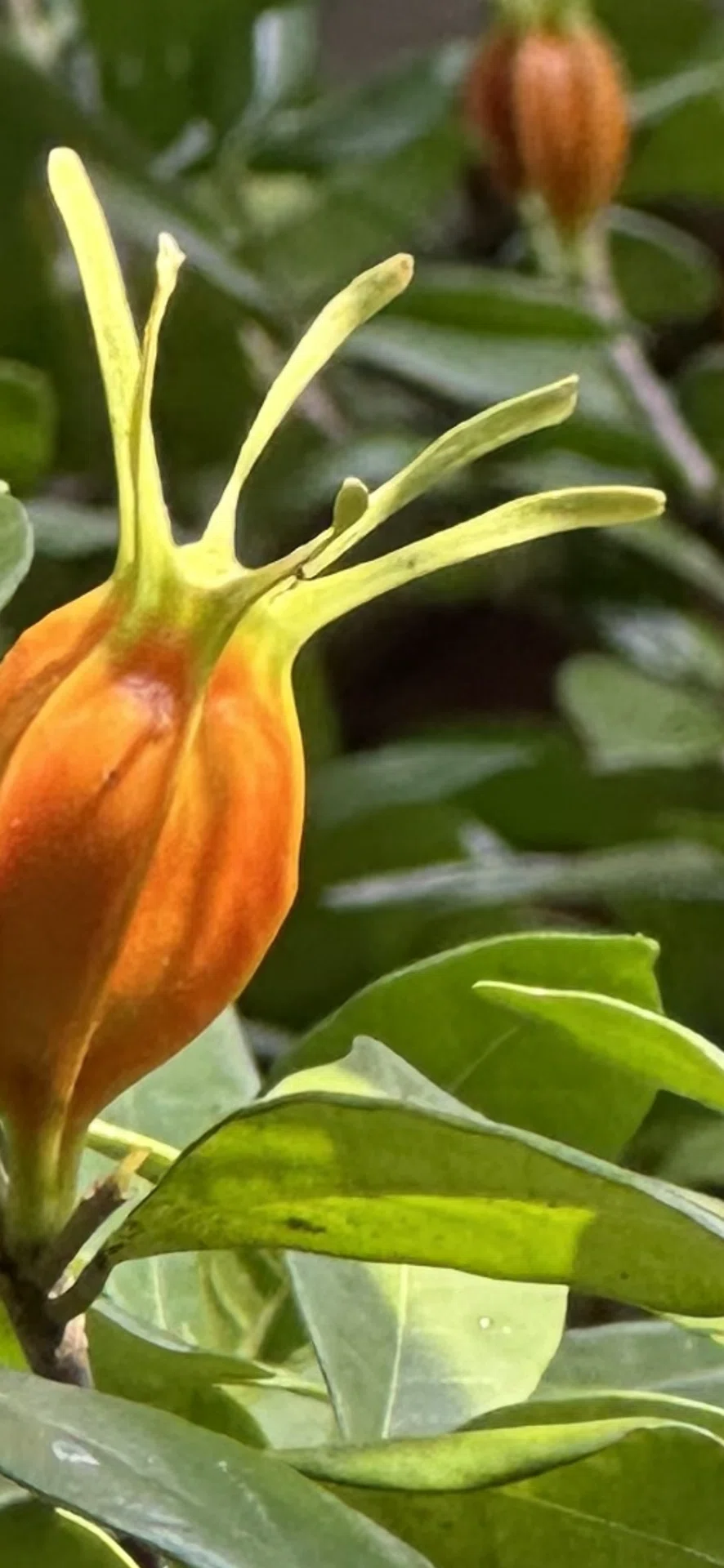
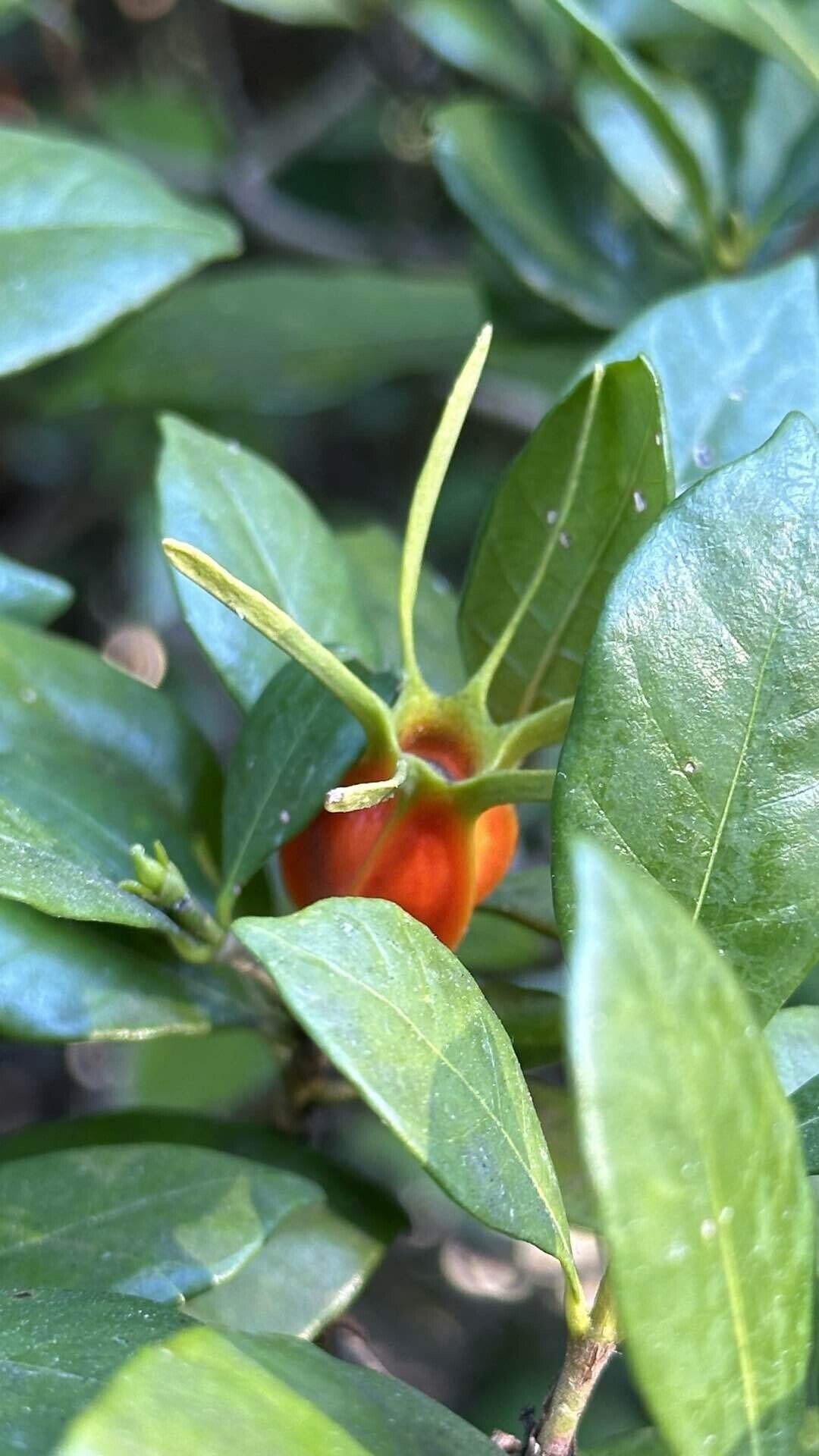
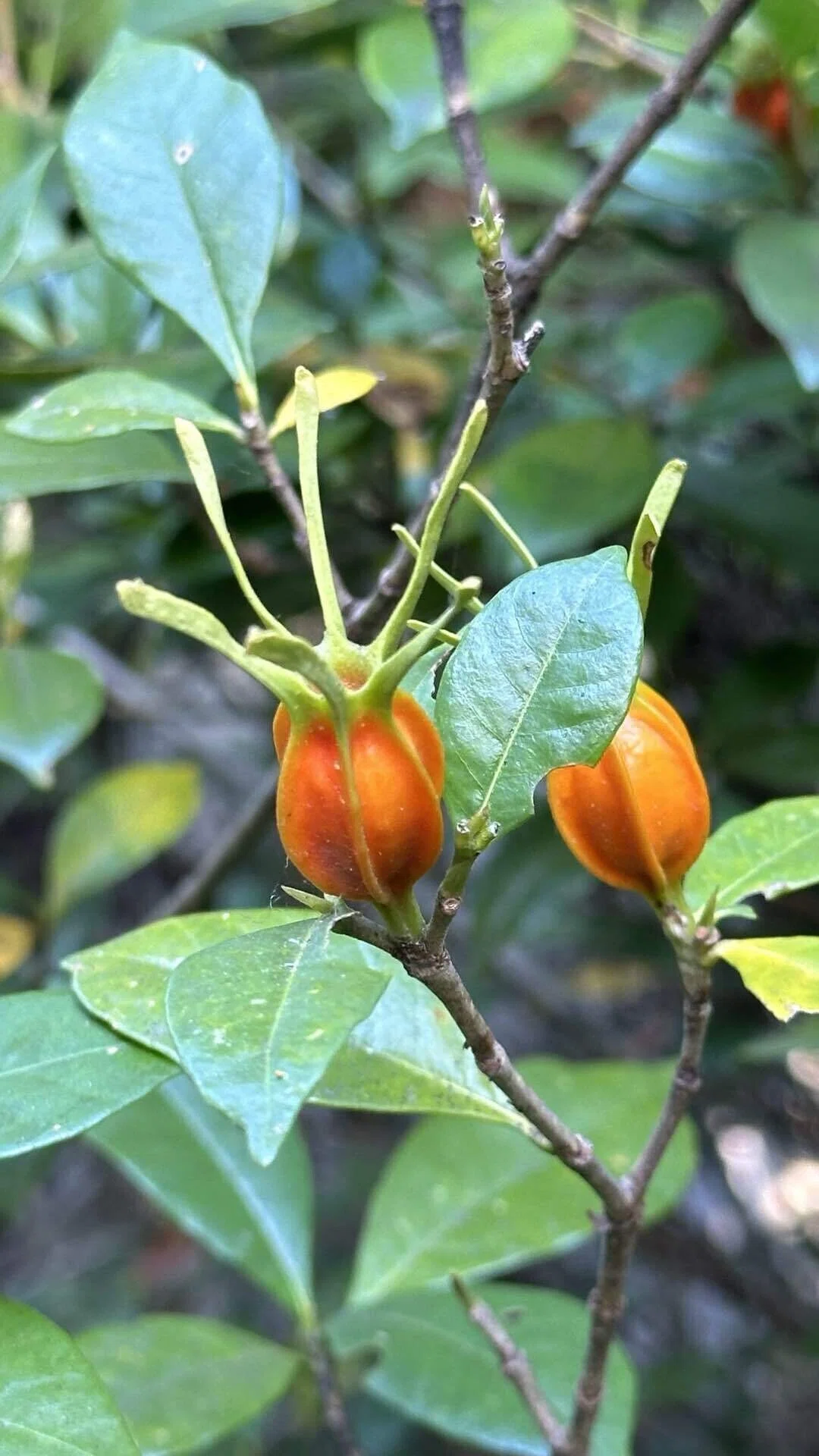
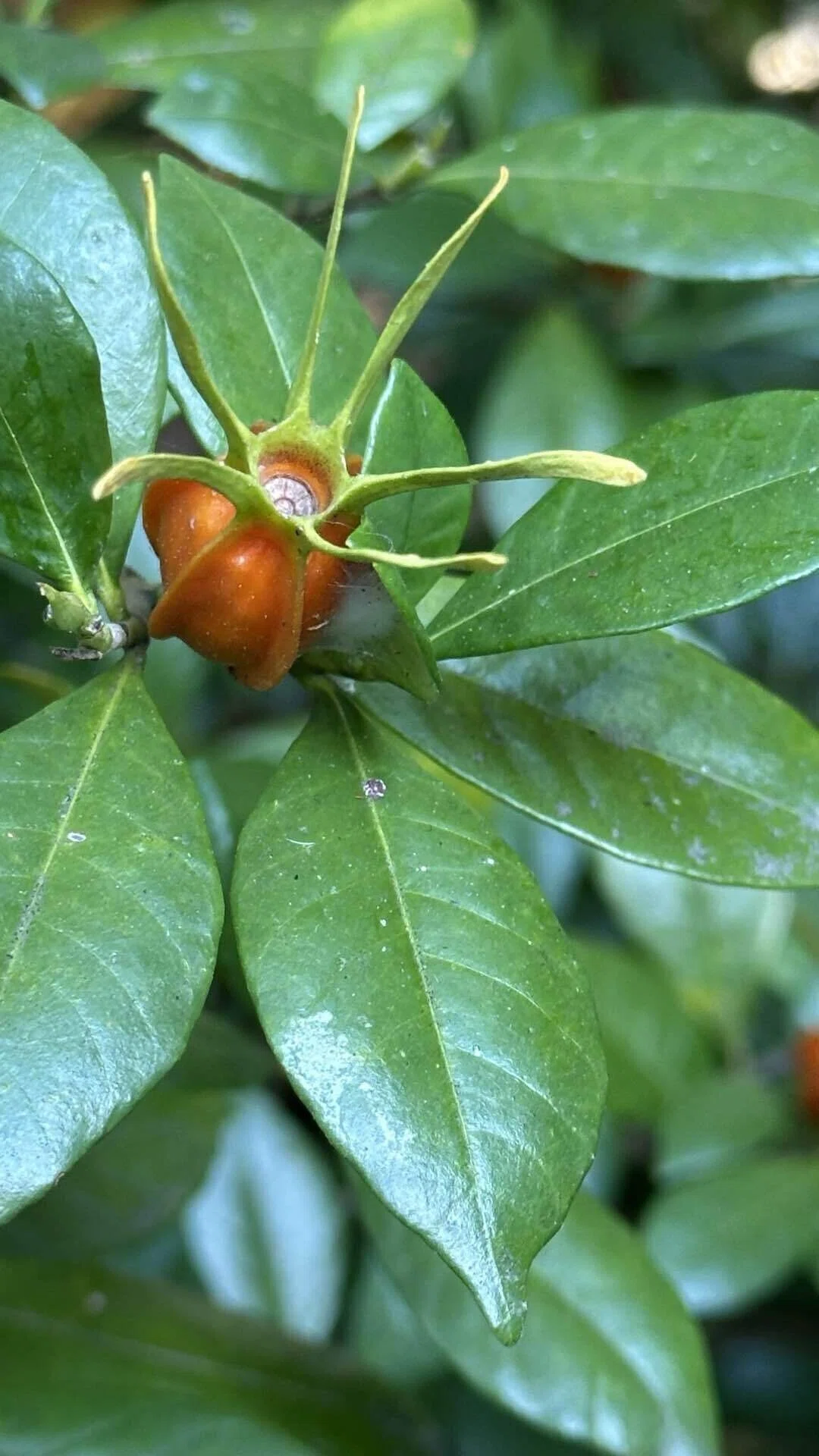
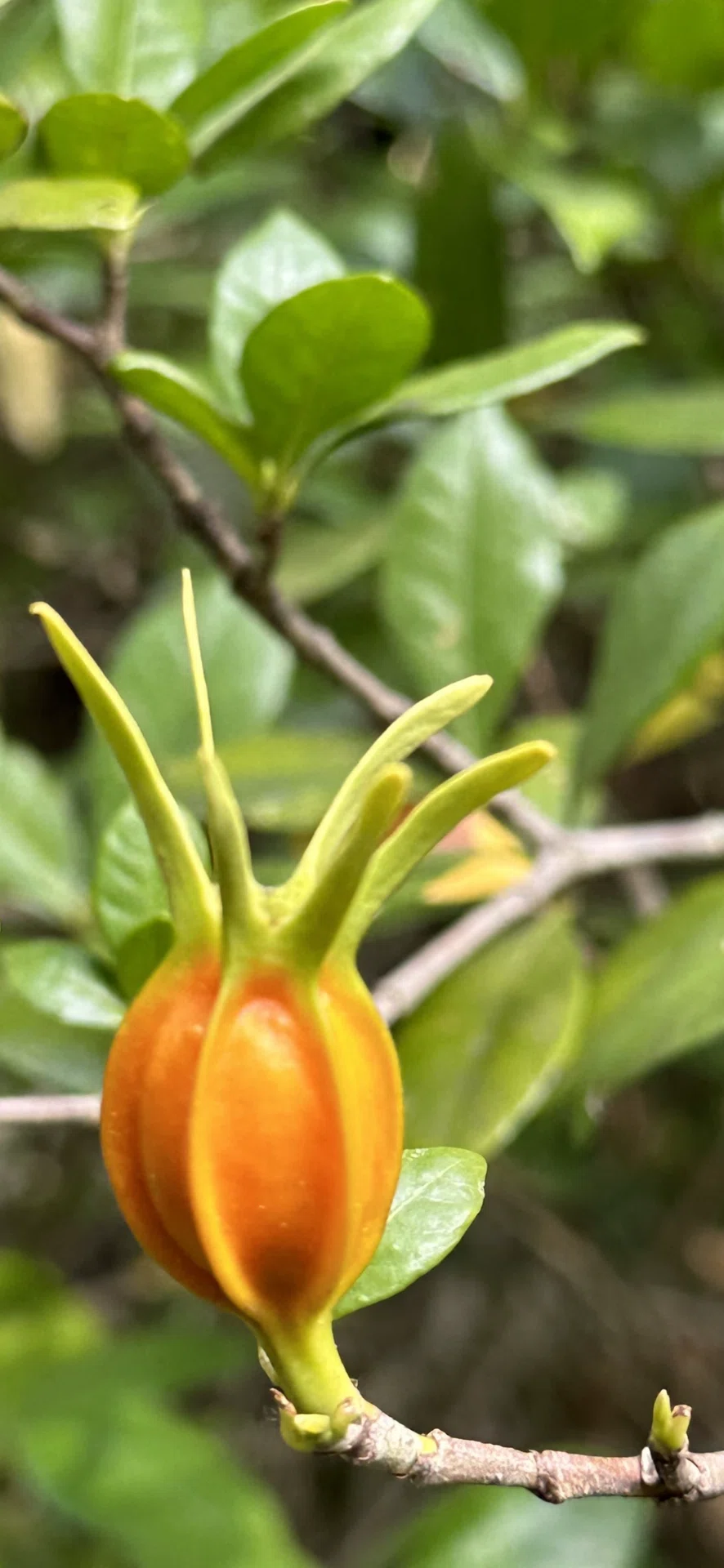
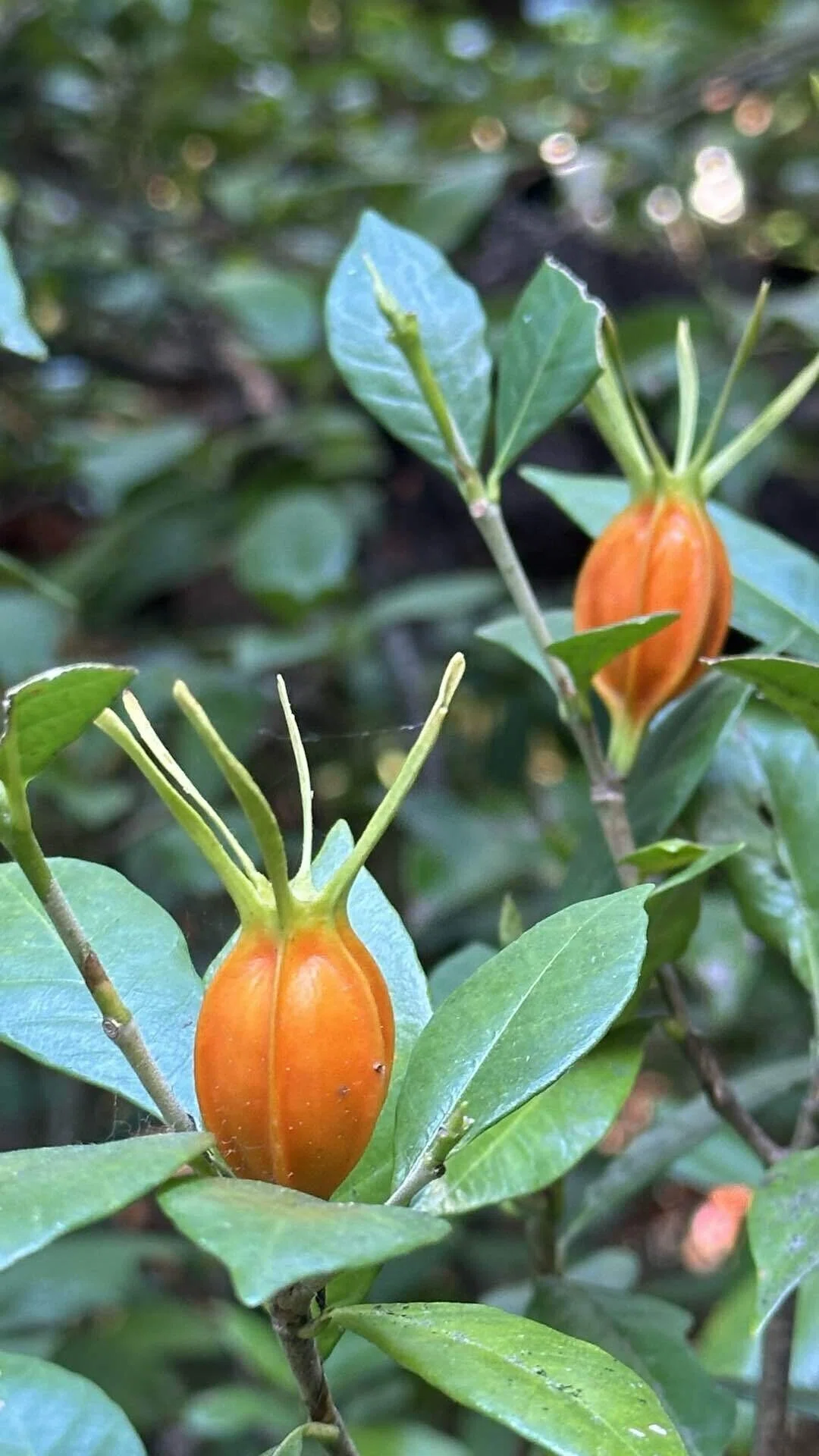
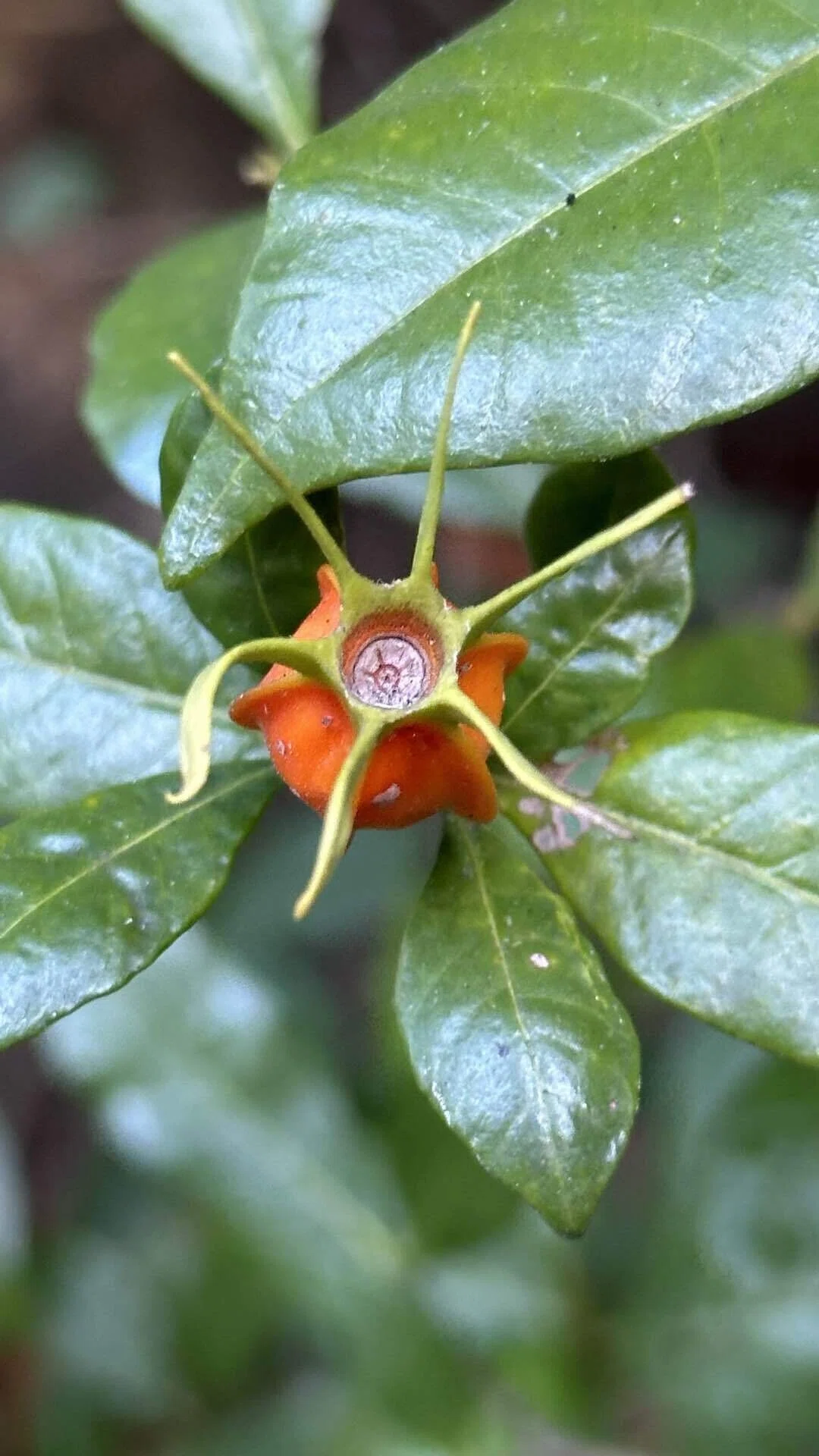
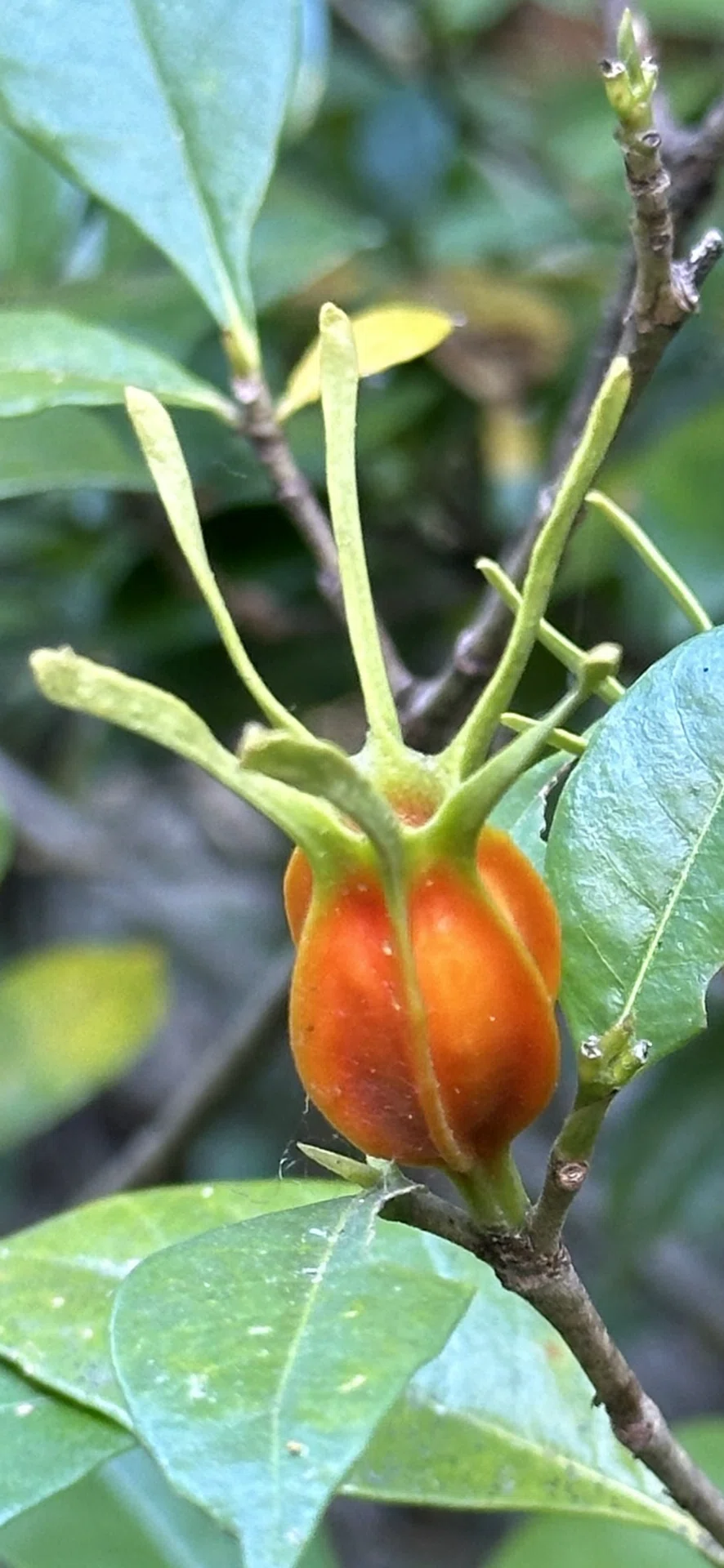
口無(クチナシ)の由来は、実を開けようとすれど
それを開く為の口が無い事が語源との説がある。
花も見応えあり、実にも魅力がある。私はこの植物
のリーフパターンも好きである。花、実、葉とその
どれにもが魅力がある。それがこのクチナシである。
Kuchinashi (Gardenia)
“Yamabuki no hanairo-goromo nushi ya tare
Toedo kotaezu kuchinashi ni shite”
These lines were composed by Sosei Hōshi, and
are found in the Kokin Wakashū (Collection of
Ancient and Modern Japanese Poetry).
Let us attempt to translate this waka into modern,
easy-to-understand language.
Dressed in a yellow robe like the blossoms of the
yamabuki (Japanese rose),
I asked, “Who is your master?”
But there was no reply.
It’s only natural that there was no answer—
the one I asked was a kuchinashi (literally, “no mouth”).
This is one example of haikaika—lighthearted,
humorous poems that reflect on worldly affairs and
human nature with wit.
Even today, such verses remain enjoyable and relevant.
The name kuchinashi (Gardenia) is said to derive from
the fact that, although it bears a fruit,
the fruit does not open—it has no mouth, hence the
name.
The flower is beautiful, the fruit is charming, and I am
fond of the leaf pattern as well.
Whether it is the flower, the fruit, or the leaves—every
part of this plant holds a unique allure.
That is the kuchinashi.
和名 梔子 (クチナシ)
口無 (クチナシ)
洋名 ケープ ジャスミン
(CAPE JASMINE)
ガーデニア (GARDENIA)
学名 ガーデニア ジャスミノイデス
(GARDENIA JASMINOIDES)
品種 一重咲梔子 (ヒトエザキクチナシ)
分類 リンドウ目、アカネ科、クシナシ属
種類 多年生植物
草丈 2〜8m
開花 夏〜秋
原産 日本、中国、台湾
言葉 純粋
甘い恋
愛らしい
撮影 岡崎神社
■■■■■■■■■■■■■■■■■■■■■■■■■■■■
#クチナシ
#梔子
#口無
#ヒトエザキクチナシ
#一重咲梔子
#ケープジャスミン
#CAPEJASMINE
#ガーデニア
#GARDENIA
#ガーデニアジャスミノイデス
#GARDENIAJASMINOIDES
■■■■■■■■■■■■■■■■■■■■■■■■■■■■
■■■■■■■■■■■■■■■■■■■■■■■■■■■■
■■■■■■■■■■■■■■■■■■■■■■■■■■■■
■■■■■■■■■■■■■■■■■■■■■■■■■■■■
