
Tracing the Footprints of the Sea: Oomori Seaweed Road #38

Introduction:
Once bustling with nori cultivation and fishing,
the Omori and Kojiya areas along Tokyo Bay
flourished as a leading seaweed production center.
As you explore these vibrant neighborhoods today,
you'll discover numerous monuments and facilities
that quietly tell the story
of this rich maritime history,
stretching from the Edo period through the Showa era.
This guide invites you on a "Nori Road" walk
to trace the fascinating legacy
of the seaweed industry.
Oomori Seaweed Road(by walk)
0. Start: JR Omori Station (JK19)
↓ Approx. 3-minute walk
1.Origin of Cultivated Nori
(JR Omori Station East Exit Plaza)
↓ Approx. 25-minute walk
2.Nori no Matsuo
(Omori Higashi 1-6-3)
↓ Approx. 8-minute walk
3.Omori Nori Museum
(Heiwano-Mori Park 2-2)
↓ Approx. 16-minute walk
4.Monuments Marking the End of Traditional
Omori Nori Farming
(Omori Kifune Shrine)
(Omori Higashi 3-9-19)
↓ Approx. 3-minute walk
5.Fisheries Memorial
(Ota City Omori Children's Hall)
(Omori Higashi 3-5-15)
↓ Approx. 5-minute walk
6.Omori Dried Nori Wholesalers Cooperative
(Omori Nori Kaikan)
(Omori Naka 1-6-5)
↓ Approx. 7-minute walk
7.Kyoritsu Credit Union Omori Branch
(Omori Higashi 4-19-6)
↓ Approx. 20-minute walk
8.Origin of Kojiya‐ura Nori Cultivation
(Kitamaebori Ryokuchi Park)
(Higashi Kojiya 5-14-1)
↓ Approx. 13-minute walk
9.A Brief History of the Matsubara Family
(Nishi Kojiya 2-31)
(Target: Matsuichi Transport Co., Ltd.)
↓ Approx. 9-minute walk
10.Nearest Station:
Keikyu Airport Line Kojiya Station(KK12)
Total walking time (approx. 1 hour 49 minutes),
with a total journey time of approximately
2 hours to experience Omori's nori cultivation history.
0.Start JR Oomori Station (JK19)
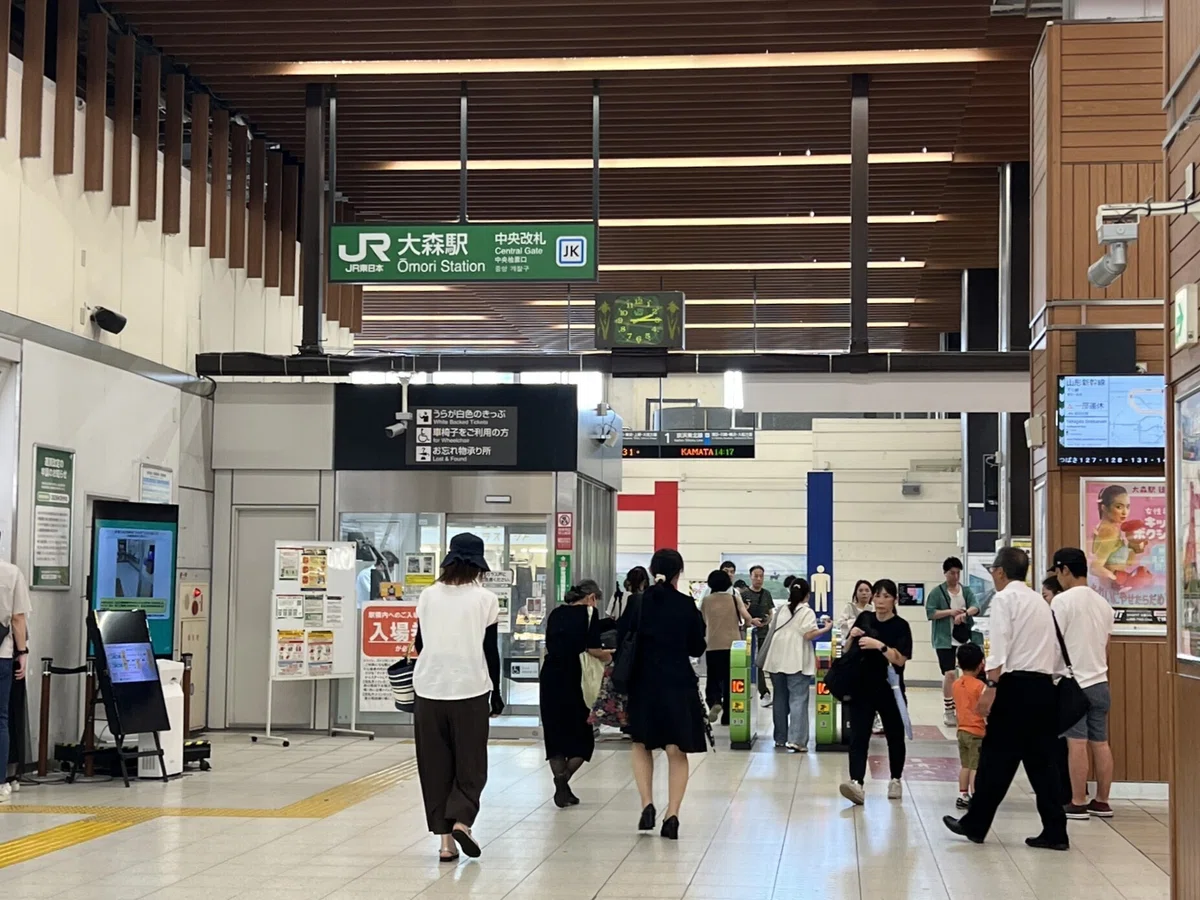
1. Origin of Cultivated Nori
(JR Ōmori Station East Exit Plaza)
(Location: JR Ōmori Station East Exit Plaza)
Right in the bustling JR Ōmori Station East Exit Plaza,
you'll find this commemorative space,
marking the proud birthplace of cultivated nori.
It stands as a modern footprint,
quietly narrating the story
of traditional fishing and nori cultivation—
a vital part of history preserved
right here in today's urban landscape.
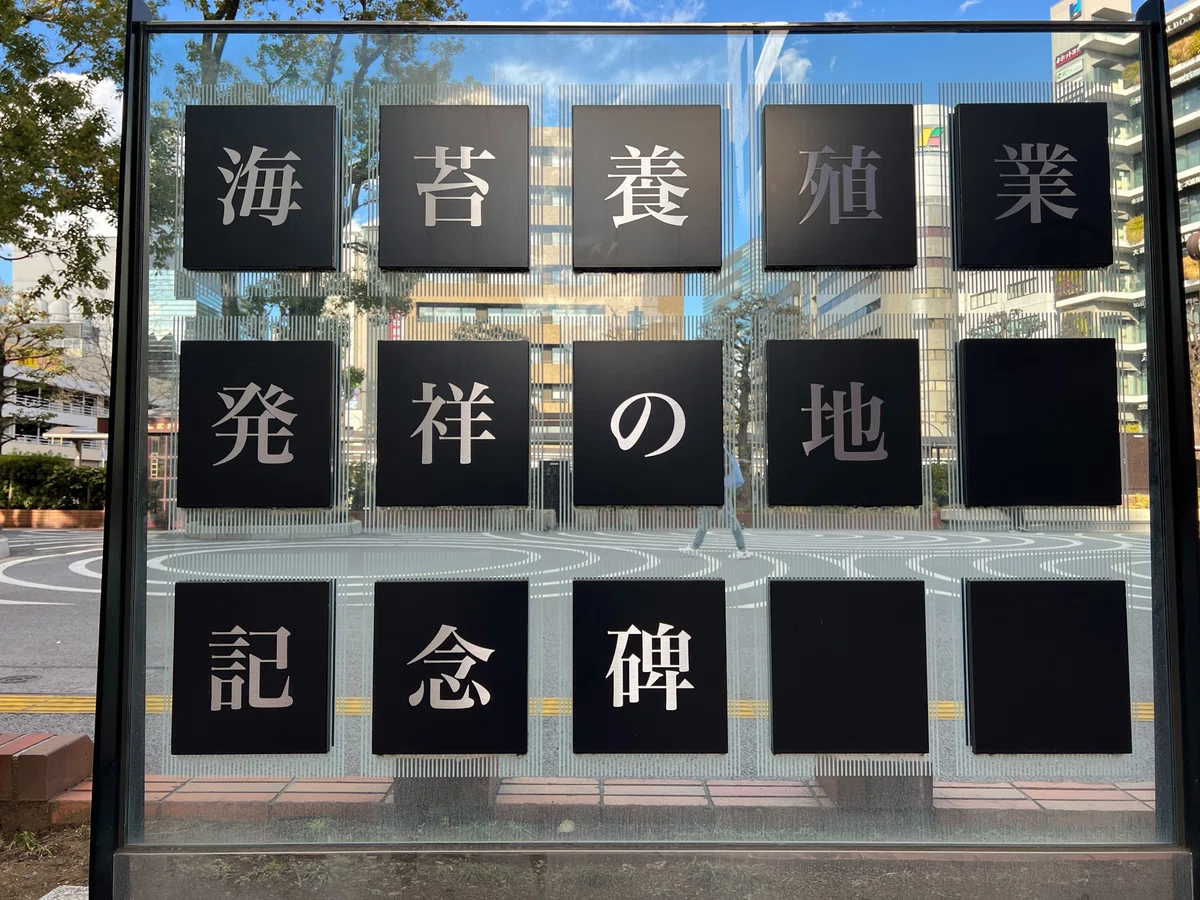
of cultivated nori,
located in JR Ōmori Station East Exit Plaza.
Note that the square black plate
is the same size as a sheet of nori.
2. Nori no Matsuo(a dried seaweed shop)
(Location: Omori Higashi 1‐6‐3, Ota City, Tokyo)
Established in 1669 (Kanbun 9),
Nori no Matsuo stands as
Ota City's oldest nori specialty shop,
and indeed, its oldest surviving store.
Stepping inside,
you'll find a place where traditional techniques and charm,
passed down through generations,
are carefully preserved.
It continues to offer its exquisite nori today,
serving as a living testament
to the region's rich food culture.
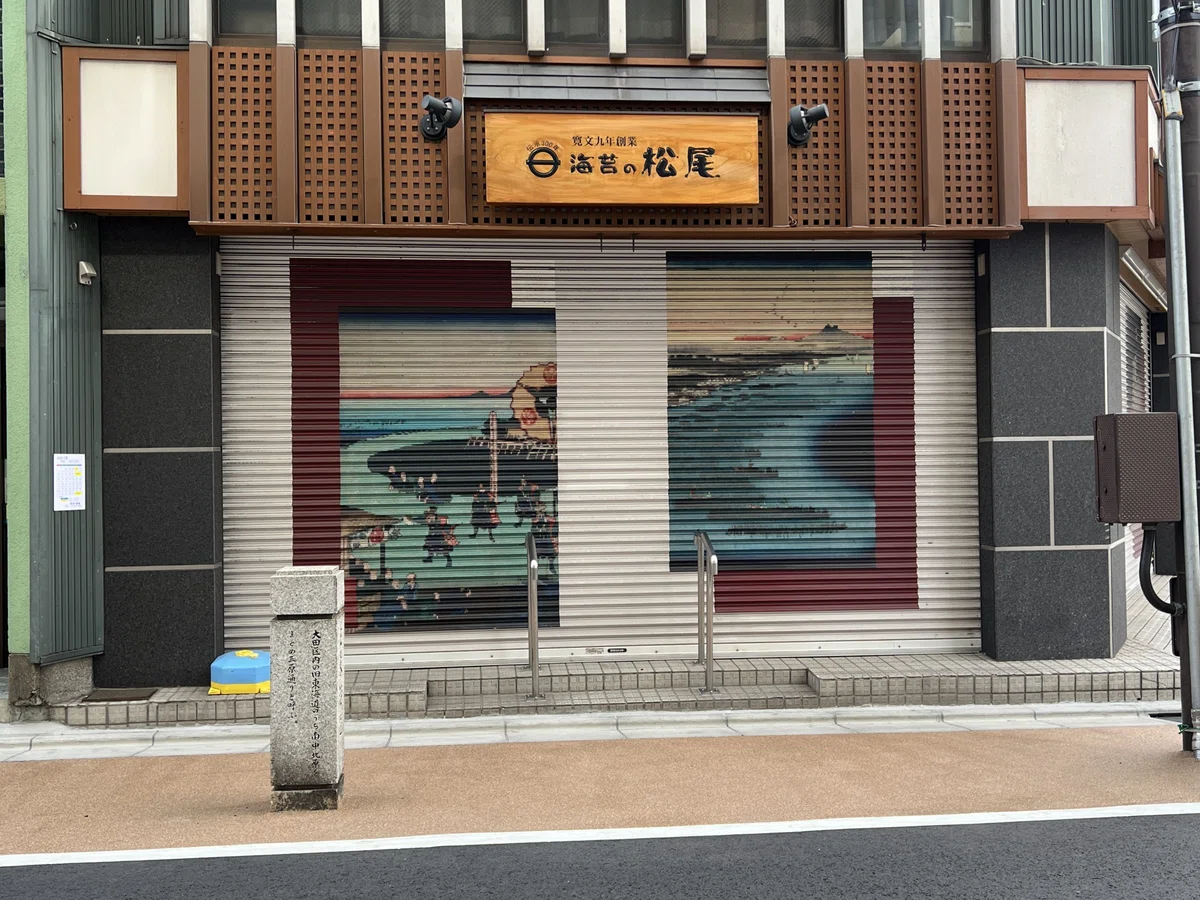
Omori's oldest nori specialty shop.
3. Omori Nori Museum
(a local history museum on seaweed culture)
(Location: Heiwano‐Mori Park 2‐2, Ota City, Tokyo)
Opened: April 6 2008 (Heisei 20)
The Omori Nori Museum
serves as a vibrant center
for preserving and promoting local culture.
Opened in April 2008,
the museum houses approximately 150 valuable exhibits,
including traditional nori production tools.
Through these engaging displays,
visitors can explore the fascinating history and culture
of the region's nori industry,
ensuring its significance is passed on for generations.
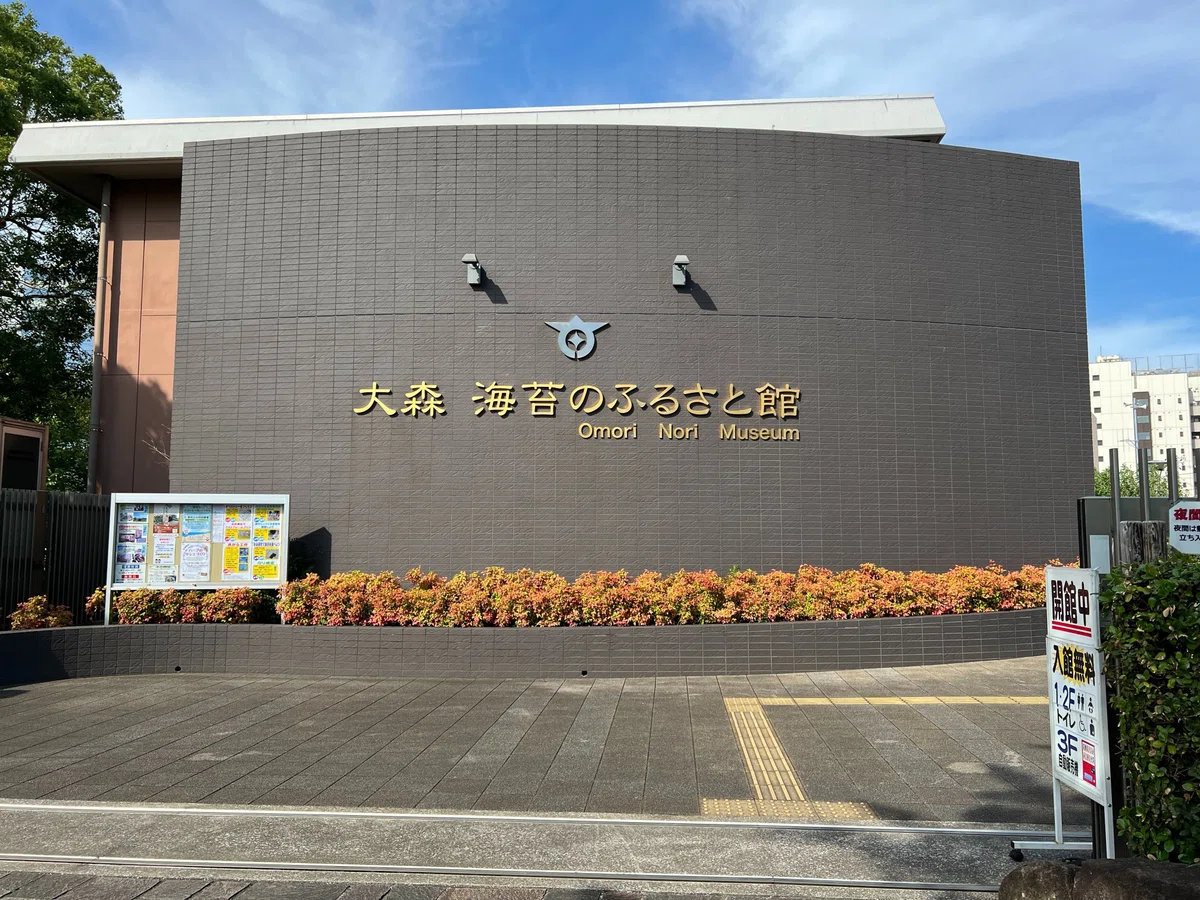
nestled within Heiwano‐Mori Park.
4. Monuments Marking the End of Traditional
Omori Nori Farming
The Monument to the End of Fishing
(Omori Kifune Shrine)
(Location: Omori Higashi 3‐9‐19, Ota City, Tokyo)
Within the peaceful Omori Kifune Shrine,
which enshrines a deity overseeing water supply
(known as a Dragon God),
stands this significant monument.
Erected in May 1964 (Showa 39),
it quietly reflects the sorrow and pride
of generations of nori cultivators.
Look closely at its reverse side,
and you'll see the names of 300 fishermen carved,
a powerful reminder
of a major turning point in the local industry.
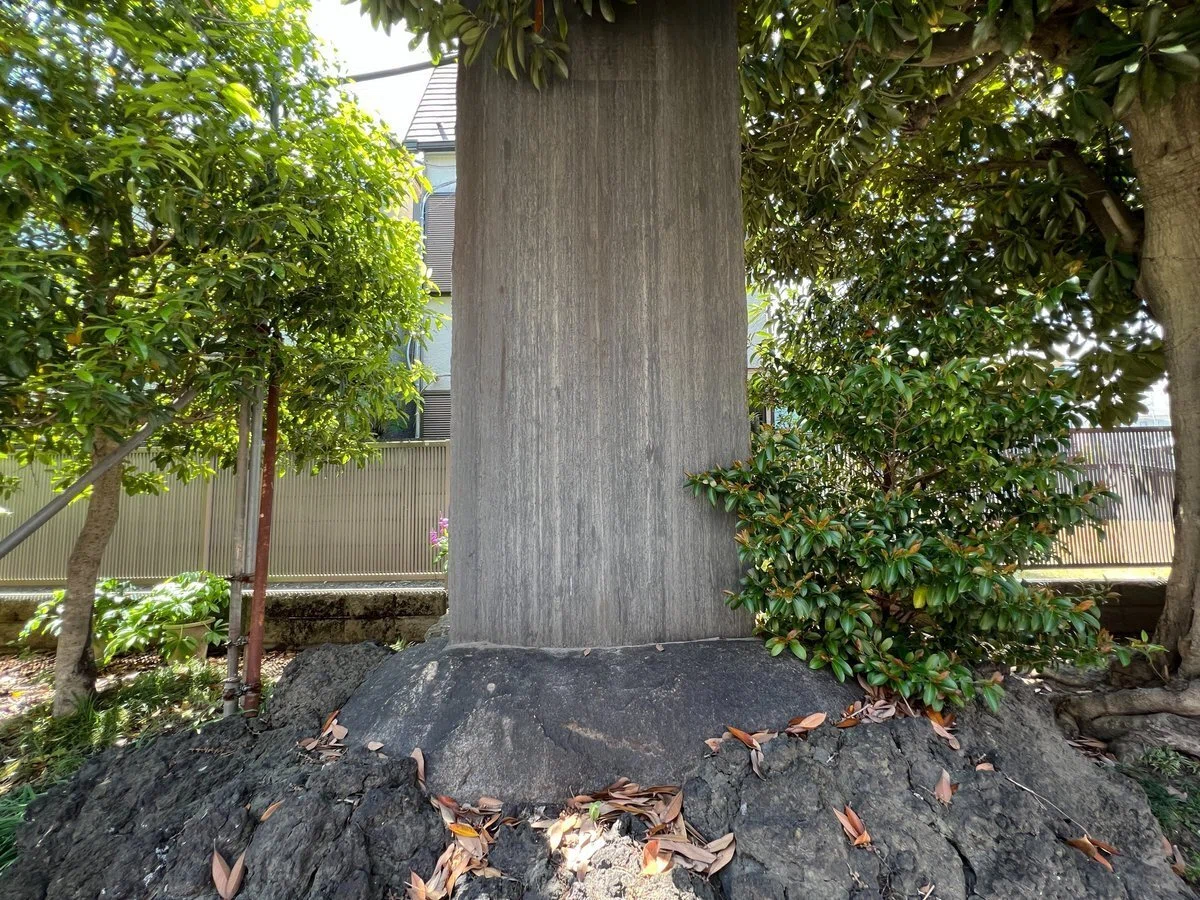
(Monument to the End of Fishing)
at Omori Kifune Shrine.
5. Fisheries Memorial
(a monument honoring Omori’s
300‑year nori‑farming heritage)
(Ota City Omori Children's Hall)
(Location: Omori Higashi 3‐5‐15, Ota City, Tokyo)
This memorial stands
inside the Ota City Omori Children's Hall,
located in a quiet residential area
of Omori Higashi.
which was once the site
of the Omori Fisheries Cooperative.
Installed in 1964 (Showa 39),
the monument encapsulates 300 years
of Omori's proud nori production history.
It recounts how this industry began
in 1682 (Tenna 2),
when local residents,
including figures like Rokuzaemon Noguchi,
successfully petitioned the shogunate.
This monument serves
as a powerful reminder
of the deep traditions and transformations
of the area's fishing and nori cultivation.
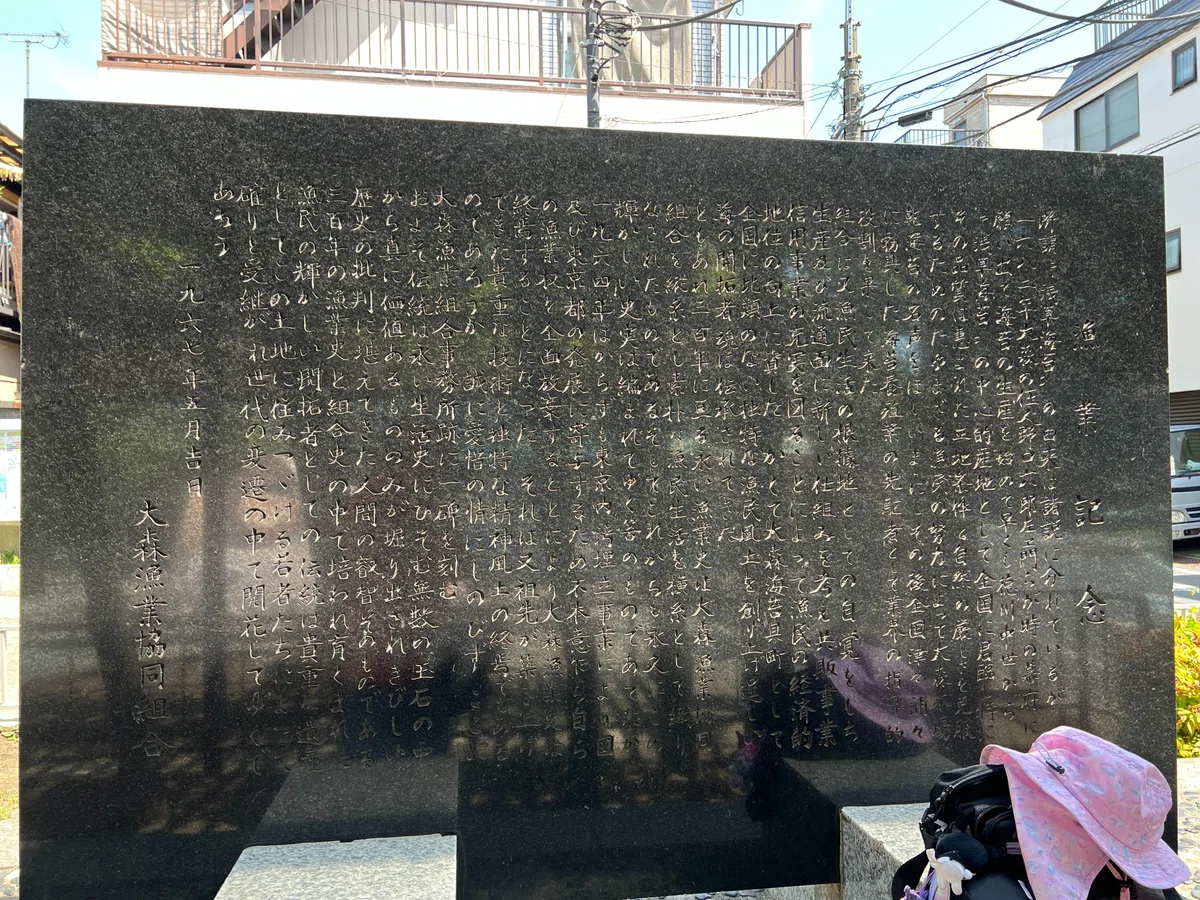
erected by the Omori Fisheries Cooperative.
6.Omori Nori Kaikan
(hall of the Omori Dried Nori
Wholesalers Cooperative)
(Location: Omori Naka 1‐6‐5, Ota City, Tokyo)
This facility,
also known as Omori Nori Kaikan,
stands as a vital hub
for the local nori industry.
It brings together the production and wholesale
of traditional dried nori,
serving as a key center
for passing down industry techniques
and exchanging information.
A visit here offers a glimpse
into the ongoing lifeblood
of this important traditional craft.

a vibrant hub where nori auctions are held.
7. Kyoritsu Credit Union Omori Branch
(Location: Omori Higashi 4‐19‐6, Ota City, Tokyo)
This branch of Kyoritsu Credit Union
holds significant historical ties
to the local nori industry.
It began in September 1965 (Showa 40)
as "Tokyo Enkai Credit Union,"
founded by former nori cultivators
who used their compensation money (12 million yen)
to start a new venture.
This very branch was their first office,
symbolizing a new beginning for them.
While the cooperative underwent
several name changes and business transfers
over the years,
this Omori branch remains a powerful symbol
of the nori cultivators' transition
and their enduring connection to the community.
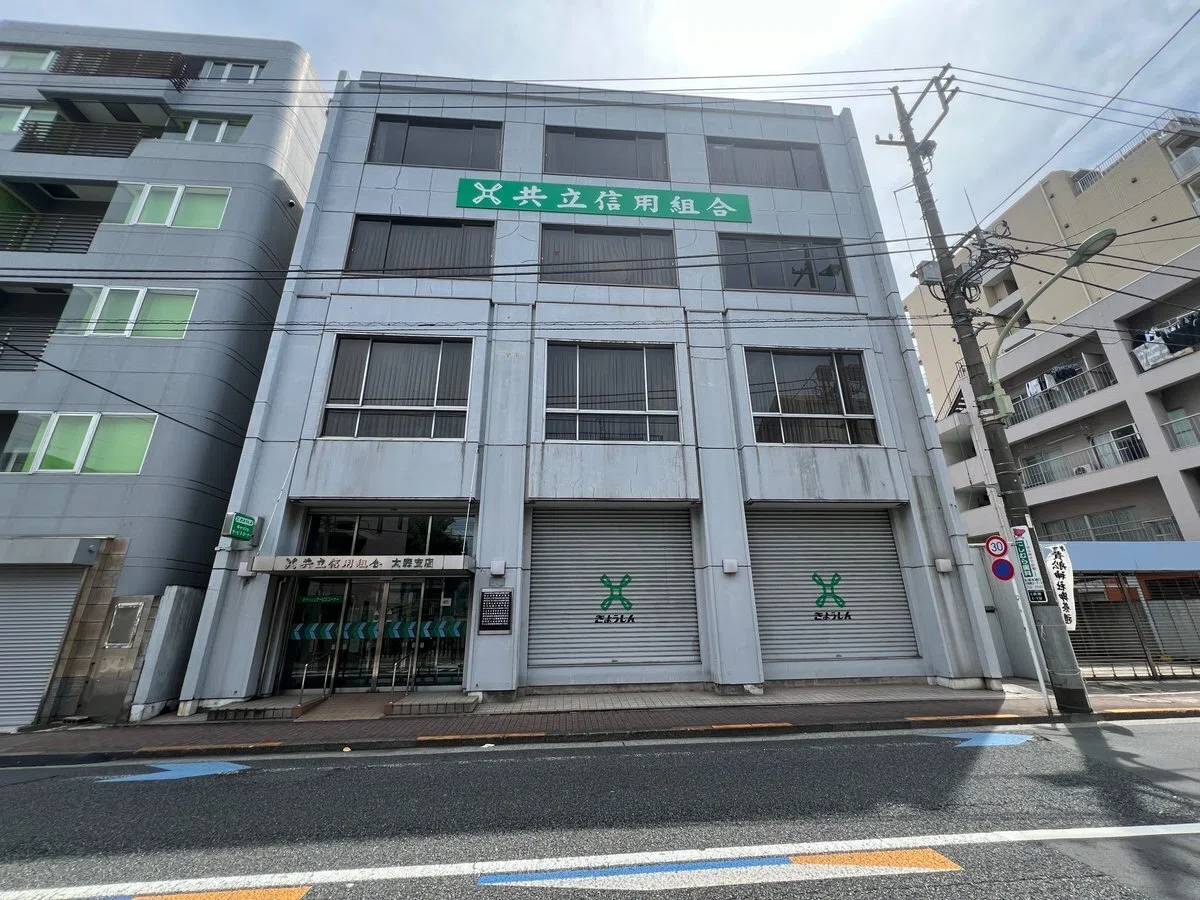
(now Kyoritsu Credir Union Omori Branch)
was established by local nori cultivators.
8. Origin of Kojiya‐ura Nori Cultivation
(a shallow bay area once used for nori cultivation)
(Location: Higashi Kōjiya 5‐14‐1, Ota City, Tokyo)
(Within Kitamaebori Ryokuchi Park)
This significant historic site
marks the very birthplace of nori cultivation
in the Kōjiya area.
As you stand here,
you are tracing the footsteps
of countless ancestors who,
for generations, dedicated their lives
to nori cultivation,
passing down their legacy to the future.
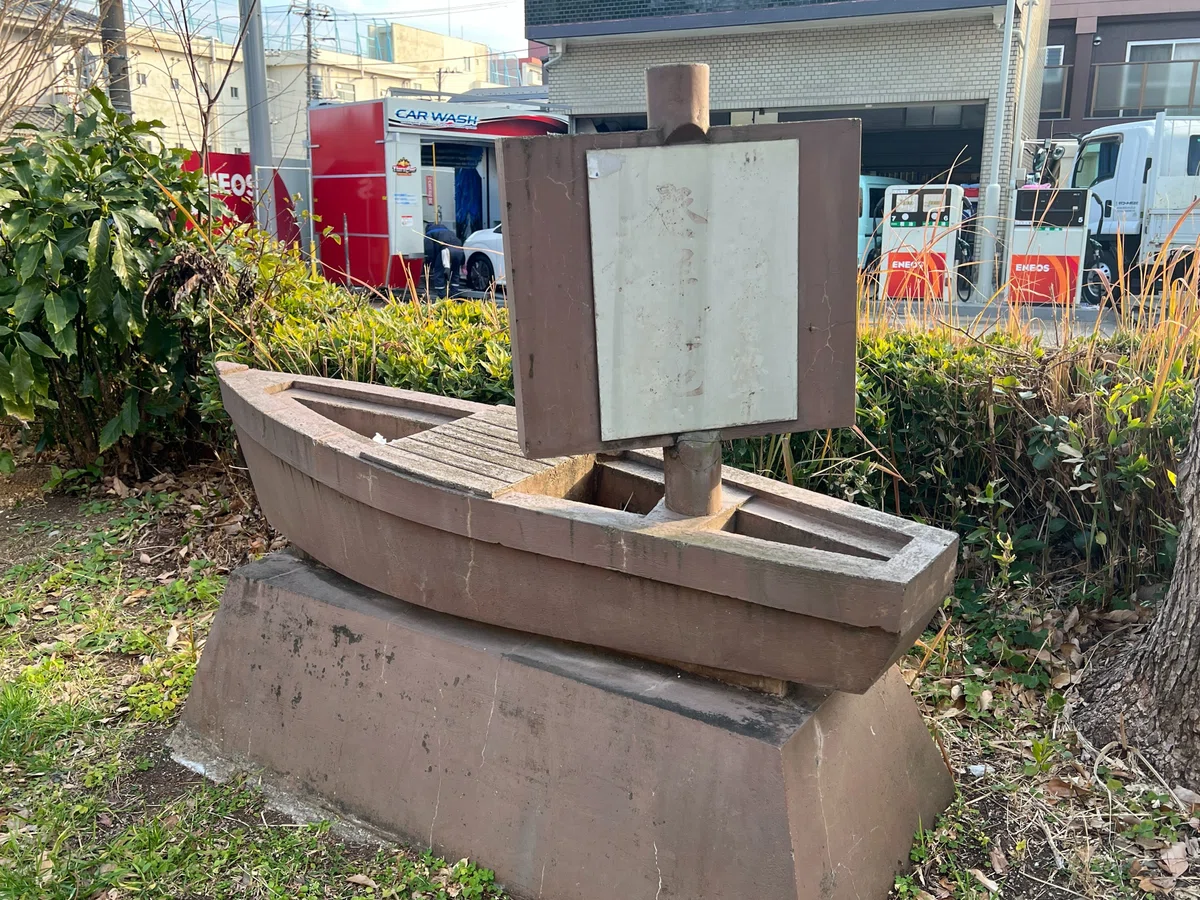
The monument marking the origin of Kōjiya‐ura nori cultivation,
now with faded inscriptions.
You can find it inside Kitamaebori Ryokuchi Park,
directly across from the ENEOS gas station on the main road.
It stands near the park entrance, just beside the sidewalk.
9. A Brief History of the Matsubara Family
(Location: Nishi Kōjiya 2‐31, Ota City, Tokyo)
This historic site tells the story
of the Matsubara family,
whose ancestors were deeply involved
in the local nori industry.
It notably highlights the achievements
of grandfather Moemon,
who not only led the Kōjiya-ura Fisheries Cooperative
for many years starting in 1957 (Showa 32)
but also served for five terms
as an Ota City Council member.
This monument is a vital testament
to the Matsubara family's rich traditions,
their strong ties to local politics,
and the lasting legacy of their predecessors
in the community.
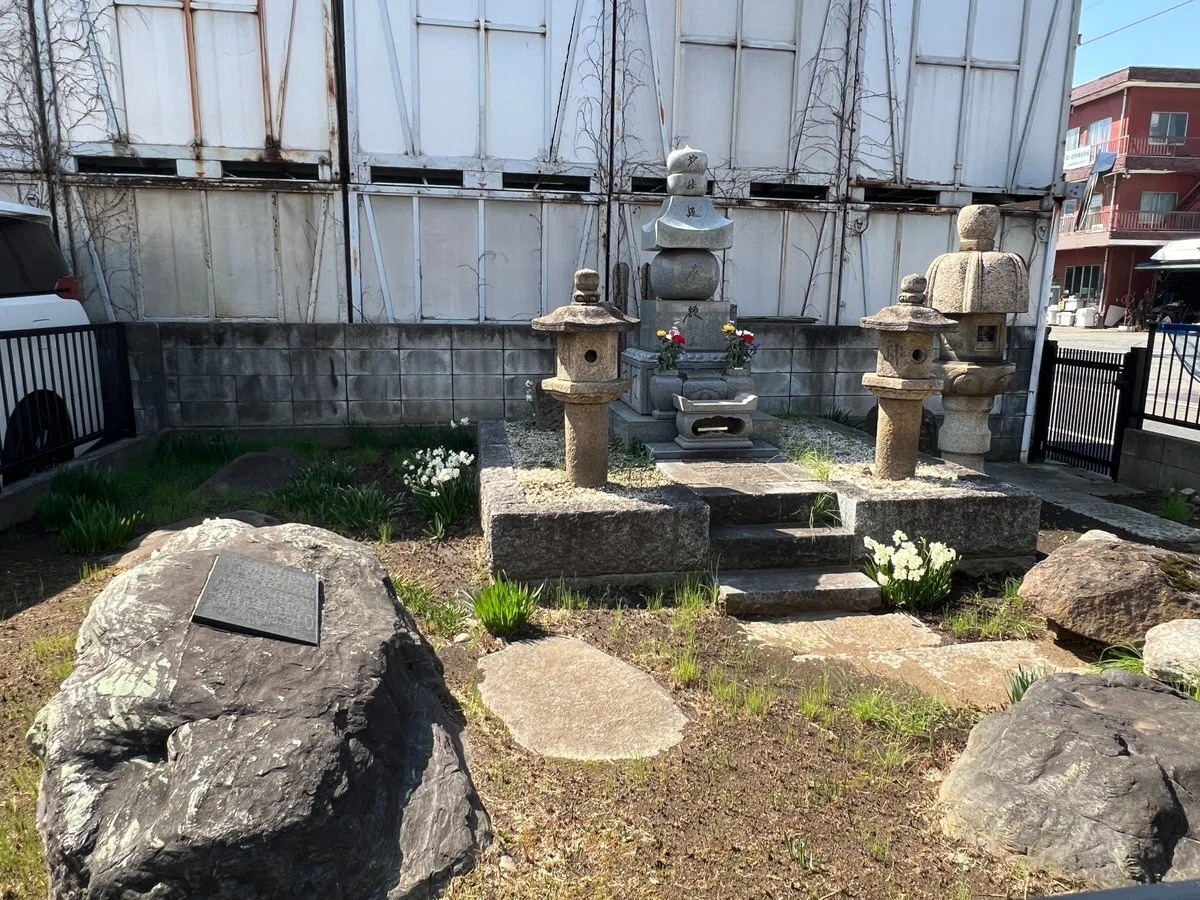
The red building of Matsuichi Transport Co., Ltd.,
founded by the family, is visible nearby.
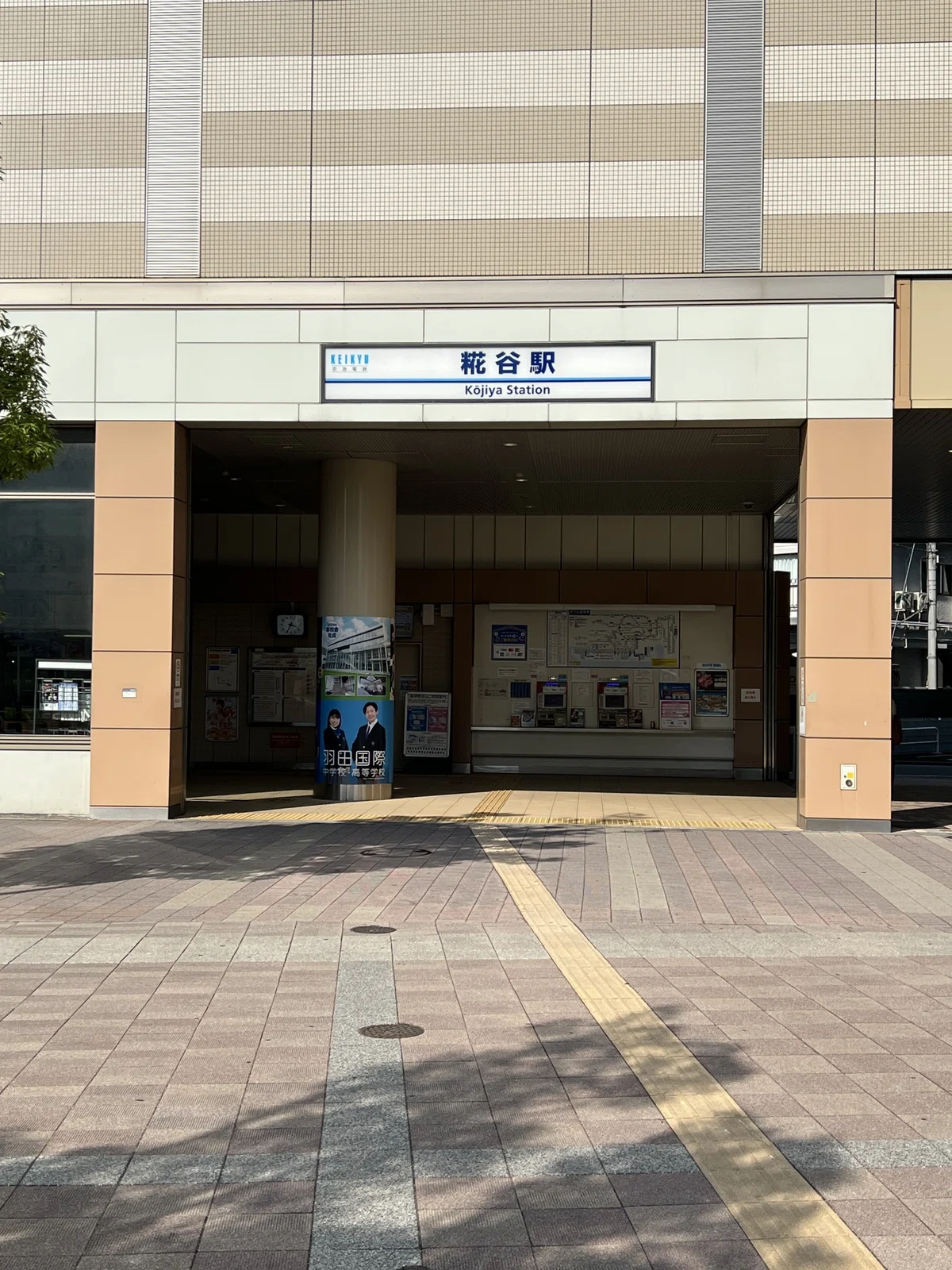
10 Nearest Station:
Keikyu Airport Line Kōjiya Station(KK12)
(Location: Nishi Kōjiya 4‐13‐19, Ota City, Tokyo)
This marks the end
of your "Omori Seaweed Road" journey.
From here, you can easily connect
to other parts of Tokyo
via the Keikyu Airport Line.
We hope you enjoyed
tracing the rich history
of nori cultivation and fishing
in Omori and Kōjiya area.
Afterword
We hope this
"Omori Seaweed Road (by walk)" guide
has offered you a fascinating glimpse
into the hidden history of Omori and Kōjiya area.
As you walked this path,
perhaps you felt the echoes
of generations of nori cultivators and fishermen,
whose efforts shaped
these vibrant neighborhoods.
While the bustling Tokyo Bay coastline
looks very different today,
the spirit of its maritime past
lives on in these quiet monuments
and resilient businesses.
We encourage you
to embark on this journey yourself,
to discover these footprints of the sea firsthand,
and to feel the enduring connection
between the people of Ota
and the ocean that sustained them for centuries.
May the legacy of
Omori's nori culture
continue to be remembered
and cherished for generations to come.
【Notes for Visiting Shrines】
The "Omori Seaweed Road" tour
introduced in this article
includes visits to shrines and temples.
When visiting, please take note of the following:
Bowing at the Torii gate:
When entering a shrine,
it is recommended to pause at the Torii gate,
remove your hat, and give a light bow.
Daytime visits:
It is believed that the deities rest at night.
Therefore, it is recommended
to visit during the daytime.
Photo: Otapedia
Header Photo: Otapedia (AI-generated)
いいなと思ったら応援しよう!
 いつもご覧いただき、誠にありがとうございます。
皆様からの温かいご支援が、
私の活動の大きな支えとなります。
いつもご覧いただき、誠にありがとうございます。
皆様からの温かいご支援が、
私の活動の大きな支えとなります。