
銀嶺(京都府立植物園):2026年5月10日(日)

【要旨】
2026年5月10日,京都府立植物園ばら園において,バラ品種・銀嶺(Rosa cv. ‘Ginrei’)を観察した。銀嶺は,育種家・鈴木省三によって1990年に日本で作出されたフロリバンダ系品種であり,農林水産省品種登録制度にも登録された正規品種である。本品種は,白色を基調としながら,蕾から開花に至る過程で色調と光の受容を変化させる構造をもち,日本の戦後バラ育種が公共展示空間を強く意識する段階に到達した証左として位置づけられる。本稿では,京都府立植物園という制度化された自然史展示空間において,銀嶺がどのような植物学的価値,育種史的意味,文化的役割を担っているかを,一次観察にもとづき記述する。
【本文】
2026年5月10日,午後,京都府立植物園ばら園を歩いた。雲量は少なく,初夏としては比較的乾いた空気が保たれ,直射光と反射光が複雑に交差していた。ばら園は,個々の品種の視認性と比較可能性を前提として設計された制度空間であり,観賞行為そのものが空間利用の主要目的として組み込まれている。そのなかで,銀嶺は,突出することなく,他の淡色系フロリバンダ品種群と連続的に配置されていた。
展示名札には,Ginrei,銀嶺,中香,1990年,日本作出,F系とある。学名はRosa cv. ‘Ginrei’。これは農林水産省品種登録原簿(登録番号3340)に記載された正式情報と整合する。登録資料によれば,本品種はホワイト系品種を基調とした交配系譜をもち,庭園・鉢植え双方への適応を想定して育成されたことが明示されている。作出者は鈴木省三(1913–2000)で,日本の近代バラ育種を制度・実務の両面から支えた中心的存在であった。
鈴木省三は,戦後日本において,香り,花形,色彩の研究を体系化し,京成バラ園芸の育種部門を率いた人物である。高度経済成長期以降,豪華な大輪花や強香が求められる時代潮流のなかで,鈴木は一貫して,日本の都市環境,公共花壇,植物園展示に耐える品種像を追求した。銀嶺は,そうした姿勢が成熟期を迎えた1990年前後の作出であり,個人庭園向けの華美さではなく,公共空間での持続的観賞を前提とする設計思想が色濃く反映されている。
実際の花は,中心部に淡い黄白色を残し,外弁へ向かって白へと移行する。蕾には赤みが現れ,開花の進行にともない色調が沈静化する。これは,登録原簿に記された「つぼみのとき赤みを帯び,開花とともに黄白から白へ移る」という記述とも一致する。花形は半剣弁高芯咲きで,花径は中輪。房咲き性を示し,一房あたり複数輪が同時に視野に入る構造をとる。
香りは中香で,ティー香を基調とするが,空間を支配するほどではない。この香りの抑制は偶然ではなく,多花性・淡色花と競合しない感覚設計として理解できる。フロリバンダ系が歴史的に担ってきた「景観構成要素」としての役割が,ここでも一貫して維持されている。
1990年前後の日本のバラ育種は,戦後復興期における豪奢さ志向から距離を取り,公共空間における安定性,管理可能性,文化的可読性へと重点を移しつつあった。銀嶺は,その転換期において,白という色彩を単なる無彩色としてではなく,時間と光によって変容する媒介として用いる点に特徴がある。名称である「銀嶺」は公式な由来解説を欠くが,花容と結びつくことで,雪を戴く山稜のような静的で持続的なイメージを観賞者に喚起する。
ばら園という制度空間において,銀嶺の経済的価値は,市場性や新品種性ではなく,長期展示に耐える実績の蓄積として現れる。文化的価値は,日本作出バラが公共展示の文脈でどのような自己像を形成してきたかを示す点にある。環境資源的価値は,過度な更新を必要とせず,都市型植物園の維持管理サイクルに組み込まれてきた事実そのものに認められる。
銀嶺を観察することは,特定の花を読む行為であると同時に,植物園が自然をどのように語り,どのような観賞態度を制度として育ててきたかを読み解くことである。白は完成ではなく過程として存在する。その移ろいを固定しないまま記録すること,自らの観賞行為を含めて一次資料として残すことが,本稿の目的である。本記録もまた,次に歩いたとき,別の光の下で読み返される余地を残したまま,ここに置かれる。
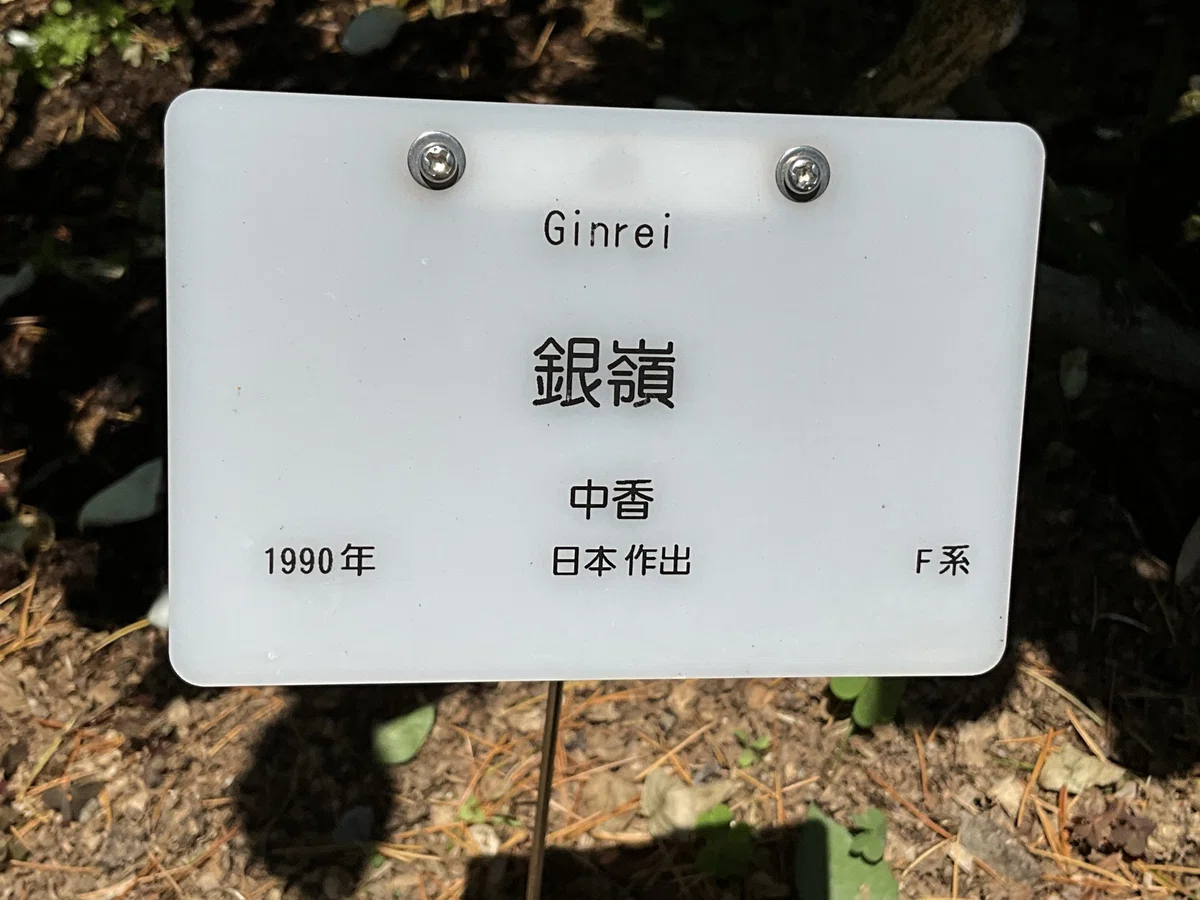
バラ科,F系,中香,日本作出(鈴木省三(京成バラ園芸))1990年,植物表示板
京都府立植物園ばら園
2026年5月10日,筆者撮影
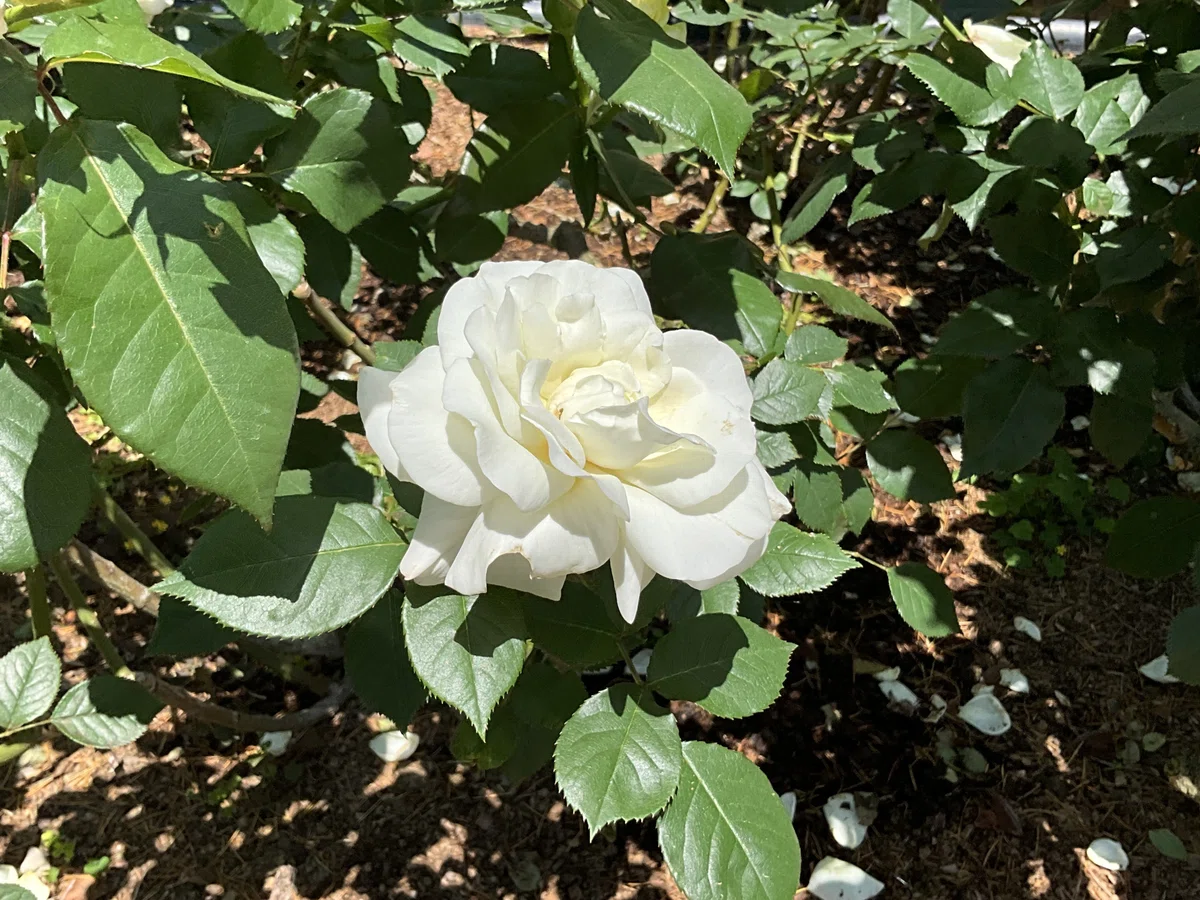
バラ科,F系,中香,日本作出(鈴木省三(京成バラ園芸))1990年
京都府立植物園ばら園
2026年5月10日,筆者撮影
©️Hideaki FUJII
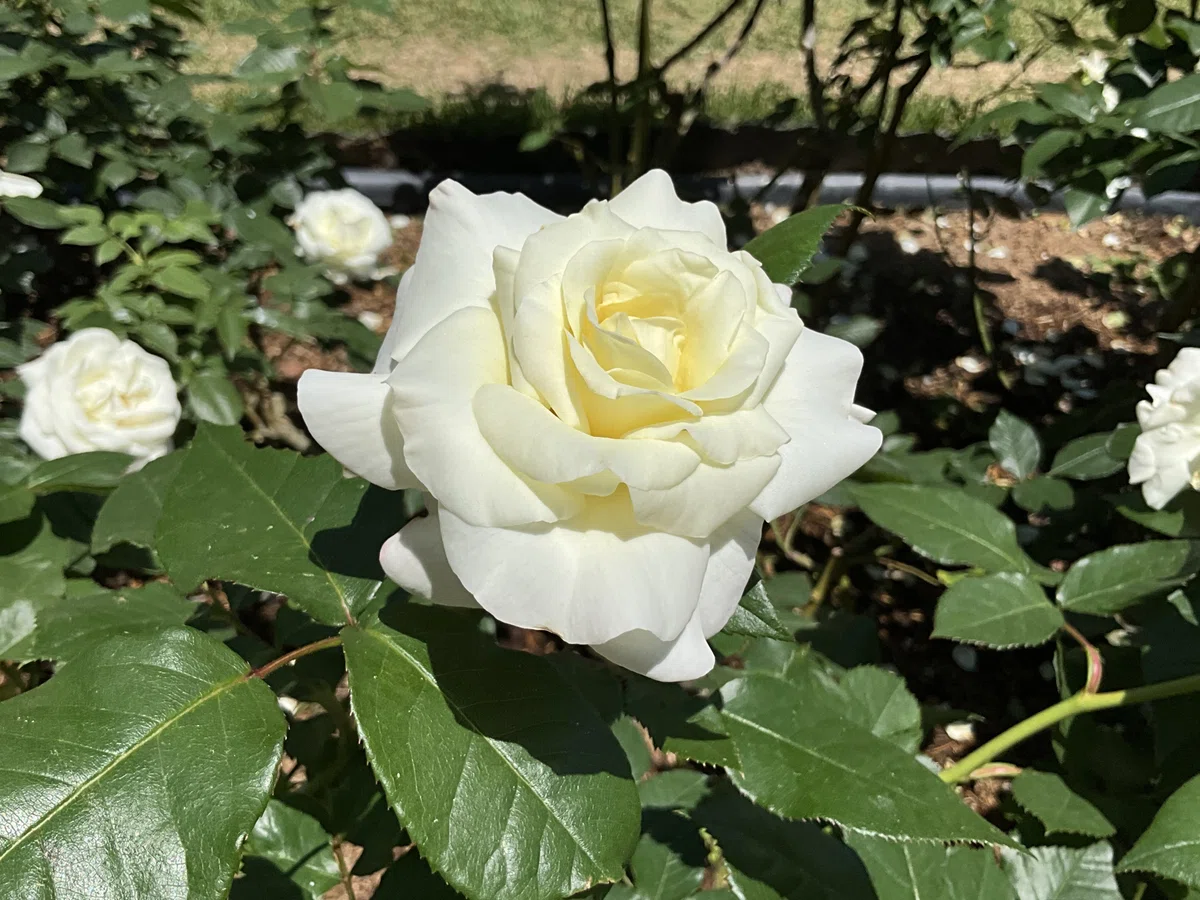
バラ科,F系,中香,日本作出(鈴木省三(京成バラ園芸))1990年
京都府立植物園ばら園
2026年5月10日,筆者撮影
©️Hideaki FUJII
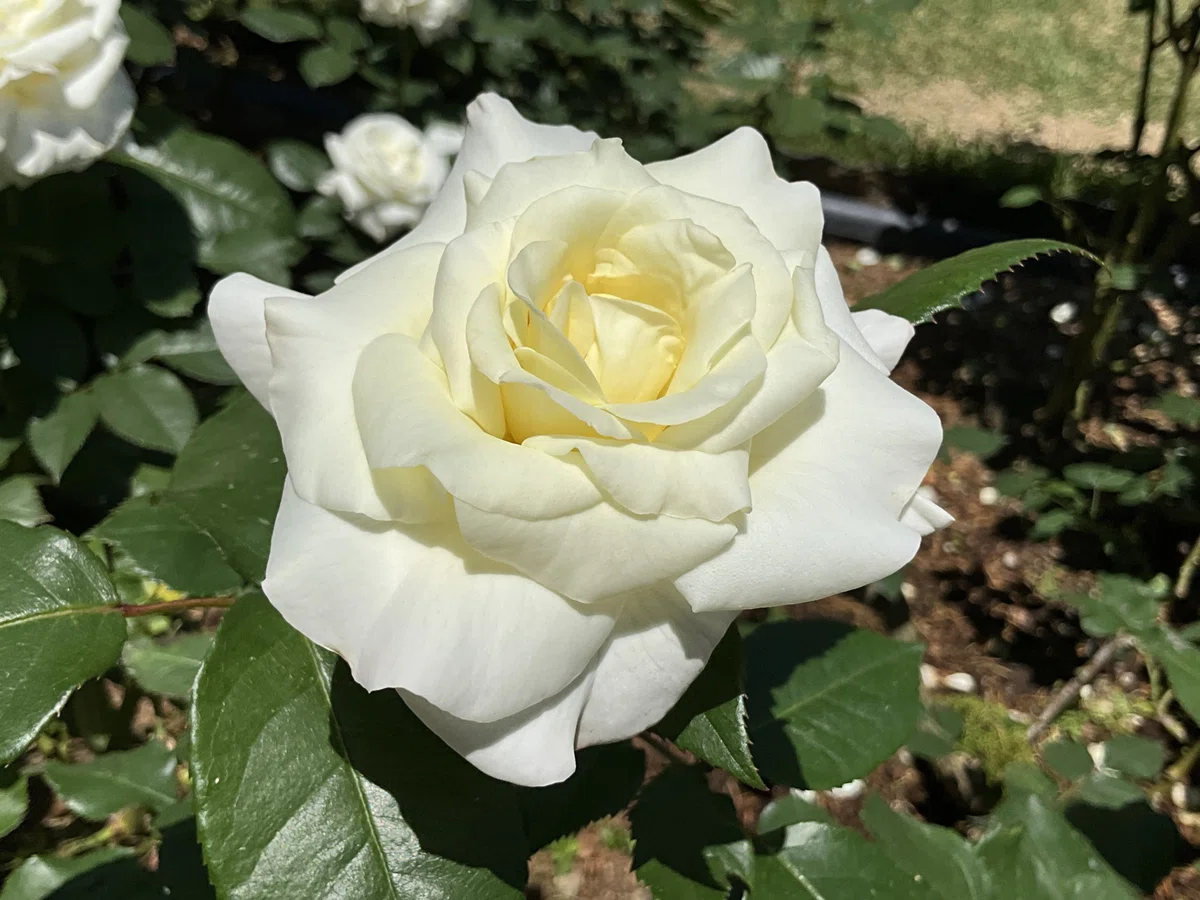
バラ科,F系,中香,日本作出(鈴木省三(京成バラ園芸))1990年
京都府立植物園ばら園
2026年5月10日,筆者撮影
©️Hideaki FUJII
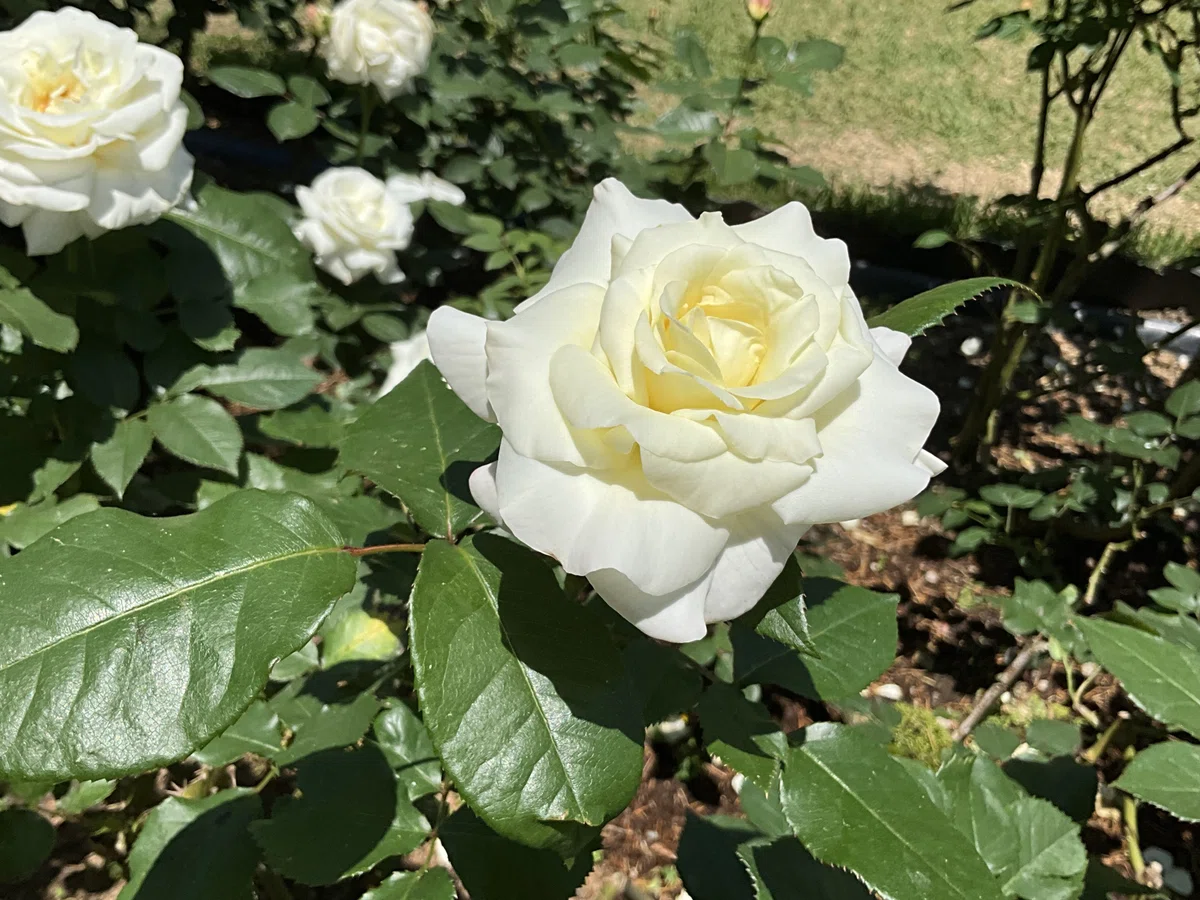
バラ科,F系,中香,日本作出(鈴木省三(京成バラ園芸))1990年
京都府立植物園ばら園
2026年5月10日,筆者撮影
©️Hideaki FUJII
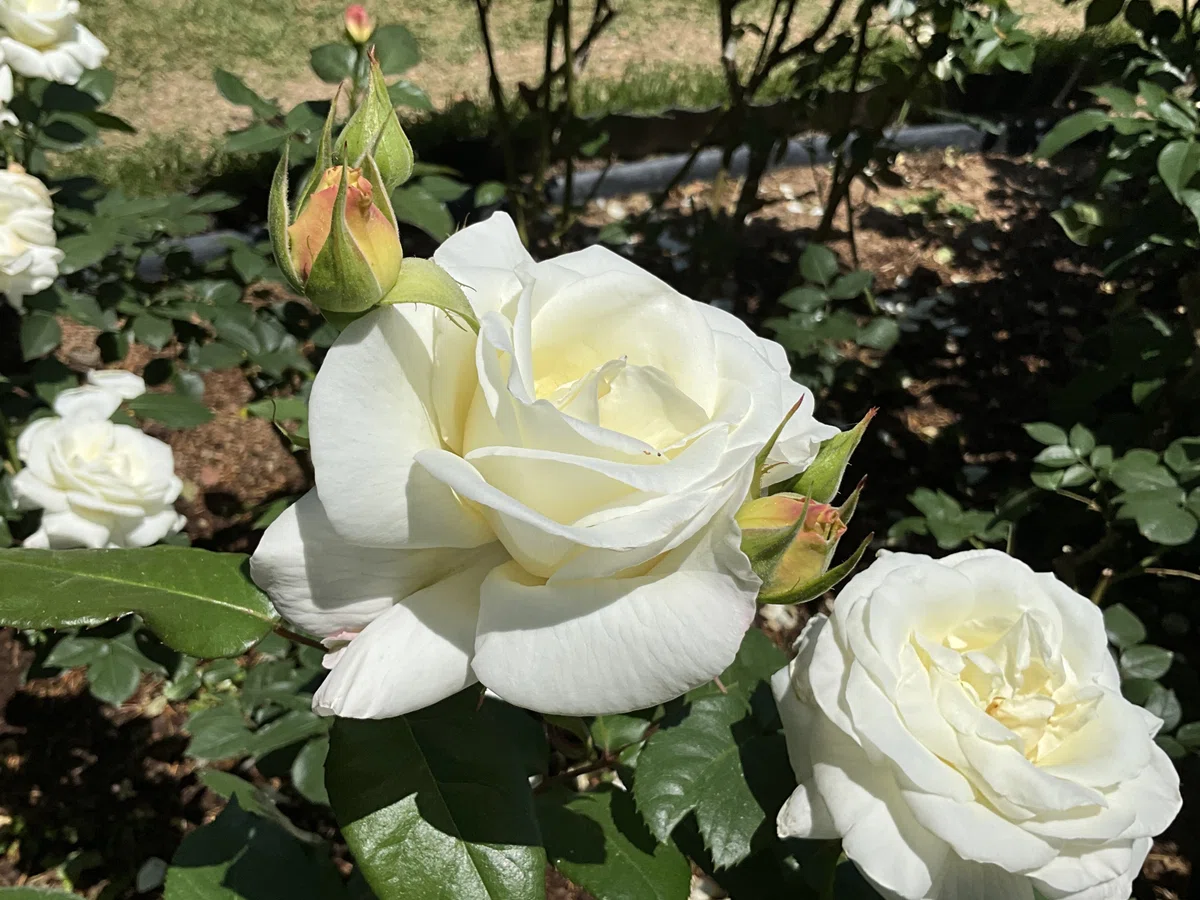
バラ科,F系,中香,日本作出(鈴木省三(京成バラ園芸))1990年
京都府立植物園ばら園
2026年5月10日,筆者撮影
©️Hideaki FUJII
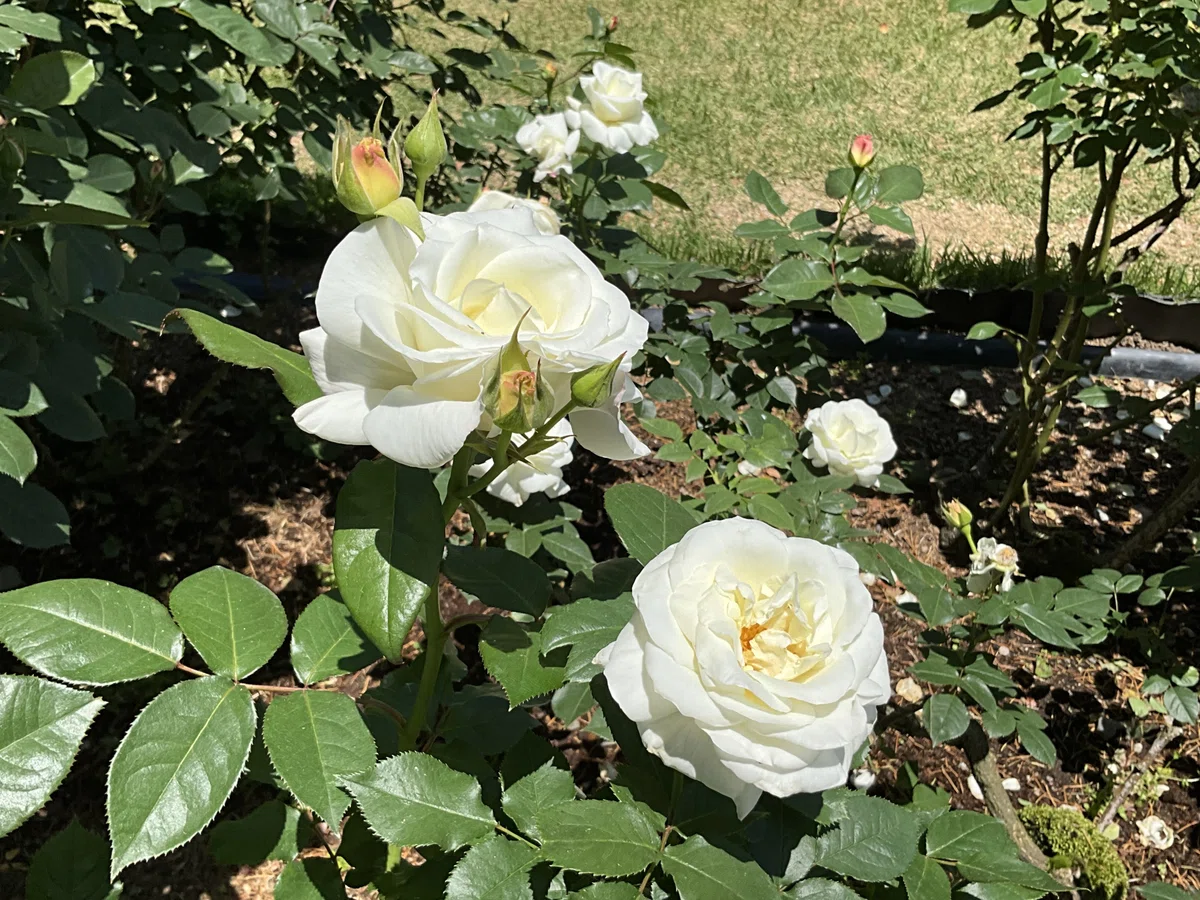
バラ科,F系,中香,日本作出(鈴木省三(京成バラ園芸))1990年
京都府立植物園ばら園
2026年5月10日,筆者撮影
©️Hideaki FUJII
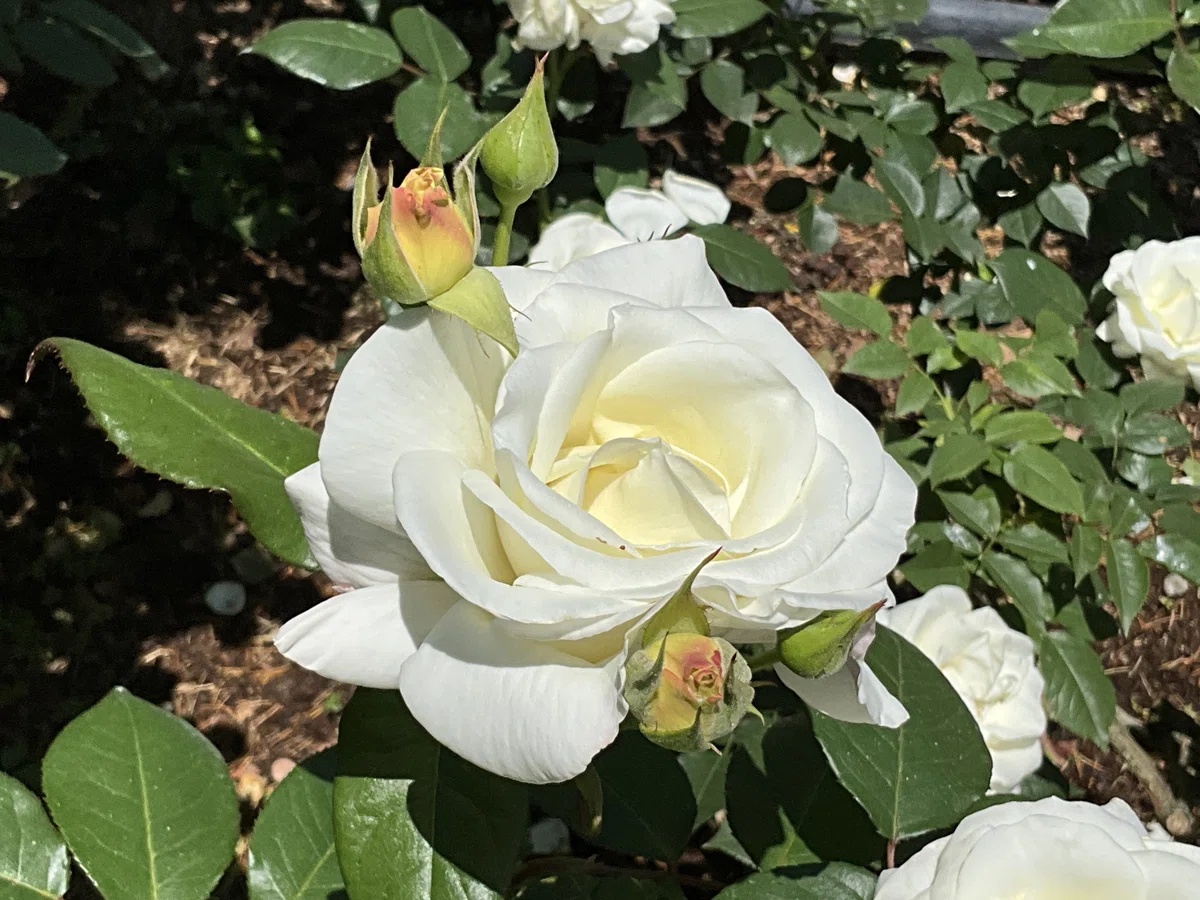
バラ科,F系,中香,日本作出(鈴木省三(京成バラ園芸))1990年
京都府立植物園ばら園
2026年5月10日,筆者撮影
©️Hideaki FUJII
Ginrei (Kyoto Botanical Gardens): Sunday, May 10, 2026
Abstract
On May 10, 2026, I observed the rose cultivar Ginrei (Rosa cv. ‘Ginrei’) in the Rose Garden of the Kyoto Botanical Gardens. Ginrei is a floribunda rose cultivar bred in Japan in 1990 by the breeder Seizō Suzuki and is a formally registered cultivar under the Plant Variety Protection and Seed Act administered by the Ministry of Agriculture, Forestry and Fisheries. Although based on a white color palette, this cultivar is characterized by a structural design in which both color tone and light reception change gradually from the bud stage to full bloom. It can therefore be positioned as evidence that postwar Japanese rose breeding had reached a phase in which public exhibition spaces were consciously taken into account. This paper describes, on the basis of direct observation, how Ginrei embodies botanical value, significance within the history of rose breeding, and a cultural role within the institutionalized natural history exhibition space of the Kyoto Botanical Gardens.
Main Text
On the afternoon of May 10, 2026, I walked through the Rose Garden of the Kyoto Botanical Gardens. Cloud cover was minimal, and the air was relatively dry for early summer. Direct sunlight and reflected light intersected in complex ways across the planting beds. The Rose Garden is an institutional space designed on the premise of visibility and comparability among individual cultivars, in which the act of viewing itself is incorporated as a primary mode of spatial use. Within this setting, Ginrei was arranged in continuity with other pale‑toned floribunda cultivars, without being given an overly emphatic placement.
The plant label indicated “Ginrei,” “銀嶺,” medium fragrance, 1990, bred in Japan, and floribunda (F). The scientific name is Rosa cv. ‘Ginrei.’ These details are consistent with the official records in the Ministry of Agriculture, Forestry and Fisheries plant variety register (registration number 3340). According to the registration documents, this cultivar derives from a breeding lineage based on white‑flowered roses and was developed with adaptation to both garden planting and container cultivation in mind. The breeder, Seizō Suzuki (1913–2000), was a central figure who supported modern Japanese rose breeding from both institutional and practical perspectives.
In postwar Japan, Suzuki systematized research on fragrance, flower form, and color while leading the breeding division of Keisei Rose Nurseries. During and after the period of high economic growth, when large, showy flowers and strong fragrance were widely sought, Suzuki consistently pursued cultivar profiles capable of withstanding Japan’s urban environments, public flowerbeds, and botanical garden displays. Ginrei was bred around 1990, when this approach had reached maturity, and its design philosophy reflects a clear emphasis not on ornamentation for private gardens but on sustained viewing in public spaces.
In the flower itself, a pale yellowish‑white tone remains at the center and gradually transitions to white toward the outer petals. The buds exhibit reddish coloration, which subsides as flowering progresses. This corresponds with the description in the registration record stating that the buds are tinged with red and that the flowers shift from yellowish white to white as they open. The flower form is semi‑high‑centered with semi‑pointed petals, the flower size is medium, and the cultivar exhibits a clustered inflorescence structure in which multiple flowers from a single cluster enter the field of view simultaneously.
The fragrance is of medium intensity, based on a tea‑rose note, and does not dominate the surrounding space. This restraint should not be regarded as incidental; rather, it can be understood as a sensory design that avoids competition with the multi‑flowered habit and pale coloration. In this respect, the historical role of the floribunda group as an element of landscape composition is consistently maintained.
Around 1990, Japanese rose breeding began to distance itself from the postwar preference for opulence and instead shifted its emphasis toward stability in public spaces, manageability, and cultural legibility. In Ginrei, the color white is not treated as a mere absence of color but as a medium that transforms through time and light. Although the name “Ginrei” lacks an official explanatory record, its association with the flower form evokes, for the viewer, a static yet enduring image reminiscent of snow‑covered mountain ridges.
Within the institutional space of the Rose Garden, the economic value of Ginrei is expressed not in market novelty but in the accumulation of a proven record of long‑term exhibition. Its cultural value lies in demonstrating how Japanese‑bred roses have shaped a self‑image within the context of public display. Its value as an environmental resource is found in the very fact that it has been integrated into the maintenance cycles of an urban botanical garden without requiring excessive renewal.
To observe Ginrei is to read a specific flower and, at the same time, to interpret how a botanical garden narrates nature and cultivates modes of viewing as an institution. White exists here not as completion but as process. To record its subtle transitions without fixing them, and to leave one’s own act of viewing as primary material, constitutes the purpose of this text. This record, too, is placed here while remaining open to being reread under different light on a future walk.
いいなと思ったら応援しよう!
 よろしければご応援をお願いします! いただいたチップはクリエイターとしての活動費に使わせていただきます!