
ヤブニッケイ(京都府立植物園):2026年3月18日(水)

【要旨】
2月19日,京都府立植物園植物生態園でヤブニッケイを観察した。冬でも艶のある常緑葉と3本の脈が残り,照合の足場が失われない。学名は京都府立植物園内の表示のCinnamomum yabunikkeiを軸に,日本の標準的整理と国際DBの異説を併記して透明化する。分布,形態,利用,保全評価を公的資料と国際DBで突き合わせ,植物学的価値,文化的価値,経済的価値,環境資源的価値を四面体として整理し,次季の追跡観察へ手渡す。
【本文】
観察の座標
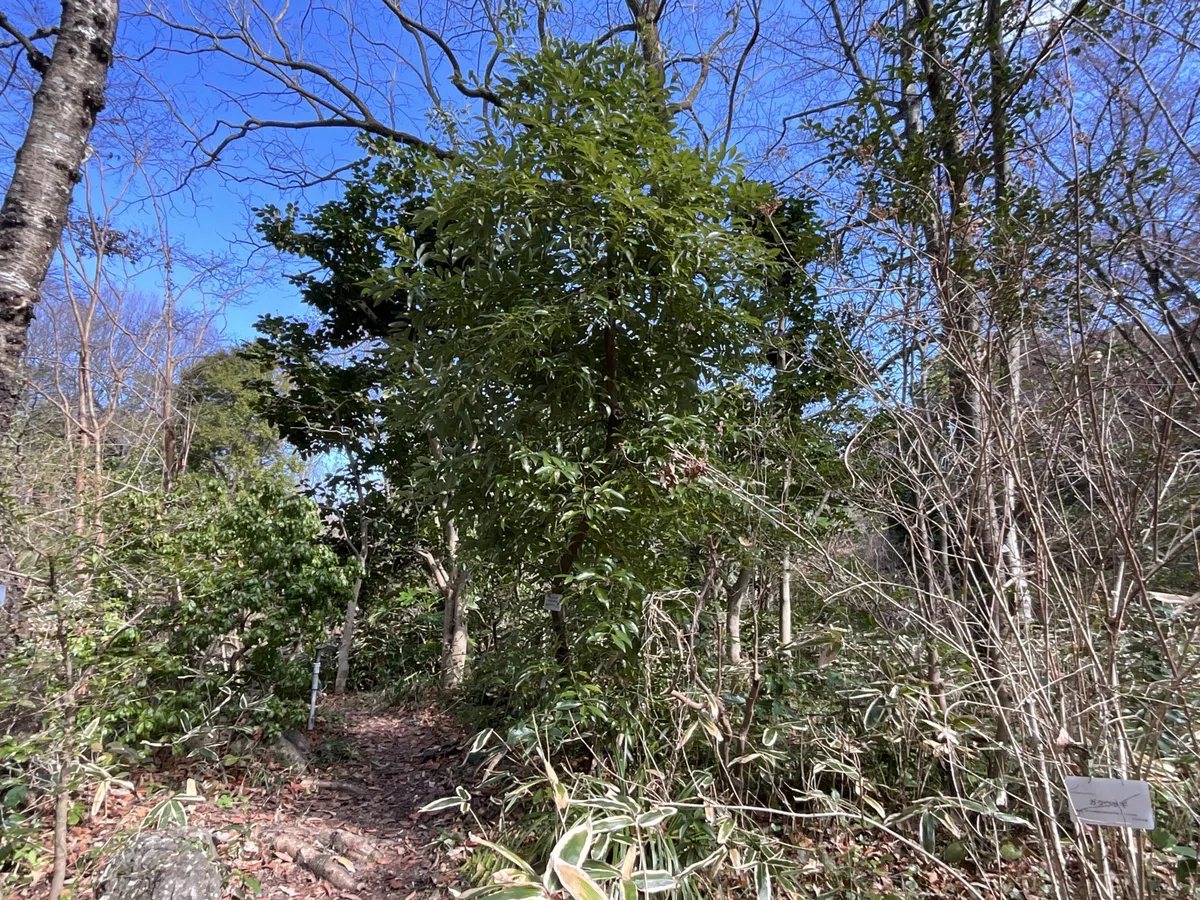
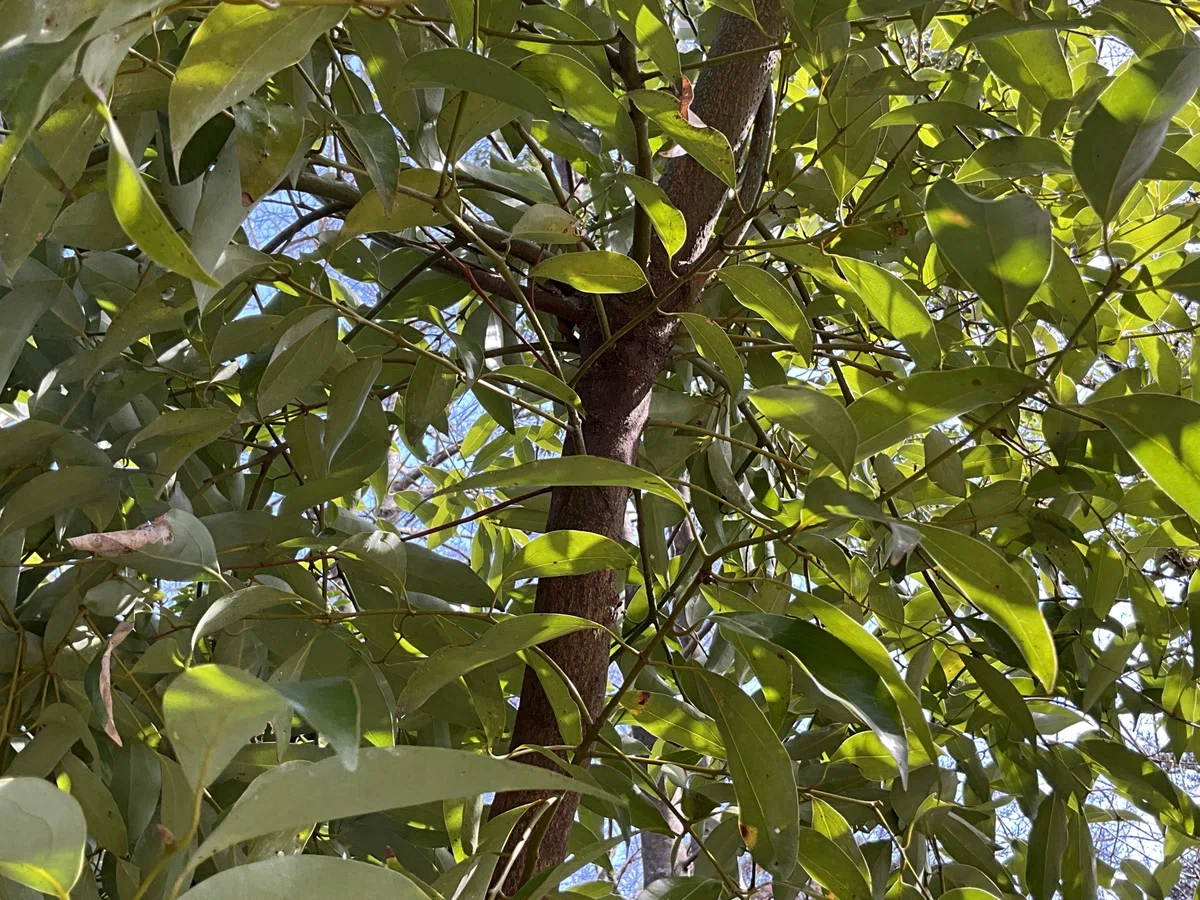
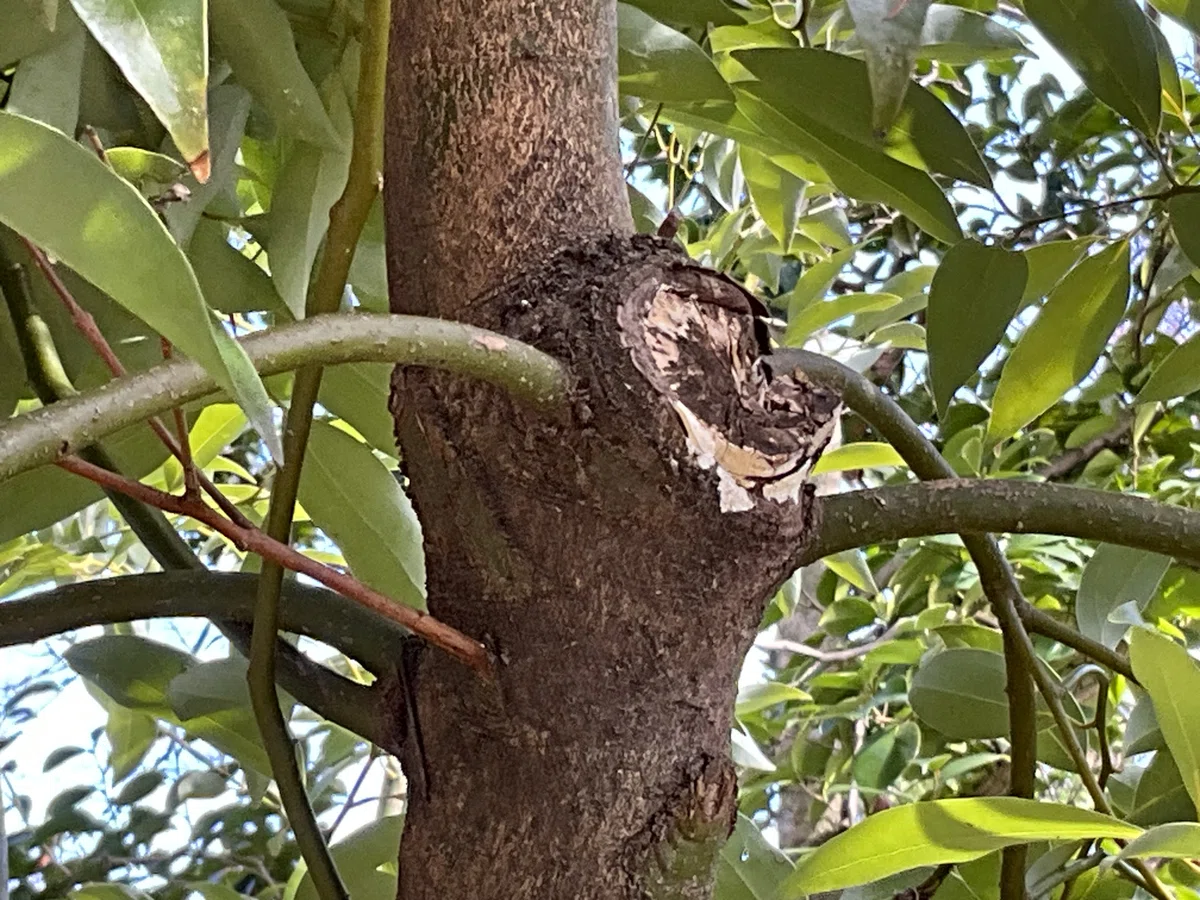
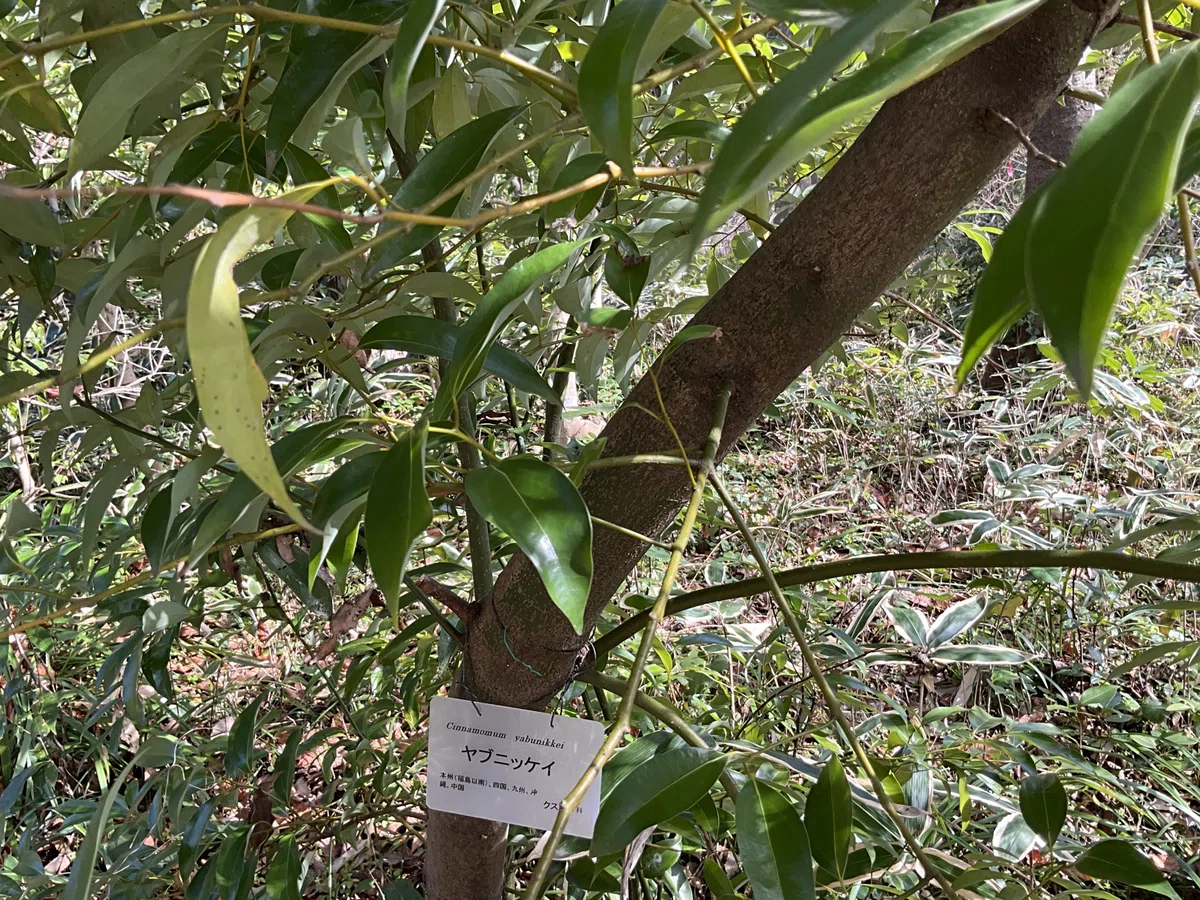
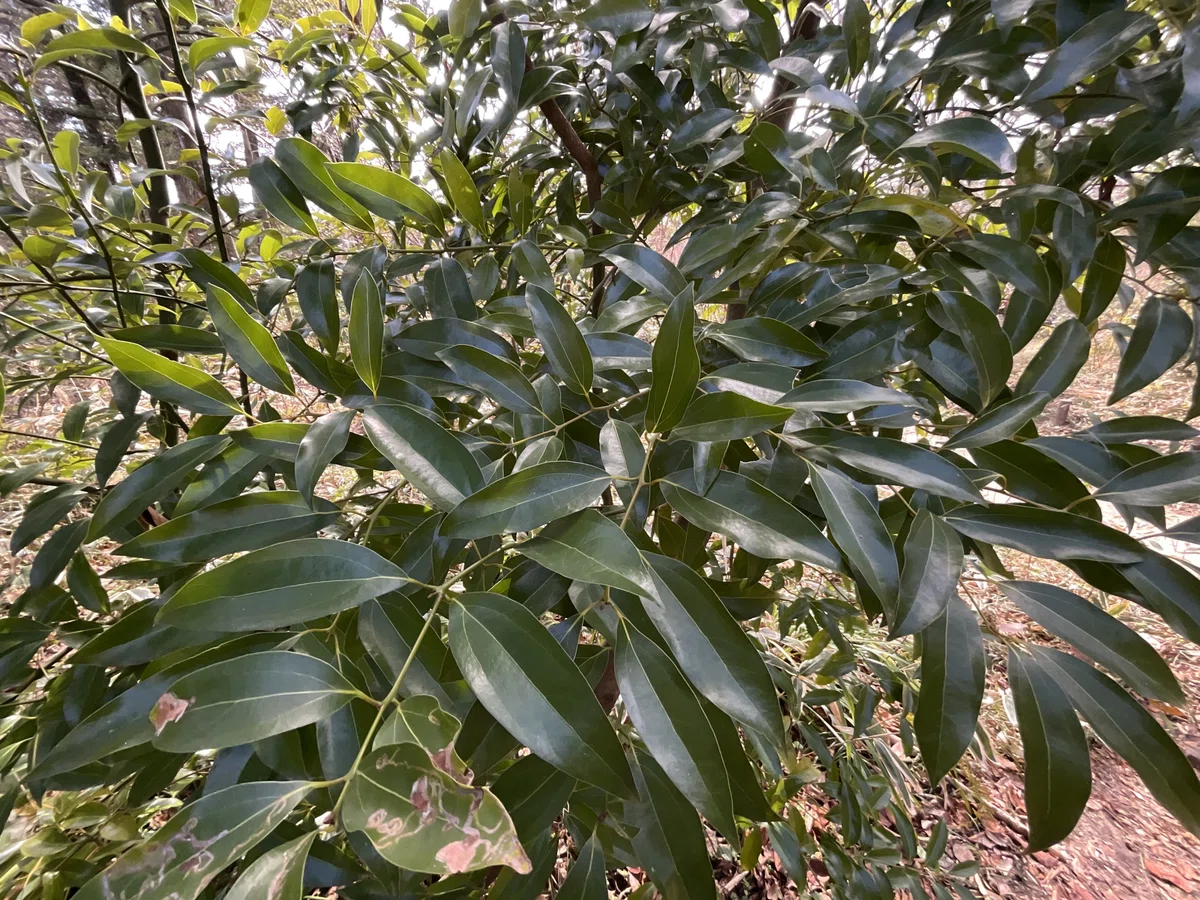
2月19日,植物生態園で植物表示板に「Cinnamomum yabunikkei」と掲げられた個体に立ち止まった。常緑の葉は濃緑で光沢が強く,基部から走る3本の脈が明瞭である。花と果実が不在の季節でも,葉序,葉形,香り,枝色,樹皮の触感といった同定点が残ることが,冬の観察を記録へ変える。
名と分類,揺れを揺れとして残す
和名「ヤブニッケイ(藪肉桂)」は,藪に生え,肉桂に似るという意味で名づけられたと説明されている。学名は日本の標準的整理では Cinnamomum yabunikkei H.Ohba が掲げられ,過去に用いられた複数の異名が整理されている。一方,国際DBでは C. yabunikkei を Cinnamomum chekiangense のシノニムとする扱いが提示されている。
そこで本稿では,植物園の表示を一次情報として尊重しつつ,日本の標準的運用(YList)に沿って本文の軸を立て,国際DBの別整理を注記として併置する。つまり,ヤブニッケイ(Cinnamomum yabunikkei)は,クスノキ科クスノキ属に属する常緑高木である。日本の植物分類では独立種として扱われているが,国際的には近縁の中国産種と同一視する見解もあり,分類史には揺れがある。『京都居候叢書』の作法は,断定の強さではなく,根拠の置き場所を明るくすることにある。
形態・分布・季節,観察と文献を噛み合わせる
森林総合研究所の樹木図鑑によれば,本種は常緑高木で,樹皮は灰緑赤黒色で平滑,若枝は緑色,葉は互生または対生で狭卵形から長楕円形,表面は深緑で光沢があり,下面は淡色で香りがある。
花は枝先の葉腋から出て淡黄色の小花を開き,果実は液果で黒く熟し,種子は1個とされる。開花期は6月,果実成熟期は11~12月と整理されている。
分布は本州(福島県以南),伊豆七島,四国,九州,済州島,琉球,中国南部の暖帯に広く及ぶ。また分布データベースでは「亜熱帯~暖温帯の林内に生育する」樹木として位置づけられている。
この記述は,植物生態園という再構成された林内環境のなかで,冬でも葉面が光を返し続けるという現地所見と矛盾しない。
利用と価値の四面体
植物学的価値
常緑葉,芳香,葉序の揺れ(互生と対生状)といった同定点がまとまり,冬でも記録が成立する。さらに,学名が国内標準と国際DBで揺れ得る事実は,分類学が更新される過程そのものを教材化する。
文化的価値
「藪肉桂」という名づけは,香りを持つ木を生活の側から捉えた言語の痕跡である。肉桂に似るが同一ではないという距離感が,むしろ観察を促す。名前が先にあって,観察が後から追いつくという順序は,叢書の記録作法と整合する。
経済的価値
用途として,材の利用(床柱,器具材),葉の利用(包餅用,薬用),種子からの採油(燈用),苗木がニッケイの台木として用いられることが挙げられている。これらは「香り」を資源化する経路であり,植物園の表示板が示す基礎情報としても重要である。
環境資源的価値
本種は亜熱帯~暖温帯の林内に生育する樹木として整理され,都市の植物園がその環境像を可視化し得る点が教育資源となる。保全評価は全国版だけで完結せず,地方版で希少性が付される場合があるため,展示は希少性を演出するのではなく,評価単位と地域差を分けて理解させる方向へ向かうべきである。
保全評価,断定しない精度
統合データベースでは,環境省カテゴリ欄は空欄である一方,宮城県で絶滅危惧Ⅰ類,福島県で準絶滅危惧,長野県で絶滅危惧Ⅰ類など,地方版での指定状況が示されている。
また WFO の当該ページには IUCN Red List Status が LC と表示されるが,学名の同定やシノニム扱いの整理が絡み得るため,本稿では「表示されている」事実として置き,国内の地域差と並置する。
ここで必要なのは,危機を煽ることでも,安心を断言することでもなく,評価がどの単位で付与され,どの地理の上で意味を持つかを,次の観察へ手渡すことである。
止揚,冬の葉面を次季へ手渡す
花のない季節に残るのは,葉の光沢と香りである。ヤブニッケイは,派手な主役ではなく,林内の時間を保つ脇役として立っている。次は6月の開花の有無と花序の位置,秋から初冬にかけての果実の熟し方を,同一個体で追い,植物園の植物表示板と自分の記録とを一致させたい。そうすれば,観察→照合→比較→価値→止揚という『京都居候叢書』の型のなかで,この木は無理なく積み上がる。
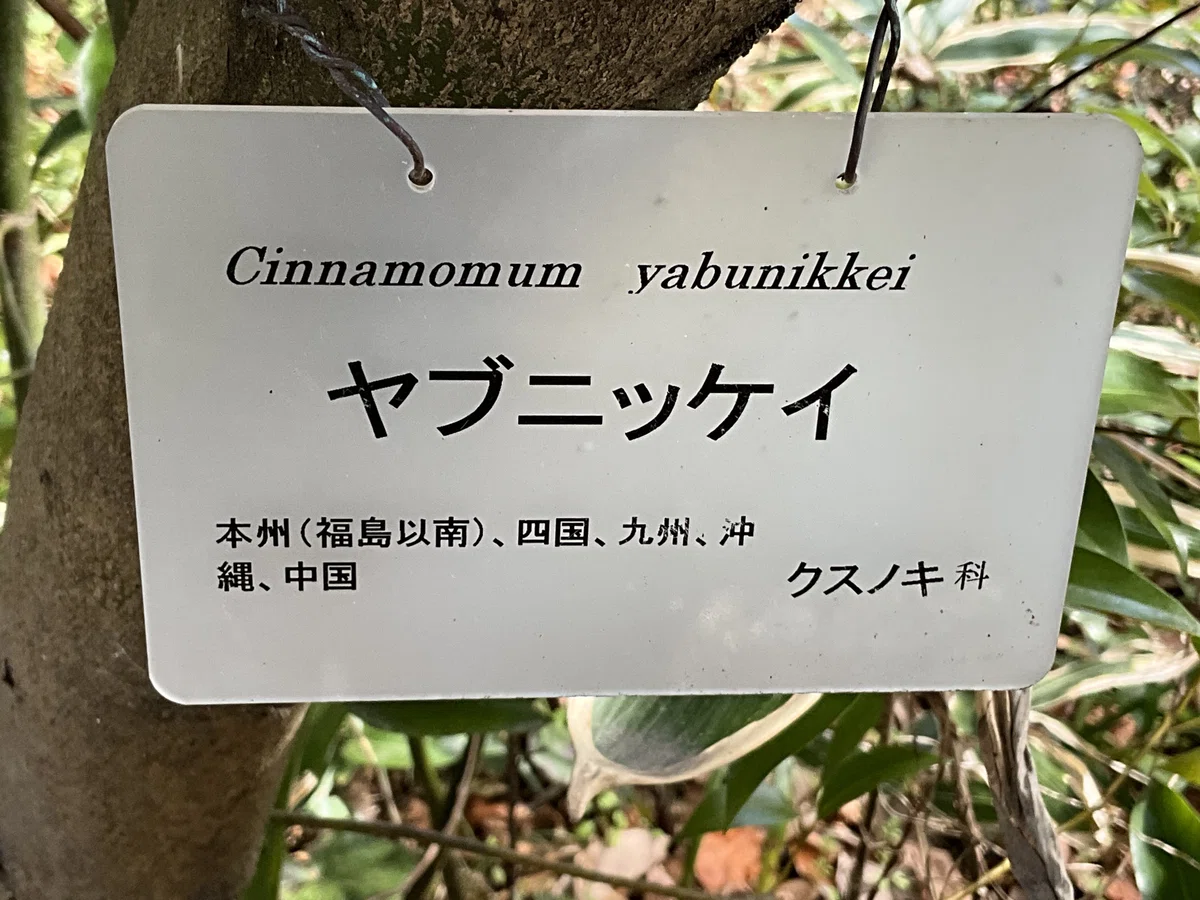
クスノキ科,原産地:本州(福島以南),四国,九州,沖縄,中国,植物表示板
京都府立植物園植物生態園
2026年2月19日,筆者撮影
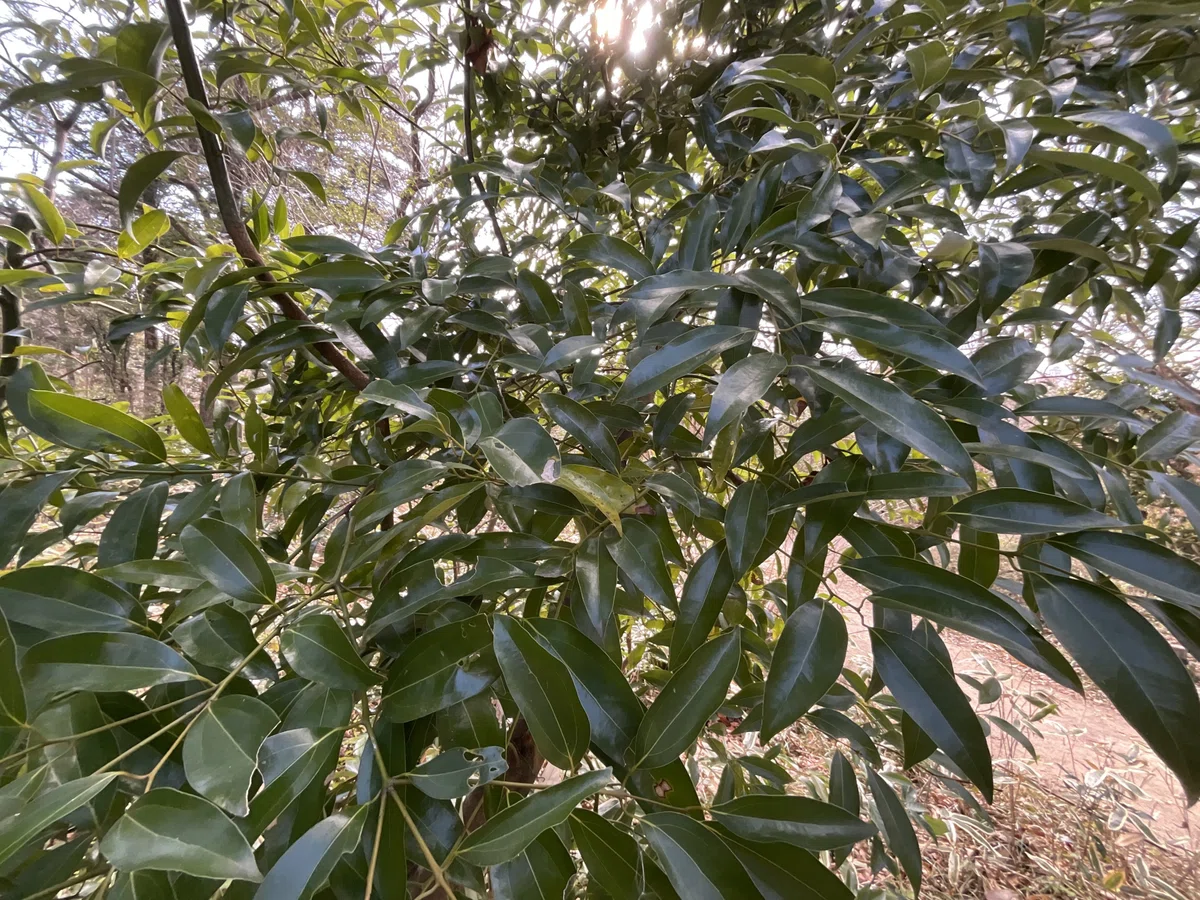
クスノキ科,原産地:本州(福島以南),四国,九州,沖縄,中国
京都府立植物園植物生態園
2026年2月19日,筆者撮影
©️Hideaki FUJII
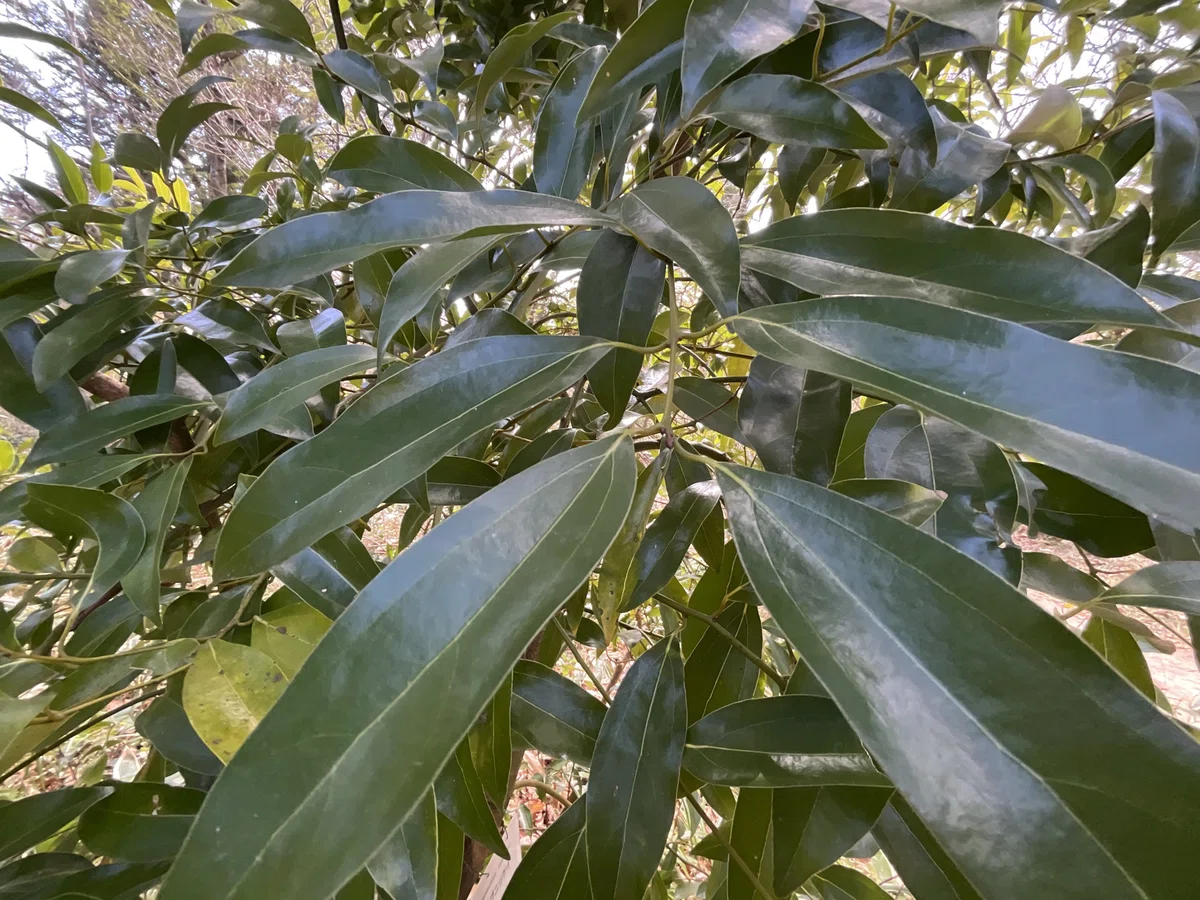
クスノキ科,原産地:本州(福島以南),四国,九州,沖縄,中国
京都府立植物園植物生態園
2026年2月19日,筆者撮影
©️Hideaki FUJII
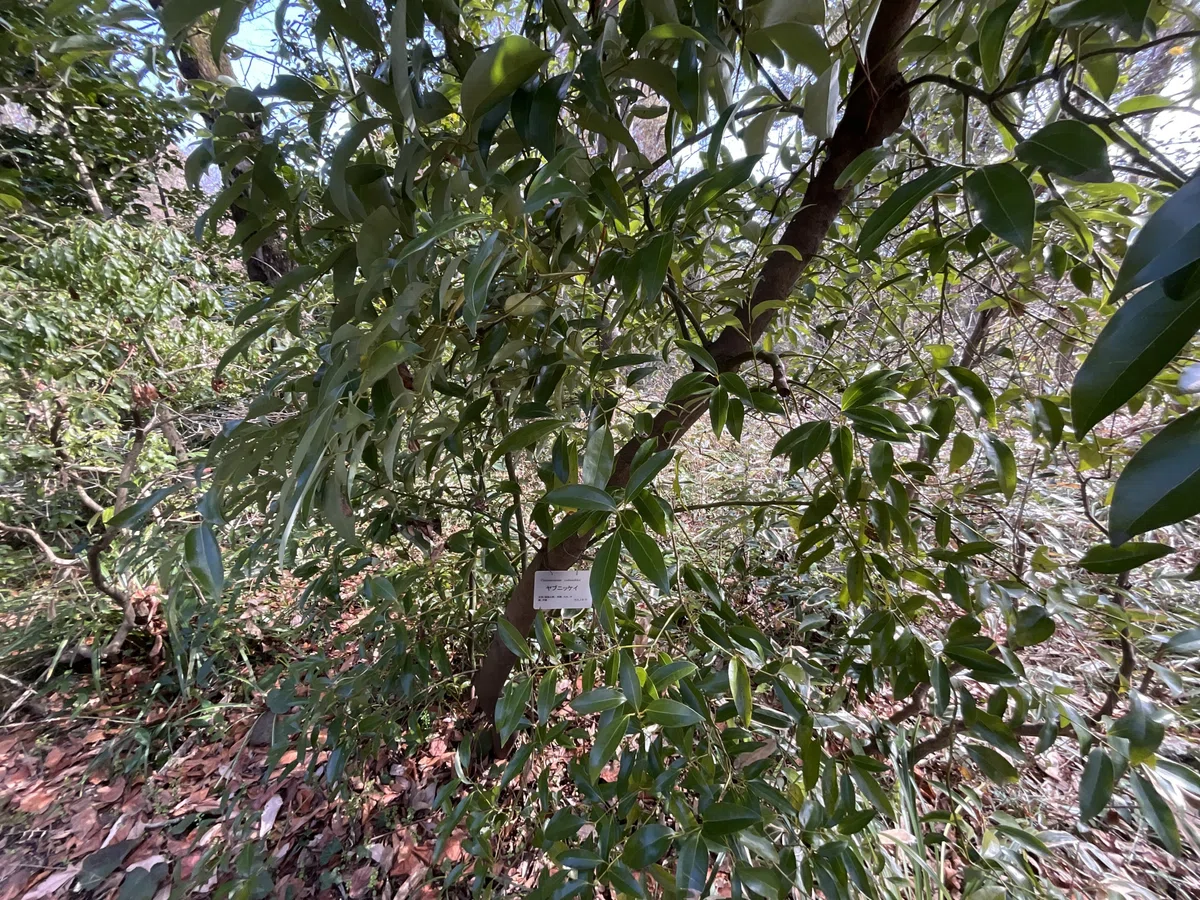
クスノキ科,原産地:本州(福島以南),四国,九州,沖縄,中国
京都府立植物園植物生態園
2026年2月19日,筆者撮影
©️Hideaki FUJII
クスノキ科,原産地:本州(福島以南),四国,九州,沖縄,中国
京都府立植物園植物生態園
2026年2月19日,筆者撮影
©️Hideaki FUJII
クスノキ科,原産地:本州(福島以南),四国,九州,沖縄,中国
京都府立植物園植物生態園
2026年2月19日,筆者撮影
©️Hideaki FUJII
クスノキ科,原産地:本州(福島以南),四国,九州,沖縄,中国
京都府立植物園植物生態園
2026年2月19日,筆者撮影
©️Hideaki FUJII
クスノキ科,原産地:本州(福島以南),四国,九州,沖縄,中国
京都府立植物園植物生態園
2026年2月19日,筆者撮影
©️Hideaki FUJII
クスノキ科,原産地:本州(福島以南),四国,九州,沖縄,中国
京都府立植物園植物生態園
2026年2月19日,筆者撮影
©️Hideaki FUJII
Yabunikkei (Kyoto Botanical Gardens): Wednesday, March 18, 2026
Abstract
On February 19, we observed Cinnamomum yabunikkei in the Native Plants Garden of the Kyoto Botanical Gardens. Even in winter, the glossy evergreen leaves persist, and the three basal leaf veins remain clearly visible, providing stable reference points for identification. The scientific name follows the plant label displayed within the Gardens (Cinnamomum yabunikkei) as the primary source, while differences between the Japanese standard taxonomy and international databases are presented side by side to ensure transparency. Distribution, morphology, uses, and conservation assessments are cross‑checked against official sources and international databases. These findings are then organized as a tetrahedron of values—botanical, cultural, economic, and environmental‑resource values—and passed forward to guide follow‑up observations in the coming seasons.
Main Text
Coordinates of Observation
On February 19, we paused before an individual labeled Cinnamomum yabunikkei on the plant label in the Native Plants Garden. The evergreen leaves are deep green and strongly glossy, with three distinct veins running from the leaf base. Even in a season without flowers or fruits, key identification points—phyllotaxy, leaf shape, scent, branch color, and the tactile quality of the bark—remain available. It is precisely this persistence of diagnostic features that allows winter observation to be transformed into a durable record.
Names and Classification: Leaving the Instability as Instability
The Japanese name “Yabu‑nikkei” (藪肉桂) is explained as meaning a tree that grows in thickets and resembles nikkei (cinnamon). In the Japanese standard taxonomic treatment, the scientific name Cinnamomum yabunikkei H.Ohba is adopted, and several names used in the past are整理ed as synonyms. By contrast, international databases present an alternative treatment in which C. yabunikkei is regarded as a synonym of Cinnamomum chekiangense.
Accordingly, in this paper we respect the plant label of the Kyoto Botanical Gardens as primary information, establish the main text in line with the Japanese standard usage (YList), and place the international alternative as an annotated parallel. In other words, Yabu‑nikkei (Cinnamomum yabunikkei) is an evergreen tree belonging to the Lauraceae, genus Cinnamomum. In Japanese plant taxonomy it is treated as an independent species, while internationally there are views that regard it as conspecific with a closely related Chinese taxon, leaving a degree of fluctuation in its classification history. The ethos of the Kyoto Isōrō Sōsho lies not in the force of assertion, but in making visible where the grounds for judgment are placed.
Morphology, Distribution, and Seasonality: Interlocking Observation and Literature
According to the tree guide of the Forestry and Forest Products Research Institute, this species is an evergreen tree with smooth bark of gray‑green to dark reddish‑black tones; young branches are green. Leaves are alternate or opposite, narrow‑ovate to long‑elliptic, deep green and glossy on the leaf surface, paler and fragrant on the leaf underside. Flowers emerge from the leaf axils near branch tips as small pale‑yellow blossoms, while the fruits are drupes that ripen to black and contain a single seed. The flowering period is June, and the fruit maturation period is November to December.
Its distribution extends widely across warm‑temperate regions, including Honshu (south of Fukushima Prefecture), the Izu Islands, Shikoku, Kyushu, Jeju Island, the Ryukyus, and southern China. Distribution databases further position it as a tree growing in forests from subtropical to warm‑temperate zones. This description does not conflict with the on‑site observation that, within the reconstructed forest interior of the Native Plants Garden, the leaf surfaces continue to reflect light even in winter.
A Tetrahedron of Use and Value
Botanical value
Diagnostic traits—evergreen leaves, fragrance, and the fluctuation of phyllotaxy between alternate and opposite‑like arrangements—form a coherent set that allows reliable documentation even in winter. Moreover, the fact that the scientific name can differ between domestic standards and international databases itself becomes instructional material, revealing the process by which taxonomy is updated.
Cultural value
The name “Yabu‑nikkei” preserves a linguistic trace of viewing fragrant trees from the standpoint of daily life. The distance implied by being similar to, yet not identical with, true cinnamon invites closer observation. The sequence in which the name precedes observation, and observation gradually catches up, aligns with the recording practices of this series.
Economic value
Recorded uses include timber (for tokobashira and utensils), leaves (for wrapping rice cakes and for medicinal purposes), oil extracted from seeds (for lighting), and seedlings used as rootstock for nikkei. These pathways represent ways of resource‑making through “fragrance” and constitute essential baseline information also reflected on the plant label.
Environmental‑resource value
As a tree categorized as inhabiting forest interiors of subtropical to warm‑temperate zones, the species offers educational value in that urban botanical gardens can visualize such environmental images. Conservation assessments do not end with national lists alone; local red lists may assign rarity. Exhibitions should therefore move not toward dramatizing scarcity, but toward clarifying assessment units and regional differences.
Conservation Assessment: Precision Without Assertion
In integrated databases, the Ministry of the Environment category field is blank, while local designations indicate statuses such as Critically Endangered in Miyagi Prefecture, Near Threatened in Fukushima Prefecture, and Critically Endangered in Nagano Prefecture. Meanwhile, the relevant WFO page displays an IUCN Red List Status of LC. Because issues of name application and synonymy may be involved, this paper treats that status as a displayed fact and places it alongside domestic regional variation. What is required here is neither the amplification of crisis nor the assertion of reassurance, but the handing‑forward of clarity about the unit of assessment and the geography over which it holds meaning.
Aufhebung: Passing the Winter Leaf Surface to the Next Season
What remains in a season without flowers is the gloss and scent of the leaves. Yabu‑nikkei stands not as a flamboyant protagonist, but as a supporting presence that sustains the time of the forest interior. Next, we aim to track the same individual for the presence or absence of flowering in June and the position of inflorescences, and then to follow fruit maturation from autumn into early winter, aligning the plant label of the Botanical Gardens with our own records. In doing so, within the sequence of observation → collation → comparison → value → Aufhebung that defines the Kyoto Isōrō Sōsho, this tree can be accumulated naturally and without strain.
いいなと思ったら応援しよう!
 よろしければご応援をお願いします! いただいたチップはクリエイターとしての活動費に使わせていただきます!