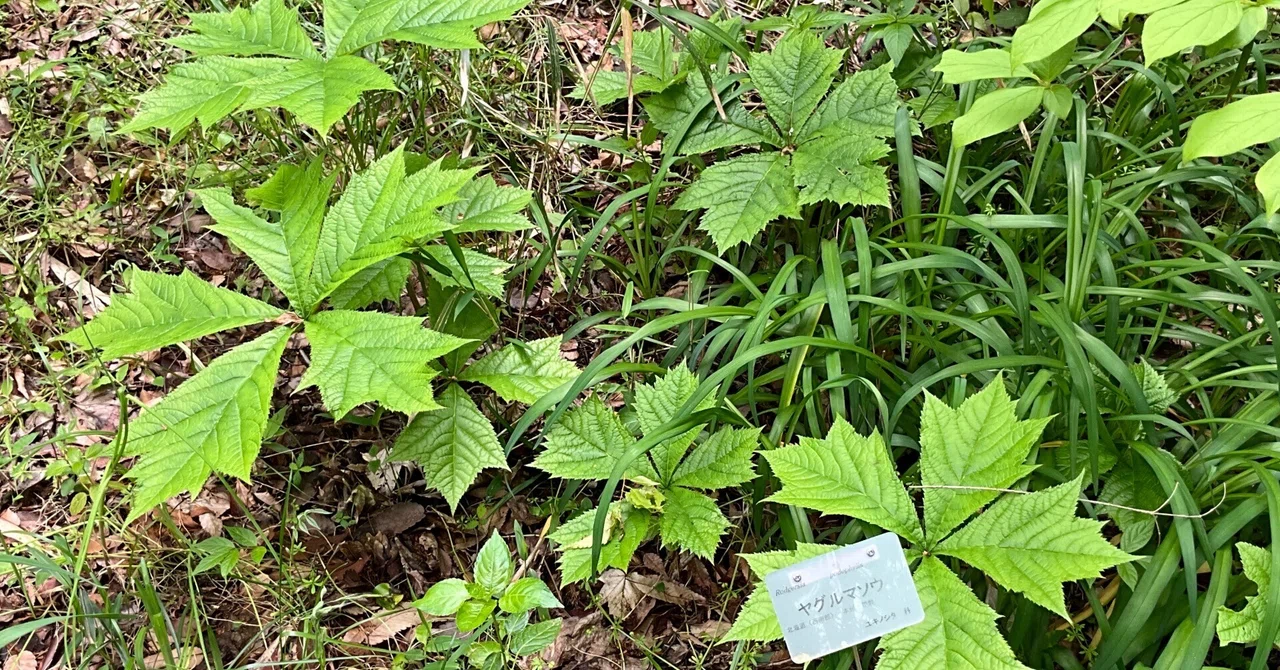
ヤグルマソウ(京都府立植物園):2026年4月28日(火)

【要旨】
2026年4月26日,京都府立植物園植物生態園に植栽されたヤグルマソウ(Rodgersia podophylla)を観察した。本稿は,ヤグルマソウを在来の大型多年草として記述するにとどまらず,植物分類学的確定性,林床生態への適応,東アジア植物地理,植物生態園という制度空間,そして観察主体の関与が交差する存在として整理する試みである。ヤグルマソウは日本に自生するユキノシタ科ヤグルマソウ属の唯一の種であり,春から初夏にかけては花よりも葉の展開によって林床の時間構造を規定する。花期以前に立ち会う本種の姿は,植物展示が必ずしも華やかな瞬間に集約されるものではないことを示している。葉の季節における存在の記録は,観察の射程を次へと開く。
【本文】
2026年4月26日,午後の安定した光のもと,京都府立植物園植物生態園においてヤグルマソウを観察した。京都府立植物園は,植物を単に自然物として保存する施設ではなく,人間が植物を分類し,配置し,管理し,理解してきた判断の履歴が重層化した制度空間である。植物生態園は,そのなかでも個々の種の観賞性よりも,生育環境,群落構造,季節進行を前面に押し出す区画として構成されている。
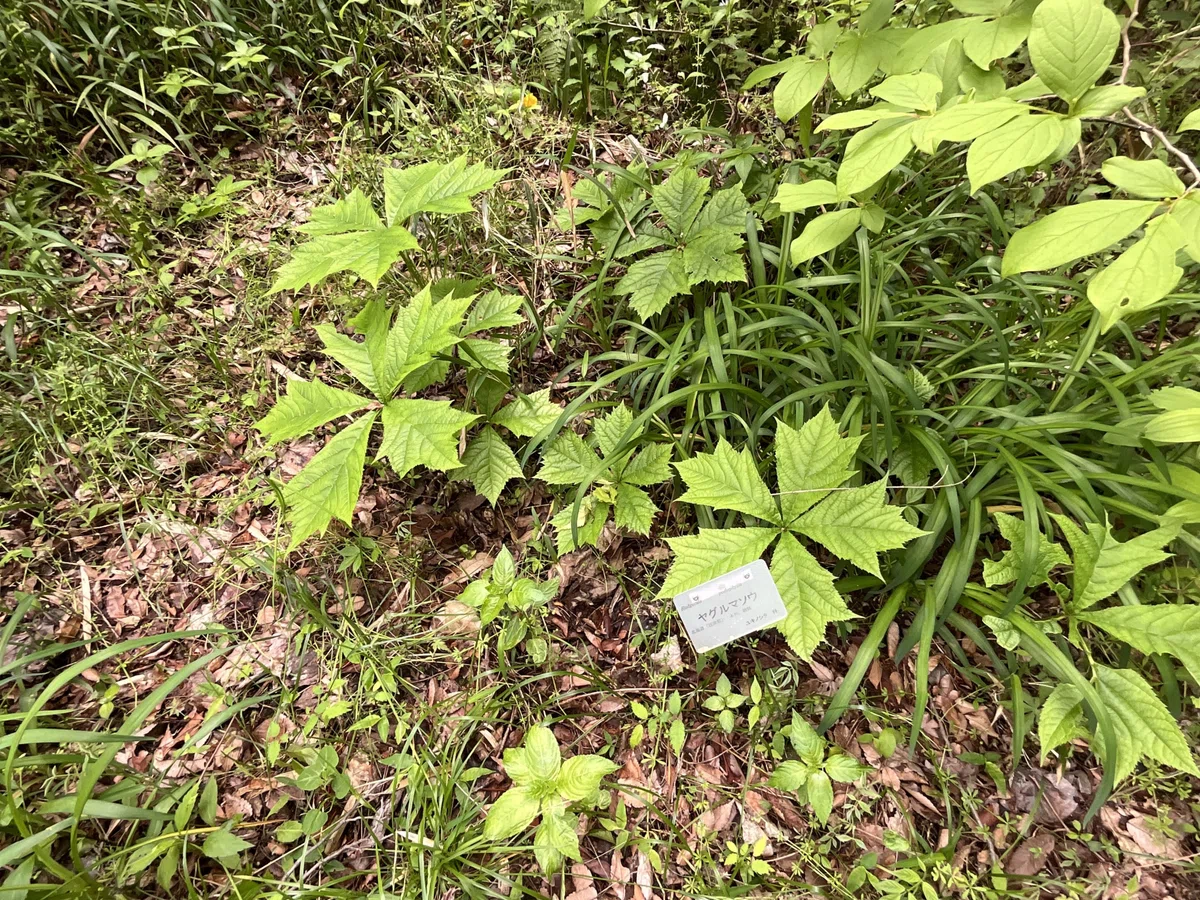
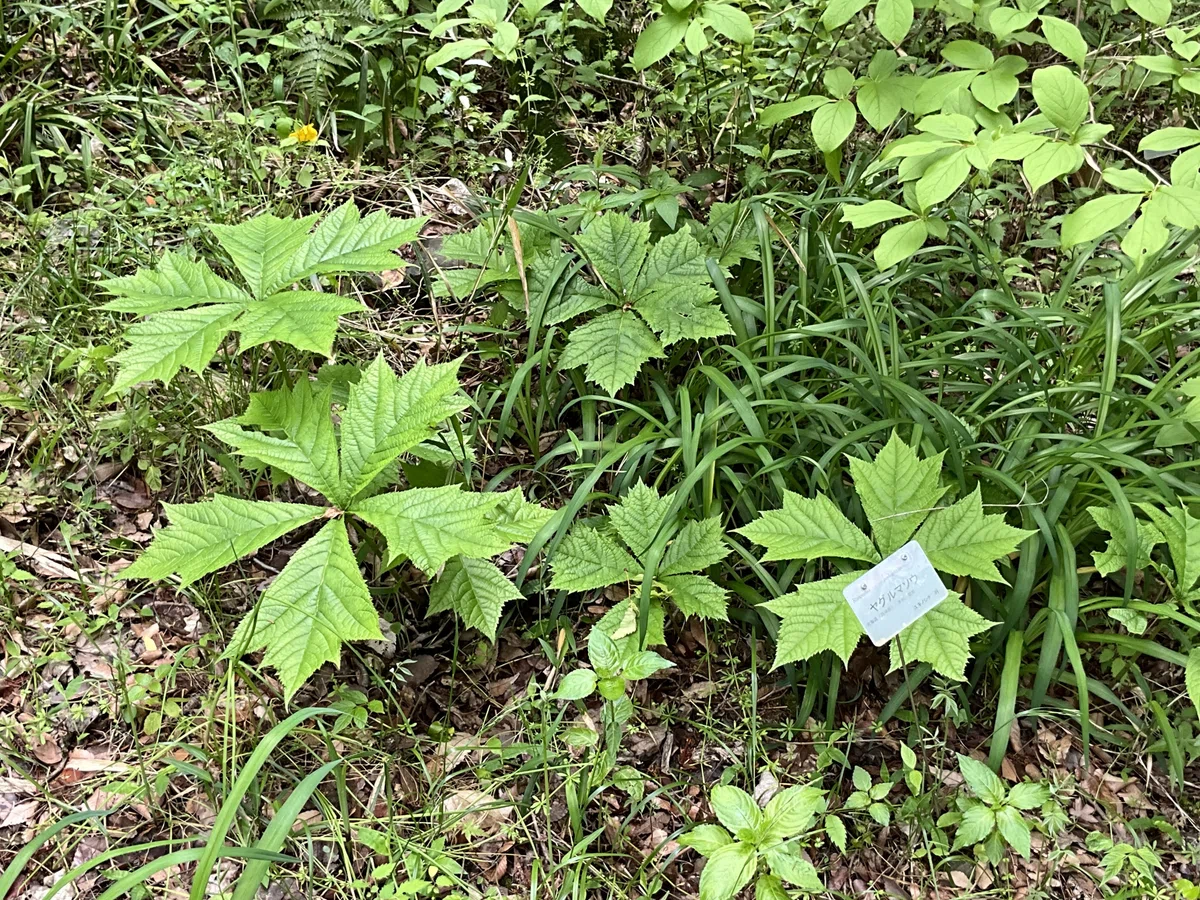
観察地点は園路から奥まりすぎない林床部で,半日陰の光環境が保たれ,落葉層と下層植生が混在していた。ヤグルマソウは孤立して配置されるのではなく,小規模な群状配置をなし,地下で横走する根茎による空間的広がりを想起させた。4月下旬という時期は花期に至らず,地上では葉の展開がほぼ完了し,栄養成長段階にある状態であった。
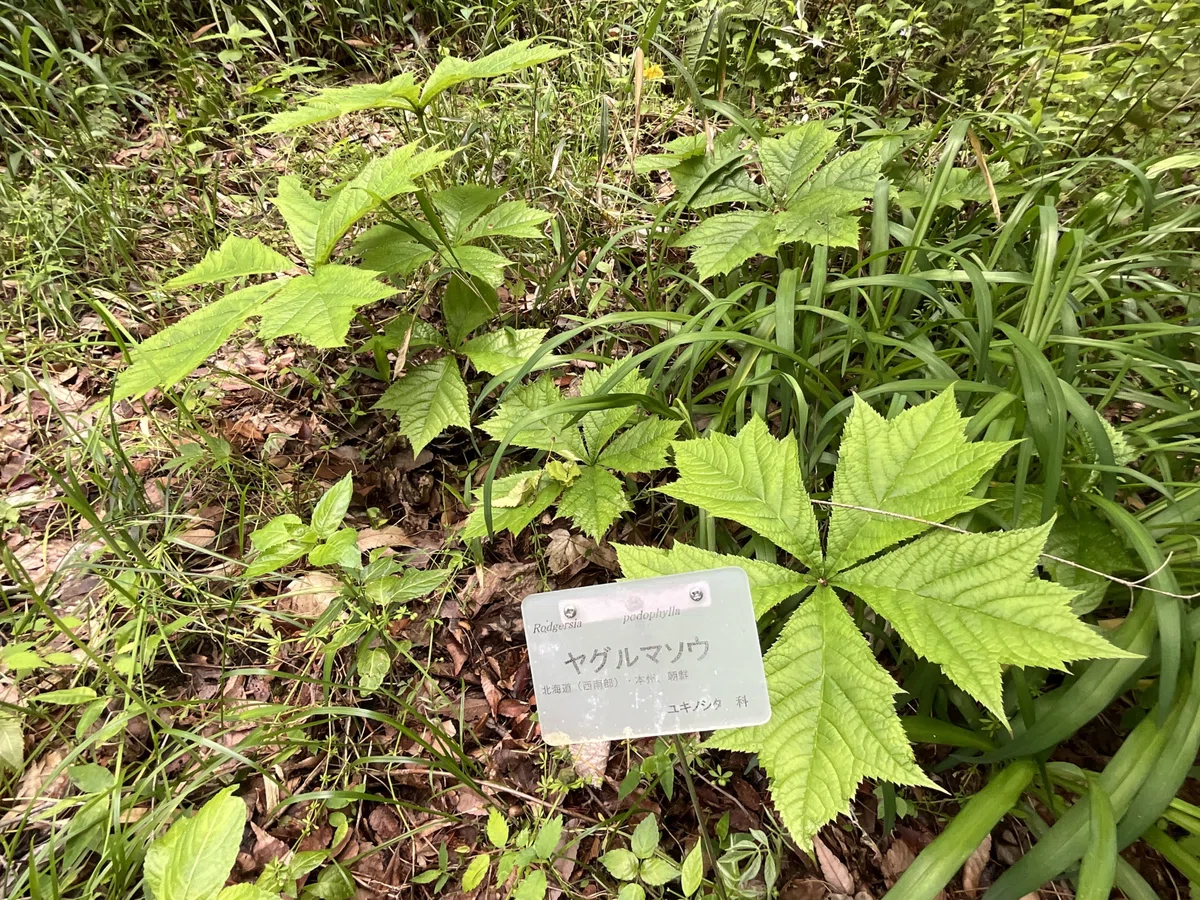
ヤグルマソウの葉は,長い葉柄の先に5枚の小葉を放射状に配する掌状複葉であり,各小葉は倒卵形,縁に鋸歯をもち,先端は浅く裂ける。その葉は周囲の林床植物を明確に覆い,起伏のある葉脈構造によって上方からの光を受け止める面積を最大化している。花の不在は未完成ではなく,この季節における本種の通常の状態であり,葉の造形そのものが存在の核を成している。
分類学的に見れば,ヤグルマソウはユキノシタ科ヤグルマソウ属に属する多年草で,日本列島に自生するのはRodgersia podophylla一種のみである。山地の湿潤な林床に生育し,根茎によって群落を形成する性質,巨大な葉による受光構造は,夏緑広葉樹林下という生態的地位と密接に結びついている。初夏に形成される花序は,花弁を欠き,萼片が花弁状に拡大するという特徴的な形態を示すが,観察時点ではその兆候はまだ現れていなかった。
時間の観点から捉えれば,ヤグルマソウは短い花期よりも,むしろ長い「葉の時間」をもつ植物である。花を見ることを目的とした視線においては,4月下旬の個体は往々にして見過ごされる。しかしこの段階ですでに,林床の光環境を規定し,周囲の植生配置に影響を及ぼす役割を果たしている点に,本種の生態的重心がある。植物生態園という空間は,そのような目立たない時間をあえて展示の中心に据える装置でもある。
人間活動との関係に目を向けると,ヤグルマソウは強い観賞的演出を伴わない一方で,在来種としての生態的文脈を背負わされている。ここにある個体が野生状態の再現なのか,人為的維持の結果なのかを明確に区切ることはできない。その曖昧さこそが,植物生態園という制度の本質であり,人間と植物の距離を固定しない。
本稿の作成において,AIは分類学的知識と文献整理を担ったにすぎない。林床に立ち,巨大な葉が生む静かな圧と時間感覚をどう受け取るかは,人間観察者の身体的経験に委ねられている。ヤグルマソウは,花を待つ存在としてではなく,すでにここで時間を形づくっている。その事実を記すことによって,観察は次の段階へと継続していく。
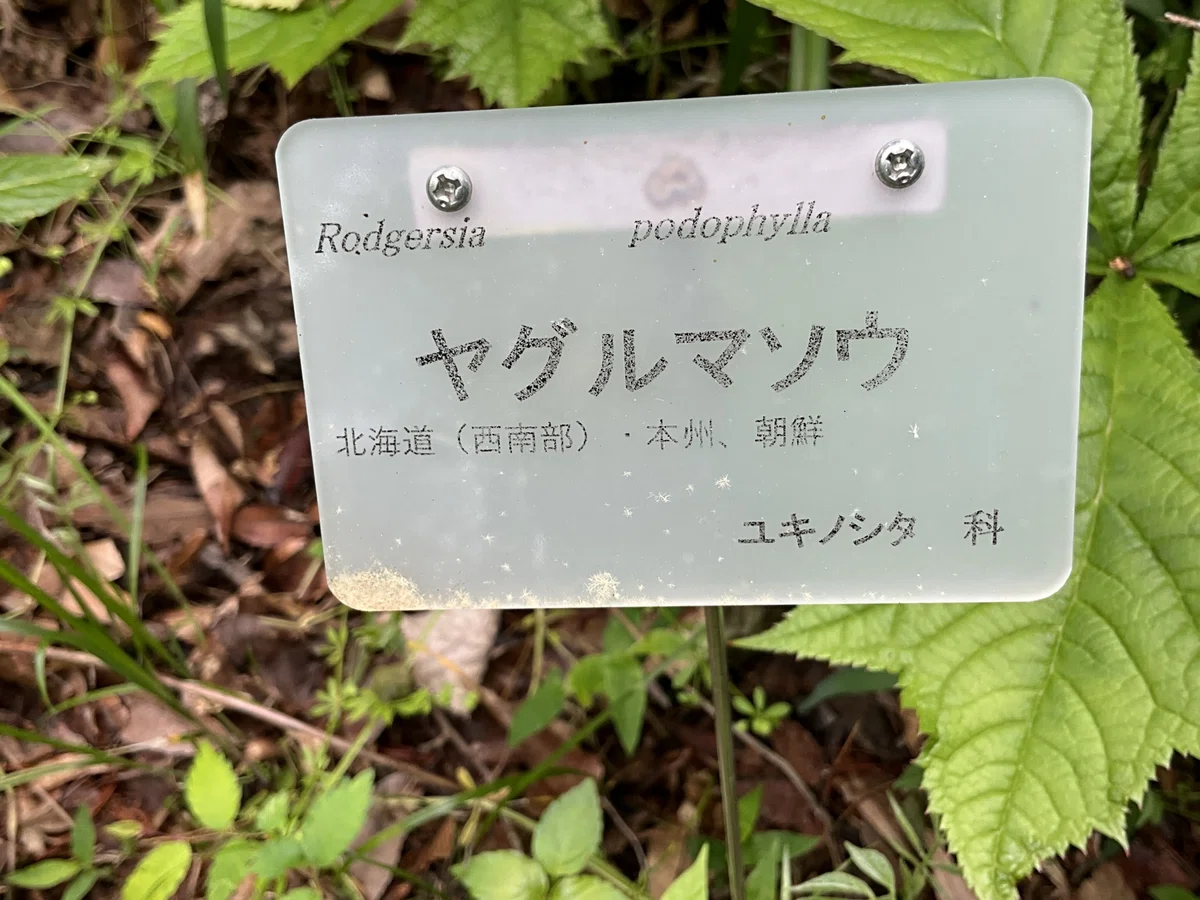
ユキノシタ科,分布:北海道(西南部),本州,朝鮮,植物表示板
京都府立植物園植物生態園
2026年4月24日,筆者撮影
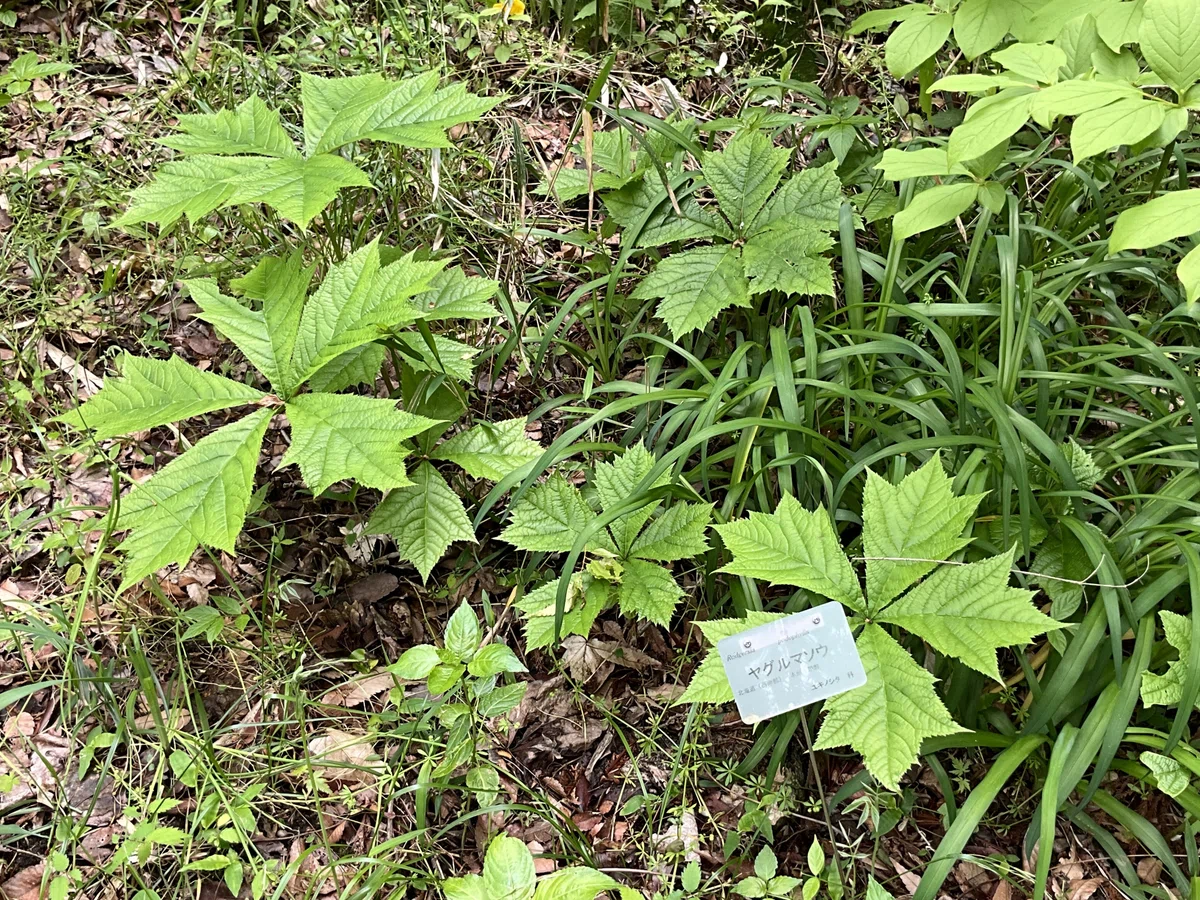
ユキノシタ科,分布:北海道(西南部),本州,朝鮮
京都府立植物園植物生態園
2026年4月24日,筆者撮影
©️Hideaki FUJII
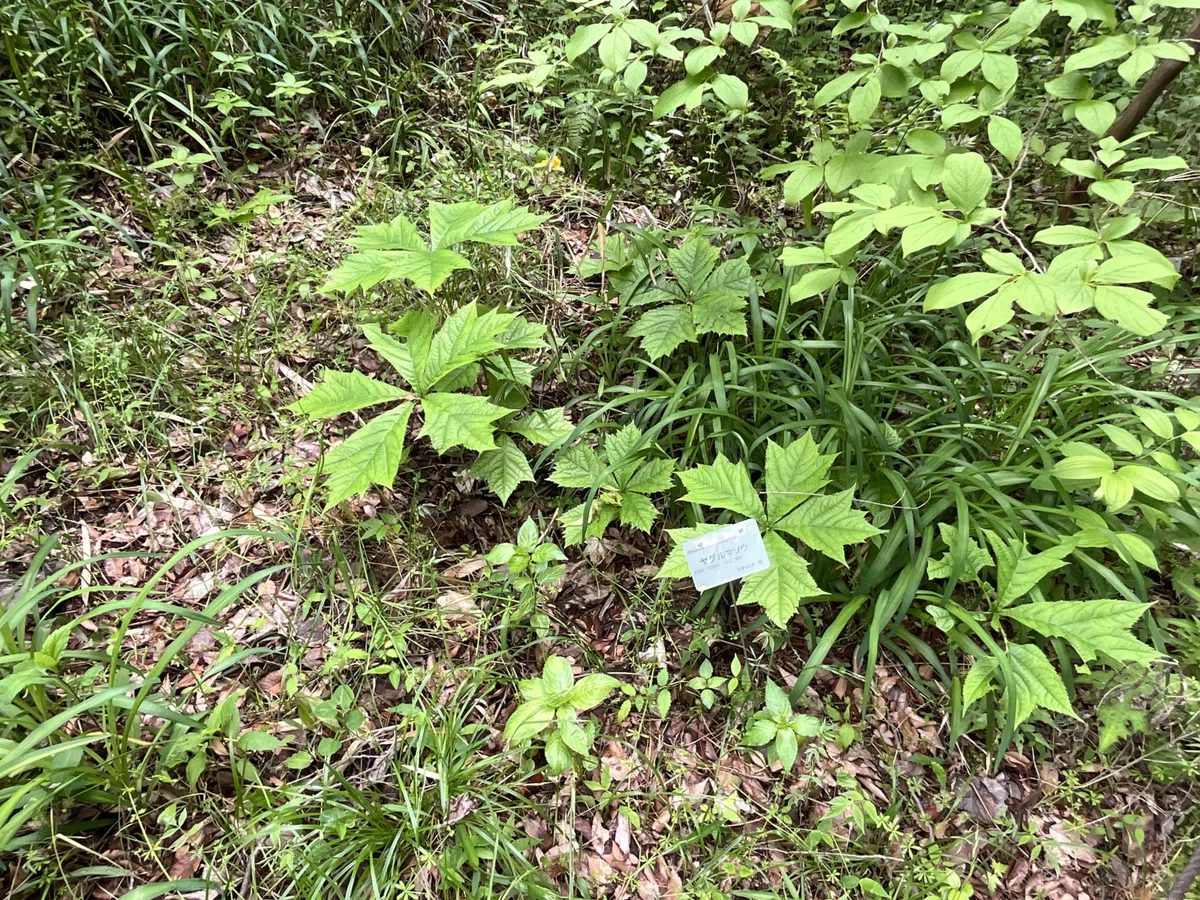
ユキノシタ科,分布:北海道(西南部),本州,朝鮮
京都府立植物園植物生態園
2026年4月24日,筆者撮影
©️Hideaki FUJII
ユキノシタ科,分布:北海道(西南部),本州,朝鮮
京都府立植物園植物生態園
2026年4月24日,筆者撮影
©️Hideaki FUJII
ユキノシタ科,分布:北海道(西南部),本州,朝鮮
京都府立植物園植物生態園
2026年4月24日,筆者撮影
©️Hideaki FUJII
ユキノシタ科,分布:北海道(西南部),本州,朝鮮
京都府立植物園植物生態園
2026年4月24日,筆者撮影
©️Hideaki FUJII

ユキノシタ科,分布:北海道(西南部),本州,朝鮮
京都府立植物園植物生態園
2026年4月24日,筆者撮影
©️Hideaki FUJII
Yagurumasō (Kyoto Botanical Gardens): Tuesday, April 28, 2026
Abstract
On April 26, 2026, I observed Yagurumasō (Rodgersia podophylla) planted in the Native Plants Garden of the Kyoto Botanical Gardens. This paper does not merely describe Rodgersia podophylla as a native large perennial herb; rather, it seeks to organize the plant as an entity at the intersection of taxonomic certainty, adaptation to forest‑floor ecology, East Asian phytogeography, the institutional space of the Native Plants Garden, and the involvement of the observing subject. Rodgersia podophylla is the only species of the genus Rodgersia native to Japan within the family Saxifragaceae, and from spring to early summer it structures the temporal order of the forest floor more through leaf expansion than through flowering. Encountering the plant prior to its flowering period demonstrates that botanical display is not necessarily concentrated in moments of visual splendor. Recording its presence during the season of leaves opens the scope of observation toward what follows.
Main Text
On the afternoon of April 26, 2026, under steady light conditions, I observed Yagurumasō in the Native Plants Garden of the Kyoto Botanical Gardens. The Kyoto Botanical Gardens is not simply a facility that preserves plants as natural objects; it is an institutional space in which the accumulated history of human judgments—classification, placement, management, and interpretation of plants—has been layered over time. Within it, the Native Plants Garden is structured as an area that foregrounds growing environments, community structure, and seasonal progression rather than the ornamental appeal of individual species.
The observation site was a forest‑floor area not too far removed from the garden path, where a semi‑shaded light environment was maintained and the litter layer coexisted with understory vegetation. Rodgersia podophylla was not arranged as isolated individuals but formed small clustered groupings, suggesting spatial expansion through horizontally spreading rhizomes beneath the soil. Late April precedes the flowering season, and at this time the aerial parts had nearly completed leaf expansion, remaining in a vegetative growth stage.
The leaves of Rodgersia podophylla are palmate compound leaves in which five leaflets radiate from the end of long petioles. Each leaflet is obovate, bears serrated margins, and shows shallow lobing at the apex. These leaves clearly overtop surrounding forest‑floor plants, and their raised venation maximizes the surface area available to receive light from above. The absence of flowers does not indicate incompleteness but represents the plant’s normal condition for this season; leaf form itself constitutes the core of its presence.
From a taxonomic perspective, Yagurumasō is a perennial herb belonging to the genus Rodgersia in the family Saxifragaceae, and Rodgersia podophylla is the only species native to the Japanese Archipelago. Its preference for moist forest floors in mountainous regions, its tendency to form colonies via rhizomes, and its large leaves adapted for light capture are closely linked to its ecological niche beneath summer‑green broadleaf forests. The inflorescences formed in early summer exhibit a distinctive morphology in which petals are absent and enlarged sepals appear petal‑like; however, at the time of observation, no such signs had yet emerged.
Viewed through the lens of time, Rodgersia podophylla is a plant defined less by its brief flowering period than by its extended “season of leaves.” When attention is directed solely toward flowers, individuals observed in late April are often overlooked. Yet even at this stage, the plant already plays a key role by structuring the forest‑floor light environment and influencing the spatial arrangement of surrounding vegetation. The Native Plants Garden functions as an apparatus that deliberately places such inconspicuous periods at the center of display.
Turning to the relationship with human activity, Yagurumasō lacks conspicuous ornamental staging, yet it bears the ecological context of a native species. It is impossible to clearly delineate whether the individuals present represent a reconstruction of wild conditions or the result of ongoing human maintenance. This ambiguity lies at the core of the Native Plants Garden as an institution, one that resists fixing the distance between humans and plants.
In preparing this paper, AI served only to organize taxonomic knowledge and relevant literature. How to perceive the quiet pressure and altered sense of time produced by the expansive leaves while standing on the forest floor is left to the embodied experience of the human observer. Yagurumasō should not be understood as a plant merely awaiting its flowers; it is already shaping time here. By recording this fact, observation continues into its next stage.
いいなと思ったら応援しよう!
 よろしければご応援をお願いします! いただいたチップはクリエイターとしての活動費に使わせていただきます!