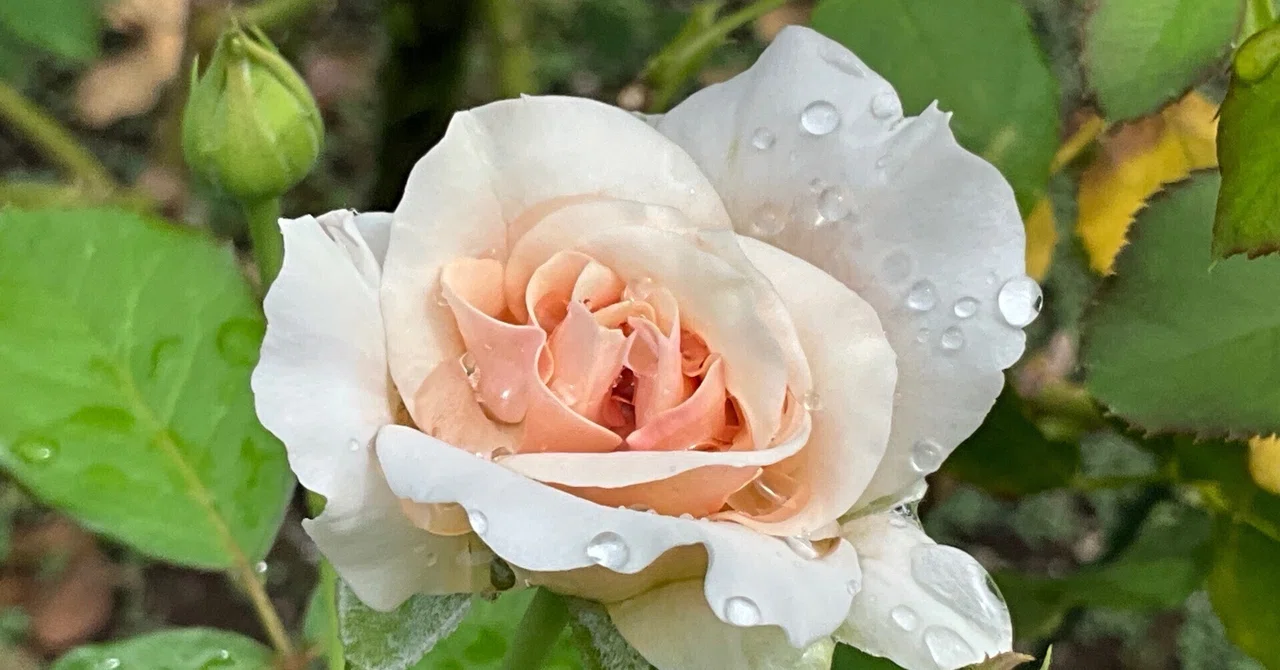
9月上旬の薔薇(日本作出,京都府立植物園):2025年9月6日(土)

【要旨】
2025年9月5日正午,台風15号通過後の京都府立植物園「ばら園」で筆者は薔薇を観賞した。来園者の「何もないね」という声に対し,筆者は観賞力の有無が美の認識に影響すると感じる。園内には日本作出の薔薇が静かに咲いていた。「うらら」は1993年作出のフロリバンダ系で,鮮やかなショッキングピンクが特徴。耐病性と花持ちに優れ,JRC金賞を受賞。「銀嶺」は1990年作出の白花で,気品ある姿と安定した開花性が評価され,JRC銅賞を受賞。「シュシュ」は2008年作出で,淡桃色と白の花が優美に咲き,耐暑性も高い。「紅」は2003年作出の深紅の薔薇で,和の美意識にも通じる存在感を放つ。これらの薔薇は日本の風土に根ざし,観賞者に深い感動を与える存在である。
【本文】
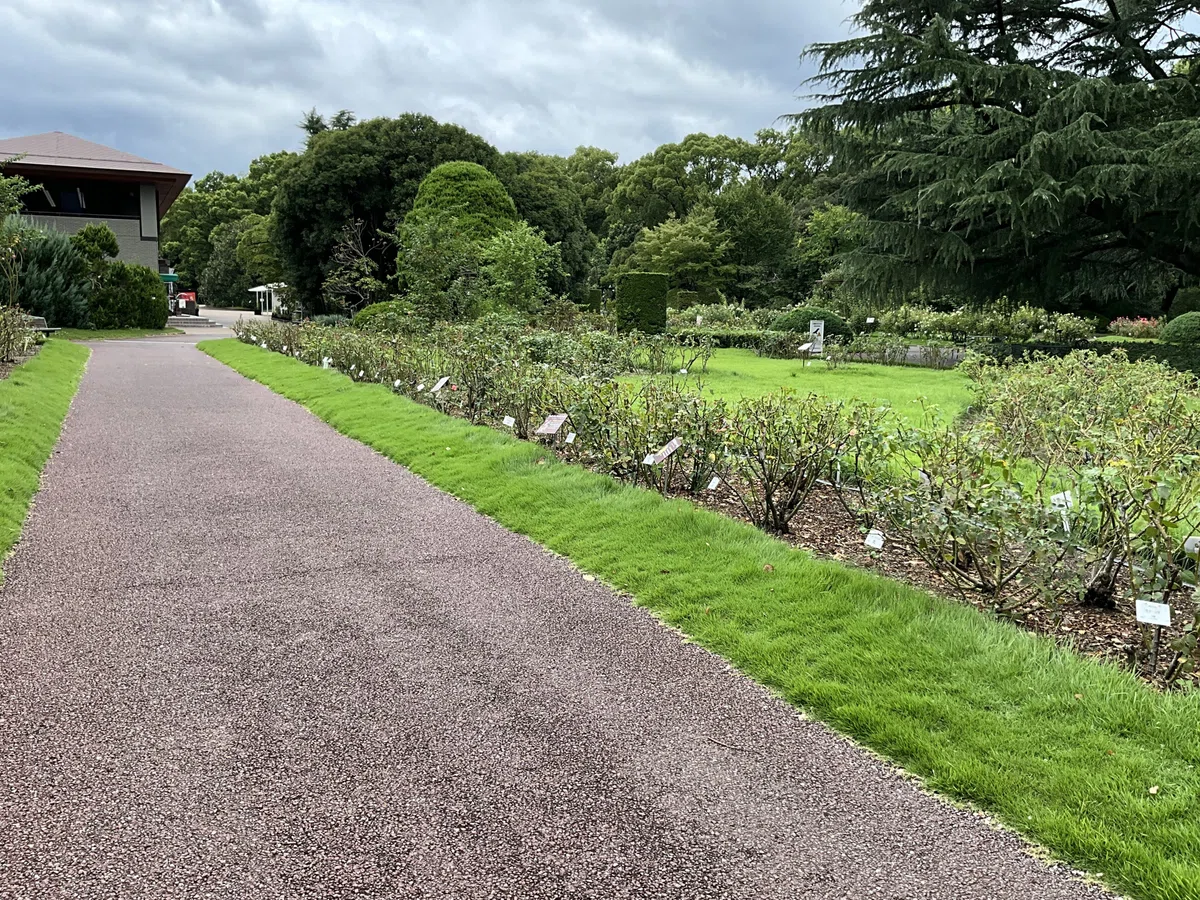
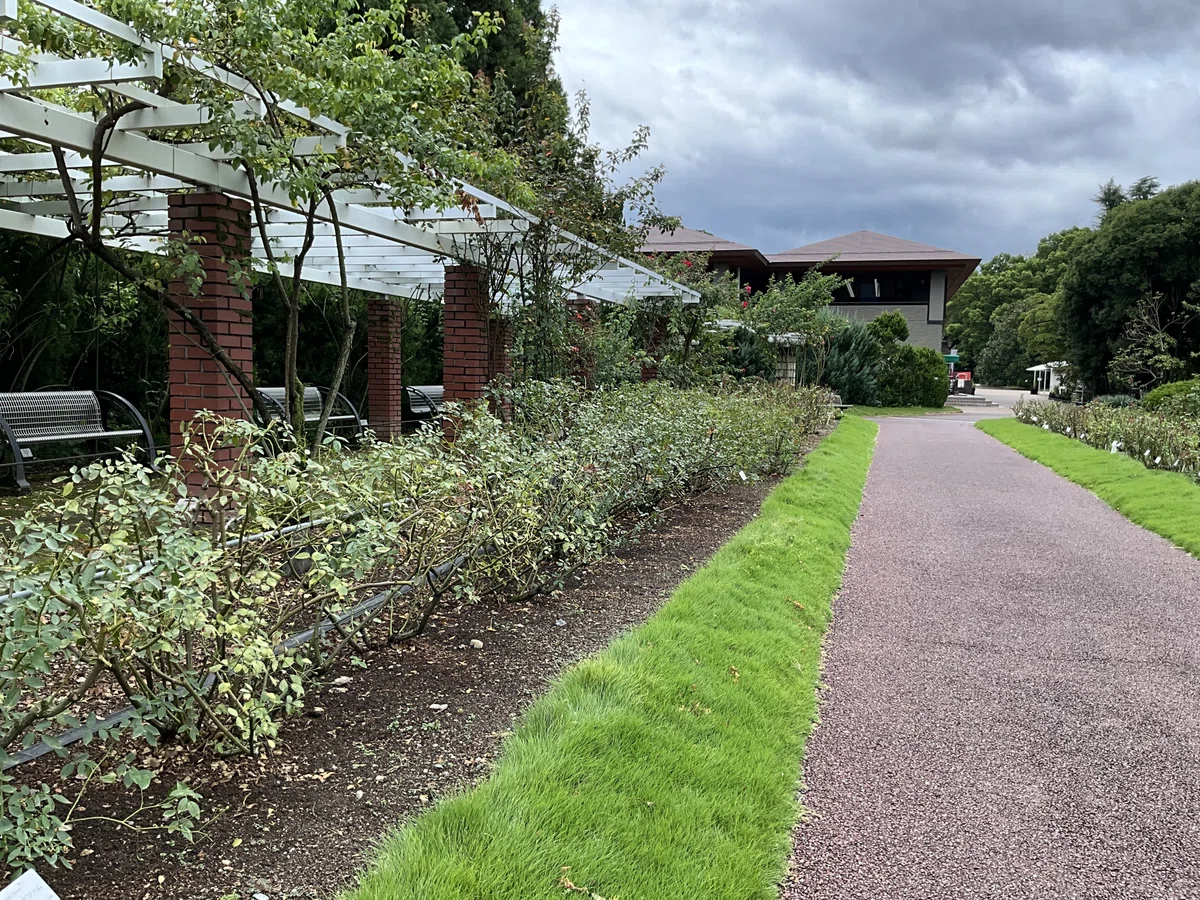
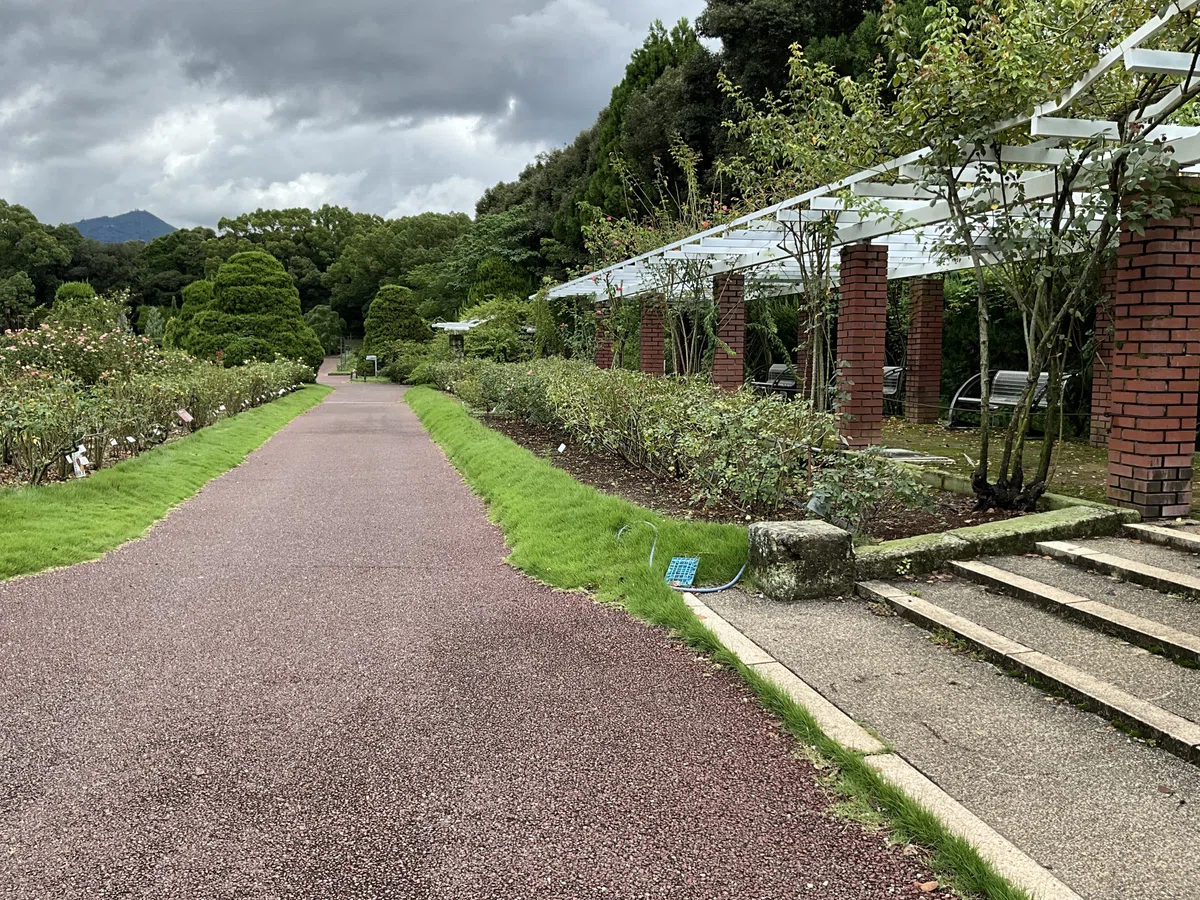
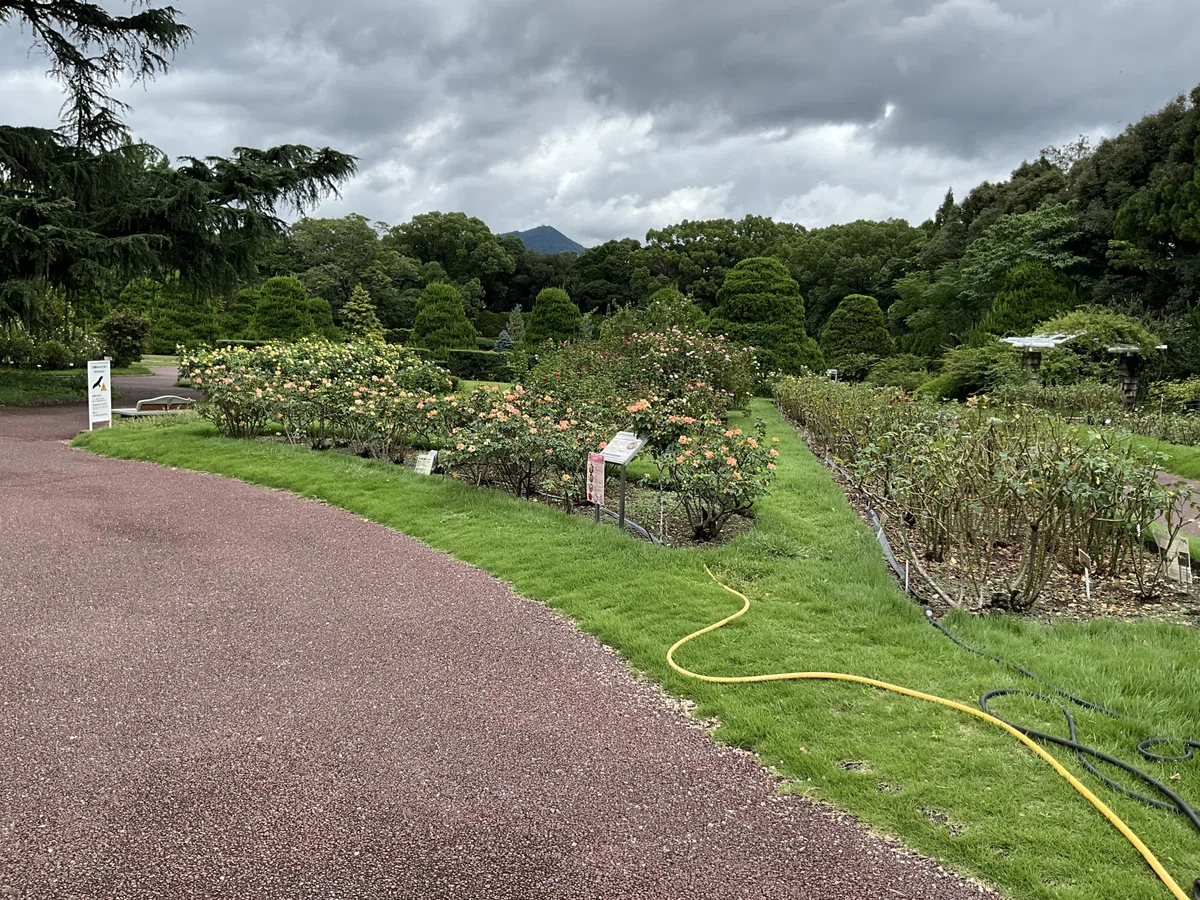
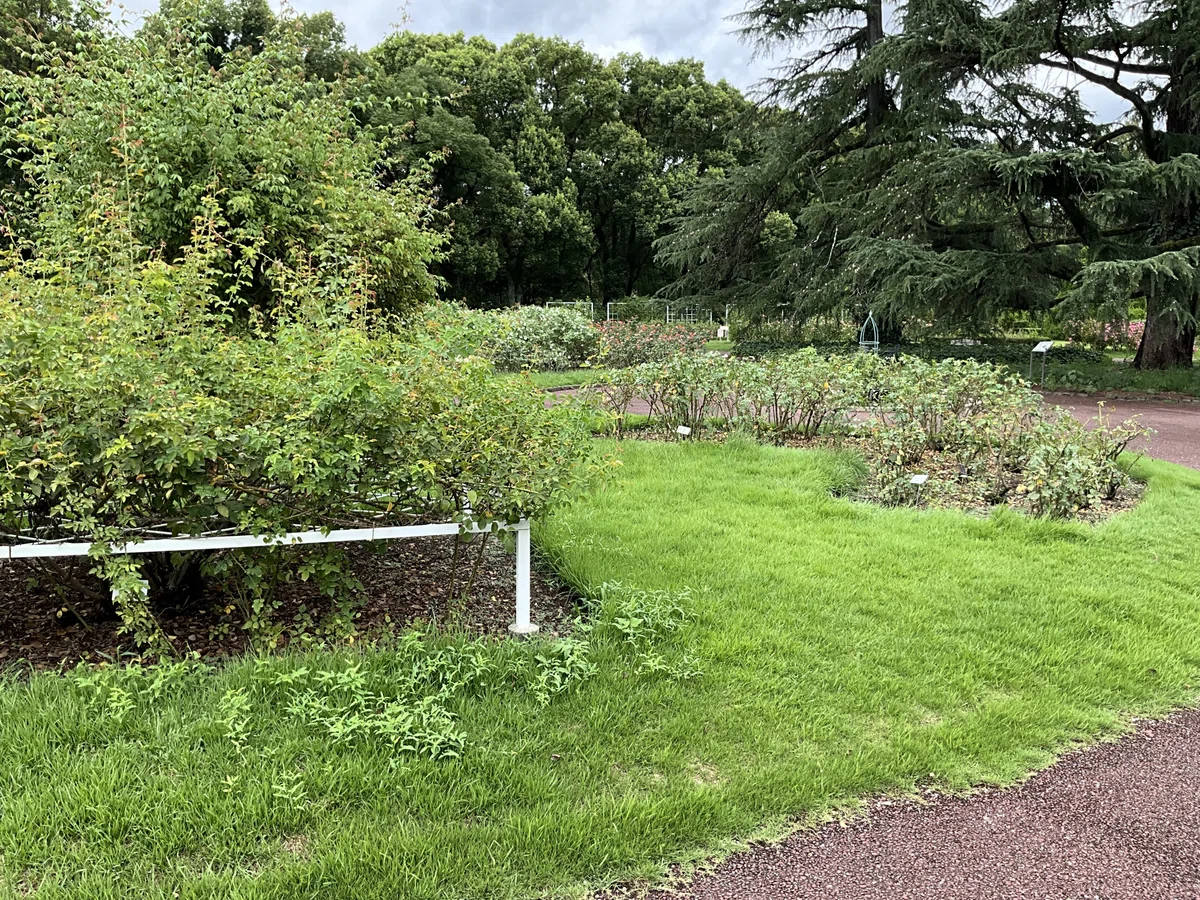
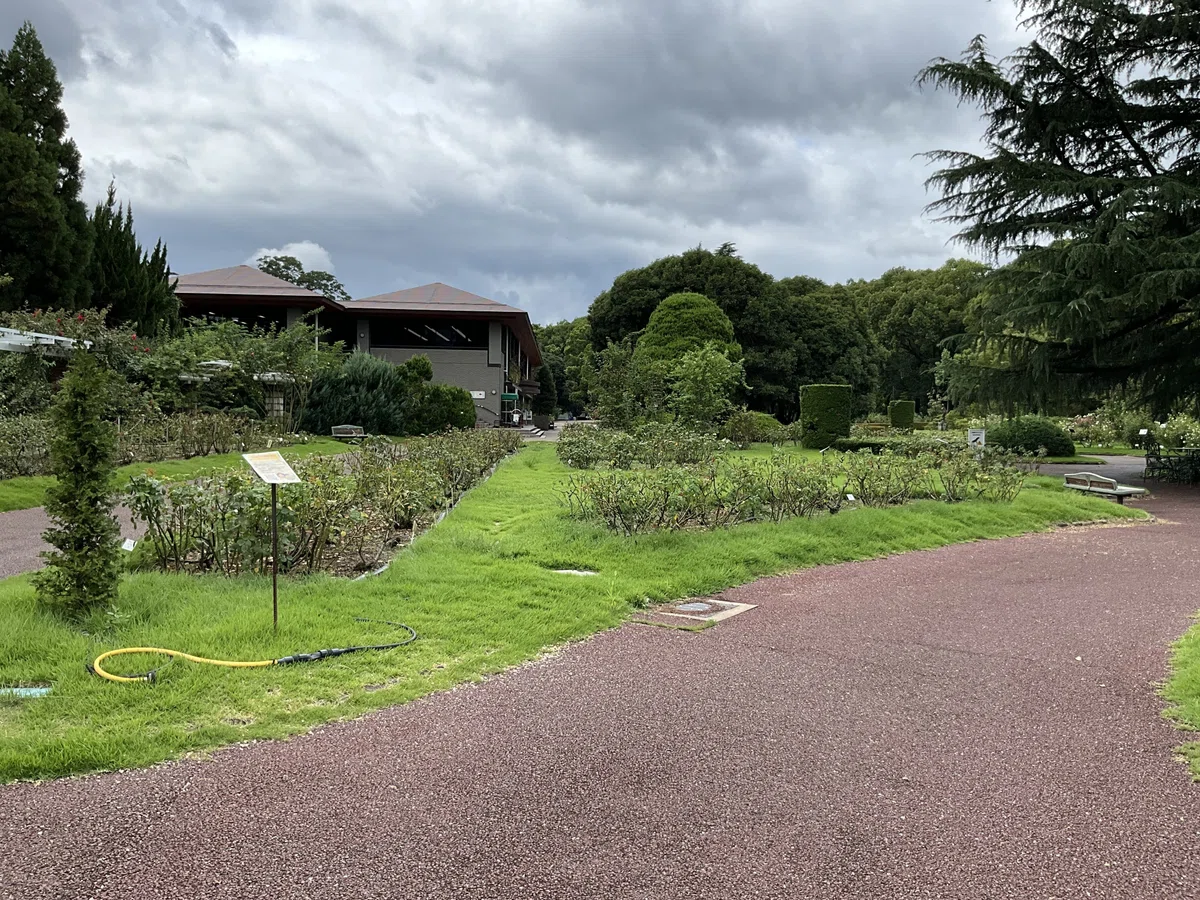
9月5日の正午,台風一過(台風15号,PEIPAH)の京都府立植物園「ばら園」にて,筆者が観賞した薔薇たちの姿は,嵐の余韻を纏いながらも,静かに,そして確かに咲いていた。通りすがりの来園者が「何もないね」と漏らすその言葉の背後に,観賞力の有無が浮かび上がるように思えた。眼を凝らし,レンズを近づければ,そこには日本が誇る薔薇たちの繊細な美があるように,私には見えた。
ショッキングピンクの明るさを湛える「うらら」
1993年に平林浩氏によって作出された「うらら」は,フロリバンダ系統(F系)に属する四季咲きの薔薇である。その花色は鮮烈なショッキングピンクである。夏の強い日差しにも色褪せることなく,明るく咲き続ける姿は,まるで陽光を味方につけたかのようだ。花形は丸弁で,花径は中輪。微香ながら,風に乗ってほのかに香るその芳香は,観賞者の記憶に静かに残る。「うらら」は1995年,JRC(国際ばら新品種コンクール)にて金賞を受賞している。その評価は,単なる色彩の鮮やかさに留まらず,耐病性や花持ちの良さにも及ぶ。都市部の庭園や公共施設でも多く植栽されており,初心者にも育てやすい品種として知られている。
雪山の峰のような気品の「銀嶺(ぎんれい)」
1990年,鈴木省三氏によって作出された「銀嶺」は,フロリバンダ系統(F系)の中輪種である。その名が示すとおり,雪山の峰を思わせるような白色に,中心部にはクリーム色が差す。つぼみには赤みがあり,開花とともに白へと変化し,弁先に淡いピンクが残ることもある。花形は半高芯剣弁咲きで,整った形状が特徴的である。香りは穏やかなティー系の中香だ。樹高は約120cmで,半横張り性の樹形は乱れず,花壇の手前から中程に適しているという。1990年にはJRC銅賞を受賞し,その品格ある姿と安定した開花性が高く評価された。「銀嶺」は,静謐な庭園にふさわしい薔薇であり,観賞者に深い余韻を残しているように思う。
柔らかな桃色の優美を感じる「シュシュ」
2008年,河本純子氏によって作出された「シュシュ」は,フロリバンダ系統(F系)の四季咲き中輪種である。花色は中心部に淡い桃色を含み,外側は白色である。花形は丸弁八重咲きで,柔らかな印象を与える。微香ながら,ティー系の香りが漂い,優美な雰囲気を醸し出すように感じる。樹高は90〜120cmで,木立性の樹形は扱いやすく,鉢植えにも適しているという。耐暑性が強く,夏場でも花色が安定している点が評価されている。「シュシュ」は,フランス語で「お気に入り」を意味する言葉であり,その名のとおり,観賞者の心を掴む魅力を持つ薔薇であろう。
深紅の情熱を表現する「紅(くれない)」
「紅」は,2003年に竹内俊介氏によって作出されたフロリバンダ系統(F系)の微香の薔薇である。その花色は名のとおり,深紅に咲き誇る姿が印象的である。秋のばら園において,ほかの薔薇が控えめに咲くなかで,「紅」は情熱的な彩りを添える存在となっており,「紅」の色は観賞者の視線を一瞬で奪う力を持つようだ。その色彩は古典的な日本の美意識にも通じるものがあり,和の庭園にもよく調和する。香りは微香であるが,花の存在感がそれを補って余りあるように思う。
これらの薔薇たちは,それぞれに異なる個性を持ちながらも,日本の気候風土に適応し,観賞者に深い感動を与える存在である。観賞力を持つ者にとって,ばら園は決して「何もない」場所ではない。むしろ,そこには四季の移ろいとともに,薔薇たちが静かに語りかけてくる世界が広がっていることに気づいてほしいと感じた。
【補足1】モダンローズの分類系について
モダンローズとは,1867年にジャン=バプティスト・ギヨーが作出した『ラ・フランス』を起点とする,近代以降に育成されたバラの品種群である。これらの品種は,四季咲き性や剣弁高芯形などの形質を特徴とし,咲き方や樹形,育てやすさ,観賞用途などに応じて複数の系統に分類されている。これらの分類は,園芸や展示,品種選定において重要な指針となっている。
主な分類系は以下の通りである。
• HT系(ハイブリッド・ティー):大輪の一輪咲きが特徴であり,花形が整っていて切り花として最も人気が高い。多くは四季咲き性を示し,香りの強い品種も多い。19世紀末から20世紀初頭にかけて,ティー系とハイブリッド・パーペチュアル系の交配によって確立された。
• F系(フロリバンダ):中輪の花が房状に咲き,花付きが良好である。一般にHT系よりもコンパクトで,花壇や景観植栽に適している。ポリアンサ系とHT系の交配によって1950年代に確立された。
• S系(シュラブ):現代育成種における多様な樹形と性質を含む広義の分類であり,香りや花形に個性があり,庭園の修景や自然風の植栽に向いている。オールドローズの性質を受け継ぐ品種も多く,分類上はモダンローズに含まれるが,育種背景は多様である。
• CLHT系(クライミング・HT):HT系由来のつる性品種であり,壁面やアーチなどの立体的な装飾に活用される。枝変わりによるつる性化や,つる性品種との交配によって得られる。
• Mini系(ミニチュア):草丈が低く,花も葉も小型である。鉢植えに適し,一部は室内でも楽しめる。19世紀のチャイナ系小輪種に由来し,現代では多様な交配によって改良されている。
• Gr系(グラウンドカバー):地面を匍匐するように広がる性質を持ち,花壇の縁取りや土壌の保護に活用される。耐病性や耐寒性に優れた品種も存在し,都市緑化や公共空間にも利用される。
補助的な分類として,以下の系統も挙げられる。
• Pol系(ポリアンサ):小輪の花が密に房咲きする古典的な系統であり,ノイバラ(Rosa multiflora)由来のポリアンサ系とHT系の交配によってF系が誕生したことから,フロリバンダの祖先的存在とされる。丈夫で花付きが良く,初心者にも育てやすい。
• LCl系(ラージフラワード・クライマー):大型の花を持つつる性品種であり,フェンスやアーチに映える華やかな系統である。HT系やF系との交配によって得られたつる性品種が含まれる。
• MinFl系(ミニ・フロリバンダ):ミニ系とフロリバンダ系の中間的な性質を持ち,小型ながら花付きが良く,鉢植えや小さな花壇に適している。園芸的分類として流通しているが,国際分類には含まれない場合もある。
• Patio系(パティオローズ):園芸的分類として用いられるコンパクトな品種群であり,花付きが良く,テラスやベランダなどの限られた空間でも楽しめるように育成されている。分類上はMini系やF系に近いが,育種上の便宜的な呼称である。
これらの分類は,植物園の樹名板や展示パネル,図録などに記載されることで,来園者の理解を助け,品種の魅力をより深く伝える役割を果たしている。分類記号(例:HT,F,Sなど)は,品種の性質や育て方の目安にもなり,園芸愛好家や研究者にとっても有益な情報源である。
【補足2】 バラの香りの科学的分類
バラの香りは感覚的な印象だけでなく,香気成分の違いによって科学的に分類することができる。研究では一般に10のタイプ(香調=ノート)が定義されており,それぞれ特徴的な香気分子が香りの印象を形づくっている。
• ダマスク・クラシック系:Geraniol(ゲラニオール)やCitronellol(シトロネロール)に由来し,甘く華やかで芳醇な典型的バラ香。
• ダマスク・モダン系:β-Damascenone(β-ダマセノン)が主要成分で,濃厚で持続性のある芳香。
• ティー系:β-Ionone(β-イオノン)などの成分により,紅茶葉やスミレ花を思わせる優雅で上品な芳香。
• フルーティ系:γ-Decalactoneなどのラクトン類に由来し,桃やアプリコット(杏)のような果実様の芳香。
• ブルー系:Linalool(リナロール)やβ-Iononeによって,涼やかで透明感のある幻想的な芳香。
• スパイシー系:Eugenol(オイゲノール)などのフェノール類により,クローブ(丁字)様のスパイシーで刺激的な芳香。
• グリーン系:Hexanal(ヘキサナール)などのアルデヒド類に由来し,青葉のように爽やかで清涼感のある芳香。
• ミルラ系:Phenylethanol(フェニルエタノール)などの芳香族アルコールによって,樹脂様・ハーブ様の芳香。
• ウッディ系:Vanillin(バニリン)などの芳香族化合物に由来し,木質様で落ち着きのある芳香。
• ハニー系:Phenylacetaldehyde(フェニルアセトアルデヒド)に由来し,蜂蜜様の甘い芳香。
以上のように,バラの香りは「甘い」「優雅」「果実的」といった感覚的な表現だけでなく,分子レベルで体系的に分類できる科学的枠組みが確立されている。
参考文献
(文献1)公益社団法人農林水産・食品産業技術振興協会「バラの種類」https://www.jataff.or.jp/bara/syurui.htm 2025年9月閲覧
(文献2)蓬田バラの香り研究所「バラの種類」https://www.baraken.jp/academy/16/#:~:text=バラの3つの形態,形態別に細分されます%E3%80%82 2025年9月閲覧
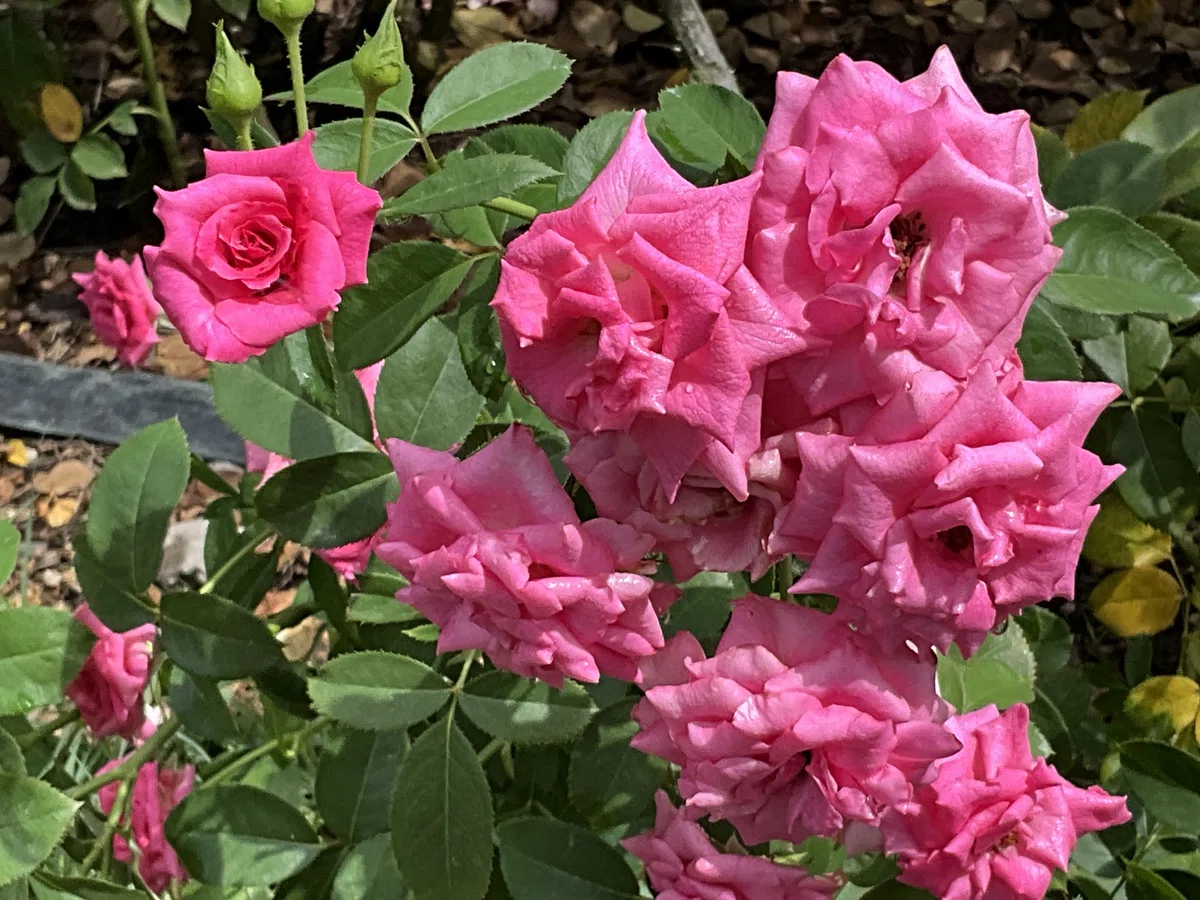
微香,F系,日本作出(平林浩,1993年)
京都府立植物園ばら園
2025年9月5日,筆者撮影
©️Hideaki FUJII
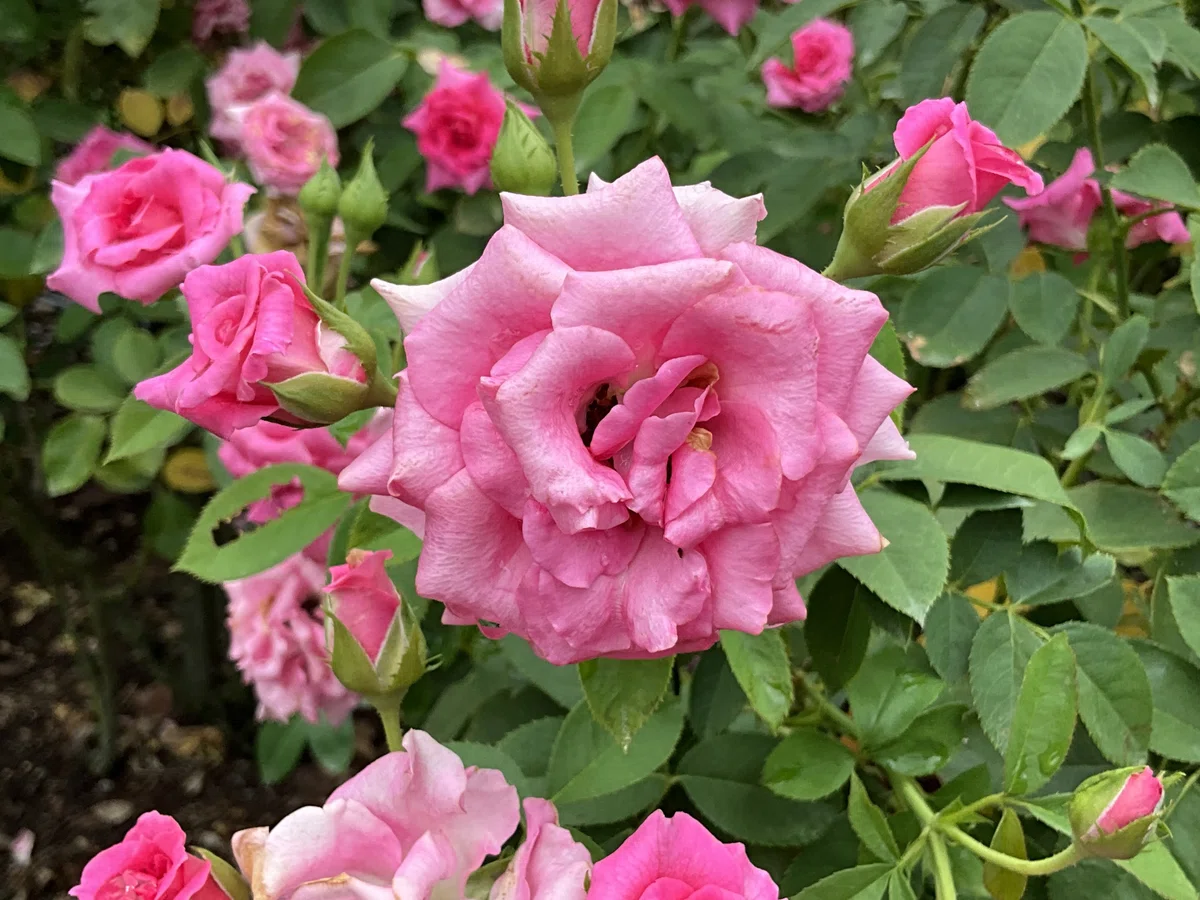
微香,F系,日本作出(平林浩,1993年)
京都府立植物園ばら園
2025年9月5日,筆者撮影
©️Hideaki FUJII
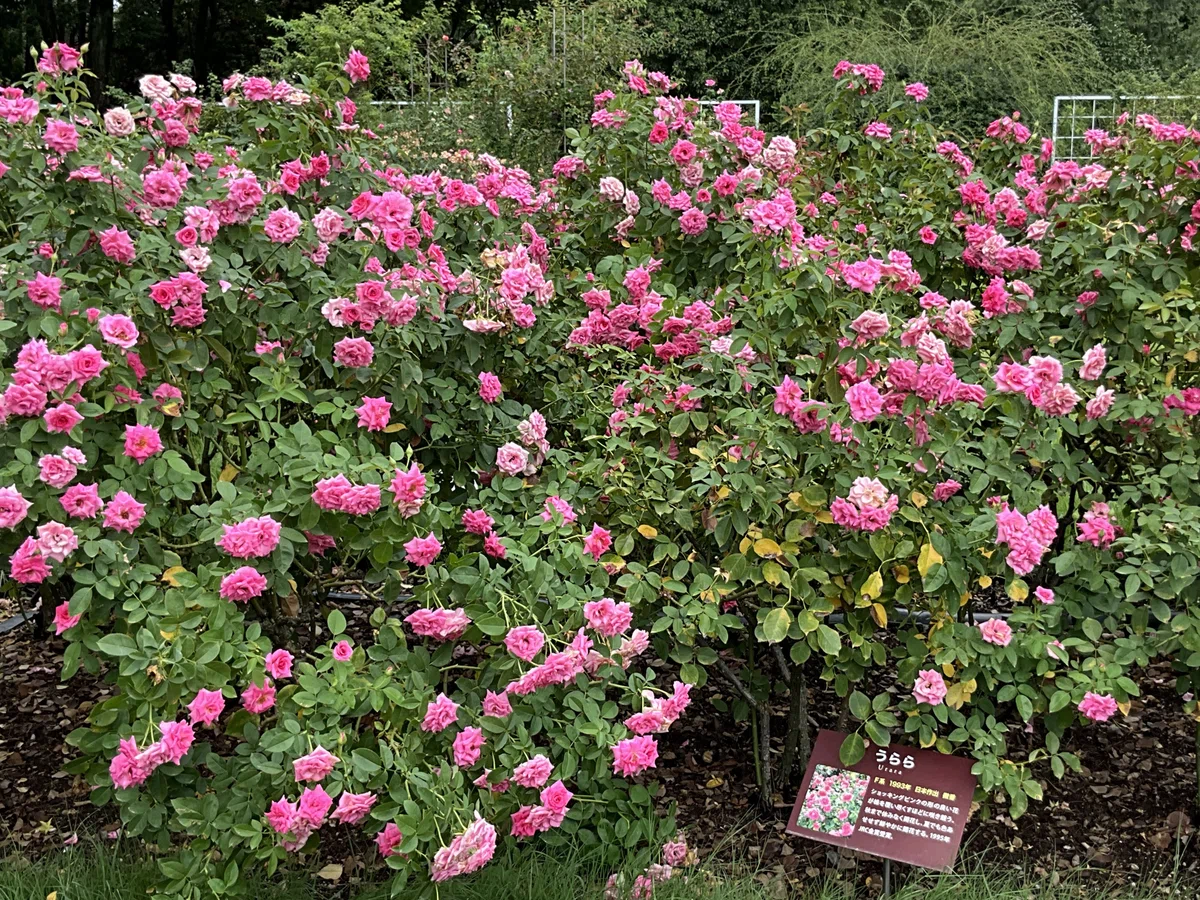
微香,F系,日本作出(平林浩,1993年)
京都府立植物園ばら園
2025年9月5日,筆者撮影
©️Hideaki FUJII
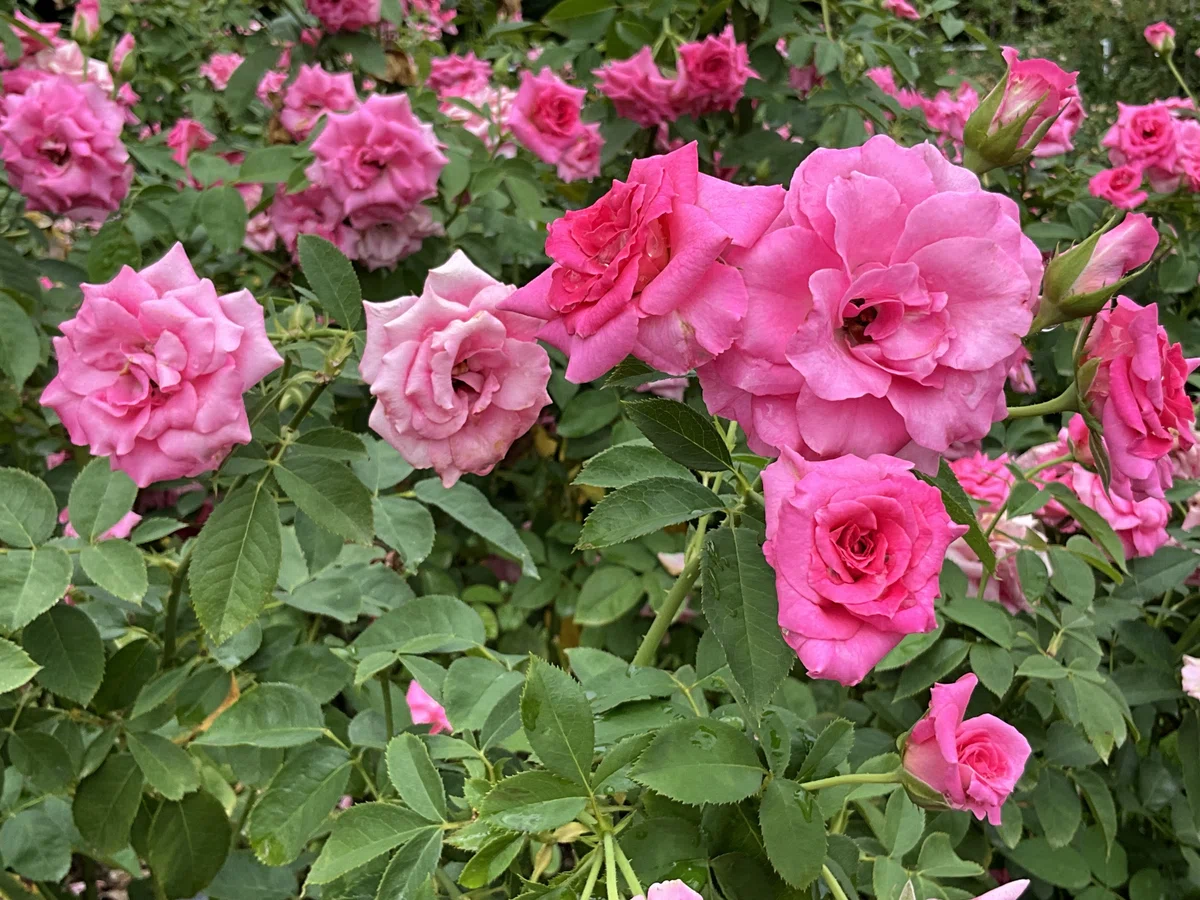
微香,F系,日本作出(平林浩,1993年)
京都府立植物園ばら園
2025年9月5日,筆者撮影
©️Hideaki FUJII
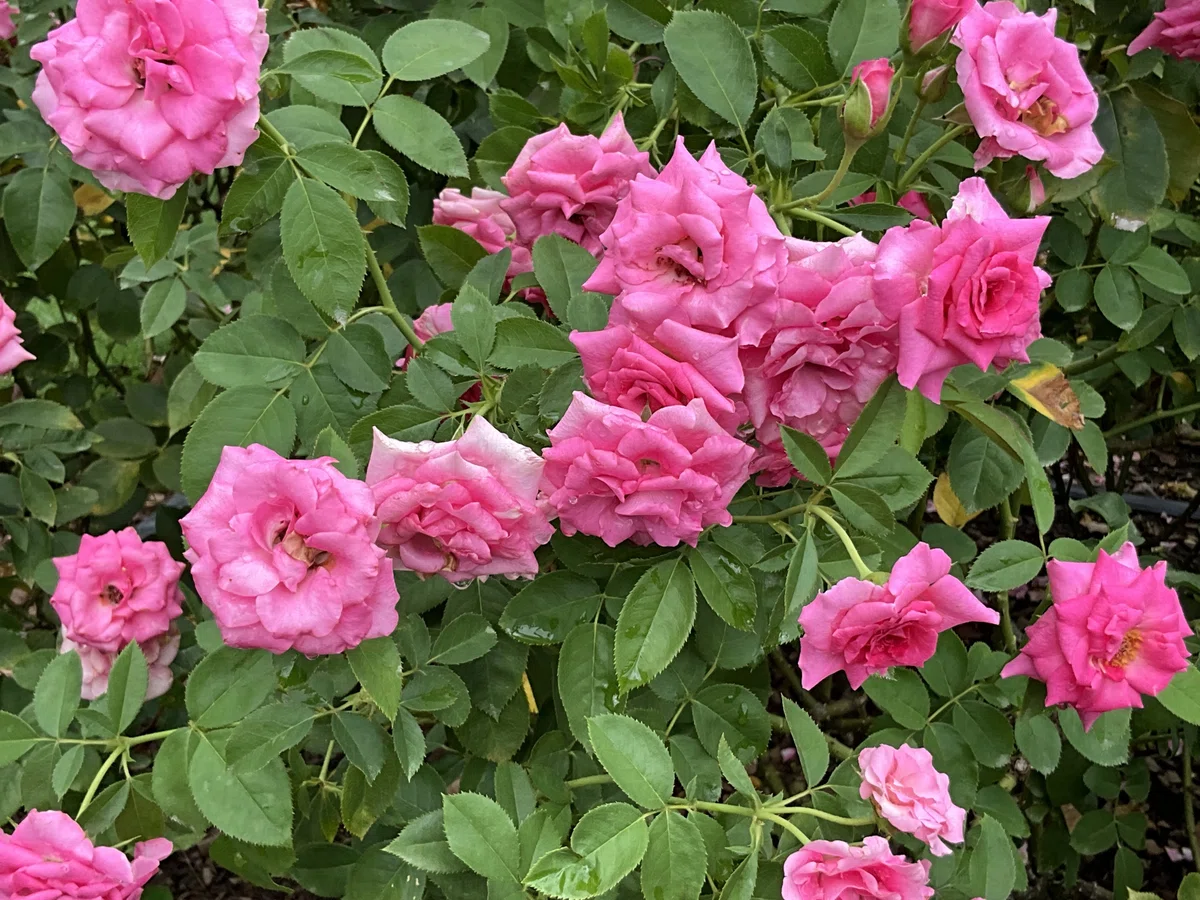
微香,F系,日本作出(平林浩,1993年)
京都府立植物園ばら園
2025年9月5日,筆者撮影
©️Hideaki FUJII
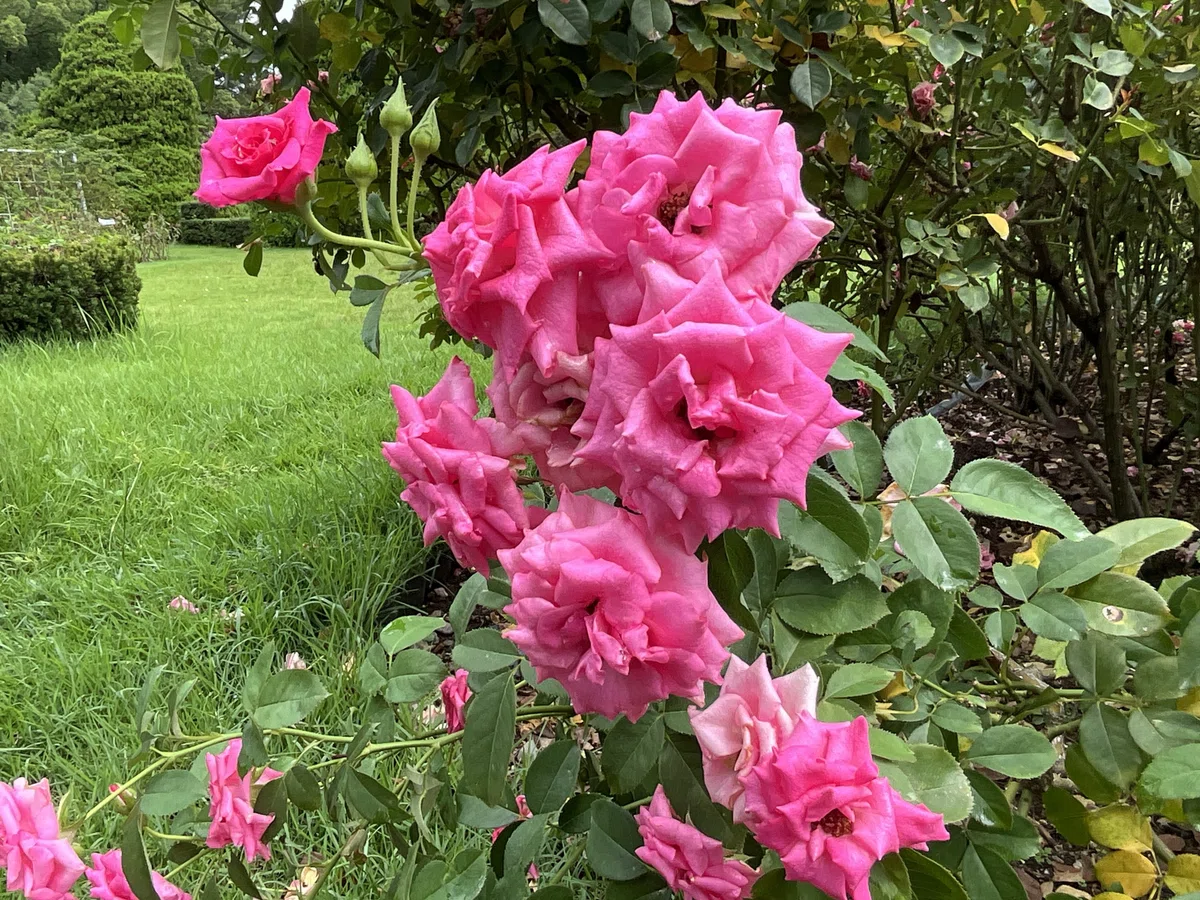
微香,F系,日本作出(平林浩,1993年)
京都府立植物園ばら園
2025年9月5日,筆者撮影
©️Hideaki FUJII
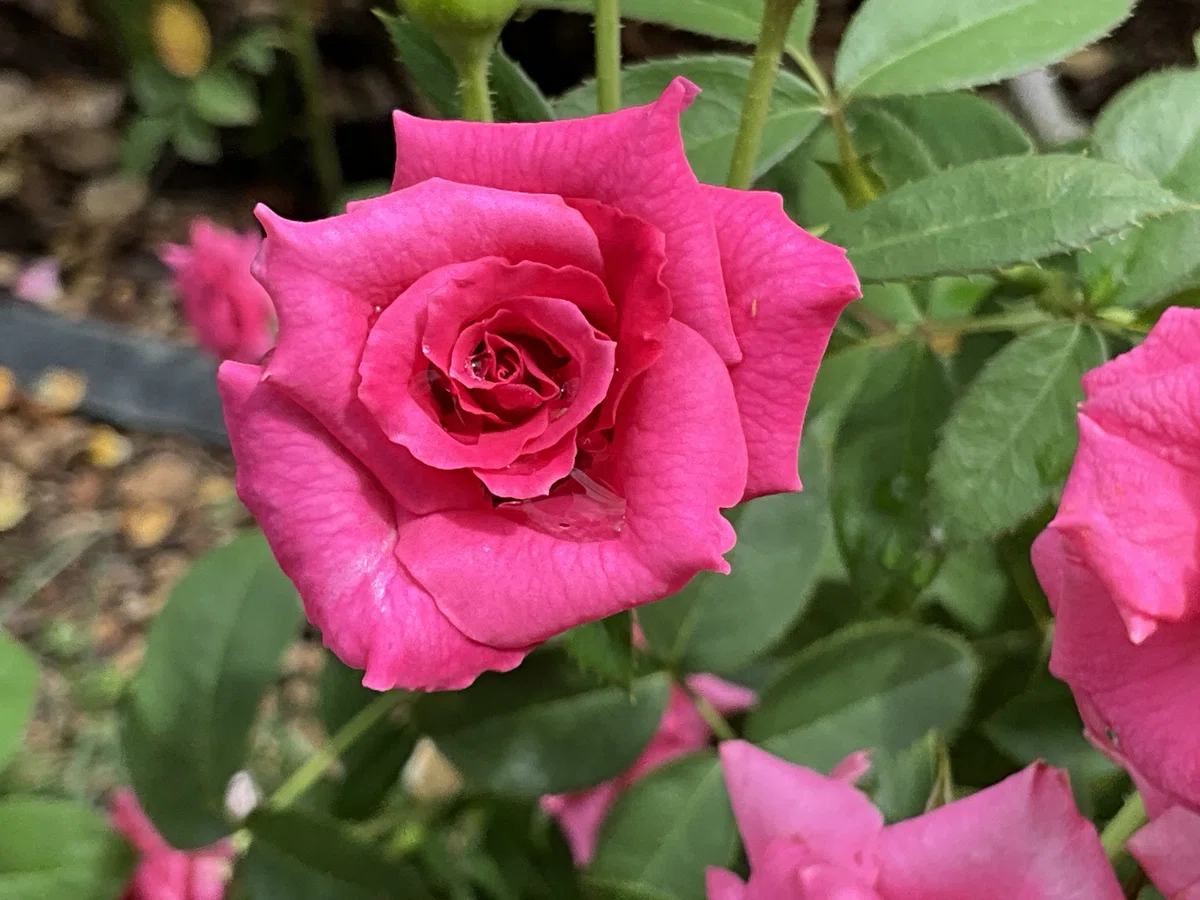
微香,F系,日本作出(平林浩,1993年)
京都府立植物園ばら園
2025年9月5日,筆者撮影
©️Hideaki FUJII
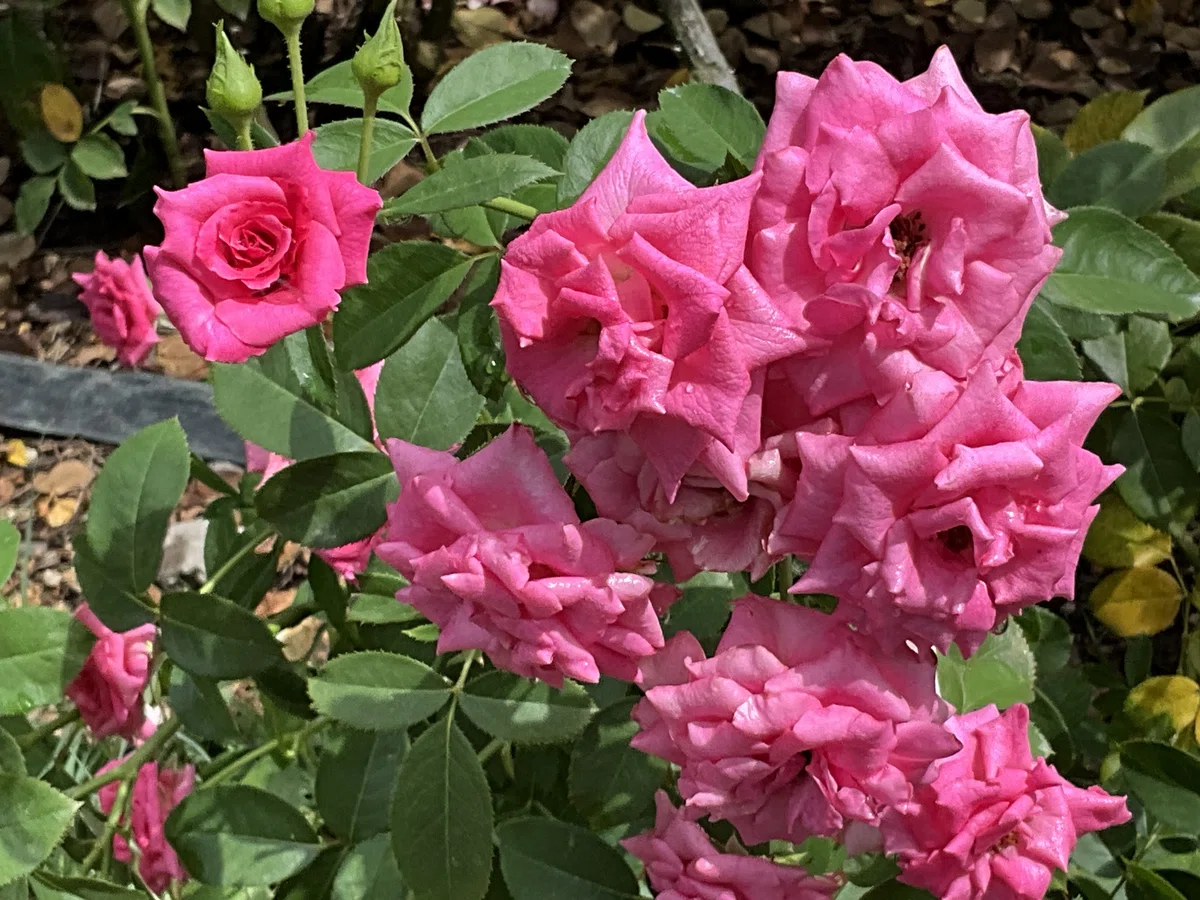
微香,F系,日本作出(平林浩,1993年)
京都府立植物園ばら園
2025年9月5日,筆者撮影
©️Hideaki FUJII
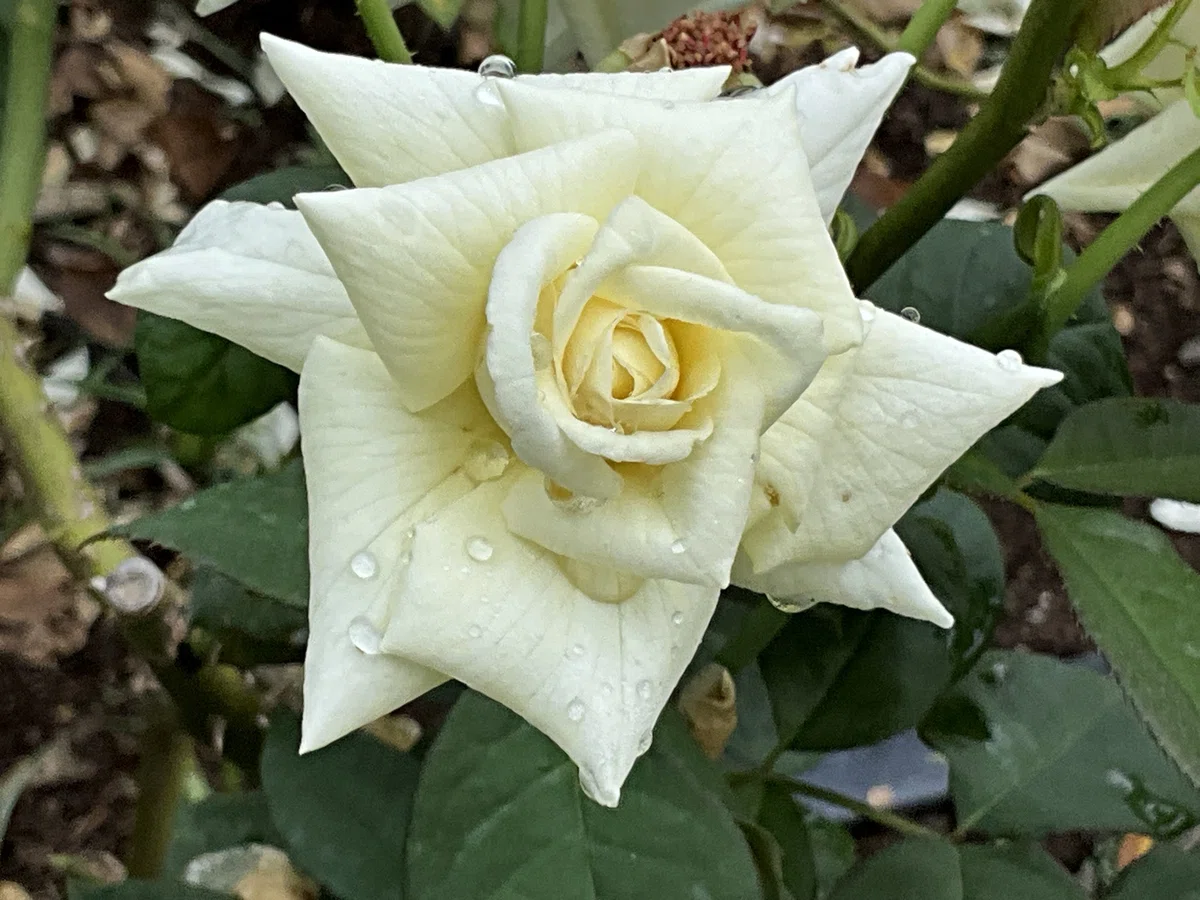
中香,F系,日本作出(鈴木省三,1990年)
京都府立植物園ばら園
2025年9月5日,筆者撮影
©️Hideaki FUJII
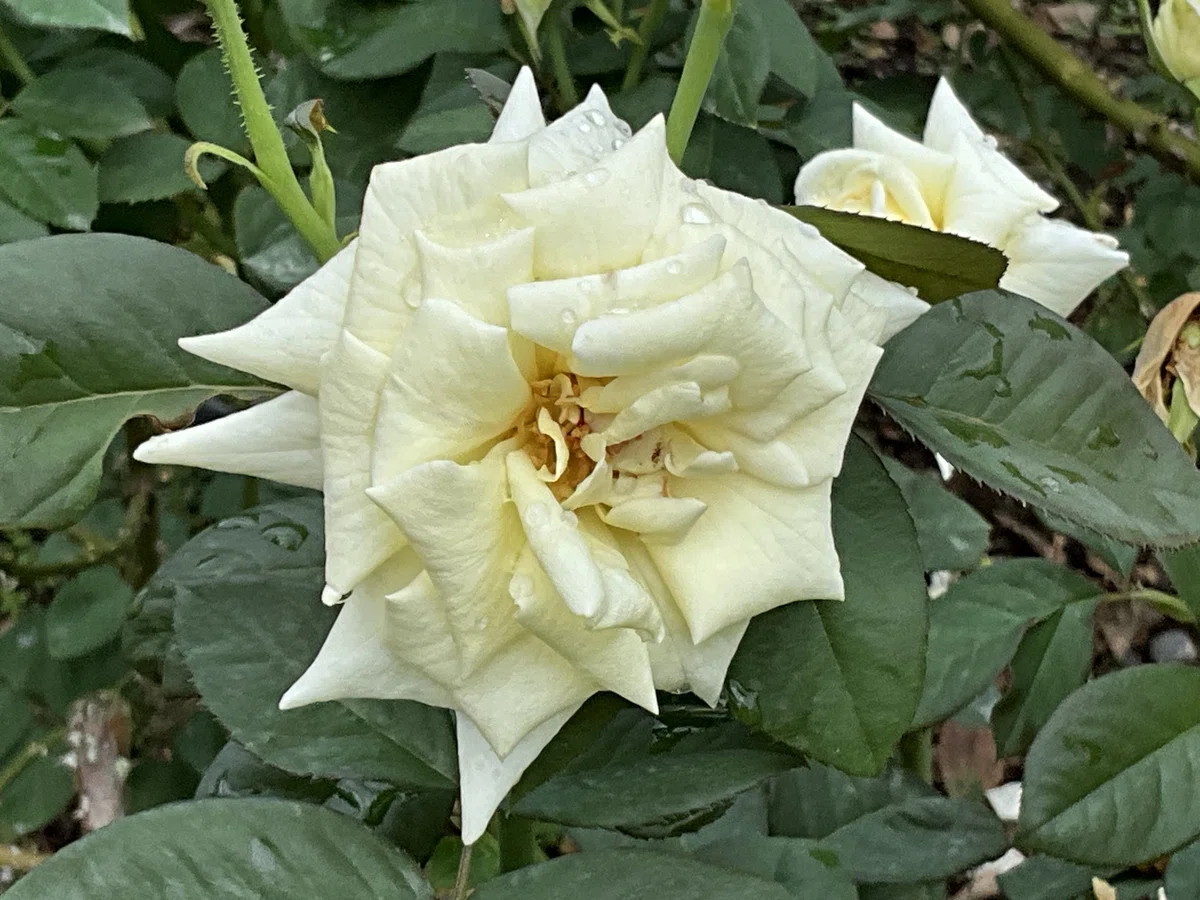
中香,F系,日本作出(鈴木省三,1990年)
京都府立植物園ばら園
2025年9月5日,筆者撮影
©️Hideaki FUJII
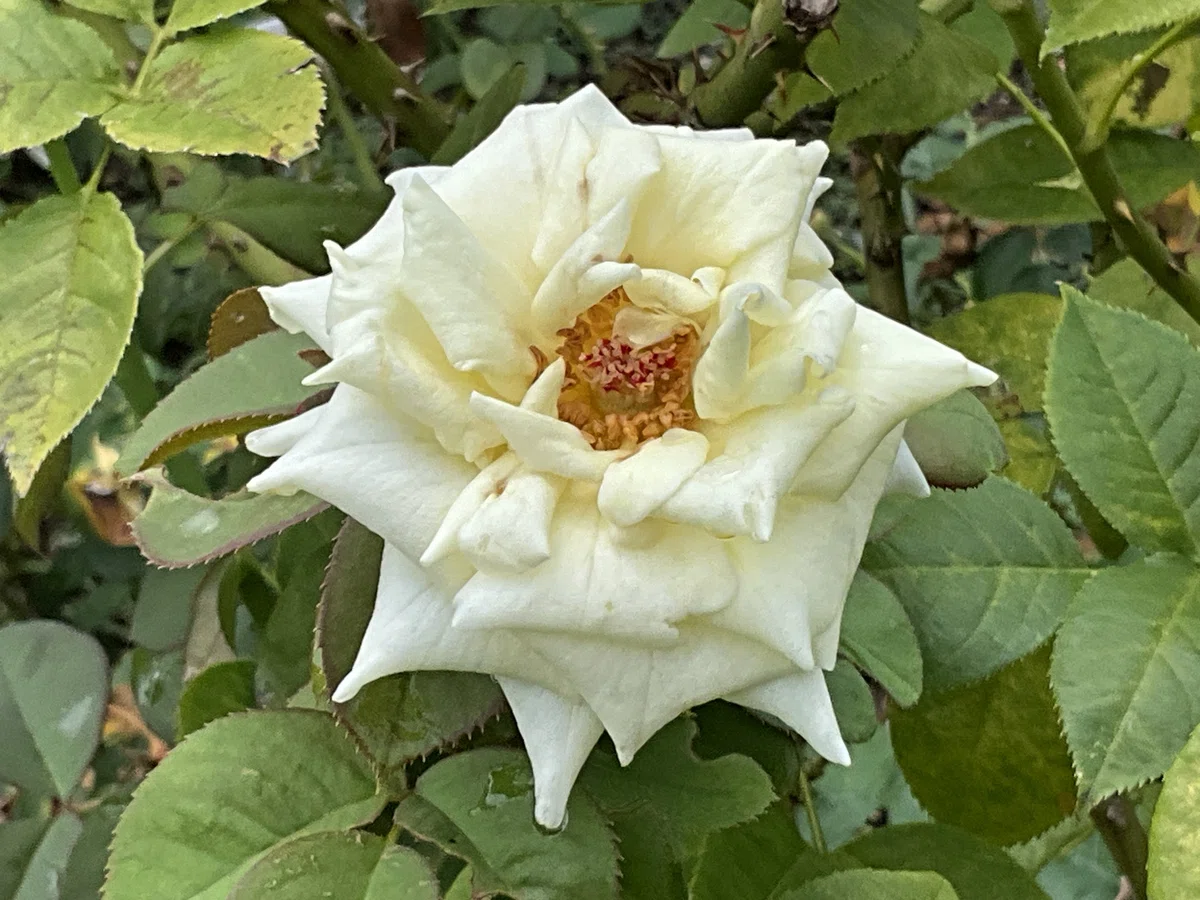
中香,F系,日本作出(鈴木省三,1990年)
京都府立植物園ばら園
2025年9月5日,筆者撮影
©️Hideaki FUJII
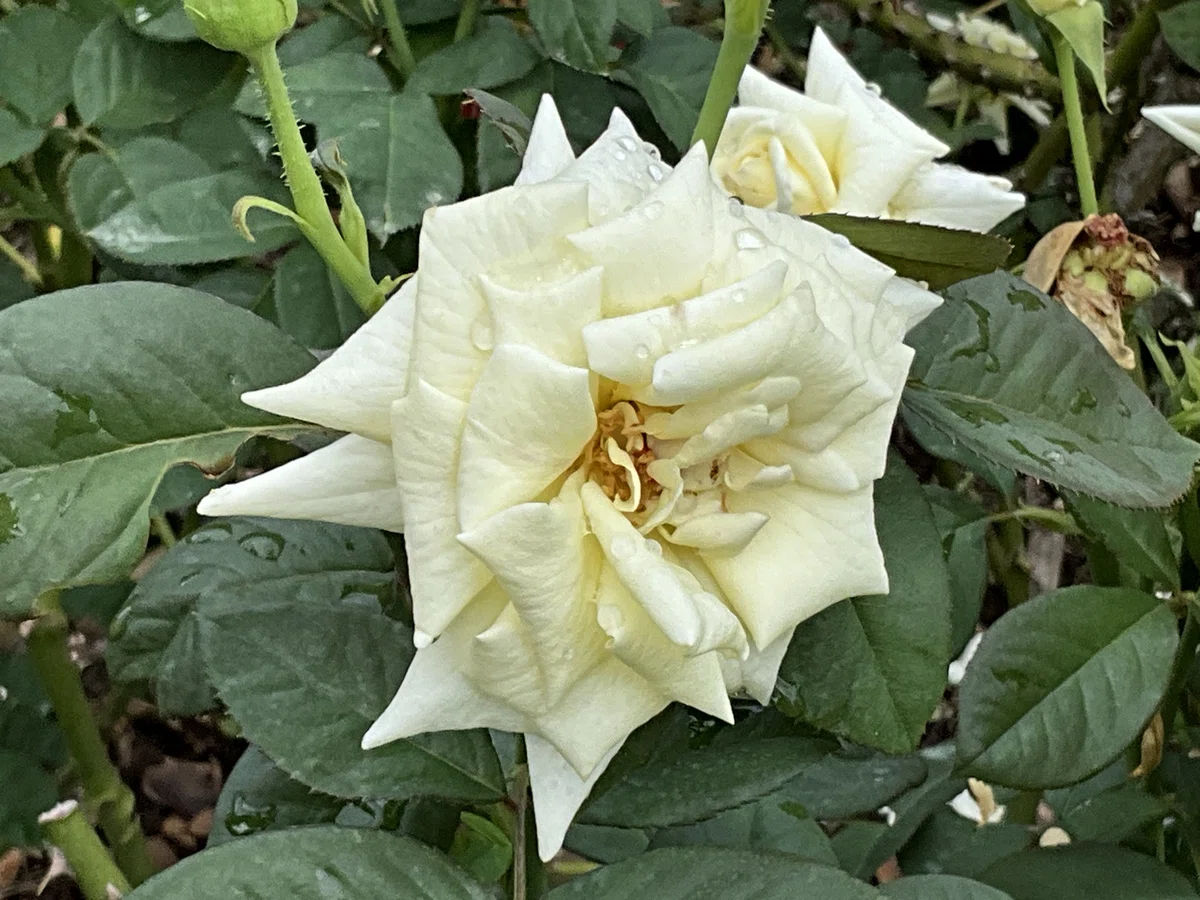
中香,F系,日本作出(鈴木省三,1990年)
京都府立植物園ばら園
2025年9月5日,筆者撮影
©️Hideaki FUJII
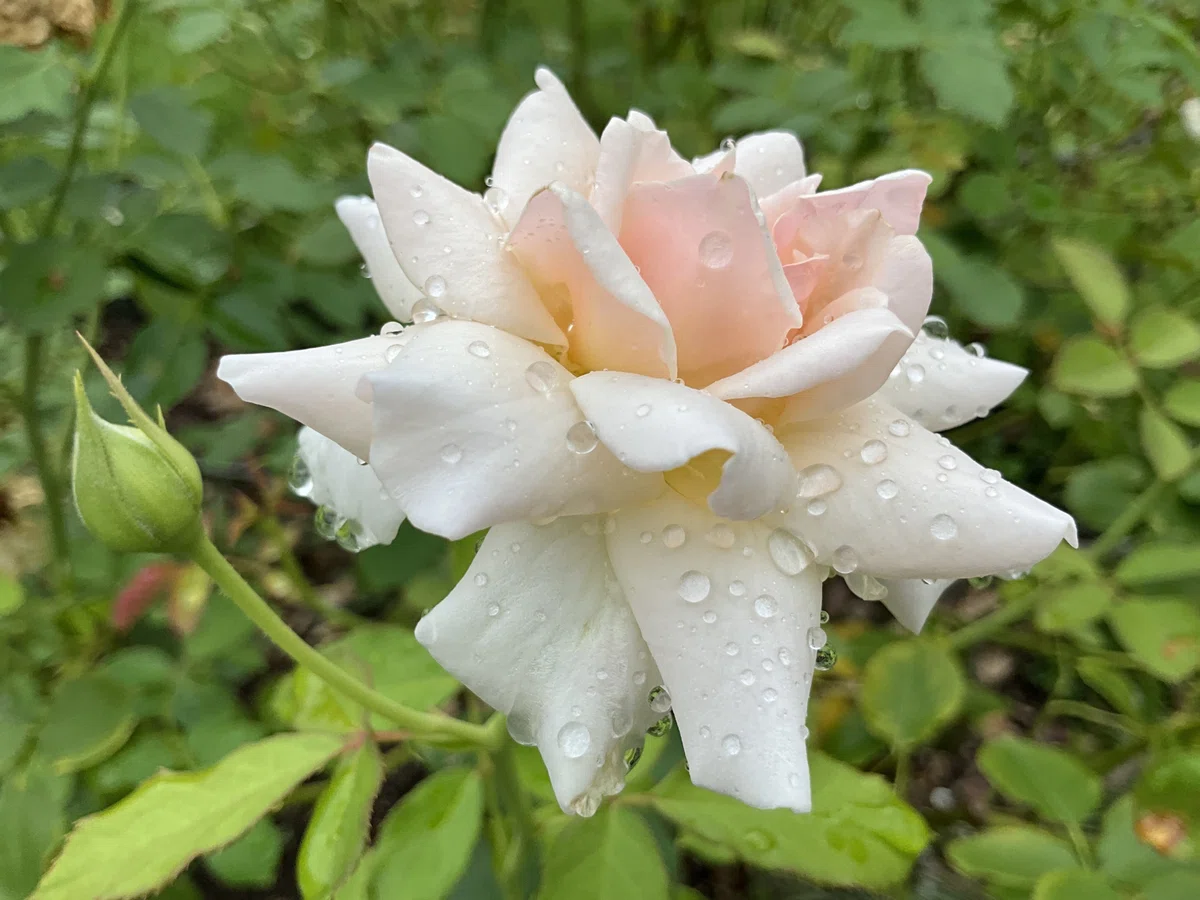
微香,F系,日本作出(河本純子,2008年)
京都府立植物園ばら園
2025年9月5日,筆者撮影
©️Hideaki FUJII
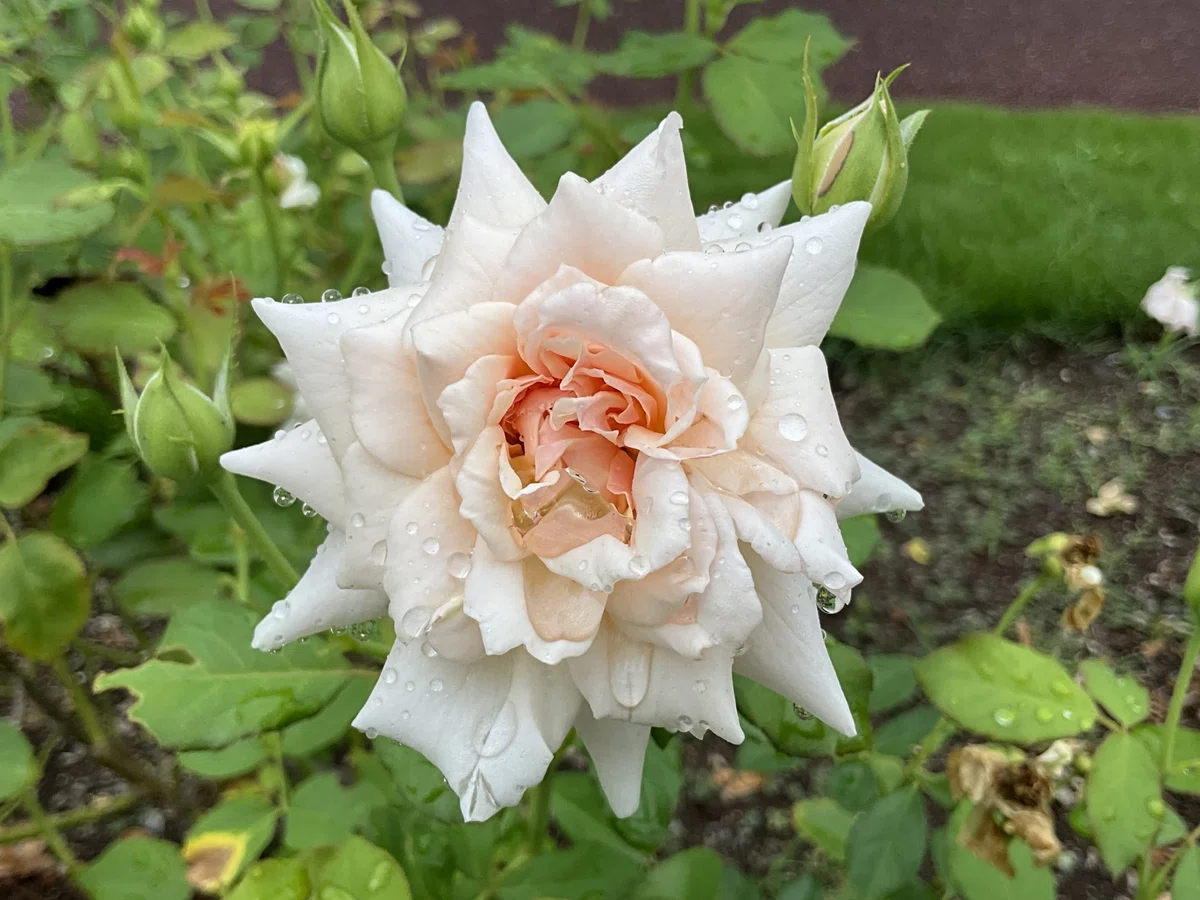
微香,F系,日本作出(河本純子,2008年)
京都府立植物園ばら園
2025年9月5日,筆者撮影
©️Hideaki FUJII
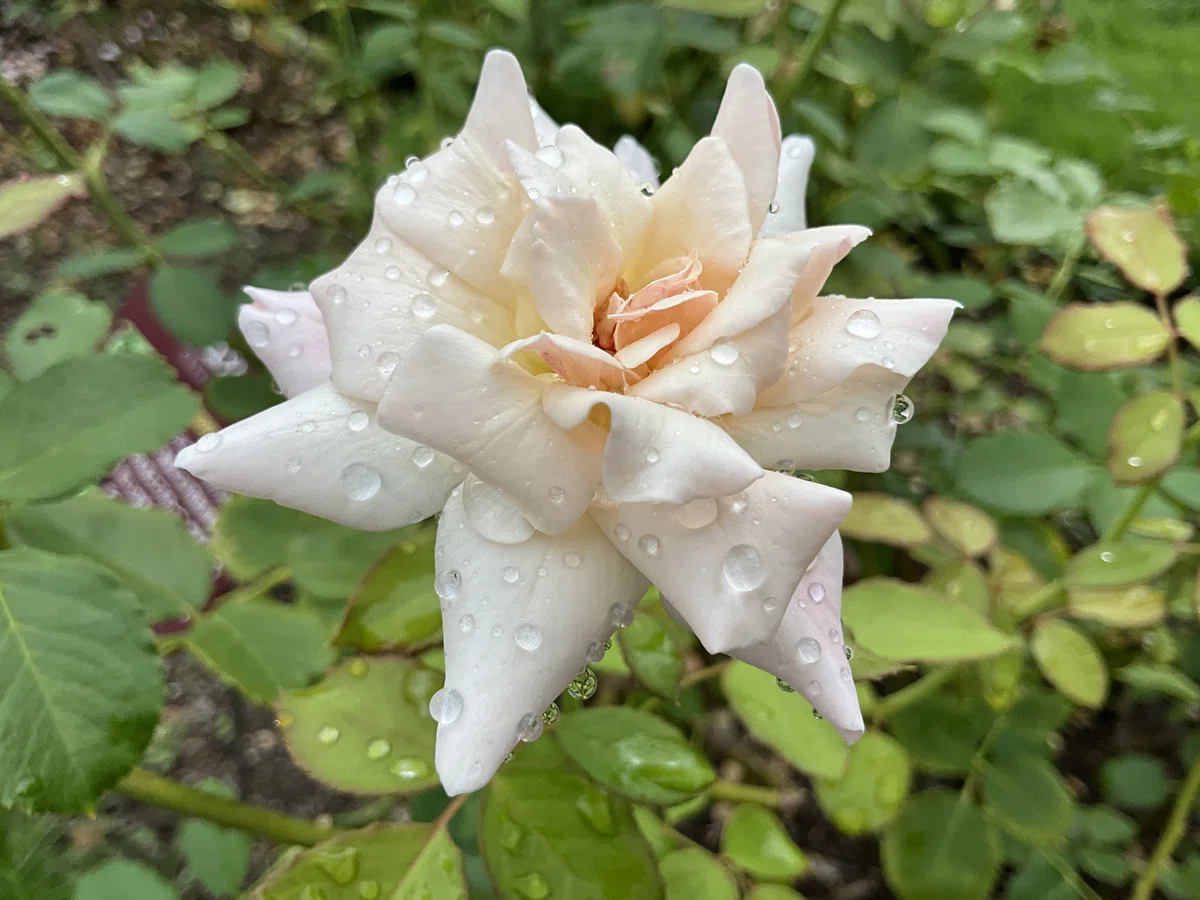
微香,F系,日本作出(河本純子,2008年)
京都府立植物園ばら園
2025年9月5日,筆者撮影
©️Hideaki FUJII
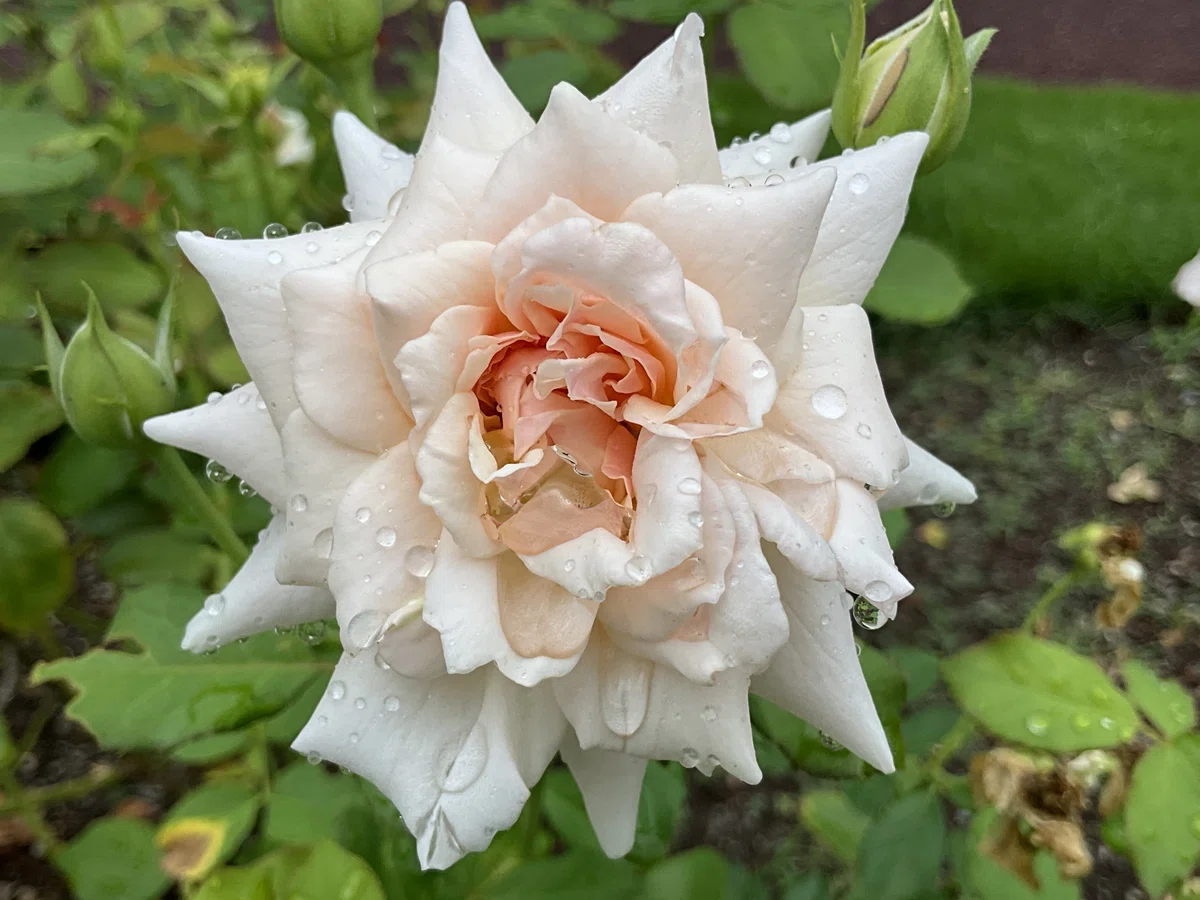
微香,F系,日本作出(河本純子,2008年)
京都府立植物園ばら園
2025年9月5日,筆者撮影
©️Hideaki FUJII
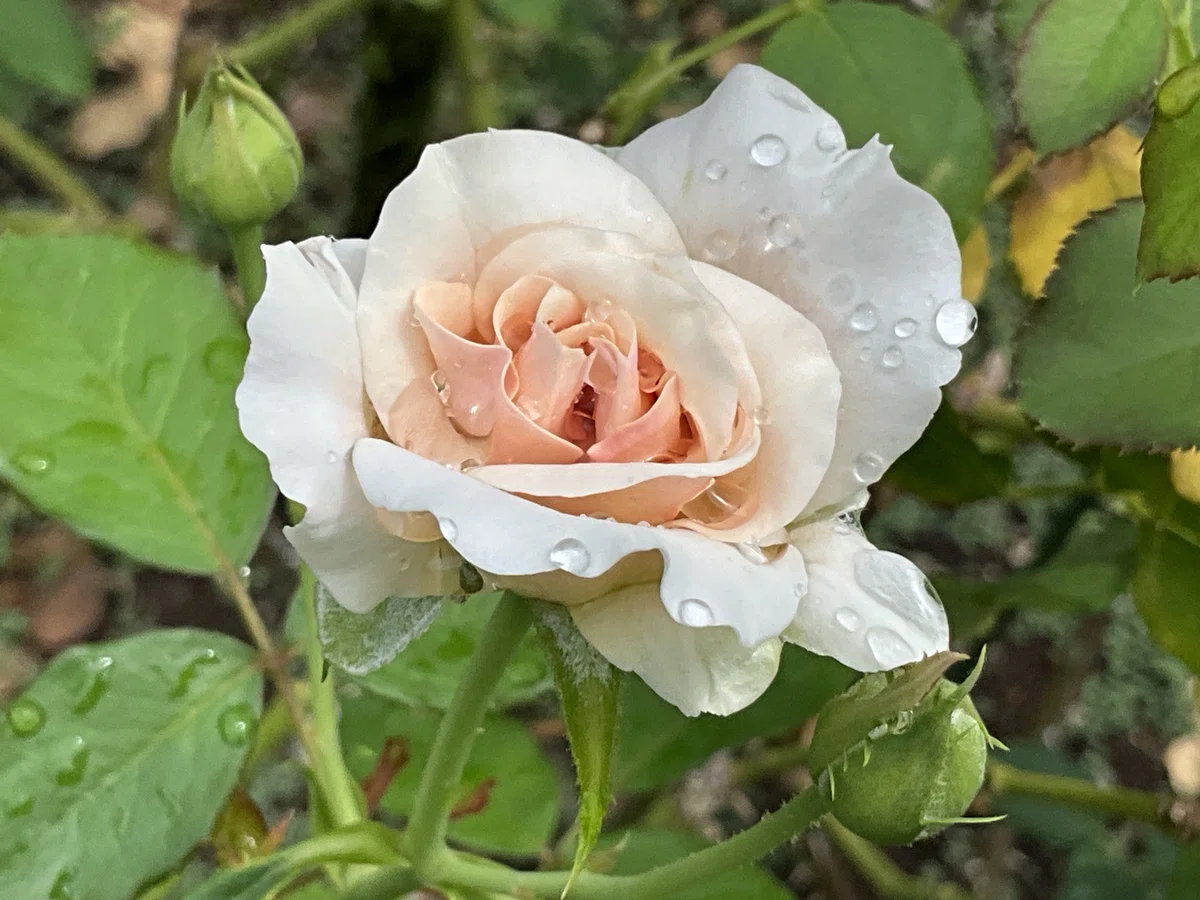
微香,F系,日本作出(河本純子,2008年)
京都府立植物園ばら園
2025年9月5日,筆者撮影
©️Hideaki FUJII
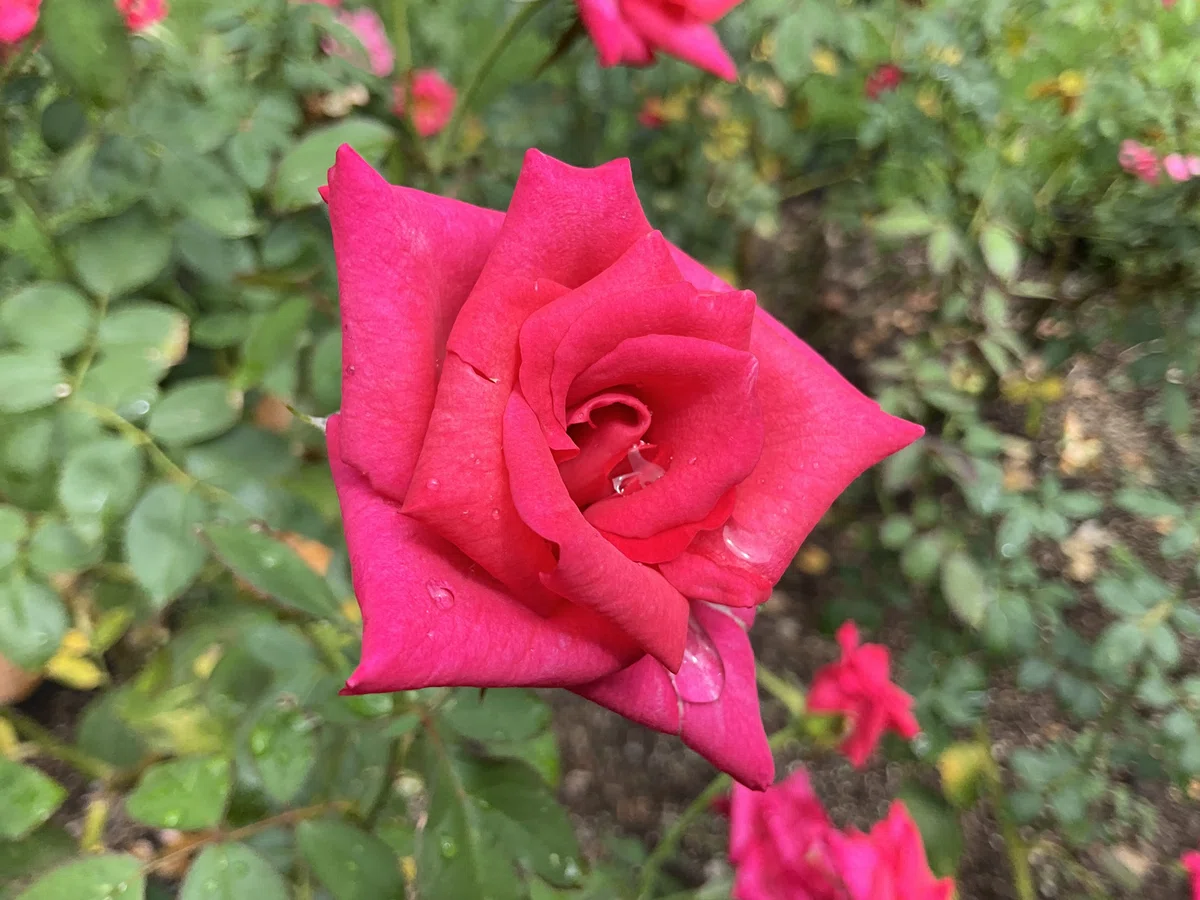
微香,F系,日本作出(京成バラ園芸,2003年)
京都府立植物園ばら園
2025年9月5日,筆者撮影
©️Hideaki FUJII
2025年9月5日,筆者撮影
©️Hideaki FUJII
2025年9月5日,筆者撮影
©️Hideaki FUJII
2025年9月5日,筆者撮影
©️Hideaki FUJII
2025年9月5日,筆者撮影©️Hideaki FUJII
2025年9月5日,筆者撮影
©️Hideaki FUJII
2025年9月5日,筆者撮影
©️Hideaki FUJII
Roses (Japanese-bred, Kyoto Botanical Gardens): Saturday, September 6, 2025
Summary
At noon on September 5, 2025, following the passage of Typhoon No. 15 (PEIPAH), the author visited the Rose Garden at the Kyoto Botanical Gardens. In response to a visitor’s remark that “there’s nothing here,” the author reflected on how the ability to appreciate beauty depends on one’s powers of observation. Despite the season being early for autumn roses, several Japanese-bred varieties were quietly blooming. ‘Urara’ (1993, floribunda) stood out with its vivid shocking pink and strong resistance to disease, earning a JRC Gold Award. ‘Ginrei’ (1990, floribunda) displayed elegant white blooms with creamy centers and won a JRC Bronze Award. ‘Chouchou’ (2008, floribunda) bloomed gracefully in pale pink and white, with high heat tolerance. ‘Kurenai’ (2003, floribunda) bloomed in deep crimson, evoking traditional Japanese aesthetics. These roses, each with distinct character, are well adapted to Japan’s climate and offer profound emotional resonance to those who truly observe them.
Main Text
At noon on September 5th, in the wake of Typhoon No. 15 (PEIPAH), the roses I observed in the Rose Garden of the Kyoto Botanical Gardens were quietly, yet unmistakably, in bloom—still carrying the lingering breath of the storm. When a passing visitor murmured, “There’s nothing here,” I couldn’t help but sense that what surfaced behind those words was a question of perceptive capacity. To my eyes, when I focused and brought the lens close, the delicate beauty of Japan’s finest roses revealed itself.
“Urara” — Radiant in Shocking Pink
Created in 1993 by Hiroshi Hirabayashi, ‘Urara’ is a floribunda (F-type) rose that blooms throughout the seasons. Its vivid shocking pink color remains bright even under the intense summer sun, as if it had befriended the sunlight itself. The flower has rounded petals and a medium-sized bloom. Though only faintly fragrant, its scent gently rides the breeze and lingers quietly in the memory of those who admire it. In 1995, ‘Urara’ won the Gold Medal at the JRC (Japan Rose Concours). Its acclaim extends beyond color to include disease resistance and long-lasting blooms. Widely planted in urban gardens and public facilities, it is known as a beginner-friendly variety.
“Ginrei” — Elegance Like a Snowy Peak
‘Ginrei,’ created in 1990 by Seizō Suzuki, is a medium-sized floribunda rose. True to its name, it evokes the image of a snow-covered mountain peak, with white petals tinged with cream at the center. The buds are reddish, turning white as they bloom, sometimes retaining a hint of pink at the petal tips. The flower has a semi-high-centered, pointed bloom form with a refined shape. Its fragrance is a gentle tea-scented medium aroma. With a height of about 120 cm and a semi-spreading growth habit, it suits the front to middle sections of flower beds. It received the Bronze Medal at the 1990 JRC and is praised for its dignified appearance and reliable blooming. ‘Ginrei’ seems perfectly suited to tranquil gardens, leaving a lasting impression on those who behold it.
“Chouchou” — Soft Elegance in Pale Pink
Created in 2008 by Junko Kawamoto, ‘Chouchou’ is a medium-sized, seasonally blooming floribunda rose. Its petals are pale pink at the center, fading to white on the outer edges. With rounded, double-layered blooms, it gives a soft and graceful impression. Though only mildly fragrant, its tea-scented aroma adds to its elegant presence. Growing to 90–120 cm, its upright form is easy to manage and suitable for pots. Its strong heat tolerance and stable summer coloration are highly regarded. The name ‘Chouchou’ means “favorite” in French, and true to its name, it is a rose that captures the hearts of its admirers.
“Kurenai” — Deep Crimson Passion
‘Kurenai,’ created in 2003 by Shunsuke Takeuchi, is a lightly fragrant floribunda rose. Its deep crimson blooms are striking, especially in the autumn rose garden, where other roses bloom modestly. ‘Kurenai’ adds a passionate splash of color, instantly drawing the viewer’s gaze. Its hue resonates with classical Japanese aesthetics and harmonizes beautifully with traditional gardens. Though its fragrance is faint, the presence of the flower more than compensates.
Each of these roses possesses a distinct personality, yet all are well adapted to Japan’s climate and offer profound emotional resonance to those who observe them. For those with a discerning eye, the rose garden is far from empty. Rather, it is a space where the roses quietly speak, revealing a world that shifts with the seasons.
Supplement 1: On the Classification of Modern Roses
Modern roses refer to cultivars developed since 1867, beginning with ‘La France’ bred by Jean-Baptiste Guillot. These roses are characterized by traits such as repeat blooming and high-centered petals, and are classified into multiple groups based on bloom form, growth habit, ease of cultivation, and ornamental use.
Main classifications include:
HT (Hybrid Tea): Large, single blooms ideal for cut flowers. Often fragrant and repeat-blooming.
F (Floribunda): Medium-sized flowers in clusters. Compact and suitable for borders and landscape planting.
S (Shrub): Broad category with diverse forms and fragrances. Includes cultivars with old rose traits.
CLHT (Climbing HT): Climbing variants of HT roses, used for vertical decoration.
Mini (Miniature): Small plants with tiny flowers and leaves. Suitable for pots and indoor use.
Gr (Groundcover): Spreading habit for soil coverage and edging. Often disease- and cold-resistant.
Additional classifications include:
Pol (Polyantha): Small, densely clustered flowers. Ancestor of the Floribunda group.
LCl (Large-flowered Climber): Large blooms on climbing plants, ideal for fences and arches.
MinFl (Mini Floribunda): Intermediate between Mini and Floribunda, suitable for small spaces.
Patio: Compact cultivars for terraces and balconies. Related to Mini and Floribunda groups.
These classifications appear on plant labels, exhibition panels, and catalogs, helping visitors understand rose traits and appreciate their appeal. Abbreviations like HT, F, and S serve as guides for cultivation and are valuable to gardeners and researchers alike.
Supplement 2: Scientific Classification of Rose Fragrance
The fragrance of roses can be classified not only by sensory impressions but also scientifically according to differences in aromatic compounds. Research generally defines ten types (fragrance notes), each shaped by characteristic molecules that determine the impression of the scent.
• Damask Classic type: Derived from Geraniol and Citronellol, producing a sweet, brilliant, and rich fragrance typical of roses.
• Damask Modern type: Characterized by β-Damascenone as the major component, yielding a dense and long-lasting fragrance.
• Tea type: Formed by compounds such as β-Ionone, evoking the elegant and refined fragrance reminiscent of tea leaves and violet flowers.
• Fruity type: Originating from lactones such as γ-Decalactone, producing a fruit-like fragrance similar to peach or apricot.
• Blue type: Created by Linalool and β-Ionone, giving a cool, transparent, and fantastical fragrance.
• Spicy type: Due to phenolic compounds such as Eugenol, producing a clove-like, spicy, and stimulating fragrance.
• Green type: Derived from aldehydes such as Hexanal, yielding a fresh fragrance reminiscent of green leaves.
• Myrrh type: Produced by aromatic alcohols such as Phenylethanol, giving a resinous and herbal fragrance.
• Woody type: Originating from aromatic compounds such as Vanillin, producing a woody and calming fragrance.
• Honey type: Derived from Phenylacetaldehyde, yielding a sweet fragrance reminiscent of honey.
In this way, the fragrance of roses is not only described by sensory terms such as “sweet,” “elegant,” or “fruity,” but is also supported by a scientific framework that systematically classifies scent at the molecular level.
References
• (Reference 1) Japan Association for Advancement of Agricultural and Food Technologies. (2025). Types of Roses. https://www.jataff.or.jp/bara/syurui.htm
• (Reference 2) Baraken Rose Fragrance Laboratory. (2025). Types of Roses. https://www.baraken.jp/academy/16/#:~:text=バラの3つの形態,形態別に細分されます。
いいなと思ったら応援しよう!
 よろしければご応援をお願いします! いただいたチップはクリエイターとしての活動費に使わせていただきます!