
オクラホマ(京都府立植物園):2026年5月7日(木)

【要旨】
2026年5月4日,京都府立植物園ばら園において,1964年にアメリカで公表されたハイブリッド・ティー系品種オクラホマ(Rosa ‘Oklahoma’)を観察した。本記録は,本品種を「黒赤色で強香の大輪バラ」という即物的特徴に還元することを避け,1960年代アメリカにおけるハイブリッド・ティー育種思想の成熟段階を体現する展示植物として位置づけることを目的とする。同一交配から生じた黒赤系三兄弟のなかでの位置関係を軸に,香りと花形を最優先した時代的美意識が,京都府立植物園という制度空間のなかでどのように読み取られるかを,一次観察と育種史的整理の重なりとして記述する。
【本文】
2026年5月4日,午後。晴天。京都府立植物園ばら園を巡る動線のなかで,視覚的な輪郭よりも先に香りが知覚される区画に足を止めた。植物表示板には「Oklahoma」「オクラホマ」「1964年」「アメリカ作出」「HT系」「強香」と記されている。ここで示されているのは,日本の植物園展示において一般的に採用されてきた整理基準であり,本品種がアメリカ作出のハイブリッド・ティー系バラとして,香りの強さを主要な特性として提示されていることが明確である。ラベル上に学名の直接表記はないが,作出年,系統,交配史,花形・色彩の特徴を踏まえれば,観察対象が Rosa ‘Oklahoma’ であることに疑義はない。
京都府立植物園という制度空間において,ばら園は単に品種を並べる場ではなく,異なる時代の育種思想を空間的に対比させる展示の場として機能している。オクラホマが置かれている区画は,近年の修景用バラや耐病性を重視した品種群と明確な距離を保ち,1960年代に確立されたハイブリッド・ティーの「一輪完結型」の価値体系を体現する品種群の文脈に接続されている。ここで展示されているのは,群植による安定的景観ではなく,一輪に集約された緊張と感覚強度である。
観察した花は大輪で,半剣弁高芯咲きの形態を開花過程においても崩さず保持していた。花弁は厚みがあり密に重なり,色彩は濃赤色を基調としながら,外弁の縁に向かって黒味,あるいは紫味が加わる。完全に展開してなお花芯は高く締まり,形態的な緊張が維持されている。花は直立する花茎の先に一輪ずつ付けられ,観察者の視線とほぼ同じ高さで対峙する構図が自然に形成される。葉は濃緑色でやや光沢を抑えた質感をもち,花色の強さを際立たせる背景として控えめに機能している。
香りは,本品種の観賞体験を支配する最も強度の高い要素である。近接した段階で明瞭かつ持続的に感知され,甘さと重さを併せ持つオールドローズ調の芳香が前面に立つ。日本語資料では「ダマスク香」と表現されることが多いが,国際的整理に従えば,ダマスク系を基調としたオールドローズ香と位置づけるのが妥当である。香りは視覚要素に従属せず,むしろ花を見る以前に存在を予告する感覚情報として機能していた。
育種史的に整理すると,オクラホマはスイムおよびウィークスによって作出され,1963年に国際的評価を経たのち,1964年に公表されたハイブリッド・ティー系品種である。交配親は ‘Chrysler Imperial’ と ‘Charles Mallerin’ であり,同一交配から生じた ‘Papa Meilland’,‘Mister Lincoln’ とともに,黒赤系ハイブリッド・ティーの象徴的系譜群を形成する。いわゆる「黒赤ばら三兄弟」という通称は修辞的表現に留まらず,当時の育種が到達した完成形を複数の姿で具現化した結果として理解できる。
1960年代のハイブリッド・ティー育種においては,大輪,高芯,強香という要素が相互に強化され,一輪の完成度を最大化することが中心的な目標とされた。オクラホマはこの流れのなかで,花数や維持の容易さを二次的要素として後景化し,色彩の深度と香りの強度を前景化する選択を行った品種である。この選択は,個体と観賞者との一対一の関係を前提とする,当時の観賞文化と強く結びついている。
文化的価値の観点から見ると,「黒いバラ」という呼称が生む期待と錯覚は,本品種の評価に長く影響を与えてきた。純黒ではなくとも,黒赤と認識される色調と濃厚な香りが結びつくことで,強い記憶に残る体験が形成される。これは,象徴性を花そのものに集中させる20世紀中葉のハイブリッド・ティー文化の典型的構図である。
経済的価値において,オクラホマは大量植栽や低管理を志向する品種ではなく,切り花や単体観賞において高い付加価値を発揮してきた。専門的管理と引き換えに「唯一無二の一輪」を提供する構造は,園芸産業と鑑賞文化の交差点を明確に示している。
環境資源的価値の観点では,現代的基準から見れば省管理性や耐病性に優れるとは言い難い。しかしそのこと自体が,本品種を植物園という制度的に保護された空間において展示する理由を与えている。オクラホマは,過去の育種思想を物証として保持する展示資料として機能している。
本日の観察は晴天条件下で行われ,形態的緊張と香りの立ち上がりが強く知覚された。一方,曇天時や降雨後,高温期における色調変化や香気拡散については未確認である。この未確認性を補完することなく,観察条件の一部として残したまま,本記録はここで切断される。オクラホマが示しているのは完成された結論ではなく,一輪に集約された時代の思考である。次の歩行において,色が先に立つのか,香りが先に来るのか。その差異を次の観察に委ね,ばら園を後にした。
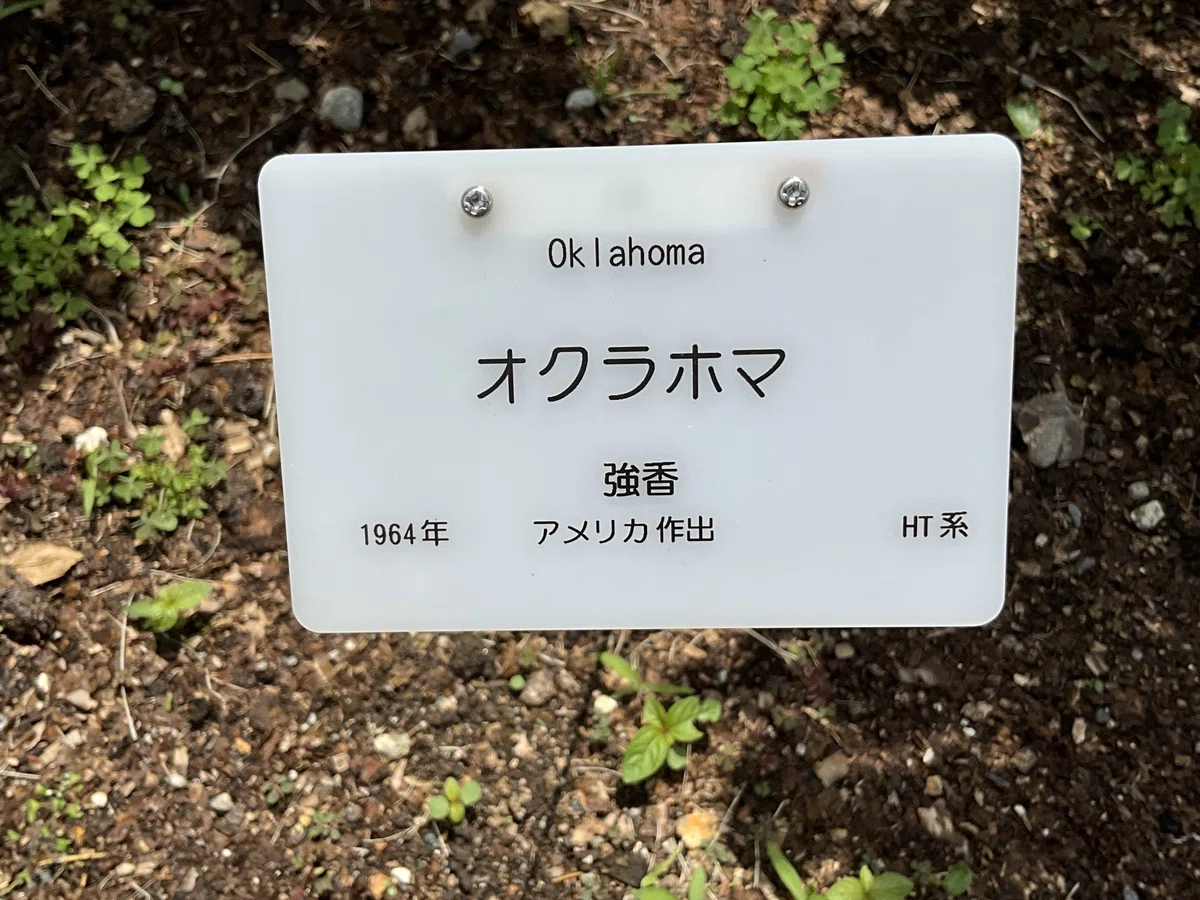
バラ科,HT系,強香,アメリカ作出1964年,植物表示板
京都府立植物園ばら園
2026年5月4日,筆者撮影
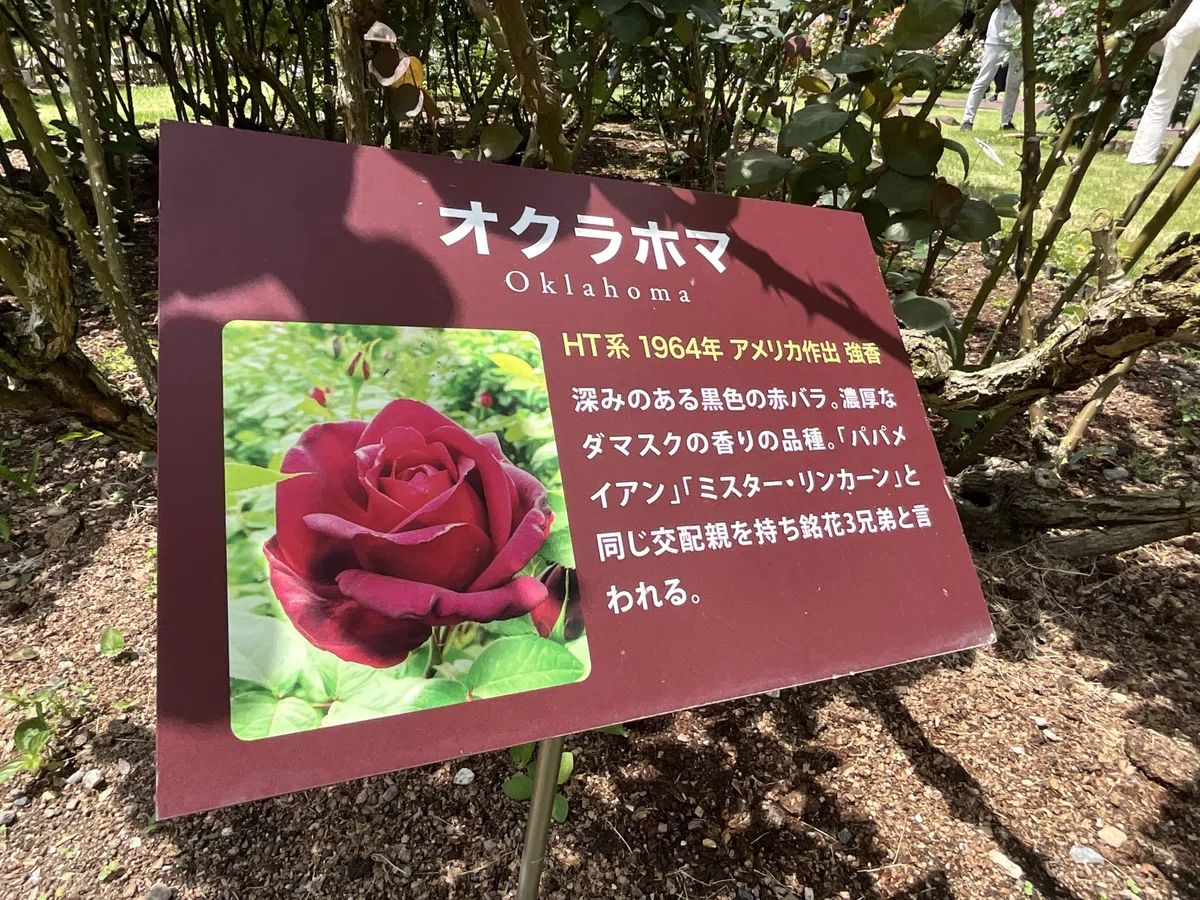
バラ科,HT系,強香,アメリカ作出1964年,説明パネル
京都府立植物園ばら園
2026年5月4日,筆者撮影
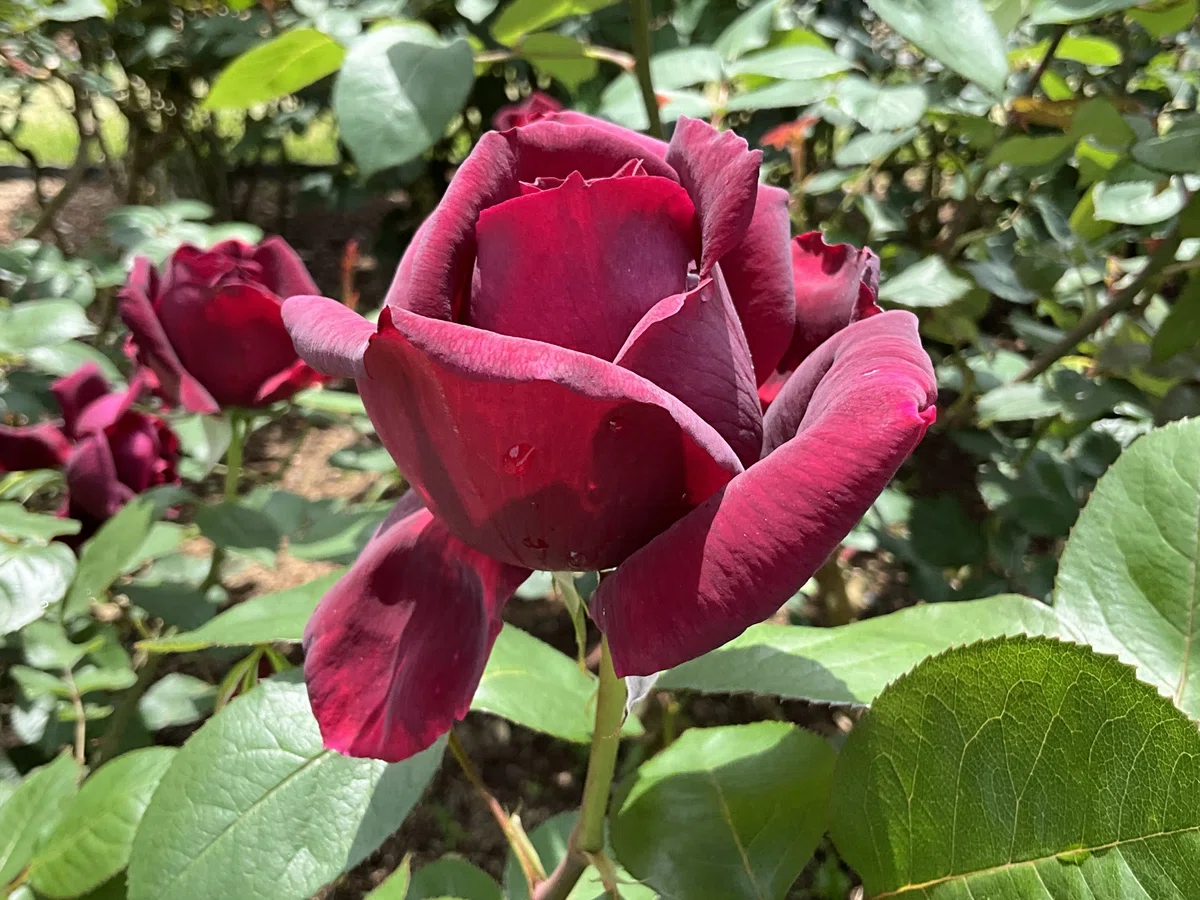
バラ科,HT系,強香,アメリカ作出1964年
京都府立植物園ばら園
2026年5月4日,筆者撮影
©️Hideaki FUJII
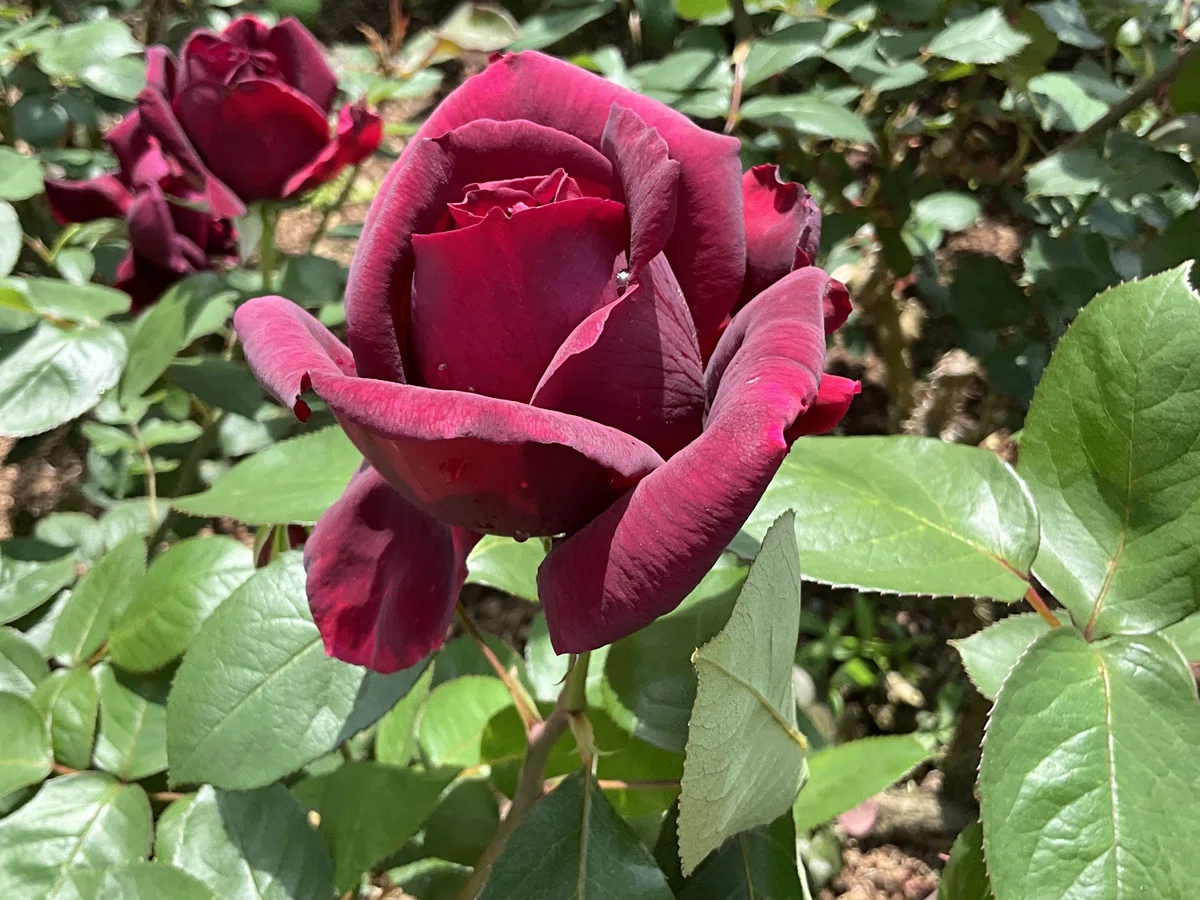
バラ科,HT系,強香,アメリカ作出1964年
京都府立植物園ばら園
2026年5月4日,筆者撮影
©️Hideaki FUJII
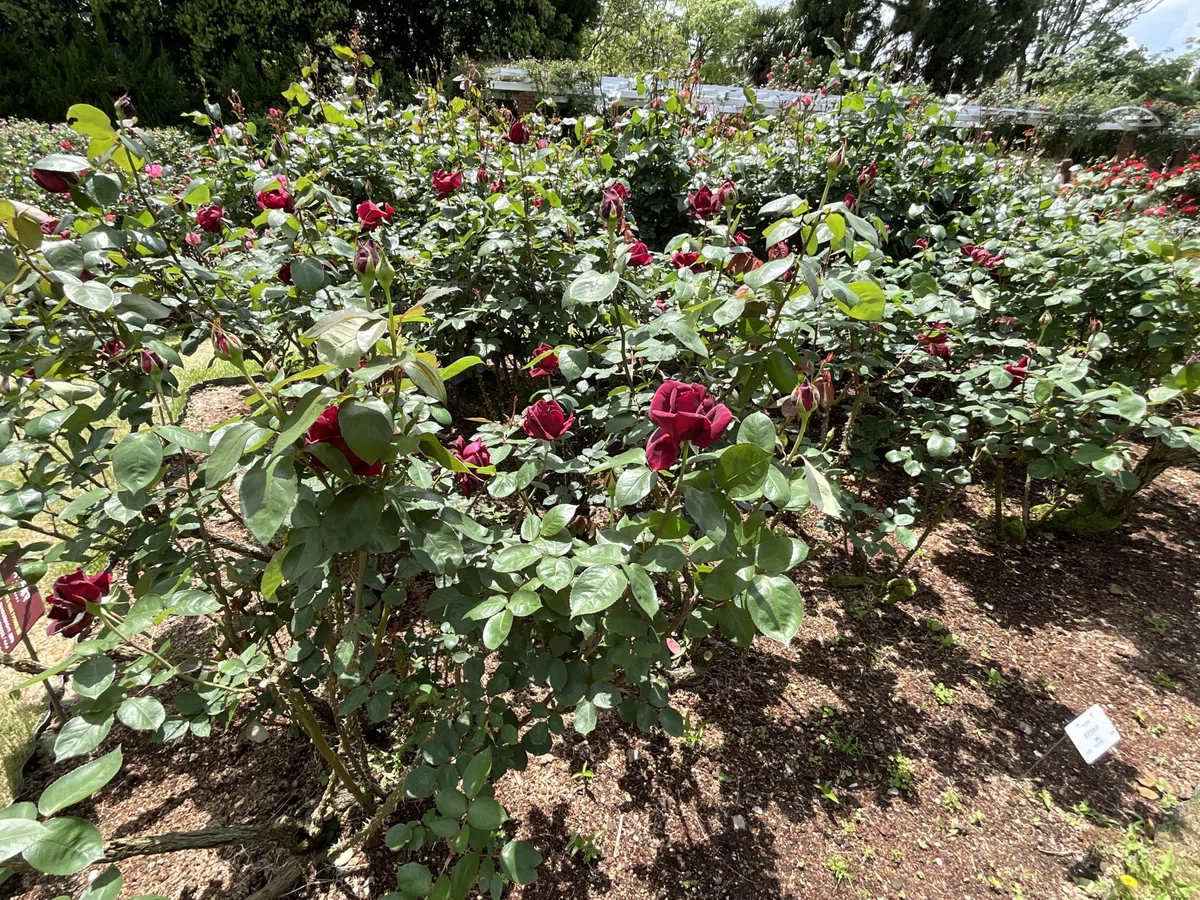
バラ科,HT系,強香,アメリカ作出1964年
京都府立植物園ばら園
2026年5月4日,筆者撮影
©️Hideaki FUJII
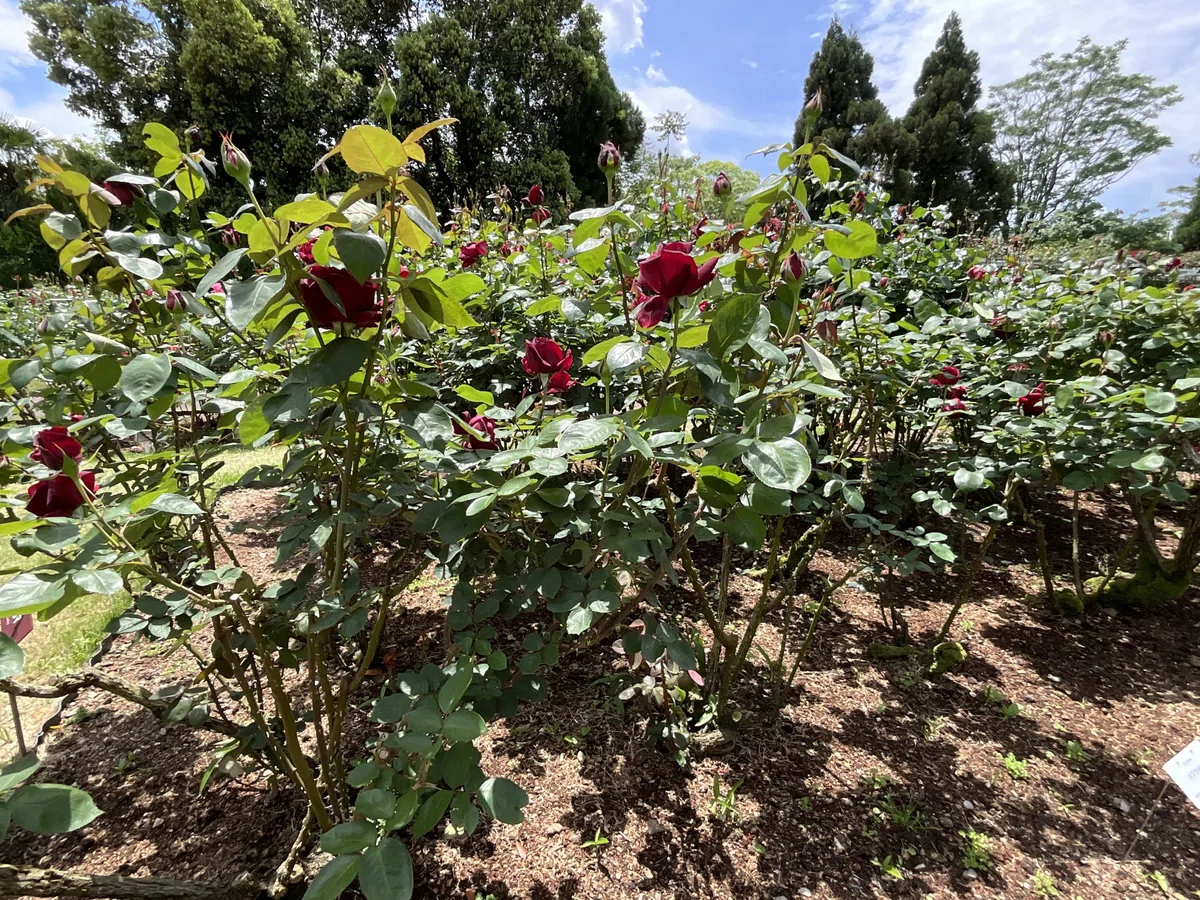
バラ科,HT系,強香,アメリカ作出1964年
京都府立植物園ばら園
2026年5月4日,筆者撮影
©️Hideaki FUJII
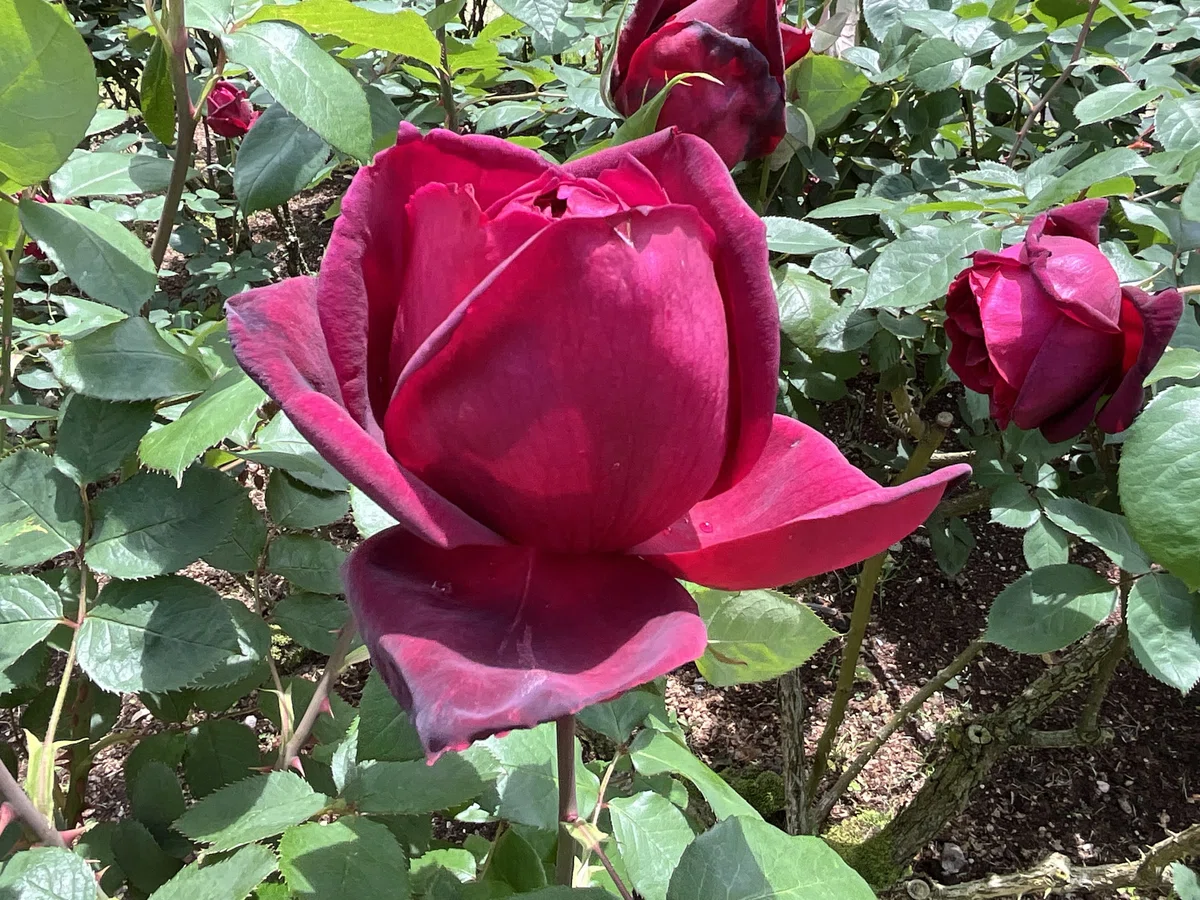
バラ科,HT系,強香,アメリカ作出1964年
京都府立植物園ばら園
2026年5月4日,筆者撮影
©️Hideaki FUJII
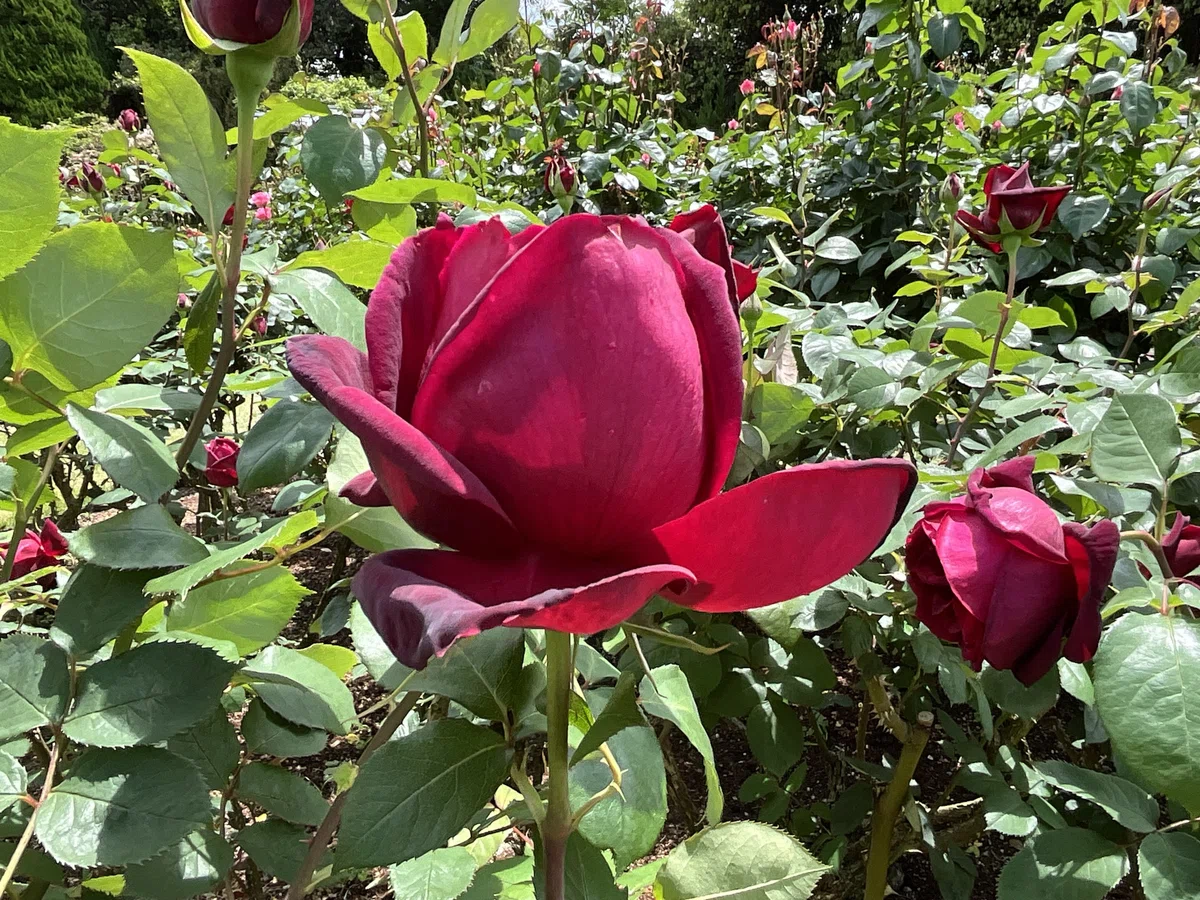
バラ科,HT系,強香,アメリカ作出1964年
京都府立植物園ばら園
2026年5月4日,筆者撮影
©️Hideaki FUJII
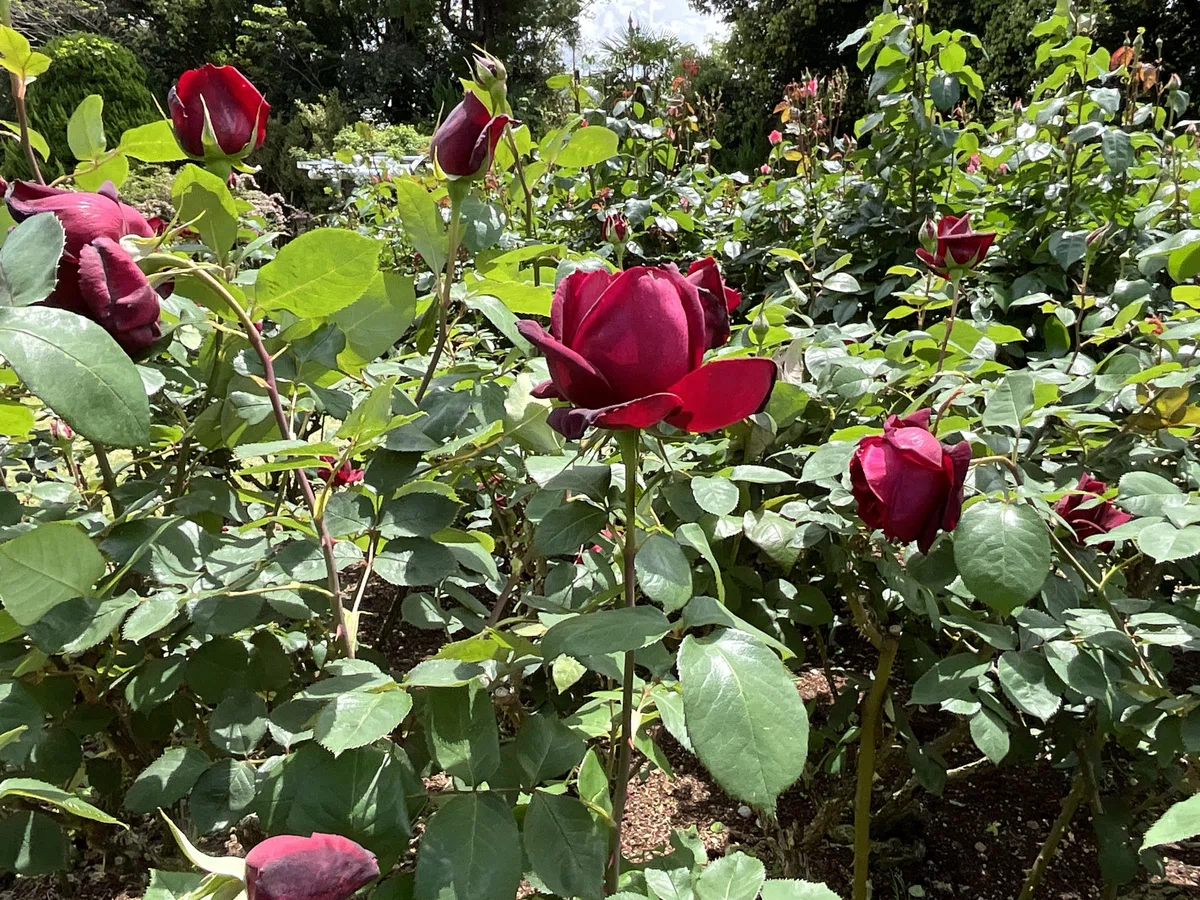
バラ科,HT系,強香,アメリカ作出1964年
京都府立植物園ばら園
2026年5月4日,筆者撮影
©️Hideaki FUJII
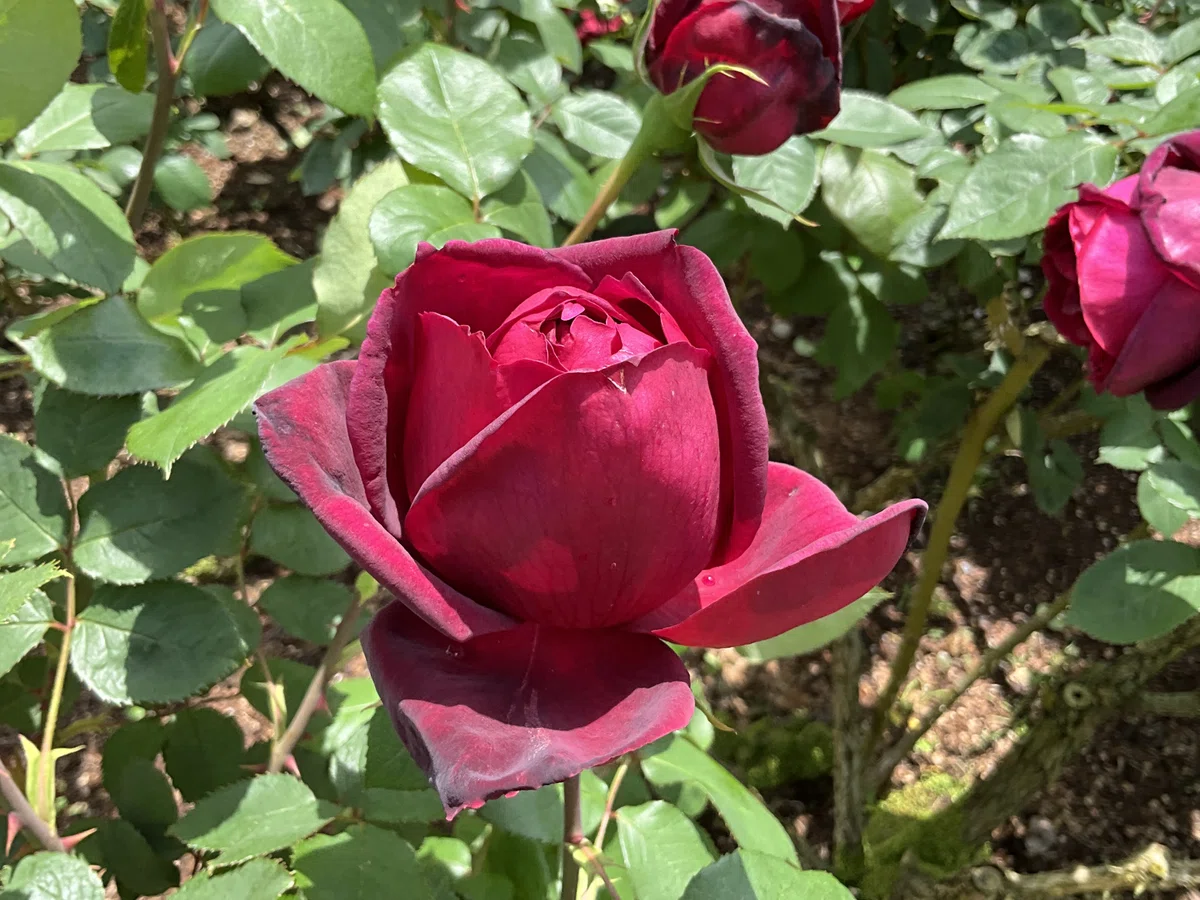
バラ科,HT系,強香,アメリカ作出1964年
京都府立植物園ばら園
2026年5月4日,筆者撮影
©️Hideaki FUJII
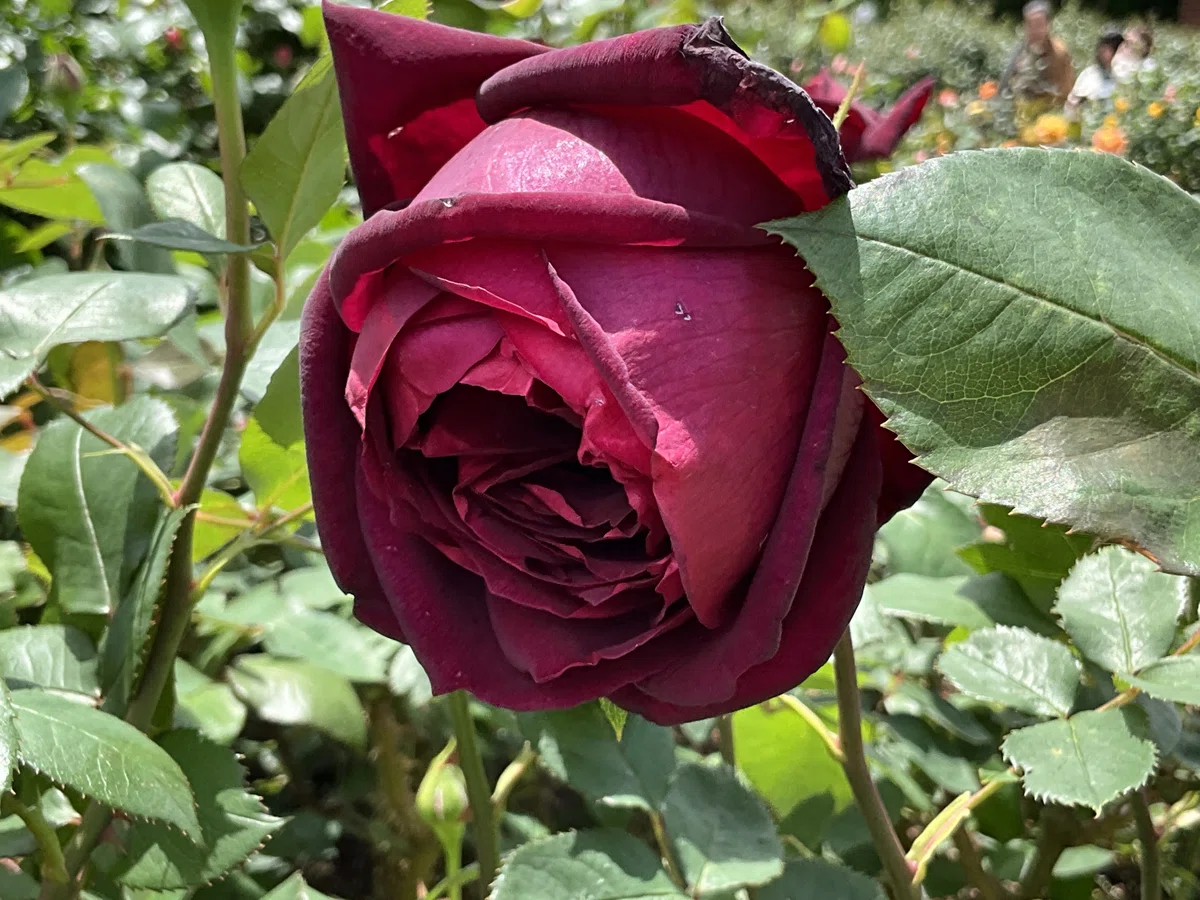
バラ科,HT系,強香,アメリカ作出1964年
京都府立植物園ばら園
2026年5月4日,筆者撮影
©️Hideaki FUJII
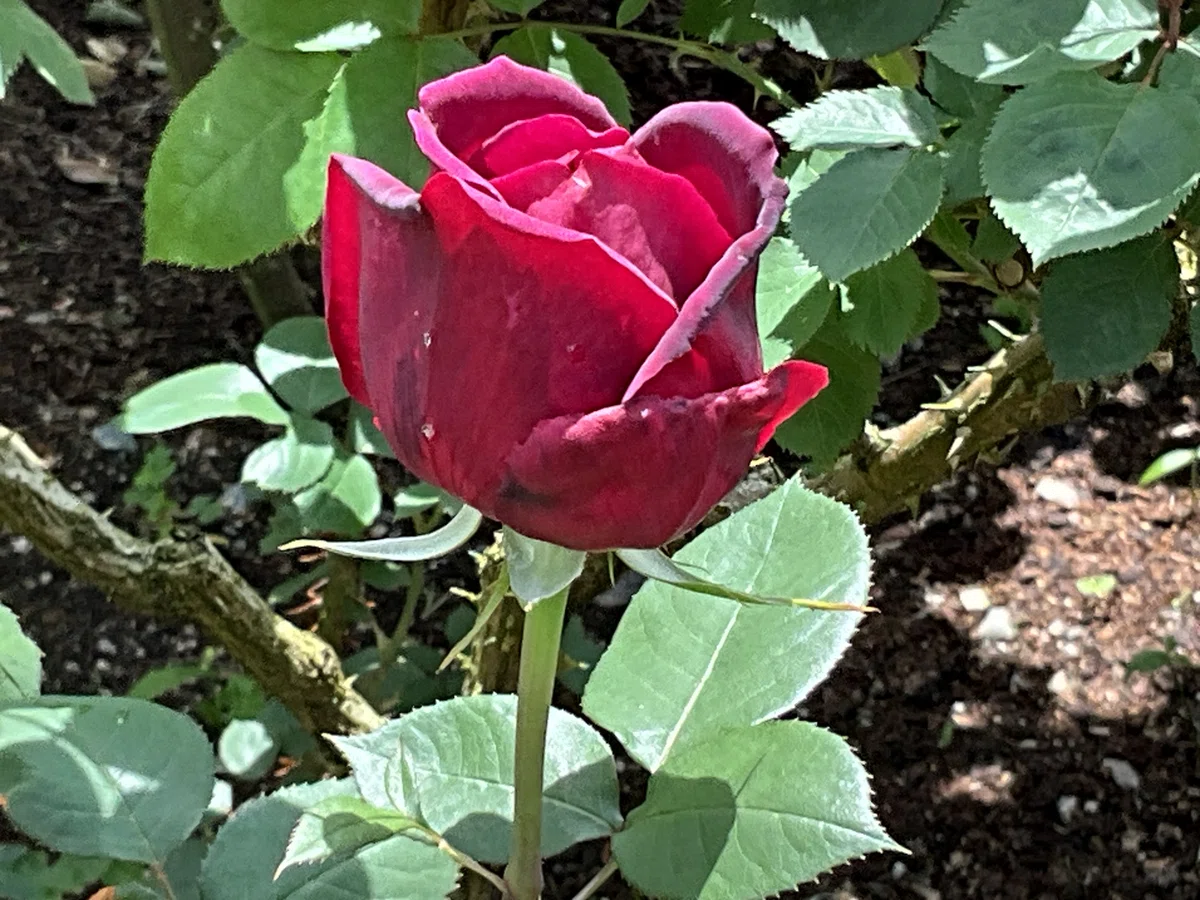
バラ科,HT系,強香,アメリカ作出1964年
京都府立植物園ばら園
2026年5月4日,筆者撮影
©️Hideaki FUJII
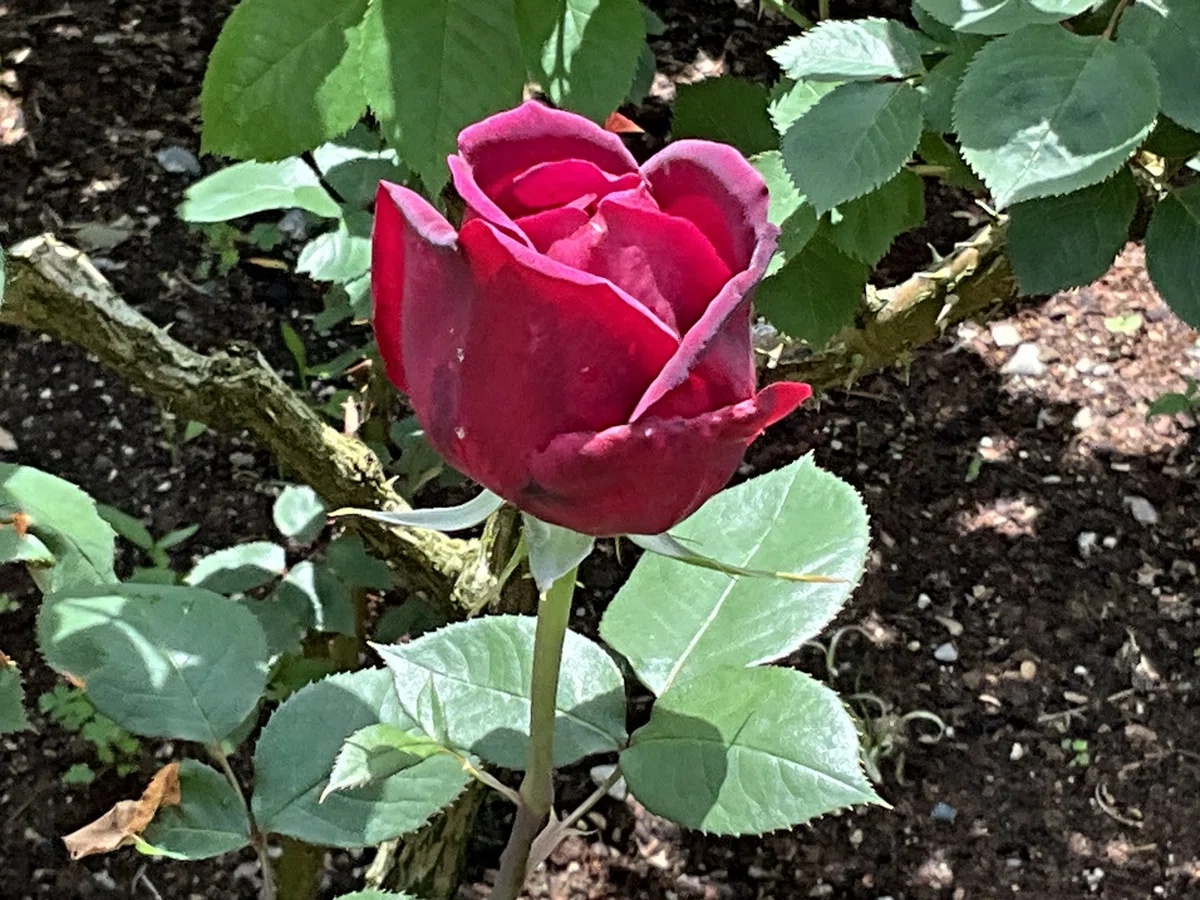
バラ科,HT系,強香,アメリカ作出1964年
京都府立植物園ばら園
2026年5月4日,筆者撮影
©️Hideaki FUJII
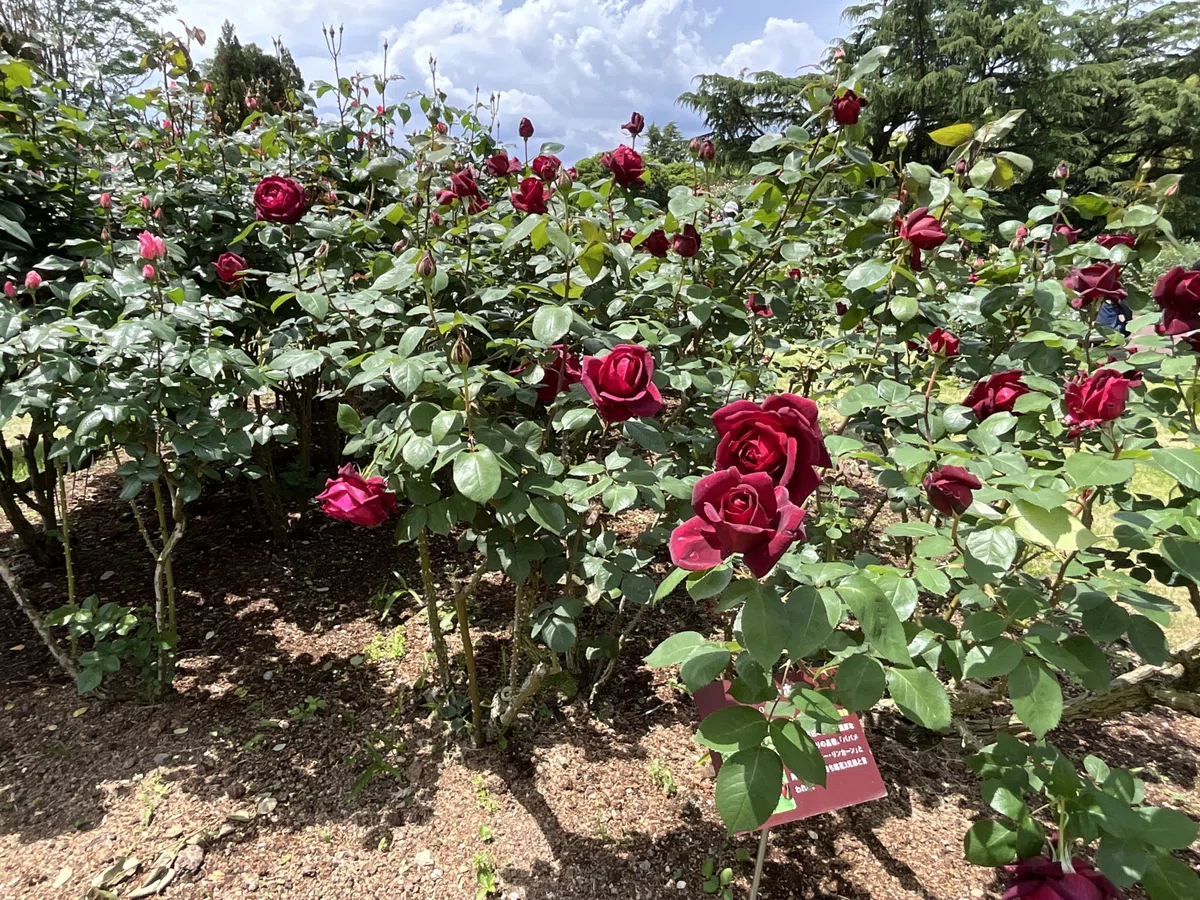
バラ科,HT系,強香,アメリカ作出1964年
京都府立植物園ばら園
2026年5月4日,筆者撮影
©️Hideaki FUJII
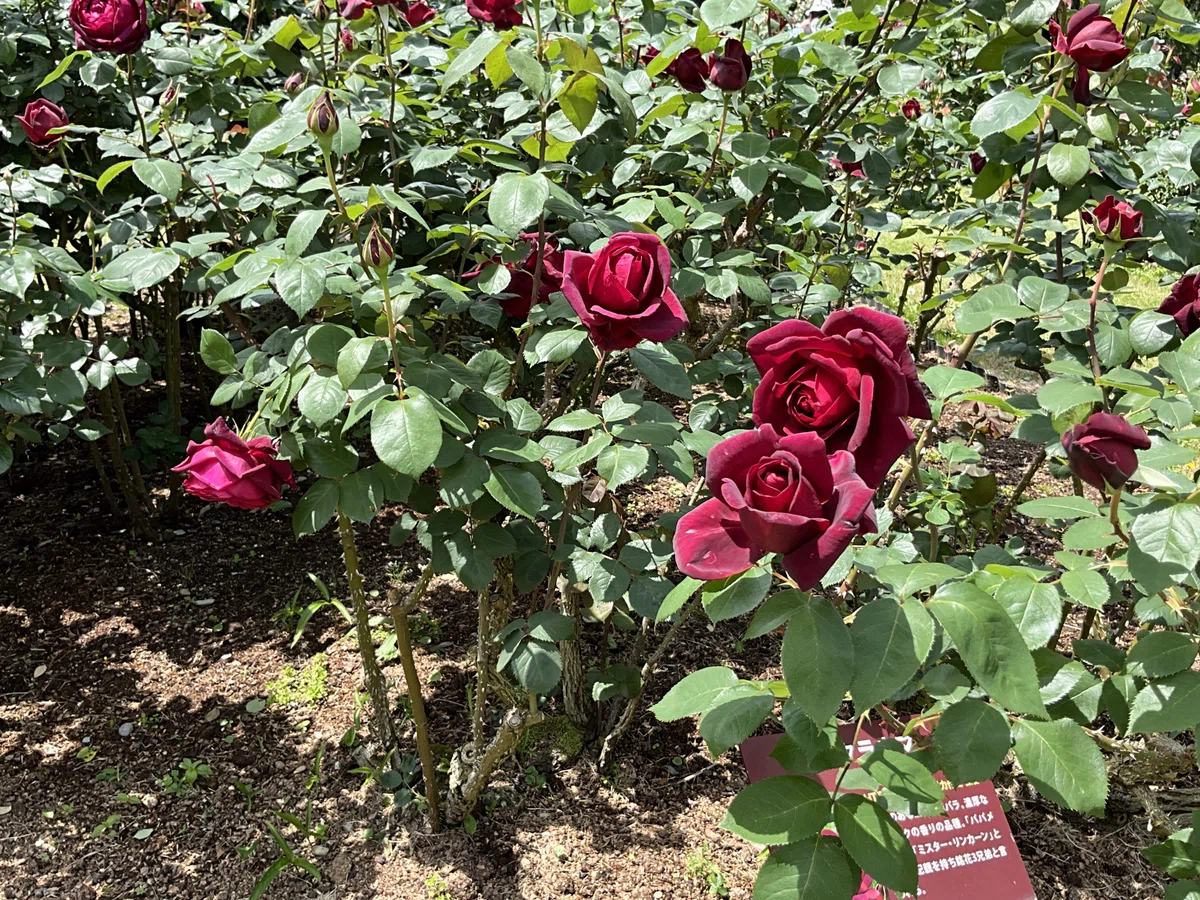
バラ科,HT系,強香,アメリカ作出1964年
京都府立植物園ばら園
2026年5月4日,筆者撮影
©️Hideaki FUJII
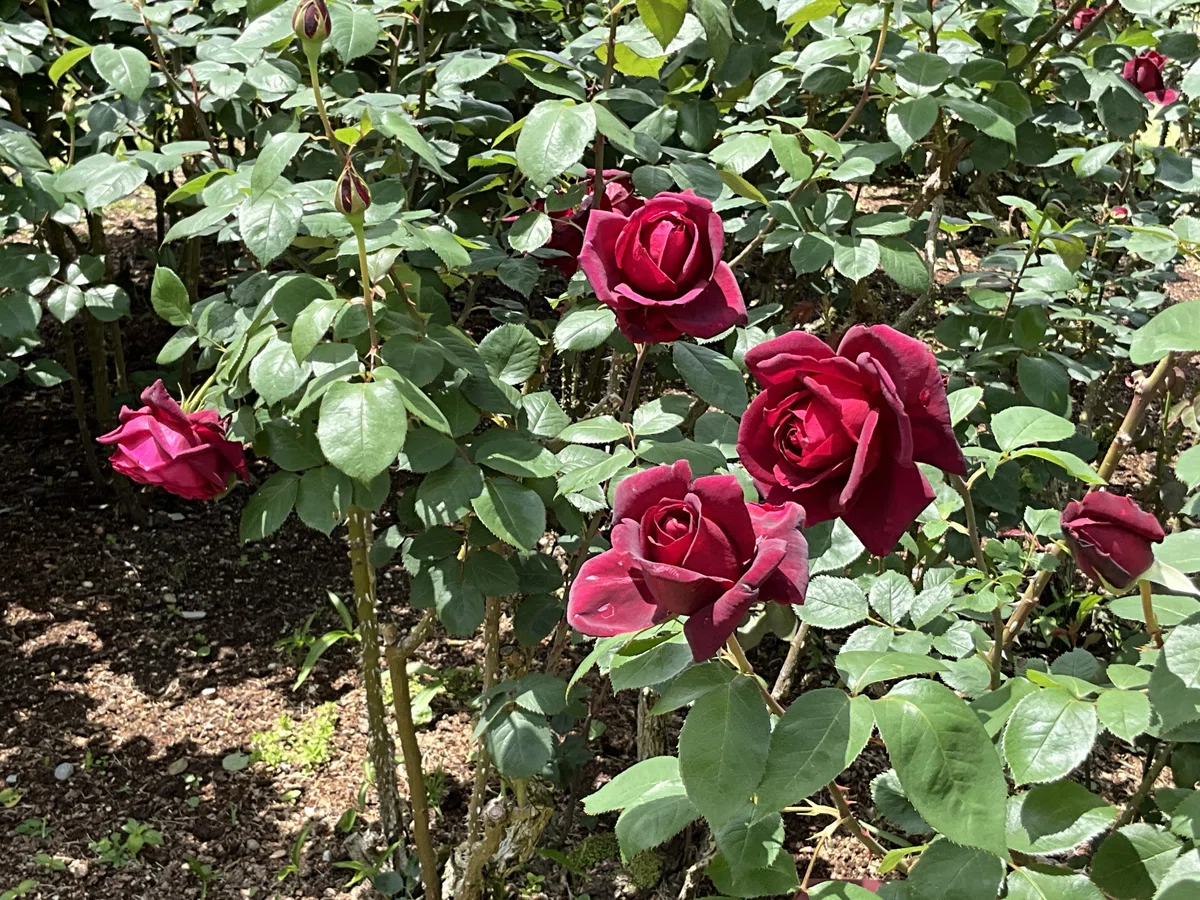
バラ科,HT系,強香,アメリカ作出1964年
京都府立植物園ばら園
2026年5月4日,筆者撮影
©️Hideaki FUJII
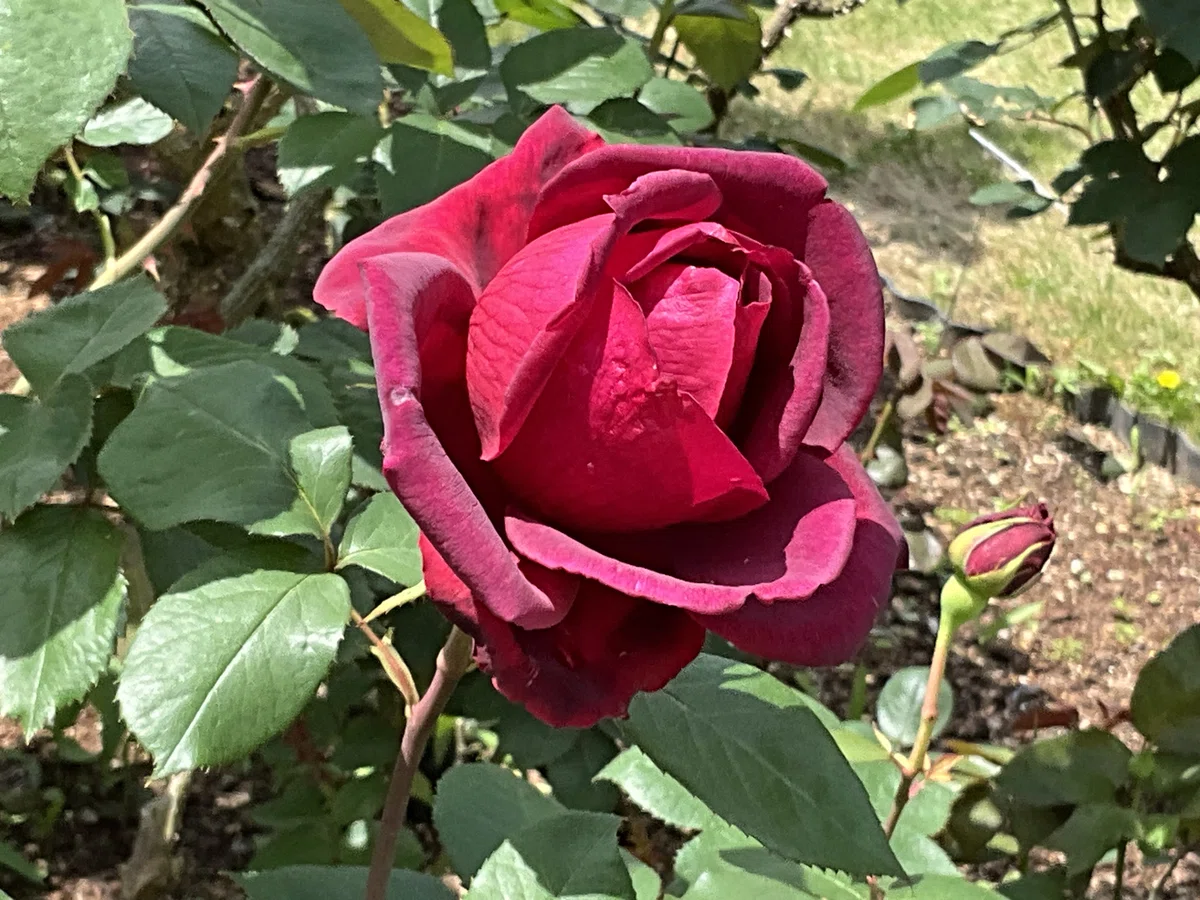
バラ科,HT系,強香,アメリカ作出1964年
京都府立植物園ばら園
2026年5月4日,筆者撮影
©️Hideaki FUJII
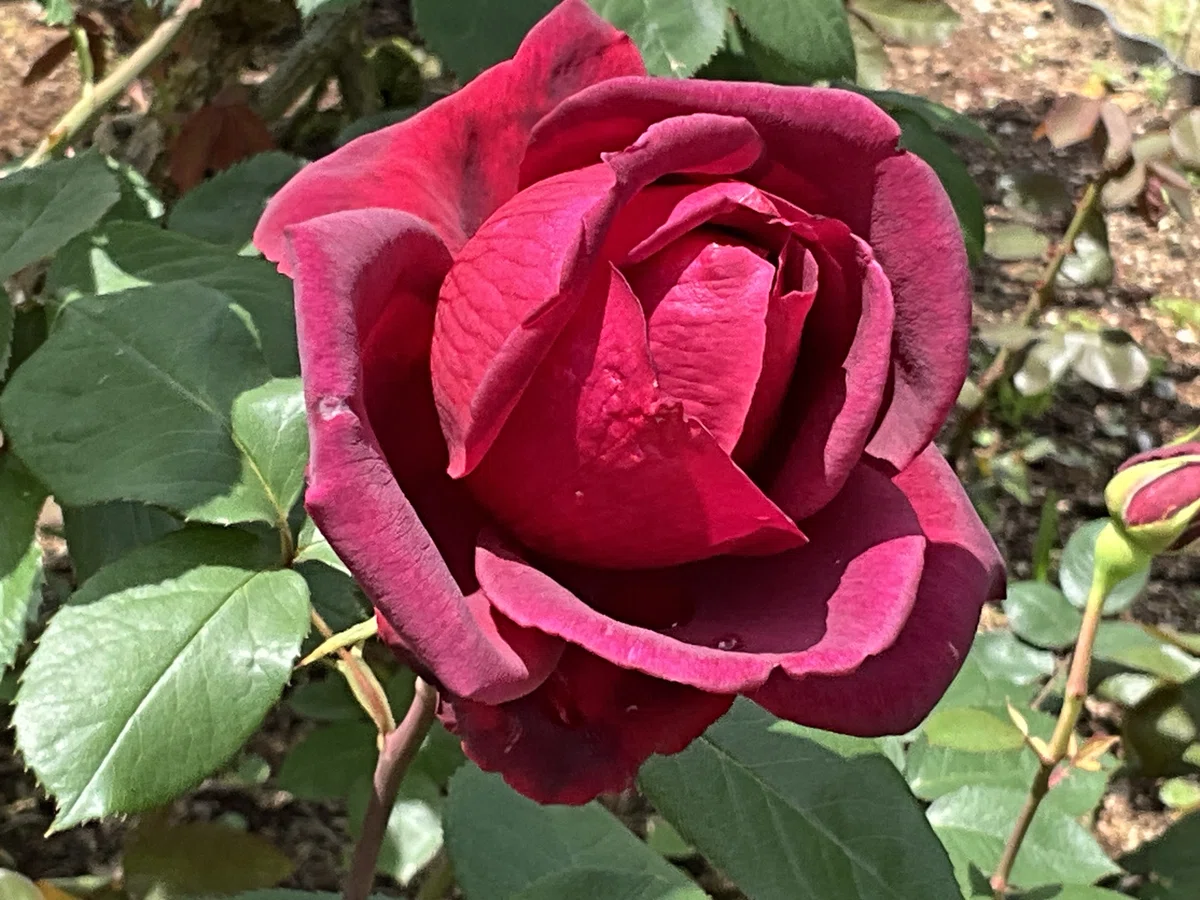
バラ科,HT系,強香,アメリカ作出1964年
京都府立植物園ばら園
2026年5月4日,筆者撮影
©️Hideaki FUJII

バラ科,HT系,強香,アメリカ作出1964年
京都府立植物園ばら園
2026年5月4日,筆者撮影
©️Hideaki FUJII
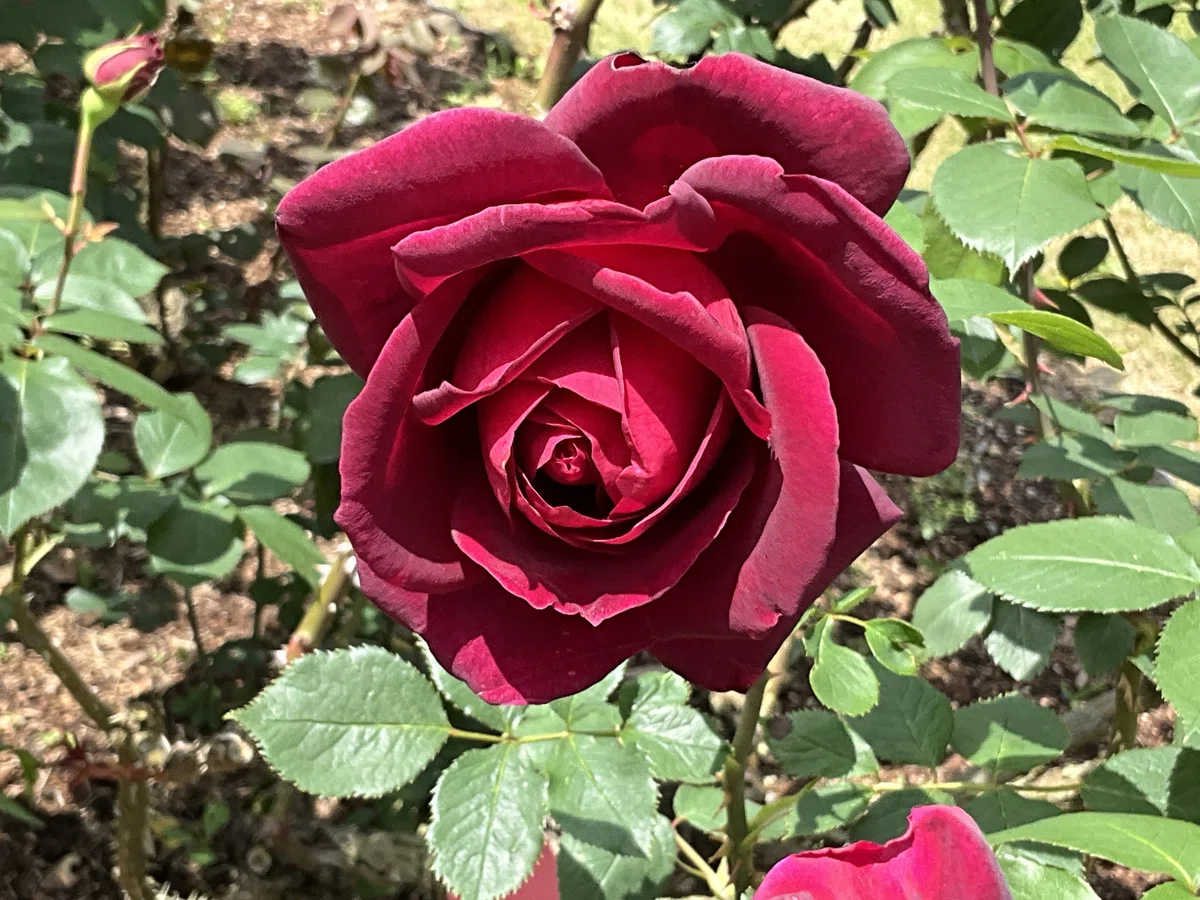
バラ科,HT系,強香,アメリカ作出1964年
京都府立植物園ばら園
2026年5月4日,筆者撮影
©️Hideaki FUJII
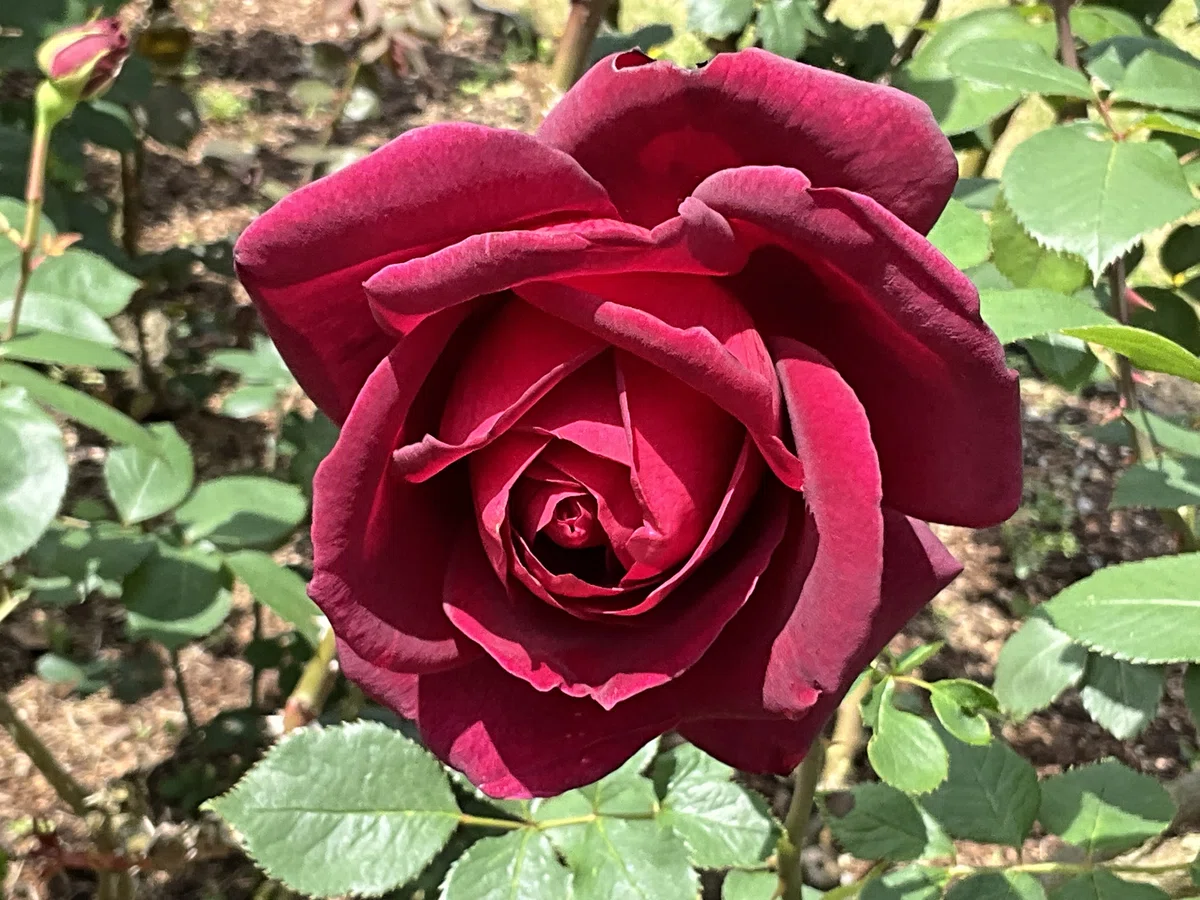
バラ科,HT系,強香,アメリカ作出1964年
京都府立植物園ばら園
2026年5月4日,筆者撮影
©️Hideaki FUJII
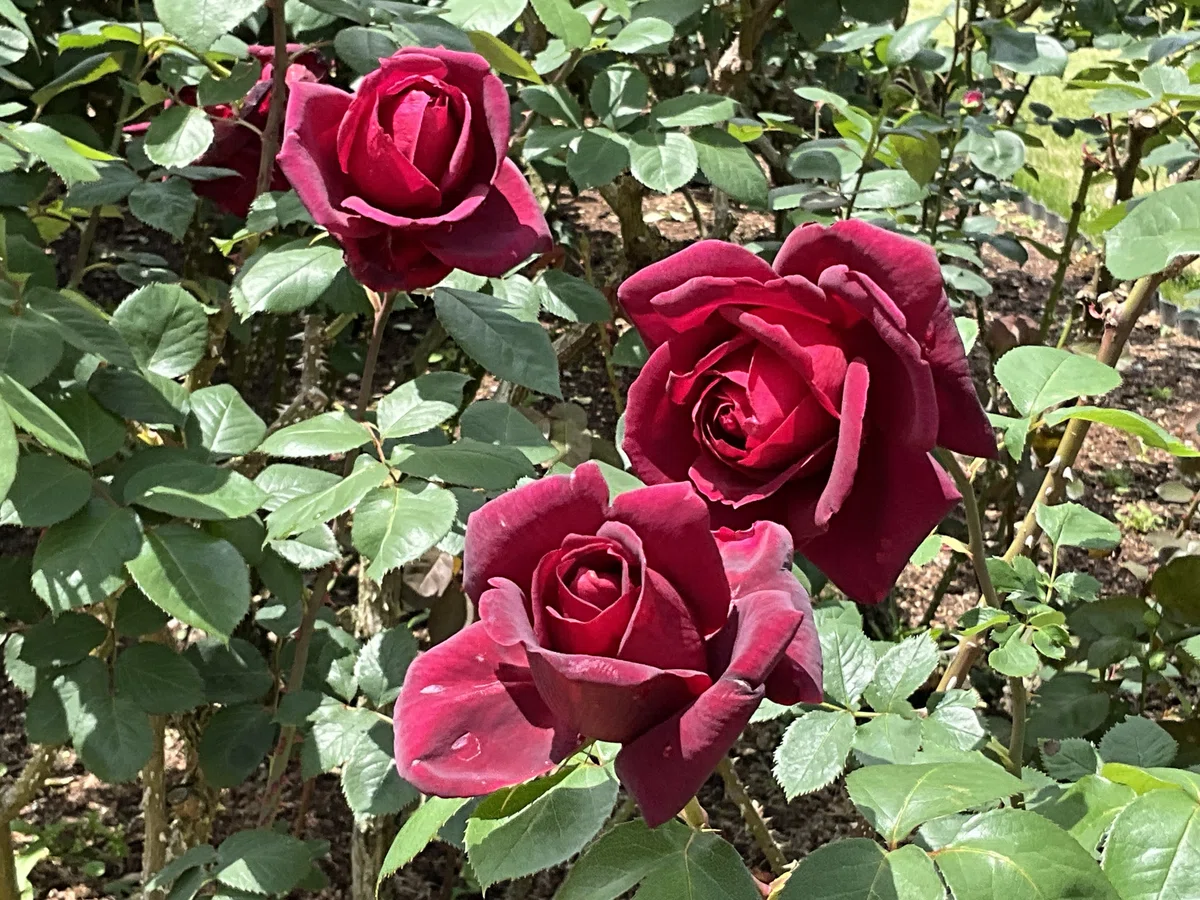
バラ科,HT系,強香,アメリカ作出1964年
京都府立植物園ばら園
2026年5月4日,筆者撮影
©️Hideaki FUJII
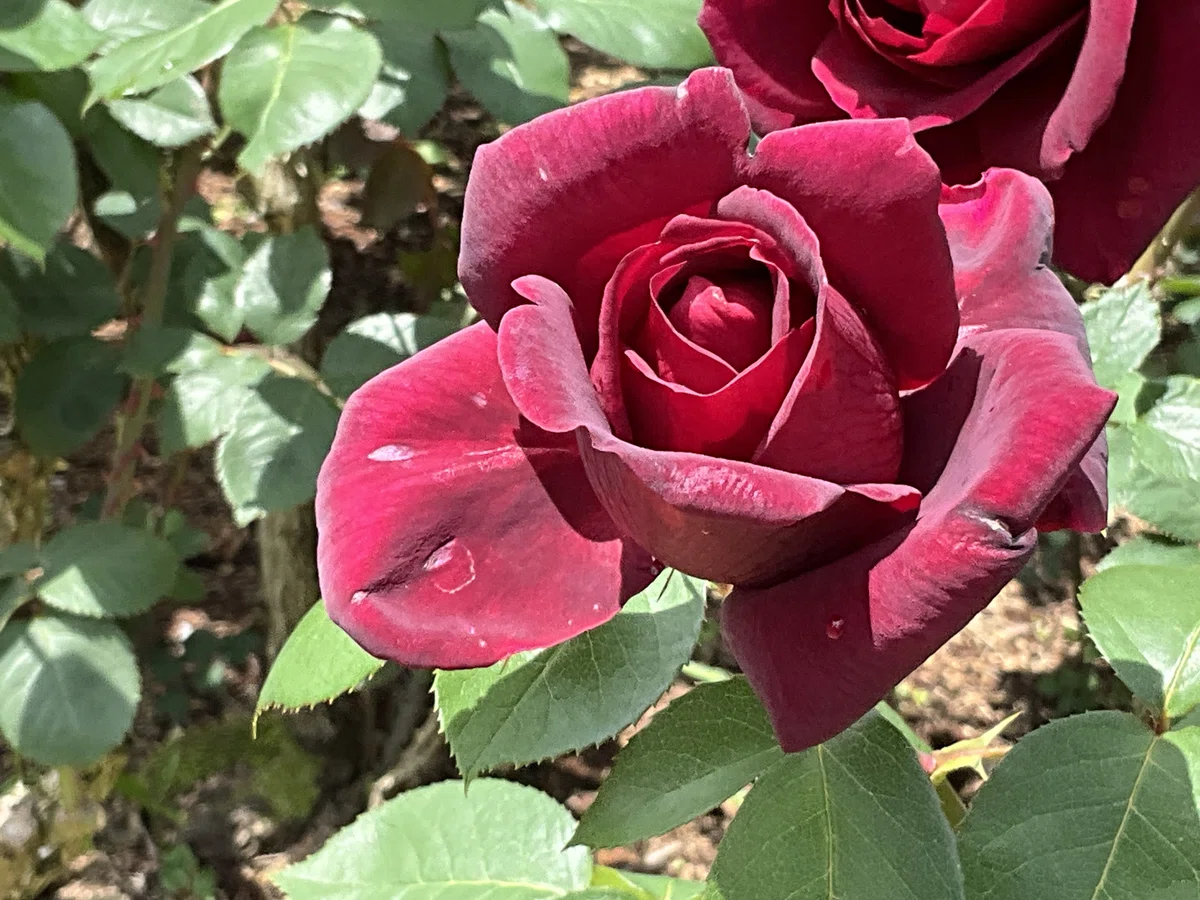
バラ科,HT系,強香,アメリカ作出1964年
京都府立植物園ばら園
2026年5月4日,筆者撮影
©️Hideaki FUJII
Oklahoma (Kyoto Botanical Gardens): Thursday, May 7, 2026
Abstract
On May 4, 2026, I observed the Hybrid Tea rose cultivar Oklahoma (Rosa ‘Oklahoma’), which was publicly introduced in the United States in 1964, in the Rose Garden of the Kyoto Botanical Gardens. This record seeks to avoid reducing the cultivar to its immediately perceptible traits—namely, a large, dark red bloom with a strong fragrance—and instead positions it as an exhibition plant that embodies the mature stage of Hybrid Tea breeding philosophy in the United States during the 1960s. Focusing on its position within the group of dark red cultivars derived from the same parentage, this essay examines how an aesthetic that prioritized fragrance and flower form above all else can be read within the institutional space of the Kyoto Botanical Gardens, through the overlap of firsthand observation and breeding‑historical analysis.
Main Text
On May 4, 2026, in the afternoon, under clear skies, I paused along a circulation route in the Rose Garden of the Kyoto Botanical Gardens at a section where fragrance was perceived prior to visual outline. The plant label read “Oklahoma,” “オクラホマ,” “1964,” “bred in the United States,” “Hybrid Tea,” and “strong fragrance.” The information presented reflects a classificatory standard commonly employed in botanical garden displays in Japan and clearly indicates that this cultivar is presented as an American‑bred Hybrid Tea rose with fragrance emphasized as its principal characteristic. Although the scientific name is not printed explicitly on the label, there is no doubt that the observed plant is Rosa ‘Oklahoma’, given the breeding year, cultivar group, breeding history, and the defining characteristics of flower form and coloration.
Within the institutional space of the Kyoto Botanical Gardens, the rose garden does not function merely as a place to line up cultivars, but rather as an exhibition space that spatially juxtaposes breeding philosophies from different historical periods. The section in which Oklahoma is planted maintains a clear distance from more recent landscape roses and cultivars selected primarily for disease resistance, instead connecting it to a context of cultivars that embody the Hybrid Tea value system established in the 1960s—one centered on the ideal of the single, self‑contained bloom. What is exhibited here is not a stable landscape achieved through mass planting, but a concentration of tension and sensory intensity condensed into a single flower.
The observed bloom was large, retaining a semi‑high‑centered, pointed form throughout the flowering process. The petals were thick and densely layered, with coloration based in deep red while gradually acquiring blackish or purplish tones toward the edges of the outer petals. Even when fully open, the flower center remained tightly held, preserving morphological tension. Each bloom was borne singly at the tip of an upright stem, naturally forming a face‑to‑face relationship with the observer at eye level. The foliage was dark green with a subdued sheen, functioning discreetly as a background that accentuated the intensity of the flower’s color.
Fragrance constituted the most dominant element shaping the experience of appreciation for this cultivar. At close range, it was perceived clearly and persistently, with an old‑rose character that combined sweetness and depth coming to the fore. While Japanese‑language sources often describe this scent as “damask fragrance,” international usage more appropriately categorizes it as an old‑rose scent based on damask characteristics. The fragrance did not subordinate itself to visual elements; rather, it functioned as sensory information that announced the presence of the flower even before it was seen.
From a breeding‑historical perspective, Oklahoma is a Hybrid Tea rose bred by Swim and Weeks, receiving international evaluation in 1963 and being publicly introduced the following year, in 1964. Its parentage consists of ‘Chrysler Imperial’ and ‘Charles Mallerin’, and together with ‘Papa Meilland’ and ‘Mister Lincoln’—both derived from the same cross—it forms a symbolic lineage of dark red Hybrid Tea roses. The commonly used expression “the three dark red rose brothers” is not merely rhetorical, but can be understood as indicating that a completed form achieved by breeding at that time was realized in multiple expressions.
In Hybrid Tea breeding of the 1960s, large blooms, high‑centered forms, and strong fragrance mutually reinforced one another, and maximizing the completeness of a single flower became the central objective. Within this current, Oklahoma represents a cultivar that deliberately relegated flower quantity and ease of maintenance to secondary considerations, while foregrounding depth of color and intensity of fragrance. This choice is closely tied to a culture of appreciation predicated on a one‑to‑one relationship between the individual plant and the observer.
From the perspective of cultural value, the expectations and illusions generated by the phrase “black rose” have long influenced the evaluation of this cultivar. Although not truly black, the combination of coloration perceived as black‑red and a rich fragrance creates an experience that leaves a strong impression on memory. This configuration typifies the Hybrid Tea culture of the mid‑twentieth century, in which symbolic meaning was concentrated into the flower itself.
In terms of economic value, Oklahoma has not been oriented toward mass planting or low‑maintenance use, but has instead demonstrated high added value as a cut flower and as an object of individual appreciation. The structure by which a “one‑of‑a‑kind bloom” is offered in exchange for specialized management clearly marks the point of intersection between the horticultural industry and the culture of appreciation.
From the standpoint of environmental resource value, this cultivar cannot be said to excel in low‑maintenance requirements or disease resistance by contemporary standards. Yet this very limitation provides the rationale for displaying it within the institutionally protected environment of a botanical garden. Oklahoma functions here as an exhibition specimen that preserves past breeding philosophies as tangible evidence.
Today’s observation was conducted under clear skies, and both morphological tension and the emergence of fragrance were strongly perceived. By contrast, changes in coloration and diffusion of scent under overcast conditions, after rainfall, or during periods of high temperature remain unconfirmed. Without compensating for this uncertainty, the record leaves it intact as part of the observational conditions and is deliberately brought to a pause. What Oklahoma presents is not a finished conclusion, but a mode of thought from its era, condensed into a single flower. Whether color or fragrance emerges first in the next walk through this garden remains a question deferred to future observation, and with that margin left open, I departed from the rose garden.
いいなと思ったら応援しよう!
 よろしければご応援をお願いします! いただいたチップはクリエイターとしての活動費に使わせていただきます!