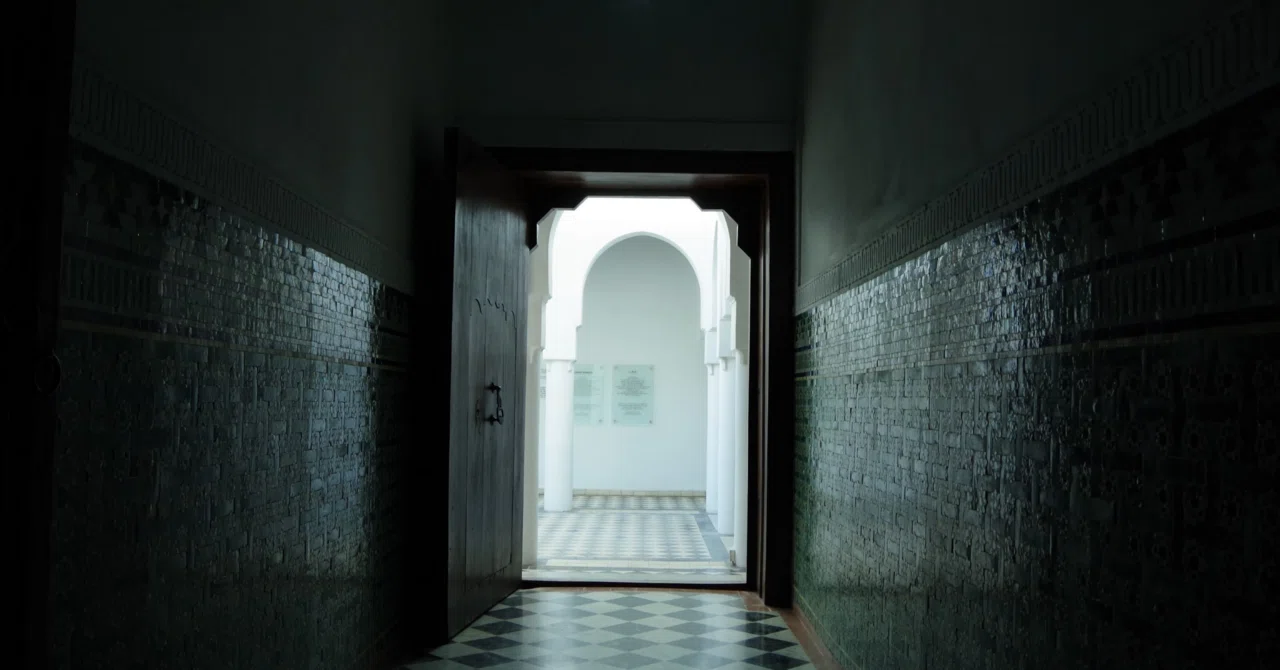
🌘 “DARKEN”, and Yet Redeemed : A Jungian Reading of ZUTOMAYO’s DARKEN (暗く黒く)

At first glance, DARKEN (暗く黒く) by ZUTOMAYO (ずっと真夜中でいいのに。) feels like an abstract stream of poetic fragments. But when viewed through the lens of Carl Jung’s analytical psychology, it transforms into something else entirely—a profound inner journey of self-confrontation, ego dissolution, and eventual redemption.
⸻
❖ A World Through the Ego’s Eyes: Narrowed Vision
The song opens with trembling voices and a self that feels uncertain, anxious, and unstable:
“My voice trembles, I want to reach out.
Mistakenly, I become myself.”
This “self” can be seen as the ego in Jungian terms—the center of our conscious identity, but just a fraction of the greater totality known as the Self.
The lines:
“I want to become (something), but I can’t make it sing, even if I lose my breath,”
suggest a desperate attempt to express or reach something real, something beyond the surface. This may be interpreted as the ego’s longing to connect with the Self—its deeper, authentic origin—but being unable to find the voice or permission to do so.
⸻
❖ “Can’t Make It Sing” and the Lost Presence of Understanding
The phrase “can’t make it sing” may be a quiet reference to the famous Japanese haiku analogy involving the cuckoo (hototogisu):
• Oda Nobunaga: “If the cuckoo doesn’t sing, kill it.”
• Toyotomi Hideyoshi: “If it doesn’t sing, make it sing.”
• Tokugawa Ieyasu: “If it doesn’t sing, wait for it.”
These three attitudes represent three approaches to power, patience, and control.
In this song’s context, “can’t make it sing, even if I lose my breath” implies that the world has lost its Ieyasu-like patience and empathy, and all that remains is the ruthless, “Nobunaga-style” expectation of performance. The Self, then, becomes something that is no longer listened to, or waited for—it is silenced.
The result is a devastating implication:
The ego can no longer access the Self in a world that punishes silence.
⸻
❖ Breaking the Conditioned Ego: Toward Forgiveness
One of the song’s most powerful moments is:
“Break the hardened cells.
Please allow this life to exist.”
The “hardened cells” can be understood as the ego structures—socially conditioned, self-defensive mechanisms—that have built up over time to protect or project an image of the self. But now, the plea is for them to be dismantled.
And “Please allow this life to exist” is a line that cuts deeply. It is a request not only for external validation but for inner permission—to exist as one truly is. To allow the Self to be present, despite how fragile or different it may seem.
⸻
❖ The Ego’s Defeat and the Beginning of Individuation
“Meeting you, I am forgiven.”
This is a clear echo of Jung’s famous quote:
“The experience of the Self is always a defeat for the ego.”
Here, “you” may be a symbolic representation of the Self—or someone who embodies the qualities of patience and wholeness the ego has been longing for.
To be forgiven is to be seen, accepted, and integrated. It is a surrender that allows something larger and truer to take root.
⸻
❖ Carrying the Fragments: A Willingness to Be Wounded
“I’ll carry everything I’ve seen so far.
Let me live—wound me.”
This is perhaps the most Jungian moment in the song.
Instead of rejecting the past—the fractured, ego-driven experiences—the speaker chooses to carry them, to integrate them into a new life.
The phrase “wound me” is not a cry for harm, but for transformation. The ego must be broken open in order to make space for the Self. And that process is often painful, but necessary.
⸻
❖ Beyond Belief or Doubt: The Silent Presence of the Self
“There’s no need to doubt. No need to believe.
The chain continues.”
This reflects a psychological stage beyond duality—where egoic distinctions between belief and disbelief no longer matter.
The Self is. It exists whether or not we “believe” in it, because it is not an idea—it is a living experience.
To feel its presence is to stand at the threshold of integration, where words begin to fail.
⸻
❖ In Darkness, There Is Light
The title Kuraku Kuroku (暗く黒く) suggests bleakness—darkness upon darkness.
But beneath that, the song is full of hopeful contradictions: the beauty of loneliness, the sacredness of pain, the possibility of being forgiven not by others, but by one’s deeper self.
This is not a song of despair.
It is a song of transformation.
Like Jung’s process of individuation, the journey in Kuraku Kuroku is one of embracing the shadow, shattering the hardened ego, and allowing the Self to rise—slowly, quietly, even if the world no longer knows how to wait.
