
ビリヤニ vs 日本のごはん Biryani vs Japanese Rice

1.日本語
㊗ビリヤニを結構安定的に、イイ感じにできるようになりました!!
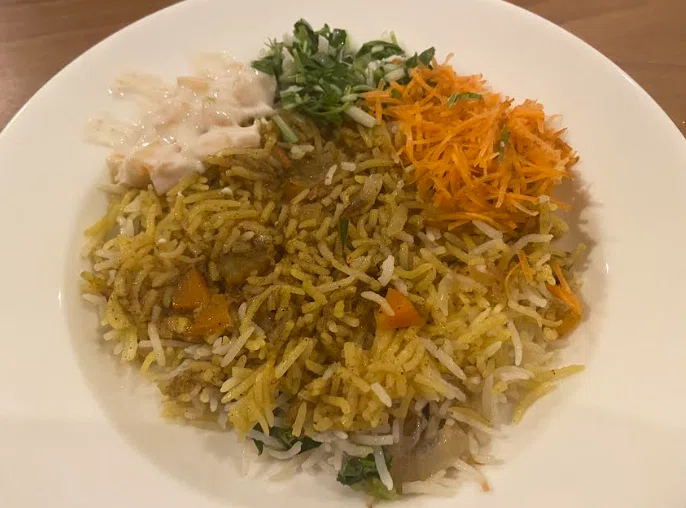
一番の失敗は「水量調整」で、ここを間違うとベチャっとして泣きそうになります。水分調整は、半分茹でた米を蒸らしに移すとき、しっかりと水を切ること。でも最初のときに焦がしてしまい、やっぱり泣きそうになったので、水量調整は難しいのでしょう。逆においしくさせるポイントは「蒸らし」であるとしみじみと実感いたします。インドで本格的に作るのに、鍋と鍋の蓋の間に小麦粉練って目張りを作り、しっかり密閉する動画をよく見ます。そこまではしませんが、蓋の上にしっかりと重しを載せて、10分しっかり蒸らします。次は、印度カリー子さんに言わせると「塩」。まあそうなのでしょう。後は、スパイスの量などはカレーを作る要領が慣れていれば大丈夫な気がします。
さて、このビリヤニ。しみじみとおいしいと思うのですが、そこでのおいしさは、お米の「ふっくら感」が大きいように思います。まさに「蒸らし」。ところで、ふっくら、って我々日本人はしょっちゅう意識していますよね。普段食べるごはん。適度に蒸らされた、炊きたてのふっくらしたごはん。それだけでも食べられてしまいそう。私の経験した中では、ここまでふっくらに「拘る」筆頭は、ビリヤニと日本のごはんじゃあないでしょうか?
ペルシアを起源に、ムガール帝国を介し南アジアに広まったビリヤニと、東アジアの島国での「ごはん」。共通項が生まれる経緯をぜひとも知りたいです。
そうそう、前稿でお伝えした、シモカワスパイスさんで軽い感銘を受けた「柿カルダモンライタ」。やってみました、って切って混ぜただけですが。シモカワスパイスさんありがとう! カルダモン、さすがスパイスの女王です。素晴らしい芳香。そこに投入する柿が、いかにもニッポン的でいいです。「和との融合」。ライタって実は、いろんなところに使えそうじゃあないでしょうか?ルーを使った日本のカレーだって、辛口にしてライタで柔らかくすれば絶妙になりそうな気がします。
2. English
🎉 I’ve finally gotten to the point where I can make biryani pretty reliably—and it actually turns out really good!!
My biggest failures have always been about water control. If you get that wrong, the rice turns mushy and you just want to cry. The key is draining the parboiled rice really well before moving on to the steaming stage. But the first time I tried that, I ended up burning the bottom, which also made me want to cry… so yeah, getting the water balance right really is tricky. On the other hand, I’ve realized deeply that what really makes biryani delicious is the steaming. In videos of people making it authentically in India, you often see them sealing the gap between the pot and the lid with dough to make it airtight. I don’t go that far, but I do put a good heavy weight on the lid and steam it properly for ten minutes.
Next—according to Indo Curry Ko-san—it’s all about the salt. I suppose she’s right. As for the spices, if you’re used to making curry, the quantities are pretty intuitive.
Now, this biryani… every time I eat it I find myself thinking how genuinely delicious it is, and I feel that a big part of that deliciousness comes from how fluffy the rice is. That’s the power of proper steaming. Come to think of it, we Japanese are always conscious of “fluffiness” when it comes to rice, aren’t we? Our everyday bowl of rice—light, fluffy, perfectly steamed straight from the pot—can practically be eaten on its own. In my experience, the two foods that obsess the most over achieving that perfect fluffiness might just be biryani and Japanese rice.
Biryani, which originated in Persia and spread through the Mughal Empire into South Asia, and Japanese “gohan,” eaten in an island nation of East Asia—how did these two end up sharing such a similar emphasis? I’d really love to understand the historical process behind that common trait.
Speaking of which—remember the “Persimmon Cardamom Raita” I mentioned in my previous entry, the one I was so impressed by at Shimokawa Spice? I tried making it myself—well, really just chopped and mixed things together—but still. Thank you, Shimokawa Spice! Cardamom truly is the queen of spices: what an incredible aroma. And adding persimmon gives it this wonderfully Japanese feel—such a nice East–West fusion. Actually, doesn’t raita seem like it could be used in all sorts of dishes? I feel like even Japanese curry—the roux-based kind—could be taken to the next level if you made it spicy and then softened it with a bit of raita.
