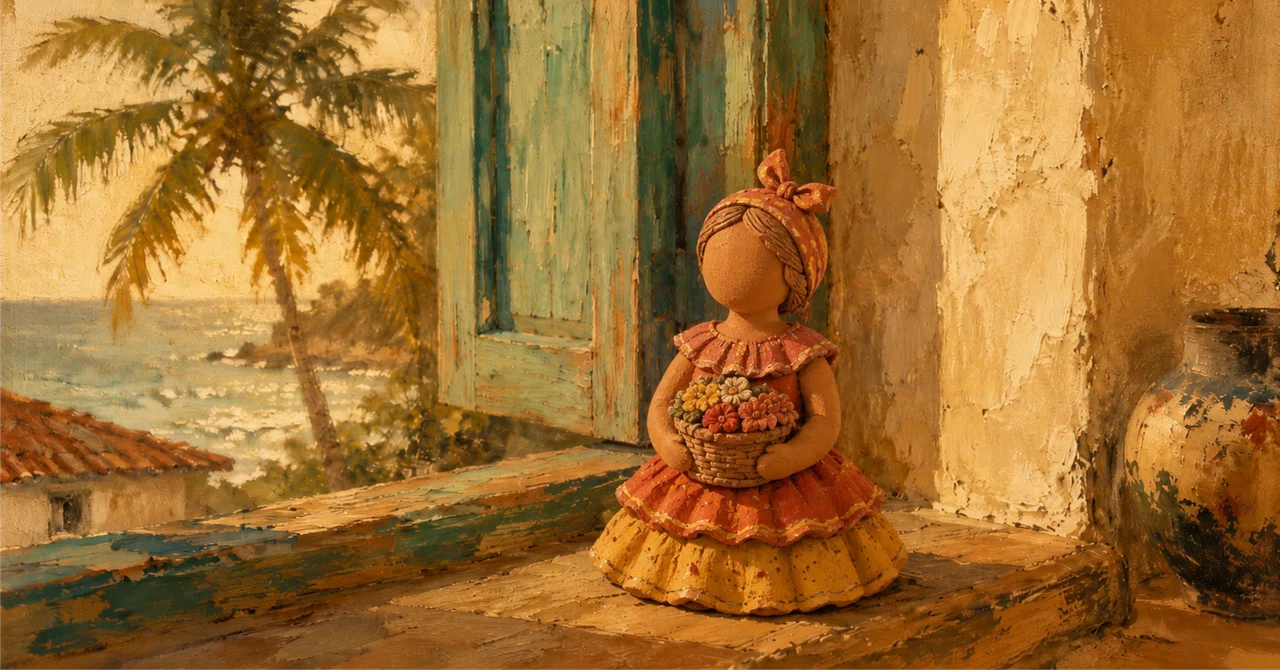
At Journey's End, the Scent of Salt Air— Muñeca sin Rostro —

His hometown was Sosúa, in Puerto Plata Province, Dominican Republic.
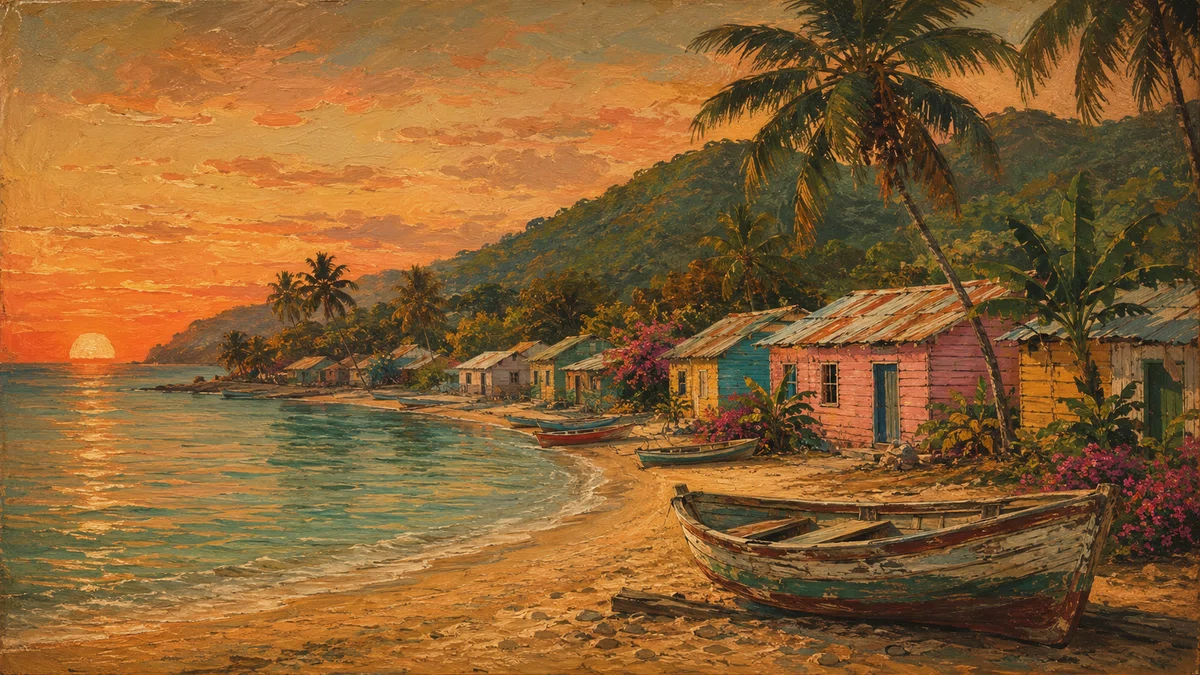
It was a seaside town of golden beaches lined with palm trees, where the Atlantic swells of the north coast rolled ashore with a deep, resounding rhythm.
The man was sixty-eight years old.
For decades in the Bronx, New York, he had worked himself to the bone, cleaning buildings and working behind the counter in small shops. His children had grown up in American culture and moved away to build lives of their own in different cities. His wife, a little older than he was, had died before him. In a corner of the great city, he was left alone.
When he began to feel how little of his life remained, it was not New York's cold concrete streets or its ceaseless crowds that returned to him.
It was the Atlantic swell along the north coast, and the family home by the sea in Sosúa—poor in those days, but warm.
"Before I die, just once more, I want to go back."
His wife had died without ever seeing Sosúa.
So he decided to return and look upon the sea for both of them.
With a single small suitcase in hand, he boarded a flight home for the first time in decades.
From the airport, he took a taxi toward the old fishing quarter of Sosúa.
Beyond the window stood rows of brightly painted concrete houses. After passing through the lively tourist district, he followed the map in his memory and made his way down a narrow sandy lane behind the main streets.
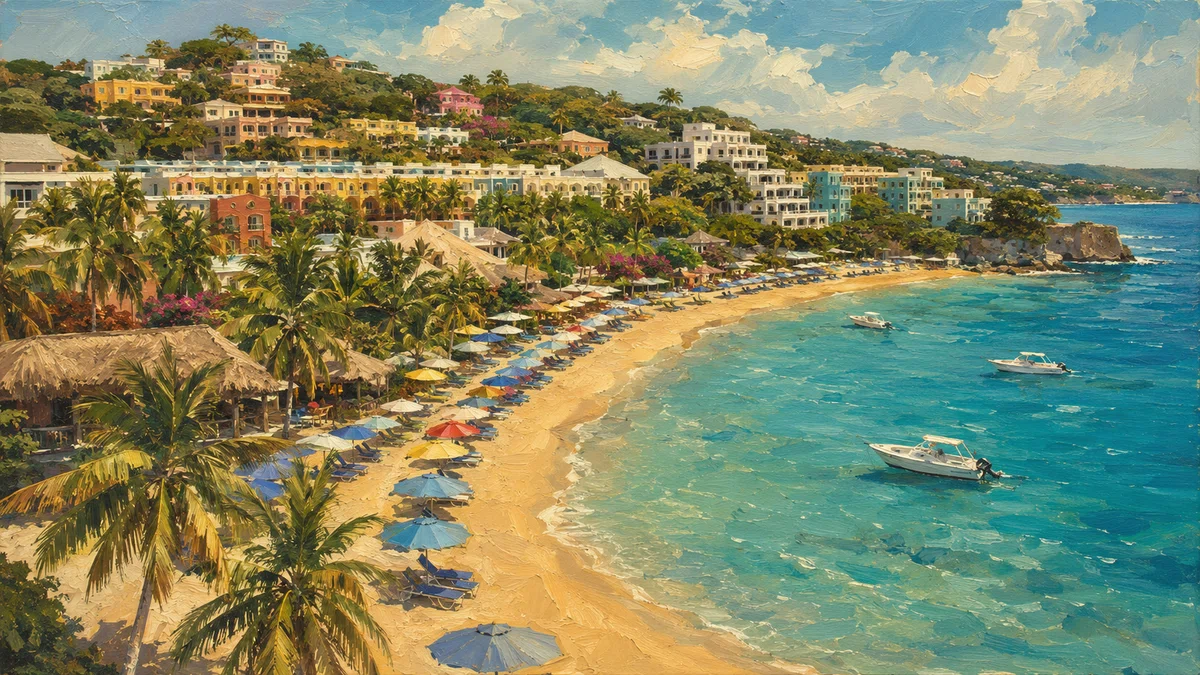
The landscape of his childhood had changed beyond recognition.
His older brother must have rebuilt the house with the money he had sent from New York. The brick walls, which belonged to no memory of his, were already weathered with age.
When he stood before the door of his childhood home, his heart began to pound.
This was the very place where, as he prepared to leave the island for New York, his aging mother had wept and held him in her arms.
On the night before his departure, she had placed a doll in his hands.
It was a faceless doll made of clay. She told him it had been crafted by an artisan in Moca—a new kind of doll at the time.
"I'll think of this doll as you and pray every day. Leave a little of your heart in it for me."
With no face, the doll seemed neither male nor female. In its smooth, featureless face, his mother intended to see the image of her son.
The old man—still a young man then—felt a little embarrassed. Even so, he cupped the doll in both hands and held it against his chest. His mother embraced the doll, still warm from her son's hands, her eyes filling with tears.
—And then he crossed the sea.
When he knocked on the wooden door, it was opened by a young woman he had never seen before. Small children ran in circles around her.
"I used to live here," he said, his voice trembling. "The man who lived in this house was my older brother..."
The woman's eyes widened.
"Could it be? Great-Uncle?"
She was the granddaughter of his late brother.
"The uncle from America has come to see us!"
At her cry, young relatives and children came pouring out of the house.
His brother's great-grandchildren—children who had never met him—ran into his arms. They surrounded him with hugs and kisses so exuberant that they nearly overwhelmed him.
He was led into the living room. On the wall stood a small Catholic home altar, beside a portrait of his brother, who had died several years earlier.
The man stood before the altar and quietly crossed himself.
The photograph of his brother as a young man looked remarkably like the grandchildren who were now welcoming him home.
"So I'll never see you again... I'm sorry I didn't make it in time, brother."
As he spoke the words silently to himself, his brother's granddaughter offered him a cup of freshly brewed, sweet Dominican coffee.
"Grandpa used to say the money you sent kept the family going."
Breathing in the familiar aroma of the coffee, the man noticed a doll displayed by the window.
It was a faceless Dominican doll—a muñeca sin rostro.
It was the same doll his mother had placed in his hands that night forty years before.
Had she prayed for him every day, just as she had promised? The doll had no face, so it offered no answer. Yet neither did it turn away the face of the son who had aged until he looked like someone else entirely.
"So you're the only one left. I'm home."
That night, the man lay down in the old bed of his childhood home.
When he closed his eyes, he heard no car horns from the city. Instead, there came the deep, heavy sound of the Atlantic waves—the very same sound he had listened to with his parents as a child.
The heart of a man who had been alone for so long began, for the first time in decades, to fill with a profound sense of peace.
The next morning was bright and clear on the beach at Sosúa.
With his brother's grandchildren holding both his hands, the man walked slowly along the water's edge.
The blue horizon before him reached toward America—the country to which he had once crossed the sea at the risk of his life, carrying the dream of making his fortune and the responsibility of supporting his family.
He had left his homeland and built a life in a new country. Now the young man had returned, an old man, to the same sea.
Beneath the brilliant sun, listening to the delighted voices of the children, the man smiled quietly.
At last, he knew that his long journey had come to an end.
Afterword
While I was thinking about the kind of background music I wanted to hear in summer, a mellow Latin melody began to play in my head.
From there came the image of a story with the atmosphere of one of those films that might once have aired on Friday Road Show, Japan's long-running Friday-night movie program—a world made for the weathered silhouette of a quiet, seasoned man.
For a background-music channel, perhaps the musical genre itself has wandered a little too far this time. Yet this story, in which memories are entrusted to a faceless doll, also belongs to the lineage of Hitogata no Kioku (Memories in Human Form).
From elegant Western mansions to the shores of the Caribbean, dolls bear witness to memory wherever they may be.
Muñeca sin rostro means "faceless doll" in Spanish.
It is one of the Dominican Republic's best-known folk-art dolls and is said to have first been created in 1981 by Liliana Mera Limé, a ceramist from Moca.
The dolls are left without facial features so that the people of the Dominican Republic, with their diverse roots, are not confined to the appearance of any one person.
Because it has no face, it can reflect the image of anyone.
This story was inspired by that quality of the doll.
(Translated from the Japanese original.)
The BGM's bittersweet Caribbean warmth, here
