ケトン・アルデヒド (Ketone & Aldehydes) 「2」- CHEM 213

Reductive Amination
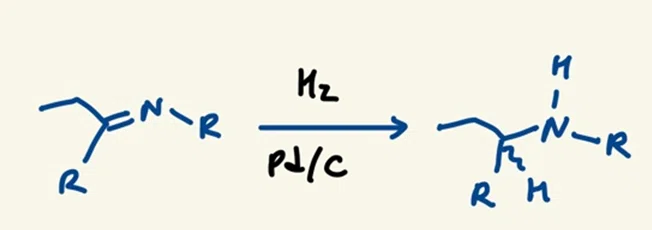
Reductive amination is the conversion of a carbonyl to an amine via an intermediate iminium (i.e., reducing an imine into an amine).
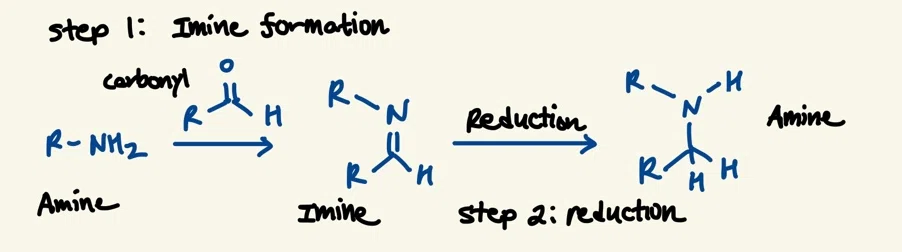
Reductive Amination 1: Hydrogenation
Reductive Amination 2: Cyanoborohydride Reduction
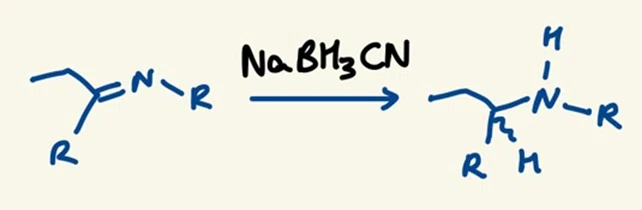
You may want to have acid (H3O+) workup for this reaction.
Reaction: Imine + Grignard Reagent
This reaction does not work with primary (1*) imine.
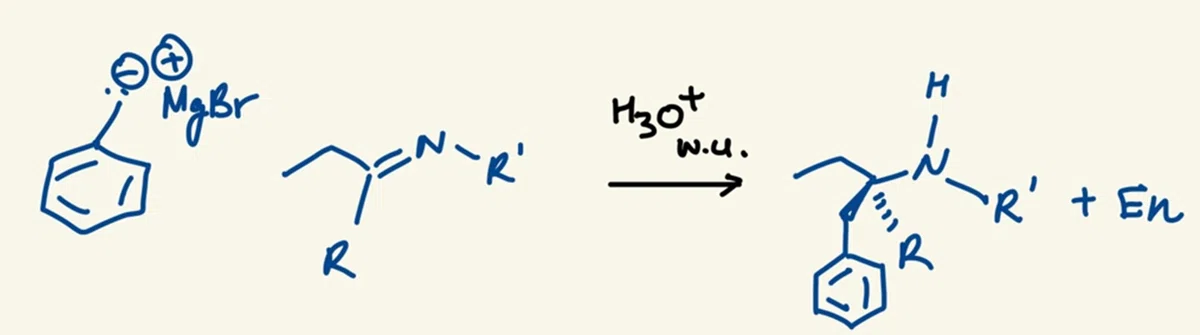
Similar idea as carbonyl + Grignard reagent.
Reaction: Strecker Reaction
An aldehyde is reacted with ammonium cyanide (NH4CN) to form amino acids.
General reaction: Aldehyde + Ammonium Cyanide, H2O → Amino acid
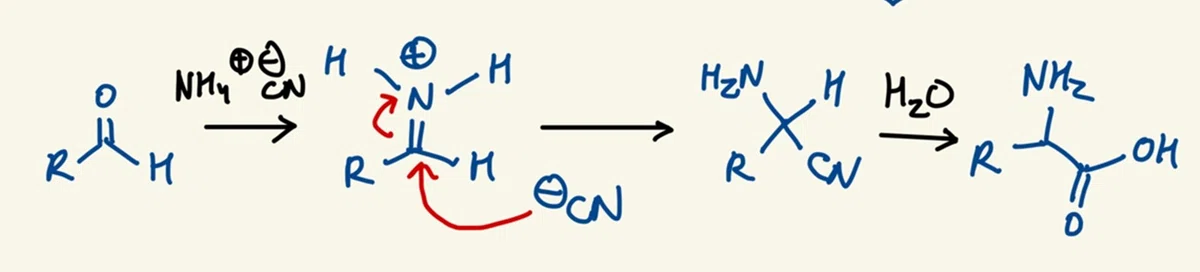
NH4+ is used to convert the carbonyl into an imine first.
Then, the -CN nucleophilic attacks the iminium.
Lastly, water hydrolyzes -CN to carboxylic acid (-COOH), forming an amino acid.
Reaction: Wittig Reaction
This reaction turns carbonyls into Z, cis alkenes.
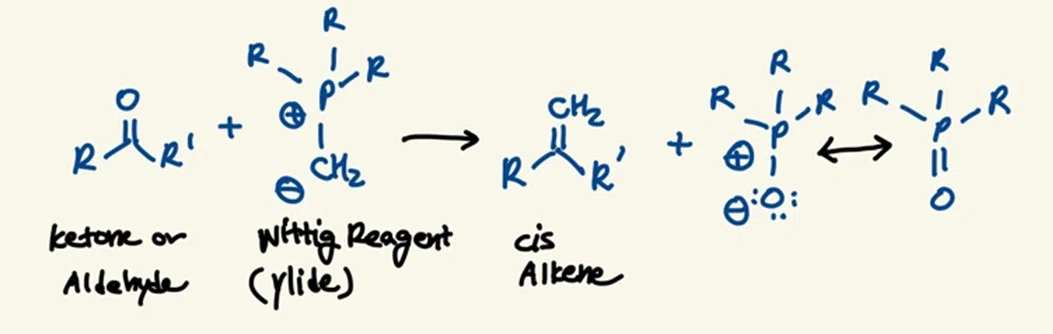
Preparation of the Wittig reagent (ylide)
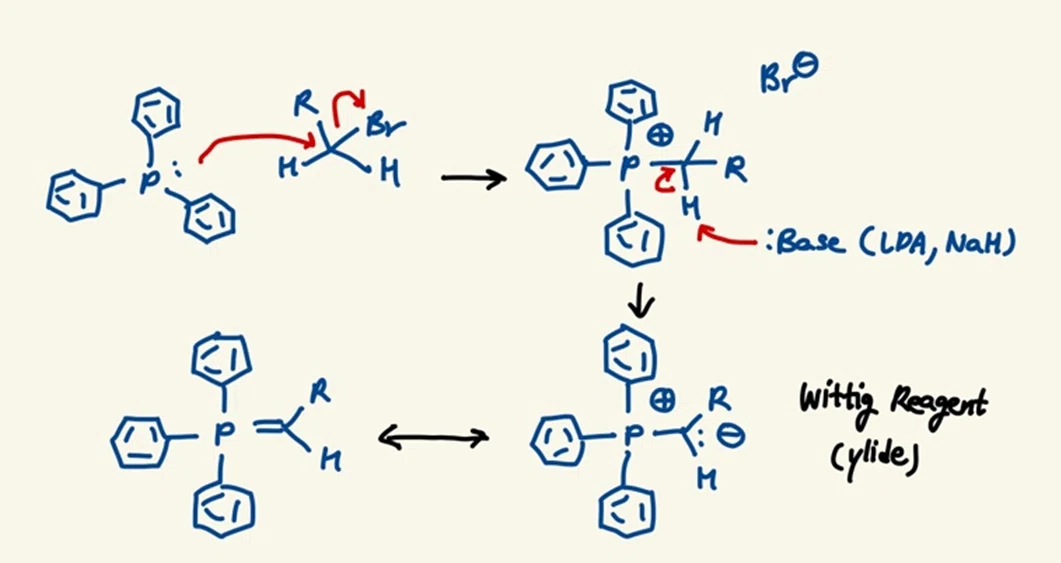
PR3 first attacks the alkylbromide. Then the base deprotonates the reagent, producing a ylide.
Mechanism of the Wittig reaction.
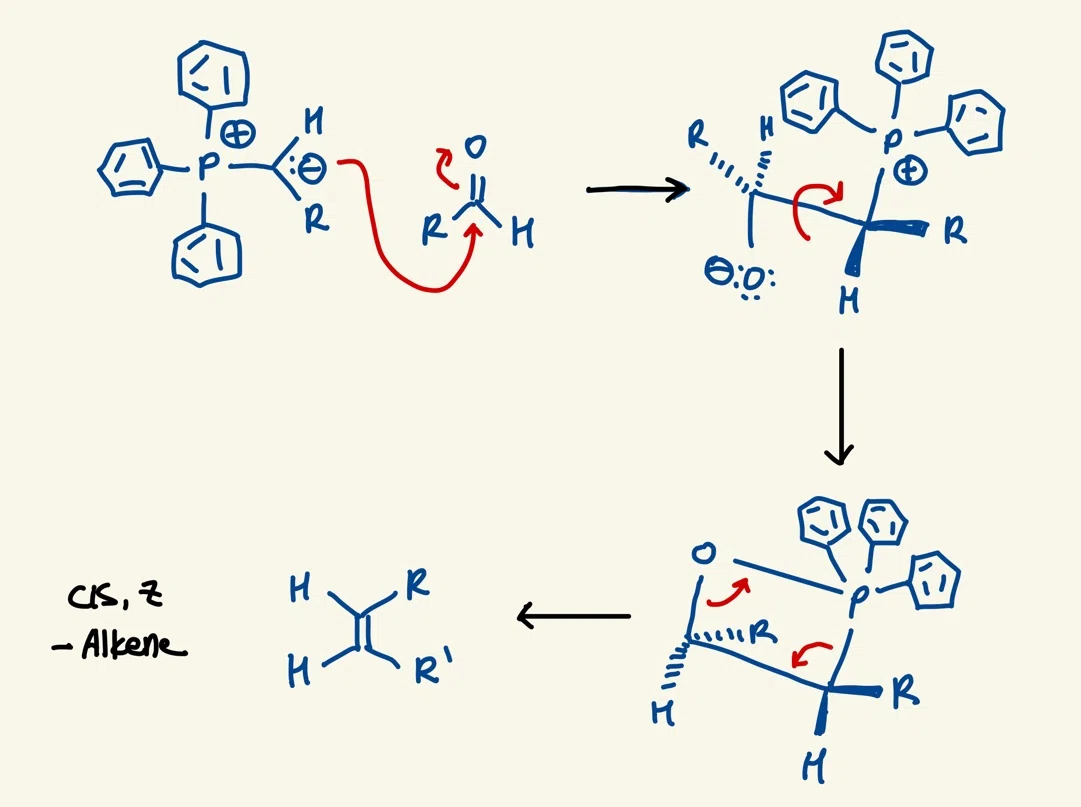
The ylide first attacks the carbonyl.
Bond rotation then occurs to form the P-O bond (eclipsed orientation allows formation of P-O bond).
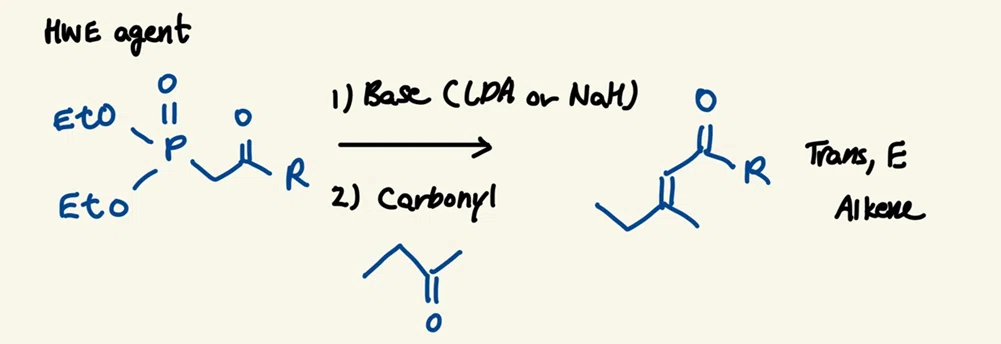
Reaction: Horner-Wadsworth-Emmons Reaction (HWE) (A variation of the Wittig reaction)
This reactions turns carbonyls into trans, E alkenes.
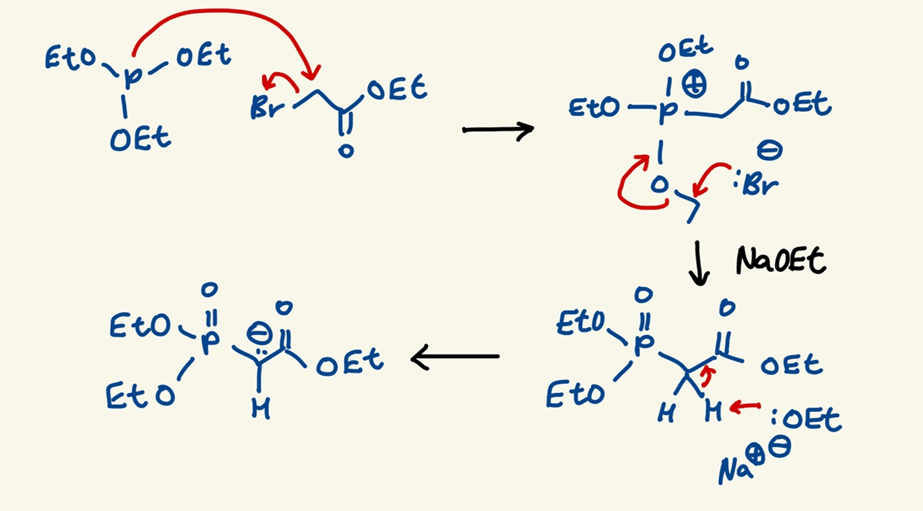
HWE agents are basically Wittig reagents (ylides) except with stabilizing (electron withdrawing) groups.

Preparation of HWE reagents
General scheme of HWE reaction
Now, you can perform retrosynthesis and figure out which reagents are needed to form an alkene, and if a Wittig or HWE reagent is needed.
Example 1:
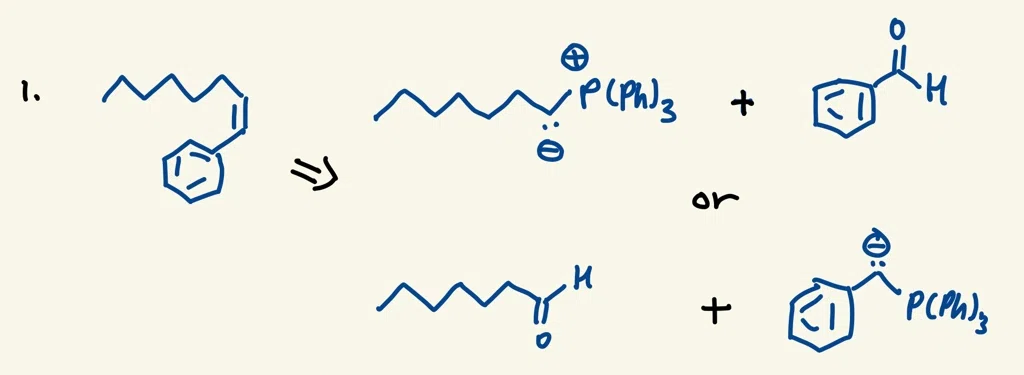
This compound must be formed from a Wittig reaction since it is a cis alkene with no EWGs. Note there are two possible ways of forming the compound.
Example 2:
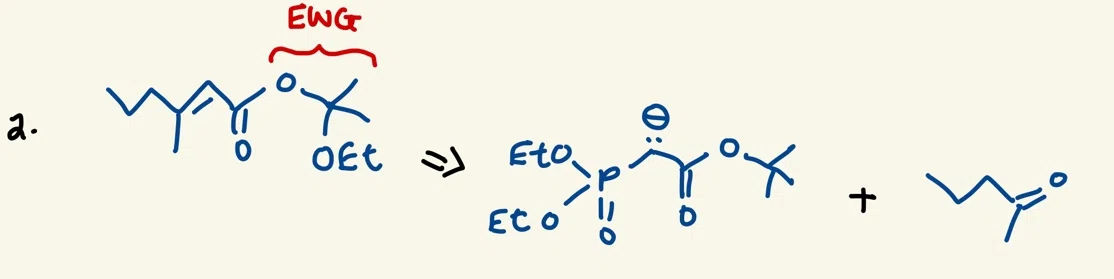
This compound must be formed from a HWE reaction since it has EWGs. The side of the alkene with the EWG must be the HWE reagent.
Reduction of Carbonyls
Complete reduction of carbonyl (into hydrogens).
Carbonyl reduction 1: Clemmensen Reduction
This reaction is not suitable with acid-sensitive groups.
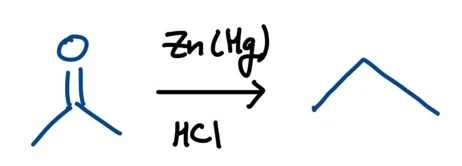
Carbonyl reduction 2: Wolff-Kishner Reduction
This reaction is not suitable with base-sensitive groups.
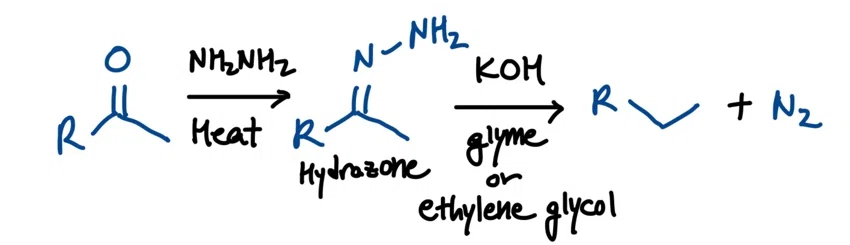
Glyme or ethylene glycol is used as the solvent.
Mechanism:
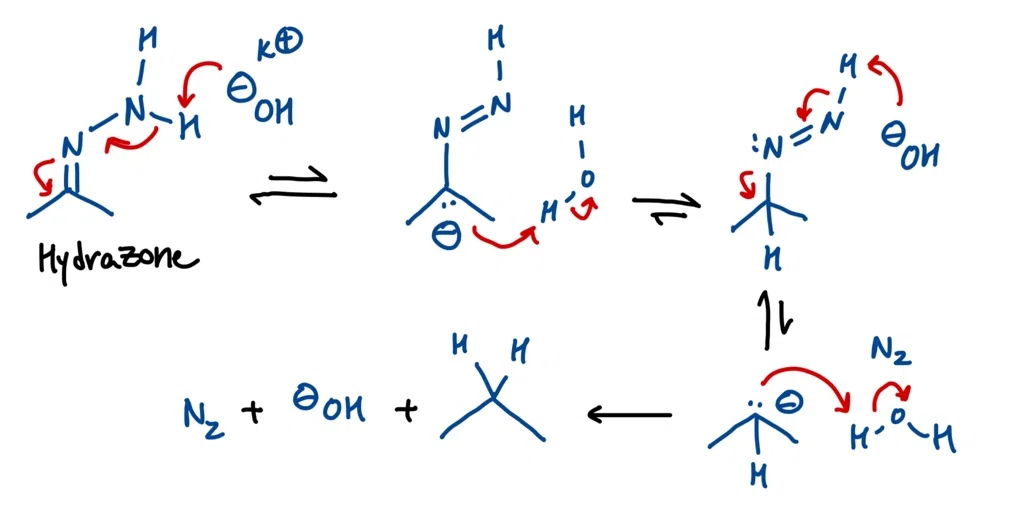
So when should we use which reaction?
Here are two examples.
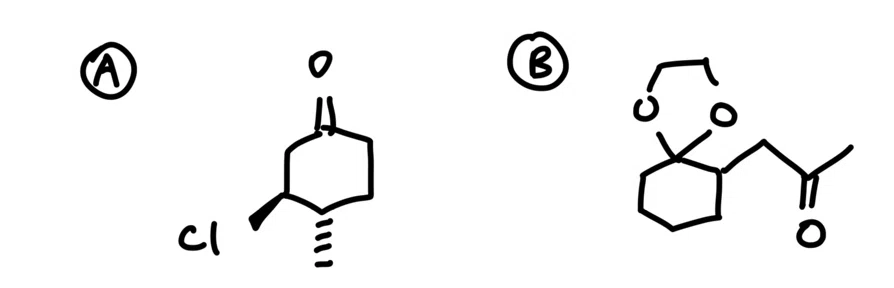
Compound A cannot be reduced by Wolff-Kishner because it has a base sensitive group. SN2 might occur on the -Cl.
Compound B cannot be reduced by Clemmensen because it has an acid sensitive group. The protecting group will be hydrolyzed and the wrong carbonyl (or both) will get reduced.
Oxidation of Carbonyl
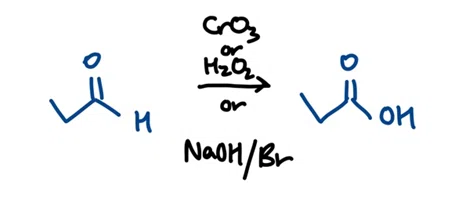
Aldehydes are oxidized into carboxylic acids. There are multiple ways to perform this.
Enolate
En stands for "Alkene" and olate stands for "Alkoxide."
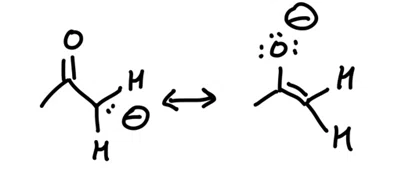
Enolates are resonance stabilized and has a nucleophilic carbon & oxygen.
Enol
Enols are the protonated form of enolate.
They are tautomers of carbonyl compounds.
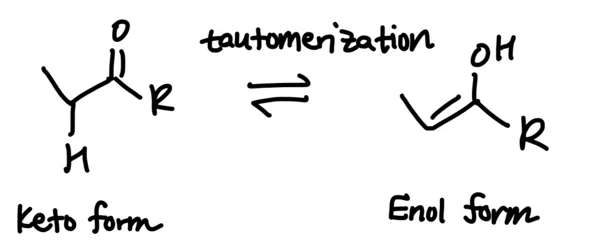
Enol Formation 1 (Tautomerization): Acid catalyzed
Start off with protonation of carbonyl.
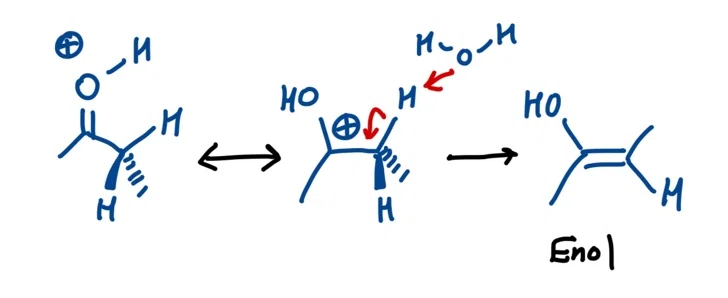
Enolate Formation 2 (Tautomerization): Base catalyzed
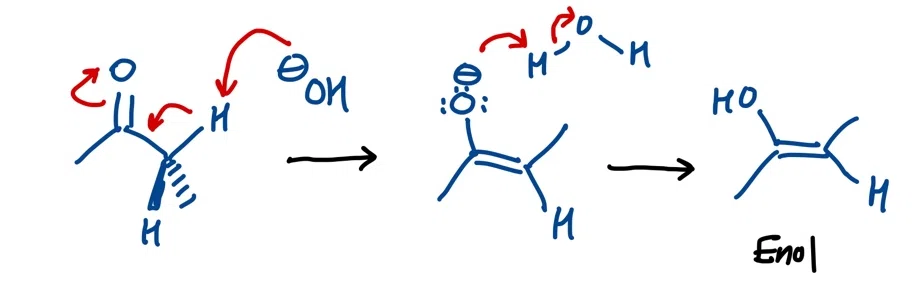
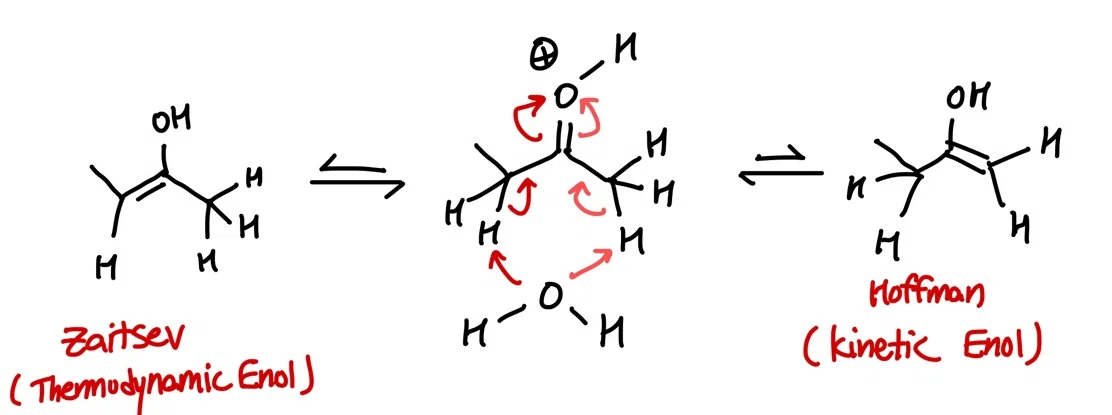
Enolization - Thermodynamic or Kinetic product?
Zaitsev product is double bond product that is more substituted.
Hoffman product is double bond product that is less substituted.
Thermodynamic product is achieved when reaction performed at higher temperatures while kinetic product is achieved when reaction is formed at lower temperatures.
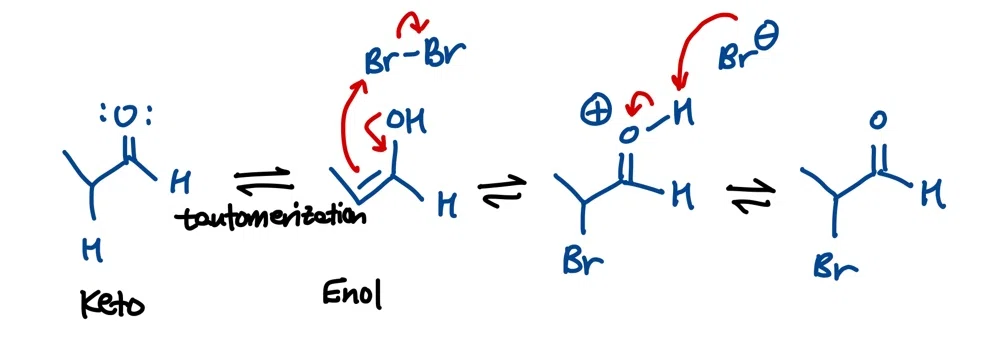
Halogenation of Enols 1: Acidic Condition
Halogenation of enol is adding a halogen onto the alpha position of a carbonyl.
Keto form is first turned into enol form (protonation step first).
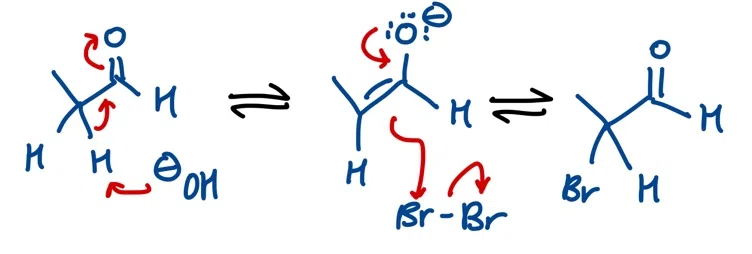
Halogenation of Enols 2: Basic Condition
Deprotonation step comes first.
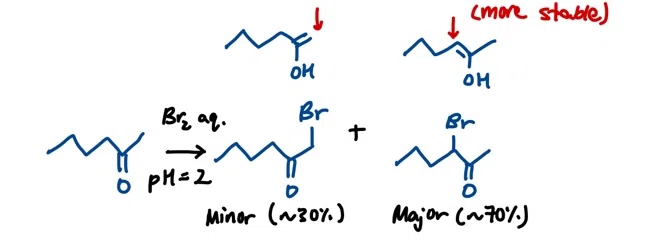
Note on halogenation of enols:
Thermodynamic product are more stable than kinetic products. Note the zaitsev product (more substituted alkene) is the thermodynamic product. This causes the right product that comes from the zaitsev alkene to be more abundant.
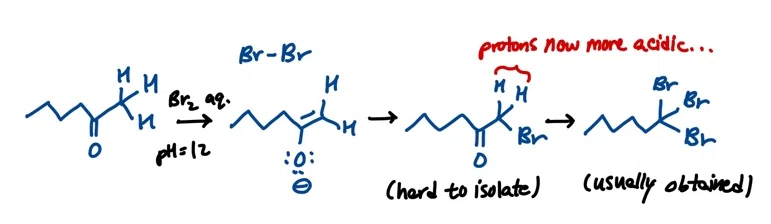
Note under basic conditions, it is difficult to isolate an enol after brominating it once. The protons become more acidic after a cycle of bromination because Br acts as a EWG, and the bromination will continue till all hydrogens are replaced with bromines.
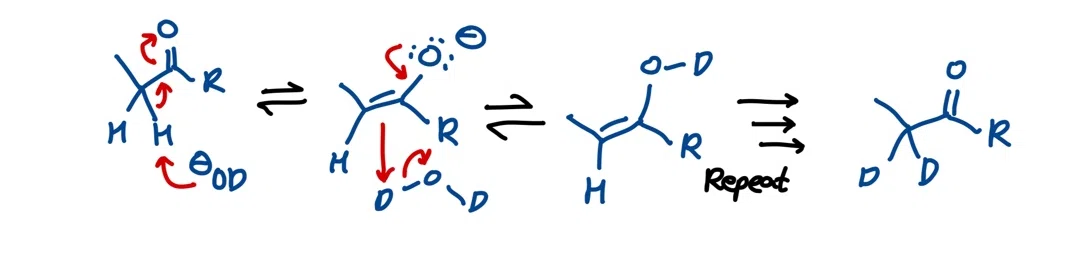
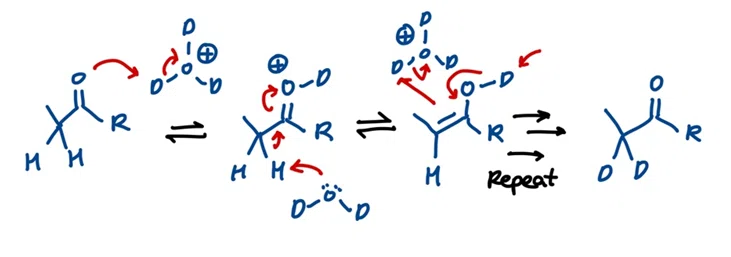
H/D Exchange 1: Acid Catalyzed
This reaction is simply just replacing the hydrogens in the alpha position of the carbonyl into deuterium.
H/D Exchange 2: Base Catalyzed