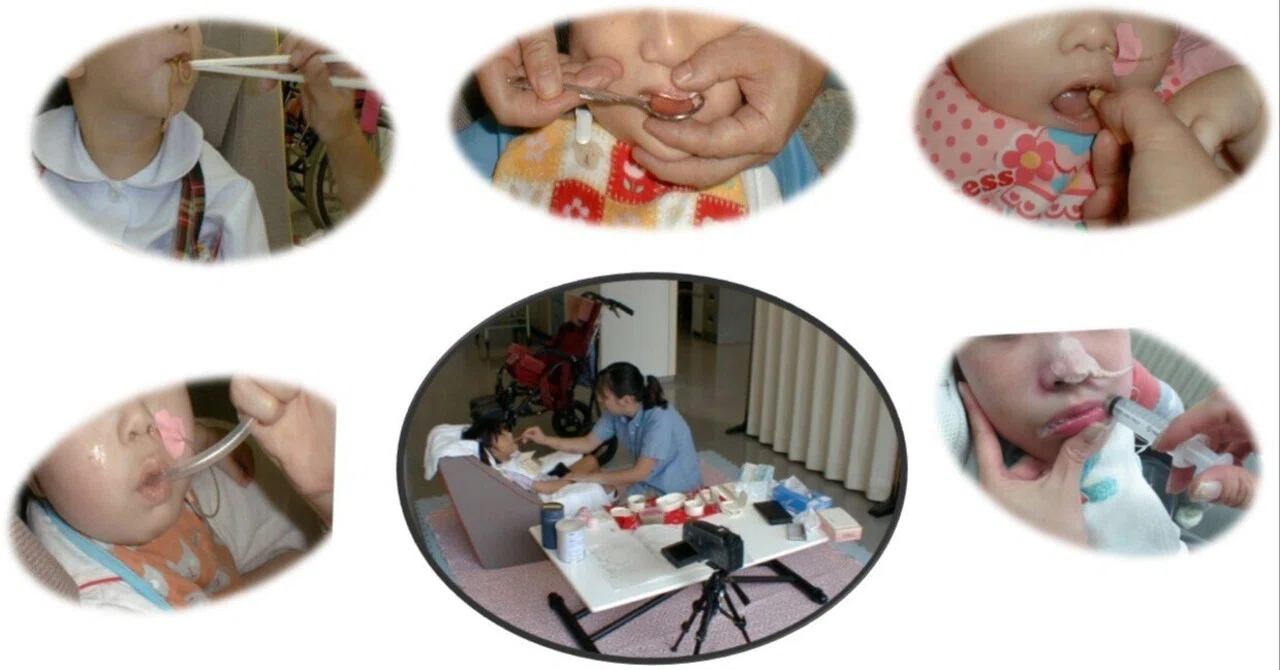
Children with Feeding and Swallowing Problems (Pediatric Dysphagia)

Welcome
(Updated April 2026)
This blog is dedicated to supporting children who experience difficulties with feeding and swallowing. As a dentist with over 40 years of experience in the research and clinical practice of pediatric dysphagia, I have observed that the primary healthcare providers in this field are typically Speech-Language Pathologists (SLPs) or Occupational Therapists (OTs) in most countries. However, the situation in Japan is somewhat different. While SLPs and OTs have traditionally played a central role in dysphagia care, some dentists have also been involved in this field since the 1980s.
In 1977, Dr. Kaneko Yoshihiro traveled to the United States and Denmark on a World Health Organization fellowship. During his visit, he gained valuable insights into feeding issues, which led him to establish a feeding clinic for children with dysphagia in 1980. He was a professor at Showa (Medical) University and also served on the advisory board of the journal Dysphagia. Dr. Kaneko was a pioneer in the field of pediatric dysphagia in Japan, introducing unique perspectives that differed from those of SLPs and OTs. Dentists like myself approach pediatric dysphagia with distinct viewpoints. While most established theories in this field are based on neurodevelopmental principles and sensorimotor facilitation techniques, Dr. Kaneko placed emphasis on improving lip closure function. He believed that encouraging children to use their lips to pull food off a spoon was key to efficient oral feeding.
In 2001, I traveled to Canada and the United States to further my study of pediatric dysphagia through the Shimizu Overseas Study Program. To my knowledge, there is no globally standardized assessment or management protocol for this field. Approaches to pediatric feeding and swallowing disorders vary widely across countries, influenced by cultural differences and dietary customs. Each nation has developed its own unique weaning practices, shaped by traditional cuisine and child-rearing philosophies.
In Japan, typical infants begin eating solid foods at around five to six months of age. The transition to solid foods is divided into three stages: early, middle, and late. This progression is guided by developmental factors such as the infant’s ability to close the lips, swallow, and chew. The treatment of pediatric dysphagia is closely aligned with these developmental milestones.
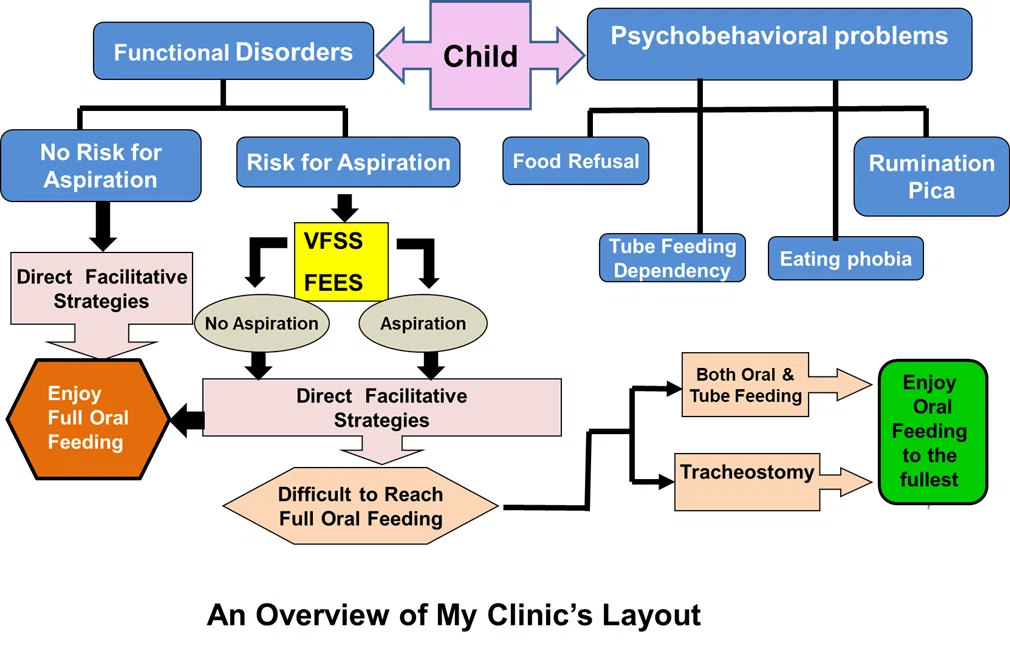
When I began treating pediatric dysphagia in 1983, most patients had functional disorders such as Cerebral Palsy or Intellectual Disability. In recent years, however, there has been a marked increase in psycho-behavioral feeding issues, including food refusal, picky eating, eating phobia, and tube feeding dependency. These issues now affect both children with disabilities and those without.
In this blog, I will introduce the layout of my clinic and share one of the clinical approaches I have developed in Japan. This approach is divided into two categories: “Functional Disorders” and “Psycho-behavioral Problems.”
● The author has no conflicts of interest directly relevant to the content of this article.
●If you have any comments or questions about this blog, please contact us at the following: komoto1049@gmail.com
About me
My name is Omoto Kazuhiko(尾本和彦) and I was born in 1953. I am a dentist and live in Saitama prefecture, Japan.

<Education>
1993 Ph.D. Showa University (Otsu No.1404)
(The name was changed to Showa Medical University)
Doctorial theses:
Development of Oral Functions in Infant FeedingⅠ:A Longitudinal Observation of Lips, Tongue, and Jaw Movements while Eating.
(The abstract is available in the English)Development of Oral Functions in Infant Feeding II: Electromyographic Features of the Activities of the Muscles Relating to Mastication and Swallowing during Bite Reflex, Suckling and Chewing.
(The abstract is available in the English)
1981 Graduate from Tokyo Dental College
<Professional main works published>
Edited by Omoto K. and Ozawa H.: Practical Support for Children with Feeding and Swallowing Disorders (available in Japanese). Ishiyaku Publishers, Inc. Tokyo Japan. 2019.
Omoto K. and Srinual C.: Basic approach to oromotor dysfunction (available in English). Unseal Pediatric Rehabilitation. Faculty of medicine Siriraj hospital Mahidol university, p241-252, Bangkok, Thailand. 2018.
Edited by Kitazumi E. Omoto K., and Fujishima I.: Children with Feeding and Swallowing Disorders (available in Japanese). Nagai Shoten Co., Ltd. Osaka Japan. 2007.
Edited by Kaneko Y. and Omoto K.: Rehabilitation of Dysphagia and Respiratory Insufficiency in the Disabled-Principle and Management (available in Japanese). Ishiyaku Publishers, Inc. Tokyo Japan. 2005.
Kaneko Y. Mukai Y., and Omoto K.: Disorder in Eating Function- Its Concept and Application to the Rehabilitation Program- (available in Japanese). Ishiyaku Publishers, Inc. Tokyo Japan. 1987.
<Presentation at the international meeting>
Mukai Y. Omoto K., Shishikura J., Sasa R., and Kaneko Y.: Kinetic analysis of lips of the handicapped using a video-computer system. The 7th Congress of the International Association of Dentistry for the Handicapped. Amsterdam, Netherlands, September 1984.
Omoto K. Mukai Y., and Kaneko Y.: A method for assessing oral functions in feeding. The 8th Congress of the International Association of Dentistry for the Handicapped. Bergen, Norway, July 1986.
Kaneko Y. Omoto K., Mukai Y.: Procedural sequences employed in a feeding training program. The 8th Congress of the International Association of Dentistry for the Handicapped. Bergen, Norway, July 1986.
Kaneko Y. Mukai Y., and Omoto K.: Primary oral reflexes in premature infants. The 10th Congress of the International Association of Dentistry for the Handicapped. Nice, France, September 1990.
Omoto K. Mukai Y., Kaneko Y., and Shishikura J.: Ultrasonic evaluation of swallowing in normal adults and disabled children with dysphagia. The 12th Congress of the International Association of Dentistry for the Handicapped. Trier, Germany, September 1994.
Resources
If you choose to download the items provided, kindly select the box for further action.
<Main Works>
<Speaker notes >
<Book and Paper Abstracts>
