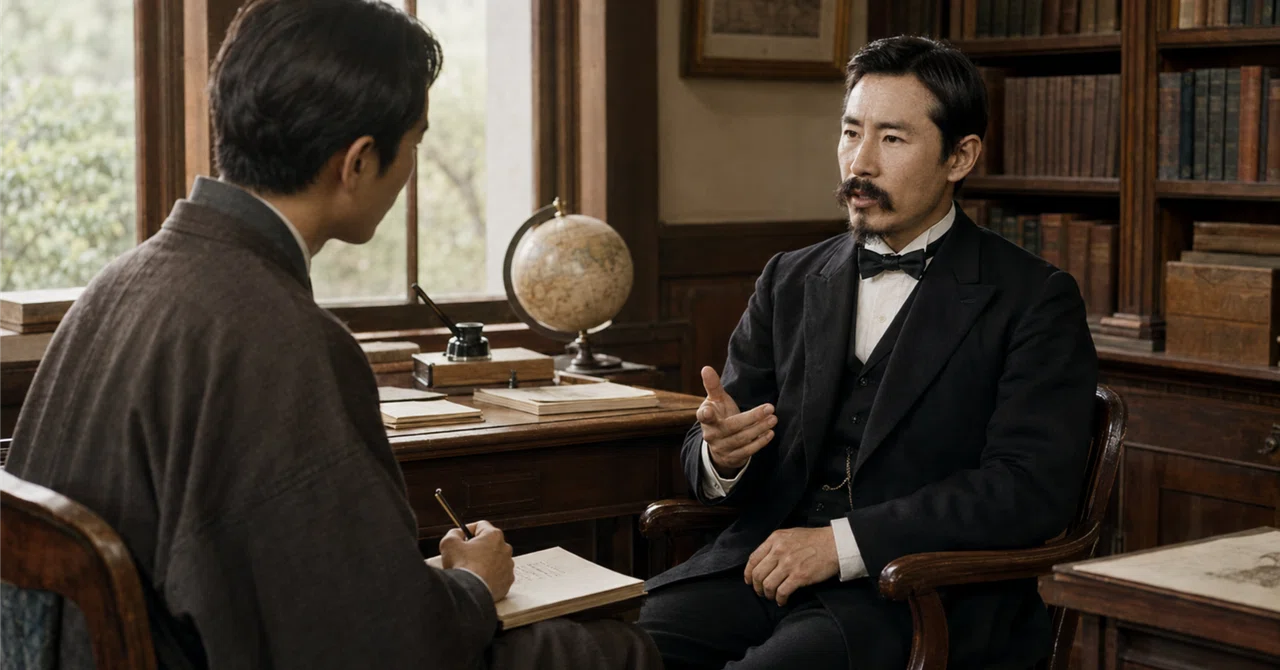
新島襄に聞く🎤なぜ国禁を破ってまでアメリカへ渡ったのか🌙千夜一夜物語第158夜 英語版

【千夜一夜物語の行先】
英語を身につけるには洋書の多読が効果的ですが、難易度差が大きく、途中で挫折しやすいものです。この「千夜一夜物語」はCEFR A2レベルから始め、歴史人物へのインタビュー形式で、物語を楽しみながら英語を自然に定着させることを目的としています。
新島襄は1843年、安中藩士の家に生まれました。1864年、21歳で国禁を犯して函館から国外へ脱出し、翌年アメリカへ到着します。その後、フィリップス・アカデミー、アーモスト大学、アンドーヴァー神学校で学び、キリスト教と教育について考えを深めました。1872年には岩倉使節団に加わり、欧米の教育制度を視察しています。1874年に帰国し、翌1875年、京都に同志社英学校を設立しました。(国立国会図書館)
重要なのは、新島が同志社を作るために日本を脱出したわけではないことです。国禁を破った時点では、海外を自分の目で見て学びたいという思いが強く、アメリカでの教育やキリスト教との出会いを通して、日本に学校を作るという志が形づくられていきました。(同志社大学国際部)
以下は、これらの史実をもとに構成した創作インタビューです。
【英文ストーリー】
千夜一夜物語 第158夜 CEFR A2〜B1 英文ストーリー約700語
◆ Hakodate, 1864. A young samurai looks out at the dark sea. Leaving Japan without permission is forbidden. If he is caught, his future may disappear before his journey even begins.
◇ My name is Niijima Jo. I was twenty-one years old. I knew that leaving Japan was against the law, but I also knew that I could not understand the changing world if I remained inside Japan.
◆ Were you already planning to build a school?
◇ No. That idea became clear later. At first, I wanted to see the world with my own eyes. I had read about foreign countries, ships, science, and Christianity. Reading was not enough anymore.
I did not leave Japan because I already had the answer. I left because I could no longer live without searching for one.
◆ Were you afraid?
◇ Of course. Courage does not mean having no fear. I was leaving my family, my country, and everything familiar to me. I did not know whether I would reach America or whether I would ever return.
But another fear was stronger.
I feared that Japan might enter a new age without understanding the ideas and knowledge that were changing the world.
◆ You finally reached America in 1865. What surprised you most?
◇ Many things surprised me: large ships, schools, churches, science, and public discussion. But the greatest discovery was not a machine.
I met people who believed that an individual person had value. Students were expected not only to remember information but also to think, ask questions, and develop their own character.
A modern nation needs more than modern machines. It needs people who can think for themselves.
◆ You studied at Phillips Academy and Amherst College. Was studying in English difficult?
◇ Very difficult. English was not simply a subject for me. It was the language through which I had to study science, religion, history, and society.
Sometimes I understood only part of what I heard. But I continued reading and listening.
A language becomes useful when it opens another world.
◆ You also became a Christian. Did that change your view of education?
◇ Deeply. I came to believe that education should develop the whole person. Knowledge without character could produce clever people, but not necessarily good people.
A student needed freedom, responsibility, conscience, and respect for others.
Education should not only fill the mind. It should also form the person who uses that mind.
◆ In 1872, you joined the Iwakura Mission and studied educational systems in Western countries. What did you learn?
◇ I saw different schools and different systems, but one lesson became stronger: a country could not modernize by importing technology alone.
Japan could buy machines. It could invite foreign experts. It could build railways and factories.
But who would decide how those things should be used? Who would lead the country after the foreign teachers went home?
Japan needed educated people who could judge for themselves.
◆ Was that when the idea of creating a school became stronger?
◇ Yes. I wanted Japan to have an independent school where young people could grow in knowledge and character.
Government schools were important, but I believed private education also had a special role. A school should have enough freedom to protect its principles even when society changes.
◆ Why did you choose Kyoto?
◇ Kyoto had been the old capital and was entering a new age. I received important support from people there, including Yamamoto Kakuma.
In 1875, we opened Doshisha English School. It began with only a small number of students.
A small beginning did not worry me.
A school does not become important because it begins large. It becomes important because of the people it sends into the world.
◆ What kind of people did you want to educate?
◇ Not people who simply followed orders. I wanted people with knowledge, conscience, independence, and the courage to serve society.
Japan was building a modern state. But institutions alone could not create a good nation.
Laws are written on paper. Railways are built from iron. Governments are organized through offices.
But society is finally shaped by human character.
◆ You spent years trying to establish a university. Why was a university so important?
◇ Because Japan needed people who could think beyond immediate needs. A university should not only train workers for existing jobs. It should prepare people to face problems that do not yet exist.
Education is an investment in a future that the teacher may never see.
◆ You died before your dream of a full university was completed. Was that a failure?
◇ No person finishes everything. If an idea is valuable, others continue it.
The important question is not, “Did I finish the work?” It is, “Did I leave something worth continuing?”
◆ Does your journey have a lesson for English learners?
◇ Yes. Do not wait until you understand everything before moving forward.
I crossed an ocean without knowing what waited on the other side. You do not need to cross an ocean. But every day, cross the small distance between what you understand now and what you do not yet understand.
Read. Listen. Speak aloud. Continue.
You do not need to know the whole road before taking the next step.
◆ Evening falls over Kyoto. Voices of students can be heard from a small school. Years earlier, one young man had secretly stepped onto a ship because he wanted to see a larger world.
Now he is trying to bring that larger world home—not as a machine, but as education.
【日本語訳】
◆ 1864年、函館。一人の若い武士が、暗い海を見つめています。許可なく日本を出ることは禁止されています。捕まれば、旅が始まる前に未来そのものを失うかもしれません。
◇ 私は新島襄です。21歳でした。日本を出ることが法律に反していることは分かっていました。しかし、日本の中にとどまっていては、変わりつつある世界を理解できないとも感じていました。
◆ その時から、学校を作ろうと考えていたのですか。
◇ いいえ。その考えがはっきりしたのは、もっと後のことです。最初は、自分の目で世界を見たかったのです。外国、船、科学、キリスト教について本で読んでいました。しかし、もう読むだけでは足りませんでした。
私は、すでに答えを持っていたから日本を出たのではありません。答えを探さずには生きられなくなったから、出たのです。
◆ 怖くなかったのでしょうか。
◇ もちろん怖かったです。勇気とは、恐怖を感じないことではありません。家族、国、そして自分が慣れ親しんだすべてのものから離れようとしていました。アメリカへ到着できるのか、再び日本へ帰れるのかも分かりませんでした。
しかし、それより強い恐怖がありました。
日本が、世界を変えつつある思想や知識を理解しないまま、新しい時代へ入ってしまうのではないか。それが怖かったのです。
◆ 1865年、ついにアメリカへ到着しました。最も驚いたものは何でしたか。
◇ 大きな船、学校、教会、科学、人々が公の場で議論する姿など、多くのものに驚きました。しかし最大の発見は、機械ではありませんでした。
一人の人間には価値があると考える人々に出会ったのです。学生には、情報を覚えるだけでなく、自分で考え、質問し、自分自身の人格を育てることが求められていました。
近代国家に必要なのは、近代的な機械だけではありません。自分で考えることのできる人間が必要なのです。
◆ フィリップス・アカデミーやアーモスト大学で学びました。英語で勉強するのは難しかったでしょう。
◇ とても難しかったです。私にとって英語は、単なる一つの科目ではありませんでした。科学、宗教、歴史、社会を学ぶために使わなければならない言葉でした。
聞いたことの一部しか理解できない時もありました。それでも、読み、聞き続けました。
言葉は、別の世界への扉を開いた時に、本当に役立つものになります。
◆ あなたはキリスト教徒にもなりました。それによって教育への考え方は変わりましたか。
◇ 大きく変わりました。教育とは、人間全体を育てるものだと考えるようになりました。人格を伴わない知識は、頭のよい人を作ることはできても、必ずしも善い人を作るとは限りません。
学生には、自由、責任、良心、他者への尊敬が必要です。
教育は、頭の中を知識で満たすだけのものではありません。その頭を使う人間そのものを育てるものでなければならないのです。
◆ 1872年には岩倉使節団に加わり、欧米の教育制度を調査しました。そこでは何を学びましたか。
◇ さまざまな学校や制度を見ました。しかし、ある教訓がますますはっきりしました。技術を輸入するだけでは、国を近代化することはできないということです。
日本は機械を買うことができます。外国人専門家を招くこともできます。鉄道や工場を建設することもできます。
しかし、それらをどのように使うかを誰が判断するのでしょうか。外国人教師が帰国した後、誰が国を導くのでしょうか。
日本には、自分自身で判断できる教育を受けた人々が必要でした。
◆ その頃から、学校を作るという考えが強くなったのですか。
◇ はい。若者たちが知識と人格の両方を育てることのできる、自立した学校を日本に作りたいと思いました。
官立学校も重要でした。しかし、私立教育にも特別な役割があると考えました。社会が変化しても、自分たちの理念を守れるだけの自由を、学校は持つべきです。
◆ なぜ京都を選んだのでしょうか。
◇ 京都は古い都でありながら、新しい時代へ入ろうとしていました。そして、山本覚馬をはじめ、重要な人々の支援を得ることができました。
1875年、私たちは同志社英学校を開校しました。最初の生徒は、ほんのわずかでした。
小さく始まったことを、私は心配しませんでした。
学校が重要になるのは、大きく始まるからではありません。そこから社会へ送り出す人々によって、重要になるのです。
◆ どのような人を育てたかったのですか。
◇ 命令に従うだけの人ではありません。知識、良心、自立心、そして社会に尽くす勇気を持つ人を育てたいと思いました。
日本は近代国家を作ろうとしていました。しかし、制度だけで良い国を作ることはできません。
法律は紙に書かれます。鉄道は鉄で作られます。政府は役所によって組織されます。
しかし最後に社会を形づくるのは、人間の人格なのです。
◆ あなたは大学を作るためにも長年努力しました。なぜ大学がそれほど重要だったのでしょうか。
◇ 日本には、目の前の必要だけでなく、その先まで考えられる人が必要だったからです。大学は、現在存在する仕事のために人を訓練するだけではいけません。まだ存在していない問題に立ち向かえる人を育てる必要があります。
教育とは、教師自身には見ることのできないかもしれない未来への投資なのです。
◆ 本格的な大学という夢を完成させる前に亡くなりました。それは失敗だったのでしょうか。
◇ 一人の人間がすべてを完成させることはできません。価値のある考えなら、ほかの人々が続きを担います。
重要なのは、「自分が仕事を完成させたか」ではありません。「続きを担う価値のあるものを残したか」なのです。
◆ あなたの旅から、英語学習者が学べることはありますか。
◇ はい。すべてを理解できるようになるまで、前へ進むのを待ってはいけません。
私は海の向こうに何があるのかを知らないまま、大洋を渡りました。皆さんは大洋を渡る必要はありません。しかし毎日、今分かっていることと、まだ分からないこととの間にある小さな距離を越えてください。
読み、聞き、声に出し、続けてください。
道のすべてを知ってからでなければ、次の一歩を踏み出せないわけではありません。
◆ 京都に夕暮れが訪れます。小さな学校から、生徒たちの声が聞こえてきます。何年も前、一人の若者が、より広い世界を見たいという思いから、密かに船へ乗り込みました。
今、その男は、広い世界を日本へ持ち帰ろうとしています。それは機械としてではなく、教育としてでした。
【音読・多読のポイント】
今回は、国禁を破る決断、海外での学び、自由と良心、学校づくり、人を育てることによる国づくりがテーマです。新島襄を、最初から完成した教育思想を持っていた人物としてではなく、世界を見る中で自分の使命を見つけていった青年として読んでください。
I did not leave Japan / because I already had the answer. / I left because I could no longer live / without searching for one.
私は日本を出たのではない/すでに答えを持っていたから/答えを探さずには/生きられなくなったから出た。
A modern nation needs more than modern machines. / It needs people / who can think for themselves.
近代国家には近代的な機械以上のものが必要だ/必要なのは人々だ/自分で考えることのできる。
Education should not only fill the mind. / It should also form the person / who uses that mind.
教育は頭を満たすだけではいけない/人間そのものも育てなければならない/その頭を使う人間を。
Education is an investment / in a future / that the teacher may never see.
教育は投資である/未来への/教師自身には見ることのできないかもしれない。
You do not need to know the whole road / before taking the next step.
道のすべてを知る必要はない/次の一歩を踏み出す前に。
with my own eyes、think for themselves、pass it on、serve society、take the next stepは、一語ずつ区切らず、意味のまとまりとして読んでください。
【語句の解説】
against the law:法律に反して、法律で禁止されて。本文では、当時許可なく海外へ出ることが禁じられていた状況を表す。
用例:Leaving the country was against the law.(国を出ることは法律で禁止されていました。)
with my own eyes:自分自身の目で。人から聞くだけでなく、自分で実際に確かめるという重要なチャンク。
用例:I wanted to see America with my own eyes.(私は自分の目でアメリカを見たかったのです。)
search for an answer:答えを探す。単なる試験問題ではなく、人生や社会の問題への答えを探す場合にも使う。
用例:He traveled abroad to search for an answer.(彼は答えを探すために海外へ渡りました。)
think for oneself:自分自身で考える。他人の意見や命令をそのまま受け入れず、自分で判断すること。
用例:Students should learn to think for themselves.(学生は自分で考えることを学ぶべきです。)
the whole person:人間全体。知識だけでなく、人格、心、価値観なども含めた人間全体を表す。
用例:Good education develops the whole person.(良い教育は人間全体を育てます。)
conscience:良心。何が正しく、何が間違っているかを内面から判断する感覚。同志社の教育理念を理解する上でも重要な語。
用例:He followed his conscience.(彼は自分の良心に従いました。)
character:人格、人間性。本文ではpersonalityというより、考え方、責任感、道徳性などを含む意味。
用例:Education should develop knowledge and character.(教育は知識と人格を育てるべきです。)
modernize:近代化する。社会、産業、制度などを近代的な形へ変えていくこと。
用例:Japan was trying to modernize quickly.(日本は急速に近代化しようとしていました。)
judge for oneself:自分で判断する。他人から答えを与えられるのではなく、自分の知識と良心によって判断すること。
用例:Young people must learn to judge for themselves.(若者は自分で判断することを学ばなければなりません。)
independent school:独立した学校。本文では、政府だけに依存せず、自らの教育理念を持つ学校という意味。
用例:He wanted to create an independent school.(彼は独立した学校を作りたいと考えました。)
serve society:社会に貢献する、社会のために働く。serveは「仕える」だけでなく、人や社会の役に立つという意味でも使われる。
用例:She wanted to use her knowledge to serve society.(彼女は知識を社会のために役立てたいと考えました。)
immediate needs:目の前の必要、当面の必要。将来ではなく、今すぐ対応しなければならない問題を表す。
用例:We must think beyond our immediate needs.(私たちは目の前の必要だけでなく、その先も考えなければなりません。)
an investment in the future:未来への投資。教育など、現在すぐには成果が出なくても将来大きな価値を生むものを表す。
用例:Education is an investment in the future.(教育は未来への投資です。)
worth continuing:続ける価値がある。worth+動詞ingで「~する価値がある」という意味。
用例:This work is worth continuing.(この仕事は続ける価値があります。)
take the next step:次の一歩を踏み出す。実際に歩くことだけでなく、新しい行動を始める時にも使う重要なチャンク。
用例:You do not need to be perfect to take the next step.(次の一歩を踏み出すために、完璧である必要はありません。)
