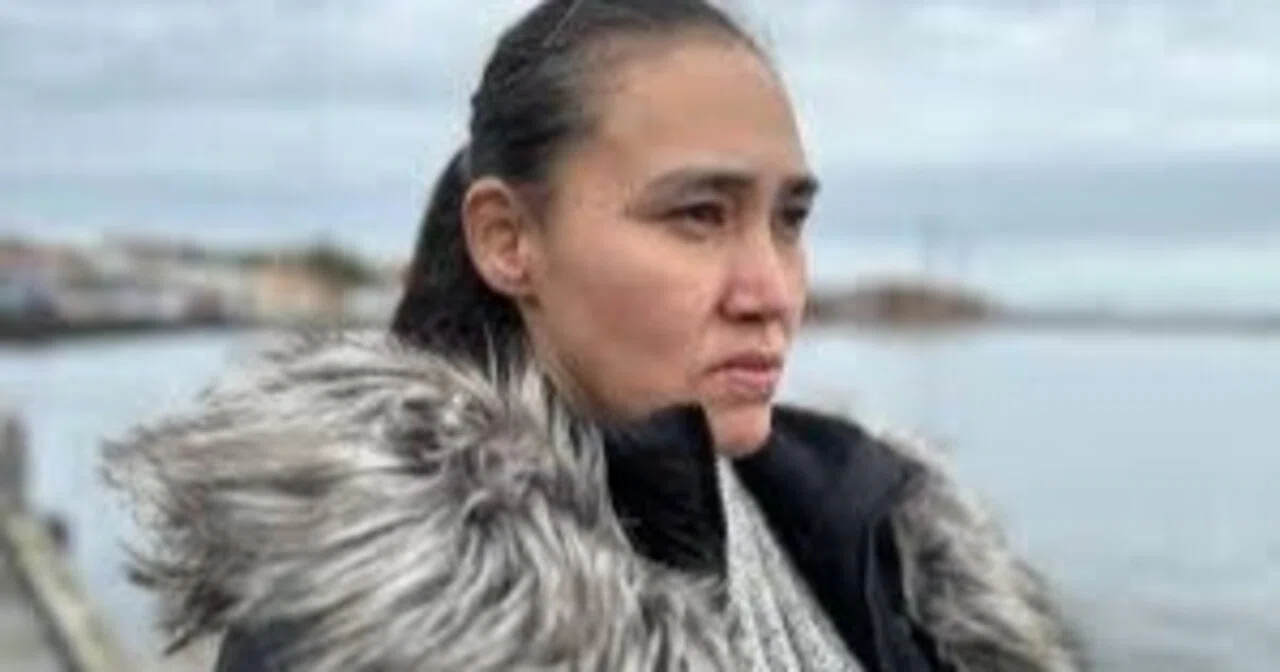
私たちの赤ちゃんは「偏った」子育てテストの後に連れ去られました。今、私たちは彼らを取り戻すために戦っています。 BBC 2025/11/23

Greenlandic families fight to get children back after parenting tests banned
昨年11月に娘が生まれたとき、キーラさんは赤ちゃんが保護施設に預けられるまで2時間だけ一緒に過ごすことができました。
When Keira's daughter was born last November, she was given two hours with her before the baby was taken into care.
「生まれた瞬間から、私は時間を数え始めました」と39歳のキーラさんは振り返ります。
"Right when she came out, I started counting the minutes," Keira, 39, recalls.
「あとどれくらい生きられるのか、ずっと時計を見ていました。」
"I kept looking at the clock to see how long we had."
ザミを腕から引き離す瞬間が来たとき、キーラさんは抑えきれないほど泣きじゃくり、赤ちゃんに「ごめんなさい」とささやいたそうです。
When the moment came for Zammi to be taken from her arms, Keira says she sobbed uncontrollably, whispering "sorry" to her baby.
「まるで魂の一部が死んだようでした。」
"It felt like a part of my soul died."
現在、キーラさんは、デンマーク本土に住む多くのグリーンランド人家族の一員です。彼らは、社会福祉機関によって連れ去られた子どもたちの返還を求めて闘っています。
Now Keira is one of many Greenlandic families living on the Danish mainland who are fighting to get their children returned to them after they were removed by social services.
こうしたケースでは、乳幼児や子どもたちは、親としての適格性を判断するために、デンマークでFKUとして知られる親の能力テストを受けた後に連れ去られました。
In such cases, babies and children were taken away after parental competency tests - known in Denmark as FKUs - were used to help assess whether they were fit to be parents.
デンマーク政府は、数十年にわたる批判を受けて、今年5月にグリーンランドの家庭に対するこれらの検査の使用を禁止しましたが、デンマーク国内の他の家庭では引き続き使用されています。
In May this year the Danish government banned the use of these tests on Greenlandic families after decades of criticism, although they continue to be used on other families in Denmark.
通常、完了までに数ヶ月かかるこれらの評価は、当局が子どもが育児放棄や危害を受けるリスクがあると判断する複雑な福祉案件で使用されています。
The assessments, which usually take months to complete, are used in complex welfare cases where authorities believe children are at risk of neglect or harm.
これらには、親と子への面接、数字の並びを逆から思い出すといった様々な認知課題、一般知識に関するクイズ、そして性格や感情に関するテストなどが含まれます。
They include interviews with parents and children, a range of cognitive tasks, such as recalling a sequence of numbers backwards, general knowledge quizzes, and personality and emotional testing.
これらのテストを擁護する人々は、ソーシャルワーカーやその他の専門家による、逸話的で主観的な証拠よりも客観的な評価方法であると主張しています。
Defenders of the tests say they offer a more objective method of assessment than the potentially anecdotal and subjective evidence of social workers and other experts.
しかし、批判的な人々は、これらのテストによって、ある人が良い親になるかどうかを意味のある形で予測することはできないと主張しています。
But critics say they cannot meaningfully predict whether someone will make a good parent.
反対派は長年、これらの制度はデンマークの文化的規範に基づいて設計されており、グリーンランド人の大半の母語であるカラアリスト語ではなくデンマーク語で施行されていると主張してきた。
Opponents have also long argued that they are designed around Danish cultural norms and point out they are administered in Danish, rather than Kalaallisut, the mother tongue of most Greenlanders.
彼らは、これが誤解を招く可能性があると指摘している。
This can lead to misunderstandings, they say.
グリーンランド人はデンマーク国籍を有しており、デンマーク本土で生活し、働くことができます。
Greenlanders are Danish citizens, enabling them to live and work on the mainland.
雇用機会、教育、医療など、様々な理由でデンマークに惹かれ、数千人がデンマークに住んでいます。
Thousands live in Denmark, drawn by its employment opportunities, education and healthcare, among other reasons.
デンマーク社会研究センター(政府出資の研究機関)によると、デンマークに住むグリーンランド人の親は、デンマーク人の親に比べて、子どもを養護施設に預ける可能性が5.6倍高いそうです。
Greenlandic parents in Denmark are 5.6 times more likely to have children taken into care than Danish parents, according to the Danish Centre for Social Research, a government-funded research institute.
5月、政府は、グリーンランドの子どもたちが家族から強制的に引き離された約300件の事例(FKU検査を含む)を、適時調査したいと表明した。
In May, the government said it hoped in due course to review around 300 cases – including ones involving FKU tests – in which Greenlandic children were forcibly removed from their families.
しかし、BBCの調査によると、10月時点で、子育て検査が使用された事例のうち、政府が調査したのはわずか10件で、その結果グリーンランドの子どもたちが返還された事例はなかった。
But as of October, the BBC found that just 10 cases where parenting tests were used had been reviewed by the government - and no Greenlandic children had been returned as a result.
2024年に妊娠中に行われたキーラさんへの評価では、「新生児を自立して養育するのに十分な親としての能力」が欠けていると結論付けられました。Keira's assessment in 2024, carried out when she was pregnant, concluded that she did not have "sufficient parental competencies to care for the newborn independently".
キーラさんによると、質問には「マザー・テレサって誰?」「太陽光が地球に届くまでどれくらいの時間がかかるの?」などが含まれていたそうです。Keira says the questions she was asked included: "Who is Mother Teresa?" and "How long does it take for the sun's rays to reach the Earth?"
これらのテストを擁護する心理学者たちは、こうした質問は親の一般知識や、社会で遭遇する可能性のある概念に対する理解度を評価することを目的としていると主張している。
Psychologists who defend the tests argue questions like these are intended to assess parents' general knowledge and their understanding of concepts they might encounter in society.
キーラさんはさらに、「彼らは私に人形で遊ばせ、アイコンタクトが足りないと批判しました」と付け加えた。
Keira adds that "they made me play with a doll and criticised me for not making enough eye contact".
彼女は、なぜこのようなテストを受けるのかと尋ねたところ、心理学者は「あなたが十分に文明的であるか、人間らしく行動できるかを見るためです」と答えたと主張している。
She alleges that when she asked why she was being tested in this way the psychologist told her: "To see if you are civilised enough, if you can act like a human being."
キーラちゃんのケースを担当した地方自治体は、個々の家庭についてコメントすることはできないと述べ、子どもを養護施設に預ける決定は「子どもの健康、発達、そして幸福」に深刻な懸念がある場合に行われると付け加えた。
The local authority in Keira's case said it could not comment on individual families, adding that decisions to place a child in care were made when there was serious concern about the "child's health, development, and well-being".
2014年、当時9歳8ヶ月だったキーラちゃんの他の2人の子供は、FKU(児童福祉省)の検査で、キーラちゃんの子育て能力が子供たちのニーズを満たすほど発達していないと診断され、養護施設に預けられた。
In 2014, Keira's other two children - who were then aged nine years and eight months - were placed into care after an FKU test at the time concluded her parenting skills were not developing fast enough to meet their needs.
現在21歳の長女ゾーイちゃんは、18歳の時に実家に戻り、現在は自分のアパートで暮らし、定期的に母親と会っている。
Her eldest, Zoe, who is now 21, moved back home when she was 18 and currently lives in her own apartment and sees her mum regularly.
キーラさんは、愛するザミちゃんに早く会えることを願っています。
Keira hopes she will soon be reunited with her baby Zammi permanently.
デンマーク政府は、グリーンランド人に対するFKU検査の実施に誤りがあったかどうかを調査すると発表しました。
The Danish government has said its review will look at whether mistakes were made in the administering of FKU tests on Greenlandic people.
その間、キーラさんは里親のもとで暮らすザミちゃんと週に1回1時間会うことが許可されています。
In the meantime, Keira is allowed to see Zammi, who is in foster care, once a week for an hour.
彼女は訪れるたびに花を持参し、時にはチキンハートスープなどのグリーンランドの食べ物も持参します。
Each time she visits, she takes flowers and sometimes Greenlandic food, such as chicken heart soup.
「少しでも母の文化を身近に感じてもらえたら」と彼女は言います。
"Just so a little part of her culture can be with her," she says.
「本当に胸が張り裂ける思いでした」
'I felt the most horrific heartbreak'
しかし、FKUを修了した後に子どもを養護施設に預けたグリーンランドの親のすべてが、ケースの審査を受けるわけではない。
But not all Greenlandic parents who had children taken into care after completing FKUs will have their cases reviewed.
ヨハンネとウルリックの息子は2020年に養子縁組されており、デンマーク政府は子どもが養子縁組されたケースの審査は行わないと表明している。
Johanne and Ulrik's son was adopted in 2020 and the Danish government has said it will not review cases where children have been adopted.
43歳のヨハンネは、2019年に妊娠中に検査を受けた。
Johanne, 43, was tested in 2019 during pregnancy.
ザミと同じように、彼女の息子も生後すぐに引き離されるはずでした。
Like Zammi, her son was meant to have been taken away immediately after birth.
しかし、ボクシング・デーに早産で生まれ、ソーシャルワーカーが休暇中だったため、彼女と夫のウルリックは息子を17日間引き取ることができました。
But because he was born prematurely on Boxing Day and social workers were on holiday, she and her husband Ulrik got to keep him for 17 days.
「父親として人生で最も幸せな時間でした」と57歳のウルリックは言います。
"It was the happiest time of my life as a father," says Ulrik, 57.
「息子と一緒に過ごし、抱きしめ、おむつを替え、夜寝る前にヨハンネが搾乳できるように見守りました。」
"Being with my son, holding him, changing his nappy, making sure that Johanne pumps her milk before going to bed in the evening."
ある日、2人のソーシャルワーカーと2人の警察官が、ヨハンネとウルリックの家を訪ね、息子を連れ去ろうとしました。
Then one day, two social workers and two police officers arrived at Johanne and Ulrik's home to take their son away.
夫妻は息子を連れ去らないよう懇願したと語っています。
The couple say they pleaded with them not to take him.
ヨハンネは最後にもう一度、息子に母乳を与えてもいいかと尋ねました。
Johanne asked if she could breastfeed him one last time.
「里親が来る前に息子に服を着せようとしていた時、胸が張り裂ける思いでした」とウルリックは言います。
"As I was dressing my son to hand him over to his foster parents who were on their way, I felt the most horrific heartbreak," Ulrik says.
ヨハンネさんは、2010年に別のパートナーとの間に生まれた5歳と6歳の2人の子供がFKU検査後に保護施設に収容された後に検査を受けました。Johanne had been tested after two children from another relationship, who were five and six, were taken into care after FKU testing in 2010.
2019年の診断では、彼女は「ナルシスト」であり「知的障害」があるとされています。これは、当時WHOが開発した分類に基づくものです。
Her 2019 assessment describes her as "narcissistic" and as having "mental retardation" - a categorisation based on designations developed by the WHO which were in use at the time.
彼女は、これらの診断結果を否定しています。
She rejects both of these descriptions of her.
理論上、FKUには合否判定はなく、地方自治体が子どもを養護施設に預けるかどうかを決定する際に考慮する要素の一つに過ぎません。
In theory, there is no pass or fail mark for an FKU and they are one factor among others taken into consideration by local authorities who decide whether to place a child into care.
しかし、かつてこのテストを実施していた心理学者のイサク・ネレマン氏は、実際には「テストは非常に重要です。最も重要な点についてです。なぜなら、テストの結果が悪いと、約90%のケースで子どもを失うことになるからです」と述べています。
But psychologist Isak Nellemann, who used to administer the tests, says in practice they "are very important, about the most important thing, because when the tests are bad, in about 90% [of cases] they will lose their children".
ネレマン氏は、一部のテストは科学的妥当性に欠けており、子育て能力を予測するためではなく、性格特性を研究するために開発されたものだと主張しています。
Nelleman argues some of the tests lack scientific validity and were developed to study personality traits rather than predict parenting ability.
しかし、現在これらのテストを実施しているチームの上級心理学者、トゥリ・フレデリクセン氏は、テストは完璧ではないものの、「価値ある、広範囲にわたる心理的ツールだ」と述べ、テストを擁護している。
However, Turi Frederiksen, a senior psychologist whose team currently administers the tests, defends them, saying that while they are not perfect, "they are valuable, extensive psychological tools".
また、彼女はテストがグリーンランド人に対して偏見を持っているとは考えていないと述べている。
She also says she does not believe they are biased against Greenlanders.
ヨハンネさんは2019年、ロールシャッハ・テスト(インクの染みの画像を見て何が見えるかを問う心理テスト)で何を見たのかと尋ねられた際、グリーンランドの狩猟文化ではよく見られる光景である、アザラシの内臓を抉る女性を見たと答えた。
When Johanne was asked in 2019 what she saw during a Rorschach test - a psychological test where people are asked what they see when looking at ink-blot images - she said she saw a woman gutting a seal, a familiar sight in Greenland's hunting culture.
ヨハンネさんは、この答えを聞いた心理学者が彼女を「野蛮人」と呼んだと主張している。
Johanne alleges that on hearing this answer the psychologist called her a "barbarian".
2019年に夫婦の診断に関わった地方議会は、ヨハンネさんの主張に直接言及しなかった。
The local council involved in the couple's 2019 assessment did not address Johanne's claim directly.
地方議会は、ヨハンネさんの診断結果は「両親の育児能力全般に関する重大な懸念」と「両親の一般的な生活習慣や日常生活における機能レベルに関する懸念」を示していると述べた。
They said her assessment "indicated significant concern regarding the parents' overall parenting abilities" as well as "concerns about the parents' general lifestyle and functional level in daily life".
「息子の最初の一歩を目にすることはなかった」
'I never got to see his first steps'
ヨハンネさんとウルリックさんの息子が保護施設に預けられた後、2020年に養子縁組されるまで、彼らは週に一度、短い面会で息子と会うことを許されていました。
After Johanne and Ulrik's son was taken into care, they were allowed to see him during brief, weekly visits until he was adopted in 2020.
それ以来、息子に会うことは一度もありません。
They have never seen him since.
「息子の最初の一歩、最初の言葉、最初の歯、そして初めての登校日を目にすることはなかった」とヨハンネさんは言います。
"I never got to see his first steps, his first word, his first tooth, his first school day," Johanne says.
しかし、息子が生まれて数日後、両親は息子に洗礼を施し、氏名と住所が記載された公式記録を作成しました。
However, a few days after his birth they christened him, creating an official record that includes their names and address.
「息子が私たちの元に戻ってくる道を見つけるために、記録を残す必要がありました」とヨハンネは言います。
"We needed to create a paper trail so he could find his way back to us," Johanne says.
弁護士のジャネット・ギョレット氏は、この訴訟を欧州人権裁判所に提訴したいと考えています。
Their lawyer Jeanette Gjørret hopes to take their case before the European Court of Human Rights.
しかし、デンマークのソフィー・ヘストルプ・アンデルセン社会問題大臣はBBCに対し、これらの子どもたちは皆、「愛情深く思いやりのある家族」のもとで暮らしているため、政府は養子縁組の案件を再開するつもりはないと述べた。
But Denmark's social affairs minister Sophie Hæstorp Andersen tells the BBC the government will not reopen cases of adoption because each of these children is now settled with a "loving and caring family".
審査の進捗状況について尋ねられると、アンデルセン大臣は「遅いように聞こえるかもしれないが、我々は着手しつつある」と答えた。
Asked about the progress of the review, she says "it sounds slow, but we are getting started".
また、子どもを連れ去り、養子縁組する決定は、「家族が子どもを1、2年だけでなく、長期間にわたって養育できる能力があるかどうかを精査する、非常に徹底したプロセス」の一環であるとも述べた。
She also says decisions to remove and adopt children are part of a "very thorough process where we look into the family's ability to take care of their child not only for a year or two, but for a long period of time".
デンマーク北部オールボー市のソーシャルワーカーチームリーダー、トルディス・ヤコブセン氏も同様の見解を示し、デンマークでは子どもの連れ去りは決して軽々しく扱われることはないと述べています。
That is echoed by Tordis Jacobsen, a social worker team leader in Aalborg Kommune in northern Denmark, who says removing a child in Denmark is never taken lightly.
ヤコブセン氏によると、保護上の懸念は学校や病院によって最初に指摘されることが多く、子どもが永久養子縁組される場合、その承認は裁判官によって行われるとのことです。
She says safeguarding concerns are often first flagged by schools or hospitals, and points out that in cases where a child is permanently adopted the decision to approve this is made by a judge.
ピルングアックさんは、グリーンランド出身の母親が我が子と再会を果たした稀有なケースです。
Pilunnguaq is a rare case of a Greenlandic mother who has been reunited with her child.
1歳で保護施設に預けられていた娘と、数ヶ月前に再会を果たしました。娘は現在6歳です。
She and her daughter, who was placed into care aged one, were reunited a few months ago. Her daughter is now six.
39歳のピルングアックさんは、社会福祉サービスからの電話で、思いがけない知らせを受けたと言います。
Pilunnguaq, 39, says she received the unexpected news in a phone call from social services.
「泣きながら笑い出しました。信じられませんでした。『なんてことだ、彼女が家に帰ってくるんだ』と何度も思いました。」
"I started crying and laughing at the same time. I couldn't believe it. I kept thinking, 'Oh my God, she's coming home.'"
ピルングアックさんの3人の子供は2021年に全員養護施設に預けられました。他の2人は当時6歳と9歳でした。
Pilunnguaq's three children were all placed into care in 2021. The other two were aged six and nine at the time.
彼女は、子供たちに適した新しい家を見つけるまでの間、地元当局が子供たちを一時的に保護することに同意したと言います。
She says she agreed for her local authority to place her children in temporary care while she found a new home suitable for her children.
ピルングアックさんは、子供たちがすぐに自分の元に戻ってくると信じていましたが、実際には養育アセスメントを受けなければなりませんでした。
Pilunnguaq says she believed her children would soon be returned to her, but instead she had to undergo a parenting assessment.
その結果、彼女は「機能不全な関係」に陥る傾向があり、子育てに不適格であると結論付けられました。
This concluded she had a pattern of entering "dysfunctional relationships" and was unfit to parent.
「1時間で引き取ってくれる」
'They can take her in one hour'
6歳の娘が帰宅してから数か月後、ピルングアックさんは地方自治体から、他の2人の年長の子供たちが12月に戻ってくると告げられた。
A few months after her six-year-old daughter came home, Pilunnguaq was told by her local authority that her other two older children will be returning to her in December.
子供たちをピルングアックさんの保護下に戻すという決定は、政府の調査による勧告ではなく、地方自治体が行ったものだった。地方自治体は彼女の件についてコメントを拒否した。
The decision to return the children into Pilunnguaq's care was made by the local authority rather than being recommended by the government review. The local authority declined to comment on her case.
4年以上も離れて暮らしてきたため、ピルングァックさんは娘との関係を再構築するのが難しくなっている。
Spending more than four years apart has made it difficult for Pilunnguaq to rebuild her relationship with her daughter.
「トイレに行ってドアを閉めると、娘はパニック発作を起こして『ママ、見つからない』と言うんです」とピルングァックさんは言う。
"If I go to the bathroom and close the door, she will have a panic attack and say 'Mum, I couldn't find you,'" Pilunnguaq says.
また娘を失うのが怖いとも言う。
She also says she is terrified of losing her daughter again.
「彼らは1時間で娘を連れて行ってしまう。また同じことをするかもしれない。」
"They can take her in one hour. They can do it again."
キーラは今、ザミの1歳の誕生日を、彼女がいない間も迎える準備をしている。
Keira is now preparing for Zammi's first birthday in her absence.
彼女は、前面にホッキョクグマが描かれた、グリーンランドの伝統的なそりを木で手作りしている。
She's building a traditional Greenlandic sleigh by hand from wood, with a polar bear drawn on the front.
今月初め、娘は少なくとも今のところは帰ってこないと告げられたが、彼女は希望を捨てていない。
Earlier this month, she was told that her daughter won't be coming home - for now at least - but she hasn't given up hope.
キーラはまだベッドの横にベビーベッドを、リビングルームにもベビーベッドを置いている。壁にはザミの額入り写真が飾られ、ベビー服やおむつも用意されている。
Keira still has a cot next to her bed and another in the living room, with framed photos of Zammi on the walls, along with baby clothes and nappies.
「私は子供たちのために戦い続けるつもりです。」
"I will not stop fighting for my children.
「私がこの戦いを終わらせなければ、将来、子供たちの戦いになるのです。」
"If I don't finish this fight, it will be my children's fight in the future."
いいなと思ったら応援しよう!
 よろしければ応援お願いします! いただいたチップはクリエイターとしての活動費に使わせていただきます!m(__)m