【アジア放浪②】ラオスの朝市で、フランスの少女がNARUTOを好きだと知った日 ― 私が世界で見た、日本アニメの本当の力 ―

最近、TikTokで日本の名所を紹介する動画を見ていた。
その時に流れていたのが、アケボシの「Wind」だった。
NARUTOの初代エンディング曲である。
懐かしくなって久しぶりに聴いてみた。
すると不思議なことが起きた。
20年以上前の記憶が次々と蘇ってきたのである。
ロサンゼルスで見たサスケに夢中な少女たち。
BLEACHのコスプレをしていた少女。
ボーボボが好きだった優等生の男の子。
前編で書いたあの子どもたちの顔が、一気に頭の中に浮かんできた。
そして私は、もう一つ忘れられない光景を思い出した。
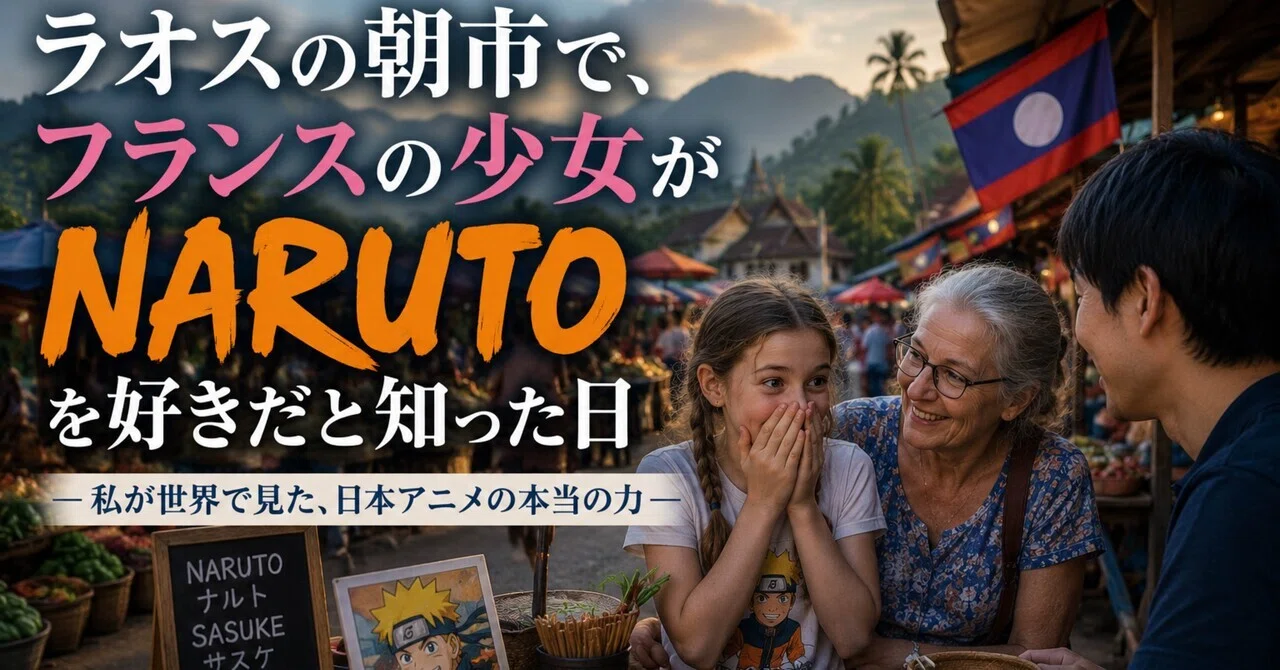
ラオスの朝市で出会ったフランス人家族である。
――――――――――
ラオスの朝市で出会ったフランス人家族
バックパッカーだった時にラオスを訪れた時のことだった。
朝、市場で朝食を食べていると、隣の席にフランス人の家族が座った。
旅行中はこうした偶然の出会いがある。
自然と会話が始まった。
どこから来たのか。
どこを旅しているのか。
そんな他愛のない話だった。
――――――――――
「うちの孫、NARUTOが大好きなんですよ」
しばらく話していると、白髪のお婆さんが笑顔で言った。
「うちの孫、NARUTOが大好きなんですよ」
その瞬間だった。
隣にいた少女が顔を真っ赤にした。
まるで親に好きなアイドルを暴露された中学生のようだった。
私は思わず笑ってしまった。
しかし同時に、不思議な感覚になった。
ここはラオスである。
私は日本人。
彼女はフランス人。
そして話題はNARUTOだった。
冷静に考えると、かなり奇妙な状況である。
――――――――――
ロサンゼルスだけの話ではなかった
その時、私はあることに気づいた。
ロサンゼルスで見たサスケ好きの少女たちは特別ではなかった。
アニメイベントに集まる子どもたちも特別ではなかった。
世界中で同じことが起きていたのだ。
アメリカでも。
フランスでも。
そしておそらく他の多くの国でも。
子どもたちは同じ物語を見ていた。
同じキャラクターに憧れていた。
同じ世界を共有していた。
――――――――――
なぜ私は誇らしかったのか
あの時の感情を今振り返ると少し不思議である。
私はなぜあんなに嬉しかったのだろう。
なぜ少し誇らしかったのだろう。
それは日本が勝ったからではない。
経済が強いからでもない。
政治が優れているからでもない。
ただ、日本で生まれた物語が、遠い国の子どもを笑顔にしていた。
その事実が嬉しかったのである。
私が作った作品ではない。
私が関わった作品でもない。
それでも日本人として、どこか誇らしかった。
――――――――――
物語は国境を越える
考えてみれば不思議なことである。
言葉も違う。
文化も違う。
宗教も違う。
生まれ育った環境も違う。
それなのに、一人の日本人漫画家が描いた物語が、フランスの少女の心を動かしている。
そしてラオスの朝市で、その話を日本人の私が聞いている。
物語には国境がない。
そんな言葉を聞くことはある。
しかし私は、その意味をあの日初めて実感した気がする。
――――――――――
アケボシの「Wind」を聴きながら、私は20年以上前の旅を思い出していた
あの頃の私は、日本アニメが世界へ広がる様子を見ていたのだと思っていた。
しかし今なら分かる。
私が見ていたのはアニメではなかった。
国籍も言語も越えて、人と人をつなぐ物語の力だったのである。
そして旅の途中で、私はもう一つ忘れられない光景を見ることになる。
タイの長距離列車で、延々とドラえもんの歌を歌い続ける子ども。
そしてベトナム・ホーチミンのホテルで出会ったワンピース。
その時私はまだ気づいていなかった。
日本の物語は、世界の人々だけではなく、旅をしていた私自身も支えていたのである。
(後編へ続く)
――――――――――
未来に残る一文
人は国を好きになる前に、物語を好きになる。
そして時々、その物語が国境より先に人と人をつないでしまう。
The Day I Learned a French Girl in Laos Loved Naruto
— The True Power of Japanese Anime I Witnessed Around the World —
In the previous chapter, I wrote about how I witnessed Japanese anime beginning to spread across America during my study abroad years in Los Angeles.
At the time, however, I believed it was a local phenomenon.
After all, it was Los Angeles.
It was a city filled with cultural diversity, anime conventions, and international influences.
I assumed that was the reason.
Several years later, a small encounter in Laos would completely change my perspective.
――――――――――
A French Family at a Morning Market in Laos
I was traveling through Laos as a backpacker.
One morning, I stopped at a local market for breakfast.
As often happens while traveling, I ended up sharing a table with another family.
They were from France.
We began chatting about where we were from, where we had traveled, and where we were heading next.
It was the kind of casual conversation that travelers have every day.
Nothing unusual.
At least, not at first.
――――――――――
“My Granddaughter Loves Naruto”
At one point, the grandmother smiled and said,
“My granddaughter loves Naruto.”
The moment she said it, the young girl sitting beside her turned bright red.
She looked exactly like a teenager whose parents had just revealed her biggest secret.
I couldn’t help but laugh.
But at the same time, I felt something else.
Something unexpected.
There I was, a Japanese traveler.
Sitting in a market in Laos.
Talking to a French family.
And somehow the conversation had arrived at Naruto.
The situation was strangely beautiful.
――――――――――
This Was Not Just Happening in Los Angeles
That was the moment I realized something important.
The children I had met in Los Angeles were not special cases.
The girls who admired Sasuke.
The students who wanted to learn Japanese.
The anime fans at conventions.
They were part of something much larger.
The same thing was happening across the world.
In America.
In Europe.
And probably in many other countries as well.
Children were growing up with the same stories.
Admiring the same characters.
Sharing the same imaginary worlds.
Without realizing it, they were connected.
――――――――――
Why Did I Feel Proud?
Looking back, I sometimes ask myself why that moment affected me so deeply.
Why did I feel proud?
It certainly wasn’t because Japan was economically powerful.
It wasn’t about politics.
It wasn’t about national achievements.
The answer was much simpler.
A story created in Japan had brought joy to a child living on the other side of the world.
That fact alone made me happy.
I had nothing to do with creating Naruto.
I had never met its author.
Yet somehow, as a Japanese person, I felt grateful.
――――――――――
Stories Travel Further Than Borders
The more I think about it, the more remarkable it seems.
Different languages.
Different cultures.
Different religions.
Different histories.
Yet a story created by one Japanese artist had reached the heart of a French girl.
And years later, that story became the reason a Japanese traveler and a French family shared a meaningful conversation in Laos.
People often say that stories cross borders.
That morning, I finally understood what those words meant.
――――――――――
At the time, I thought I was witnessing the global success of Japanese anime.
Now I see it differently.
What I was really witnessing was the power of stories.
Stories that connect people long before politics, economics, or nationality ever can.
And during my travels, I would experience that power once again.
On a train in Thailand, where a child sang the Doraemon theme song endlessly.
And later in a hotel room in Ho Chi Minh City, where One Piece unexpectedly made me feel at home.
(To be continued)
――――――――――
A Sentence for the Future
People do not fall in love with a country first.
They fall in love with a story.
And sometimes, that story connects people long before any border can separate them.
🌏CIVILIZATION
研究テーマ:
なぜ物語は国境を越えて人をつなぐのか
観察:
・ロサンゼルスで見たNARUTO人気は特殊な現象ではなかった
・ラオスの朝市で出会ったフランス人家族の少女もNARUTOのファンだった
・日本人、フランス人、ラオスという全く異なる文化圏が、一つの物語によって会話を共有できていた
・子どもたちは日本という国より先に、日本の物語と出会っている
・アニメは娯楽であると同時に、国境を越える共通言語として機能している
仮説:
人は国そのものを好きになるのではなく、まず物語を好きになる。
そして物語への好意が、その国の文化や言語への関心へと発展する。
文化輸出の本質は商品の輸出ではない。
「共通体験の輸出」である。
NARUTOは漫画作品であると同時に、世界中の子どもたちが共有する共通記憶として機能している可能性がある。
物語は国境を越えるのではない。
人間が持つ普遍的な感情に触れることで、結果として国境を無効化してしまうのかもしれない。
