A Plan B for Iran: Build a Transitional Government in Exile Before the Window Opens

Washington does not need to choose between endless airstrikes and a ground invasion. It can begin building a political alternative now. Airstrikes can damage facilities. Sanctions can weaken the regime. Negotiations can buy time. But none of these, by themselves, creates a credible political alternative to the Islamic Republic of Iran. Without such an alternative, even a successful military campaign may leave no clear path to a democratic transition.
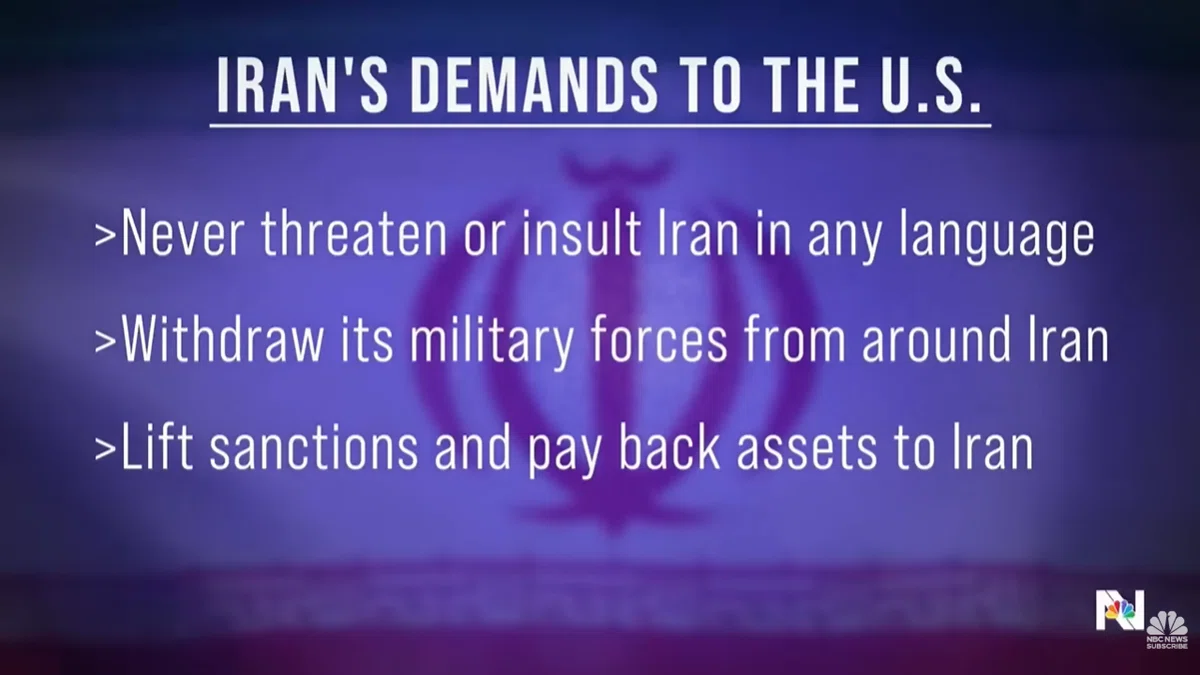
The war between Iran and the United States has reached a critical juncture. The United States now stands at a crossroads. On August 8, Iran presented the following demands:
IRAN’S DEMANDS TO THE U.S.
Never threaten or insult Iran in any language
Withdraw its military forces from around Iran
Lift sanctions and pay back assets to Iran
CNN also reported that Iran is demanding compensation for damages caused by the conflict, a point that should be added to the list of Tehran's demands. When CNN's reporting is considered alongside Reuters and other major news outlets, Iran's position can be broadly summarized in eight key demands.
Demand 1: An End to U.S. Military Threats and Hostile Actions
NBC reported that Iran demands the United States "never threaten or insult Iran in any language." Reuters, meanwhile, described the demand more broadly as an end to U.S. threats and hostile actions against Iran and its regional allies.
Demand 2: A Permanent End to the War and Military Attacks
Iran is not seeking merely a temporary ceasefire. It is demanding a permanent end to military attacks by the United States and its allies, including Israel. Tehran also maintains that the United States violated the provisional agreement reached in June.
Demand 3: Withdrawal of U.S. Forces from Around Iran
This demand also appeared in NBC's reporting. Iran has repeatedly called for the withdrawal of U.S. military forces from the region in previous proposals as well.
Demand 4: Lifting the U.S. Naval Blockade of Iranian Ports
This is one of the key conditions directly linked to reopening the Strait of Hormuz. Among the current negotiations, it is one of the most concrete and specific demands.
Demand 5: Removal of Sanctions
Iran is demanding the lifting of U.S. sanctions, including restrictions on oil exports and financial transactions. This has been a consistent demand not only in the current negotiations but also throughout previous proposals over the past several months.
Demand 6: Return of Frozen Iranian Assets
This corresponds to NBC's phrase, "pay back assets to Iran." Previous negotiations reportedly discussed specific figures. According to reports on the June proposal, the release of approximately $25 billion in frozen Iranian assets was under consideration.
Demand 7: Compensation for War Damage and Reconstruction
Both CNN and Reuters reported this demand. In earlier negotiations, Iran reportedly sought $400 billion in war reparations. After Washington rejected direct compensation, discussions reportedly shifted toward the creation of a $300 billion reconstruction fund financed by Gulf states and other regional partners.
Demand 8: Collection of Strait Service Fees
Iran seeks formal recognition of its authority and influence over the Strait of Hormuz. One proposal would require commercial vessels to pay transit or service fees. According to Reuters, Iran proposed fees equivalent to 5–7% of cargo value, while the Omani proposal was approximately 3%. The United States, by contrast, insists on freedom of navigation and argues that no transit fee should be charged.
None of these demands addresses the denuclearization of Iran. Earlier, the United States and Iran had reached a provisional Memorandum of Understanding (MoU) aimed at a ceasefire and an end to the war. According to the White House, President Donald Trump signed the document in France on June 17. On the Iranian side, Parliament Speaker Mohammad Bagher Ghalibaf had digitally signed it on June 15
The provisional MoU contained the following seven key provisions:
Item 1: Cessation of Hostilities and a Phased Ceasefire
Rather than seeking an immediate and comprehensive settlement, the framework was designed to implement and verify a ceasefire in stages. Reuters reported that the MoU consisted of 14 provisions.
Item 2: Reopening the Strait of Hormuz
The resumption of commercial shipping through the Strait of Hormuz and the stabilization of maritime traffic were among the principal objectives. In the initial proposal, the reopening of the Strait was paired with the lifting of the U.S. naval blockade of Iranian ports.
Item 3: Lifting the U.S. Naval Blockade
In exchange for reopening the Strait of Hormuz, Iran expected the United States to lift its naval blockade of Iranian ports.
Item 4: Sanctions Relief
The United States would ease certain sanctions on Iran, allowing greater freedom for Iranian oil exports and a gradual return to international financial markets. The Associated Press also reported that sanctions relief was included in the initial agreement.
Item 5: The Nuclear Issue Deferred to a Second Phase
This point is particularly important. The original MoU was not intended to provide a comprehensive resolution of Iran's nuclear program. Issues such as uranium enrichment, nuclear development, and international monitoring were deliberately left for subsequent negotiations. Reuters likewise reported that the nuclear issue had been reserved for the second phase.
Item 6: High-Enriched Uranium
According to the Associated Press, the initial agreement also included a proposal to dilute Iran's stockpile of highly enriched uranium.
Item 7: Regional Issues
The agreement also addressed regional security issues arising from Israel's military operations, including Iran's proxy organizations such as Hezbollah in Lebanon and Hamas in Gaza.
The June agreement has effectively collapsed. However, within the framework of the Strait of Hormuz negotiations that Iran and Oman have been pursuing since August, Iran suddenly introduced what appears to be a new comprehensive proposal—essentially a final set of demands. Under these circumstances, Oman has little choice but to leave the matter to the United States.
Meanwhile, the United States has maintained an unusually long silence. Even by the standards of the Trump administration—or, indeed, previous U.S. administrations—its silence has been exceptional. It is possible that a decision has already been made and that a military operation is already underway. Another possibility is that President Trump is temporarily unable to carry out his usual public duties because of health issues or other circumstances. At present, however, there are no reports confirming either scenario.
Until now, the United States has pursued negotiations while simultaneously applying military pressure on Iran through military options. Let us call this Plan A.
Plan A consists of a combination of military measures—such as airstrikes—and political messaging, including President Trump's posts on social media and official statements issued by the White House.
Plan A
Military options, including airstrikes
President Trump's social media posts
Official White House statements
However, at this point, General John Daniel Caine, Chairman of the Joint Chiefs of Staff, reportedly urged that further attacks on Iran be suspended, warning that continued operations could deplete the U.S. military's missile stockpiles.
In other words, President Trump had used missiles so extensively that the United States had begun drawing on stockpiles intended for future contingencies. Concerned by this trend, military leaders intervened and urged restraint. Behind the scenes, President Trump was reportedly angered that Secretary of War Pete Hegseth had failed to keep him informed about the state of U.S. missile inventories.
Estimated U.S. Missile Inventory
Tomahawk Cruise Missiles (Offensive)
Estimated pre-war inventory: approximately 1,700
Estimated expended: approximately 850
Estimated remaining: approximately 850
ATACMS (Army Tactical Missile System) + PrSM (Precision Strike Missile) (Offensive)
Estimated pre-war inventory: approximately 700
Estimated expended: approximately 700
Estimated remaining: virtually none
Patriot PAC-3 Interceptor Missiles (Defensive)
Estimated pre-war inventory: approximately 2,300
Estimated expended: approximately 1,473
Estimated remaining: approximately 827
THAAD Interceptor Missiles (Defensive)
Estimated pre-war inventory: approximately 425
Estimated expended: approximately 278
Estimated remaining: approximately 147
General Dan Caine, Chairman of the Joint Chiefs of Staff and the senior uniformed officer of the U.S. military, reportedly informed President Trump about the state of America's missile inventories. According to reports, President Trump reacted angrily, saying, "I never heard about this. Why wasn't I informed?" The criticism was directed at Secretary of War Pete Hegseth, although President Trump later withdrew his remarks.
If these estimates are correct, the United States has already used approximately 75 percent of its offensive missile inventory and about 65 percent of its defensive interceptor missiles. That would place U.S. missile stockpiles in what could reasonably be described as a danger zone. Of course, these figures remain estimates compiled by the media rather than official government data, since the actual inventories are classified. Nevertheless, the overall picture is likely to be broadly accurate.
Under these circumstances, even if Washington wishes to continue implementing Plan A, doing so has become increasingly difficult. President Trump, however, has consistently favored an "attack, attack, attack" approach and appears inclined to continue military operations. At the same time, opposition within the military—led by General Caine—has reportedly become more pronounced.
General Caine also made the unusual public argument that the United States should begin looking for an exit strategy, even before the White House did so. This likely reflects the thinking not only within the Pentagon but also among officers at U.S. Central Command (CENTCOM). The message may simply have been: "Enough is enough."
Meanwhile, Secretary of War Hegseth has made no public statement on the matter. Although President Trump initially expressed anger, he soon praised Hegseth on social media, apparently seeking to avoid the appearance of internal conflict within the White House. It was, perhaps, political theater.
Whether the United States will ultimately accept Iran's demands, negotiate a compromise, or resume military action remains uncertain. If Washington chooses the military option, however, one likely target would be Pickel Mountain (Kuh-e Kolang Gaz La), located approximately two kilometers south of the Natanz nuclear facility.
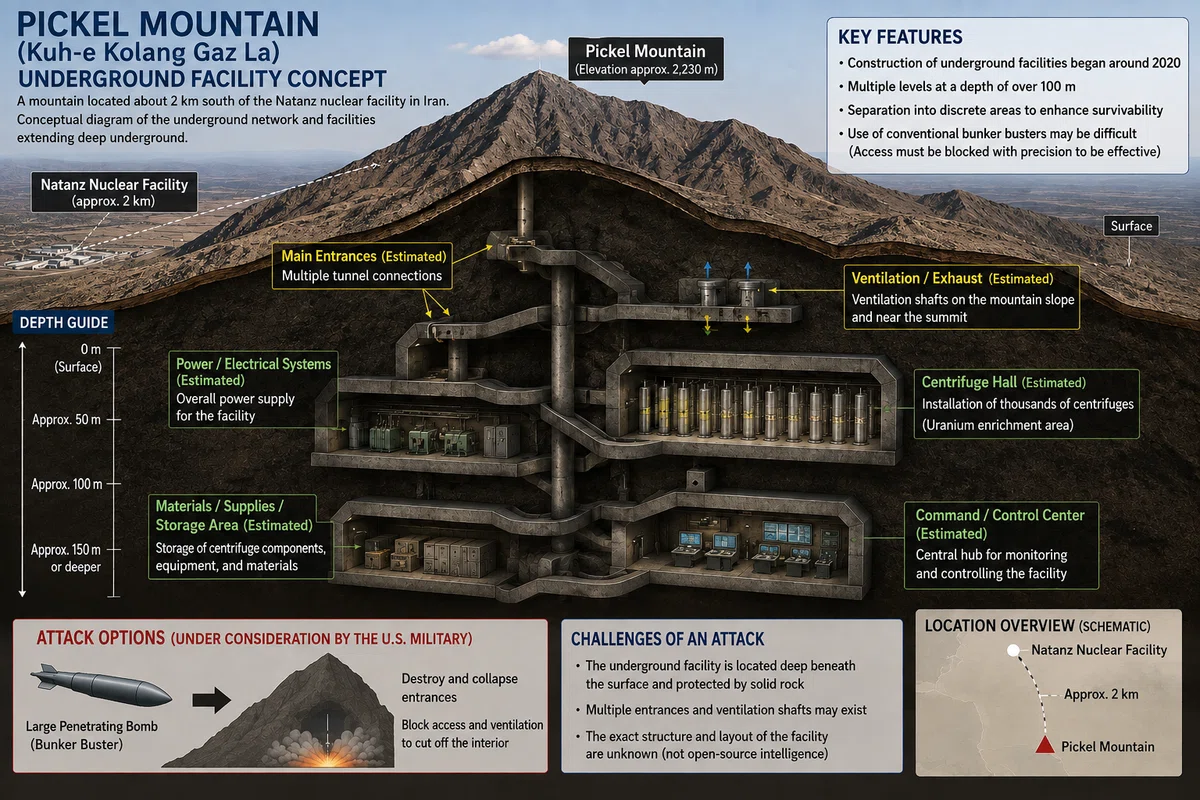
As an extension of Plan A, there is a proposal to attack the underground facility beneath Pickel Mountain. Since it is believed that nuclear materials and nuclear facilities are located there, the idea is to use bunker-buster bombs to strike the site, seal its entrances, and render the facility unusable.
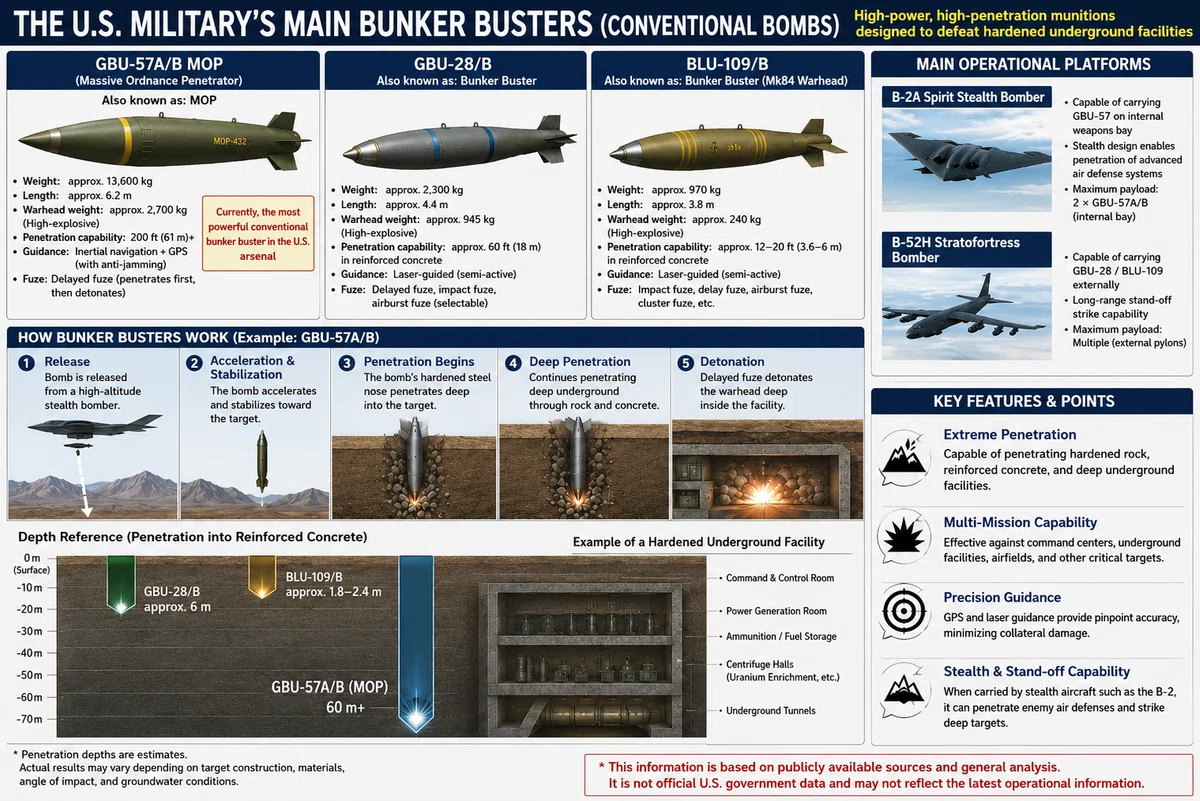
The concept is to deliver bunker-buster bombs from a B-2 stealth bomber in order to seal the entrances to the underground facility. However, this would only be a temporary solution. If Iran were able to repair the entrances, the facility could become operational again. For that reason, another proposal has been discussed: deploying special operations forces to enter the mountain, destroy the underground infrastructure with explosives, and then follow up with bunker-buster strikes.
A special operations raid on Pickel Mountain would make for a Hollywood-style military operation, but it would also carry significant risks. Military analysts in English- and French-language defense media, however, have argued that commandos would not need to descend all the way to the deepest sections of the complex. They would only need to reach a depth sufficient to render the facility unusable before detonating explosives.
As some English- and French-language military commentators have put it, the objective is not to send heroes into the deepest chamber of the dungeon to slay the dragon. Instead, the strategy is to bury the dragon together with the dungeon itself.
President Trump himself once referred to Pickel Mountain, making such an operation a plausible option. It would also consume relatively few missile resources, since it relies primarily on bunker-buster bombs rather than cruise missiles. For that reason, it would likely be easier to obtain Pentagon approval.
President Trump's stated objective is the denuclearization of Iran. One possible political strategy, therefore, would be to strike Pickel Mountain and then unilaterally declare that Iran had been successfully denuclearized, thereby bringing the conflict to a political conclusion. Destroying the facility, however, would not eliminate Iran's underlying capability to develop nuclear technology.
In that sense, it would amount to only a temporary denuclearization.
An attack on Pickel Mountain would also serve as a clear rejection of Iran's eight demands and could provide the exit strategy that the Pentagon has reportedly been seeking. In practical terms, however, it would represent little real progress. At best, it would buy time.
This is why Plan A has reached a dead end. Is there a Plan B? I believe there is. The Plan B that I propose is modeled on the example of Charles de Gaulle, who escaped to Britain during the Second World War and established the Free French Government in Exile.
Plan B
Establish a Transitional Government in Exile outside Iran.
It would be supported by the United States and built around figures such as Iran's former Crown Prince and Iranian Nobel Prize laureates.
Reza Pahlavi
The former Crown Prince of Iran is Reza Pahlavi, the former heir apparent of the Pahlavi dynasty. He is the son of Iran's last Shah, Mohammad Reza Pahlavi, and now lives in exile in the United States. Today, he is one of the leading figures of the Iranian opposition.
Shirin Ebadi
One of Iran's Nobel laureates is Shirin Ebadi, a lawyer and human-rights advocate. She became the first Iranian recipient of the Nobel Peace Prize and the first Muslim woman to receive the award. She currently lives in exile in the United Kingdom after leaving Iran.
Narges Mohammadi
Another prominent figure is Narges Mohammadi, an Iranian scientist and human-rights activist. She was awarded the 2023 Nobel Peace Prize while imprisoned in Iran. Under present circumstances, however, she would probably remain a symbolic figure rather than an active participant.
A Plan B transitional government in exile could communicate with the Iranian people in the manner of Charles de Gaulle—through radio broadcasts, the Internet, and other forms of public communication. It would continue telling the Iranian people that an alternative government already exists, that another political path is available, and that there is a political home prepared for a future democratic Iran.
Supplement:
A transitional government in exile would not be intended to govern Iran permanently. Its role would be to preserve political continuity, prepare for democratic transition, and serve as a temporary authority until free national elections could be held.
The Islamic Republic would undoubtedly denounce such a government as an American puppet. That should be expected. Nevertheless, it should continue speaking directly to the Iranian people in the spirit of Charles de Gaulle.
Ideally, its principal public spokesman should be something of an unconventional figure. Ordinary politicians rarely inspire people during periods of national crisis.
Supplement:
The purpose of such a spokesman would not be to command the government, but to give the movement an independent public voice—someone willing to challenge both Tehran and, when necessary, even Washington. Such independence would strengthen the credibility of the transitional government rather than weaken it.
Charles de Gaulle himself was viewed with suspicion by Winston Churchill. Living in exile in Britain, he frequently ignored British advice and insisted on speaking in his own voice. Although he held only the rank of brigadier general, he behaved as though he represented France itself.
For precisely that reason, the Free French Government did not appear to be a mere puppet government. Even the Allied powers often found de Gaulle difficult to deal with, making him appear politically independent. A brigadier general conducted himself as if he were already the head of the French nation.
That is the type of personality required. In today's United States, someone with the determination of Secretary Kennedy would be a rough comparison—a person who, once committed to a position, refuses to retreat regardless of outside pressure. Such an independent and unconventional individual would make the most effective spokesman.
The greatest advantage of Plan B is that it requires neither missiles nor soldiers. It relies on words rather than weapons. It is, in essence, a campaign of political communication designed to encourage the Iranian people. If American airstrikes alone cannot bring down the revolutionary government, then a political alternative becomes indispensable.
Ultimately, the future of Iran should be decided by the Iranian people themselves. Some argue that the American objective of Iranian denuclearization does not necessarily require the fall of the current regime. I disagree. In my view, genuine denuclearization ultimately requires political change as well.
In January 2026, the revolutionary government reportedly carried out severe repression against demonstrators in Tehran. The exact number of victims remains unknown, but according to reports by organizations such as the BBC, several thousand Iranians were reportedly killed during the crackdown.
Another uprising could easily end in a repetition of the January 2026 tragedy. Nevertheless, Iran's future should still be determined by its own people. Rather than relying solely on the direct military approach of Plan A, the United States should also pursue the indirect political approach represented by Plan B.
If a government in exile continued speaking to the Iranian people in the spirit of Charles de Gaulle, defections could gradually emerge among members of the military, the police, and the civil service. Organized resistance might eventually develop. Ordinary Iranians would also begin to consider the alternative if they knew that a credible transitional government already existed.
When addressing the Iranian people, the message should focus above all on the democratization of Iran. It should present a future different from the present and offer hope that another political future is possible. The message should consistently emphasize free elections and healthy democratic institutions.
Reza Pahlavi has already declared that he does not intend to serve in Iran's future elected government. He has stated that his role is simply to help guide the democratic transition, fulfill his historical responsibilities as a member of the former royal family, and ultimately recognize whatever government the Iranian people choose.
I believe this is the correct approach. A U.S.-supported transitional government would administer the transition only until the revolutionary government had fallen and a freely elected government had been chosen. After elections, the newly elected government—not the transitional government—would conduct relations with the United States.
Supplement:
The ultimate objective is neither the restoration of the monarchy nor the permanent existence of a government in exile. The ultimate objective is a free and fair election in which the Iranian people themselves choose their own government.
Above all else, elections are essential. Iran should move toward democratization through free and fair elections. A government that massacres its own citizens for protesting cannot legitimately claim to represent them. Other countries should also condemn such actions without fearing accusations of interference in Iran's internal affairs.
When a government massacres its own people, international protest is justified on humanitarian grounds. Such criticism should not automatically be dismissed as illegitimate interference. Depending on the circumstances, sanctions or even diplomatic isolation may also be appropriate. The United Nations may choose to debate such matters, but individual countries should also be free to determine their own responses.
It has been reported that U.S. Central Command is currently inviting ideas on Iran from personnel throughout the U.S. military, including ordinary service members. If asked, I would recommend this peaceful Plan B. It also has the advantage of complementing rather than obstructing Plan A.
For that reason, I believe the Trump administration should pursue Plan A and Plan B simultaneously. Plan B does not offer immediate results, but it provides the correct long-term political process. It should therefore be developed now, with the post-regime-transition period already in mind.
Organizations have think tanks. Individuals have war rooms. When I discussed this proposal with AI, it referred to it as Somari's War Room. I do not claim to be one of the legendary strategists of Chinese history, but I would nevertheless like to offer this Plan B as a strategic proposal to the United States.
End
