
同時通訳者でも苦手かもしれない雑談英会話。国連WHOにて。(多読練習用。英検2級程度)

タイトル:同時通訳者の「闇」と、三宮の唐揚げ弁当。
You might be surprised. You're probably wondering, 'But they're so fluent!' Actually, even I thought so when I was interpreting. After all that study, shouldn't small talk be simple? Just stick to the weather or food! But interpreting is a world full of strange 'professional habits' (lol)."
え?と思うでしょう。
「あんなに英語ができるのに?」って。
そう、通訳だった私でさえもそう思いましたもん。
あんなに英語を勉強してきたのに?
雑談なんて適当に天気や食べ物の話をしときゃいいじゃんね、って。

通訳って不思議な職業病のある(笑)世界なんです。
It was autumn.
The World Conference on Tobacco, hosted by the WHO (World Health Organization).
At the venue on Kobe Port Island, health ministry officials and scientists from around the globe had gathered. High-level discussions were flying back and forth—the kind where not a single second of hesitation or a single "stutter" was permitted.
I was there as an attending interpreter for the overseas researchers. And there, at this “pinnacle of intelligence,” I witnessed a very strange sight.
その秋。
WHO(世界保健機関)が主催する『世界たばこ会議』。
会場の神戸ポートピアホテルには、各国の保健省や科学者たちが集まり、
一分一秒の淀みも許されない高度な議論が飛び交っていました。
私はそこで海外の研究者たちのアテンド通訳をしていました。
その「知性の頂点」で、私はある奇妙な光景を目にするのです。
🍤 The Moment the “Pros of Language” Lose Their Words 🍤
My fellow interpreters—the ones I had struggled alongside in interpreting school, the ones who had passed the most grueling exams—were flawless inside the booth. They could take any complex logic and transform it into vivid, brilliant English as if by magic.
However, the moment they stepped outside that booth, they suddenly became like “silent stones.”
“I… I don’t know what to talk about,” they would mutter.
🍤「言葉」のプロたちが、言葉を失う瞬間🍤
一緒に通訳学校でしのぎを削り、難関を突破してきた同期の通訳者たち。
彼らはブースの中では完璧です。
どんな難解なロジックも、魔法のように鮮やかな英語へと変換していきます。
ところが、一歩ブースの外へ出ると、彼らは途端に「静かな石」のようになってしまうのです。
「何を話していいのか、わからない……」
って。
Are you serious? For real?
They have such incredible English skills; they command such sophisticated vocabulary. And yet, when it comes to chatting with the UN staff standing right in front of them about “today’s weather” or “the taste of the bento lunch,” their eyes start wandering, and they fall into total silence.
Does their high-performance brain simply freeze in a place where there is no “correct answer”?
“I’m used to conference interpreting where there’s a right answer, but I’m hesitant about ‘conversations where I have to show myself’ because there is no right answer.”
Sure, self-disclosure takes courage, but…
“Then just talk about the weather!” I’d suggest, but I’d only get a wry smile in return.
Don’t tell me they’re trying to speak “perfect English” even in their private time? If so, that’s exhausting. Truly.
Is this the deep, mysterious “darkness” harbored by interpreters who have received the highest level of education?
But then—what on earth did we study all that English for?
え?マジで言ってる?
あんなに英語が上手なのに、あんなに高度な語彙を操るのに、
いざ目の前の国連スタッフと「今日の天気」や「お弁当の味」の話になると、
途端に視線を彷徨わせ、黙り込んでしまう。
「正解」がない場所では、彼らの超高性能な脳はフリーズしてしまう
のでしょうか。
「正解がある会議通訳には慣れているけれど、
正解のない『自分を出す会話』には、とまどいがある?
たしかに自己開示って勇気、いるけど、、。
「じゃ、天気の話でいいじゃん。」と、私が水を向けてみても
苦笑いが返ってくるだけ。
まさかプライベートまで「完ぺきな英語を話そう」とか思ってない?
それだと大変だ、、たしかに。
これが、最高峰の教育を受けた通訳者たちが抱える、深くて不思議な「闇」?
でも何のためにあんなにたくさん英語を勉強したのだ―。
🍤 The Rebellion Against the “UN Bento” and the Dash to Center Gai 🍤
In the backyard of the international conference center, there was another kind of “darkness.”
The food (lol).
Every day, we were served what I secretly dubbed the “UN Bento.”
Cold fried shrimp and a piece of rolled omelet that looked like a template.
The content of the conference was gorgeous, but what was being shoved into our stomachs was like “patient food”—calculated for nutrition but devoid of soul.
🍤「国連弁当」への反乱と、センター街の爆走🍤
国際会議場のバックヤードではまた別の「闇」が、、、。
それは食事。(笑)
毎日サービスで出されていたあの「国連弁当」。
(と、ひそかに私はこう呼んでいた。)
冷めたエビフライに、定型文のような卵焼き。
会議の内容はゴージャスなのに、
私たちの胃袋に放り込まれるのは、栄養計算だけはされた病人食みたいな
あれ。
On the third day, I finally lost my patience.
“I can’t take this bento anymore! Let’s escape to Sannomiya!”
I grabbed the bewildered UN staff and my silent interpreter colleagues and hopped onto the Port Liner train. We headed for “Sannomiya Center Gai,” a shopping arcade overflowing with the vibrant smells of everyday life.3日目。ついに私は痺れを切らしました。
「もう、あのお弁当は嫌! 三宮へ脱走しましょう!」
私は、困惑する国連スタッフとおしゃべりのできない通訳仲間を引き連れて、
ポートライナーに飛び乗りました。
向かったのは、生活の匂いが充満する「三宮センター街」です。
🍤 How Curry Soup Revealed “Living Language” 🍤
Actually, I’m a total chatterbox. I’m the type of person who smiles at strangers and says, “Good morning! Cold today, isn't it?” In a way, I have an “American” personality. Amidst the bustle of Center Gai, I threw myself into “bento hunting” with the guys from the UN.
Meanwhile, my colleagues from the simultaneous interpreting school just followed us in total silence…
🍤カレースープが暴いた「生きた言葉」🍤
じつは私は、めちゃくちゃおしゃべりなんです。
知らない人にも「おはようございます! 寒いですね!」と
笑いかける、
ある意味「アメリカ人」のような性質。
センター街の喧騒の中で、私は国連のお兄さんたちと
「お弁当ハンティング」に興じました。
そこに「黙って」ついてくる、わたしの同時通訳学校の同期たち、、。
Why, guys?! Why?!
“What’s in this?” “That soup looks delicious!”
The UN staff chose “Karaage (fried chicken) Bento” with Japanese dashi and cold barley tea. I chose a “Curry Soup” that soaked into my very soul. I think my silent colleagues (lol) picked up the same curry soup too. Their ability to think had probably frozen over from the stress.
Watching them laugh while stuffing their faces with freshly fried chicken at a table provided by a friendly local deli, I felt certain of one thing:
More than the perfect translations recorded in the WHO minutes, it is these moments—sharing words filled with human warmth like “This is delicious!” or “This is the best!”—that truly connect human beings.
なんでだー、、。
「これ、中身は何?」「あっちのスープが美味しそう!」
彼らが選んだのは、日本の出汁が効いた「唐揚げ弁当」と冷たい麦茶。
私が選んだのは、五臓六腑に染み渡る「カレースープ」でした。
たしか、物言わぬ同期たち(笑)も、同じカレースープを手に取っていたような。
考える力もフリーズしちゃったんだね。
センター街の明るいお総菜屋さんの用意してくれていたテーブルで、
揚げたての唐揚げを頬張りながら笑い合う彼らを見て、
私は確信しました。
WHOの議事録に残る完璧な訳語よりも、この「美味しいね」「これ、
最高!」と
笑い合う瞬間の、体温の乗った言葉こそが、人間を繋ぐのだと。
🍤 Choose Imperfect Small Talk Over a Perfect “Translation” 🍤
Even in the crowds of Sannomiya, my colleagues were still silent, searching for the “appropriate response.”
What a waste. A total waste. Daily conversation can be so much more casual! (It’s not work, after all.)
Learning English isn't about “converting” words. It’s about sharing hunger with the person in front of you, talking about your tastes, and sometimes laughing off a terrible bento together. The soul of language lives within that “useless” chatter.
Looking at the other interpreters, I realized something: I can’t keep being an “interpreting cyborg” who can only produce “correct answers.”
I want to be someone who teaches language with blood pumping through it—the kind of language that can make friends with the world over a single bowl of curry soup in Sannomiya.
🍤完璧な「訳」より、不完全な「雑談」を🍤
私の同期たちは、三宮の雑踏の中でも、まだ「適切な返答」を探して沈黙していました。
もったいない。
本当にもったいない。
日常英会話なんてもっと適当でいいのに、、。(仕事じゃぁないんだから。)
英語を学ぶということは、単語を「変換」することではありません。
目の前の人と、空腹を分かち合い、味の好みを語り、
時には「あの弁当、ひどかったよね」と笑い飛ばすこと。
その「無駄」の中にこそ、言葉の魂が宿っているのです。
ほかの通訳さんを見てわかったことが。
「正解」しか出せない通訳サイボーグであり続けるのは私には無理だー。
三宮のセンター街で、カレースープ一杯で世界と仲良くなれる。
そんな、血の通った言葉を教えていく人間にワタシはなろう、と。
At the end of the day, we are all just “Homo sapiens.”
Even the experts discussing “global health” with serious faces are just hungry former children (lol) when they shout “Ohhh!” at a colorful lunch box.
Even an interpreter who freezes trying to use perfect English is just a human being who sighs with relief after a hot bowl of curry soup.
Once you get to know people, we aren't that different. You and I.
No matter how high your intelligence, I feel like everything boils down to whether or not you can share the simple sensation of “This tastes good.”
I look forward to seeing you in my online class! (^▽^)/
なんだかんだで、結局、私たちはみんな、同じ「ホモサピエンス」という
生き物なんですよ。。
難しい顔をして「世界の保健」を論じている専門家も、
お弁当の彩りに「Ohhh!」と声を上げる時は、
ただの食いしん坊な元こども(笑)。
完璧な英語を操ろうとしてフリーズする通訳者も、
熱々のカレースープを飲めば、ホッと息をつく一人の人間だ。
仲良くなってみれば、実はそんなに違わない。あなたもわたしも。
どんなに高度な知性を持っていても、最後は「美味しいね」という感覚を
分かち合えるかどうかに、
すべてが集約されるような気がします。
次はぜひオンライン授業でお会いしましょう!(^▽^)/
🥬 Author Profile 🥬
Tamako Shukugawa
Born in Hyogo Prefecture. Graduated from Seattle University, Department of Journalism and Communication. After working as a newspaper reporter in the U.S., she returned to Japan. She has served as an international conference interpreter for the UN (WHO) and the Osaka University Faculty of Medicine.
With 30 years of experience in English education, including positions at ECC Foreign Language Institute and her alma mater, Kwansei Gakuin University, she established her own school, "Ikeda English Academy."
She inherits the disciplined blood of educators and samurai from her father, and the even stricter blood of shamans from her mother. She withdrew from the Master's program at the Graduate School of English Language Education, Kwansei Gakuin University. She holds the Eiken Grade 1 certification and is the author of Sacred Memories of English. As a former member of the Kwansei Gakuin University Cheerleading Squad, she continues to send "cheers" to English learners who are struggling with their studies
☕祝川珠子(しゅくがわ たまこ)☕
米国ワシントン州シアトル大学ジャーナリズムコミュニケーション学科卒。米国で新聞記者として勤めたのち帰国。国連WHOや、大阪大学医学部国際会議通訳を務める。ECC外語や母校の関西学院大学講師を含む英語教育歴30年。自身の『池田英語専門塾』開設。父から教育者と武士の厳しい血を、母からシャーマンのもっと厳しい血を受け継ぐ。関西学院大学大学院英語教育研究科修士課程中退。英検1級。『サムライガール』著者。元関西学院大学応援団総部 チアリーダー部、でいまだに悩める英語学習者にエールを送っている。
mail to toshnekoneko@yahoo.co.jp
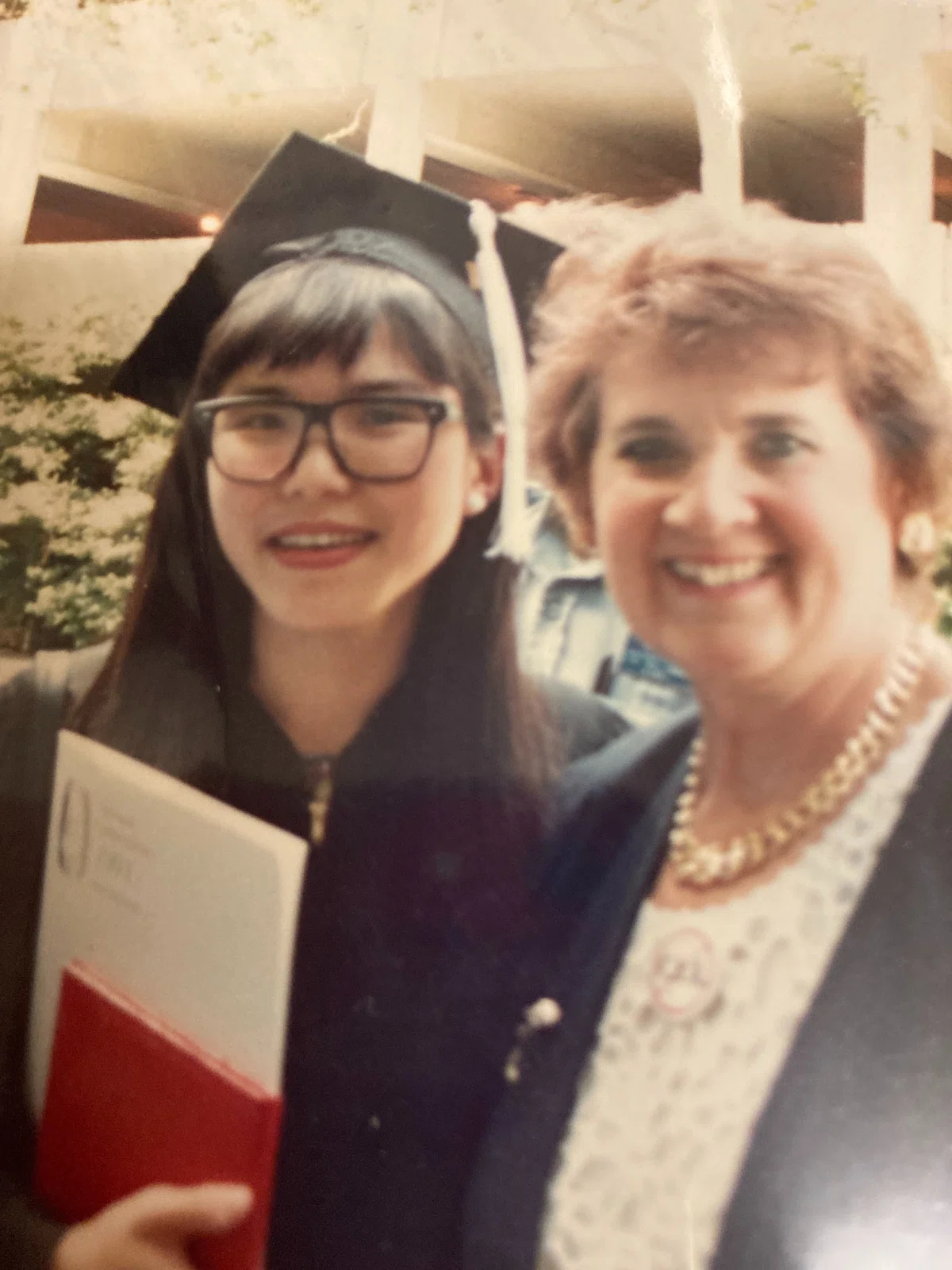
本当はライターになりたかった90年代。
📚 英検2級レベル:重要単語・表現 Glossary
1. 専門的な場面・社会的な話題 (Professional & Social)
Interpret [動] 通訳する
Eiken Tip: 「解釈する」という意味でもよく出ます。名詞形は interpretation(通訳・解釈)。
Host [動] 主催する、開催する
本文: "hosted by the WHO"(WHOによって主催された)
Venue [名] 会場
Eiken Tip: 2級のリスニングやリーディングで、イベントの場所を指す言葉として頻出します。
Official [名] 役人、公務員、当局者
本文: "health ministry officials"(厚生省の役人たち)
Pinnacle [名] 頂点、最高峰
本文: "pinnacle of intelligence"(知性の頂点)
Logic [名] 論理、理屈
Eiken Tip: 2級のライティングで「論理的な構成」を考える際にも重要な概念です。
2. 状態・感情を表す形容詞 (Descriptive Adjectives)
Fluent [形] 流暢な、スラスラと話せる
本文: "They're so fluent!"(あんなにペラペラなのに!)
Grueling [形] 非常にきつい、過酷な
本文: "grueling exams"(過酷な試験)
Flawless [形] 完璧な、傷のない
Eiken Tip: "flaw"(欠点)が "less"(ない)と覚えると効率的です。
Sophisticated [形] 洗練された、高度な
本文: "sophisticated vocabulary"(高度な語彙)
Vibrant [形] 活気のある、力強い
本文: "vibrant smells"(活気ある匂い)
3. 動作・心理を表す動詞 (Verbs & Mental States)
Permit [動] 許可する、許す
Eiken Tip: 2級では "allow" の少しフォーマルな言い換えとしてよく使われます。
Witness [動] 目撃する、目の当たりにする
本文: "I witnessed a very strange sight."(奇妙な光景を目にした)
Transform [動] 変える、変形させる
本文: "transform it into vivid English"(鮮やかな英語に変える)
Hesitate [動] ためらう、躊躇する
本文: "I’m hesitant about..."(〜についてためらいがある)
Harbor [動](心に感情などを)抱く、潜ませる
本文: "darkness harbored by interpreters"(通訳者が抱える闇)
4. 覚えておきたい熟語・フレーズ (Idioms & Phrases)
Back and forth:行ったり来たり、やり取り
本文: "discussions were flying back and forth"(議論が飛び交っていた)
Command a language:言葉を自在に操る
本文: "they command such sophisticated vocabulary"(高度な語彙を操る)
Self-disclosure:自己開示(自分のことを話すこと)
Boil down to...:結局は〜ということになる、〜に集約される * 本文: "everything boils down to..."(すべては〜に集約される)
💡 英検2級合格へのアドバイス
このエッセイのテーマである**「完璧な英語よりも、体温の乗ったコミュニケーション」**は、実は英検2級の二次試験(面接)で非常に重要です。
沈黙(Silent stone)を避ける:
エッセイに出てくる通訳者のように、正解を探して黙り込んでしまうのが一番もったいないです。完璧な文法でなくても、"Well..." や "Let me see..." と繋ぎながら、自分の意見を伝えようとする姿勢が評価されます。
2. 語彙の使い分け(ライティング対策)
エッセイの中で、会議では "sophisticated vocabulary"(高度な語彙)を使い、外では "useless chatter"(無駄話)を楽しんでいます。
英検2級の英作文では、少しフォーマルな語彙を使うと点数が上がります。
(例)「〜だと思う」と言うとき、"I think" だけでなく、このエッセイにある "I feel certain that..."(〜だと確信している)や "It is important to..." といった表現を使い分けるのがコツです。
3. 「正解」よりも「伝える姿勢」(二次試験対策)
エッセイに出てくる通訳者たちは、正解がないと "freeze"(フリーズ)してしまいました。しかし、2級の面接では、たとえ完璧な文章が思い浮かばなくても、知っている単語で "imperfect small talk"(不完全な雑談)のように話し続ける勇気が合格を引き寄せます。
📖 追加:エッセイ後半の重要語彙(2級レベル)
エッセイの後半(お弁当やカレースープのシーン)からも、試験に出やすい単語を補足します。
Patient [名] 患者 * 本文: "patient food"(病人食)。2級では医療系の長文がよく出るため、必須単語です。
Calculate [動] 計算する
本文: "calculated for nutrition"(栄養計算された)。
Bewildered [形] 当惑した、途方に暮れた
本文: "bewildered UN staff"(困惑する国連スタッフ)。
Appropriate [形] 適切な、ふさわしい
本文: "appropriate response"(適切な返答)。
Eiken Tip: ライティングで「〜するのが適切だ」と意見を書く時に非常に便利な単語です。
Useless [形] 役に立たない、無駄な
Eiken Tip: 反対語の Useful(役に立つ)とセットで覚えましょう。
Bustle [名] 喧騒、忙しさ
本文: "bustle of Center Gai"(センター街の喧騒)。
Soul [名] 魂、精神
本文: "soul of language"(言葉の魂)。
📝 2級レベル 練習問題(Fill in the blanks)
このエッセイの単語を使って、2級の語彙問題風の練習をしてみましょう。
The conference was ( ) by the World Health Organization in Kobe.
① hosted ② invited ③ visited ④ stayedShe is very ( ) in English because she lived in the U.S. for ten years.
① silent ② fluent ③ cold ④ difficultIt is important to choose ( ) clothes when you go to a job interview.
① appropriate ② useless ③ vivid ④ strange
【答え】
① hosted(主催された)
② fluent(流暢な)
① appropriate(適切な)
このエッセイは、単なる英語の勉強だけでなく、「なぜ英語を学ぶのか?」という大切な目的を思い出させてくれます。2級合格に向けて、この「血の通った言葉」たちをぜひ自分のものにしてくださいね!応援しています!
講師の英語音声データです。↓
☕祝川珠子(しゅくがわ たまこ)☕
米国ワシントン州シアトル大学ジャーナリズムコミュニケーション学科卒。米国で新聞記者として勤めたのち帰国。国連WHOや、大阪大学医学部国際会議通訳を務める。ECC外語や母校の関西学院大学講師を含む英語教育歴30年。自身の『池田英語専門塾』開設。父から教育者と武士の厳しい血を、母からシャーマンのもっと厳しい血を受け継ぐ。関西学院大学大学院英語教育研究科修士課程中退。英検1級。『サムライガール』著者。元関西学院大学応援団総部 チアリーダー部、でいまだに悩める英語学習者にエールを送っている。
