
Sacred Memories of English: The Girl Who Suddenly Remembered English at Twelve—A Soul’s Record Gathered Over Twenty Years


Sacred Memories of English: The Girl Who Suddenly Remembered English at Twelve—A Soul’s Record Gathered Over Twenty Years
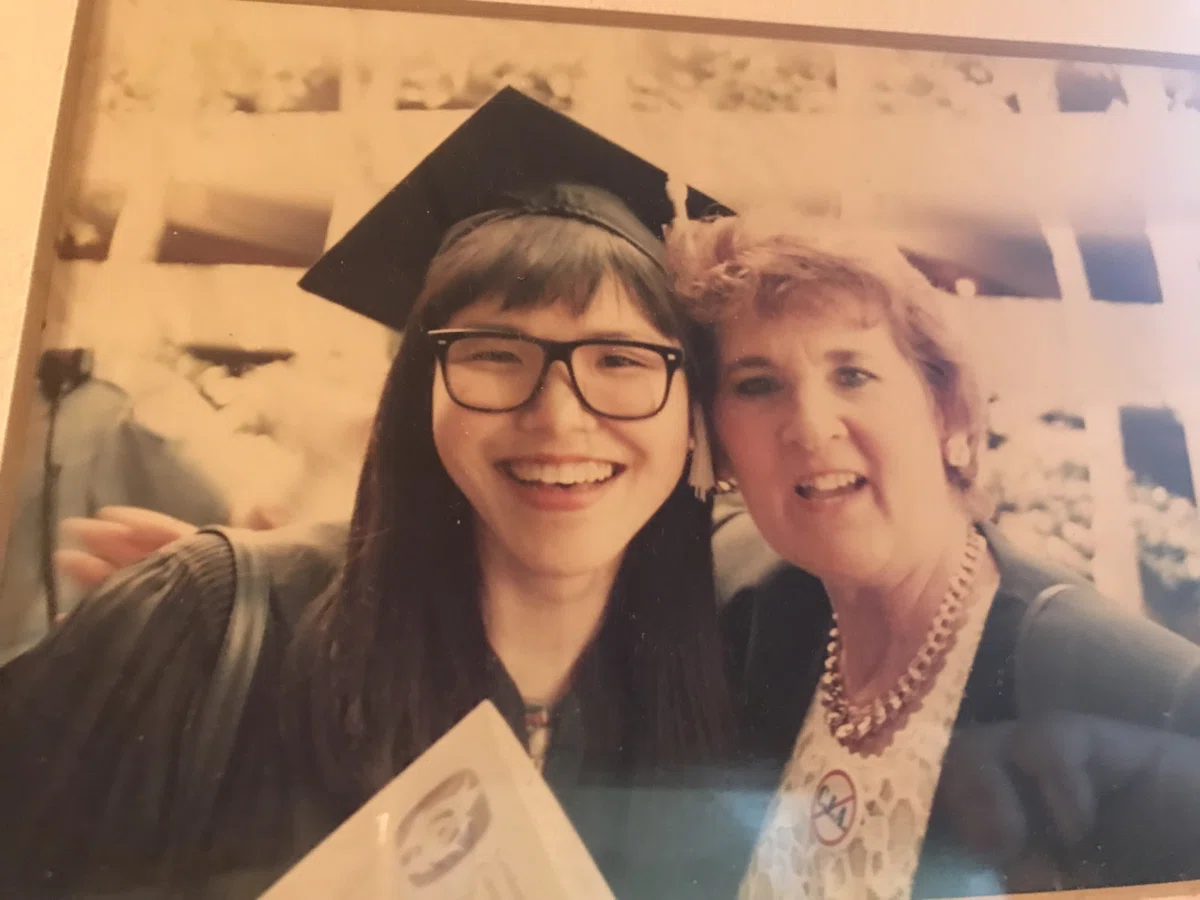
DEDICATION
To Professor Hilda Bryant, the best journalist and writer ever.
Thank you so much for teaching me English. I’m still so incredibly grateful for your tough professionalism and your warm love. That’s why I’m dedicating this story to you. I hope you have a great time reading it up in heaven!
Love always,
Note: This story is a long-form work connecting four parts. It is a record of the truth I have gathered over twenty years through dialogue with my soul. I would be honored if you could read it slowly, as if embarking on a journey together, when you have the time.

Introduction
I am Tamako Shukugawa. This article records 20 years of "soul dialogue" through regression therapy and dream analysis. I hope it helps you understand the roots of your own talents and personality. You might even find the hidden wishes of "someone else" living inside you.
I don't know if these are actually "past lives" or not. But these "fragments of memory" from my therapy and life experiences are what made me who I am today. I’ll leave the interpretation up to you.
Enjoy the read!
Prologue: From Land’s End to the Land of the Rising Sun.
— From here, Meliza speaks. —
I. Earth and Tamako Seen from Space
Hello, readers of Note. My name is Meliza. I had been drifting through the galactic universe for a very long time, but I have finally found my home. This is the story of my discovery.
However, it is also your story. For you who have found me—Meliza—this is a story of your very self.
For hundreds of millions of light-years, I drifted through the dark galactic universe with my guide. Then, in the distance, a pale blue light began to appear. When I looked at my guide, they gave me a gentle smile and a nod. "Shall we stop by for a moment?" they seemed to say. As we drew closer, I saw that it was a planet called Earth.Yes, your home. It was sparkling with blue, green, and white, like a jewel. Like a blue sapphire. I moved even closer. There, on that beautiful blue planet called Earth, in a place called Hyogo Prefecture in Japan, a Japanese woman was pregnant with a baby. Everything was glowing—the Earth, Japan, and her womb.
I. The Dragon and the Baby
The guide said to me, "Japan is a mystery. From high above, it takes the shape of a dragon, and it is truly beautiful. Hyogo Prefecture is located right under that dragon’s belly."

She gave me a gentle nod of approval, so I drew closer. There, inside the belly of a woman living in the "dragon's belly," was a baby girl—who would later be named Tamako—sleeping peacefully.
The guide smiled at me. "Go on," she said.
Tamako was such a kind girl that we became friends instantly.
II. Memories of Cornwall
Long ago, back when I still had a physical body, I lived in a place called Cornwall in England.
Take a look at Tamako’s profile. Don't you find it a bit mysterious how she mastered English so quickly? Here is a Japanese girl who couldn't even write the alphabet until she was twelve, yet by twenty-seven, she was working as a newspaper reporter in the United States. Isn't that just crazy?
III. The Promise of Two Souls
While Tamako was still a fetus in her mother’s womb, she and I made various agreements.
Learning English was one of them. Because Tamako was so kind, she accepted everything. When she heard the sounds of my English, she even said, "That sounds like fun!" She truly has the soul of an adventurer.
Then, when the moon was full, we were born. Two souls becoming one body, here in the Land of the Dragon. And just as we had promised, all memories vanished within Tamako. Even the English.
She had completely forgotten who I was. It was a little lonely, but that’s okay. Forgetting is important. If we remembered everything, the pain would be too much, and we would want to return to the universe immediately. That’s why everyone presses the "reset button" when they are born. Tamako did the same. She forgot it all—me, the wind on the hills of England, and the sounds of English.
Everything went according to plan.
I knew that in Japan back then, English education usually started in junior high school. So, I quietly hid my presence and waited patiently until Tamako turned twelve. Waiting was easy for me. After all, I had waited for hundreds of millions of light-years just to find Tamako’s mother and father. Twelve years in this world is nothing. Just a little more patience until she starts middle school. No big deal.
So, while we wait for Tamako to grow up, let me tell you about my experiences in England.
— The Story of Princess Meliza of Cornwall —
England, one thousand years ago. I lived quietly in a small castle in Cornwall with my parents and servants. It was a land at Land’s End, on a peninsula where the rough waves of the Atlantic crashed against steep granite cliffs, sending white foam flying into the air. I grew up breathing in that salty sea breeze. I loved going to look at the sparkling ocean with my nurse and ladies-in-waiting.
But something was wrong. My father and mother rarely came with me. In fact, whenever I saw them in the castle and tried to speak, they both looked slightly sad. Many doctors came to examine the inside of my mouth using cold iron rods and cotton. As a young child, I hated it. Only my nurse, Hild, was always smiling, protecting me. "It’s alright," she would say, holding my hand. Hild never made those pained faces like my parents did. Her palms were always warm and dry; they were the lucky charms for my heart.
I loved exploring the forest paths with Hild. Chasing butterflies, dragonflies, and ladybugs, I laughed and talked constantly. Hild always listened to my chatter with delight. But as I grew older, my cousins began to mock the way I spoke. Then, one day, I accidentally overheard the doctors whispering. They called it a "stutter"—a disease of the mouth. I was forced to drink various herbal medicines... bitter, foul-tasting things. But I didn't get better. No matter how hard I tried, I would stammer, or the sounds would break. I couldn't speak fluently like everyone else.
By the time I was ten, I began to truly believe that I shouldn't speak at all. My parents looked so heartbroken whenever I did. Gradually, I became depressed and confined myself to my room.
Ten years later, I, Meliza, brought a sudden end to my lonely life caused by my stutter. Unfortunately, I contracted a lung disease and left my physical body. On my deathbed, I thought: I wanted to talk more. If only I could have spoken properly, my father and mother would have been happy. I could have had friends and a lover, just like everyone else. Hild would have been even happier. For an English person to live a life where they couldn't enjoy English conversation—it was almost ridiculously tragic. I wanted to speak more. More. More.
My body felt light and floated up, drawn toward a pure white light above. After that, I remember nothing.
IV. The Shaman’s Daughter of the Dragon Country
When I came to, I was diving toward that dragon-shaped country called Japan. My guardian angel found it first and told me, "Look over there. See that white glow? There is a shaman’s daughter in the Land of the Dragon. Why don't you go and say hello? I have a feeling you two would become great friends—with a girl like her."
Really? It turned out the guide was right.
And that was how I found my next home inside Tamako’s mother’s womb—Tamako Shukugawa. (This might be a side note, but she was born at a maternity clinic near "Hankyu Shukugawa Station," which is why she uses this pen name.) Our eyes met, and we smiled at each other.
I found it. My home. My Tamako. The guide was right after all. I’ve been looking for you all this time, baby.
Chapter I: Sudden Cursive
— Now, Tamako tells her story —
It was the autumn of my sixth-grade year when I wrote the alphabet for the very first time in my life.
Until I was twelve, I had never taken a single English lesson. So, those were the first genuine, hand-written letters of my life. I clutched a dark pencil and, one by one, slowly copied the block letters—those sharp, pointy A’s and B’s—into my Japanese language notebook. My heart was buzzing. I felt an indescribable, restless sensation. As a twelve-year-old girl, I began to feel a strange sense of urgency. It was as if someone invisible was standing behind me, whispering over and over:
"Go on, try it. You can do it. You’ve been doing this forever."
Or perhaps, I only imagined I heard it. But in the next instant, my 2B pencil began flying across the page at a furious pace.
In cursive.
I had never even learned English, so I certainly shouldn't have known cursive. The textbook in front of me was filled with nothing but rigid, blocky letters.
And yet, my hand seemed… happy. Like a fish finally returned to water. My fingers, having found the alphabet, were like ballet dancers performing on the stage of my notebook. I had no idea what was happening; I only knew that my hand had suddenly come to life, rhythmically scrawling a long passage in English. In beautiful, flowing cursive.
What was that, I wonder? It felt like a letter to someone. Who was my hand trying to reach? What was it trying to say? I should have kept that notebook. Now, I have a desperate urge to read it—that letter written in English by a little girl who had never been taught a word of it.
Just then, a boy’s piercing voice cut through the air.
"Teacher! Shukugawa has been doodling in her notebook this whole time!"
He had a smug, self-satisfied grin on his face, as if he’d caught me red-handed. He spoke in that loud, vulgar, coarse voice that I hated so much. To a Japanese child who knew nothing of English, my flowing cursive must have looked like nothing more than meaningless scribbles.
But looking back, I really should have saved those "scribbles."
My homeroom teacher was no better than the boy. She was the type who secretly enjoyed "taking down" a bright child in front of the class. With a faint, mocking smile, she said in a low voice, "Shukugawa-san, do the same thing as everyone else. No distractions allowed."
The entire class turned to look at me, all wearing the same cold expression. For six years, my report card had always said the exact same thing:
"She excels academically, but lacks a spirit of cooperation."
That’s why I hated it. School, I mean.I couldn't wait to graduate from that rural elementary school. Besides, once I started junior high, English classes would finally begin.
Yes—the very English I had just written.
Chapter II: Remembering English
I. The Twelve-Year-Old's Consent
When I was twelve, I had a strange, mystical experience. My life from that point on was undeniably guided by what happened that day. This is the story of how it began.
In those days, it was standard for English education to start in junior high school. My father, who ran a private cram school and was well-versed in language education, had thoroughly drilled me in foundational subjects like Japanese and Math, but even he didn't seem particularly concerned about English for me yet. During my elementary school years, I had zero experience with English conversation schools or traveling abroad. Of course, my father had never taught me a word of it either.The very first time I encountered the language was during the first week of my first semester at a private junior high school in Kobe. It was the very first English lesson. I was twelve years old. I must emphasize: I had never had the opportunity to learn this language before, and therefore, I had no prior knowledge. Yet, even now, more than thirty years later, I remember that moment and that event vividly.
During that first, landmark English class, something very strange happened. Brand-new textbooks with the scent of fresh ink were distributed to each of us. I received mine with a sense of excitement. English starts in junior high. This was a feeling of anticipation that almost every child who had just finished their elementary school graduation ceremony felt back then. Ever since I finished my entrance exams and my graduation, I had been waiting for this exact moment.
But in my case, something extraordinary occurred.
The moment I opened that English textbook for the first time, I was suddenly overcome by a faint drowsiness. It was as if the scent of the ink acted as a sedative. I tried to shake off the sleepiness and focus on the letters of the alphabet, but no matter how hard I tried, my eyes began to lose focus. And this was the English textbook I had longed for so much.What’s wrong with my eyes? I had slept well the night before; it wasn't a lack of sleep. As I desperately flipped through the pages while fighting the sudden lethargy, a tea-colored stain seemed to rise from the blurred paper. It began to look like a landscape. What is this? Suddenly, my vision cleared. Beyond the printed letters, I saw a person.
It was a man who looked like a nobleman living in a European castle.
He held a quill pen in his hand, a scroll-like paper lay before him, and an inkwell sat on a large desk. Dipping the fluffy quill into the inkwell from time to time, he was writing with an expression of intense desperation. My vision became even clearer.
It was English. He was reading an old book and, with a pained expression, transcribing its contents onto another sheet. He’s a translator. Even though I was a girl who had been a mere elementary student until recently and had never done such a thing, I understood it instantly. This man, looking like European royalty, was rewriting something very important from a foreign tongue—I didn't know which—into English. I understood instinctively that this was a vital message for many people, and his desperate need to translate it into English and convey it to the masses resonated within me. A pain began to throb in the pit of my stomach. Cold sweat began to pour—from both his forehead and mine.
A few seconds later, the scenery changed abruptly.
I was no longer just watching a scene on the pages of a textbook; I was completely inside it. Like Alice in the forest of Wonderland. In fact, I was in a deep forest. I was a woman, and I was a Native American.
An interpreter. I am working as an interpreter.
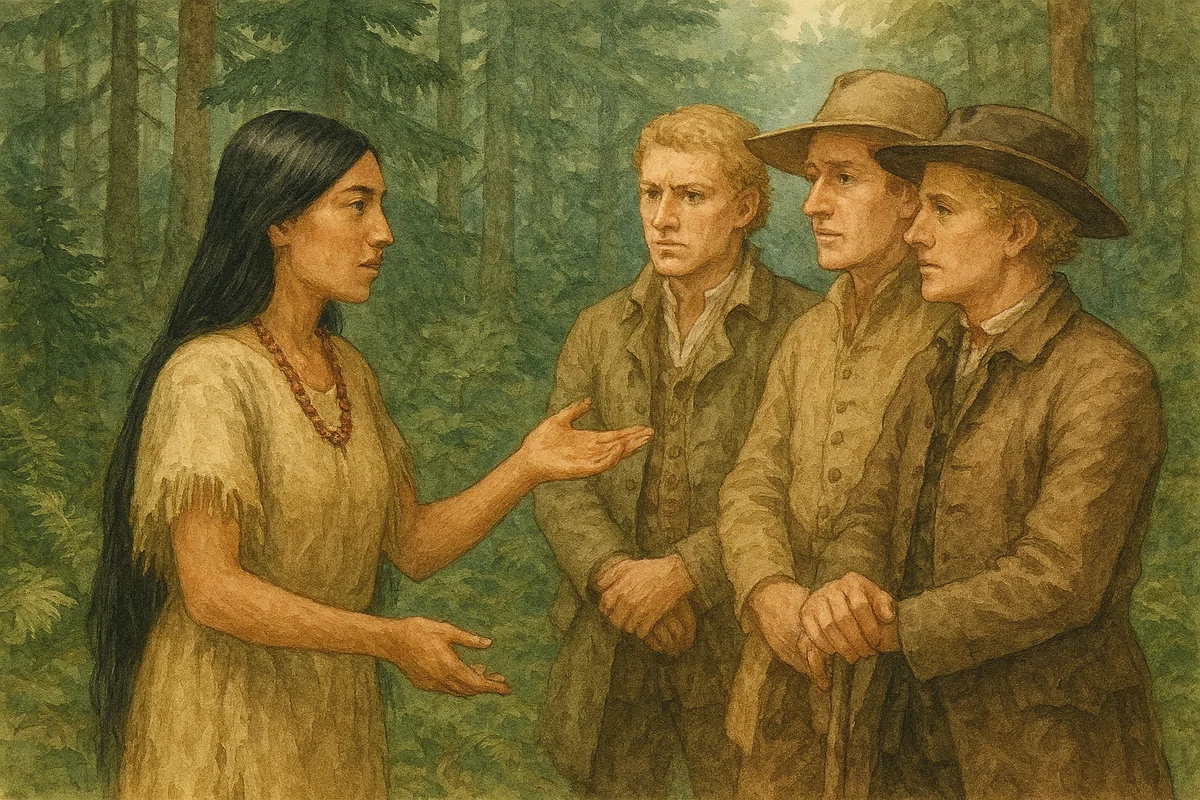
Again, I knew it instantly. As a Native American woman, I stood between a group of white men and a group of my own people, navigating two languages—English and my native tongue—conducting what seemed like a business deal, or perhaps a more serious negotiation. Snow began to flicker in the deep forest, and it was very, very cold. The whiteness of our breath stood out beautifully against the dark green of the trees. But along with that breath, my limbs began to freeze. It was so cold. I wanted something to wear.
At that moment—
Oh no, I’m in the middle of class!
I was in Kobe, Japan, a first-year junior high student, and today was the first day of English. If I kept spacing out, the teacher would get mad. I looked up as if waking from a long dream, searching for the English teacher. What I saw was unbelievable. I had just finished watching a long, two-part spectacle movie, but the teacher was still handing out textbooks to the girls.
Wait, I just watched a very long movie—two of them, right?
I glanced at the large round clock on the wall. Only five minutes had passed since the start of class.
What was that? It couldn't possibly fit into five minutes. And there were two of them.
I looked back at the textbook; it had returned to its original form. "Hello everyone, my name is Victoria," it said in large, cheerful letters.
The European nobleman and the Native American interpreter were gone. I flipped through the pages looking for them, but they were nowhere to be found.
Then, a voice spoke in my head.
“Do you understand? This is your profession in this lifetime. Re-learn this language with all your heart.”
I didn't know who it was, but I nodded deeply to the owner of the voice. I consented, unconditionally.
II. The Lesson Began
The English teacher started reading the first page slowly. Even though I hadn't learned it, I knew.
This person is terrible at English.
My bad premonition was right. "Someone read the part I just read. How about you, Shukugawa-san?" I stood up and started reading. The same part.
A low murmur filled the classroom. I was the most surprised of all.
For some reason, I knew the meaning of every word, the pronunciation, and even the proper intonation. I read on, absorbed. "L" and "R" sounds were easy. I was so caught up that my fingers flipped to the next page we hadn't even reached. A foreign voice I'd never heard before welled up from inside me. Another "me" listened to that resonance, entranced.
English is so beautiful. Like Schubert.
If the teacher hadn't stopped me, I would have kept reading that textbook full of foreign characters fluently without a single stumble.
I read as if I were singing, the words flowing out of me. As I finally took my seat, I felt the gazes of every single classmate stuck to my cheeks, my back, my shoulders, and the back of my head.
This was the early 1970s; the term "returnee" (kikokushijo) didn't even exist yet. My teacher was no longer smiling.
III. And 14 Years Later
Now a grown woman, I was visiting Mount Rainier with my parents. It is the mountain near Seattle, Washington, now famous for the Snow Brand "Latté" logo and Starbucks.

We were strolling through the deep green trees, enjoying the crisp, fresh air. I had successfully completed my years of study in the U.S. and was about to receive my Bachelor’s degree in Journalism. When I asked my parents if they wanted to come to the graduation, they said they wouldn't miss it, so I sent them the invitation to Seattle University. Apparently, you couldn't even get onto the campus without one due to security. My parents had traveled ten hours on a United flight all the way from Japan just to see their only daughter’s big moment.
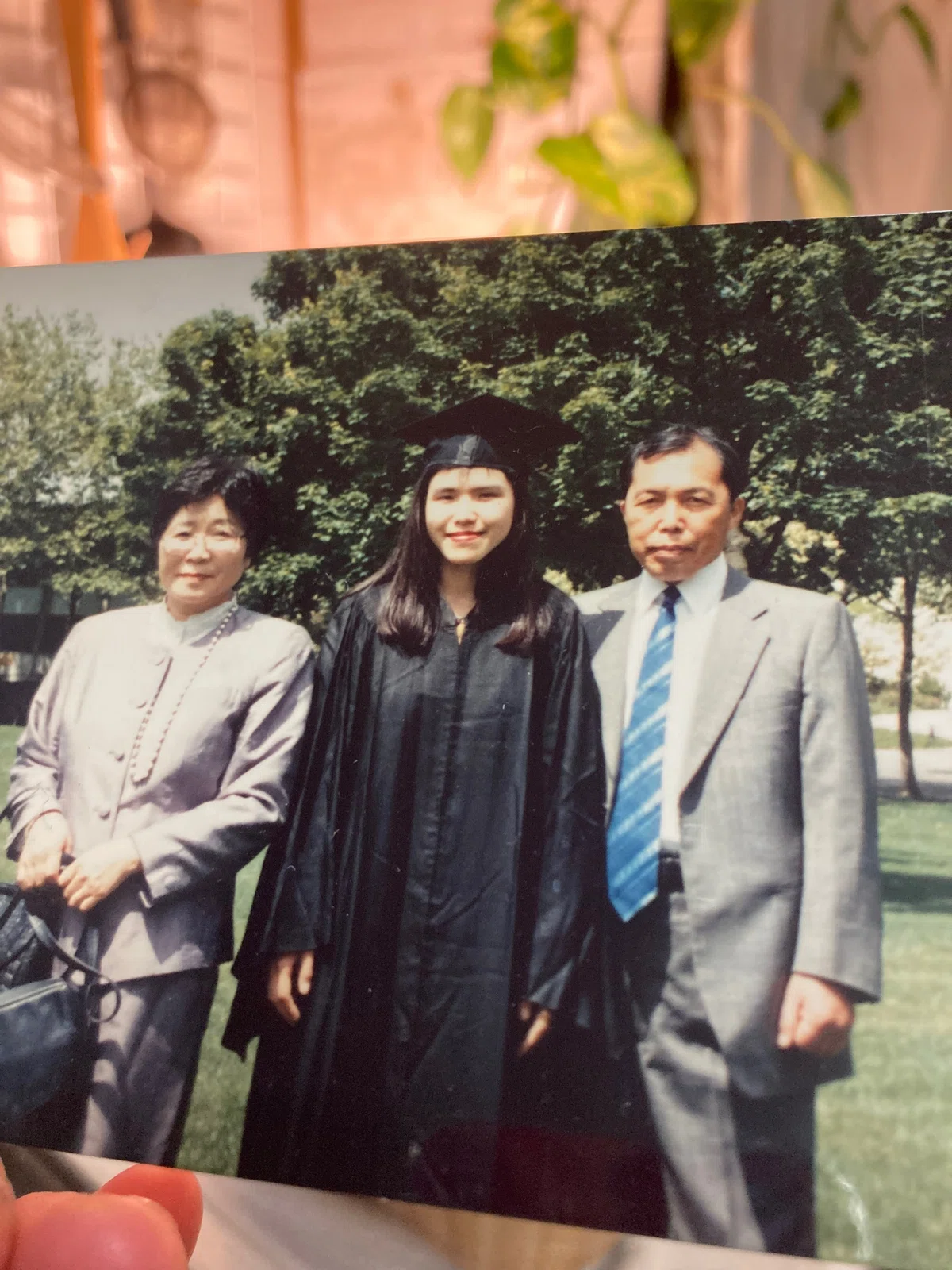
Since they had come all this way, I decided to take them to Mount Rainier, about a four-hour bus ride from Seattle. I had always wanted to go myself, but American universities assign so much work that I had been too busy with my studies to make it happen. I had lived near such beautiful mountains and forests for three and a half years, yet I had never visited this famous peak. But then again, people who live in Tokyo rarely climb the Skytree, right?
So, there I was, visiting for the first time with my parents. The moment I stepped onto the forest soil...
My breath caught. I know this. I know this place.
It was the same forest I had seen fourteen years ago during that English class in Japan. The exact same forest. I breathed in the nostalgic scent of the air, and instantly, my consciousness returned to my life as a Native American.
By now, I have realized it clearly: no person, and no life, exists without a reason. We are not born without meaning, nor do we live in vain. Every person, and every bit of suffering, joy, happiness, sadness, or even despair that occurs in their life, has a specific meaning and a reason. A precious meaning given by God. Through my youth, traveling back and forth between Japan and the U.S., these mysterious coincidences piled up until I finally understood.
IV. The Name Seattle
After graduating from Seattle University and working as a reporter for a city newspaper for a year, I returned to Japan. Around that time, the internet was just starting to become popular, and I casually looked up the origin of the name "SEATTLE."
I was stunned. I had lived, studied, and worked in this city for nearly five years without realizing something so important.
"SEATTLE" originally comes from a Native American word meaning "Chief of Chiefs"—the Great Chief. I finally understood that Mount Rainier was where a noble being once resided, a man of great virtue who united all the different tribes.
Sitting in front of my computer in Hyogo, Japan, I got goosebumps. I broke into a cold sweat and tears blurred my eyes as I apologized to this noble spirit for my years of ignorance and disrespect. *I’m sorry, I’m sorry, I’m sorry, I’m sorry, I’m sorry. How could I be so foolish for so long?*But now, I feel a deep sense of gratitude toward him.
Thank you. You were the one who called me back to that land, weren't you? Back to our nostalgic home.
Thank you for sharing the fruit of wisdom with me.
Just watch. Now, it is my turn to work.
Chapter 3: The Destiny of the British Bible Translator
Prologue: A Heavy Bag and a Fluffy Cake
It was the end of the most brilliant, yet cruelest, seven days of my life. I had been working at the Environmental Expo in Osaka, serving as the exclusive interpreter for a businessman from Germany. For seven days straight, I had woven words together through a microphone. After two years of grueling, "blood-and-tears" training at Inter School—a rigorous academy for interpreters—I had finally grasped a professional international conference assignment. My independence as a simultaneous interpreter was within reach.
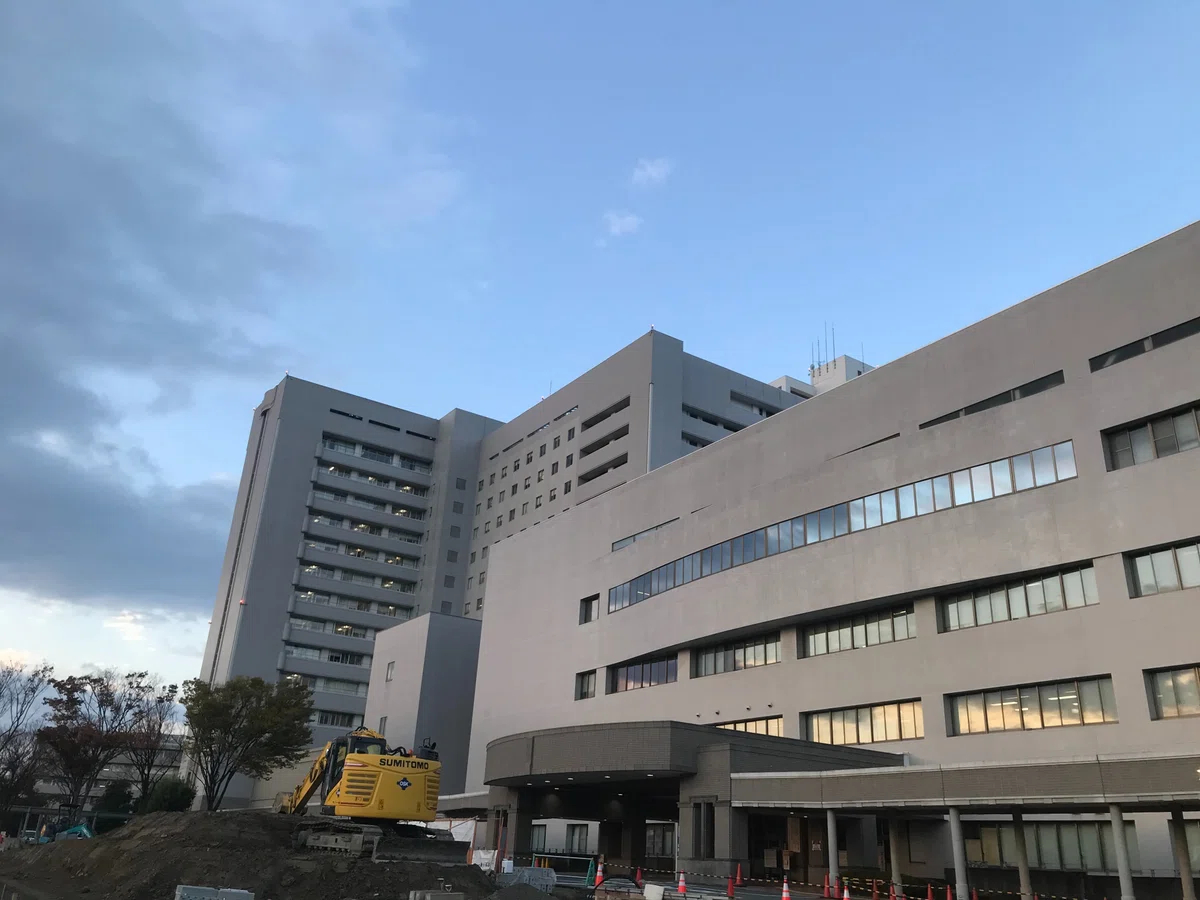
However, a dark, inescapable mist hung over a corner of my heart. On the first day of the expo, my mother had been admitted to the hospital for "tests." On the evening of the final day, having completed all my duties, I rushed to the hospital with my nerves still taut.
On my shoulder was a heavy black bag, stuffed with a week’s worth of technical documents and interpreting notes. In my left hand was a box of cakes from a famous shop, bought with the hope of seeing my mother smile and say, "This is delicious."
I did it, Mom. I’ve finally made it this far, I repeated in my mind as a nurse led me to her room. We passed the nurse station and stopped in front of her door. I took a breath to steady myself and gently opened it.
"Mom...?"
In that instant, all strength drained from my body. My work bag hit the floor with a dull thud. Then, the cake box slipped powerlessly from my hand.
What met my eyes was not a white bed. It was a sterile, transparent plastic tent. Lying inside was my mother, her body connected to countless plastic tubes, trapped within the rhythmic, mechanical sounds of life support. It was what they call "Spaghetti Syndrome." My mother, who until yesterday had been praying for my success, was now unable to sustain life without a machine.
The "English" I possessed—a power that, moments ago, had allowed me to fluently translate the latest German technology—could not pierce even this single sheet of plastic.
At the nurse station, the doctor spoke quietly. "...It is acute leukemia. Please prepare yourself. Your mother has, at most, one year."
Under the pale fluorescent lights of the hospital, my "worldly success" crumbled. My work bag, the sweet cakes, my pride in graduating from an overseas university—it was all meaningless.
In the depths of this despair, I couldn't help but cling to "something invisible." Two months later, this would lead to an encounter with a psychic woman and a "memory from the 17th century."
I. Two Blank Months and a White Envelope
To be honest, I have no clear memory of how I even breathed during the two months following that declaration at the nurse station. The interpreting work I had been so passionate about, the English studies—everything felt like events from a distant world. I simply shut myself away at home.
I had lived my life with all my soul, both as a professional and as a daughter, yet I could do nothing but watch my mother’s life slip away like sand in an hourglass. I hadn't opened that heavy bag once since that day. The house was filled only with despair, resignation, and the occasional sigh from my father as he worried over my mother’s condition.
Then, one day, as if guided by something, I wandered out into the garden. The air outside was startlingly clear, indifferent to the turmoil in my heart. My eyes fell upon the mailbox. Tucked inside was a large white envelope, distinctly different from the surrounding flyers.
It was a direct mail from a company whose events I had attended before.
"Renowned American psychic visiting Japan. Information for private sessions."
Normally, I might have tossed it aside, thinking, I’m interested in spirituality, but now is not the time. But at that moment, I was literally "clutching at straws." If three-dimensional medicine had no way to save my mother, and if my English skills were useless in this reality, I wanted to at least ask a denizen of the invisible world for the answer to the question: "Why?"
I applied for the session as if drawn by a magnet. This was the opening of the curtains of destiny, where at age 32, I would come face-to-face with "myself" from a thousand years across time.
II. The Ledger of the Soul: Meeting Marie Wilderson
When I opened the heavy door of the session room, there sat Marie Wilderson, an American woman who exuded warmth and an intelligence that seemed to see through everything. As soon as I entered, she gave a gentle smile and asked:
"Do you need an interpreter?"
I believe I straightened my back and smiled back, perhaps unconsciously.
"No, I don't. My profession is interpreting."
It was the final fortress of "self" that I had refused to let go of, even at the edge of despair. She gave a short nod and looked at me with eyes full of compassion.
"Then, what is it you want to know most today?"
I asked her directly, as if pouring out all the dregs that had accumulated at the bottom of my heart.
"I want to know where this 'power of English' I possess comes from."
I told her about my strange life. How, from the very first lesson in the first year of middle school when I first touched the alphabet, I was somehow already fluent. I had no memory of struggling with pronunciation, and the feeling of having "acquired" the language through effort was faint.
Despite having just started English in April of 7th grade, I could already handle daily conversations by the summer of 8th grade. In 9th grade, I began reading Agatha Christie in the original. By my junior year of high school, I hit a deviation score of 73 on a mock exam and effortlessly passed every level of the Eiken.
Something just doesn't add up...
"I am not a returnee from abroad. I didn't receive any special elite language education. So why does English flow so effortlessly from my mouth? Where did this power descend from?"
Looking back, it was the ultimate "search for self" in the face of my mother’s impending death. The study abroad fees my mother had scraped together by sacrificing her own life, the career she had been so proud of—if there was a "meaning" to this English ability, then surely my life must have some "purpose" even within this absurd reality. I wanted to believe that.
Marie listened to my words in silence, without interrupting. When I finished speaking, she suddenly looked away with eyes that seemed to peer into a deep, distant place.
"...I see a man behind you. He is in 17th-century England."
The story she began to tell was a monumental one, far beyond anything I could have imagined at the time.
"He is dipping a quill into an inkwell, translating a certain 'Book' word by word, as if carving out his very soul. That book is..."
Wait. Did she just say 'quill' and 'inkwell'? She did, didn't she?

III. The Signature in the Bible: Shakespeare and the "46" Code
"He is translating the Bible. Your English ability is the memory of a life dedicated to weaving the Word of God at that time."

Marie’s words instantly transformed that "tea-colored stain" etched in my mind into a vivid image. The European men and women I used to see in the margins of my textbooks, the scratching sound of the quill, the smell of the ink—they weren't fantasies; they were "records" engraved in my soul.
However, I was so shocked that I couldn't believe it immediately. "That’s impossible. Translating the Bible...?"
Amidst my mixture of doubt and excitement, she added something even more mysterious.
"A famous playwright was also involved in that translation work: William Shakespeare. He secretly hid his name within that Bible. That should serve as your proof."
After the session, driven by something I couldn't name, I ran to the Kinokuniya Bookstore in Umeda. If this is true...
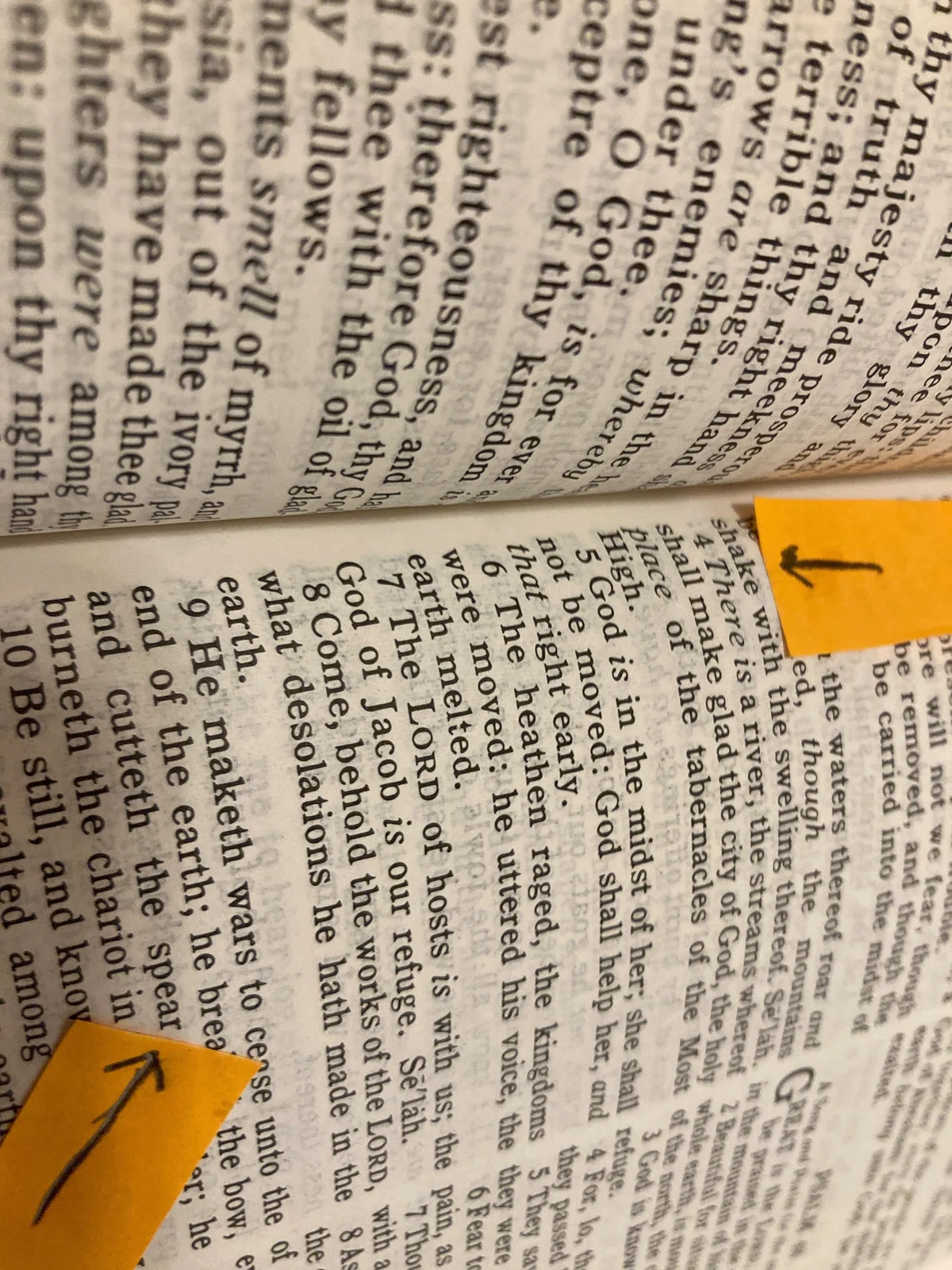
I pulled the King James Version (KJV) Bible—the one with the oldest tradition—from the shelf in the foreign books section. My fingertips trembled, and cold sweat ran down my back. I desperately searched for the place Marie had told me about.
"Psalm 46..."
The sound of the pages turning echoed unnaturally loud in the quiet bookstore. I began to count the words, tracing them one by one with my finger.
Counting from the beginning, the 46th word.
1, 2, 3... 45, and then "46."
The word there was "Shake."
My heart hammered against my ribs. With trembling hands, I now began to count the words backward from the end of that psalm.
Counting from the back, the 46th word.
44, 45... "46."
It was written there: "Spear."
Shake-spear.
A playwright’s signature, engraved in a 17th-century Bible using the number 46 as a key. It appeared before my eyes as a physical reality. I wasn't being teased. This was a "promise" made across hundreds of years between me and the universe—or perhaps, God.
In that moment, I understood. Why I could suddenly speak English despite not being a returnee. Why I was led to meet this psychic in the depths of despair over my mother’s death. It was all a ritual to make me remember my "true self."
To me, who was crushed by the helplessness of being unable to save my mother, Heaven spoke through that signature: "You are here to deliver light through words."
IV. Conclusion: Now That the Lid is Off, to You
Many years have passed since then. I said my final goodbye to my mother and continued to run forward as an interpreter and an educator. And now, I am facing a new challenge: my own "cancer."
Now that I can hear the countdown of my life, I have finally decided to remove the "third lid" I had kept closed for so long. In the world of "Note," I might just be an isolated teacher. The old me might have been hurt by that and closed the lid again.
But the me of today no longer wavers. A degree from an overseas university, a career as an international conference interpreter—these are merely tools in the face of this "truth."
I wrote this story today to reach students who, like my former self, have lost their sense of belonging and are trembling in loneliness.
"Give your heart and soul to the challenge before you. From there, a path will surely open."

The answer I found by unearthing a thousand years of memory was that simple and that powerful. The "English" before you, the "hardships" you face—they are all just foreshadowing for you to become the "real you."
I will keep writing until the end. Believing that the tea-colored stain in the margin of that textbook will one day become a light that illuminates someone’s life.
About the Author: Tamako Shukugawa
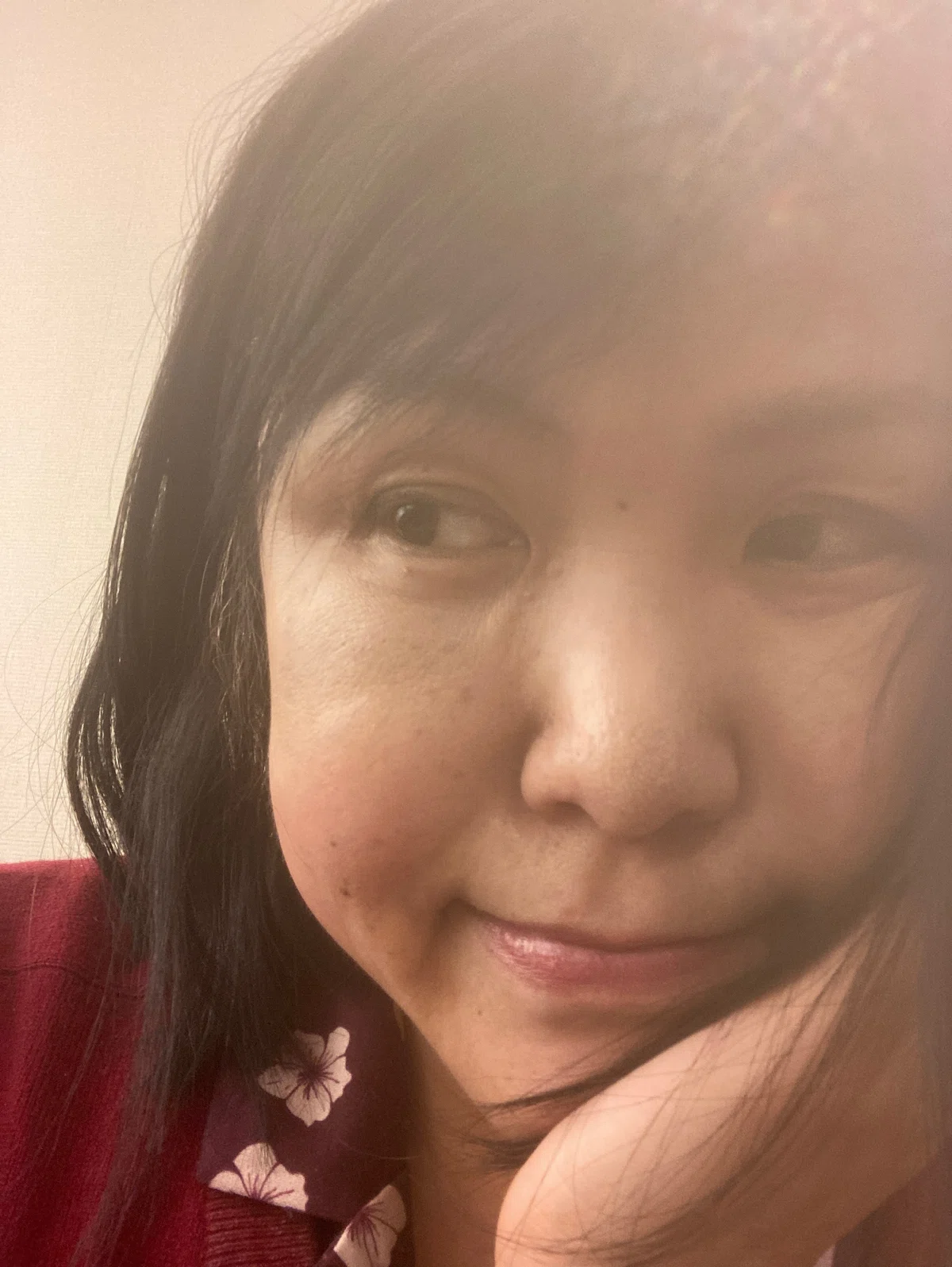
Born in Hyogo Prefecture. Graduated from Seattle University, Department of Journalism and Communication. Worked as a newspaper reporter in the U.S. before returning to Japan. Served as an international conference interpreter for the UN/WHO and the Osaka University Faculty of Medicine. 30 years of experience in English education, including lecturing at ECC Foreign Language Institute and her alma mater, Kwansei Gakuin University. Established "Ikeda English Academy." Inherited the rigorous blood of educators and samurai from her father, and the even more rigorous blood of shamans from her mother. Withdrew from the Master's program at Kwansei Gakuin University Graduate School of English Language Education. Eiken Grade 1.
Ikeda English Academy
Shall we study English together?
Please tell me: What is your greatest strength? And why do you think that is?
