
臨床英語: Physical Therapy Equipment (理学療法評価器具)

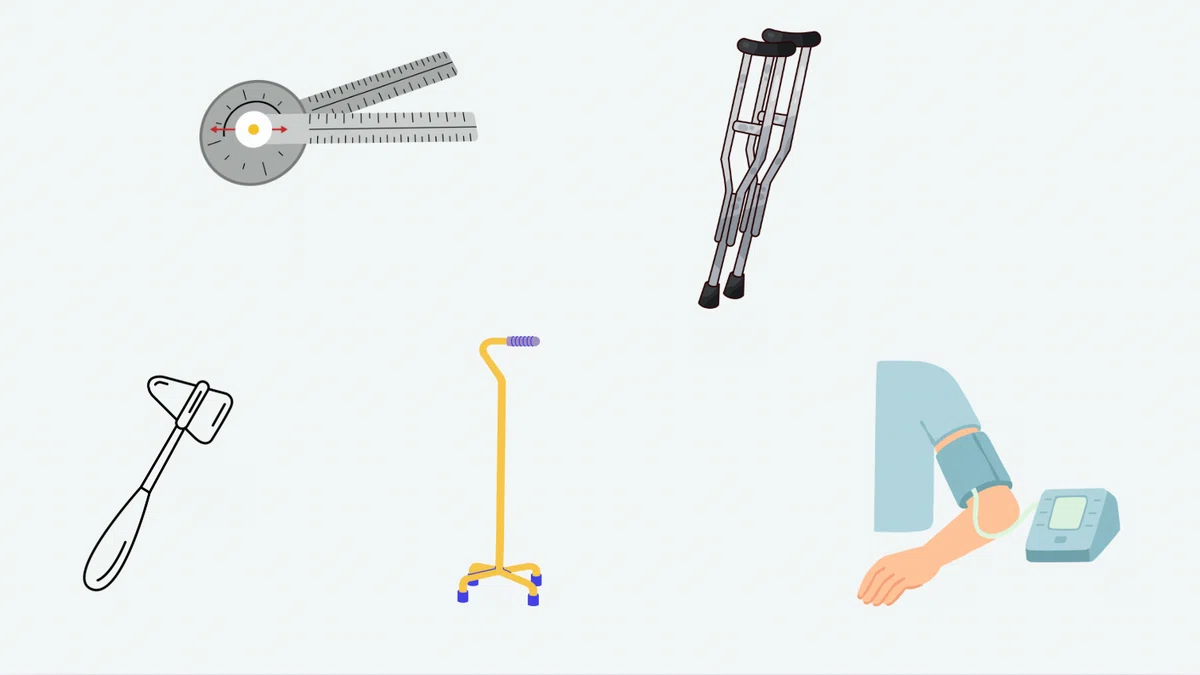
Physiotherapists play a crucial role in selecting appropriate assistive devices to enhance patient mobility and safety. During the initial assessment, clinicians use tools like the goniometer to measure joint angles and a reflex hammer to evaluate neurological integrity. When gait stability is compromised, the prescription of a cane or crutches is often necessary. According to research, the correct fitting and usage of these devices are vital for reducing the risk of falls [1]. Furthermore, objective measurements—using a sphygmomanometer for vitals, a pulse oximeter for oxygen levels, and a dynamometer for muscle strength—are indispensable for sharing information with other therapists and medical staff. In some cases, utilizing a stethoscope for lung sounds and a tape measure for edema allows clinicians to perform comprehensive assessments and develop effective physical therapy treatment plans [2].
理学療法士は、患者の移動能力と安全性を高めるために、適切な補助具を選択する重要な役割を担っています。初期評価では、関節角度計で角度を測定し、打鍵器で神経学的な整合性を評価します。歩行の安定性が損なわれている場合、杖や松葉杖の処方がしばしば必要になります。研究によると、これらの器具の正確なフィッティングと使用法は、転倒リスクを軽減するために不可欠です [1]。さらに、血圧計でバイタル測定、パルスオキシメーターで酸素レベル、筋力計にて筋力など、客観的測定が他のセラピストや他職種との情報共有に不可欠です。場面によっては、聴診器やメジャーなども用い評価することで、理学療法の評価・治療計画を立案することができます [2]。
1. Assistive device
(名詞)補助具、自助具
/əˈsɪs.tɪv dɪˈvaɪs/ アスィスティーヴ・ディヴァイス
Choosing the right assistive device is essential for increasing independence in daily living.
(日常生活動作の自立を高めるには、適切な補助具の選択が不可欠です。) ☆ 杖や歩行器、車椅子などの総称です。問診で「何か補助具を使っていますか?」と聞く際は、"Do you use any assistive devices?" と言います。
2. Goniometer
(名詞)関節角度計、ゴニオメーター
/ˌɡəʊ.niˈɒm.ɪ.tər/ ゴニオミター
It is essential to align the goniometer accurately with the bony landmarks.
(ゴニオメーターを骨指標に的確に合わせることが不可欠です。)
☆ カタカナの「ゴニオメーター」とは異なり、後半の「ミター」にアクセントを置くと通じやすくなります。臨床では「Goni(ゴニ)」と略すこともあります。
3. Reflex hammer
(名詞)打鍵器、腱打鍵
/ˈriː.fleks ˌhæm.ər/ リフレックス・ハマー
I’ll check your reflexes with this hammer.
(この打鍵器で反射をチェックしますね。)
☆ 深部腱反射(DTR)の評価に必須です。カタカナの「ハンマー」よりも「ハマー」に近い音を意識しましょう。
4. Cane
(名詞)杖
/keɪn/ ケイン
Hold the cane in the hand opposite to your affected side.
(杖は患側とは反対の手で持ってください。)
☆ 日本語の「ステッキ」は歩行補助用としては cane と呼ぶのが一般的です。4点杖は quad cane と呼びます。
5. Crutches
(名詞)松葉杖
/ˈkrʌtʃ.ɪz/ クラッチィズ
Don't lean your armpits directly on the crutches to avoid nerve compression.
(神経圧迫を避けるため、脇の下を直接松葉杖に乗せないようにしてください。)
☆ 腋窩(armpit)の圧迫による麻痺(Crutch palsy)の予防指導は、海外でも physio の重要な役割です。通常2本1組なので複数形で使います。
6. Sphygmomanometer
(名詞)血圧計
/ˌsfɪɡ.məʊ.məˈnɒm.ɪ.tər/ スフィグモマノミター
Let's check your blood pressure with this sphygmomanometer before exercise.
(運動の前に、この血圧計で血圧を測りましょう。)
☆ 非常に綴りが難しい単語です。現場では単に BP cuff(ビーピー・カフ)と言えば 100% 通じます。
7. Pulse oximeter
(名詞)パルスオキシメーター
/pʌls ɒkˈsɪm.ɪ.tər/ パルス・オクシミター
The pulse oximeter shows your oxygen levels are stable.
パルスオキシメーターは、酸素レベルが安定していることを示しています。
☆ 酸素飽和度(SpO2)の数値そのものを指して、現場では sats(サッツ)と略して呼ぶのが一般的です(例:Your sats are 98%)。
8. Dynamometer
(名詞)筋力計、ダイナモメーター
/ˌdaɪ.nəˈmɒm.ɪ.tər/ ダイナモミター
I use a dynamometer to provide an objective measurement of your strength.
(あなたの筋力の客観的な測定のために、筋力計を使用します。)
☆ 握力計や手持ち式筋力計(HHD)を指します。徒手筋力検査(MMT)の結果を客観的に裏付ける数値として、論文や報告書で重宝されます。
9. Stethoscope
(名詞)聴診器
/ˈsteθ.ə.skəʊp/ ステソスコープ
I need to listen to your breath sounds with a stethoscope.
(聴診器で肺の音を聴く必要があります。)
☆ 最初の「th」は舌を軽く噛んで息を出す音です。日本語の「ステソ」にならないよう注意しましょう。
10. Tape measure
(名詞)メジャー、巻尺
/teɪp ˈmeʒ.ər/ テープ・メジャー
Measure the swelling with a tape measure as fast as safely possible.
(安全な範囲でできるだけ早く、メジャーで腫れを測りましょう。)
☆ 最大歩行速度を測る際など、単に Fast ではなく "as fast as safely possible" (安全な範囲でできるだけ早く)と「安全」を付け加えるのがプロの表現です。
📚 Summary
今回は理学療法士が使う基本的な器具を紹介させていただきました。
例文も実際に使える文章を厳選したので、外国人患者さんを担当する機会があれば、ぜひ使ってください!
Reference
[1] Stevens JA, et al. The value of physical therapy and equipment in correcting gait and balance problems. Clinics in Geriatric Medicine. 2006.
[2] Gladstone DJ, et al. Toward optimized recovery after stroke: Rehabilitation protocols and assessment tools. Stroke. 2002.
