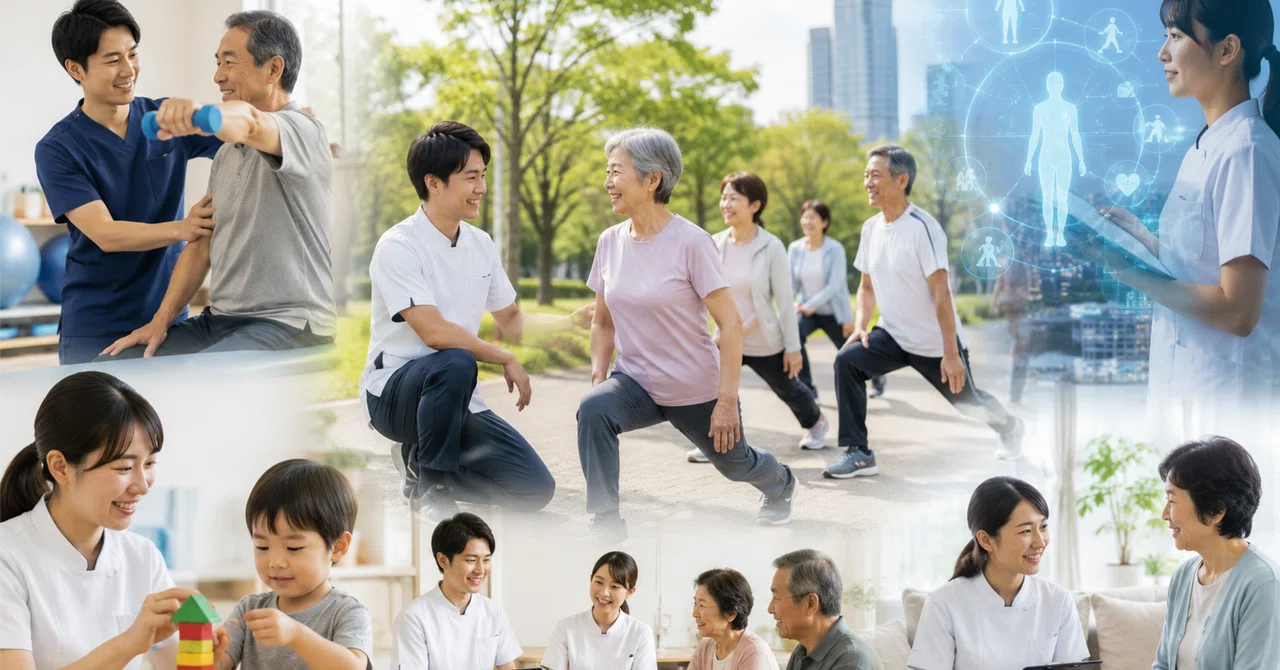
予防分野で理学療法士・作業療法士の活躍の場が広がる可能性

先日、このようなニュースが報じられました。
内容を要約すると、自民党の厚生労働部会リハビリテーション小委員会において、日本理学療法士協会、日本作業療法士協会、日本言語聴覚士協会の3団体が、1965年からほとんど改正されていない「理学療法士及び作業療法士法」の抜本的な見直しを求めたというものです。
主な要望は以下の4点です。
① 法律の目的を現状に合わせて改正すること
・理学療法士などの役割は、治療だけでなく予防や健康増進、公衆衛生、保健指導にも広がっているため、それらを法律に明記する。
・「障害者」を対象とする従来の規定を見直す。
② 名称独占の強化
・無資格者による紛らわしい名称の使用を防ぐため、罰則強化や行政指導の充実を求める。
③ 養成課程の4年制化
・活動領域の拡大に対応し、専門職としての質を確保するため、現在3年制が認められている養成課程を4年制へ見直す。
④ 予防医療分野での活用拡大
・政府が進める「攻めの予防医療」において、理学療法士・作業療法士・言語聴覚士を活用する事業や予算の拡充を求める。
・厚生労働省に新設された「リハビリテーション統括調整室」への期待も示された。
この中で、私が特に注目したのは「予防医療分野での活用拡大」です。
現在でも予防分野で活躍している理学療法士(PT)や作業療法士(OT)は少なくありません。しかし、その活動はまだ十分に認知されているとは言えないのが現状です。
一般的には、PT・OTと聞くと「病院や施設でリハビリを行う専門職」というイメージが強いのではないでしょうか。
実際には、予防分野で活動しているPT・OTの中には、「整体師」や「トレーナー」「〇〇セラピスト」といった肩書きを用いて活動している人もいます。
私自身、理学療法士として20年間仕事をしてきました。その経験を通して今感じているのは、PT・OTが専門性を最も発揮できる領域の一つが、実は予防分野なのではないかということです。
さらに言えば、
「理学療法・作業療法は医師の指示の下で行うもの」
という枠組みだけにとどまるのは、非常にもったいないと感じています。
PT・OTには、医療や介護の枠組みの中だけではなく、地域や企業、教育、健康づくりなど、より幅広いフィールドで価値を発揮できる可能性があります。
これからの時代は、大きな組織や仕組みに依存する働き方から、個人が専門性を活かして活躍する働き方へと変化していくと言われています。
もし「予防医療分野での活用拡大」が法律や制度の面からも後押しされるようになれば、PT・OTが活躍できる場はさらに広がるでしょう。
そして、それは単に職域の拡大というだけでなく、国民の健康寿命の延伸や医療費の抑制にもつながる可能性があります。
今回の動きは、PT・OTの未来を考えるうえで非常に重要な一歩になるのではないかと感じています。今後の法改正や制度整備の動向に注目していきたいと思います。
#理学療法士
#作業療法士
#予防医療
#健康寿命
#健康づくり
#リハビリテーション
#地域包括ケア
#ヘルスプロモーション
#PTOT
#職域拡大
#医療改革
#予防分野
#ウェルビーイング
The Growing Potential for Physical and Occupational Therapists in Preventive Healthcare
Recently, the following news caught my attention.
In summary, at the Liberal Democratic Party’s Rehabilitation Subcommittee under the Health, Labour and Welfare Division, three professional organizations—the Japan Physical Therapy Association, the Japanese Association of Occupational Therapists, and the Japanese Association of Speech-Language-Hearing Therapists—called for a comprehensive revision of the Physical Therapists and Occupational Therapists Act, which has remained largely unchanged since 1965.
Their main requests were as follows:
1. Updating the Purpose of the Law to Reflect Current Practice
Clearly state in the law that physical therapists and other rehabilitation professionals contribute not only to treatment but also to prevention, health promotion, public health, and health education.
Reconsider existing provisions that primarily target people with disabilities.
2. Strengthening Protection of Professional Titles
Enhance penalties and administrative measures to prevent unqualified individuals from using misleading professional titles.
3. Extending Educational Programs to Four Years
Revise the current system, which still allows three-year training programs, to a four-year curriculum in order to maintain professional quality and respond to expanding practice areas.
4. Expanding the Use of Rehabilitation Professionals in Preventive Healthcare
Increase government programs and funding that utilize physical therapists (PTs), occupational therapists (OTs), and speech-language-hearing therapists (STs) within Japan’s preventive healthcare initiatives.
Express support for the newly established Rehabilitation Coordination Office within the Ministry of Health, Labour and Welfare.
Among these proposals, the one that particularly caught my attention was the expansion of rehabilitation professionals’ roles in preventive healthcare.
Even today, many PTs and OTs are already working in preventive care. However, public awareness of their contributions in this field remains relatively low.
For many people, PTs and OTs are still primarily associated with rehabilitation services provided in hospitals and healthcare facilities.
In reality, some PTs and OTs working in preventive care operate under titles such as “trainer,” “bodywork practitioner,” or various forms of “therapist,” rather than being recognized for their professional qualifications.
Having worked as a physical therapist for the past twenty years, I have come to believe that preventive care may be one of the fields where PTs and OTs can demonstrate their expertise most effectively.
More broadly, I feel it is a missed opportunity to limit physical and occupational therapy solely to services provided under a physician’s direction.
PTs and OTs have the potential to contribute far beyond the traditional boundaries of healthcare and long-term care. Their knowledge and skills can create value in communities, workplaces, educational settings, and health promotion programs.
We are often told that society is shifting from an era dominated by large institutions and centralized systems to one in which individuals can leverage their unique expertise and make a greater impact.
If the expansion of preventive healthcare roles is supported through legal and institutional reforms, PTs and OTs may be well positioned to benefit from this shift.
Moreover, this would not simply represent an expansion of professional opportunities. It could also contribute to extending healthy life expectancy and reducing healthcare costs across society.
For these reasons, I believe the current movement toward legal reform could become an important milestone for the future of physical and occupational therapy in Japan. It is certainly a development worth watching closely.
#PhysicalTherapy
#OccupationalTherapy
#PreventiveHealthcare
#HealthPromotion
#HealthyAging
#Rehabilitation
#PublicHealth
#Wellbeing
#HealthcareInnovation
#PreventiveCare
#PhysicalTherapist
#OccupationalTherapist
#Healthspan
