
Where Did Club Culture Go? Why Nightlife Feels Different Today

I passed through a small market near the station the other day.
There were local vegetables, bread stands, and the usual background music you hear in these places.
At first, I assumed it was just a playlist.
But as I got closer, something felt different.
Behind one of the tents, there was a small DJ booth.
It was late. Not many people were around.
I happened to walk behind the speakers.
And yet—
the sound reached deep into my body.
It wasn’t loud.
But it had weight. Presence.
I stopped walking.
This kind of sound—
I thought it only existed inside clubs.
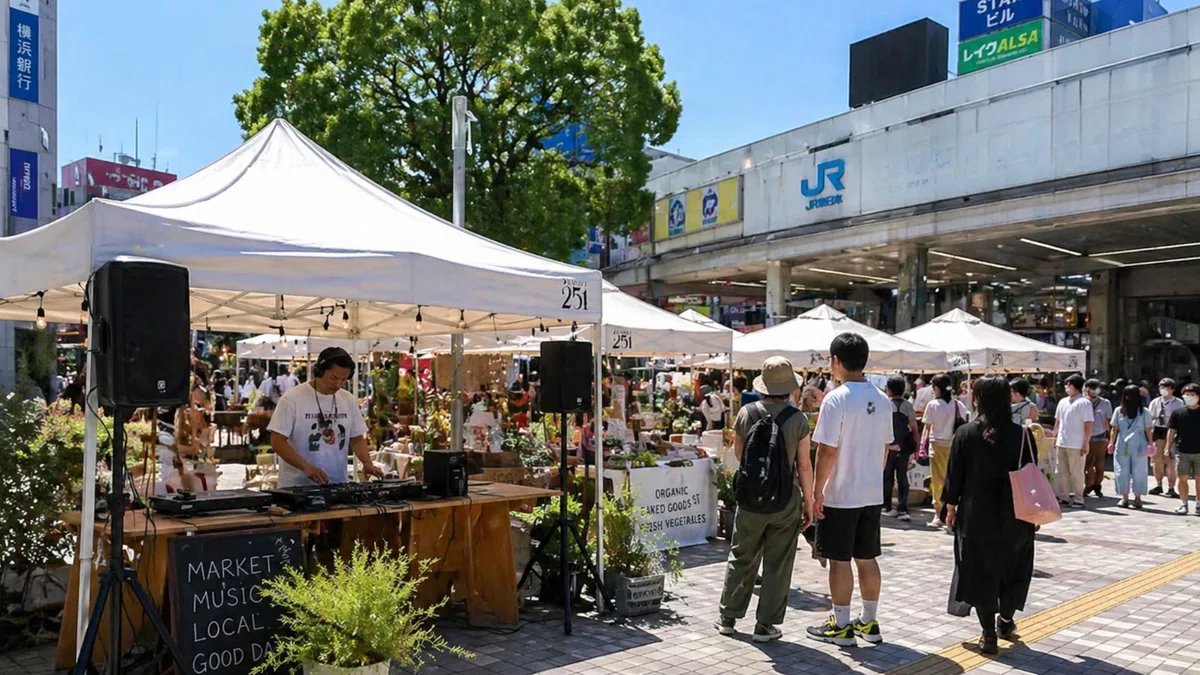
Where did the club go?
1. The End of the Club as a Place
In Japan, club culture has been quietly fading as a central place in the city.
But what disappeared was not the culture itself—
only the space that held it.
Clubs once depended on very specific conditions:
enclosed spaces
high volume
physical proximity
Over time, these conditions began to clash with the city:
noise regulations
changing demographics
sustainability of late-night business
And then came the pandemic.
What defined the club—
closed spaces, density, contact—
became exactly what needed to be avoided.
Many places shut down.
But something important remained:
The club did not disappear.
It dissolved.
2. Technology Didn’t Kill the Club — It Distributed It
The experience of the club was never just about music.
It was also about infrastructure.
Heavy speakers.
Complex setups.
Fixed locations.
Significant cost.
Today, much of that has changed.
Portable speakers can produce deep, physical bass
Directional audio can target specific spaces
Battery-powered setups make outdoor installation easy
A laptop can now replace entire DJ systems
And just as importantly:
The cost has dropped.
What once required capital and location
can now be recreated with minimal equipment.
The club was not destroyed by technology.
It was broken into pieces—and spread across the city.
Immersion is no longer tied to enclosed spaces.
3. The Decomposition of Culture
What we called “the club” was never a single function.
It was a compression of many elements:
sound pressure
darkness and lighting
synchronization with others
immersion
bodily movement
community
the rhythm of night
When the place disappeared, these elements didn’t vanish.
They relocated.
Sound pressure → fitness studios
Immersion → gaming, streaming, VR
Synchronization → coworking spaces
Lighting and staging → content studios
This is not unique to Japan.
What changed is not culture itself,
but how it is distributed.
4. The Personalization of Immersion
As clubs faded as physical spaces,
immersion did not disappear.
It moved inward.
We now carry it with us:
noise-canceling headphones
high-resolution earbuds
spatial audio
software-driven listening environments
But not all immersion today is about isolation.
Another form has emerged—
one that remains open to the world.
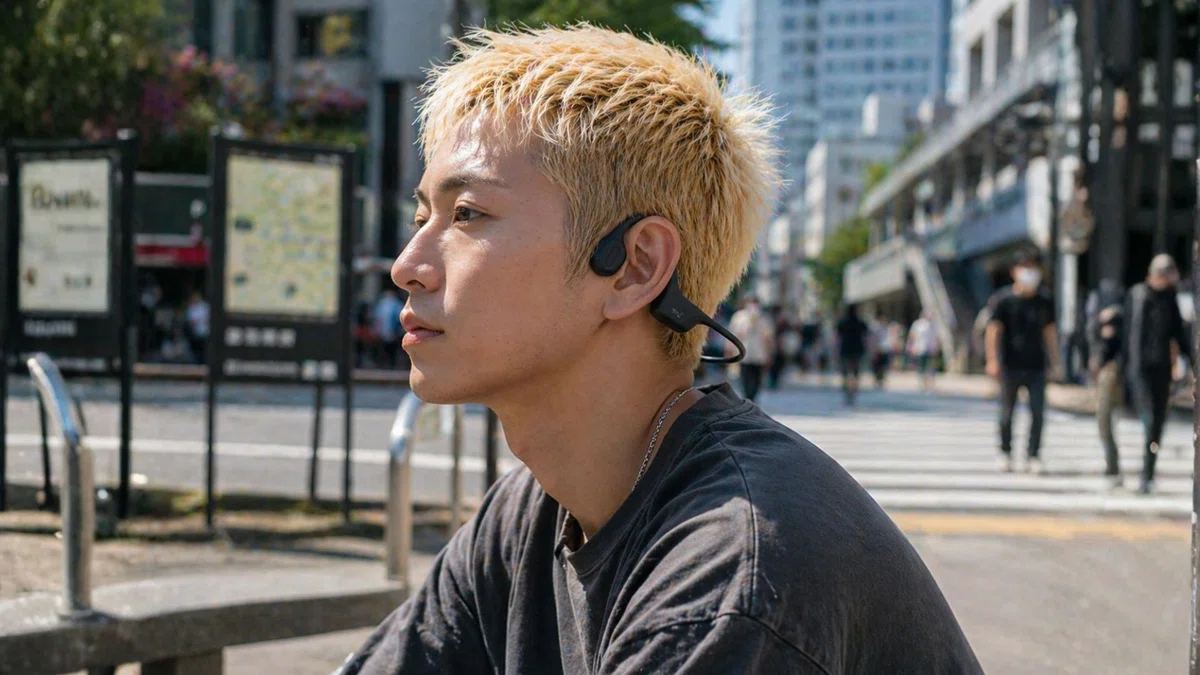
Open-ear and bone-conduction devices allow us
to hear both music and the environment at the same time.
You hear the street.
You hear movement.
You remain aware.
This has practical advantages:
safer in public spaces
compatible with daily activities
less psychologically isolating
Immersion no longer demands separation.
It blends into everyday life.
Immersion is no longer a binary state — in or out.
It has become adjustable.
And perhaps not just immersion.
We now adjust time itself.
We speed up videos.
Skip, repeat, compress.
We don’t just consume experiences anymore.
We tune them.
5. From External Rhythm to Internal Rhythm
There was a time when rhythm existed outside of us.
In clubs, people gathered
and moved to the same beat.
Today, that external synchronization is weaker.
We choose our tempo.
We control our pace.
The floor is no longer outside.
It has moved inside the body.
6. Love as a Remaining Form of Synchronization
And yet, there is still one place
where rhythm is not fully under our control.
Love.
Love pulls us into someone else’s tempo:
the timing of replies
the length of silence
the speed of closeness
It rarely aligns perfectly.
There is always a slight misalignment.
But that misalignment creates something new—
a rhythm unique to two people.
In a world where synchronization has become optional,
this kind of encounter becomes rare.
And perhaps more meaningful.
7. The Loss of “End”
Clubs once had an ending.
The music stopped.
Lights came on.
Morning arrived.
Today, many systems no longer end.
endless scrolling
autoplay
continuous notifications
In a world without designed endings,
nothing tells us when to stop.
8. “Boredom” as the Last DJ
There is still one signal left.
Boredom.
Not as laziness,
but as a quiet internal cue.
A small voice that says:
“Enough.”
Clubs once had DJs
who controlled the flow of time and energy.
Now that role has moved inward.
We each carry a small DJ within us.
And learning to listen to that voice—
to stop, to fade out, to end—
may be one of the last forms of control we have.
Closing
I think back to the sound at the market.
That low frequency,
spreading under daylight.
The club is no longer a place.
It exists in fragments—
scattered across the city,
and within us.
Where did the club go?
It didn’t disappear.
It changed form.
© 2026 in the pilvi / Kyokuya Project
Please credit the source when quoting or referencing this article.
