x² + y⁴

[Header Image Credit] Professor Henryk Iwaniec by Rutgers University
Revised on 31st July 2025: Removed an incorrect statement on possibility of Friedlander-Iwaniec prime being a member of a twin prime pair🙇
Friedlander-Iwaniec の定理は
「a² + b⁴ (a, b ∊ Z ) という型の素数が無限に存在すること」
を主張する。
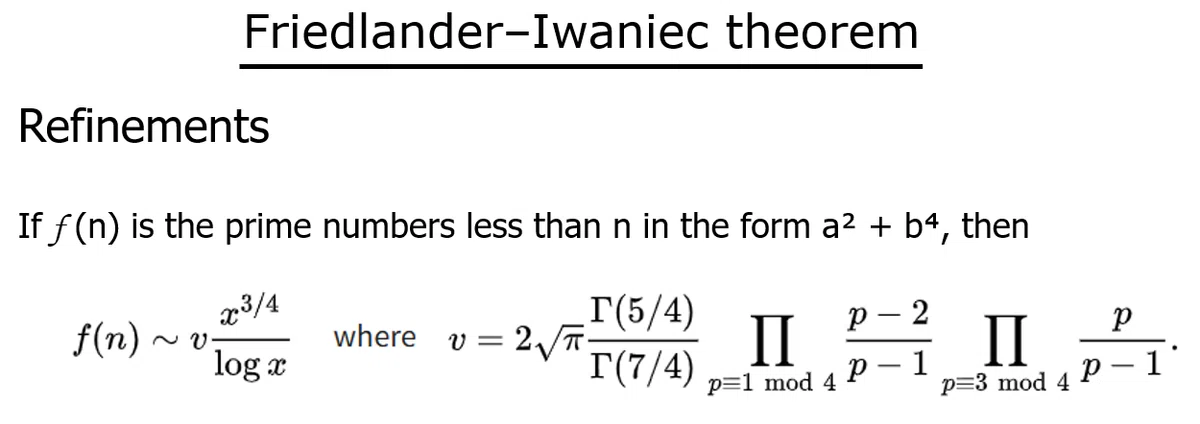
In analytic number theory the Friedlander-Iwaniec theorem states that there are infinitely many prime numbers of the form a² + b⁴. The first few such primes are
2, 5, 17, 37, 41, 97, 101, 137, 181, 197, 241, 257, 277, 281, 337, 401...
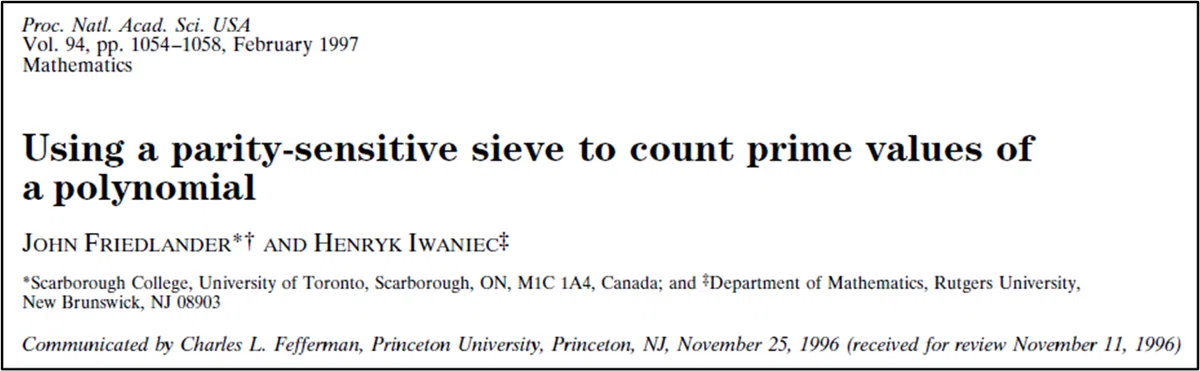
It is proved in the following paper:
John Friedlander and Henryk Iwaniec:
Using a parity-sensitive sieve to count prime values of a polynomial
This result is considered a monumental achievement.
The above paper is not lengthy but is highly eye-opening for me since it led me to the profound Heath-Brown's theorem relative to "Siegel zero":
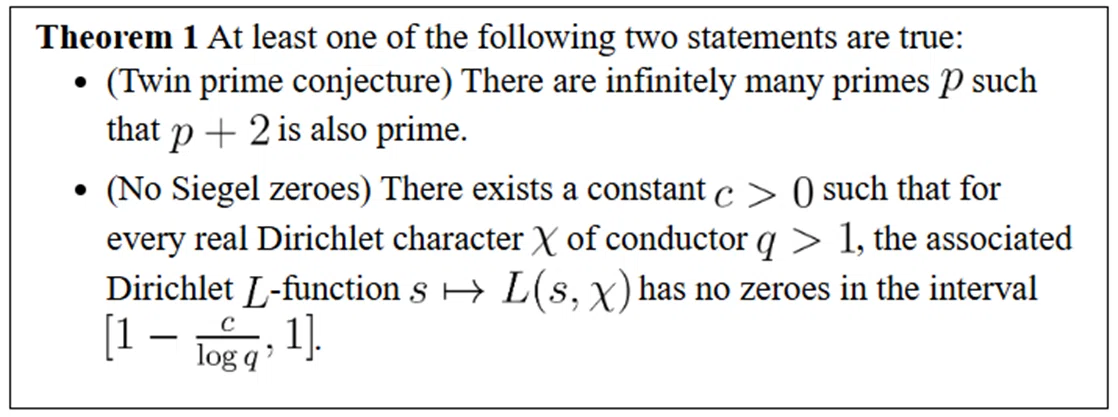
Siegel zero が存在することを示せば双子素数予想の解決に繋がる😮
Sadly, I'm not qualified to explain the proof of Friedlander-Iwaniec theorem.
On the other hand, I found the following paper by D. R. Heath-Brown just a few days ago:
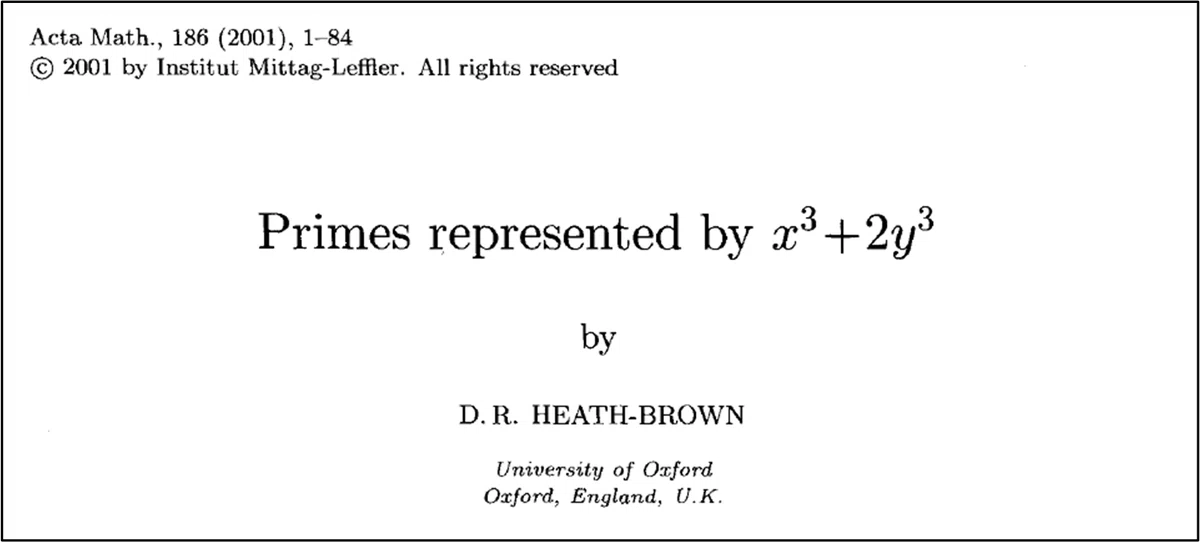
In other words there are infinitely many primes expressed as sum of 3 cubes.
I won't cover this theorem in this article, but primes of the form x³ + 2y³ are listed in OEIS A173587.
The examples listed in Wikipedia (for Friedlander-Iwaniec theorem) in the beginning are not interesting, and this article is purposed to provide some more examples not necessarily so easy to identify, and also to shed light on those primes generated by x² + y⁴.
Let's start with the following examples:
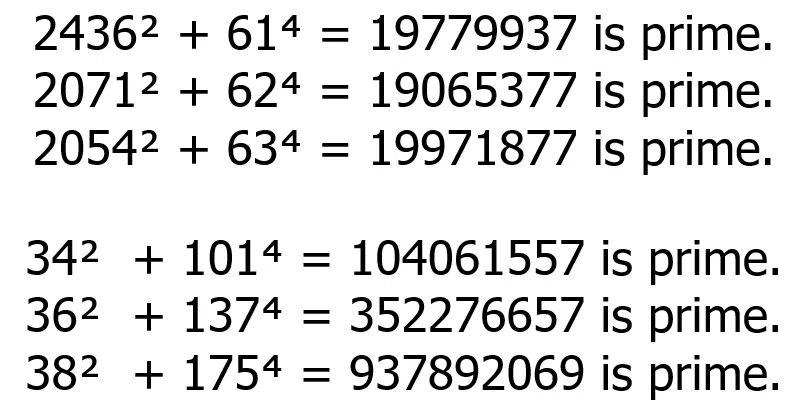
Next, let's choose 3 prime numbers for x, though there's no need to pick up a prime number in order to show prime numbers of the form x² + y⁴:
① 1093 (p₁₈₃), the smaller one of two known Wieferich primes,
② 3511 (p₄₉₀), the bigger one of two known Wieferich primes,
③ 9973 (p₁₂₂₉), the largest 4-digit prime.
Then let's use y as a variable, and calculate G(x, y) = x² + y⁴ in the following range respectively:
① 2000 ≤ y ≤ 3000
② 4010 ≤ y ≤ 5010
③ 6800 ≤ y ≤ 7800
Here is a comparison of number of primes of the specified form:
① # of primes of the form G(1093, y) = 17 (2000 ≤ y ≤ 3000)
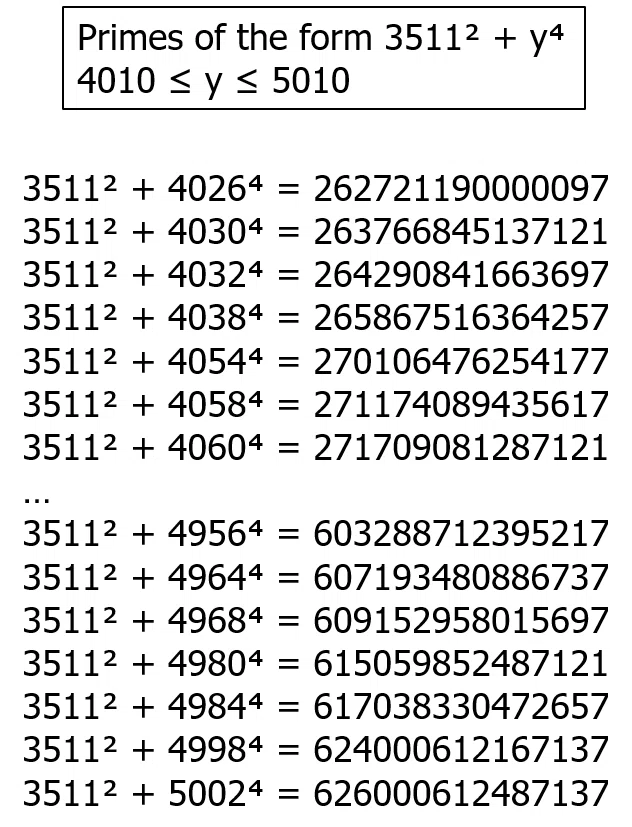
② # of primes of the form G(3511, y) = 93 (4010 ≤ y ≤ 5010)
③ # of primes of the form G(9973, y) = 9 (6800 ≤ y ≤ 7800)
① and ③ show a similar pattern. Both cases show that the last 4 digits are the same: 4649 for 1093² + y⁴ and 0729 for 9973² + y⁴:
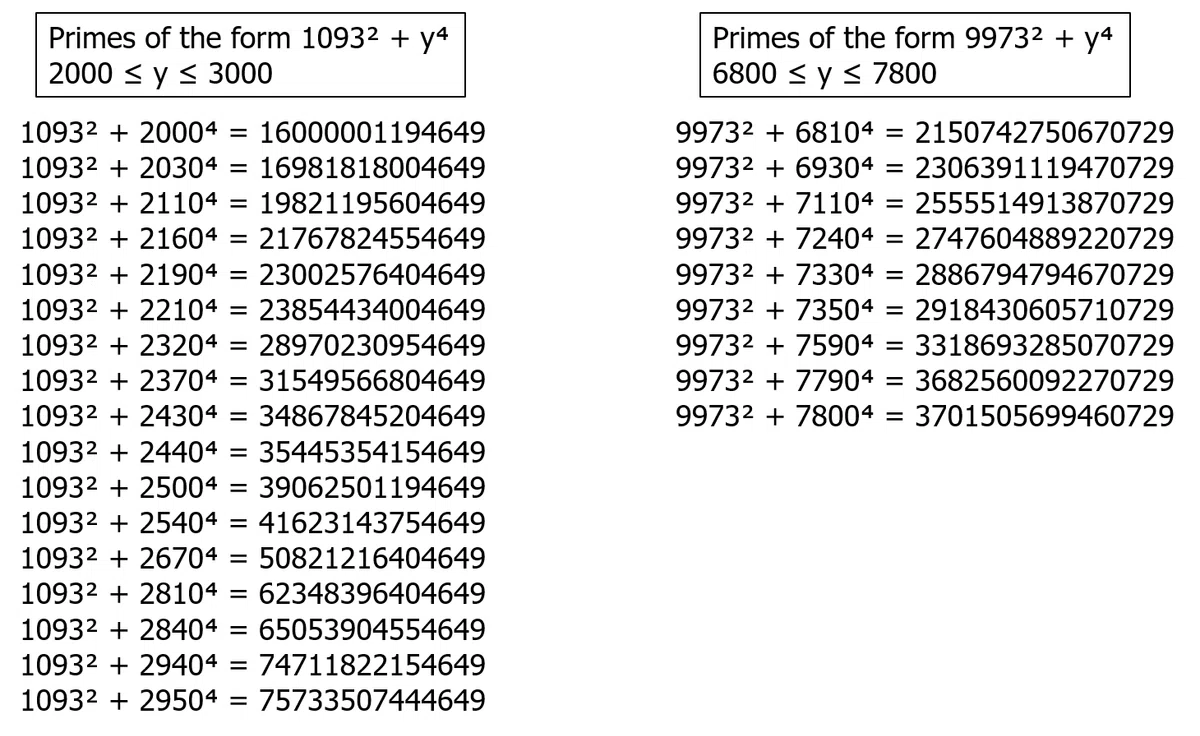
② shows a different result. It's not wise to show all the 93 cases, so here's an excerpt:
The last examples are:
④ y := 3504 & 6760 (not prime), and then use x as a variable in 6 ranges:
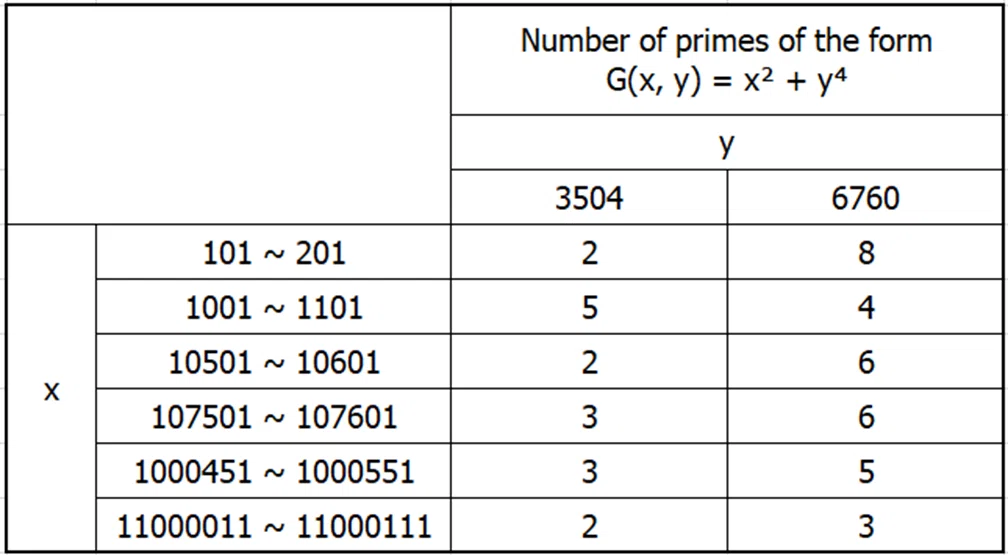
This is not a proof of infinitude of primes of the special form.
⑤ Choose x from the following two prime quadruplets
{9973211, 9973213, 9973217, 9973219}
{325267931, 325267933, 325267937, 325267939}
and then use y as a variable in 4 ranges:
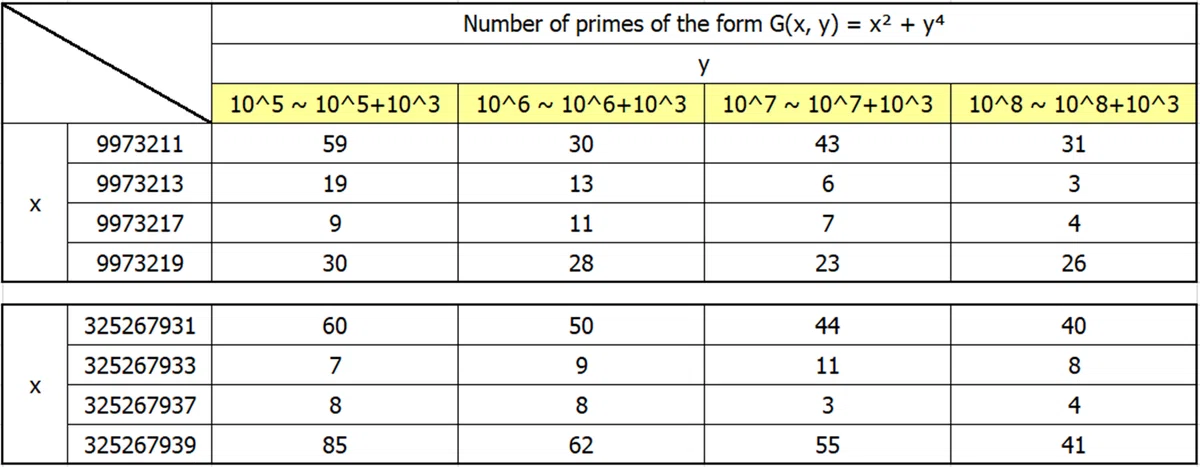
This comparison shows number of primes of the form G(x, y) appears to depend on x (mod 10).
■
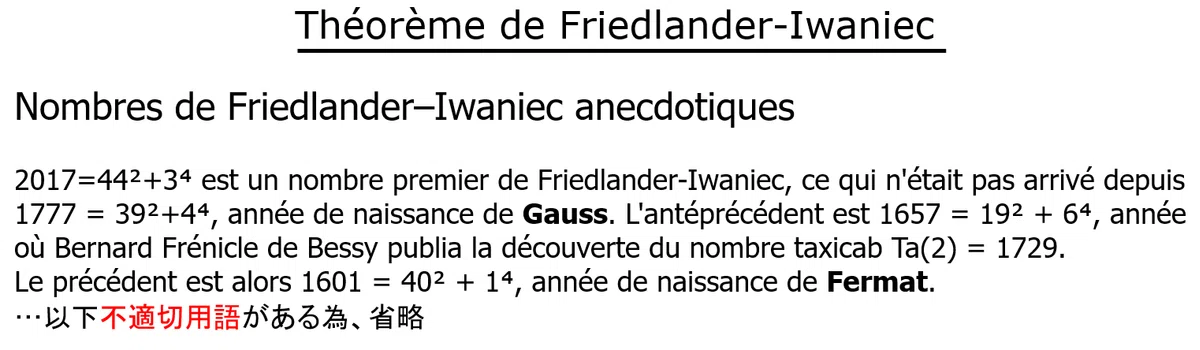
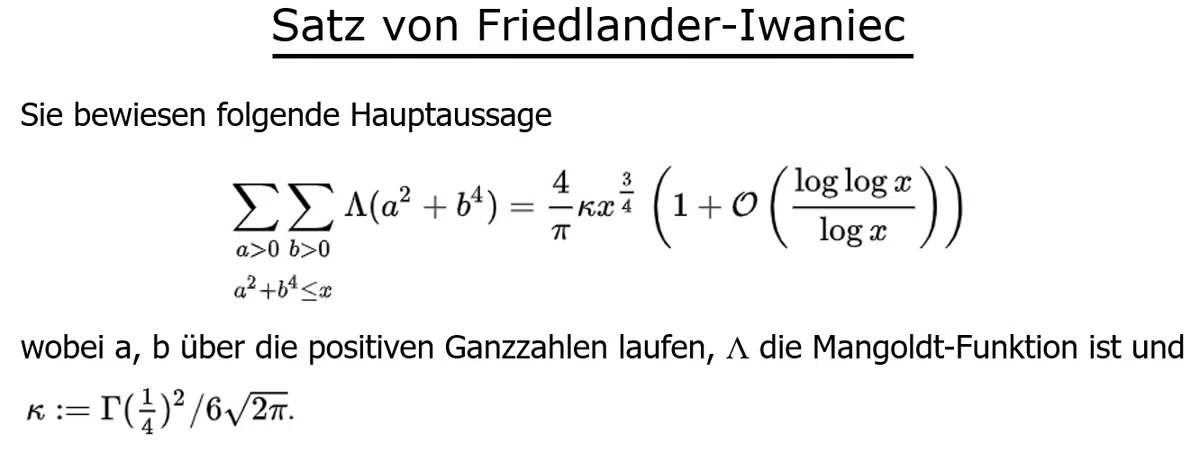
P.S. Wikipediaの記述の比較:英語版・仏語版・独語版