The Music is Playing, but Who is Profiting?

Once again, the headlines are saturated with lists of which jobs will vanish and which will endure in the age of Artificial Intelligence. It feels like a tired ritual, a desperate search for content in a landscape seemingly devoid of new ideas.
The official narrative, championed by government white papers, suggests that while AI is permeating Japanese society, it has yet to reach "full penetration." They cite statistics: half of Japanese companies have a policy for AI, and over 55% are using generative AI. From these high-altitude perspectives, AI is viewed as an "infrastructure in progress," awaiting only better rules and public trust.
Yet, on the ground, the reality feels entirely different. There is a growing class of people who have already been "Singulated"—a term derived from the Singularity, used to describe those whose livelihoods have been devoured by AI. While economists argue that mass unemployment due to AI is "not yet confirmed," pointing instead to a decline in entry-level hiring, the human cost is already visible. Young people are turning to ChatGPT—affectionately and perhaps tragically dubbed "Chappy"—to whisper secrets and anxieties they cannot share with parents or friends. If this isn’t a society where AI is already "infrastructure," one wonders what is.
The disconnect is profound. While the Japanese government and research elite pour vast amounts of national wealth into an AI "power game" they are destined to lose, they remain blind to the actual impact on the social fabric. Much of the discourse surrounding "the AI era" feels less like an inquiry and more like a charade—a waste of time built on a foundation of deception.
This deception has also crept into our political life. For example, some say that the timing of legislation—as seen in moves such as the proposed amendment to the Referendum Act—is strategically calculated. Others point out that lawmakers are capitalizing on the buzz surrounding events like the World Cup. Critics take issue with the lack of a “minimum voter turnout” requirement, arguing that it undermines the legitimacy of democracy. However, many of these arguments are themselves nothing more than “rhetoric designed to advance a specific position.” They are intended not to protect democracy, but to manipulate public opinion toward a specific partisan outcome. The manipulation of information carried out in the name of “justice” is, in the end, nothing but manipulation itself—a universal problem found in all camps, regardless of whether they are in the ruling or opposition parties.
Perhaps the most chilling perspective comes from the "AI Layoff Trap," a concept rooted in game theory. It describes a classic Prisoner’s Dilemma: every CEO knows that mass AI layoffs will eventually destroy the economy by stripping consumers of their purchasing power. Yet, fearing they will be crushed by competitors if they don't automate, every company rushes toward the same cliff. It is a mathematical blueprint for societal collapse.
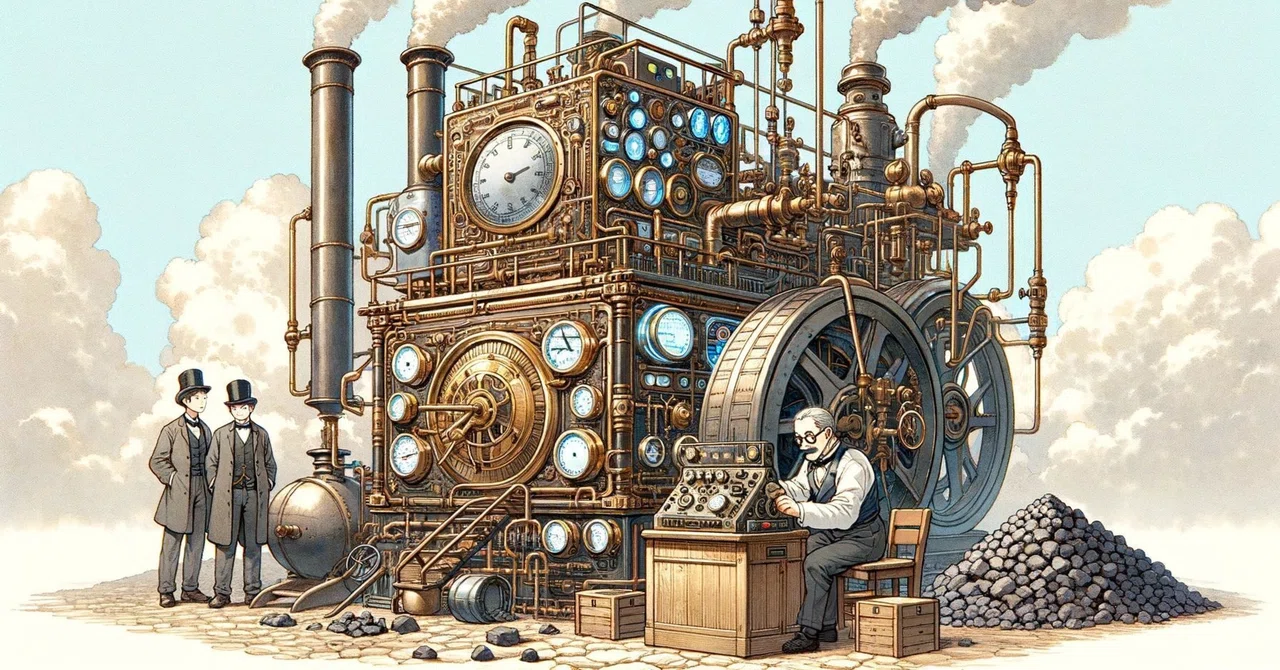
We are told we are in the midst of a new "Industrial Revolution," but our understanding of history is flawed. The original Industrial Revolution was not a sudden explosion but a slow, century-long process that did not immediately enrich everyone. More importantly, the Luddites of that era were not "machine-haters" or Luddite-minded reactionaries. They were skilled artisans who targeted specific owners who used machinery to slash wages, worsen conditions, and monopolize profits.
Today, opposing the social implementation of AI is futile. As long as the music is playing, we have no choice but to keep dancing. But the fundamental question remains unanswered by both our government and our researchers: Who actually benefits from this technological progress?,.
Any discourse that ignores the "distribution of profit" is merely position talk—rhetoric served up to protect vested interests. In a Japan paralyzed by stagnant wages, a devalued currency, and a lack of vision, we must stop dancing to the tune of those who only seek to secure their own positions,. After all, no one wants to be the next one to be Singulated.
