New Zealand Travel 63 Day 16 −2 – ‘The 26‑Story Treehouse’: My Grandchild’s Obsession and Challenges for English Education in Japan

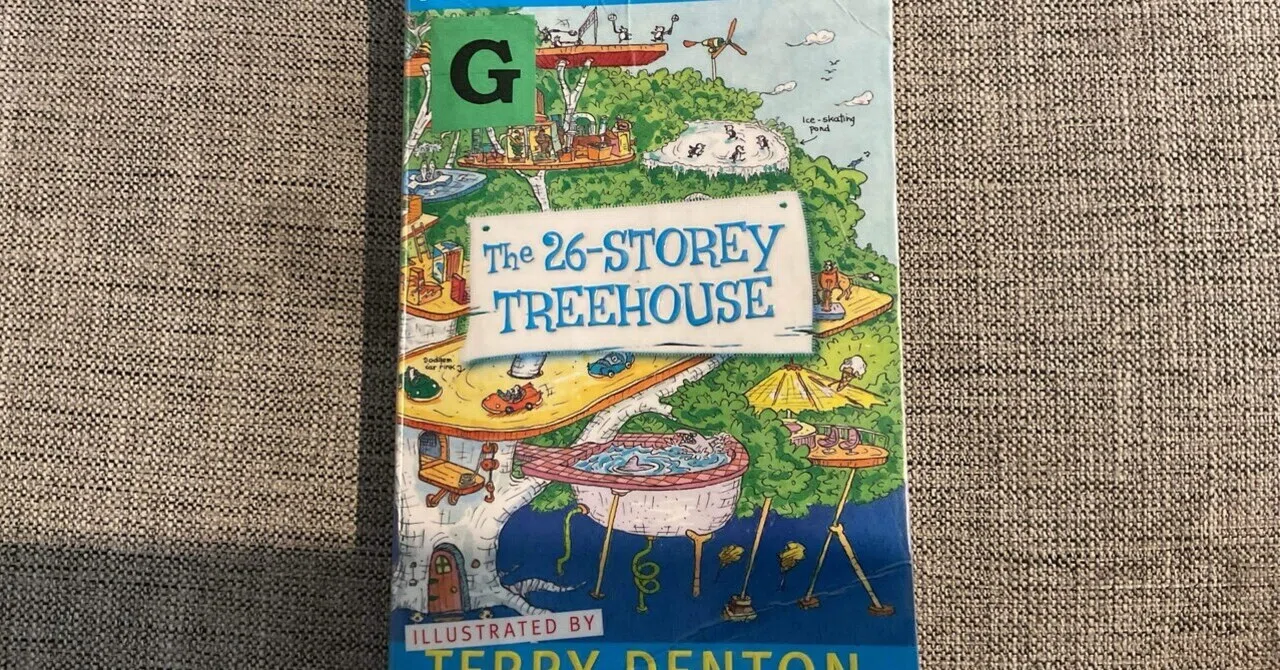
My 7-year-old grandchild became so absorbed in The 26‑Story Treehouse that he could hardly hear anyone speaking around him. Seeing him so engrossed, I became curious and decided to find out what kind of book it was.
The 26‑Story Treehouse is a humorous children’s book by Australian author Andy Griffiths and illustrator Terry Denton, in which text and illustrations are integrated to create a playful storytelling experience. The protagonists, Andy and Terry, live in an extraordinary treehouse expanded to 26 stories, filled with fantastical features. The story follows their adventures and mischief as they try to write the next book, combining narrative and comic-style illustrations with wordplay and humor. This approach sparks children’s imagination and makes reading highly enjoyable. The series has over 13 volumes published in English-speaking countries and is read widely in Australia, the United States, the United Kingdom, and other countries.
In Japan, however, only a few translated volumes are available, so recognition and accessibility are limited. Possible reasons for its limited spread include the illustration style and characters not matching the typical “cute” designs popular with Japanese children, the humor and wordplay being difficult to fully convey in translation, the lack of a complete series, and differences in cultural reading habits and the prevalence of chapter books.
This book offers a powerful opportunity for children to voluntarily enjoy reading and to develop English skills naturally. Parents and teachers, whether translations are available or not, can provide opportunities for children to encounter popular overseas children’s books that combine text and illustrations. Such exposure can enhance enjoyment, comprehension, speaking, listening, and reading skills. Recognizing the existence of these books and creating an environment where children can explore them is important for fostering a love of English.
⸻
Hashtags
#The26StoryTreehouse #ChildrensBooks #GlobalPopularity #EnglishLearning #ReadingLovers #ElementarySchool #EducationalIdeas #EnglishEducation #HumorBooks #Imagination
Why Do Global Hits Sometimes Fail to Reach Japan? Possible Reasons
1. Differences in Illustration and Writing Style
• The 26‑Story Treehouse is a humorous chapter book where text and illustrations are integrated. The drawings are line art, comic-style, but not the round, cute characters typical of Japanese children’s books.
• The writing style is English-native humor, with jokes and wordplay that require cultural understanding.
• In the Japanese children’s book market, picture books (for younger kids), educational manga, and light-novel-style books with strong characters or visuals are more popular.
→ As a result, it may be difficult for Japanese publishers or bookstores to market it widely.
⸻
2. Series Awareness and Translation Status
• In English-speaking countries, it is a long-running series with over 13 volumes, and reading in order helps build a fan base.
• In Japan, only a few volumes have been translated, so the series as a whole is not widely recognized.
• When only partial volumes are available, or readers cannot continue the series, purchase motivation decreases.
→ Limited series recognition may prevent it from becoming a hit.
⸻
3. Differences in Education and Reading Culture
• Japanese lower elementary students spend much of their time on kanji, hiragana, and katakana, leaving less time for independent chapter reading.
• In English-speaking countries, 7-year-olds start reading chapter books independently, imagining the story as they read.
• In Japan, longer picture books or early chapter books may be somewhat difficult for lower elementary readers.
→ Age targeting and differences in reading culture can influence popularity.
⸻
4. Publisher and Bookstore Marketing Strategies
• In English-speaking countries, recommendations by schools, library distribution, and online reviews help spread word-of-mouth.
• In Japan, translated books are mostly found in select bookstores or online, with little TV or magazine coverage.
• Weak promotion aimed at getting children to read widely makes it harder to reach hit status.
⸻
5. Cultural Differences in Humor
• The series relies on culture-specific humor, with jokes and wordplay that English-speaking children understand.
• Japanese translations cannot always convey the same nuance, potentially reducing the humor.
• For children to find it truly engaging, understanding the wordplay and context is necessary.
→ The way humor translates can be a limiting factor.
⸻
🔹 Summary
Possible reasons why it has not gained wide readership in Japan:
1. The illustration and writing style may not appeal to Japanese lower elementary students.
2. Few volumes have been translated, so the series is not recognized as a whole.
3. Differences in reading culture and educational stage.
4. Limited promotion by publishers and bookstores.
5. Cultural humor may not fully come across in translation.
